I still remember the first Baltimore Oriole I ever saw. I was ten, standing in my grandmother’s Mexican garden, when a flash of fire dropped into the trees. Nothing that small should burn that bright. Decades later, I’ve learned that orange birds still stop me cold every single time.
Here’s something most people never notice. Most birds are brown, gray, or black, camouflage colors that keep them alive. Truly vivid plumage is rare. Besides red and blue, orange is one of the standout hues in the bird world, and it almost always means something. In this guide, I’ll walk you through 15 of the most iconic orange birds on the planet. You’ll learn where they live, how they behave, and the strange chemistry behind that glow. Let’s meet them.
Why Are Some Birds Orange?
Before the list, a quick bit of science that changed how I see every orange bird. That color isn’t painted on. It’s eaten. Orange plumage comes from carotenoids, pigments birds cannot make themselves. They must pull them from their food.
Many orange birds consume fruits, berries, seeds, and insects packed with these carotenoids, then deposit the pigment into growing feathers. As a result, dietary quality directly affects the exact shade of orange a bird wears. A dull male ate poorly. A blazing one found the good stuff.
This makes color honest. Brighter orange plumage signals fitness and reliably attracts mates. That Baltimore Oriole glowing in your backyard is advertising real biological quality… not just good looks.
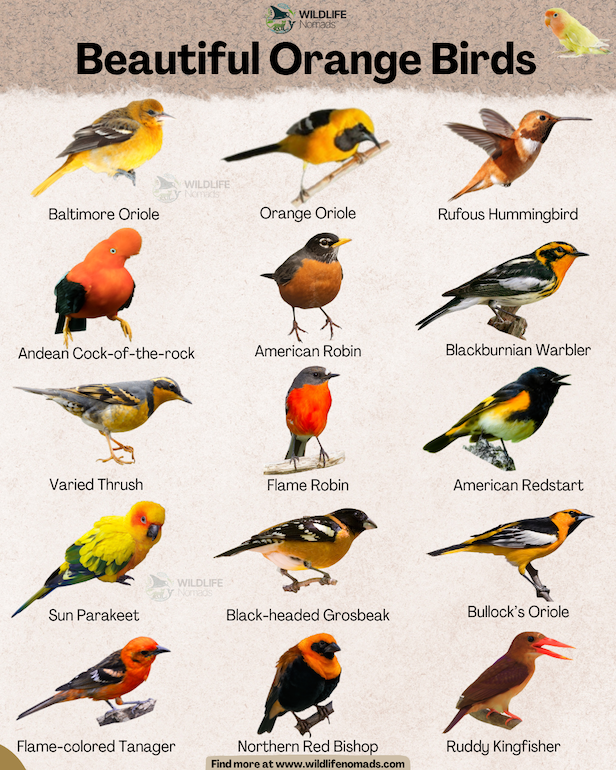
1. Baltimore Oriole (Icterus galbula)
The Baltimore Oriole is the bird that started my obsession. Male Baltimore Orioles wear brilliant orange plumage set against jet-black wings and head, a contrast so sharp it looks unreal in flight.
These birds breed across eastern North America, then head to Central America and the Caribbean for winter. Females are a softer, yellow-orange, beautiful in a quieter way. If you want them in your yard, skip the seed. Baltimore Orioles are famously drawn to orange feeders, halved oranges, and grape jelly. I’ve filled a dish with grape jelly and watched three males squabble over it within an hour.
They weave remarkable hanging nests, deep pouches slung from the tips of tall trees. For more, see my full guide to Baltimore Oriole facts.
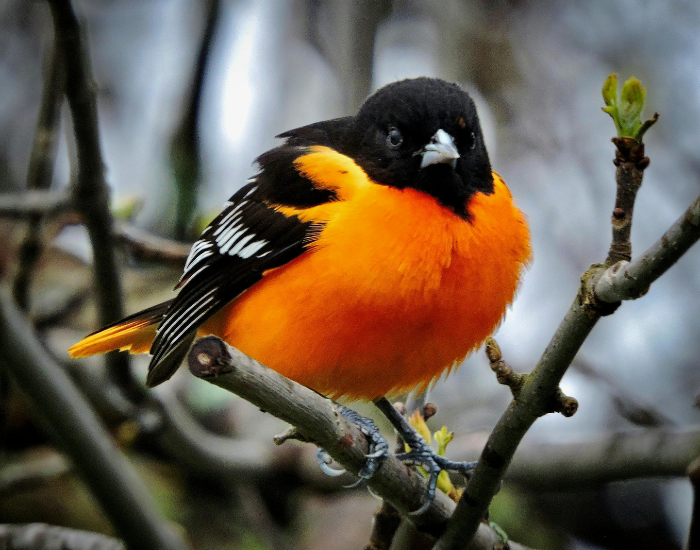
2. Bullock’s Oriole (Icterus bullockii)
Out West, the Baltimore’s role is filled by its cousin. The Bullock’s Oriole shows a bright orange face and underparts, but with a bold black eye-line and a large white wing patch. It’s the western answer to that eastern fire.
I’ve watched them in California riverside cottonwoods, males singing from the canopy in late spring. They favor open woods, parks, and tree-lined rivers. Where their range meets the Baltimore Oriole on the Great Plains, the two sometimes interbreed, a reminder that species lines can blur.
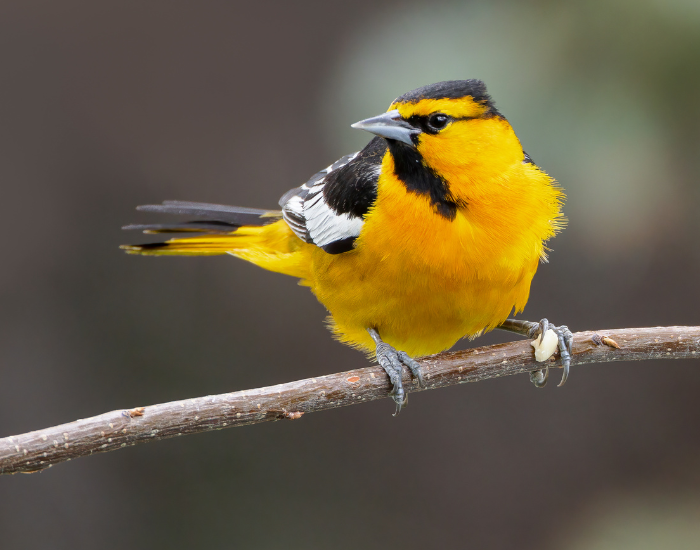
3. Hooded Oriole (Icterus cucullatus)
The Hooded Oriole is a slim, elegant bird with a flaming orange hood and black throat. In the U.S. Southwest, it has become a suburban favorite, largely because it loves palm trees.
Here’s a detail I adore. The Hooded Oriole nests beneath palm fronds, stitching its nest to the underside to protect chicks from brutal sun exposure. It’s clever engineering. These birds also visit hummingbird feeders and fruit feeders, sipping nectar with a surprisingly delicate reach. For the full family picture, see my roundup of the different types of orioles.
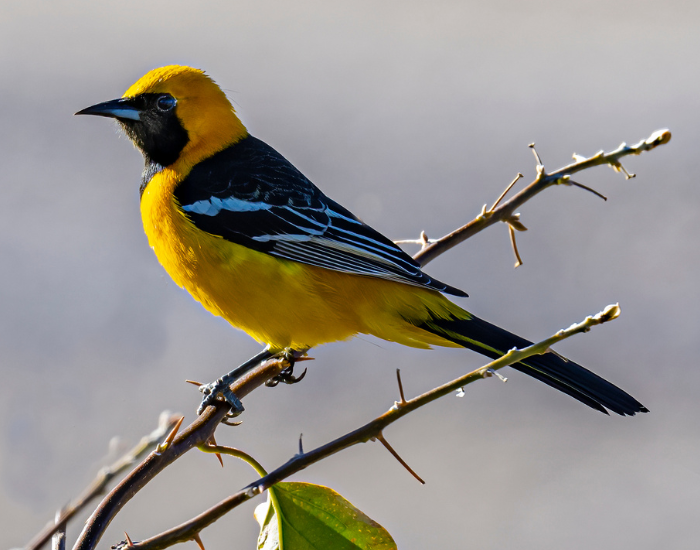
4. Orchard Oriole (Icterus spurius)
The Orchard Oriole breaks the mold. Instead of bright orange, adult males display a deep, burnt orange (almost brick or chestnut) against black. It’s a richer, moodier tone than its cousins.
True to its name, this species prefers open woods, orchards, and shady backyards near water. It’s also one of our earliest migrants. Orchard Orioles winter in southern Mexico and Central America, and many leave the U.S. by late summer. Blink in August and you’ll miss them until spring.
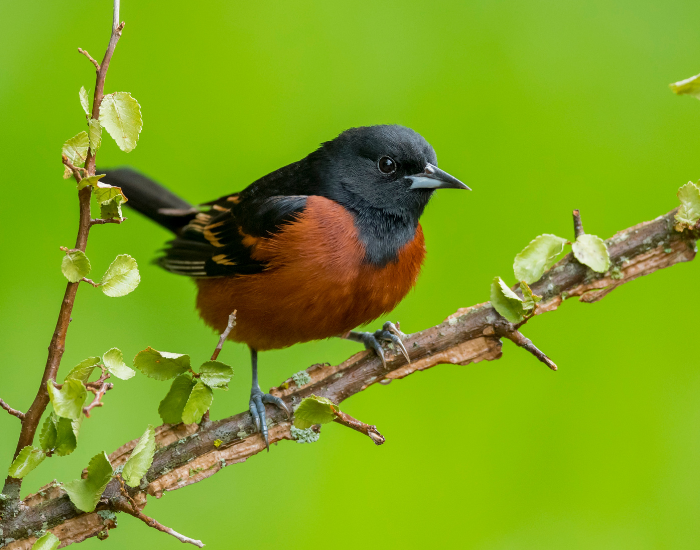
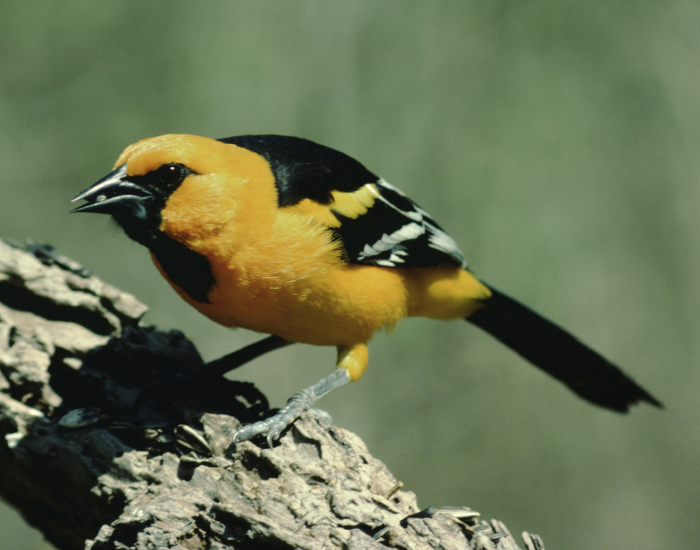
5. Altamira Oriole (Icterus gularis)
The Altamira Oriole is the largest oriole in North America, and a genuine prize for U.S. birders. Deep orange with a black bib and back, it’s a tropical bird that barely crosses the border.
Its range centers on Mexico and Central America, sneaking into southern Texas along the Rio Grande. The Altamira Oriole first appeared in the U.S. in 1939, and its arrival still draws birders south. Its woven nest is a showstopper, a hanging basket up to two feet long.
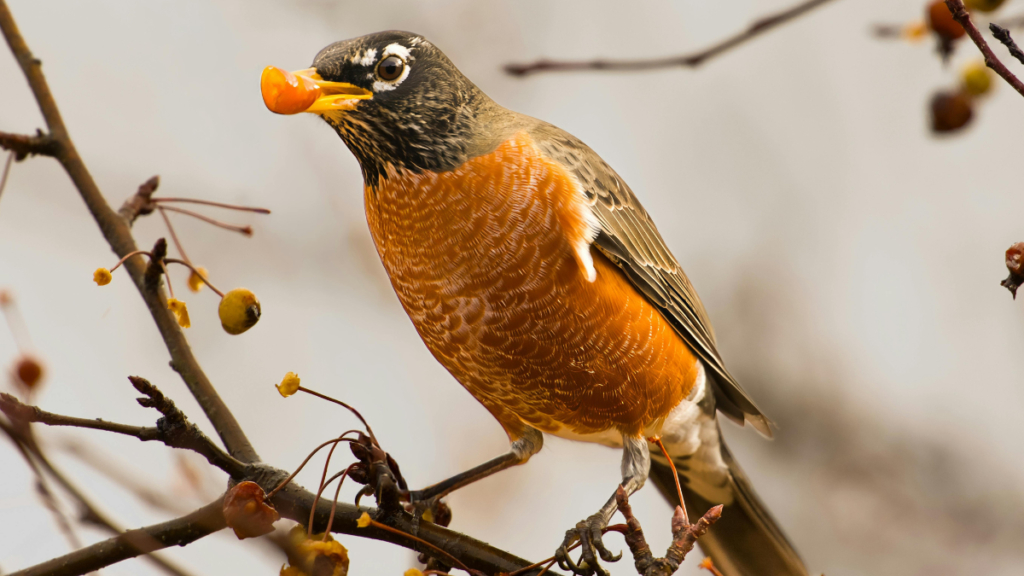
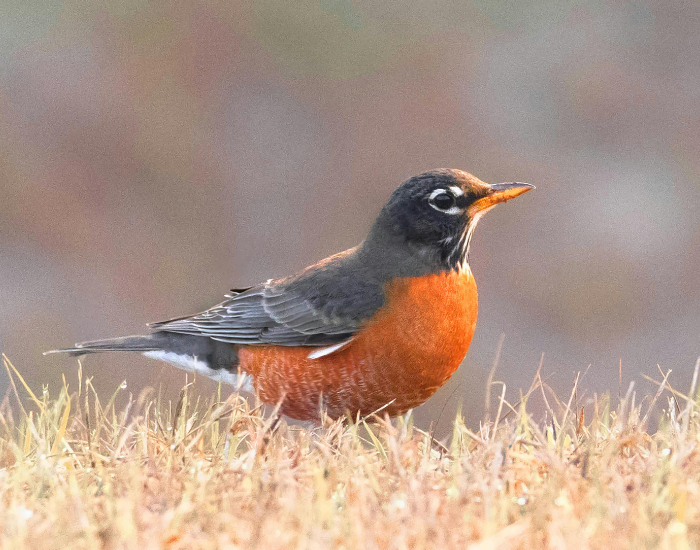
6. American Robin (Turdus migratorius)
You already know this one, even if you never thought of it as orange. The American Robin has a bright rust-orange belly and breast, gray back, and a cheerful dawn song. It’s the classic bird with an orange chest hiding in plain sight on lawns everywhere.
The American Robin is common across the Lower 48 states, and one of the most familiar birds in North America. On lawns, robins hunt worms; in fall and winter, they switch to fruit and roam in large flocks. They may also visit feeders for mealworms.
Robins are actually thrushes, cousins of the birds in my guide to types of thrushes. That rust-orange breast is the family signature.
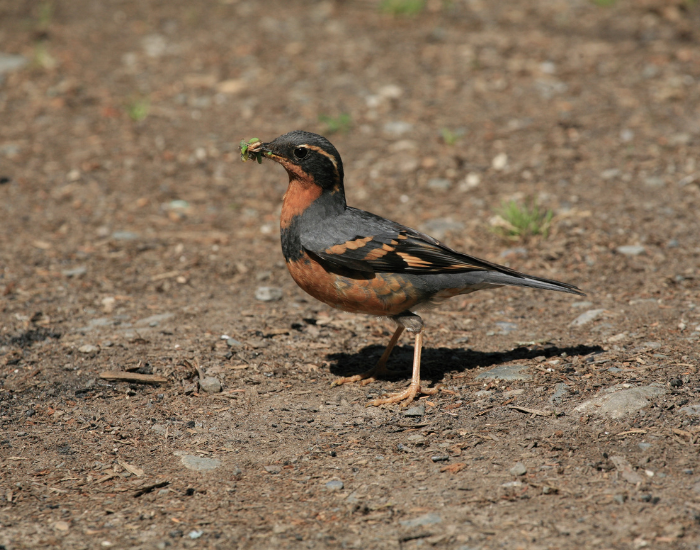
7. Varied Thrush (Ixoreus naevius)
If the robin is the familiar thrush, the Varied Thrush is its mysterious Pacific cousin. Picture a robin redesigned by a shadow artist: burnt-orange breast crossed by a dark band, orange eyebrow, and orange wing patches against slate gray.
I heard one before I ever saw it, a single, eerie, ringing note drifting through a dripping Oregon forest. Varied Thrushes haunt the dense, mossy woodlands of the Pacific Northwest and up into Canada and Alaska. In winter, they slip into backyards, quietly flipping through leaf litter for insects and berries. Few birds feel more like the forest itself.
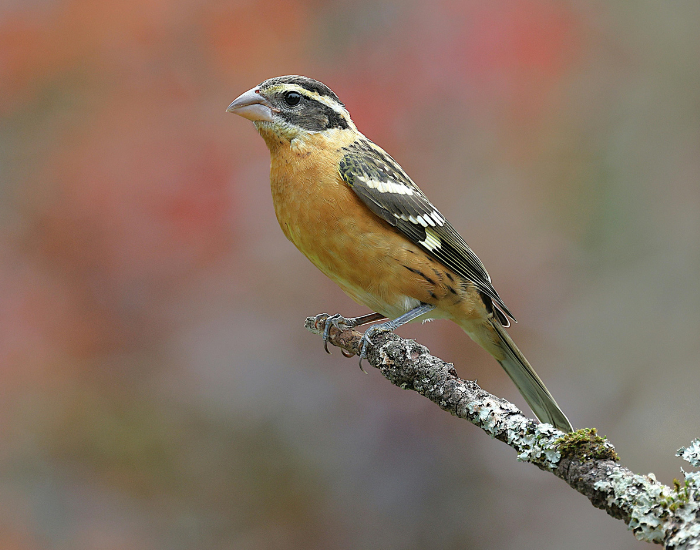
8. Black-headed Grosbeak (Pheucticus melanocephalus)
The Black-headed Grosbeak looks like it was dipped in warm orange, then capped with black. Males show a rich orange breast, collar, and rump, plus bold black-and-white wings and a heavy, seed-crushing bill.
Black-headed Grosbeaks breed across the western United States, filling forests and canyons with a song that sounds like a robin who took voice lessons. In your yard, they’re a sunflower-feeder bird, that thick beak makes short work of seeds. Remarkably, they’re among the few birds that safely eat toxic monarch butterflies on their Mexican wintering grounds.
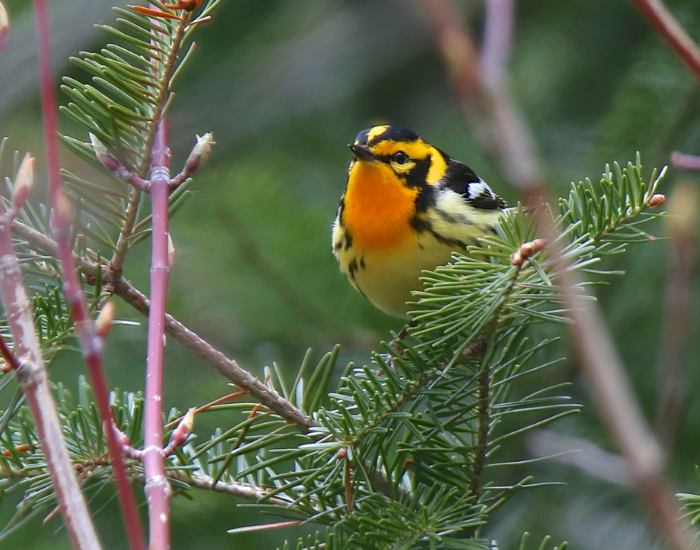
9. Blackburnian Warbler (Setophaga fusca)
No photo prepares you for a male Blackburnian Warbler. Its head and breast blaze a fluorescent orange so intense it seems lit from within. Among all our wood warblers, it’s the only one with true orange in its plumage.
That fire has a purpose. High in the treetops, the blaze-orange head and breast cut through dim canopy light to signal to mates and rivals. Blackburnian Warblers are canopy specialists, foraging for insects more than 30 feet up in tall conifers. I once spent a whole morning with a stiff neck, craning upward, and I’d do it again tomorrow. They breed in northern and Appalachian forests, then migrate to South America.
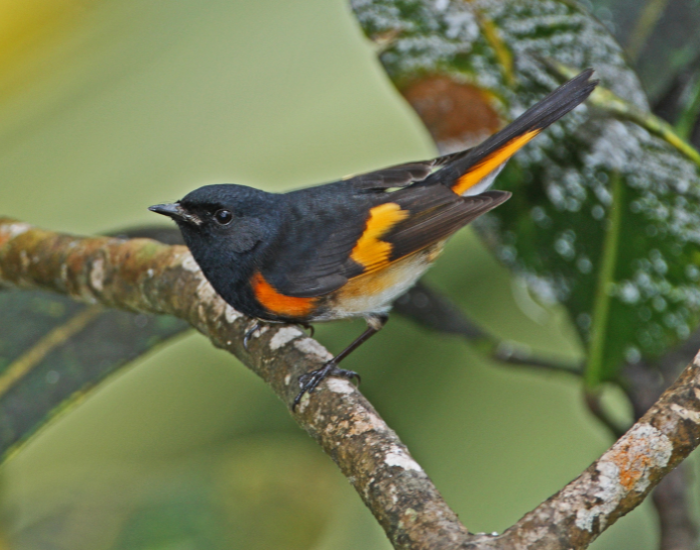
10. American Redstart (Setophaga ruticilla)
The American Redstart is a tiny, hyperactive warbler that seems to run on electricity. Adult males are glossy black with brilliant orange patches on the wings, tail, and sides.
Those flashes aren’t just for courtship. Male American Redstarts use their orange markings to startle and flush insect prey, then chase down the panicked bugs. It’s hunting by ambush lighting. Redstarts breed across eastern and northern North America in second-growth woodlands. Watch one for thirty seconds and you’ll see it fan that orange tail like a magician showing off.
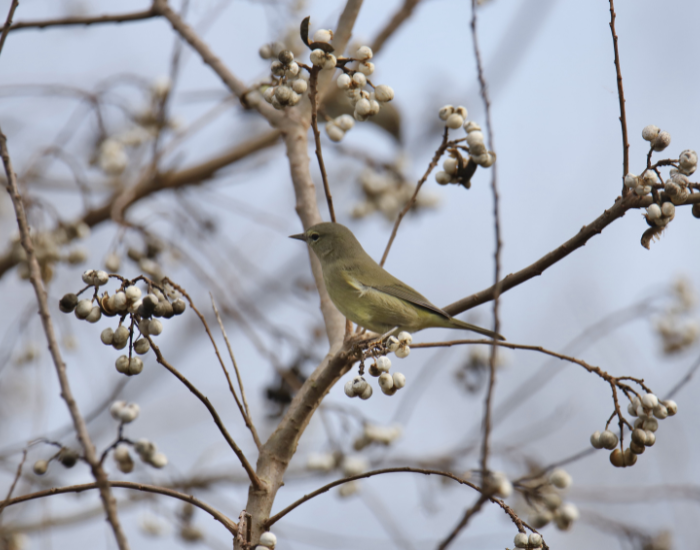
11. Orange-crowned Warbler (Leiothlypis celata)
Here’s a bird that tests your patience. The Orange-crowned Warbler is mostly dull, olive-yellow, and its namesake orange crown is almost never visible, tucked away and flashed only during excitement or display.
Don’t let the plainness fool you. This is a survivor. Flexible dietary adaptations let the Orange-crowned Warbler thrive across wildly different environments, from Alaskan scrub to Mexican deserts. It winters farther north than most warblers, happily visiting suet and even hummingbird feeders. I respect any bird that succeeds by being underestimated.
12. Rufous Hummingbird (Selasphorus rufus)
Not every orange bird is truly orange, some are rufous, that warm reddish-brown that glows like a coal. The male Rufous Hummingbird is exactly that: a fiery copper-orange body with a scarlet throat that flares in the light.
For its size, this is one of the toughest animals alive. Rufous Hummingbirds make the longest migration of any North American hummingbird, some traveling nearly 3,900 miles between Alaska and Mexico. They’re famously feisty, chasing off birds many times their weight from feeders. I’ve watched a single male guard a patch of flowers like a tiny orange dragon.

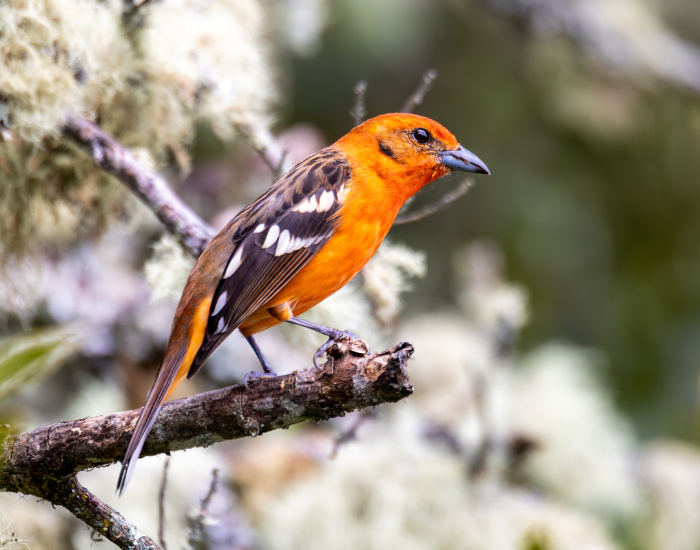
13. Flame-colored Tanager (Piranga bidentata)
The name says everything. The male Flame-colored Tanager glows a deep orange-red, streaked with black on the back and marked with black wings and white wing bars. It looks like a living ember in the trees.
This is primarily a bird of Mexican and Central American mountain forests. A handful wander north into the sky-island canyons of southern Arizona each year, triggering genuine birder pilgrimages. I chased one through an oak canyon at dawn once, and the ten seconds I got were worth every mile.
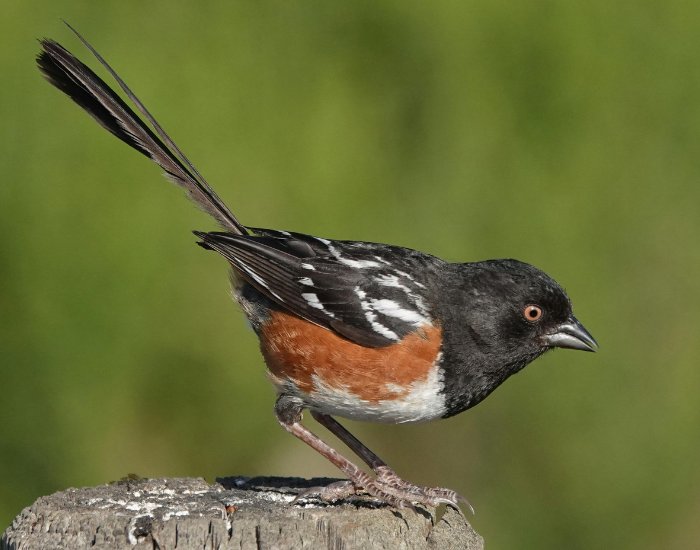
14. Eastern Towhee (Pipilo erythrophthalmus)
The Eastern Towhee is a large, striking sparrow with warm orange-rufous sides, a black hood and back, and a white belly. Females swap the black for rich brown, but keep those orangey flanks.
You’ll usually hear one before you see it. Towhees are ground foragers, and they kick noisily backward through leaf litter to uncover insects and seeds, a sound like a much larger animal crashing through the brush. They favor brushy edges and open woodlands across the eastern U.S. Their bright “drink-your-teeeea” song is one of the great sounds of an eastern spring.
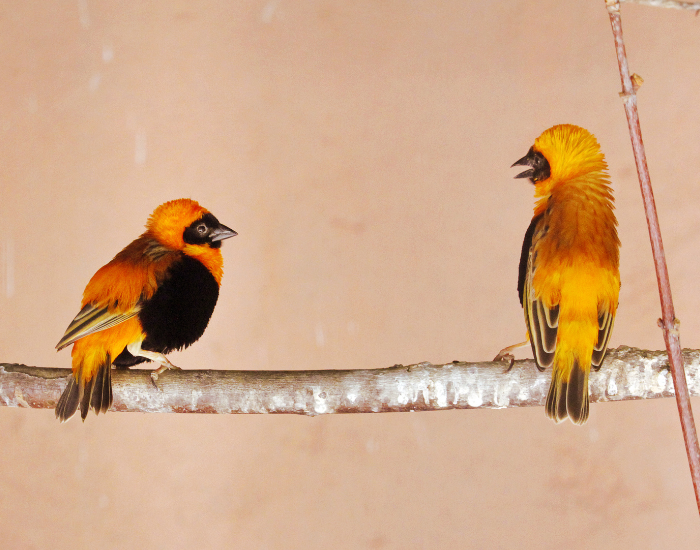
15. Northern Red Bishop (Euplectes franciscanus)
For the finale, something exotic. The breeding male Northern Red Bishop is a jaw-dropping orange-red with a black belly and cap, native to the grasslands of sub-Saharan Africa.
So why include it? Escaped cage birds have established small wild populations in southern California, so lucky birders occasionally spot one glowing in the reeds. In their African home, males build round woven nests and display in bouncing courtship flights over the grass. It’s a reminder that orange birds decorate every corner of the world, not just North America.
Honorable Mentions
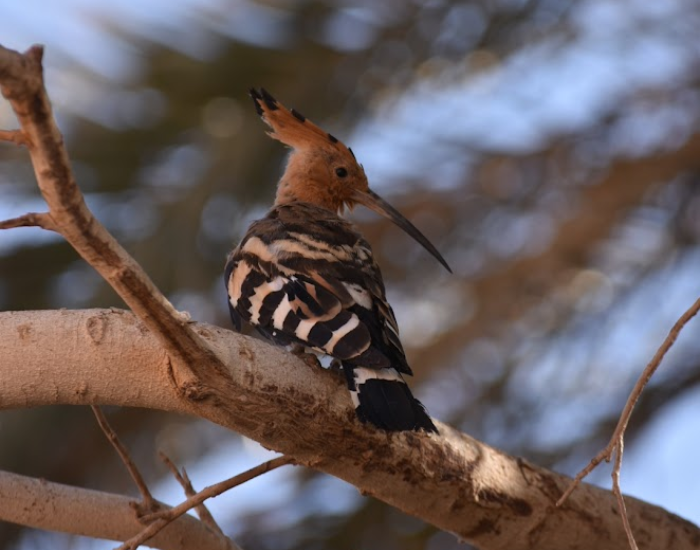
A few more orange-tinged birds deserve a nod. The Eurasian Hoopoe wears a cinnamon-orange body with a spectacular fan-like crest. The Barn Swallow flashes rusty orange on its throat as it hunts insects in flight. Even the Northern Cardinal, though famously red, edges toward orange in some lighting. There are more orange birds out there than any single list can hold.
Frequently Asked Questions
Orange plumage appears in many families, especially orioles, warblers, thrushes, and tanagers. Standouts include the Baltimore Oriole, Blackburnian Warbler, American Robin, and Rufous Hummingbird. Most get their color from carotenoid pigments in their diet, which is why a healthy, well-fed bird glows brighter than a poorly nourished one.
The American Robin is the classic bird with a rust-colored chest, common on lawns across North America. The Varied Thrush, its Pacific cousin, also shows a burnt-orange breast crossed by a dark band. Both are thrushes, and that rusty breast is a family trademark.
Not necessarily. Some, like the American Robin, are among the most common birds around. Others, like the Flame-colored Tanager or a vagrant Altamira Oriole, are genuine rarities in the U.S. Rarity depends far more on range and habitat than on the color itself.
In winter, robins abandon lawns and gather in large communal roosts, often in dense trees, thick shrubs, or evergreen woodlands. These roosts can hold thousands of birds, sharing warmth and safety through cold nights. By day, the flocks scatter to feed on fruit and berries.
Can You Guess the Orange Bird? 🧡
A 15-photo identification challenge — the wrong answers are deliberately tricky look-alikes, especially among the orioles. Go back and change any answer before you score.
Which orange bird is this?
Go Find Your Own Orange Bird
Orange is nature’s honesty badge, a color a bird literally earns through what it eats, worn to prove its health to the world. Once you understand that, every flash of orange in the trees becomes a story, not just a sighting.
So here’s my challenge. This spring, hang an orange feeder or a dish of grape jelly, and wait. The first oriole that drops in will ruin you for ordinary birds, in the best way. Tell me about it in the comments. And if this lit a spark, wander into my broader guide to the types of birds and keep exploring. The world is more colorful than we give it credit for.
References:
Weaver, R. J., Santos, E. S. A., Tucker, A. M., Wilson, A. E., & Hill, G. E. (2018). Carotenoid metabolism strengthens the link between feather coloration and individual quality. Nature Communications, 9, 73. https://doi.org/10.1038/s41467-017-02649-z
Simons, M. J. P., Cohen, A. A., & Verhulst, S. (2012). What does carotenoid-dependent coloration tell? Plasma carotenoid level signals immunocompetence and oxidative stress state in birds. PLOS ONE, 7(8), e43088. https://doi.org/10.1371/journal.pone.0043088
Grunst, A. S., Grunst, M. L., & Rotenberry, J. T. (2023). Carotenoid-dependent plumage coloration is associated with reduced male care in passerine birds. Behavioral Ecology, 34(5), 872–883. https://doi.org/10.1093/beheco/arad051
Aguilar, T. M., Maia, R., Santos, E. S. A., & Macedo, R. H. (2012). Parasite levels in blue-black grassquits correlate with male displays but not female mate choice. BMC Ecology and Evolution, 12, 3. https://doi.org/10.1093/beheco/arm130