

Last year, a biologist friend from Mexico flew down to Colombia to give a conference on Neotropical wild cats. Over coffee in Bogotá, he pulled up camera-trap footage of ocelots slipping through Chocó rainforest, and I remember sitting there thinking about a small ocelot I had watched years earlier inside a sanctuary in Chiapas, so small, so perfectly patterned, so unlike anything else in the cat family.
That conversation kept pulling my mind back to another animal: the clouded leopard. I have written extensively about Africa’s wild cats and tracked the Bengal tiger through Indian sal forests, but the clouded leopard, Neofelis nebulosa, remains one of the most elusive cat species I have ever tried to study in the wild. Most researchers working across Southeast Asia go entire careers without a single wild encounter.
In this piece I want to share 12 things about the clouded leopard that most nature lovers get wrong, the weird biology, the field observations, and the conservation threats that do not make it into the glossy documentaries.

1. There Are Actually Two Species of Clouded Leopard
For decades, biologists assumed the clouded leopard was a single, wide-ranging cat. Genetic work split it into two species: the mainland clouded leopard (Neofelis nebulosa) and the Sunda clouded leopard (Neofelis diardi), which lives only on Borneo and Sumatra. The two species diverged roughly 1.4 million years ago, and their cloud-like patterns, skull shape, and body size differ in subtle but measurable ways.
I remember comparing skins in a museum collection in Kuala Lumpur and being surprised at how obvious the difference becomes once you know what to look for. The Sunda clouded leopard has smaller cloud patches, a darker coat, and a double dorsal stripe. Neofelis diardi is, in every sense, a younger, island-locked lineage.

2. Their Cloud-Like Patterns Are a Camouflage Masterclass
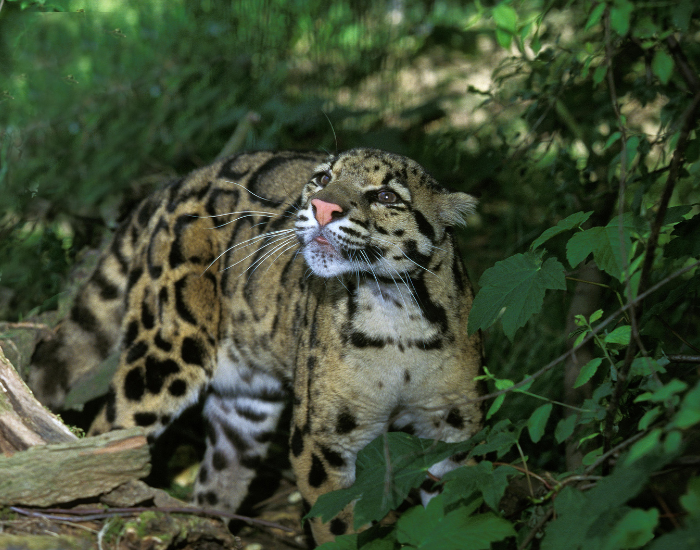
The beautiful coat that gives the clouded leopard its name is not decorative, it is an evolutionary survival tool. Those irregular, dark-edged cloud like patterns break up the animal’s outline against the dappled light of a rainforest habitat. From a few meters away, a resting clouded leopard on a mossy branch simply vanishes.
During a survey in peninsular Malaysia I once walked directly beneath a camera trap that had photographed a clouded leopard seventeen minutes earlier. I never saw a thing. That is exactly how these solitary animals survive alongside tigers and leopards in the same forest.
3. They Have the Longest Canine Teeth, Relative to Skull Size, of Any Living Cat
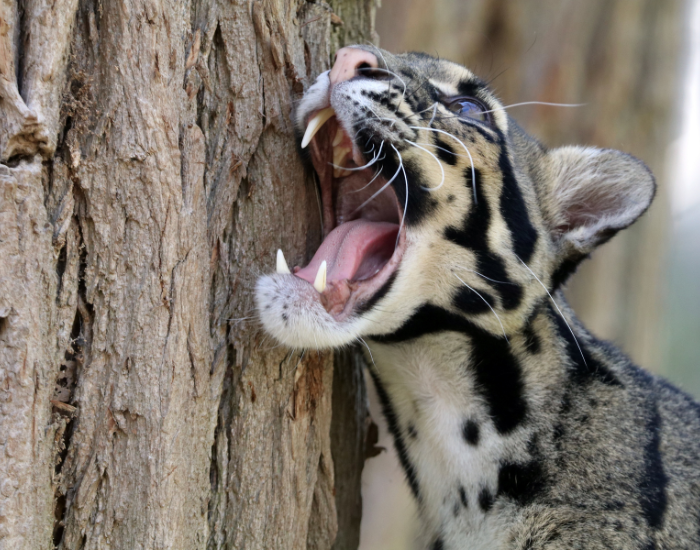
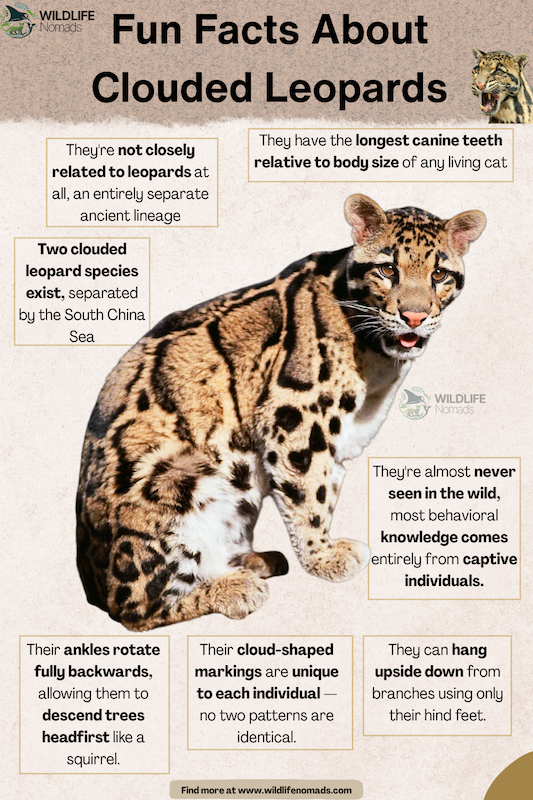
This is the fact that stops students cold whenever I teach it. Clouded leopards have canine teeth up to two inches long, proportionally the longest of any modern cat, and the closest living analog to the extinct sabertooth cat. Their jaws open to almost 100 degrees, far wider than a lion’s or tiger’s.
Interestingly, those jaws wider than any other cat give them a unique killing bite. They can take down prey twice the size of themselves, including small deer and wild pigs, by using that long reach to puncture the neck.
4. They Are the Most Arboreal of the Big Cats
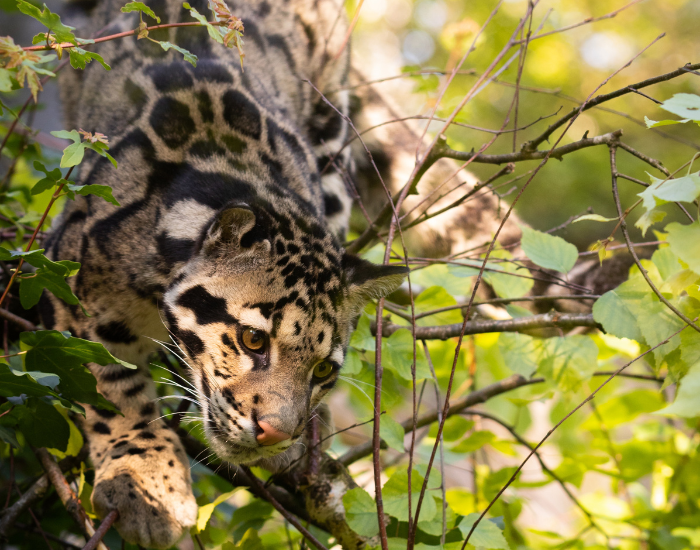
The clouded leopard is often called the tree tiger of Asia, and the nickname is earned. Their short legs, large and dexterous paws, and an exceptionally long tail — almost as long as the body itself, turn them into living climbing machines. A thick tail acts as a counterbalance as they run along tree limbs.
I have watched footage of a female cat descend a vertical trunk headfirst, a trick shared only with the margay of the Americas. They can also climb upside down beneath horizontal branches and hang upside down from their hind paws while feeding. Few animals in the cat family move through the canopy this fluidly.
5. Their Tail Is an Evolutionary Marvel
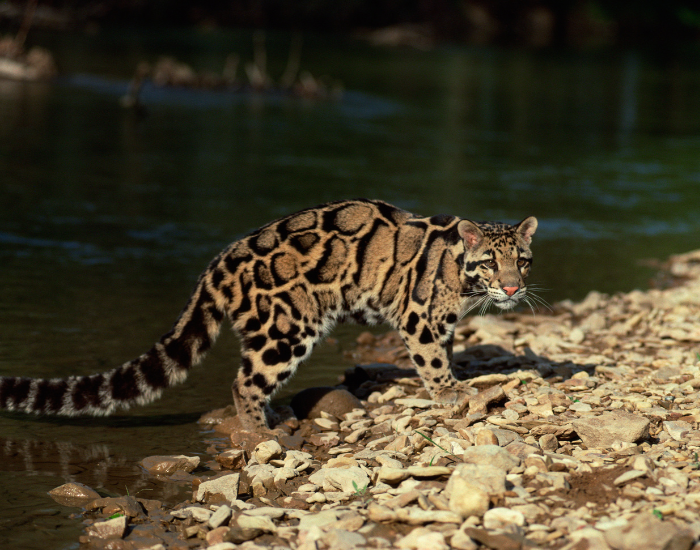
That long tail is not just for show. In adult clouded leopards it can measure up to 90 centimeters, essentially the same size as the torso. It functions as a rudder when they leap between tree branches and as a stabilizer when they walk along narrow limbs.
By contrast, ground-dwelling cats like jaguars have much shorter tails. If you ever want a quick field ID between clouded leopard neofelis and another cat species in Southeast Asia, the tail is your giveaway.
6. Females Give Birth to Small Litters in Hidden Dens
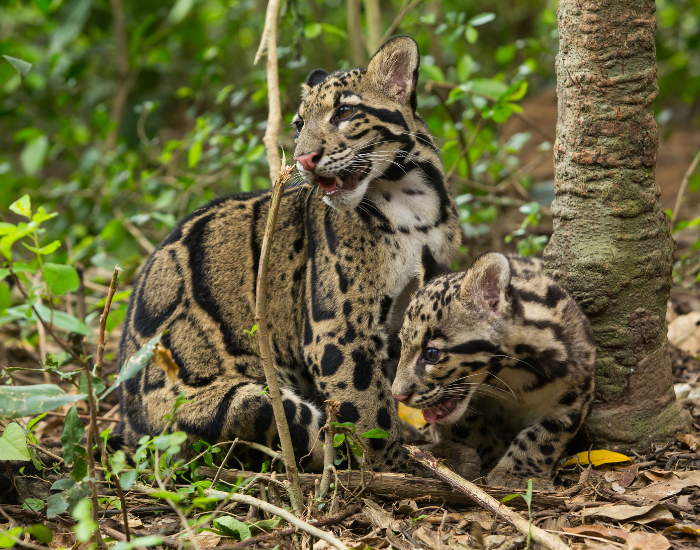
Female clouded leopards have a gestation period of around 85 to 93 days. They typically give birth to a litter of one to five cubs, though a litter of one or two is most common. Clouded leopard cubs are born blind, weighing about 150 to 280 grams, and are hidden in dense vegetation or hollow trees.
7. Cubs Reach Adult Coloration Surprisingly Late
Newborns have solid dark spots, not the signature clouds. Their teeth begin to emerge around five weeks, and the young are fully weaned by about three months. Full adult coloration does not appear until roughly six months, and tooth development continues well past that.
Cubs stay with their mother until around ten months of age, learning to hunt wild pigs, small deer, and other small cats. Females reach sexual maturity at an early age of about two years — relatively fast for such a large, arboreal predator.
8. They Are Among the Most Elusive Cats on Earth
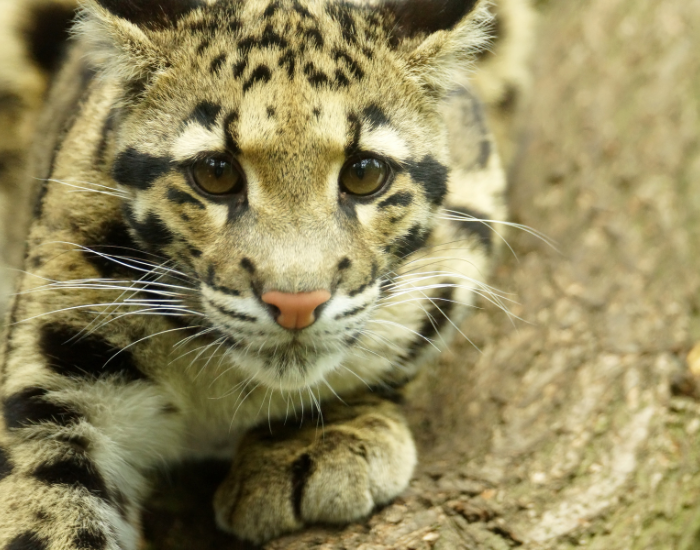
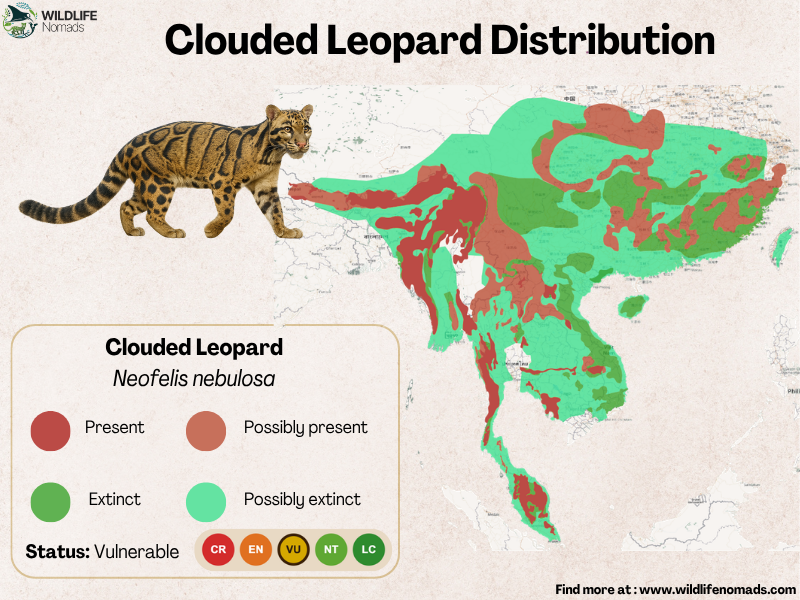
Clouded leopards live across a patchy range from eastern India through southern China, mainland Southeast Asia, Peninsular Malaysia, and down into the Sunda islands. Yet almost no one sees them.
Camera-trap density studies suggest fewer than ten thousand mature individuals remain in the wild, making them a genuinely vulnerable species. Their preference for dense primary and secondary forests, combined with their nocturnal habits and tree-based lifestyle, makes direct observation nearly impossible.
9. They Don’t Roar Like Lions… They Moan
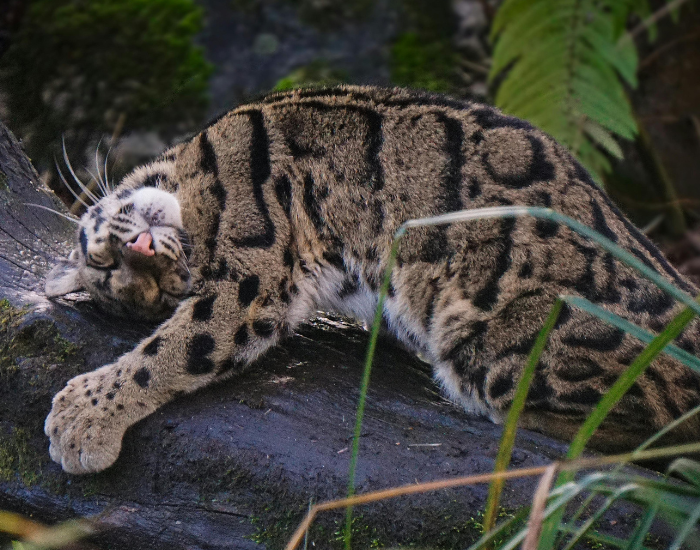
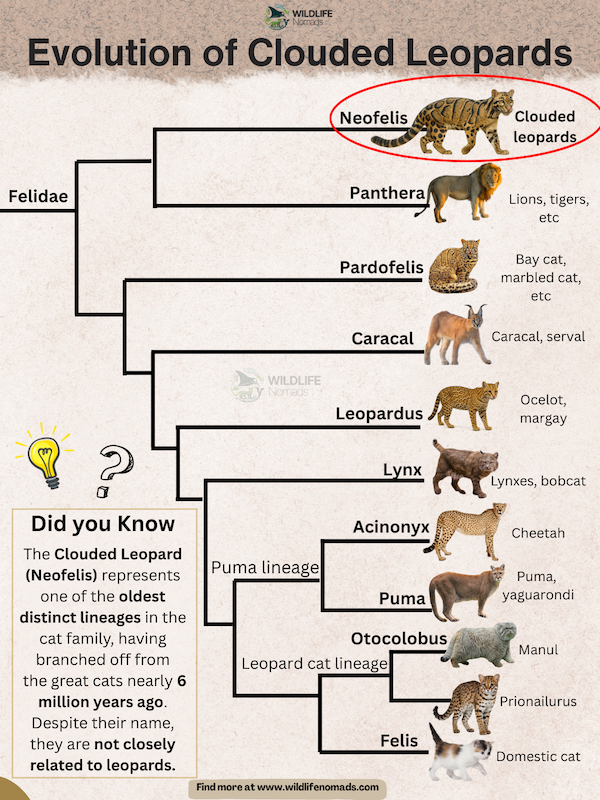
Clouded leopards are not classified with the “true” big cats in the genus Panthera, but they are not small cats either. They occupy a weird middle ground within the Carnivora family. They cannot produce the full-throated roar of a lion or tiger, but they do produce a distinctive low moaning roar used during the breeding encounter.
I once recorded one of these vocalizations at a rescue center in Sabah, and it sounded less like a roar than a drawn-out, haunting sigh. It is one of the most unusual sounds in the cat family.
10. Habitat Loss Is Their Greatest Threat
Across their range, habitat loss and habitat destruction from palm oil plantations, logging, and agricultural expansion are fragmenting the forests these cats need. In Borneo alone, more than 30 percent of primary forest has been cleared since the 1970s. Mainland clouded leopard populations in southern China and Vietnam may already be functionally extinct.
According to the IUCN, both Neofelis species are listed as Vulnerable. The Sunda clouded leopard faces additional pressure because its island range leaves it nowhere to retreat. Without urgent conservation efforts, we could lose one or both species within a few human generations.
11. Illegal Wildlife Trade Is Pushing Them Closer to the Edge
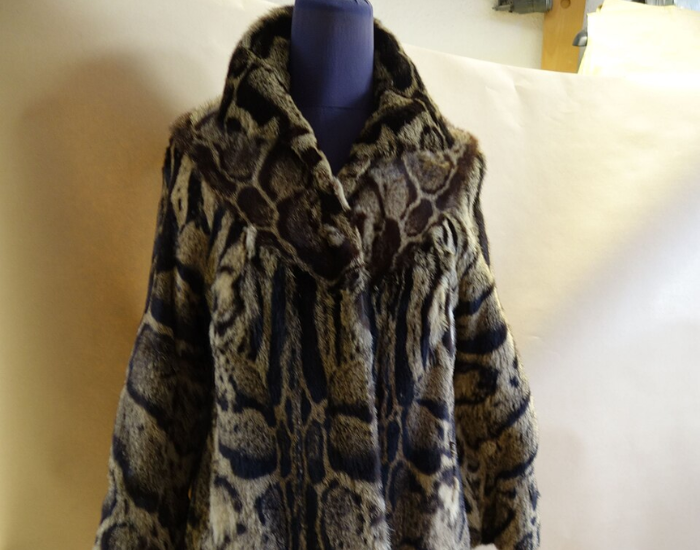
Clouded leopards are illegally hunted for their strikingly beautiful coat, for bones used in traditional medicine, and for teeth that surface in illegal trade markets alongside tiger parts. The so-called mint leopard coloration — a rare pale morph reported in captivity, has also fueled demand in the exotic pet trade.
Seized pelts in Laos usually pass through wildlife trade networks stretching into southern China. Local communities are often caught in the middle, with few economic alternatives to poaching. Programs that build predator proof goat corrals and pay villagers to monitor camera traps are quietly making a difference, but they remain underfunded.
12. Protecting Clouded Leopards Means Protecting Entire Forests
This is the fact I always finish on. You cannot protect clouded leopards without protecting the rainforest habitat they share with gibbons, hornbills, sun bears, and countless other species. They are what ecologists call an umbrella species, safeguard them, and you safeguard everyone beneath the canopy with them.
Conservation efforts led by Panthera, WWF, and local NGOs across Borneo, Sumatra, and mainland Southeast Asia now combine camera-trap monitoring, anti-poaching patrols, and community partnerships. When these programs work, they save not just one cat but entire ecosystems.

Frequently Asked Questions About Clouded Leopards
Adult clouded leopards weigh between 11 and 23 kilograms (25 to 50 pounds), with males roughly twice the size of the smallest females. Body size ranges from about 70 to 110 centimeters, plus a tail of similar length. Male clouded leopards are consistently larger than females but still smaller than a leopard or jaguar.
In the wild, clouded leopards live approximately 11 to 13 years. In captivity, where threats from human activity are absent, they can reach 15 to 17 years. Breeding success in zoos remains low because males sometimes injure females during mating.
Clouded leopards live across Southeast Asia, from the Himalayan foothills of eastern India and Nepal through Myanmar, Thailand, Laos, Vietnam, southern China, Peninsular Malaysia, Borneo, and Sumatra. They prefer dense primary and secondary forests, but camera traps have also recorded them in mangroves and highland grasslands.
They are ambush predators that hunt wild pigs, small deer, monkeys, porcupines, and birds. Their exceptionally long canine teeth let them tackle prey larger than themselves, though most meals are smaller animals taken from tree branches or the forest floor.
A Legacy in the Canopy
The clouded leopard is proof that evolution can still surprise us — an ancient, almost dreamlike cat with saber-long teeth, cloud-painted fur, and the agility of a squirrel. If we lose it, we lose one of the last living bridges between the extinct sabertooth cat and the modern cat family. Go find a good documentary, support a reputable conservation group like Panthera or WWF, and if you ever trek through the forests of Borneo or northern Thailand, walk quietly — one of these ghosts might already be watching you from above.
If this piece sparked your curiosity, share your thoughts in the comments below. You might also enjoy my deep dives on the animal jaguar, the tiny and fierce sand cat, and the stunning ocelot — three more wild cat species worth knowing.
References:
Buckley-Beason, V. A., Johnson, W. E., Nash, W. G., Stanyon, R., Menninger, J. C., Driscoll, C. A., O’Brien, S. J. (2006). Molecular evidence for species-level distinctions in clouded leopards. Current Biology, 16(23), 2371–2376. https://doi.org/10.1016/j.cub.2006.08.066
Bursell, M. G., Dikow, R. B., Figueiró, H. V., Dudchenko, O., Flanagan, J. P., Aiden, E. L., Goossens, B., Nathan, S. K. S. S., Johnson, W. E., Koepfli, K. P., & Frandsen, P. B. (2022). Whole genome analysis of clouded leopard species reveals an ancient divergence and distinct demographic histories. iScience, 25(12), 105647. https://doi.org/10.1016/j.isci.2022.105647
Grassman, L., Lynam, A., Mohamad, S., Duckworth, J. W., Bora, J., Wilcox, D., Ghimirey, Y. (2016). Neofelis nebulosa. The IUCN Red List of Threatened Species. https://dx.doi.org/10.2305/IUCN.UK.2016-1.RLTS.T14519A97215090.en
Hearn, A. J., Ross, J., Bernard, H., Bakar, S. A., Hunter, L. T. B., & Macdonald, D. W. (2016). The first estimates of Sunda clouded leopard density from Sabah, Malaysian Borneo. PLoS ONE, 11(3), e0151046. https://doi.org/10.1371/journal.pone.0151046
Kitchener, A. C., Beaumont, M. A., & Richardson, D. (2006). Geographical variation in the clouded leopard, Neofelis nebulosa, reveals two species. Current Biology, 16(23), 2377–2383. https://doi.org/10.1016/j.cub.2006.10.066
Macdonald, D. W., Bothwell, H. M., Hearn, A. J., Cheyne, S. M., Haidir, I., Hunter, L. T. B., Cushman, S. A. (2018). Multi-scale habitat selection modeling identifies threats and conservation opportunities for the Sunda clouded leopard. Biological Conservation, 227, 92–103. https://doi.org/10.1016/j.biocon.2018.08.027
Mohamad, S. W., Rayan, D. M., Christopher, W. C. T., Hamirul, M., Mohamed, A., Lau, C. F., & Siwan, E. S. (2015). The first description of population density and habitat use of the mainland clouded leopard Neofelis nebulosa within a logged-primary forest in South East Asia. Population Ecology, 57(3), 495–503. https://doi.org/10.1007/s10144-015-0494-1
Wilting, A., Christiansen, P., Kitchener, A. C., Kemp, Y. J. M., Ambu, L., & Fickel, J. (2011). Geographical variation in and evolutionary history of the Sunda clouded leopard (Neofelis diardi) with the description of a new subspecies from Borneo. Molecular Phylogenetics and Evolution, 58(2), 317–328. https://doi.org/10.1016/j.ympev.2010.11.007




.jpg)