
Years ago, on a field trip to a quiet biological station, our class set out on a misty morning hike through the woods. Halfway down a trail lined with tall weeds and shrubs, one of my classmates froze and pointed. There, suspended between two branches, hung a glistening orb web. At the center sat the most striking arachnid I had ever encountered — a plump spider with a bright orange abdomen that practically glowed in the half-light.
I had no idea what species I was looking at. My classmates filled me in within seconds: a marbled orb weaver, sometimes called a pumpkin spider. That single encounter stuck with me for years. It became one of those vivid field memories that quietly shapes how you notice the natural world.
This species, scientifically Araneus marmoreus, is one of the most photogenic orb weavers in North America and Europe. In this guide, I’ll share 12 things every nature lover should know about this colorful spider — from its biology and web design to why it shows up everywhere right around Halloween.
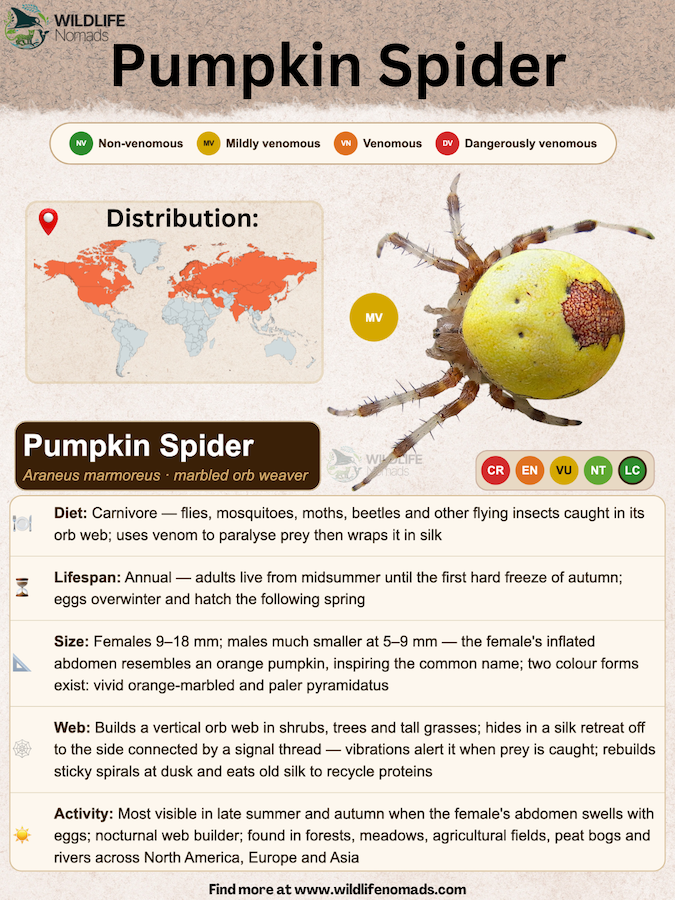
1. Why We Call It the Pumpkin Spider
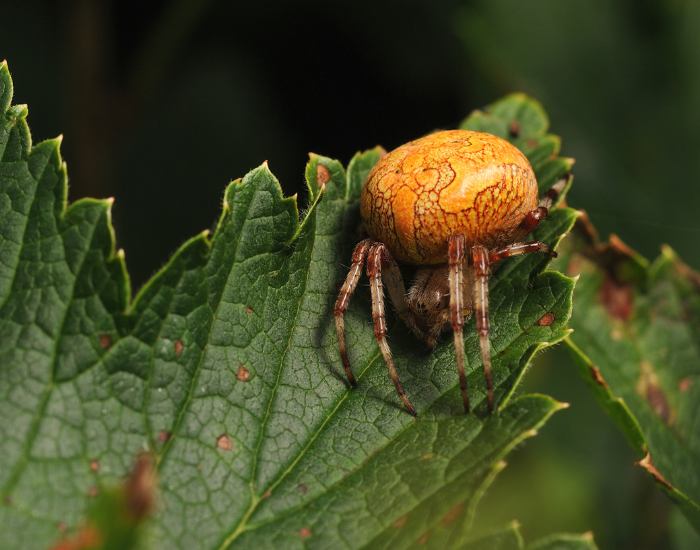
The nickname comes straight from the look of the female’s plump abdomen. By late summer, the females swell with eggs, and the body rounds into a near-perfect flattened sphere of orange. From a few feet away, it really does look like a tiny pumpkin tucked into the leaves.
That timing also explains the Halloween association. By October, the females have reached peak size and color, just in time for trick-or-treaters and curious naturalists to spot them on porches and trails. The seasonal nickname stuck for good reason.
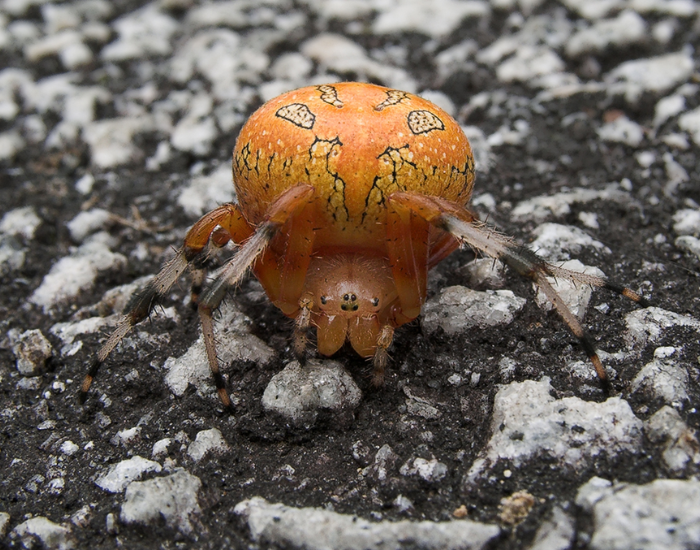
2. Meet Araneus marmoreus, the Marbled Orb Weaver
Araneus marmoreus belongs to the family Araneidae, the classic orb weavers. The species name “marmoreus” means marbled, a nod to the swirling pattern that decorates the abdomen.
You’ll find this species listed under several common names — pumpkin spider, marbled orbweaver, marbled orb weaver spider, even orange marbled orb weaver spider. They all refer to the same arachnid. The taxonomy is rock solid; only the nicknames vary.
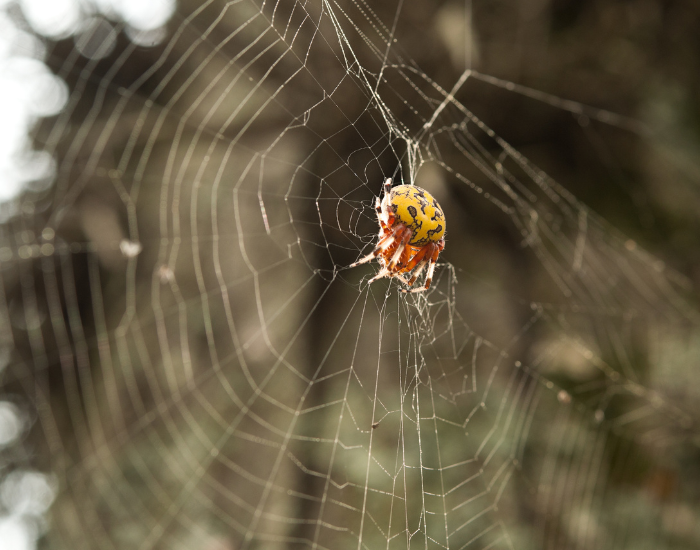
3. The Color Palette Is Wildly Variable
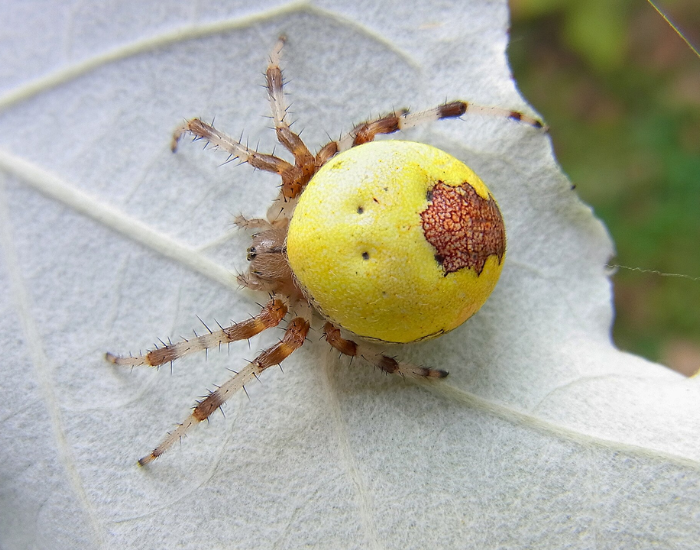
Most field guides showcase a textbook orange specimen. In reality, the species comes in a much wider range. Some individuals are pale yellow, others are a striking white and orange, and a few populations lean almost entirely brown.
Populations in parts of Europe trend yellow. North American populations across the Northern Rockies often show that classic burnt orange tone, while spiders found further east into North Dakota and the Great Lakes can run paler. In short, this is a colorful spider that refuses to be pinned down to one shade.
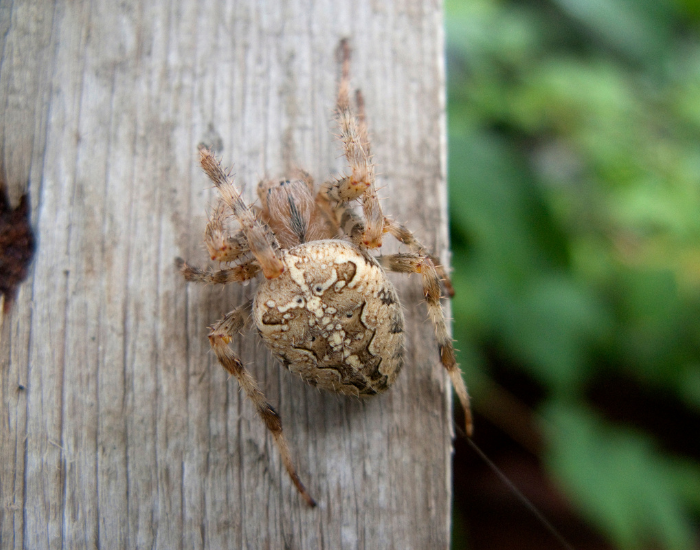
4. The Marbled Pattern, Up Close
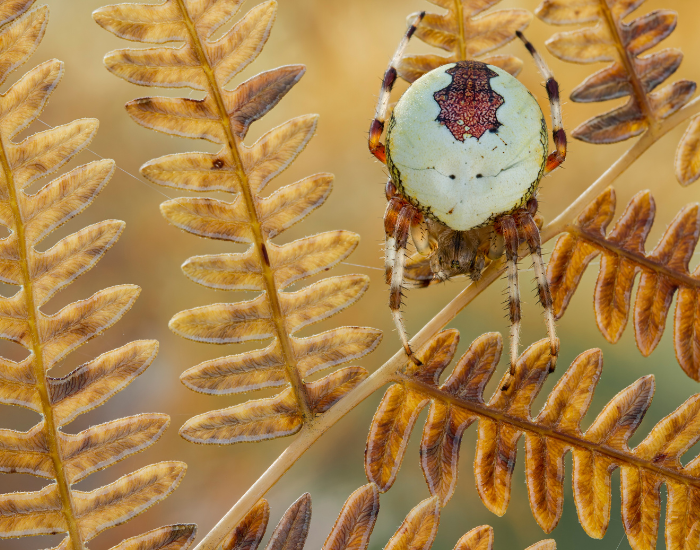
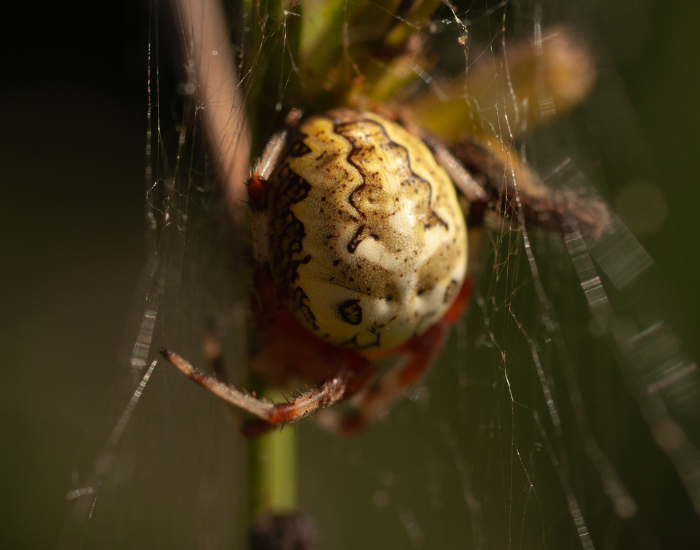
Look closely and you’ll see why “marbled” fits. The abdomen carries dark lines that swirl across the surface, and a distinct central dark line often runs straight down the middle. These dark lines break up the spider’s outline against bark and leaves, which probably helps it dodge birds and other predators.
In strong sunlight, the contrast between the orange field and the dark lines is downright artistic. It’s a reminder that even common species can be visually stunning when you take the time to actually look.
5. The Orb Web and the Signal Line
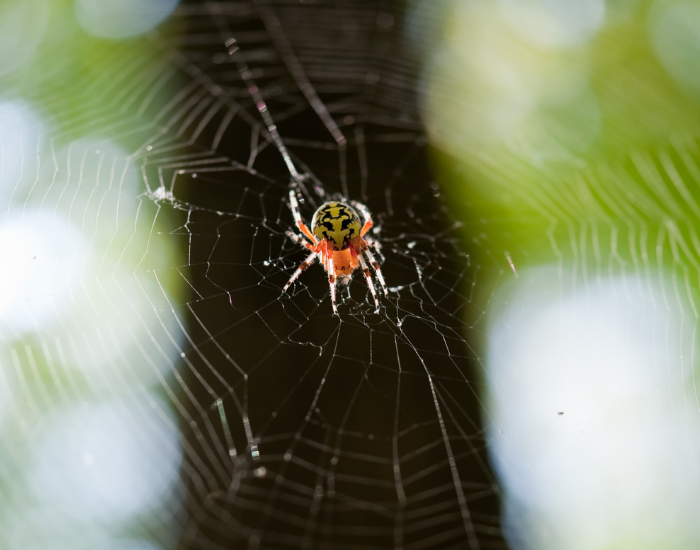
Like other orb weavers, araneus marmoreus builds a classic spoked web — a flat, sticky disk oriented vertically between two supports. Each web spans anywhere from a few inches to over a foot across, depending on body length and prey availability.
Here’s where it gets clever. The spider rarely sits in the center of the web during the day. Instead, araneus marmoreus hides in a silken retreat off to one side, often in leaves folded shut and bound with white silk formed into a tidy pouch. A single signal line runs from the retreat to the hub of the orb. When prey hits the sticky web, that line vibrates, and the spider charges out.
6. The Retreat Is a Tiny Architectural Marvel
The leafy hideout is small but well engineered. The female draws two or three leaves together with silk and binds them into a snug pouch. Inside, she sits with her front legs touching the signal thread, ready to bolt at the first vibration.
I’ve watched footage of researchers gently parting these retreats during surveys. The spider freezes for a beat, then sprints back to the orb within seconds. The whole system — orb, retreat, line — is a beautiful example of efficient ambush predation.
7. Where to Find a Marbled Orbweaver
This species favors wooded areas, forest edges, tall weeds, and the dense shrubs that line trails and stream banks. The marbled orbweaver often lives near trees, where leaves provide cover for the silken retreat. Garden fences, brushy hedgerows, and grassy lines bordering open fields also host plenty of webs.
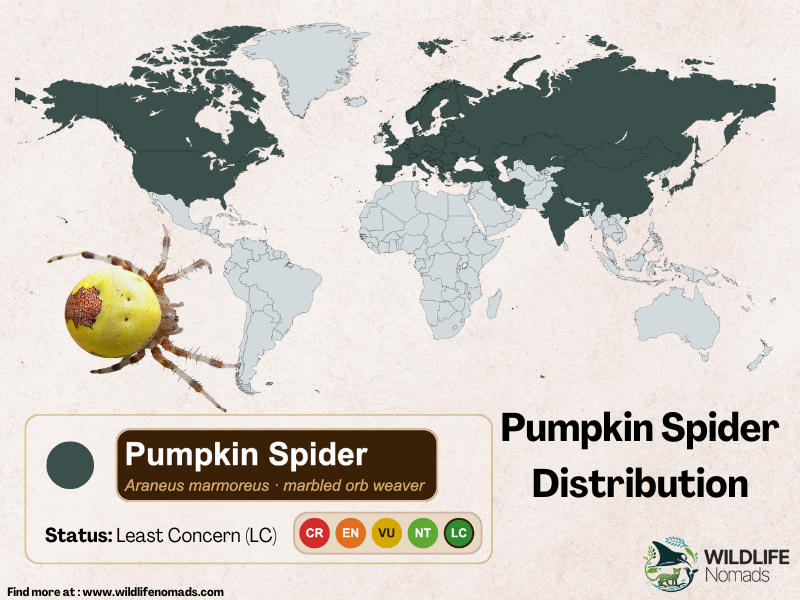
Geographically, araneus marmoreus is widespread. It thrives across most of the United States and Canada and ranges throughout much of Europe. Wherever there are trees, mid-height brush, and flying insects nearby, this spider finds a home.
8. The Egg Sac Strategy
By the end of summer, mated females begin producing egg sacs. Each sac is a fluffy ball of silk holding several hundred eggs, generally deposited on a thread attached to bark, the underside of a branch, or leaves folded into a protective pocket.
The female guards her egg sacs as long as she can. Once the first hard freeze hits, the adults die. The eggs persist through winter, insulated by the silk case. By spring, the next generation hatches in tiny clouds, ballooning away on threads to disperse across the landscape.
9. A One-Year Life Cycle Tuned to the Seasons
These spiders live fast. After immature spiders emerge in spring, they molt repeatedly through mid summer, reaching adulthood by August or September. Mating, web tending, and egg sac production all happen between summer’s end and the first hard freeze.
By October, the females are at their largest and most photogenic. By November in most of the range, the adults are gone. The next generation waits inside silk until spring, hidden in tucked leaves and bark crevices.
10. Sexual Dimorphism: Big Females, Tiny Males
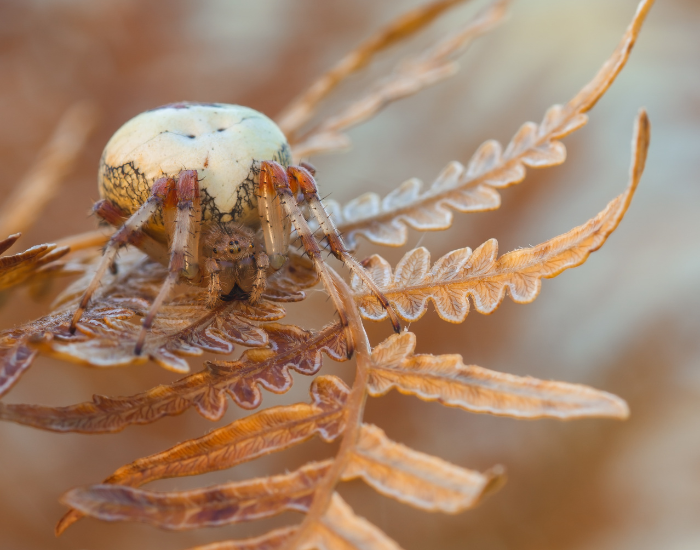
Females dwarf males in this species. A mature female can reach a body length of roughly 14 to 18 millimeters, while males stay around half that size. The female carries the iconic orange abdomen; males are slimmer and more brown overall, with proportionally longer legs adapted for searching out mates.
Mating is risky for males. They approach a female’s web carefully, tap out signals on her silk, and bolt if she shows any sign of aggression. Many males die shortly after mating from sheer exhaustion or post-copulation predation, while the females persist into late fall to finish guarding the egg sacs and feeding through the cool nights.
11. What’s on the Menu
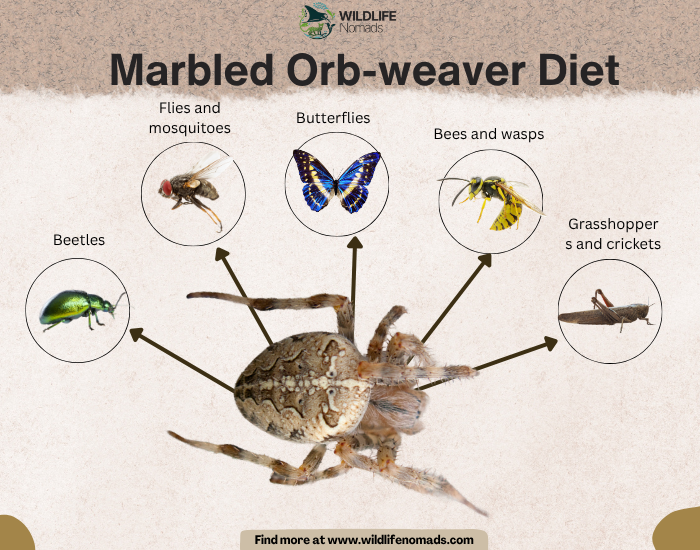
These spiders are generalist insect hunters. Flies make up a huge portion of the diet, along with moths, beetles, wasps and bees, and other small flying prey. The sticky web catches insects by the dozens during peak activity, and the female wraps each one in silk before feeding.
Many insect pests — mosquitoes, leafhoppers, and certain crop-damaging flies, get caught in marbled orb weaver webs every season. That makes araneus marmoreus a quietly important player in local ecosystems, especially around farms and gardens.
12. Beneficial Predators That Are Harmless to Humans
Despite the dramatic look, this spider is harmless. The bite is mild, the venom is no concern for healthy adults, and the animal would much rather flee than fight. Most encounters end with the arachnid bolting back into its hideout.
Better still, marbled orb weavers belong squarely in the category of beneficial predators. By thinning populations of flies and other pests around woods, gardens, and farms, they play an important role in nature that often goes unnoticed. The next time you spot one on a fall hike, consider it good news for the local ecosystem.
Frequently Asked Questions
No. These spiders are harmless to humans. The bite is rare and mild, comparable to a bee sting at worst. They are shy and almost always retreat to their silken hideout when disturbed rather than confront a person, pet, or curious hiker.
They eat flying insects caught in their orb web. The diet centers on flies, moths, mosquitoes, and other small insect pests. As beneficial predators, marbled orb weavers help keep many insect pests in check around forests, gardens, and farms.
They earn the nickname because the female’s abdomen swells into a round, orange shape during fall — much like a small pumpkin. The seasonal timing also lines up with Halloween, which cemented the name in popular culture.
Marbled orb weavers live across North America and Europe, from the Northern Rockies to North Dakota and well beyond. They prefer forests, edges, tall weeds, and trails where shrubs and trees support their webs.

Pumpkin Spiders | Credit: Wildlife Nomads
A Spider Worth Watching
The pumpkin spider is far more than a Halloween mascot. It’s a colorful spider with a clever web design, a one-year life cycle tuned to the seasons, and a quietly important role as a beneficial predator. From that one trail-side encounter at a biological station years ago to every photo I’ve studied since, I keep coming back to how much there is to learn from a single arachnid tucked into folded leaves.
Next time you walk a wooded trail in fall, look for a flattened sphere of orange suspended between two branches. You may have just met araneus marmoreus, and now you’ll know exactly what you’re looking at.
If you want to compare notes with other spiders I’ve written about on Wildlife Nomads, dig into my hobo spider facts guide, the roundup of the biggest spiders in the world, or my deep dive on the Australian funnel-web spider. Drop a comment with your own marbled orb weaver sighting — I’d love to hear where you found yours.
References:
Blackledge, T. A., Scharff, N., Coddington, J. A., Szüts, T., Wenzel, J. W., Hayashi, C. Y., & Agnarsson, I. (2009). Reconstructing web evolution and spider diversification in the molecular era. Proceedings of the National Academy of Sciences, 106(13), 5229–5234. https://doi.org/10.1073/pnas.0901377106
Bradley, R. A. (2013). Common spiders of North America. University of California Press. https://doi.org/10.1525/9780520954502
Eberhard, W. G. (1990). Function and phylogeny of spider webs. Annual Review of Ecology and Systematics, 21, 341–372. https://doi.org/10.1146/annurev.es.21.110190.002013
Hesselberg, T. (2010). Ontogenetic changes in web design in two orb-web spiders. Ethology, 116(6), 535–545. https://doi.org/10.1111/j.1439-0310.2010.01764.xSensenig, A., Agnarsson, I., & Blackledge, T. A. (2010). Behavioural and biomaterial coevolution in spider orb webs. Journal of Evolutionary Biology, 23(9), 1839–1856. https://doi.org/10.1111/j.1420-9101.2010.02048.x