
I’ll never forget the first time I spotted a velvet ant in the university entomology archives. Even pinned to a board, it looked like it was screaming a warning. Vibrantly, almost artificially red-orange and covered in what looked like plush velvet — yet nicknamed the “Cow Killer.”
How can something that cute carry such a brutal reputation?
Today, we’re diving into the most fascinating facts about the velvet ant, separating myth from science. You’ll understand exactly why this tiny “ant” is actually one of the most sophisticated wasps on the planet.
10 Facts About the Velvet Ant
1. Velvet Ants Are Actually Wasps
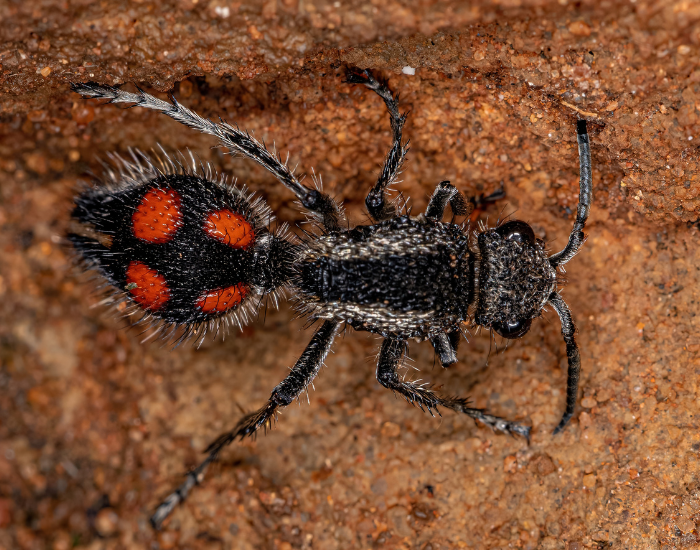
First things first: the velvet ant is a liar. Despite its name and the wingless, scurrying appearance of the females, it is not an ant at all. The velvet ant belongs to the family Mutillidae — a group of wasps, with over 7,000 velvet ant species described worldwide, found on every continent except Antarctica.
Their resemblance to ants is a brilliant evolutionary trick. Velvet ants are among the most striking insects due to their vivid appearance, which helps deter predators. By mimicking ants, the females gain recognition from predators already familiar with the ant’s defensive reputation.
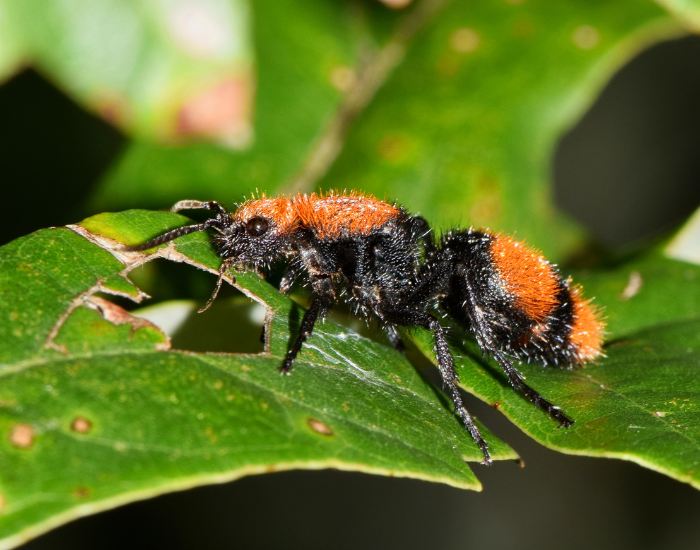
In North America, the most famous is Dasymutilla occidentalis, the red velvet ant — also called the “Cow Killer.” Not all velvet ants that look similar are the same species or belong to the same mimicry ring, and only a few species deviate from the typical mimicry patterns through unique adaptations or camouflage.
True ants are social insects that form colonies with queens and workers. Velvet ants, however, are the ultimate lone rangers. Unlike true ants, velvet ants are solitary insects and do not form colonies. You won’t find a velvet ant nest. Instead, you’ll find a single wingless female wandering across sandy soils or open fields, purposeful and relentless. Because of their hairy, ant-like bodies, velvet ants are often mistaken for ‘fuzzy ants’ or ‘hairy ants’.
2. Males and Females Look Completely Different
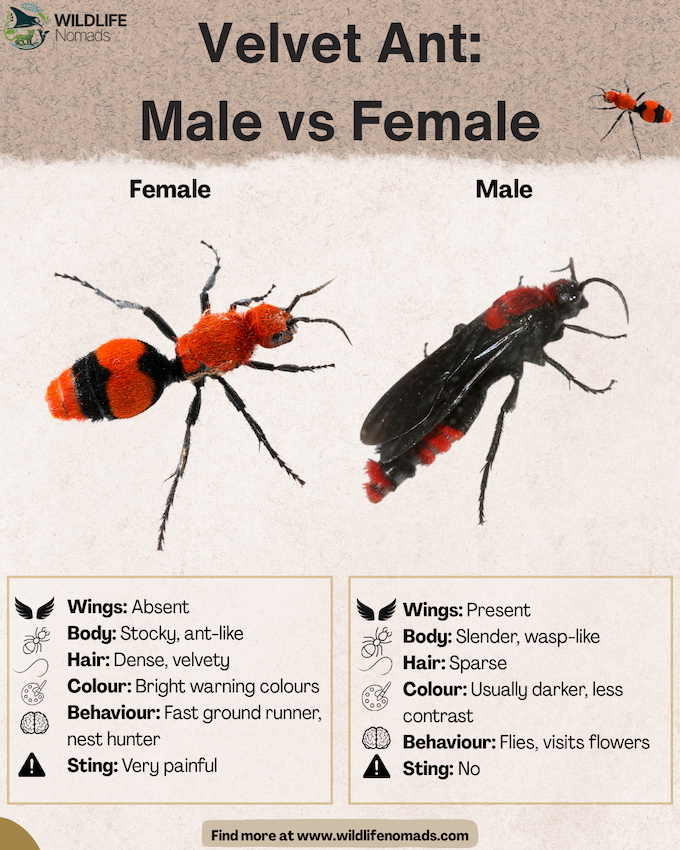
Velvet ants display extreme sexual dimorphism — the males and females look like entirely different insects.
Females are wingless females, covered in dense hair, and look strikingly like large, hairy ants. Their lack of wings isn’t a handicap. It helps them burrow into the nests of ground nesting bees without getting tangled.
Males have wings, are wasp-like in appearance, and spend their time flying low over grass, searching for female pheromones. Males do not sting and are completely harmless. Here’s a useful field tip: if you see a “velvet ant” flying, it’s a male. However, if it’s on the ground — give it a wide berth. That female carries a stinger nearly half the length of her entire body.
3. Their Bright Colors Are a Warning Signal
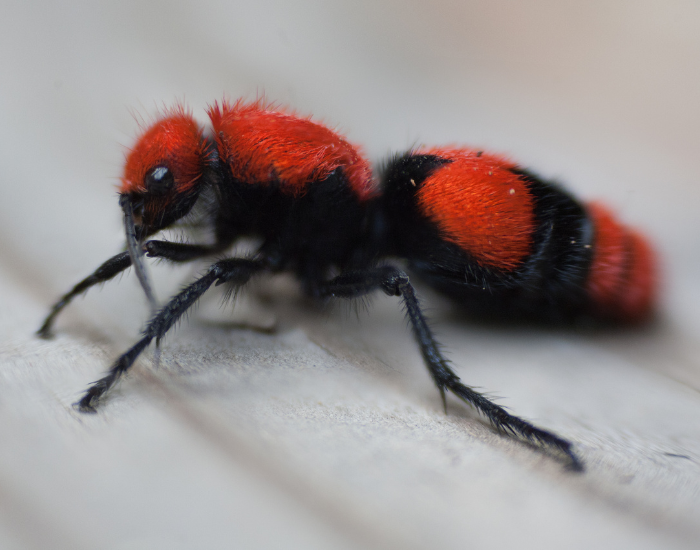
The red velvet ant uses what biologists call aposematic coloring — a high-contrast visual signal to potential predators. That bright red and orange pattern against a jet-black body broadcasts: “Eating me is a decision you will deeply regret.”
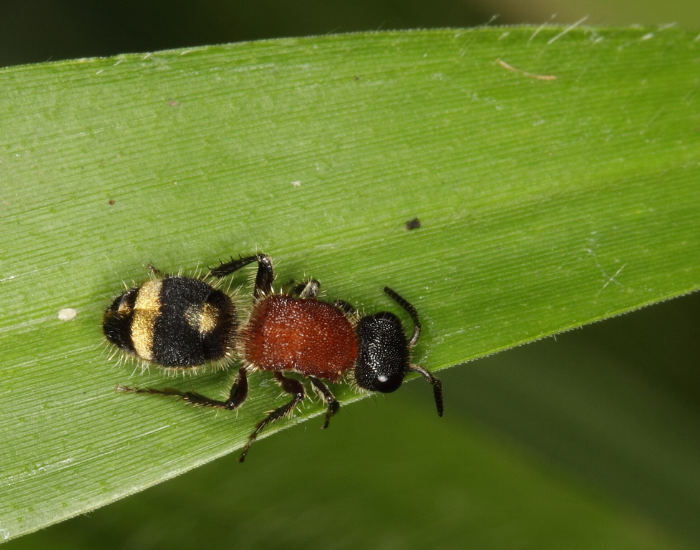
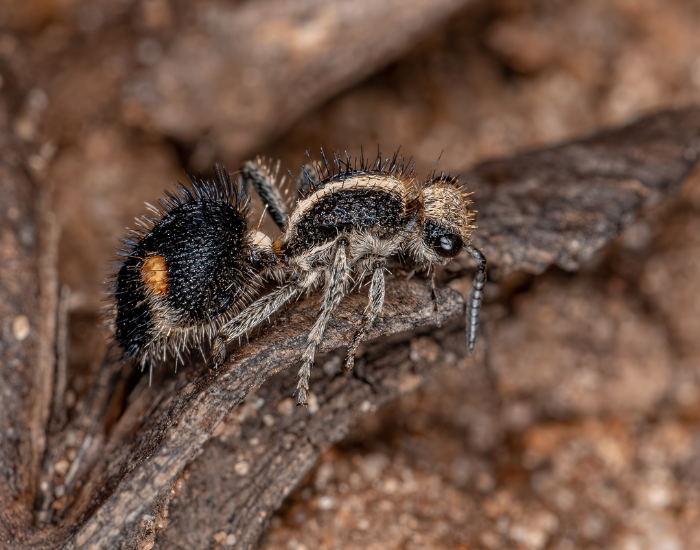
Most velvet ant species display bold patterns of red, orange, yellow, or white. Dasymutilla occidentalis is the most recognizable with its vivid orange-red coat. However, some species display yellow or white patches, and all follow the same warning logic.
In my field studies, I’ve watched birds approach a velvet ant, pause, and simply walk away. The aposematic signal works remarkably well.
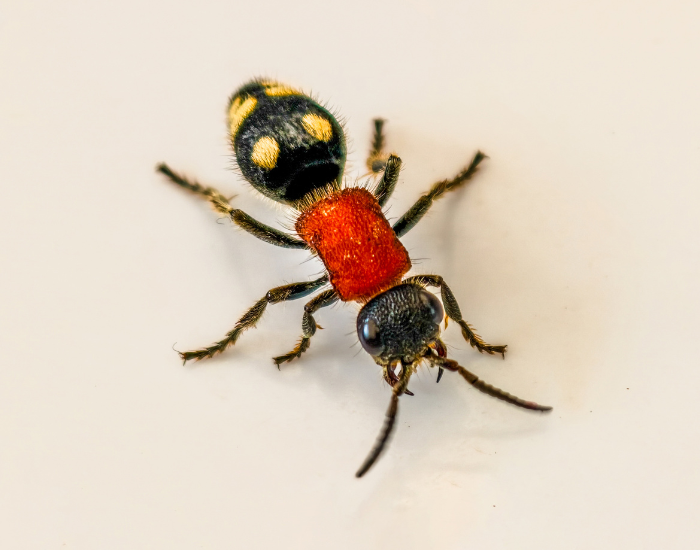
4. The “Cow Killer” Sting: Myth vs. Reality
Can a velvet ant actually kill a cow? No. Not even close. The Cow Killer nickname is pure Southern American folklore — a colorful exaggeration of just how painful the sting is.
On the Schmidt Sting Pain Index, the velvet ant sting ranks 3 out of 4. Entomologist Justin Schmidt famously described it as “explosive and long-lasting” — comparable to hot oil spilling across your hand. The pain is intense and real, lasting 30 minutes to an hour.
However, the venom itself is actually less toxic than that of a common honeybee. The danger to human life is generally low unless you carry a specific allergy to wasp or bee venom. The sting causes extreme pain, a raised red mark, and localized swelling — but it won’t kill a 1,500-pound animal.
First aid if stung:
- Wash the area immediately with soap and water
- Apply a cold compress to manage the burning sensation
- Take an over-the-counter antihistamine for itching or mild swelling
- Seek medical attention immediately if breathing difficulty or throat swelling occurs
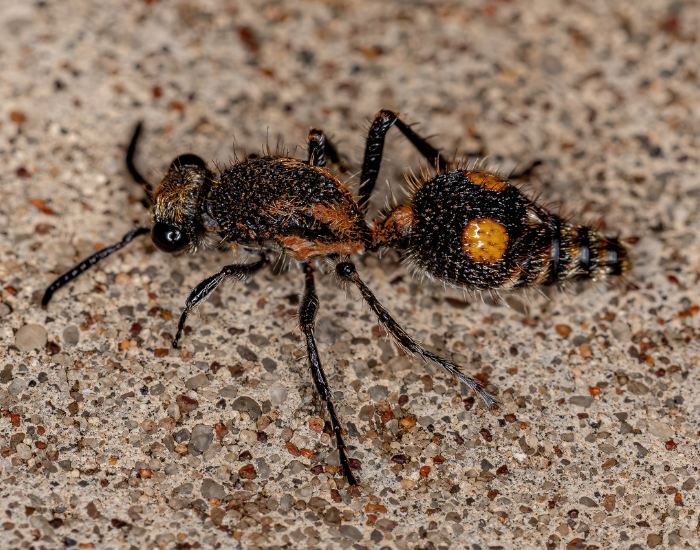
5. They Have a Near-Indestructible Exoskeleton
The velvet ant is essentially a tiny armored tank. Their exoskeleton is so thick and hard that entomologists in the lab genuinely struggle to get a pin through them. Trying to crush one on sandy soils is nearly impossible.
This toughness is a critical defense. Female velvet ants regularly invade the nests of ground nesting bees and other wasps — hosts that will absolutely try to sting or bite the intruder. The hardened exoskeleton allows females to simply ignore these attacks and go about their work.
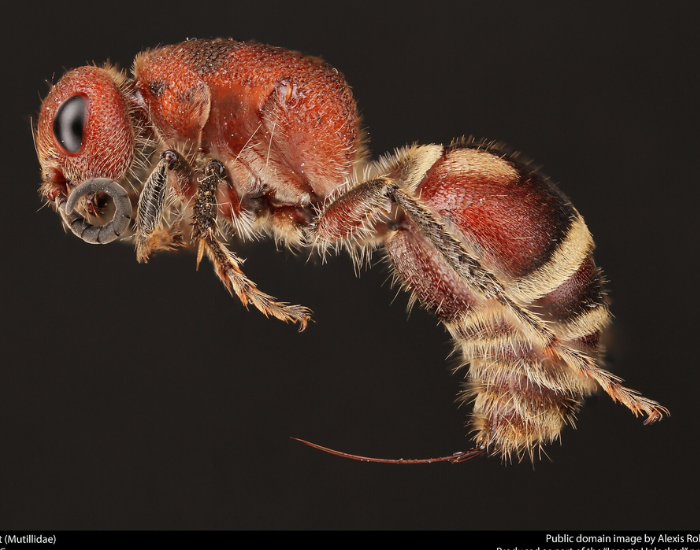
6. They Squeak to Warn You (Stridulation)
If you disturb a velvet ant, it produces a faint but distinct squeaking sound. This comes from a stridulatory organ on the abdomen — a built-in alarm system. The velvet ant is giving you a multi-sensory warning: visual (bright red), auditory (squeaking sound), and physical (nearly impossible to crush).
Ignore all three, and you get the fourth: the sting.
The squeaking sound is surprisingly loud for such a small insect. Many hikers in Texas, Arizona, or the Carolinas have been startled by it before noticing the brightly colored insect at their feet.
7. Their Life Cycle Is a Parasitic Horror Story
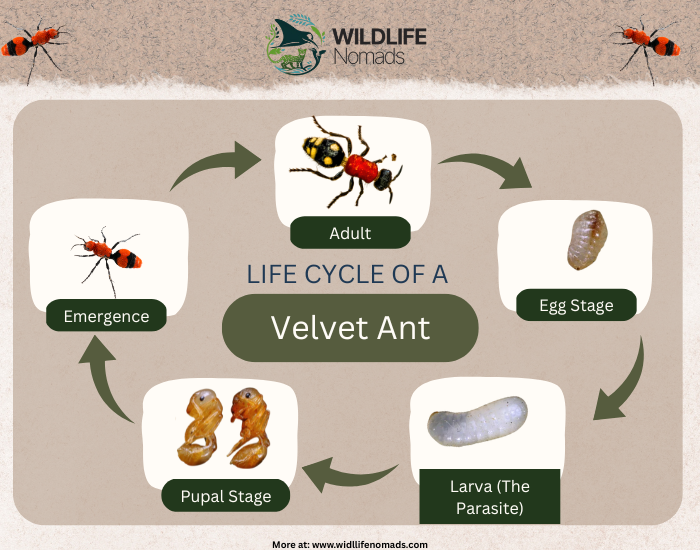
The life cycle of a velvet ant depends entirely on the hard work of other insects. Velvet ants are parasitoids — a specialized category of external parasites.
The female spends her days searching for the nesting sites of ground nesting bees, cicada killers, and other wasps. Once she finds a nest, her tough exoskeleton protects her from the defensive attacks of the host insects. She then breaks into the nesting chambers and lays her eggs directly on the host’s larvae or pupae.
When the velvet ant larvae hatch, they consume the host larva while it is still alive. After finishing, they spin a cocoon inside the host’s chamber and complete their development. It’s a brutal, efficient system refined over millions of years of evolution.
8. They Form Mimicry Rings with Other Species
One of the most fascinating phenomena in velvet ant biology is the mimicry ring. Across North America, multiple species of velvet ants — some not closely related at all — have evolved to look nearly identical to one another.
These are Müllerian mimicry rings. By converging on the same bright red appearance, all these species collectively teach predators a single lesson: don’t eat the red, fuzzy, squeaking insects. The cost of a predator’s education is shared across many species, making the warning signal far more effective for everyone involved.
9. Where to Find Velvet Ants
Velvet ants thrive in the warmer, drier regions of North America. As mentioned before, in the United States, Dasymutilla occidentalis is most common across the Southern and Eastern states — from Connecticut south to Florida and west to Texas and California (California alone has about 100 species!).
They favor sandy soils and sandy areas along trails and roadsides, open fields and forest edges, and warm summer months, particularly July through September.
If you’re hiking in Texas, Arizona, New Mexico, or the Carolinas during summer, keep an eye on the ground. Because velvet ants are solitary insects, you’ll rarely see more than one at a time — just a single fuzzball scurrying through the dust at surprising speed.
10. They Play a Real Role in the Ecosystem
Velvet ants shape their ecosystems. As parasitoids, they help regulate the populations of ground nesting bees, cicada killers, and other solitary wasps. This prevents any single insect species from dominating a habitat.
Their role in complex food webs — and the fact that so many unrelated insects have evolved to mimic their appearance — shows just how ecologically significant velvet ants are. They are, in a very real sense, keystone insects in the sandy habitats they call home.
Are Velvet Ants Dangerous?
Velvet ants are not aggressive insects. They will not seek you out or chase you. The sting only occurs when a velvet ant is stepped on or handled, it is purely defensive.
Their venom, while capable of causing extreme pain, is not medically dangerous for most people. The greatest risk comes from anaphylaxis — a severe allergic reaction — which is rare but possible in individuals with wasp or bee venom allergies. Always monitor yourself after a sting, and seek medical attention if symptoms worsen rapidly.
FAQs about the Velvet Ants
On the Schmidt Sting Pain Index, it rates 3 out of 4 — one of the most painful stings in North America. Most people describe a burning, throbbing sensation lasting 30 minutes to an hour.
They’re most common in Southern and Eastern states — Florida, Texas, Georgia, the Carolinas — but their range extends west to California and north to Connecticut. They thrive anywhere with sandy areas and warm summers.
They sting. While they have mandibles, the feared “Cow Killer” reputation comes entirely from the long stinger on the female’s abdomen. They rarely bite humans.
Yes — “cow killer ants” is a common nickname for Dasymutilla occidentalis, the red velvet ant. Despite the name, they are wasps — not ants — and cannot kill large animals like cows.
Observe it from a safe distance. If it’s indoors, use a jar and a piece of paper to relocate it gently. Never pick one up with bare hands.
The Ant That Never Was
The velvet ant is one of nature’s most perfectly engineered insects. Aposematic warning colors, a near-indestructible exoskeleton, a stridulatory alarm, a legendary sting, and a parasitic life cycle that’s equal parts brutal and brilliant — every feature tells a story of millions of years of evolution.
The next time you spot a flash of bright red scurrying across a sandy trail, take a moment to appreciate the glorious velvet ant. Just remember the golden rule: admire the velvet, don’t touch the ant.