In my decade as a biologist, I’ve studied birds in Sweden and dove with sea turtles and sharks on remote tropical beaches. But if you ask me which animal truly feels like it’s from another planet, I won’t hesitate: it’s the cuttlefish. And I know, I always say this, but bear with me.
I remember a specific afternoon in Coron, Palawan. We were wrapping up a snorkel at one of the most vibrant reefs I’ve ever seen, the kind of place where parrot fish crunch audibly on coral and puffer fish hover like clumsy balloons. Just as I was about to head back to the boat, a shape materialized out of the blue. It was a white, almost translucent cuttlefish, hovering effortlessly. It didn’t bolt; it just watched me with those strange, pulsing eyes, shifting its skin color in tiny, rhythmic waves. Even after diving across Thailand and Indonesia, that single encounter in the Philippines remains my “gold standard” for cephalopod magic.
Whether you’re a fellow “nature nerd” or just curious about what’s lurking in the shallow waters, here is everything you need to know about these intelligent invertebrates.
1. What is a Cuttlefish? (Spoiler: It’s Not a Fish)
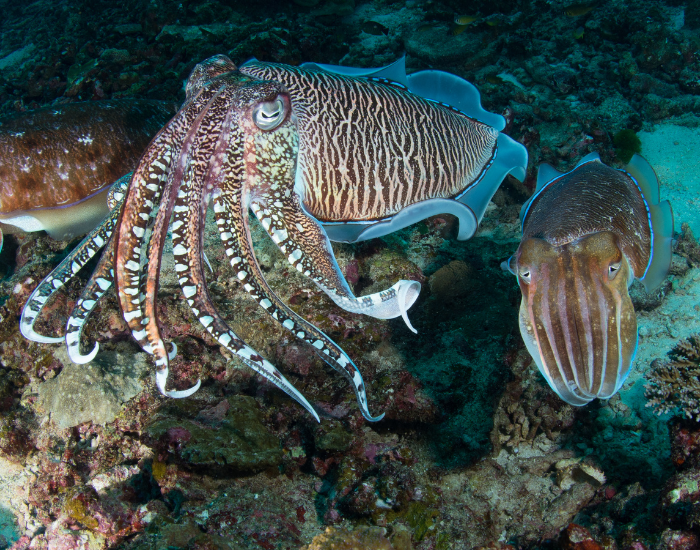
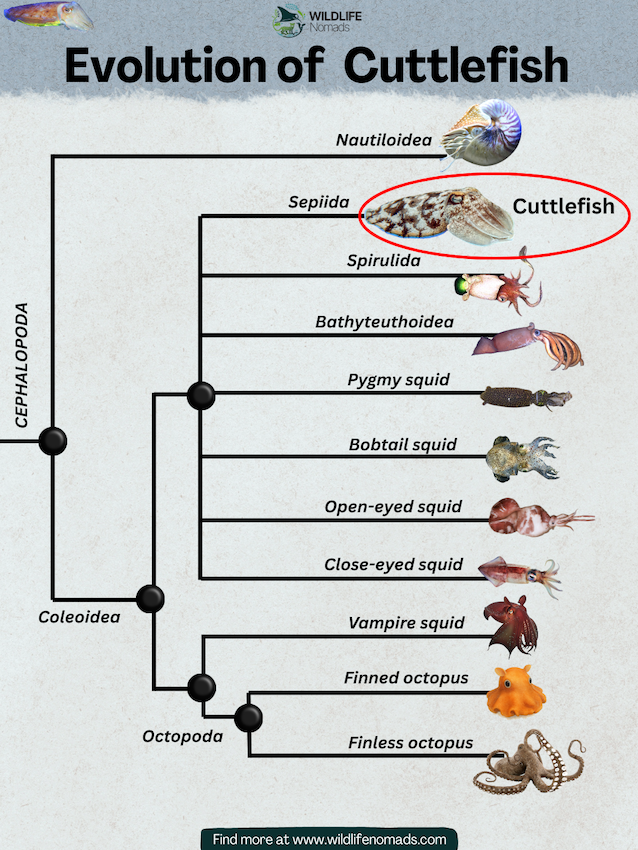
Despite the name, a cuttlefish isn’t a fish at all. It is a marine mollusk, specifically a cephalopod, making it a close cousin to theoctopus and squid. The name comes from the Old English cudele, which refers to their internal shell called the cuttlebone. The ink produced by them is historically important as a pigment called sepia, which was widely used in art and dyeing for its rich, durable color.
Biologically, they belong to the order Sepiida. While they share the “head-foot” body plan of all cephalopods, they are easily distinguished by their unique cuttlefish characteristics: a thick, shield-shaped body and a fringe-like fin that runs along the entire length of their mantle, allowing for incredibly precise maneuvering. Common species such as Sepia officinalis are widely distributed and frequently encountered, especially in the Mediterranean and North Atlantic. There are many other cuttlefish species with varying characteristics, highlighting the diversity within this group.
2. There are Over 120 Species of Cuttlefish
If you thought there was just one “common” type, think again. Scientists have identified more than 120 species of cuttlefish worldwide. At least one species, such as Sepia officinalis, has been the subject of extensive behavioral research. These range from the tiny Pfeffer’s flamboyant cuttlefish, which is only a few centimeters long and brightly colored, to the massive Giant Australian Cuttlefish (Sepia apama). Other cuttlefish exhibit a wide variety of behaviors and adaptations.
Most of these species are found in temperate ocean waters and tropical reefs across South Asia, Western Europe, and Australia. Their range extends from shallow waters to depths of about 3,000 feet for some spsecies, in both tropical and temperate regions. Interestingly, you won’t find them in the Americas, they are strictly Old World residents.

3. Cuttlefish Have Eight Arms and Two Tentacles
A common point of confusion is how many limbs these creatures actually have. Cuttlefish have eight arms covered in suckers, but they also possess two tentacles.
While the eight arms are used for grasping prey and manipulation, the two tentacles are specialized hunting tools. They are usually tucked away in pouches under the eyes and can be shot forward with lightning speed to snatch a crab or small fish. It’s the ultimate biological “switchblade.”

4. They Possess “Alien” Blue Blood
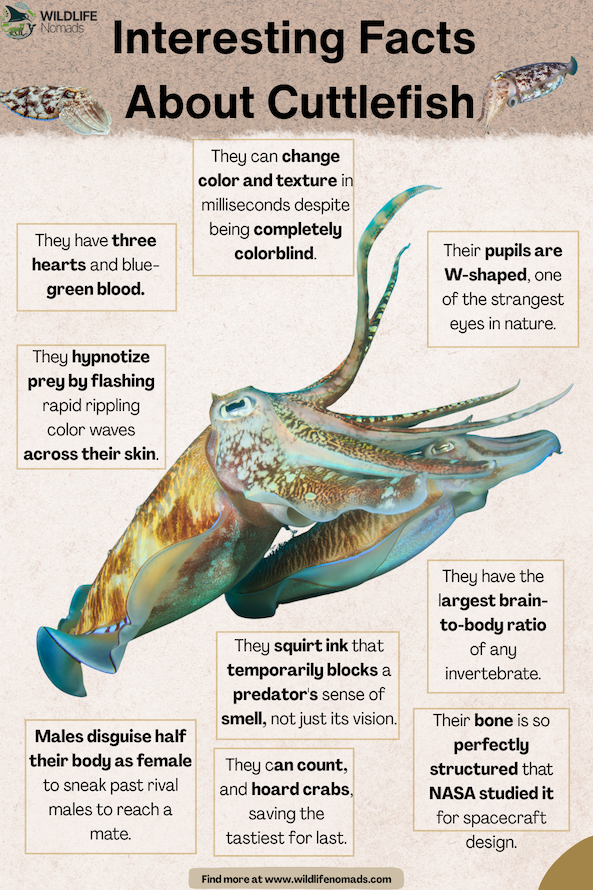
One of the most interesting facts about cuttlefish is their circulatory system. Unlike humans, who use iron-based hemoglobin to carry oxygen, cuttlefish use a copper-based protein called hemocyanin.
This results in blue blood that is greenish-blue when oxygenated. To circulate oxygenated blood efficiently, they don’t rely on just one heart; they have three hearts. Two branchial hearts pump blood to the cuttlefish’s large gills, while a single systemic heart handles the rest of the body.
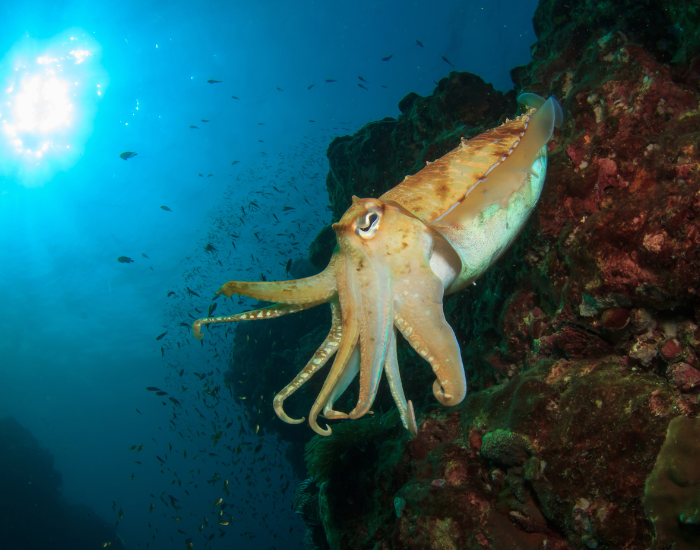
5. The Incredible Cuttlefish Change Color in Milliseconds
If you’ve ever seen a cuttlefish in the wild, you’ve seen the world’s best camouflage. They use millions of specialized cells called chromatophores to change their skin color and pattern in less than a second.
Underneath the chromatophores are iridophores and leucophores, which reflect light to create metallic greens, blues, and silvers. They don’t just change color to hide; they use “passing clouds” of rippling color to mesmerize prey during hunting, and flash aggressive patterns to communicate with rival males during the mating season.
6. Their Vision is Beyond Our Comprehension
Cuttlefish have some of the most sophisticated eyes in the animal kingdom. The cuttlefish’s eyes are highly developed and feature distinct W-shaped pupils, a unique structure that sets them apart from vertebrate eyes. These large, W-shaped pupils allow cuttlefish to see almost entirely behind them and enable them to perceive polarized light, even though they are technically colorblind.
By detecting the orientation of light, they can see transparent prey (like shrimp) that would be invisible to us. This high-contrast vision is likely how they coordinate their complex camouflage despite not seeing “color” the way we do. Basically a creataure with a unique sense of sight.

7. Cuttlefish Use “Jet Propulsion” to Evade Predators
While they usually hover using their fringe-like fin, when threatened, they switch to high gear. By forcefully squirting water out of a siphon in their body cavities, they use jet propulsion to shoot backward away from danger. These behaviors are key defense mechanisms that help cuttlefish evade predators.
To make their escape even more effective, they release cuttlefish ink. This ink, also known as sepia, doesn’t just create a smoke screen; it can form a “pseudomorph”, a cloud of ink roughly the same size and shape as the cuttlefish, to trick potential predators like larger fish and sharks. Historically, sepia has also been used as a pigment.
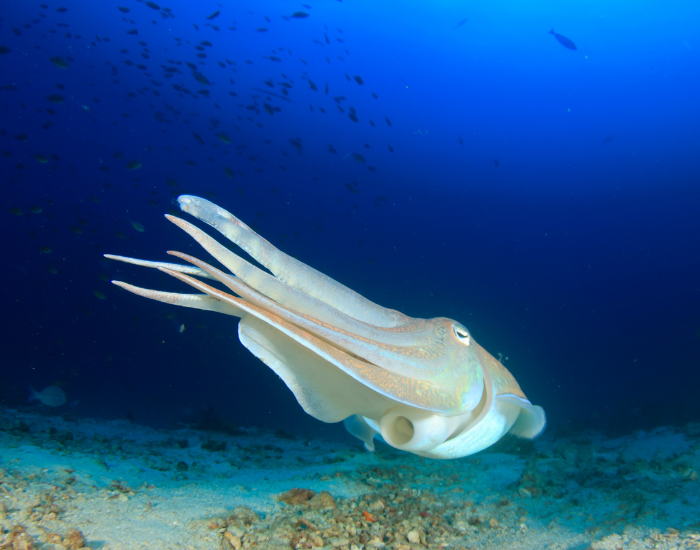
8. The Cuttlebone is a Masterpiece of Engineering
The most famous information about cuttlefish often involves the cuttlebone. This internal shell is porous and filled with tiny holes. By adjusting the ratio of liquid to gas within these chambers, the cuttlefish can change its buoyancy.
It works exactly like a submarine’s ballast tanks, allowing them to hang weightless in the water column or sink to the ocean floor without using any energy. This is why you often find white, chalky bones washed up on the beach—they are the buoyant remains of a cuttlefish die-off or predation event.

9. Male Cuttlefish Use “Cross-Dressing” as a Mating Tactic
In the world of the Giant Australian Cuttlefish, competition is fierce. Large males compete for females by flashing aggressive patterns. Males may even flash different colors on each side of their body, directing one pattern at the female and another at rival males on the other flank to communicate or deceive.
However, smaller “sneaker” males have developed a brilliant trick: they mimic the skin color and arm posture of females cuttlefish.
While the big males are busy fighting, the “cross-dressing” sneaker male swims right past them, gets close to the female, and successfully mates. Studies show this tactic has a surprisingly high rate of reproductive success.
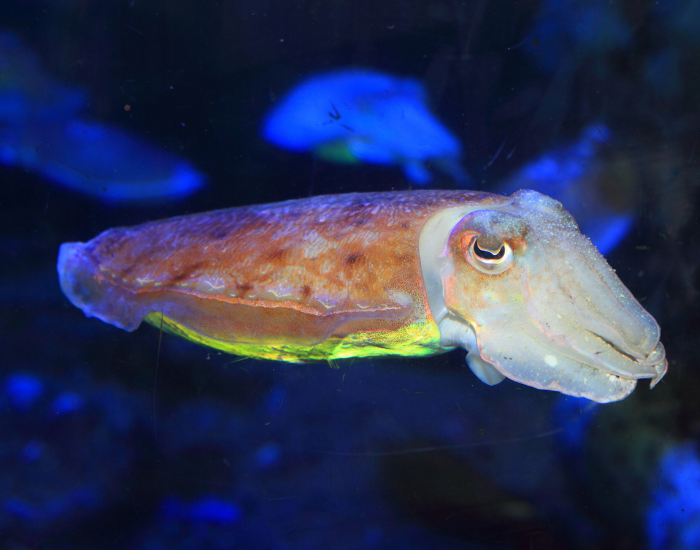
10. They are Among the World’s Intelligent Invertebrates
Cuttlefish are the “smart kids” of the sea. Research published has shown that cuttlefish can pass an adapted version of the “marshmallow test”, a famous psychological experiment used on human children to measure self-control.
In these tests, cuttlefish would resist eating an immediately available but less desirable piece of king prawn, if they had learned that waiting would earn them their preferred meal: a live grass shrimp.
All six cuttlefish in the study demonstrated this self-control, tolerating delays of up to 130 seconds, comparable to what’s been observed in chimpanzees, ravens, and parrots. Researchers also found that the cuttlefish who waited longest performed best in separate learning tasks, suggesting a direct link between self-control and general intelligence, the first time such a link had been demonstrated in a non-primate species.
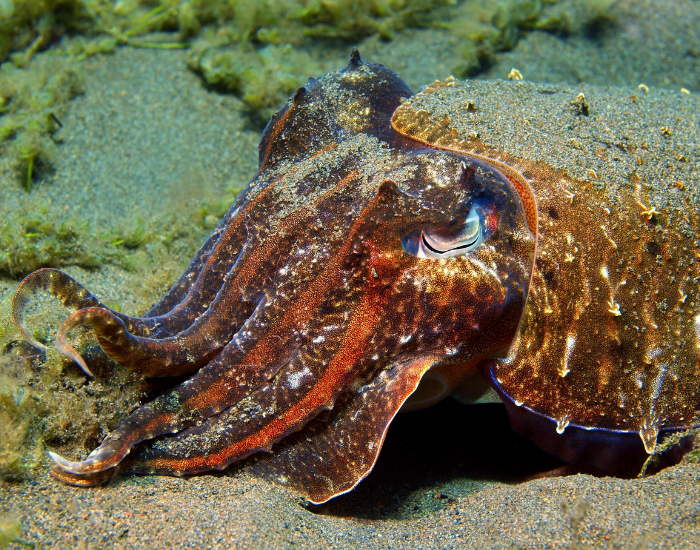
11. The Pharaoh Cuttlefish Can Mimic Hermit Crabs
The Pharaoh cuttlefish (Sepia pharaonis) takes mimicry to the next level. In certain environments, it will tuck its arms together to resemble the legs of a hermit crab and move across the seafloor with a distinctive “scuttle.”
This behavior helps them evade predators who aren’t interested in a hard-shelled crab and allows them to sneak up on their own prey, mostly crabs and small fish, without being detected.
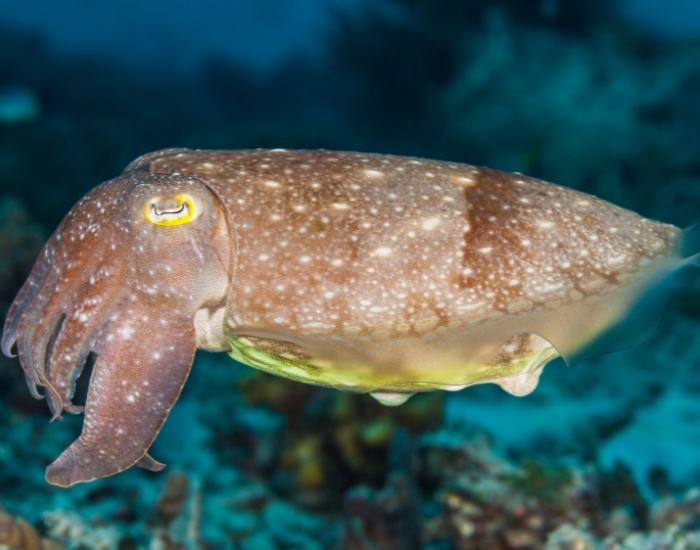
12. Climate Change and Ocean Acidification
As a biologist, I have to point out the challenges these animals face with climate change. Ocean acidification caused by increased carbon dioxide levels is a major concern.
Because the cuttlebone is made of calcium carbonate, more acidic water can make it harder for them to build their internal shells. While some studies suggest cephalopods are currently “blooming” due to warming waters, the long-term effects of changing chemistry on threatened species remain a critical area of study for the International Union for Conservation of Nature (IUCN).
Where Do Cuttlefish Live? Habitat and Distribution
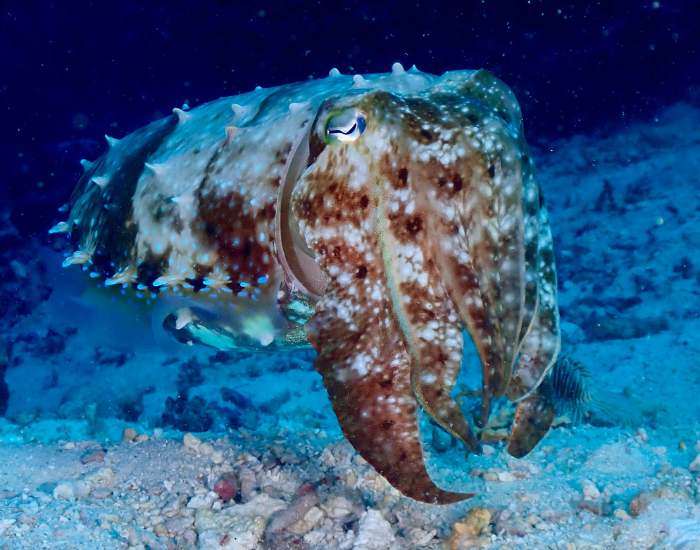
Cuttlefish are true globetrotters of the underwater world, if you’re not in the Americas, chances are there’s a species of cuttlefish lurking nearby. These fascinating creatures thrive in both tropical and temperate ocean waters, with their range stretching from the bustling reefs of South Asia to the rocky coasts of Western Europe and the Mediterranean
Australia is home to the legendary giant Australian cuttlefish (Sepia apama), famous for its spectacular mass gatherings, while the vibrant flamboyant cuttlefish can be spotted in Indonesian shallows, and the common cuttlefish (Sepia officinalis) is a familiar resident of European and North African shores.
What’s on the Menu? Diet and Foraging Secrets
When it comes to dining, cuttlefish are the ultimate carnivorous connoisseurs. Their menu is packed with variety: small fish, shrimp, crabs, and even other marine mollusks are all fair game. Thanks to their powerful beaks, cuttlefish can break hard crab shells with ease, giving them access to prey that many other predators can’t touch. Both male cuttlefish and females cuttlefish are equally skilled hunters, though they may use slightly different tactics depending on the situation or the season.
Armed with eight arms and two lightning-fast tentacles, cuttlefish are ambush specialists. They’ll lie in wait, perfectly camouflaged, before launching a rapid strike to snatch up their next meal. If a hunt goes awry or a larger predator appears, they can release a cloud of cuttlefish ink to distract predators and make a quick getaway. Some species, like the african cuttlefish and reaper cuttlefish, have even been observed preying on other cephalopods, including small octopuses and squid.

FAQ: Your Cuttlefish Questions Answered
A cuttlefish is a cephalopod mollusk known for its internal shell (cuttlebone), W-shaped eyes, and incredible camouflage abilities. Cuttlefish are generally solitary creatures.
Neither, but they are related! They are all cephalopods. Cuttlefish have a unique internal bone that squid and octopuses lack.
Yes, the Flamboyant Cuttlefish (Ascarosepion pfefferi) is highly toxic. Its muscles contain a unique toxin as potent as that of the blue-ringed octopus. But the toxin is found only in the muscle and is not injected in any form, making it poisonous (must be eaten) rather than venomous
Yes, in many cultures, common cuttlefish (Sepia officinalis) is a staple seafood, often served as “sepia” in Mediterranean cuisine.
Intelligent, Fragile, and Worth Protecting
The cuttlefish is more than just a master of disguise; it is a window into a completely different way of experiencing the world. From their blue blood to their intelligent decision-making, they remind us that the ocean still holds mysteries that defy our standard biological definitions.
Next time you’re snorkeling in shallow waters, keep an eye out for a pulsing light or a patch of sand that suddenly grows arms. You might just be meeting one of the smartest residents of the reef.
References:
Schnell, A. K., Boeckle, M., Rivera, M., Clayton, N. S., & Hanlon, R. T. (2021). Cuttlefish exert self-control in a delay of gratification task. Proceedings of the Royal Society B: Biological Sciences, 288(1946), 20203161. https://doi.org/10.1098/rspb.2020.3161
Hanlon, R. T., & Messenger, J. B. (2018). Cephalopod Behaviour (2nd ed.). Cambridge University Press. https://www.cambridge.org/core/books/cephalopod-behaviour/2D21474D460811C160EFDBA35796FAC0
Lopes, A. R., Faleiro, F., Rosa, I. C., Pimentel, M. S., Trubenbach, K., Repolho, T., Diniz, M., & Rosa, R. (2020). Cuttlefish buoyancy in response to food availability and ocean acidification. Biology, 9(7), 147. https://doi.org/10.3390/biology9070147
Amodio, P., Boeckle, M., Schnell, A. K., Ostojic, L., Fiorito, G., & Clayton, N. S. (2019). Grow smart and die young: Why did cephalopods evolve intelligence? Trends in Ecology & Evolution, 34(1), 45–56. https://doi.org/10.1016/j.tree.2018.10.010
Mäthger, L. M., Denton, E. J., Marshall, N. J., & Hanlon, R. T. (2009). Mechanisms and behavioural functions of structural coloration in cephalopods. Journal of the Royal Society Interface, 6(Suppl 2), S149–S163. https://doi.org/10.1098/rsif.2008.0366.focus
Brown, C., Garwood, M. P., & Williamson, J. E. (2012). It pays to cheat: Tactical deception in a cephalopod social signalling system. Biology Letters, 8(5), 729–732. https://doi.org/10.1098/rsbl.2012.0435
Fernandes Guerreiro, M., Oliveira Borges, F., Pereira Santos, C., & Rosa, R. (2023). Future distribution patterns of nine cuttlefish species under climate change. Marine Biology, 170(12), 159. https://doi.org/10.1007/s00227-023-04310-4