I found my first tardigrade in Sweden. On an exchange, my classmates and I took a short field trip to a biological station on the west coast. We scraped samples, carried them back, and worked through them under the microscope.
We found about five. The first walked into frame on eight stubby legs, unhurried. It was like finding a unicorn. You know the little animal exists. Then it is there, in a drop of water, doing its slow walk across the slide.
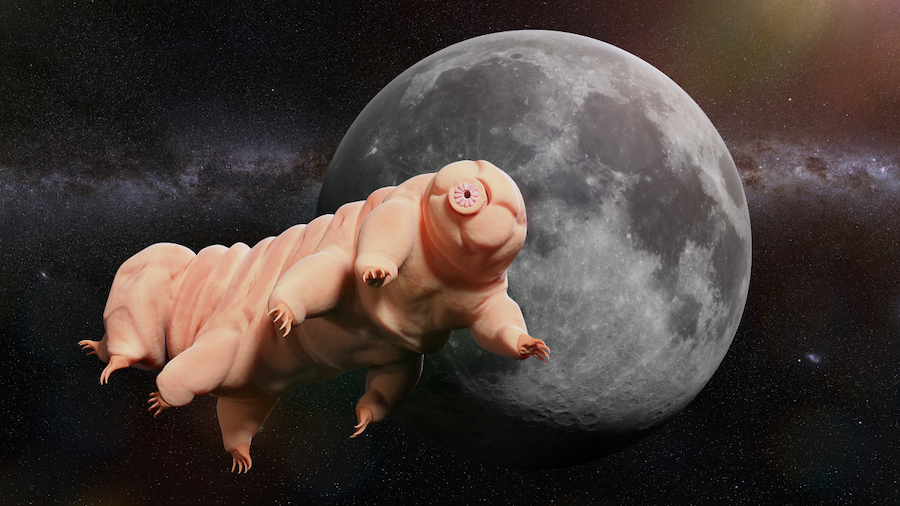
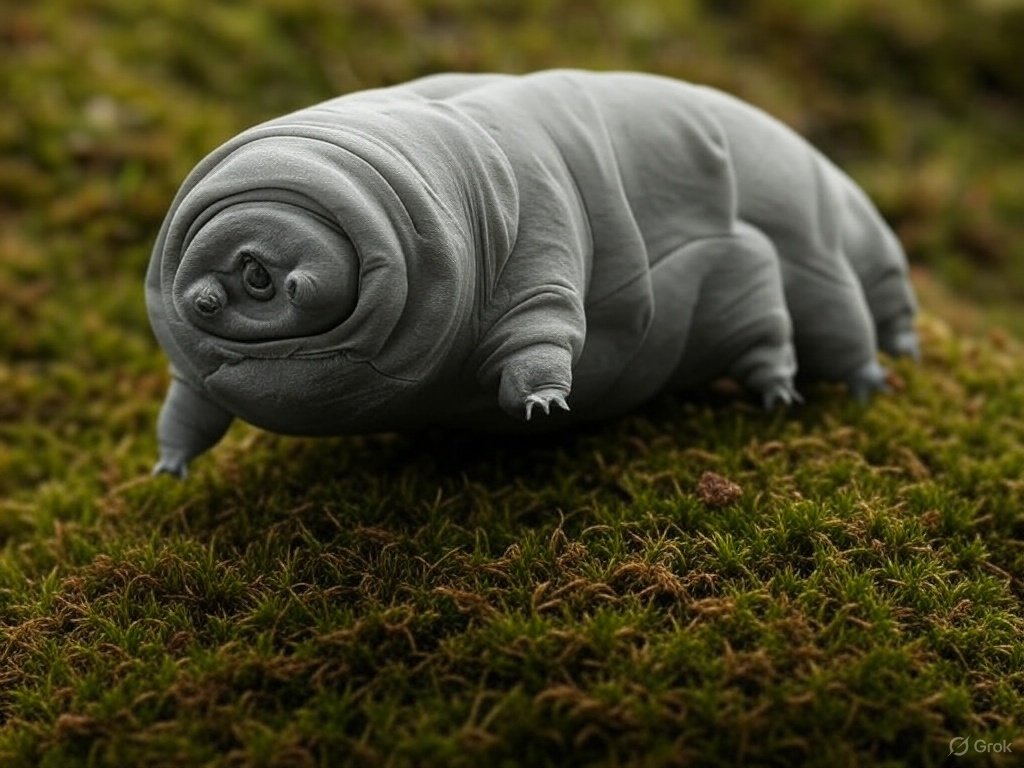
The tardigrade water bear goes by moss piglets too, and these microscopic animals have a fair claim to being the toughest creatures on Earth. They survive outer space, intense radiation and extreme environments that kill almost everything else. One widely repeated claim about them turns out to be wrong, though, and I come back to it below.
This guide covers 15 types of tardigrades. First, it helps to know where the water bear phylum sits.
Where the Water Bear Phylum Sits
Tardigrades form their own phylum, Tardigrada, with roughly 1,500 described species. They are not insects and not crustaceans. They belong to Panarthropoda, the group holding tardigrades, velvet worms and arthropods.
All three sit inside Ecdysozoa, the clade of animals that grow by moulting. Tardigrades have a chitinous cuticle and shed it as they grow, which is the shared trait that defines the group. They are therefore closely related to arthropods, not stranded between arthropods and roundworms as older textbooks suggested.
Their evolutionary history is unusually flat: tardigrades evolved early and then largely stopped changing. Fossils push the lineage back over 500 million years, and modern tardigrades look much like the oldest. Researchers describe new species constantly, as with most groups nobody has finished discovering. For the level above phylum, see the six kingdoms of life; for the level below, understanding phyla in animals.
To see where tardigrades sit on the tree of life, open my interactive phylum explorer.
🌳Phylum Explorer: the Tree of LifeZoom through 3 domains, 6 kingdoms and the major phyla, grow 4 billion years of life and find out how related any two living things are.Explore the tree →How Big Is a Tardigrade?
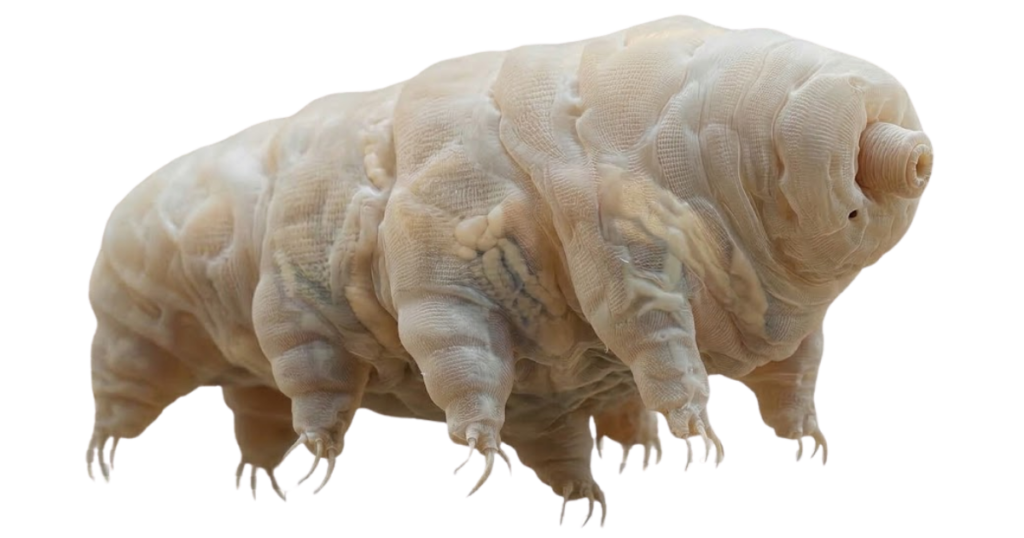
Most tardigrade species measure between 0.05 mm and 1.2 mm long. That is roughly a grain of salt, or the full stop at the end of this sentence. A few of the largest species reach 1.5 mm, which sits right at the edge of what the naked eye can detect.
Their bodies run on about 1,000 cells. They have a head, four body segments, four pairs of legs and four to eight claws on each foot. Instead of bones they carry a fluid filled compartment of hemolymph, circulating nutrients much as blood does in us.
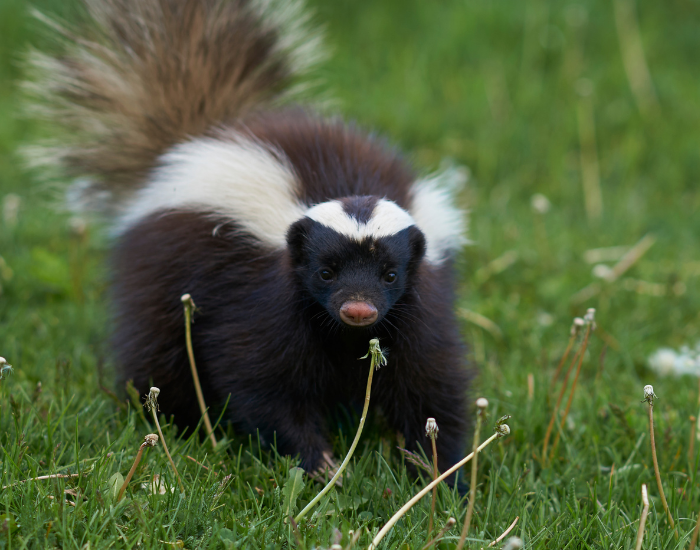
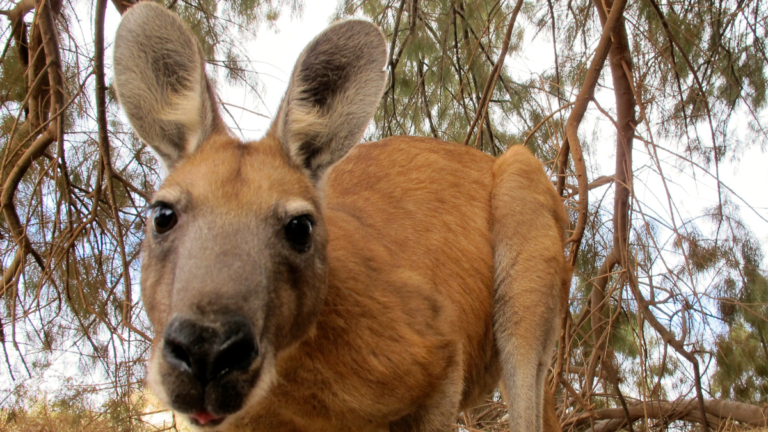
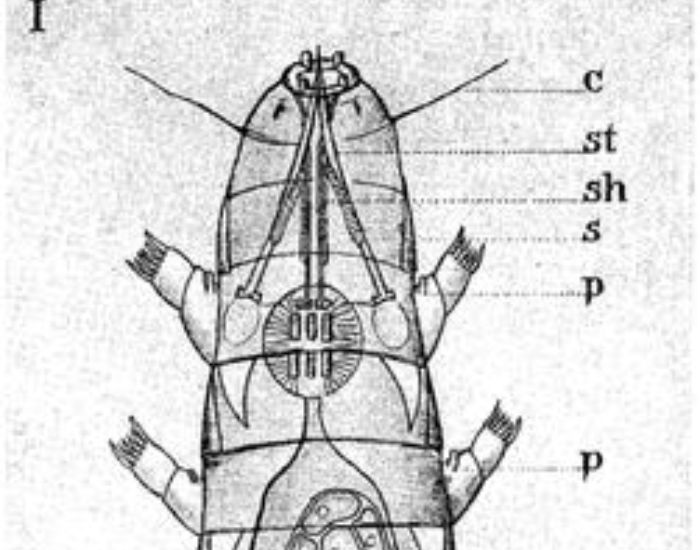
The anatomy is small but complete. A round mouth leads into a muscular pharynx and then an alimentary canal. They have no teeth, only a pair of sharp stylets. Gas exchange runs straight through the body wall, oxygen in and carbon dioxide out, because nothing this tiny needs lungs. For scale against animals you know, try my animal size comparison tool or look at it below.
Where the Names Come From
Johann Goeze found the first in 1773 and called it kleiner Wasserbär, the little water bear, because it closely resembles a bear en miniature. The phrase stuck.
Three years later the Italian biologist Lazzaro Spallanzani watched one cross a slide and named it il tardigrado, the slow walker. Both names fit a stout animal with an exceptional and strange morphology, going nowhere in particular.
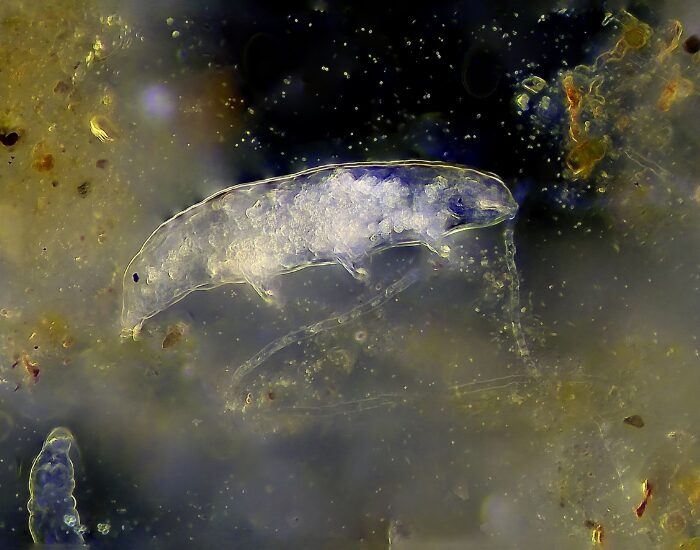
The Three Classes of Tardigrades
1. Heterotardigrada
The armoured branch. Heterotardigrades carry plates across the back, cirri and other sensory appendages on the head, and separate claws on each foot. As a result, they are easier to identify than their smooth relatives.
Most marine tardigrades belong here, along with the plated moss species people photograph most often, from interstitial sand to the barnacle zone.
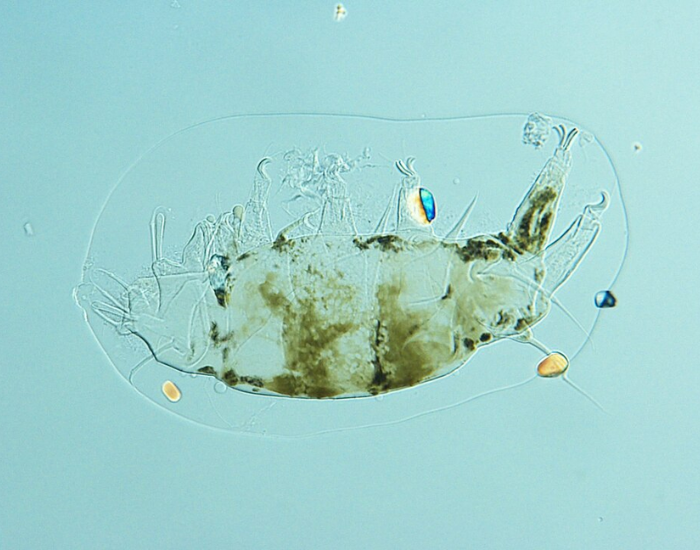
2. Eutardigrada
The smooth branch, and the one most lab work uses. Eutardigrades lack head appendages and plates, and their claws form a double structure on each foot. By contrast with heterotardigrades, they dominate freshwater and terrestrial habitats.
Nearly every famous tardigrade is a eutardigrade: the space travellers, the genome species, the lab model. Most of what we know about cryptobiosis comes from this class.
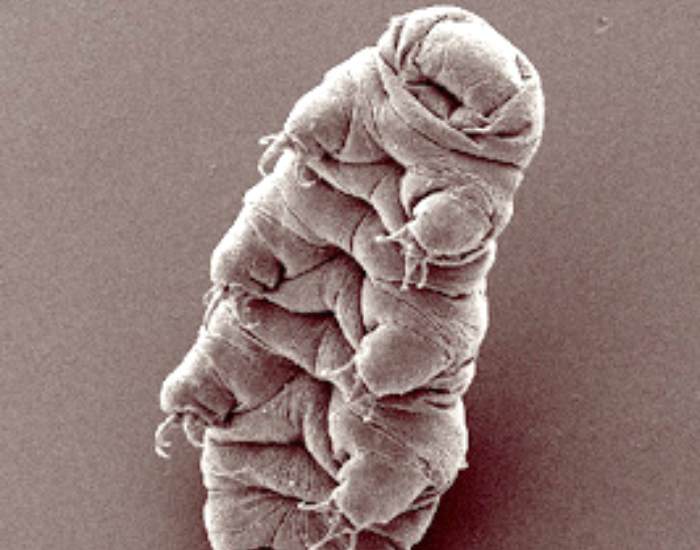
3. Mesotardigrada
A class with one member that may never have existed. Gilbert Rahm described Thermozodium esakii in 1937, from a hot spring near Nagasaki, with six equal claws on each foot.
The type specimens were lost and the spring may have been destroyed by an earthquake. Nobody has found the animal since, and a 2017 reassessment concluded Rahm probably misidentified a heterotardigrade. Mesotardigrada survives in the textbooks as a ghost.
Where Tardigrades Live
Tardigrades live on every continent. Terrestrial tardigrades occupy damp moss, lichen, leaf litter and soil, where they collect trapped water from the film around the plants. Aquatic tardigrades hold freshwater lakes, rivers and ponds.
Marine species live in intertidal sand, salt water sediments and the deep sea. Those natural environments include some of the most localized and vulnerable environments anywhere, so populations vanish locally even though the phylum is everywhere. Whatever the environmental conditions, the requirement is the same: a film of liquid water while the animal is active.
Terrestrial and Freshwater Tardigrades
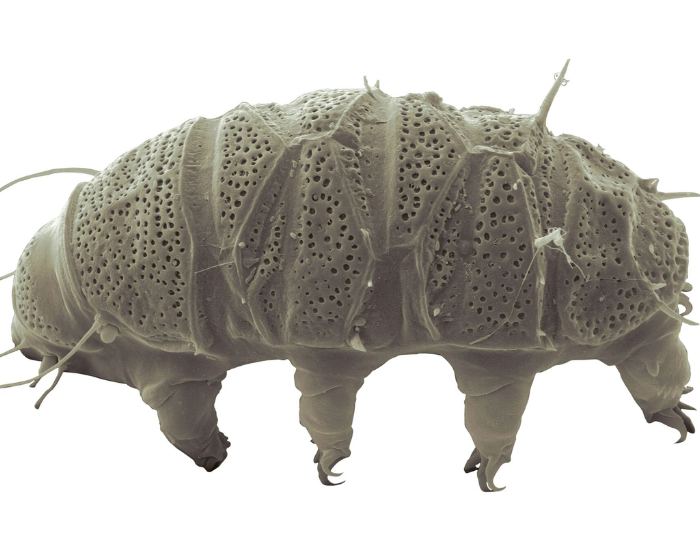
4. Echiniscus
The classic armoured moss tardigrade, often brightly coloured orange or red. Echiniscus species carry thick dorsal plates, long lateral cirri and separate tardigrade claws on each foot, which makes them the most photogenic water bears.
They live in mosses and lichens worldwide, on the thin film of trapped water those plants hold. Collect a dry cushion of moss, add distilled water in a shallow dish, and this is often the genus that appears.
5. Macrobiotus
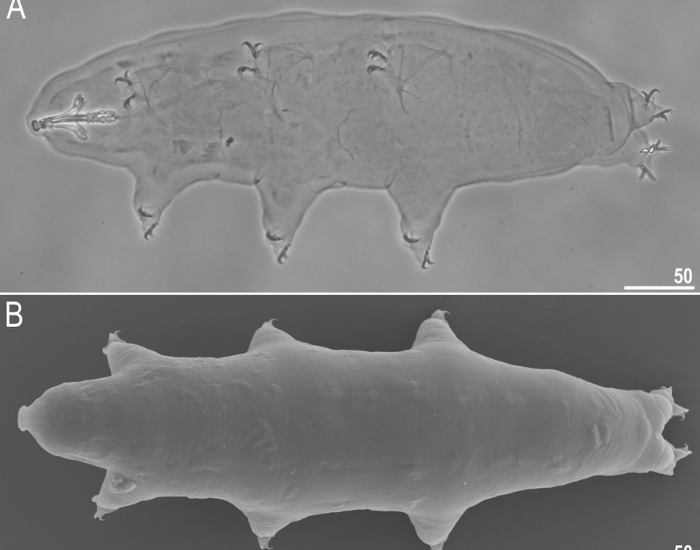
A large, common genus of eutardigrades found in moss, leaf litter and soil on every continent. Macrobiotus species feed on plant cells and algae, piercing cell walls with a pair of needle-like stylets and drawing out the contents.
Their eggs are the giveaway. Many lay ornamented eggs covered in spines, cones or chalices, and taxonomists identify species from the egg as often as from the animal.
6. Hypsibius exemplaris
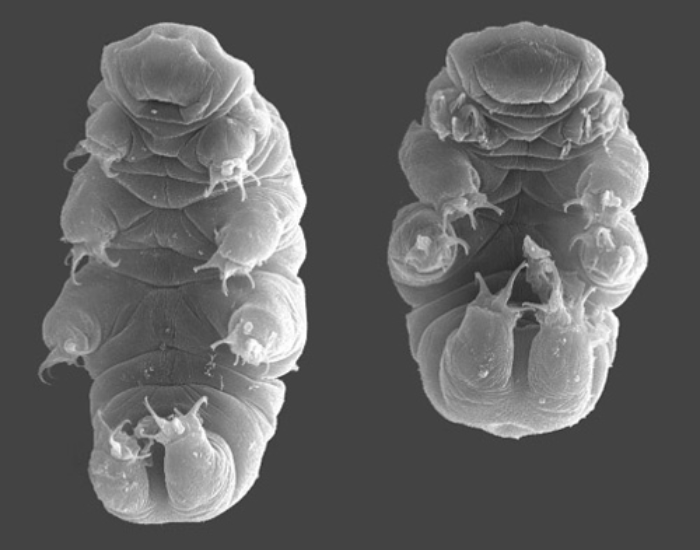
The laboratory model organism, formerly misidentified as Hypsibius dujardini. It breeds fast, eats algae happily, and tolerates culture conditions that defeat other species. For those reasons it became the standard tardigrade for developmental and genetic work.
Its fast breeding cycle is the main reason. Interestingly, it is not especially tough: H. exemplaris survives desiccation poorly compared with field species, which makes it a useful control rather than a champion.
7. Ramazzottius varieornatus
The toughest tardigrade in the literature, and the one that gave us Dsup. Hashimoto and colleagues sequenced its genome and found a tardigrade-unique protein, Damage Suppressor, that binds DNA and shields it from radiation.
They then put the Dsup gene into human cultured cells. Those cells showed roughly 40% less X-ray damage than untreated ones. That single result turned a moss animal into a serious subject for radiation medicine.
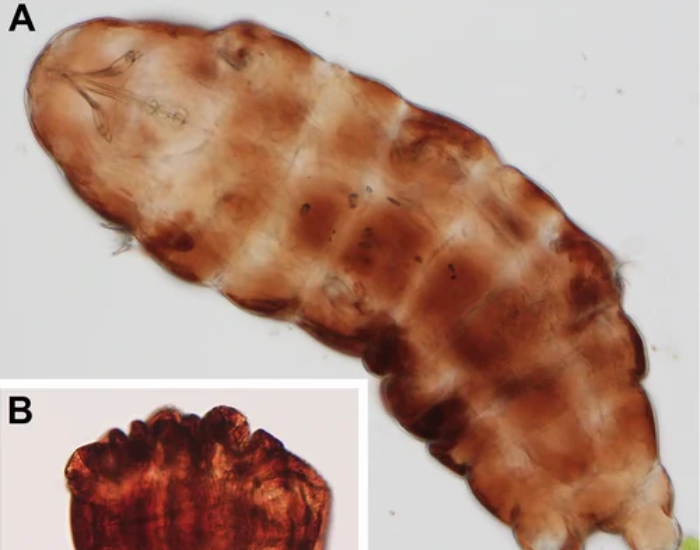
8. Milnesium tardigradum
A predator among tardigrades. Milnesium has a wide mouth and takes rotifers, nematodes and smaller tardigrades, including other tardigrades of its own kind when food runs short.
It also flew. Jönsson and colleagues sent Milnesium tardigradum into low Earth orbit on the FOTON-M3 mission in 2007. Animals exposed to the vacuum of space survived, and some exposed to solar ultraviolet radiation survived as well.
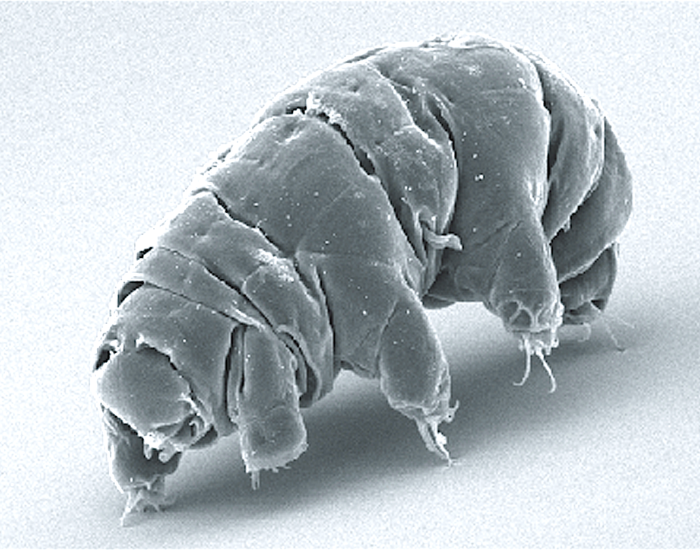
9. Richtersius coronifer
The other FOTON-M3 species, and the one that made the headline. Desiccated R. coronifer came back from vacuum exposure alive, which proved an animal can endure open space.
Full solar radiation was harder. Survival dropped sharply once unfiltered ultraviolet was added. Space itself is survivable; sunlight in space is the real problem.
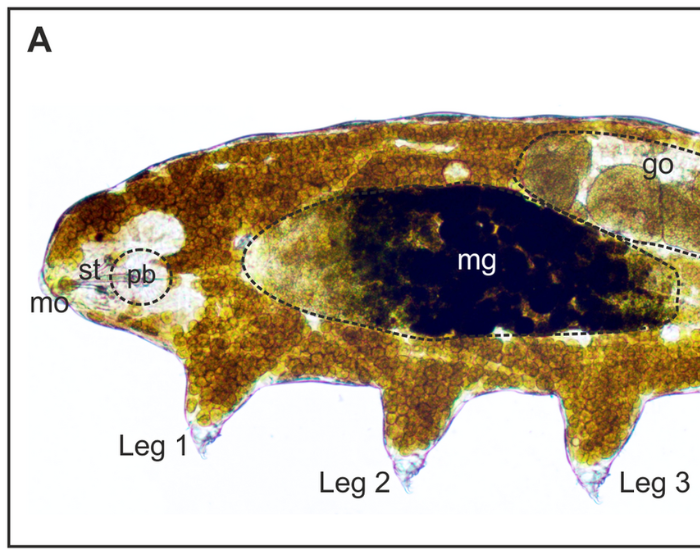
10. Paramacrobiotus
A genus with its own sunscreen. Suma and colleagues found a Paramacrobiotus species from southern India that glows blue under ultraviolet light, converting burning ultraviolet radiation into harmless visible light.
The test was direct. Doses of UV that killed other tardigrades within 15 minutes left the fluorescent species alive. When the researchers went on to transfer tardigrades’ fluorescent pigment to a vulnerable species, its survival improved too. Natural sunscreen, in a half-millimetre animal.
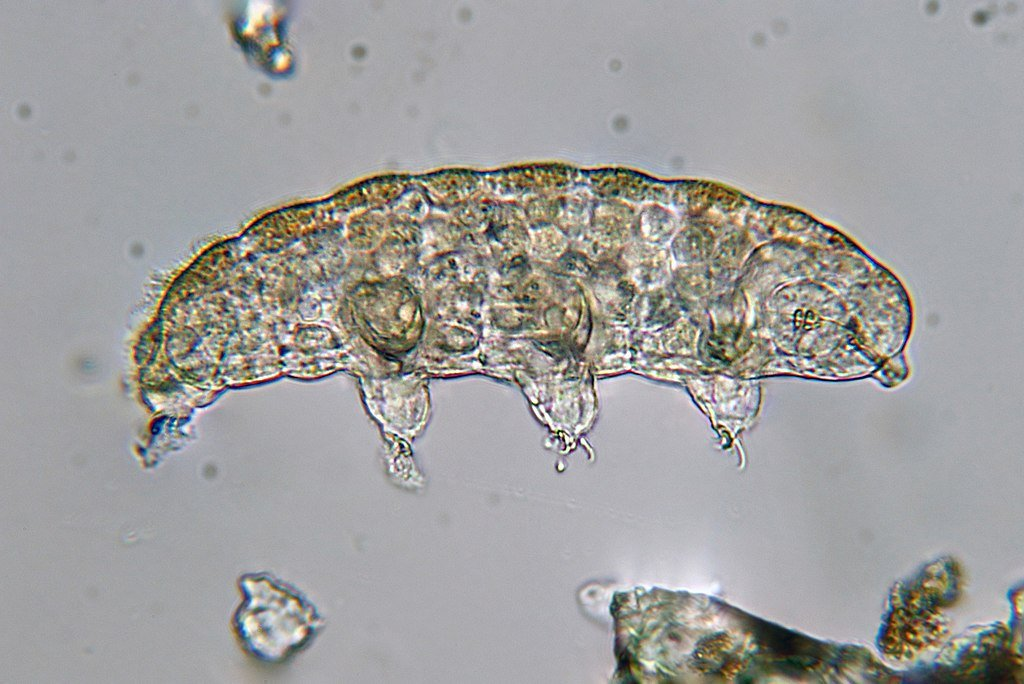
11. Acutuncus antarcticus
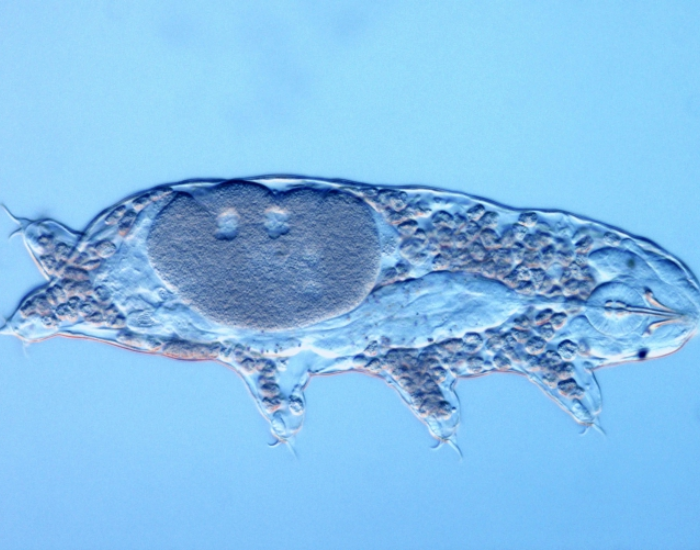
An Antarctic eutardigrade, and the record holder for coming back. Tsujimoto and colleagues thawed moss collected in 1983 and stored at −20°C, then revived an adult and hatched an egg after 30.5 years.
Both reproduced. The revived adult laid viable embryos, though it showed some reproductive lag compared with its own offspring. Therefore the freezing left a mark, even if it did not end the animal.
Marine and Extreme-Habitat Tardigrades
12. Echiniscoides sigismundi
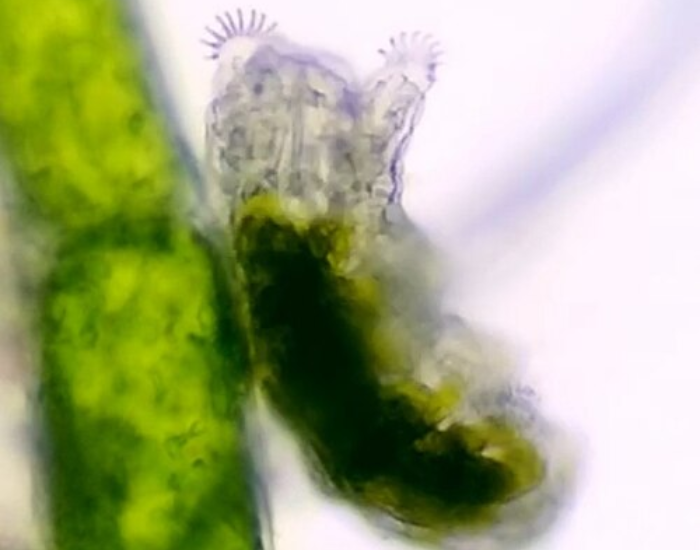
A marine heterotardigrade that lives among barnacles on rocky shores, where the tide leaves it exposed twice a day. Its relatives reach down into the deep sea. It handles salt water, fresh rain, desiccation and reflooding in the same afternoon.
That cycle makes it unusually good at resisting osmotic assault. Researchers use it to study how an animal survives repeated, rapid swings in salinity rather than one long dry spell.
13. Halobiotus crispae
An Arctic marine eutardigrade with a seasonal costume change. H. crispae runs through cyclomorphosis, shifting between distinct body forms as sea ice comes and goes. In its winter form it builds a thickened cuticle and stops feeding entirely.
Few animals this small reorganise their anatomy on a seasonal schedule, which is why the species gets more attention than its size suggests.
14. Batillipes
An interstitial marine genus living in the water between sand grains. Batillipes species have long toes tipped with adhesive discs, which let them grip in a habitat that shifts constantly.
They are among the most abundant tardigrades in coastal sediments. In addition, they cycle nutrients through micro-invertebrate food webs that rarely get counted.
15. Glacier and Cryoconite Tardigrades
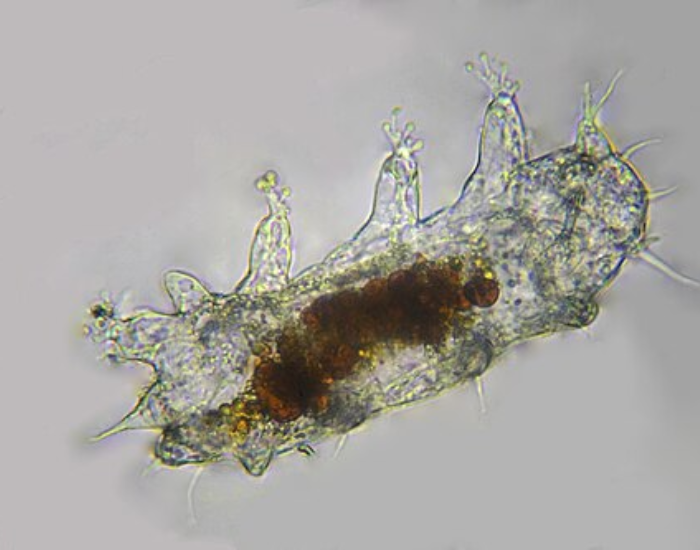
On glacier surfaces, dark dust collects in small meltwater holes called cryoconite. Those holes hold liquid water, algae and a small animal community, and tardigrades are a standard part of it.
They feed on algae and cyanobacteria, survive freezing between melt seasons, and persist on ice sheets from Greenland to the Himalaya. As glaciers retreat, these populations are among the first to go, which is one more reason biodiversity at small scales is worth counting.
The Heat Myth, Corrected
You will read that tardigrades survive 150°C. That figure comes from nineteenth-century experiments and does not hold.
Neves and colleagues tested Ramazzottius varieornatus properly in 2020. Active tardigrades died at around 37°C, which is body temperature. Desiccated ones did better, but only to a point: 50% died at 82.7°C after one hour, and at 63.1°C after 24 hours.
The authors put it plainly: high temperature is the tardigrade’s Achilles heel. Water bears survive low temperatures near absolute zero, vacuum, radiation and drought. Yet a warm afternoon in the wrong moss can finish them, and boiling water is not survivable whatever the old accounts claimed.
That matters. Of all the environmental extremes and harshest conditions tardigrades handle, heat is the one currently increasing, which is a quiet problem for an animal whose whole story is survival.
What Cryptobiosis Actually Does
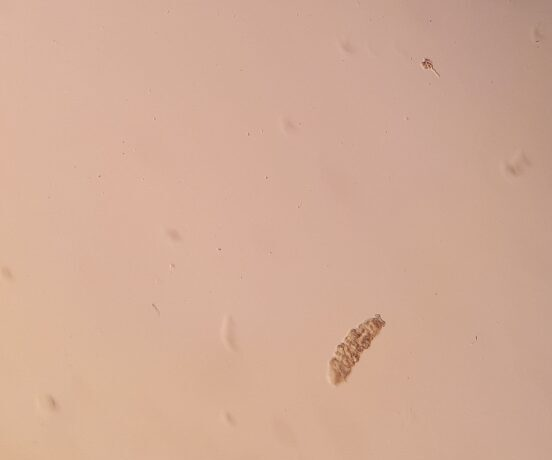
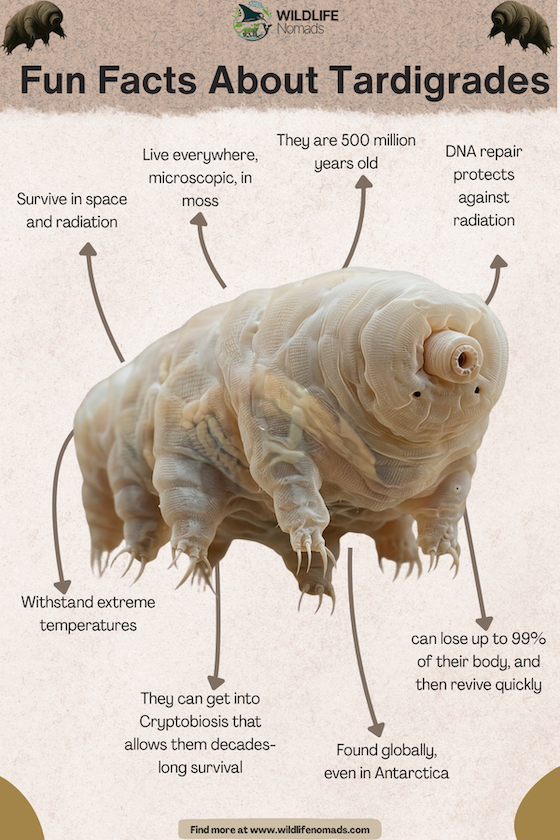
When water runs out, tardigrades enter a durable shrunken state called a tun. The organism surrenders up to 99% of its body fluids, discard excess water and metabolism alike, and drops to near zero activity. In that desiccated pellet state it is not quite alive and not quite dead.
This is how these microscopic organisms survive extreme conditions that kill everything else outright. The same machinery lets marine species resist osmotic assault when salinity swings, which is a different kind of extreme environmental conditions altogether.
The tun is what carries them through freezing, vacuum and radiation for long periods. Add liquid water, preferably rainwater, and the animal rehydrates and walks away. Scientists have revived tardigrades after three decades in a freezer, as the Antarctic work above shows, and survivors still produce viable embryos.
Radiation tolerance is the part medicine has taken seriously. Dehydrated tardigrades withstand doses hundreds of times past a human lethal limit, and the protection sits inside the tardigrade cells rather than in any shielding.
In 2025, Kirtane and colleagues delivered mRNA for the tardigrade Dsup protein into mice using nanoparticles, then applied radiation at cancer-treatment doses. Treated tissue showed far less DNA breakage, and protection stayed local to the injection site, so tumours were not shielded too. Earlier work had already shown Dsup protecting human cells in culture under such extreme conditions.
FAQs About Tardigrades
Tardigrada, their own phylum, with about 1,500 described species. Tardigrada sits within Panarthropoda alongside arthropods and velvet worms, and within the wider Ecdysozoa, the animals that moult.
Almost never. The largest species reach 1.5 mm, which is at the very limit of the naked eye, and most are far smaller. A compound microscope at 40x to 100x is the practical minimum.
Plant cells, algae and bacteria for most species, pierced with stylets and sucked out. Larger species such as Milnesium hunt rotifers, nematodes and other tardigrades.
A few months to about two years when active. In cryptobiosis the clock effectively stops, and revived animals have come back after 30 years frozen.
Collect dry moss or lichen from a wall or tree, soak it in rainwater or distilled water for a few hours, then squeeze it out into a shallow dish. Examine the sediment under a microscope. It worked for us in Sweden, and it will work in your garden.
Go and Look in the Moss
A tardigrade is not rare. It is everywhere, and almost nobody has seen one.
Scrape a handful of moss, soak it, and put a drop under glass. The first time one walks into frame, you will understand why I compared it to a unicorn.
Wildlife Nomads Challenge
Water Bear Challenge
Ten questions on tuns, Dsup and the one thing tardigrades are genuinely bad at. Instant feedback after every answer.
References:
Hashimoto, T., et al., (2016). Extremotolerant tardigrade genome and improved radiotolerance of human cultured cells by tardigrade-unique protein. Nature Communications, 7, 12808. https://doi.org/10.1038/ncomms12808
Jönsson, K. I., Rabbow, E., Schill, R. O., Harms-Ringdahl, M., & Rettberg, P. (2008). Tardigrades survive exposure to space in low Earth orbit. Current Biology, 18(17), R729–R731. https://doi.org/10.1016/j.cub.2008.06.048
Kirtane, A. R., et al., (2025). Radioprotection of healthy tissue via nanoparticle-delivered mRNA encoding for a damage-suppressor protein found in tardigrades. Nature Biomedical Engineering. https://doi.org/10.1038/s41551-025-01360-5
Neves, R. C., Hvidepil, L. K. B., Sørensen-Hygum, T. L., Stuart, R. M., & Møbjerg, N. (2020). Thermotolerance experiments on active and desiccated states of Ramazzottius varieornatus emphasize that tardigrades are sensitive to high temperatures. Scientific Reports, 10, 94. https://doi.org/10.1038/s41598-019-56965-z
Suma, H. R., Prakash, S., & Eswarappa, S. M. (2020). Naturally occurring fluorescence protects the eutardigrade Paramacrobiotus sp. from ultraviolet radiation. Biology Letters, 16(10), 20200391. https://doi.org/10.1098/rsbl.2020.0391
Tsujimoto, M., Kagoshima, H., Kanda, H., Watanabe, K., & Imura, S. (2020). Reproductive performance of the Antarctic tardigrades, Acutuncus antarcticus (Eutardigrada: Hypsibiidae), revived after being frozen for over 30 years and of their offspring. Zoological Journal of the Linnean Society, 188(3), 839–847. https://doi.org/10.1093/zoolinnean/zlz137