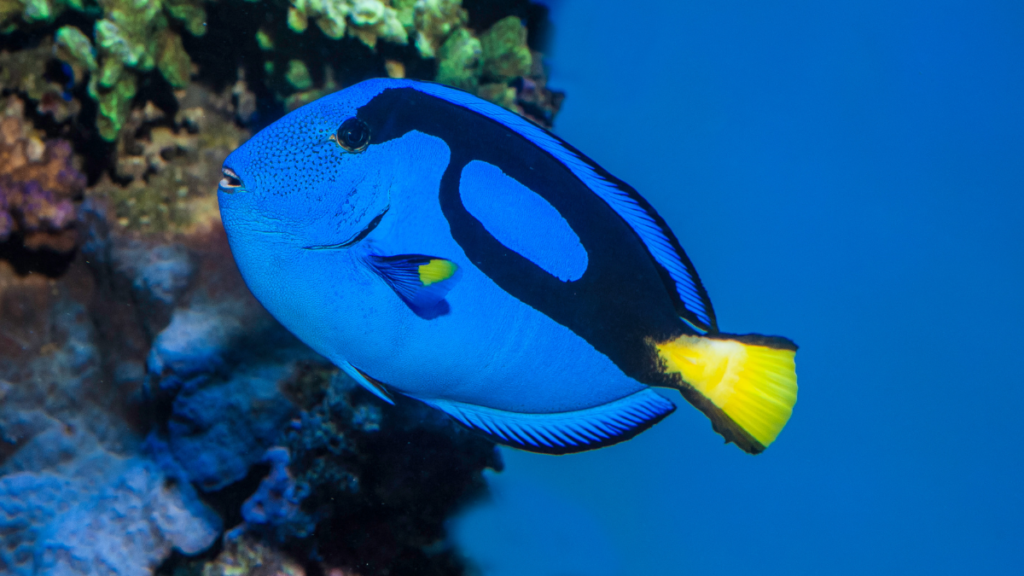
I was drifting over a black-sand slope in Amed, Bali, watching a moray eel breathe from a crack in the reef, while a picasso triggerfish swam near by. Then a wall of colour crossed my mask. Roughly forty tang fish poured past me in a loose, flickering column, grazing as they went.
That was the moment surgeonfish stopped being background scenery for me. They are the reef’s grazing crews, and they hold algae in check on almost every tropical reef I have been. Over the last few years I have logged them across Bali, Gili Trawangan, Koh Lipe, Coron, El Nido and the Egyptian Red Sea.
Below are 15 species I have seen directly, with the biology, range, behaviour and honest aquarium reality for each. I have also answered what people actually ask: which tangs get along, and whether anyone eats them.
What Is a Tang Fish?
Yes, a tang is a fish… a real one, in the family Acanthuridae. Scientists place this surgeonfish family within the Perciformes lineage of ray-finned fishes. Over 80 species sit inside the family Acanthuridae, spread across roughly six genera.
The name comes from the scalpel. Every member of this group carries one or more sharp spines on the caudal peduncle, the narrow stalk just before the caudal fin. In the genus Acanthurus, that spine folds into a groove and flicks out sideways when the fish feels threatened. I have taken a shallow cut from a netted specimen, and I only made that mistake once.
Surgeon fish size varies more than most people expect. Most tang species grow from 6 to 15 inches long, though a few unicornfishes push well past that. Their compressed bodies and tall dorsal fin let them turn hard against surge while scraping rock.
Distribution spans every warm ocean. The convict tang alone stretches from East Africa to the eastern Pacific coast of Panama. Many species spawn in aggregations timed to the lunar cycle, and I have hit dives on a full moon where the water turned milky with gametes.
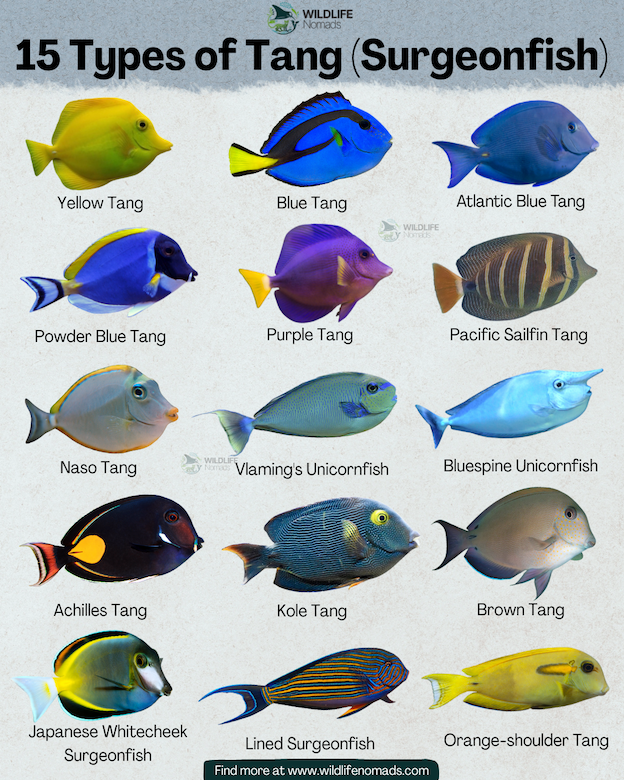
15 Types of Tangs Worth Knowing
The tang fish varieties below cover the genera you are most likely to encounter, whether you dive, snorkel or keep a reef tank.
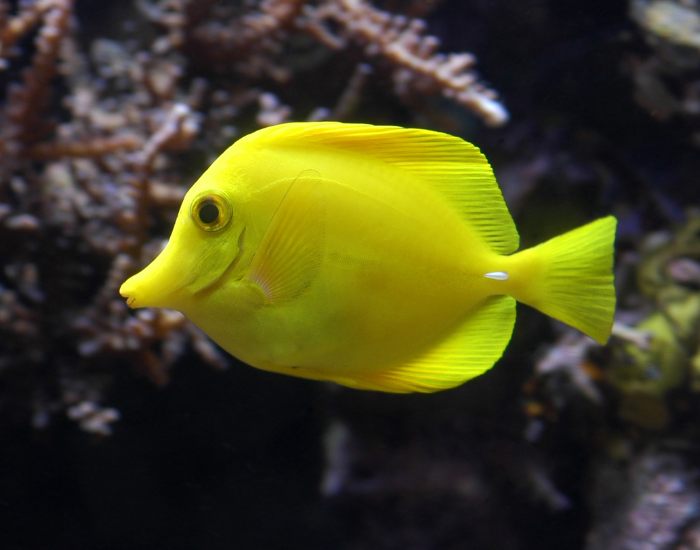
1. Yellow Tang (Zebrasoma flavescens)
The yellow tang is the most recognisable member of the surgeonfish family and the single most popular aquarium fish in the group. Wild adults reach about 20 cm and glow an almost impossible bright yellow over Hawaiian and western Pacific reefs.
Research from the Oahu aquarium fishery found females reaching sexual maturity around 63 mm total length — far smaller than managers once assumed. At night the colour drains and a dull lateral stripe appears, which is why night divers often swim straight past them.
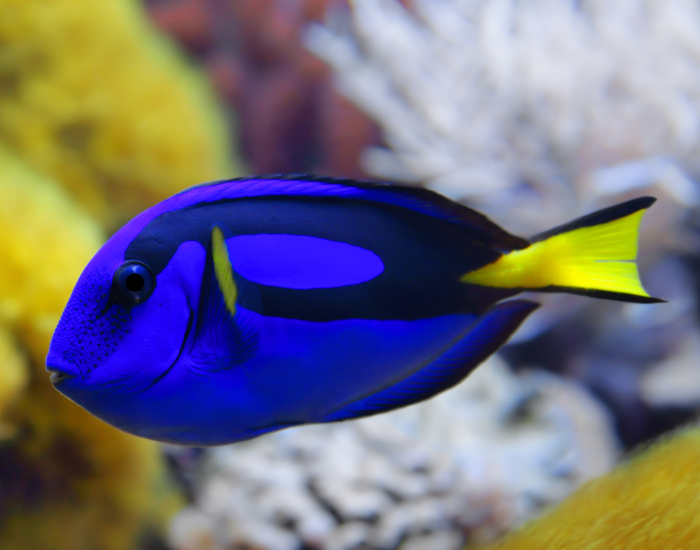
2. Palette Surgeonfish or Blue Tang (Paracanthurus hepatus)
This is Dory. I found my first one on a coral bommie off El Nido, Palawan, and I hung there grinning into my regulator like a kid. Seeing an icon from your childhood behave like an actual animal is a strange, precious thing.
The palette surgeonfish ranges across the Indo Pacific region, from East Africa to Japan and south to the Great Barrier Reef. Juveniles shelter inside branching Pocillopora, darting into the coral at the first shadow. Aquarists finally cultured this species through metamorphosis in 2016, a genuine milestone for the trade.
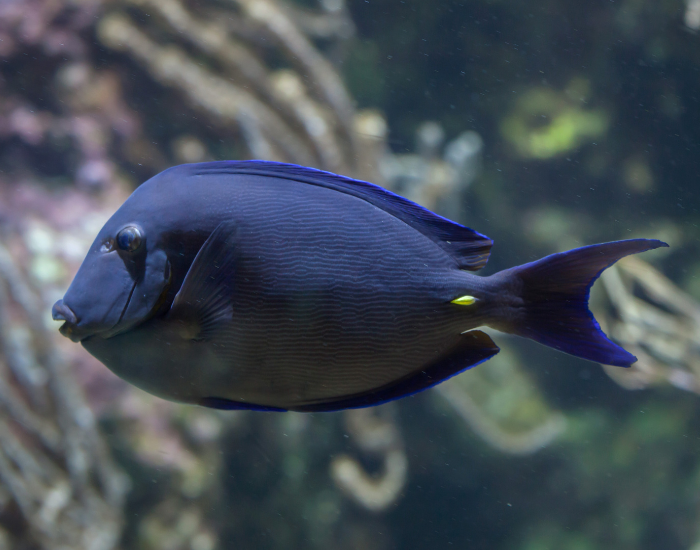
3. Atlantic Blue Tang (Acanthurus coeruleus)
The Blue Tang of the western Atlantic ocean is a different animal entirely. Acanthurus coeruleus patrols Caribbean and Florida reefs, and FishBase records a maximum length of 39 cm. Juveniles start bright yellow, then shift to deep blue as they mature.
Blue Tang Surgeonfish show distinct social modes. Individuals may forage alone as territorial residents, or join roving schools that overwhelm damselfish defending their algal gardens. I have watched a tiger grouper ignore a passing school entirely, which tells you how little threat a mouthful of spines represents.
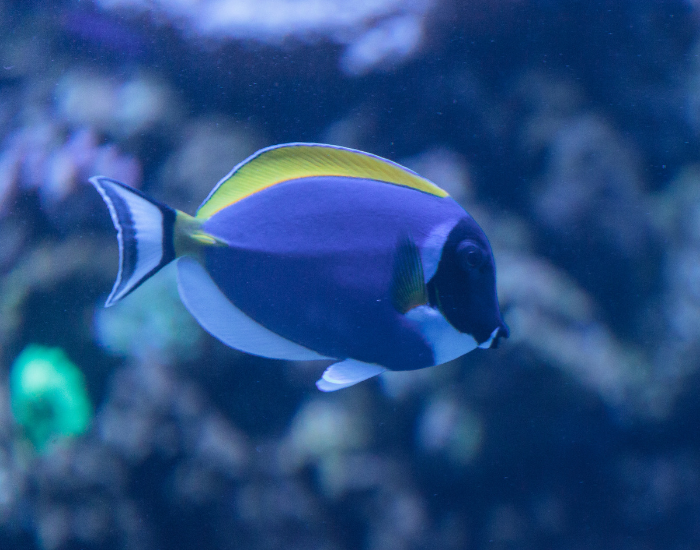
4. Powder Blue Tang (Acanthurus leucosternon)
Powder blue tang is the Indian Ocean’s showpiece: pale blue body, black face, brilliant yellow dorsal fin. Most adults measure around 20 -23 cm. I saw dense aggregations of them on the outer reefs at Koh Lipe, working the surge zone in small groups.
Beautiful does not mean easy. This is one of the species most prone to saltwater ich, and it demands pristine water and enormous swimming room. Beginners lose them constantly.
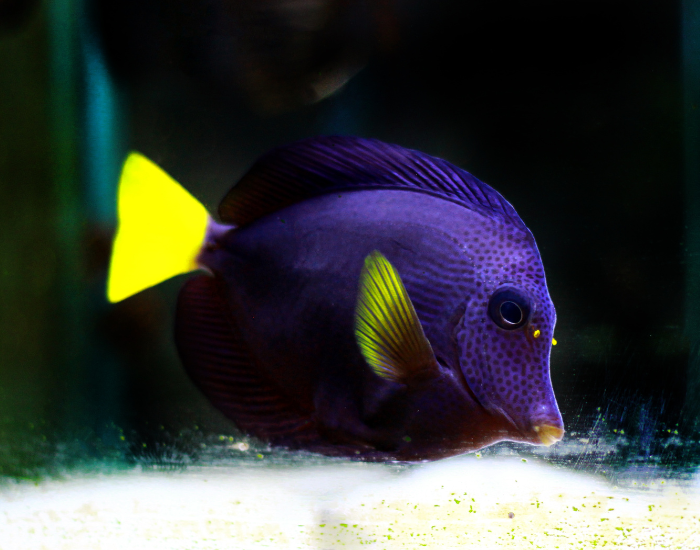
5. Purple Tang (Zebrasoma xanthurum)
The purple tang belongs to the Red Sea and Arabian Gulf, and photographs never do it justice. Diving near Marsa Alam in Egypt, I watched them glow violet against beige rock, with a yellow tail flashing on every turn. Adults reach about 22 cm.
They are also notoriously scrappy. Purple tangs defend feeding territory hard, and many tangs are aggressive towards their own species in aquariums. Two in one tank usually ends badly.
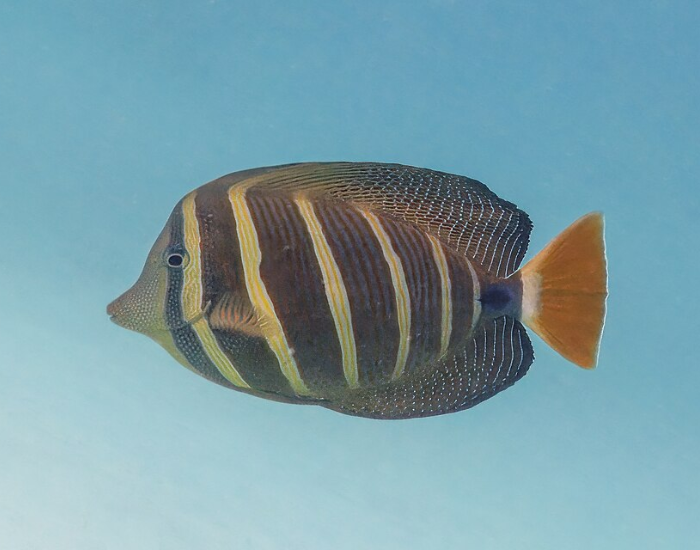
6. Pacific Sailfin Tang (Zebrasoma velifer)
Raise a sailfin and you understand the name. The dorsal fin unfolds into a sail nearly as tall as the fish is long, turning a 30 cm animal into a moving billboard. Pacific Sailfin Tang can grow up to 16 inches long, so smaller tanks are simply off the table.
They graze filamentous algae relentlessly across Indo-Pacific reef flats. I found juveniles hiding in rubble at Gili Trawangan, already flaring that sail at anything their own size.
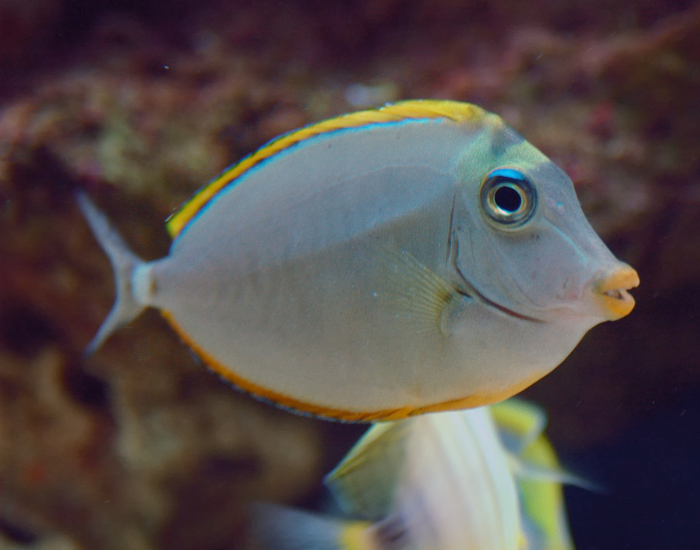
7. Lipstick Tang or Naso Tang (Naso lituratus)
The Naso Tang can grow to a maximum size of 18 inches, making it one of the largest tangs kept in home aquariums. Orange lips and orange-edged fins give it the lipstick nickname. Unlike Acanthurus species, Naso lituratus carries two fixed, forward-pointing blades on each side of the tail.
I have seen them in Amed and along the Red Sea, usually browsing leafy brown algae rather than scraping turf. That dietary split matters: this species wants macroalgae, not just nori sheets.
8. Vlaming’s Unicornfish (Naso vlamingii)
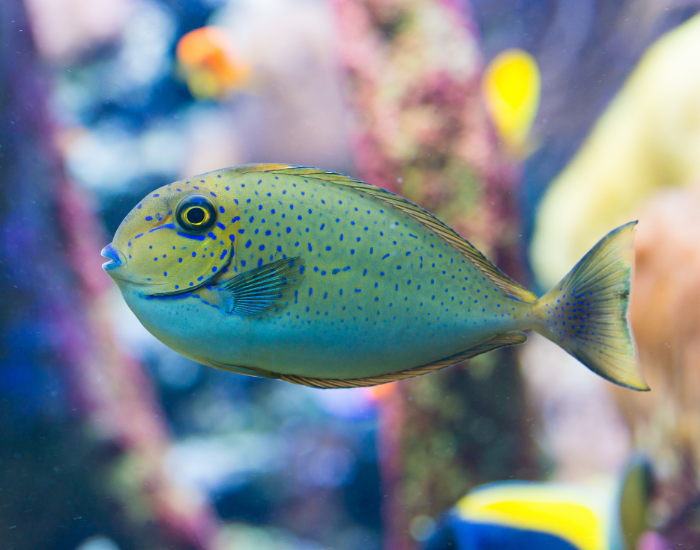
Naso vlamingii is my favourite mood ring on the reef. A calm individual looks dusky brown, but an excited one lights up with electric blue lines and blotches within seconds. Surgeonfishes can change colours significantly, especially at night, and this species takes it furthest.
Adults reach around 60 cm and hover in midwater, picking zooplankton rather than grazing rock. I met them repeatedly on deep drop-offs around Coron, Palawan.
9. Bluespine Unicornfish (Naso unicornis)
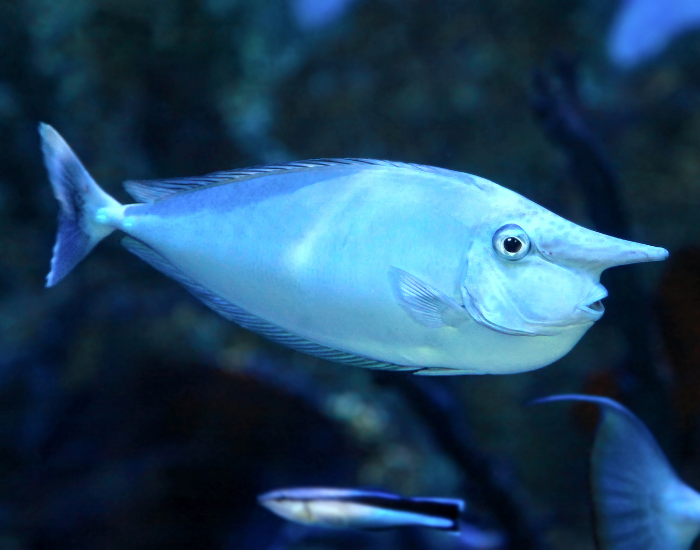
Naso unicornis grows a genuine horn from its forehead as it matures. The purpose remains debated, and I would treat any confident single explanation with suspicion. Adults reach about 70 cm and rank among the most important large herbivores on Pacific reefs.
They browse fleshy brown algae that most grazers refuse, which gives them a vital role in stopping macroalgal takeover after bleaching events. For more on their relatives, see the guide to types of unicorn fish.
10. Achilles Tang (Acanthurus achilles)
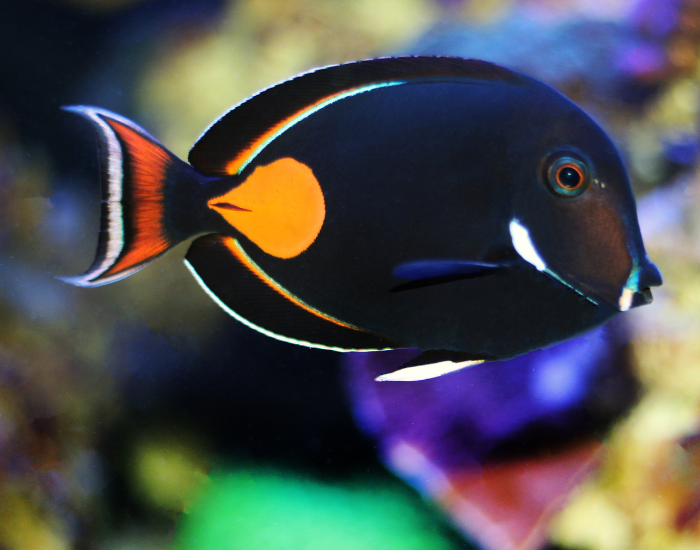
A deep black body with a teardrop of burnt orange near the tail — the Achilles is arguably the most striking of all tangs fish. It lives in high-energy surge zones across the central Pacific, and that habitat explains everything about its care.
Acanthurus achilles needs violent flow and oxygen-rich water. In captivity it is fragile, disease-prone and expensive — an expert-only animal.
11. Kole Tang (Ctenochaetus strigosus)
The kole tang trades flash for utility. Its comb-like teeth sweep detritus and fine turf from rock rather than cropping algae outright, so it cleans surfaces other tangs ignore. Adults stay near 18 cm.
Modest in size and rarely a bully, the kole ranks among the most forgiving surgeon tang fish in aquarium life, though it still needs a large tank.
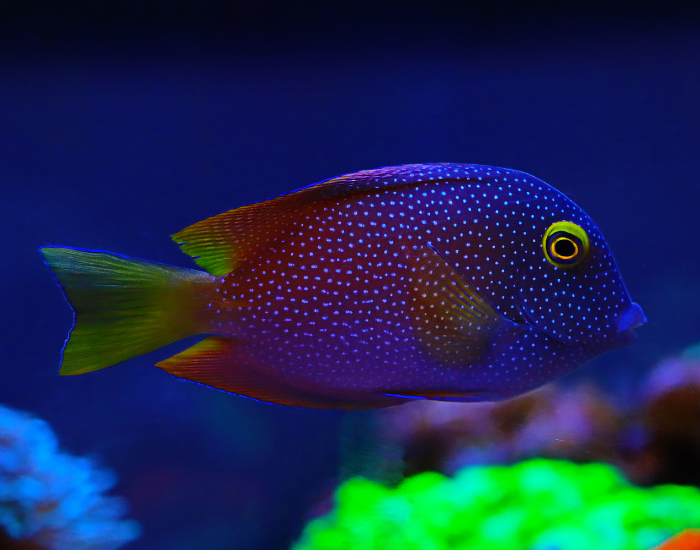
12. Brown Tang (Acanthurus nigrofuscus)
Acanthurus nigrofuscus is the species nobody photographs and everybody depends on. Dull brown with faint blue spotting, it forms huge grazing schools across Indo-Pacific and Red Sea reefs. Research separating its role from Ctenochaetus striatus showed it genuinely crops algae rather than merely vacuuming sediment.
I counted schools of several hundred near Marsa Alam, moving across the reef flat like a slow tide. Their combined bite pressure shapes what grows there.
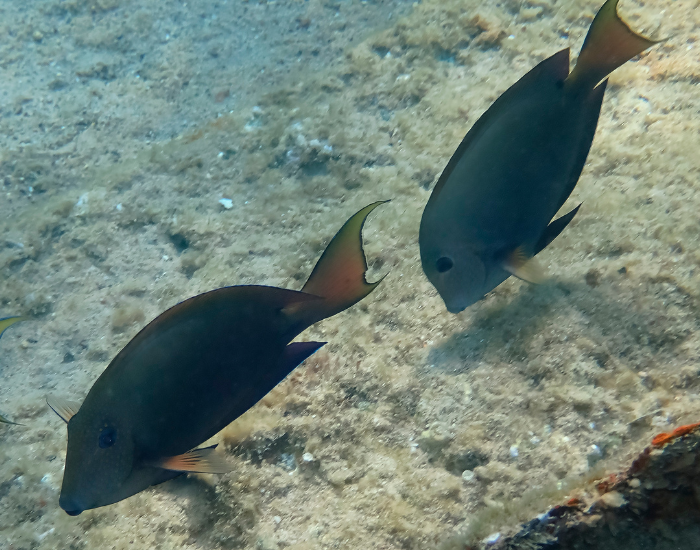
13. Lined Surgeonfish (Acanthurus lineatus)
Few reef fish and fewer tangs defend territory as fiercely as Acanthurus lineatus. Blue and yellow stripes mark an adult that will chase intruders twice its size off a patch of algal turf. Adults reach about 38 cm.
I filmed one at Koh Lipe repeatedly ramming a much larger parrotfish out of its garden. Surgeonfishes may slap each other with tails when annoyed, and this species uses that scalpel like it means it.
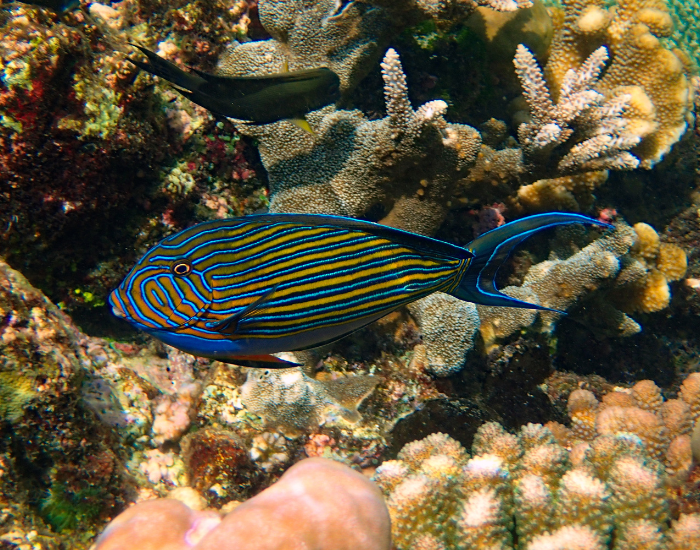
14. Japanese Whitecheek Surgeonfish (Acanthurus japonicus)
Despite the name, Acanthurus japonicus is a Philippine and Indonesian specialty, and I saw plenty during reef tours out of El Nido. A crisp white cheek patch separates it from its Pacific look-alike, Acanthurus nigricans.
Adults reach roughly 21 cm, the manageable end of the group. They graze in small groups over shallow slopes alongside the other coral reef fishes sharing that habitat.
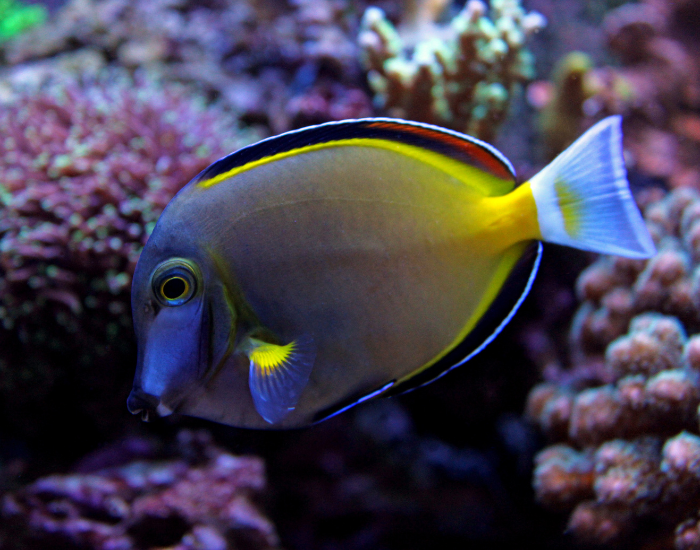
15. Orange-shoulder Tang (Acanthurus olivaceus)
Acanthurus olivaceus changes so completely with age that early naturalists described the life stages separately. Juveniles are plain yellow; adults turn two-tone grey-brown with a bright orange bar behind the gill. They reach about 35 cm across the Indo Pacific.
Adults sift sand and sediment as much as they scrape rock. I have watched them work sandy patches at Amed while wrasses trailed behind, picking off whatever got stirred up.
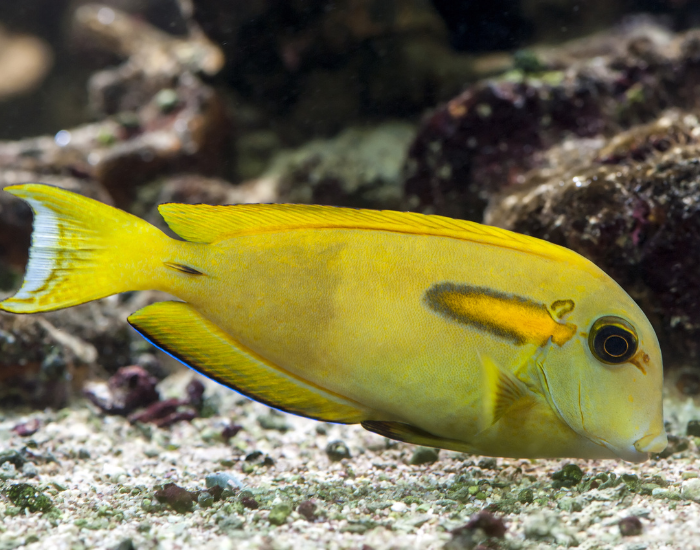
Keeping Tang Fish: The Honest Version
Most tangs have specific environmental and dietary requirements, and most tangs are not suitable for beginner aquarists. Tang fish need at least a 125-gallon tank, depending on adult size. The tank’s swimming footprint and length matter as much as total gallons, because these are active open-water swimmers.
Aim for a pH between 8.1 and 8.4, a minimum temperature of 72°F and a maximum of 78°F, and provide high water flow. Stable water parameters keep them healthy far more reliably than any medication does.
Diet drives everything. Most tangs depend heavily on marine algae and seaweed, so offer regular marine algae and nori daily, ideally two to three times. A rotation of marine-origin foods (Nori, Gracilaria, Porphyra, Spirulina, and algae-based pellets). Some tangs become omnivorous and take meaty foods, but algae should stay the backbone.
Tangs are sensitive to stress and disease, and they are prone to marine ich and velvet. Quarantine every new tang for at least two weeks before introduction, choose healthy specimens at the shop, and maintain excellent water quality. Fin rot and head-and-lateral-line erosion are the other two problems you will meet. Get those basics right and a tang will greet you at the tank front like a dog at the door.
Frequently Asked Questions
There are over 80 species of tang fish in the family Acanthuridae, though counts range from 72 to 86 depending on the taxonomy you follow. They divide into about six genera, including Acanthurus, Zebrasoma, Naso, Ctenochaetus, Paracanthurus and Prionurus. New genetic work keeps refining those boundaries.
Kole, yellow and whitecheek tangs are the most forgiving, because they stay smaller and tolerate normal reef conditions. Even so, they need a 125-gallon tank, daily algae-based food and quarantine before introduction. No tang is truly a beginner fish.
Purple tangs, lined surgeonfish and Achilles tangs top the list. Aggression usually targets fish of similar shape and colour, which is why many tangs are aggressive towards their own species. Adding a second Zebrasoma to an established tank rarely works.
The blade near the caudal fin serves as both defence and duelling gear. Fish slash sideways at predators and at rivals during territorial disputes. Some Naso species carry permanently exposed blades instead of folding ones.
Can You Name That Tang? 🐠
A 15-photo identification challenge — the wrong answers are deliberately tricky look-alikes from a similar group. Go back and change any answer before you score.
Which tang is this?
Go Find One Yourself
Tang fish are not reef decoration, they are the maintenance crew that keeps algae from smothering coral, and their grazing shapes what a reef looks like a decade from now. That is why I still stop and watch them after hundreds of dives.
Snorkel anywhere tropical and you will meet one. Look for the scalpel at the tail, and notice which species scrape rock versus which browse leafy weed. Then tell me what you saw in the comments, I read every one.
Keen to meet the neighbours? Try the guides to sea anemones, triggerfish, seahorses and the moray eel that started this story.
References:
DiMaggio, M. A., Cassiano, E. J., Barden, K. P., Ramee, S. W., Ohs, C. L., & Watson, C. A. (2017). First record of captive larval culture and metamorphosis of the Pacific blue tang, Paracanthurus hepatus. Journal of the World Aquaculture Society, 48(3), 393–401. https://doi.org/10.1111/jwas.12426
Marshell, A., & Mumby, P. J. (2015). The role of surgeonfish (Acanthuridae) in maintaining algal turf biomass on coral reefs. Journal of Experimental Marine Biology and Ecology, 473, 152–160. https://doi.org/10.1016/j.jembe.2015.09.002
Mihalitsis, M., Yin, B., Matsunami, A., Hoey, A. S., Pham, D. N., Mao, J., Raheja, R., Gong, R., & Wainwright, P. C. (2025). Functional novelties and behavioural flexibility underpin diversification of the surgeonfish feeding mechanism. Proceedings of the Royal Society B: Biological Sciences, 292(2059), 20252386. https://doi.org/10.1098/rspb.2025.2386
Schemmel, E. M. (2021). Size at maturity for yellow tang (Zebrasoma flavescens) from the Oahu, HI, aquarium fishery. Environmental Biology of Fishes, 104, 1139–1147. https://doi.org/10.1007/s10641-021-01142-3
Tebbett, S. B., & Bellwood, D. R. (2021). The functional roles of surgeonfishes on coral reefs: Past, present and future. Reviews in Fish Biology and Fisheries, 31, 887–913. https://doi.org/10.1007/s11160-021-09692-6
Tebbett, S. B., Goatley, C. H. R., & Bellwood, D. R. (2017). Clarifying functional roles: Algal removal by the surgeonfishes Ctenochaetus striatus and Acanthurus nigrofuscus. Coral Reefs, 36, 803–813. https://doi.org/10.1007/s00338-017-1571-z
Darius, H. T., Paillon, C., Mou-Tham, G., Ung, A., Cruchet, P., Revel, T., Viallon, J., Vigliola, L., Ponton, D., & Chinain, M. (2022). Evaluating age and growth relationship to ciguatoxicity in five coral reef fish species from French Polynesia. Marine Drugs, 20(4), 251. https://doi.org/10.3390/md20040251