The first time I held a pink ball python, I was standing in a humid breeding room in Puebla, Mexico. My friend ran a small reptile and amphibian facility, and he handed me a hatchling no longer than a paperback novel. It curled into a tight ball in my palm, head tucked deep inside the coil. That defensive shape is exactly where the ball python gets its name.
That afternoon, my friend walked me through racks of adult animals and tubs of hatchling ball pythons. He showed me pastels, pieds, and a few stunning pinkish morphs. We talked science, ethics, and the awkward fact that other pythons have become an ecological crisis in Florida. I left with questions about the species, the global pet trade, and the wild populations behind those tubs. This article distills what I learned from him and from peer-reviewed work since.
1. Where Are Ball Pythons From? West and Central Africa
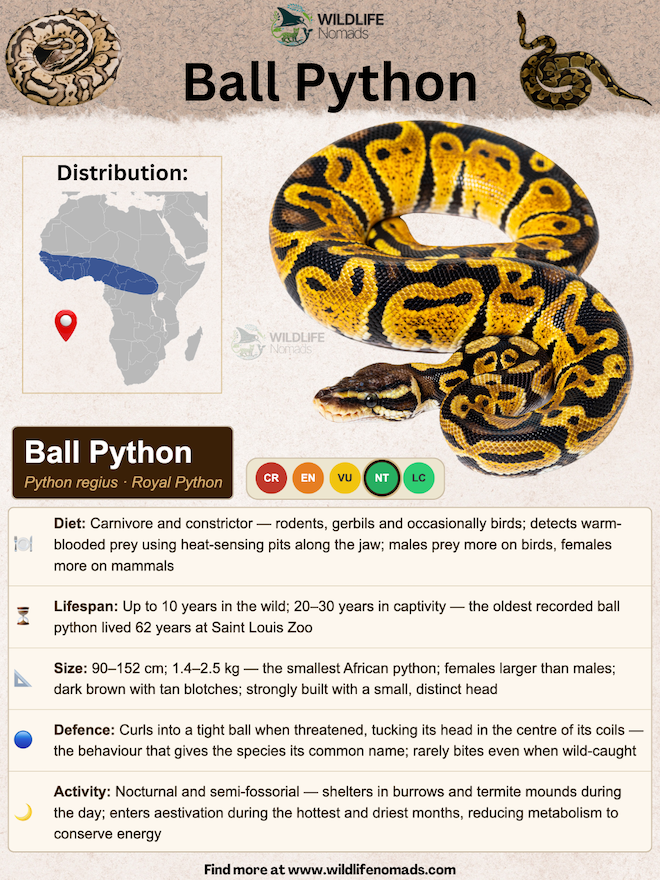
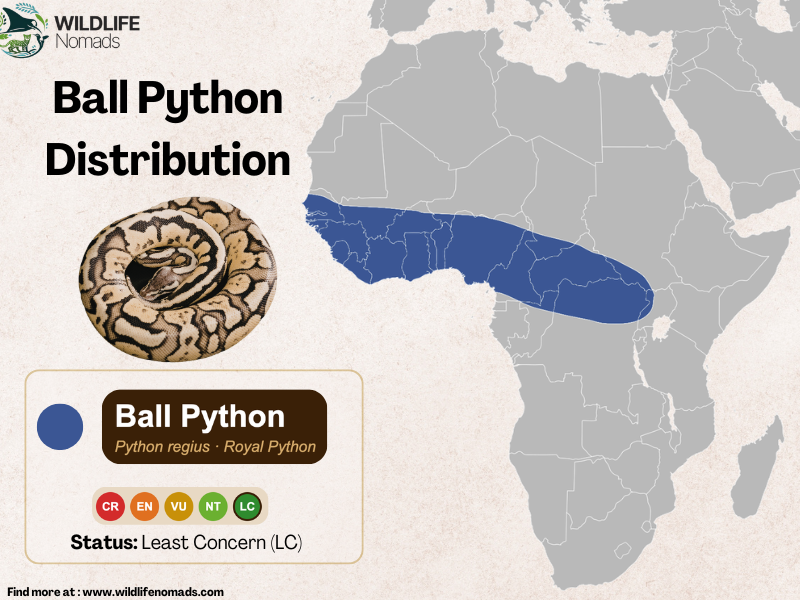
Where are ball pythons from, exactly? Ball pythons (Python regius) are native to a broad band of sub saharan africa. The range runs from Senegal east to Uganda and through western and central africa. Where do ball pythons come from in the modern pet trade? Mostly Ghana, Togo, and Benin, three nations that account for the vast majority of legal exports.
Where do ball pythons originate from in deeper time is more interesting. Python regius likely evolved from a forest-edge ancestor in central africa during the Pleistocene. Today wild ball pythons live across savanna mosaic, agricultural fields, and open forests in southeastern nigeria and beyond. The wild consists of fragmented habitat dominated by rodents, birds, and small carnivorous mammals.
I have walked transects in similar west africa habitat while tracking other snakes, and the dryness surprises new field researchers every time. These pythons spend most of the dry season hidden on the ground beneath leaf litter and inside termite mounds. Where do ball pythons live in the wild is therefore not a jungle, it is a hot, sparsely vegetated landscape where the species relies on burrows for cover.
2. The Name “Ball Python” Versus “Royal Python”
In Europe and across much of Africa, the species goes by royal python. The name traces back to a folk story that Cleopatra wore one as a living bracelet. In many communities along the Niger River, royal pythons are considered sacred and never killed on private homes or village grounds. Some Igbo villages still bury royal pythons with funeral honors when one dies on the property.
I prefer the European name because royal hints at the snake’s calm temperament. The name ball python is more recent, born from the American pet trade in the 1970s. Whatever you call them, royal pythons are not aggressive snakes. In years of handling these animals across two continents, I have been bitten exactly once, and that was my fault for surprising a gravid female.

3. The Tight Ball Defense
When threatened, a ball python tucks its head into the center of its body and the snake wraps itself into a tight ball. The shape protects vital organs and confuses predators that mistake the coil for a stone. My friend in Mexico used to gently roll a stressed adult across his palm to demonstrate. The animal simply tightened the coil and waited it out.
This behavior tells you something deeper about the species. These pythons evolved alongside birds of prey, monitor lizards, and small mongooses. Hiding works better than fighting, so natural selection refined the strategy. Unlike many other snakes, ball pythons rarely strike defensively at people, which is why they thrive as pets in private homes around the world.
4. The Natural Habitat Most Owners Get Wrong
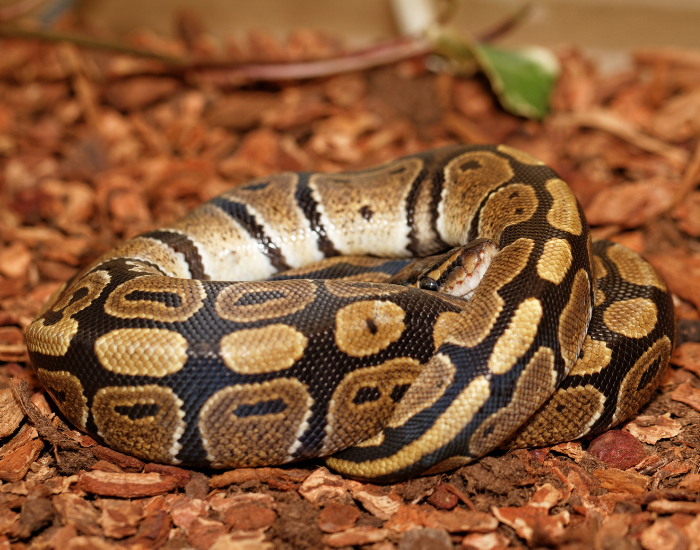
What is a ball pythons natural habitat, really? Most owners picture a steamy jungle, but where do ball pythons live in the wild is closer to grassland, farmland edges, and abandoned rodent burrows. Where are ball pythons found in southern Ghana and southeastern nigeria are usually termite mounds and burrow systems carved out by other animals.
Ball pythons spend daylight hours hidden underground or under leaf litter to maintain a stable body temperature. They are not capable climbers as adults, though young pythons occasionally ascend low shrubs to hunt fledgling birds. By contrast, adult animals stay on the ground, hunting along the edges of open forests and savanna patches. Where are ball pythons native to is best summarized as the savanna belt of western and central africa, not perpetual rainforest.
The animals I have observed in similar habitat sit motionless for hours. Only the labial pits along the upper jaw twitch when a mammal walks past.
5. Thousands of Morphs Drive the Pet Trade
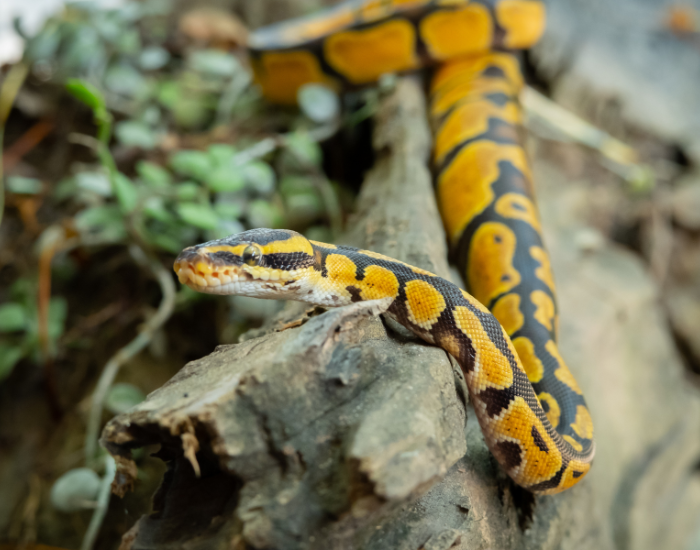
A morph is a heritable color or pattern variation. The first commercially significant ball python morph, the albino, appeared in the early 1990s. Today, breeders track more than 7,000 combinations through genetic calculators and dedicated registries. These pythons now anchor a multi-million-dollar slice of the global pet trade.
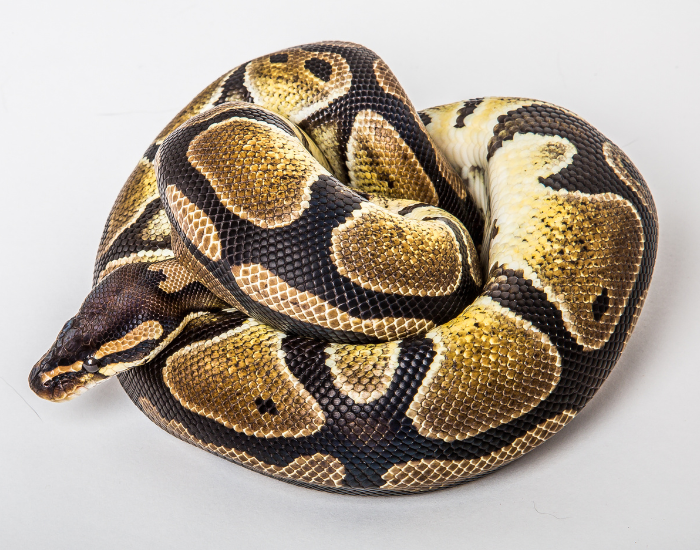
Standing in my friend’s facility, I saw banana morphs, clown morphs, and a few designer combos he was reluctant to name a price on. A normal wild ball python is dark brown with golden saddle markings, beautiful in its own right, and a sharp contrast to the designer pets dominating Instagram. Some morphs carry health concerns. The “spider” gene, for example, is linked to a neurological wobble, and ethical breeders have largely moved away from it.
The IUCN Red List entry for Python regius is a useful starting resource on the species’ biology and trade.

6. Patient Ambush Predators With Two Sets of Sensors
These snakes hunt by sitting still. The animal waits at the entrance of a rodent burrow, sometimes for days, until prey walks past. Labial pits along the upper jaw detect the warm body temperature of a rat in the dark. The jacobson’s organ on the roof of the mouth reads scent trails left by passing prey animals.
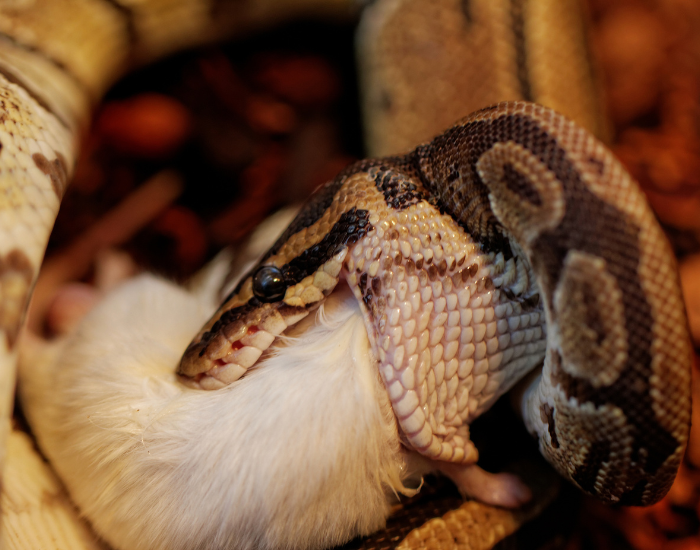
Adult ball pythons eat almost exclusively small mammals, with the occasional fledgling bird. A 2018 paper in an Italian journal of zoology documented intersexual dietary divergence in wild ball pythons, males take more birds while females specialize in small mammals. Female ball pythons reach larger body size and develop longer jaws than male ball pythons, allowing them to take heavier prey items. That sexual dimorphism shapes how each sex uses its habitat.
In the wild, an adult ball python might eat only once every two to three weeks. Captive snakes often eat more frequently because keepers offer food on a schedule. That mismatch is why obesity is a quiet but common problem in pets across the country.

7. A Surprisingly Long Average Lifespan
The average lifespan of a healthy captive ball python is 25 to 30 years. The record-holding female at the Oakland Zoo lived past 50 and laid fertile eggs without a male present in her later decades. Facultative parthenogenesis has been documented in this species more than once, which is genuinely strange among living snakes.
Young pythons reach sexual maturity at 18 to 36 months in captivity, sometimes faster than animals in the wild because of consistent feeding. Adult females take longer to mature than males, since females reach a larger body size before they can produce a clutch. This longevity catches new owners off guard; a snake bought at a college reptile expo can easily outlive a first car.

8. Females Coil Around Their Eggs for Two Months
Female ball pythons lay clutches of four to eleven leathery eggs, usually between mid april and mid june in the wild. The female then snake wraps tightly around the eggs for the entire incubation period. She rarely eats, and she shivers her muscles to nudge body temperature higher than the surrounding ground.
This level of parental care is unusual among snakes. The adult females I have observed in the breeding facility refused to leave the nest even when handlers reached in. Watching a gravid female protect a clutch is one of the more humbling things I have seen in herpetology. The behavior contradicts the lazy assumption that reptiles are indifferent parents.
9. Conservation Status: No Longer Least Concern
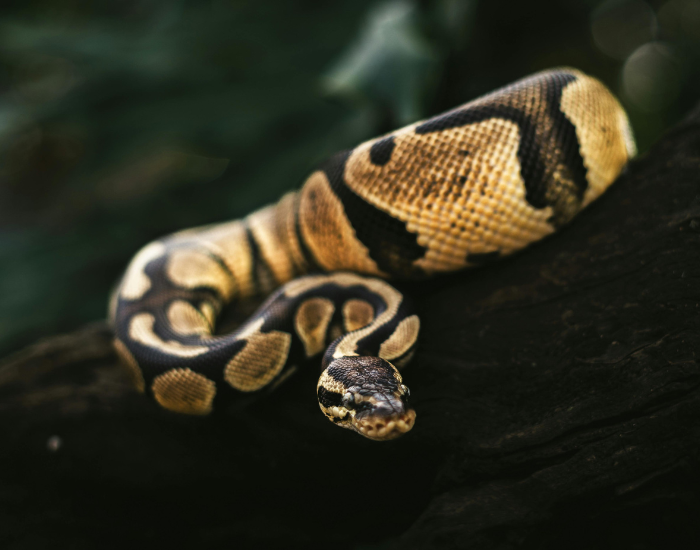
The IUCN downgraded the African ball python from least concern to Near Threatened in 2021, citing overharvest for the pet trade and habitat conversion across sub saharan africa. Ghana, Togo, and Benin still operate ranching programs that account for hundreds of thousands of animals exported each year.
The conservation picture is complicated. Recent work has documented increases in ectoparasite load among ranched young ball pythons housed in close proximity to villages, raising welfare concerns. Other natural history traits — slow growth, long egg incubation, and limited dispersal — make recovery slow when wild populations decline. Both habitat loss and over-collection affect ball pythons across the entire range. A thoughtful pet owner should know the supply chain behind the animal in their enclosure.
10. Ball Pythons Are Not Burmese Pythons
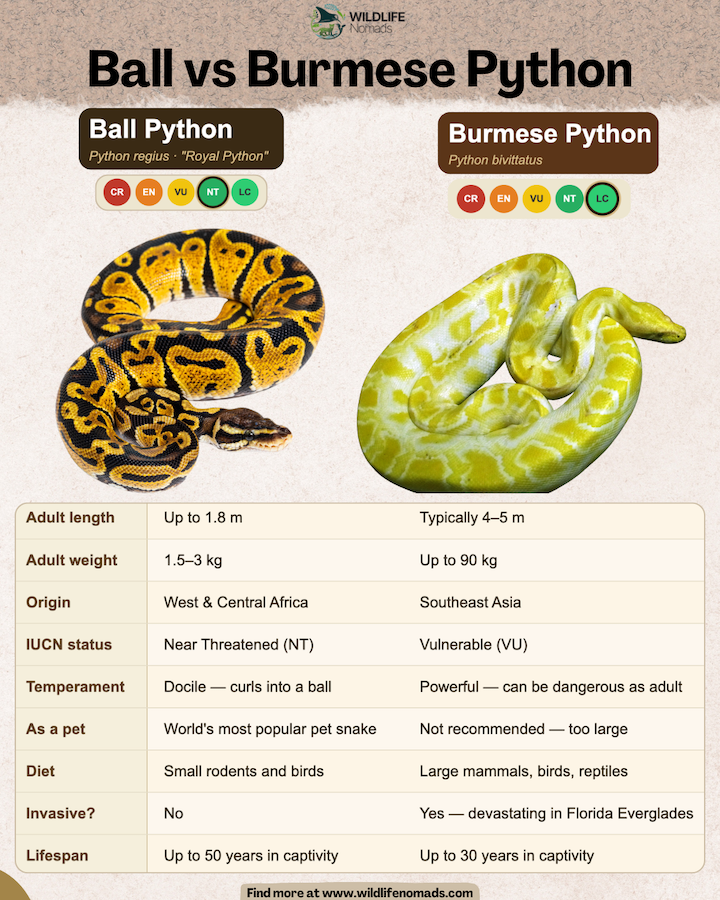
This was the conversation that stuck with me longest at my friend’s facility. He kept reminding me that the pythons ravaging the Florida Everglades are Burmese pythons, not ball pythons. Both belong to the genus python but differ enormously in ecology and body size.
Ball pythons cap out around five feet. Burmese pythons routinely top fifteen. Sexual size dimorphism in both species favors larger females, but the gap between the two pythons is the difference between a housecat and a panther. Ball pythons are physiologically incapable of surviving a Florida winter without a heated burrow. If you want the full Florida story, my earlier post on Burmese pythons in Florida walks through the ecological damage. A released ball python in Miami dies in November.
11. They Recognize Their Keepers Through Scent
The question of whether snakes know their owners has a modern answer. Recent work on social behavior in living snakes shows ball pythons distinguish between handlers based on scent trails and routine. They show measurably lower stress responses with people they know in close proximity.
Sex differences in handler tolerance are real, males in advanced vivarium systems tend to explore more than females, which spend longer hiding. Proper care means giving the animal cover, stable humidity, and predictable handling. Sex is usually determined by probing for the inverted hemipenis under anesthesia or by gentle popping. Older studies on other snakes treated them as solitary by default, but newer behavioral work challenges that assumption.
12. Slow Metabolism Means Slow Everything
A ball python digests one rat over seven to fourteen days. They defecate roughly that often, and less when fasting through the dry season. New owners panic when their snake skips a meal for a month, but a healthy adult can fast for half a year without dropping dangerous weight.
This metabolic patience is the species’ superpower. It is why a wild ball python can sit motionless inside a termite mound through the heat of the day. It is also why captive animals are so forgiving of imperfect husbandry, compared with active hunters like black cobras or coachwhips.
FAQs About Ball Pythons
There are over 7,000 documented ball python morphs. They range from base mutations like albino, pied, and pastel to complex designer combinations that stack four or more genes. Common starter morphs include banana, clown, mojave, and ghost. Some morphs, such as spider and super cinnamon, carry known health risks and are increasingly avoided by ethical breeders. A good ball python manual will help you pick a healthy line.
Yes, within limits. Ball pythons recognize familiar handlers through the jacobson’s organ and scent trails. They do not bond like a dog or cat, but they distinguish a regular keeper from a stranger. This recognition is olfactory, since their eyesight is poor and these snakes rely on chemical cues. Other snakes show similar but weaker patterns.
Adult females reach four to five feet, and males stay smaller at three to four feet. Females reach larger body size than males because of sexual size dimorphism. Most captive adults weigh between 1,200 and 2,000 grams.

The Future of the Royal Python
These snakes sit at a strange intersection of biology, commerce, and conservation. The ball python is the most-traded CITES-listed snake on Earth, and wild populations are quietly slipping. Knowing where it comes from changes how you keep one.
If this piece helped, leave a comment with your own ball python story or jump into one of my deeper field posts on Florida’s native snakes, the boomslang, the black mamba, or hognose snake morphs. And if you ever get the chance to visit a responsible breeding facility, take it. There is nothing like watching a hatchling curl into your palm for the first time.
References:
Aubret, F., Bonnet, X., Shine, R., & Maumelat, S. (2005). Why do female ball pythons (Python regius) coil so tightly around their eggs. Evolutionary Ecology Research, 7, 743-758.
Auliya, M., Hofmann, S., Segniagbeto, G. H., Assou, D., Ronfot, D., Astrin, J. J., Forat, S., Ketoh, G. K. K., & D’Cruze, N. (2020). The first genetic assessment of wild and farmed ball pythons (Reptilia, Serpentes, Pythonidae) in southern Togo. Nature Conservation, 38, 37–59. https://doi.org/10.3897/natureconservation.38.49478
Bertocchi, M., Pelizzone, I., Parmigiani, E., Ponzio, P., Macchi, E., Righi, F., Di Girolamo, N., Bigliardi, E., Denti, L., Bresciani, C., & Di Ianni, F. (2018). Monitoring the reproductive activity in captive bred female ball pythons (P. regius) by ultrasound evaluation and noninvasive analysis of faecal reproductive hormone (progesterone and 17β-estradiol) metabolites trends. PloS one, 13(6), e0199377. https://doi.org/10.1371/journal.pone.0199377
Booth, W., Million, L., Reynolds, R. G., Burghardt, G. M., Vargo, E. L., Schal, C., Tzika, A. C., & Schuett, G. W. (2011). Consecutive virgin births in the New World boid snake, the Colombian rainbow boa, Epicrates maurus. Journal of Heredity, 102(6), 759–763. https://doi.org/10.1093/jhered/esr080
D’Cruze, N., Harrington, L. A., Assou, D., Green, J., Macdonald, D. W., Ronfot, D., Hoinsoudé Segniagbeto, G., & Auliya, M. (2020). Betting the farm: A review of Ball Python and other reptile trade from Togo, West Africa. Nature Conservation, 40, 65–91. https://doi.org/10.3897/natureconservation.40.48046
Luiselli, L., & Angelici, F. M. (1998). Sexual size dimorphism and natural history traits are correlated with intersexual dietary divergence in royal pythons (Python regius) from the rainforests of southeastern Nigeria. Italian Journal of Zoology, 65(2), 183–185. https://doi.org/10.1080/11250009809386744
Lambert, H., Elwin, A., Assou, D., Auliya, M., Harrington, L. A., Hughes, A. C., Mookerjee, A., Moorhouse, T., Petrossian, G. A., Sun, E., Warwick, C., Can, Ö. E., & D’Cruze, N. (2025). Chains of Commerce: A Comprehensive Review of Animal Welfare Impacts in the International Wildlife Trade. Animals : an open access journal from MDPI, 15(7), 971. https://doi.org/10.3390/ani15070971