You’ve probably seen them go viral online, those round, compact, slightly sassy creatures that look like a common hippopotamus after a shrinking spell. When I first started field work as a conservation biologist, I was fixated on the giants of the animal kingdom. Over time, though, I discovered that nature hides its most extraordinary secrets deep in the forest, far from cameras and crowds.
So, is the pygmy hippo real? Yes… absolutely. And it isn’t simply a mini version of the common hippo. The pygmy hippopotamus (Choeropsis liberiensis) is an entirely distinct species: solitary, secretive, critically endangered, and endlessly fascinating. Here are 10 things every wildlife lover should know about this remarkable animal.
1. The Pygmy Hippo Is Not a Baby Common Hippo
This is the most important fact to understand first. A pygmy hippo is not a juvenile common Hippopotamus. When European explorers first heard reports of a small hippo in West Africa, many scientists dismissed the sightings as misidentified common hippos (also known as the Nile hippopotamus). It wasn’t until the early twentieth century that scientists formally confirmed the pygmy hippopotamus as its own species.
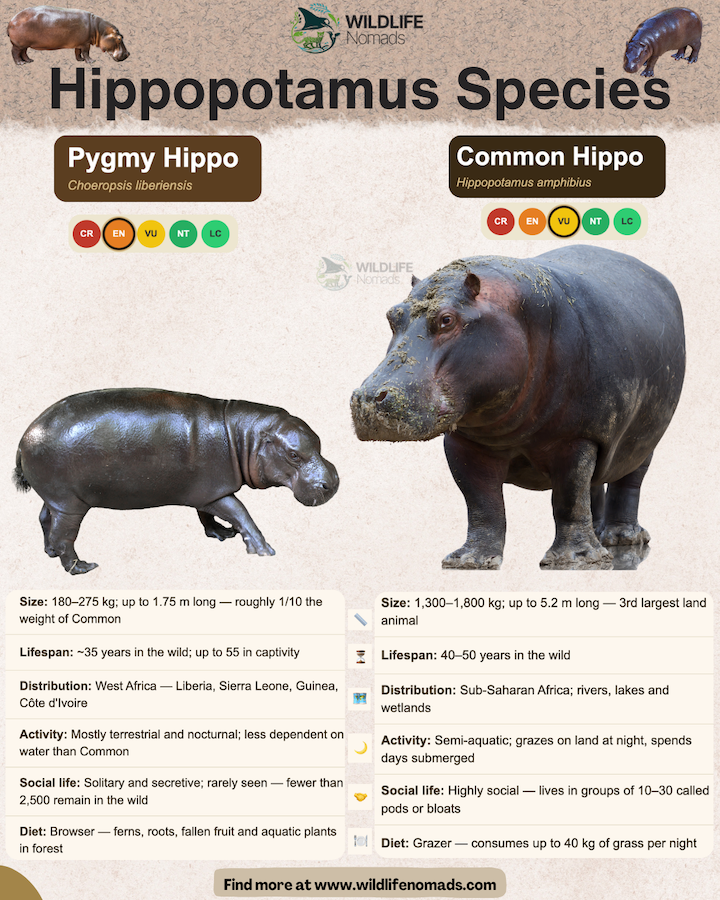
While their larger cousins live in large, social pods along open riverbanks, adult pygmy hippos are solitary, forest-floor dwellers. The comparison here is between adult pygmy hippos and adult common hippos, highlighting their significant differences in size and lifestyle. Think less ‘miniature river tank’ and more ‘specialist forest ungulate.’ They occupy a completely different ecological niche, which is exactly what makes them so scientifically important.
2. Their Scientific Name Has Been Debated for Decades
Taxonomy is rarely simple. The pygmy hippopotamus, scientifically named Choeropsis liberiensis, It belongs to the genus Choeropsis within the family Hippopotamidae, which places it in the same family as the common hippopotamus but in a distinct genus.
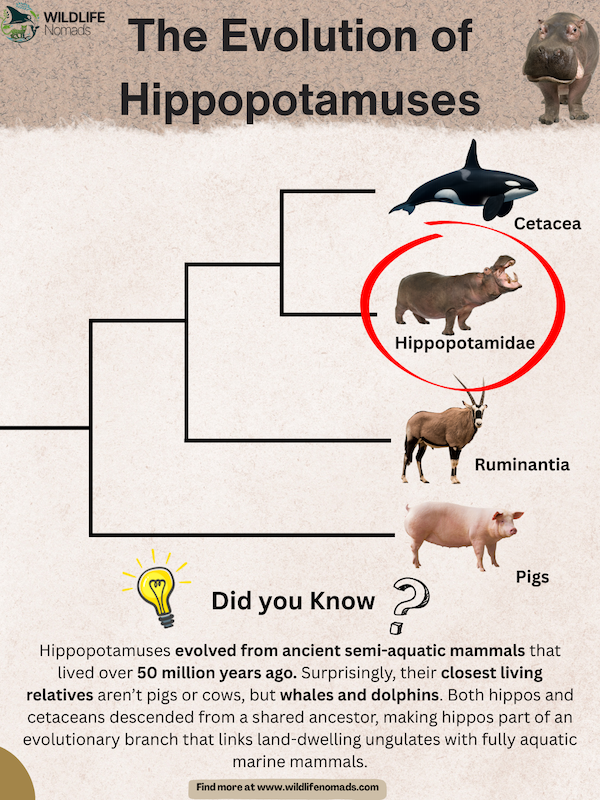
You’ll often see the pygmy hippopotamus referred to as either Choeropsis liberiensis or Hexaprotodon liberiensis. For years, scientists used the Hexaprotodon classification to link them with extinct hippo lineages. However, modern molecular analysis has largely returned the community to Choeropsis. The distinction matters, it reflects ongoing discoveries about the evolutionary history of hippos and their surprising relationship to modern cetaceans such as whales and dolphins.

3. Their Skin Produces a Natural Sunscreen
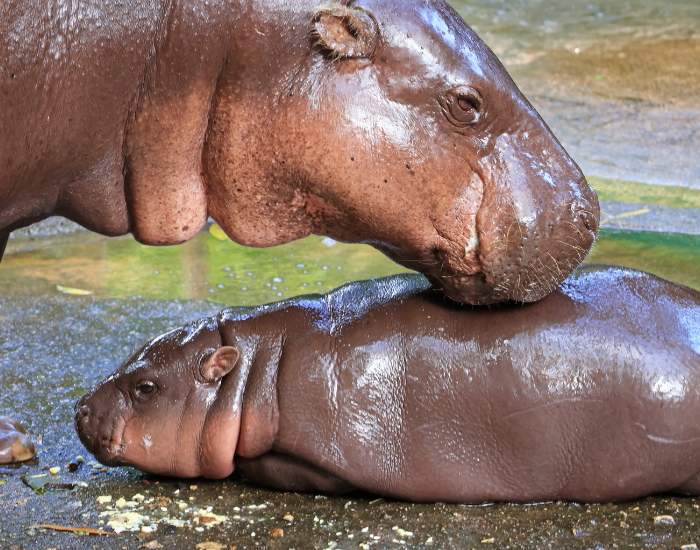
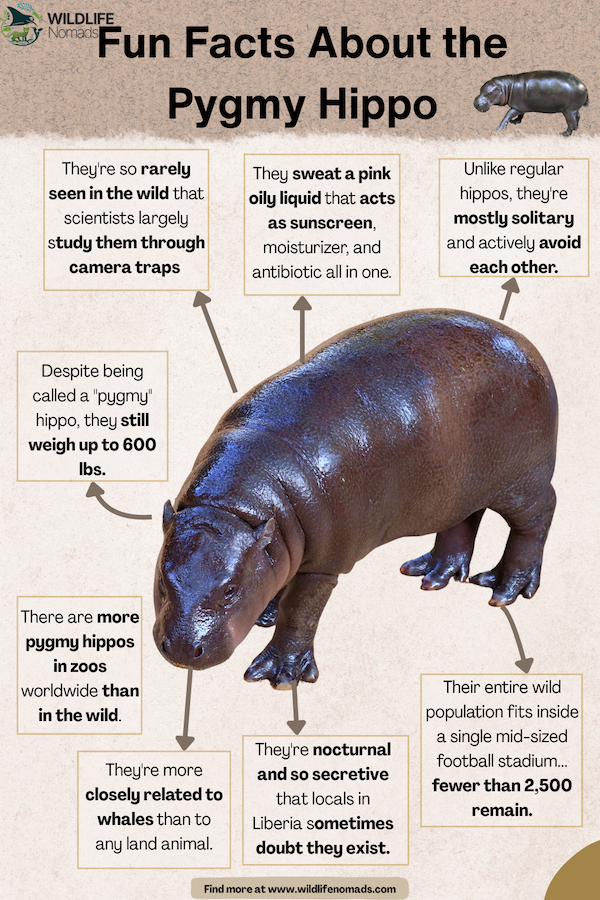
If you watch a pygmy hippo — or any hippopotamus — closely, you’ll notice that its skin oozes a reddish, oily secretion. Many people call this ‘blood sweat,’ but that description is misleading on both counts. The secretion is neither blood nor sweat. It’s a compound called hipposudoric acid, and it performs three critical functions simultaneously.
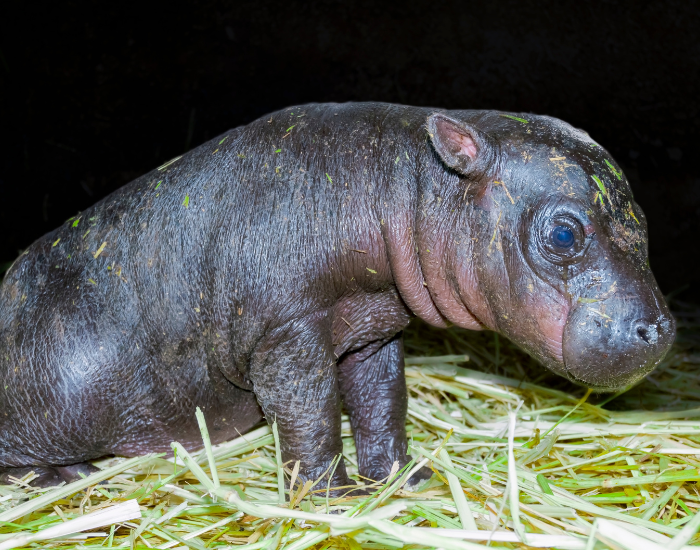
A pygmy hippo’s skin is susceptible to sunburn and dehydration, which is why it secretes this pink fluid known as ‘blood sweat’ to protect its skin. The smooth and thin top layer of skin helps pygmy hippos stay cool in the humid rainforest. Tiny mucus glands in the skin contribute to the animal’s glossy, moist appearance, making this adaptation especially effective in their tropical environment.
First, it acts as a powerful natural sunscreen. Second, it keeps the skin moist and prevents cracking in the humid forest environment. Third, it works as a natural antibiotic to fight skin infections. For an animal that spends time in dense undergrowth and shallow waterways, this skin coating is an essential evolutionary adaptation.
4. Their Feet Reveal Their Lifestyle
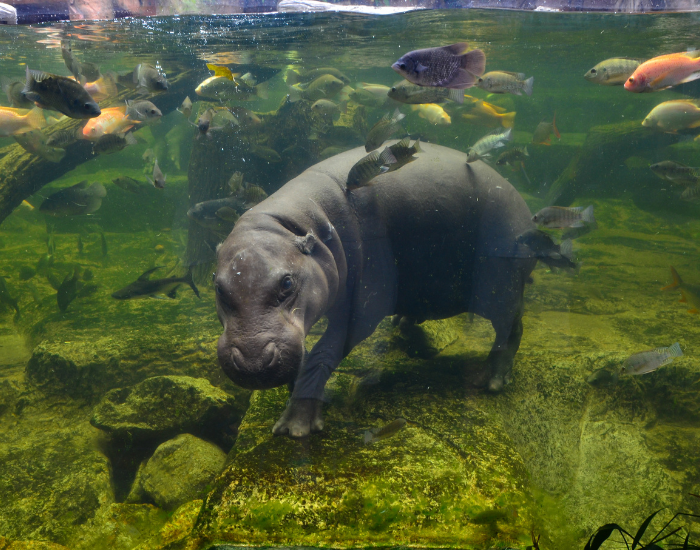
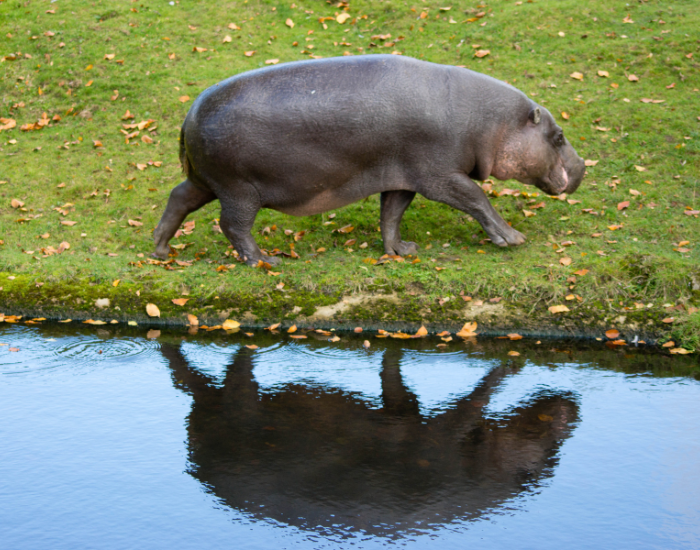
Look closely at a pygmy hippo’s feet, and you’ll immediately notice the difference from a common hippo. Common hippos have wide, heavily webbed hooves designed for maneuvering through deep, slow rivers. Pygmy hippos, by contrast, have more spread-out toes with far less webbing. This structure prioritizes grip and stability on the forest floor over swimming efficiency. It’s a clear physical signal of their terrestrial lifestyle.
5. A Subspecies Has Already Gone Extinct
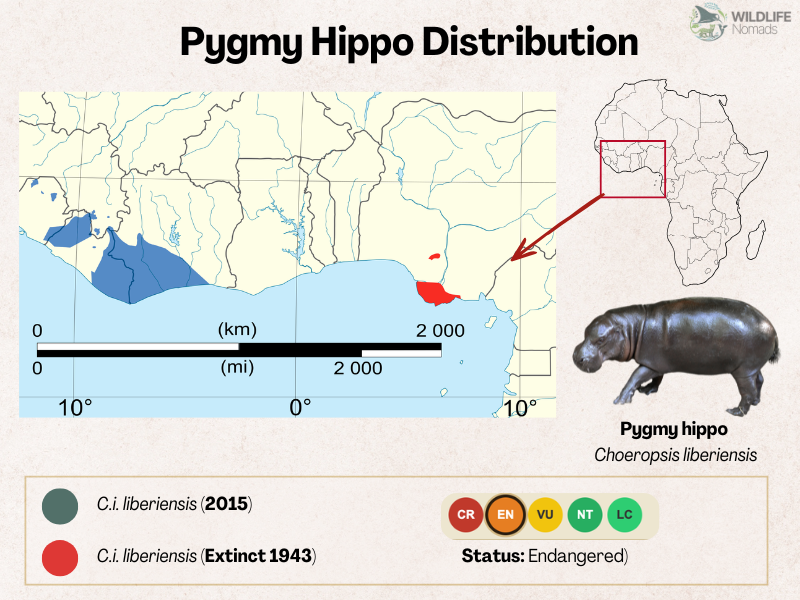
One of the most sobering chapters in pygmy hippo history involves the Nigerian subspecies, Choeropsis liberiensis heslopi. Reports historically placed a small, isolated population in the Niger Delta — nearly 1,800 kilometres from the main range in Liberia and surrounding countries. No confirmed sightings have occurred since the 1940s, and the subspecies is now widely considered extinct. It stands as a stark reminder of how quickly unique biodiversity disappears, often before scientists get a real chance to study it.
6. They Are Masters of Evasion
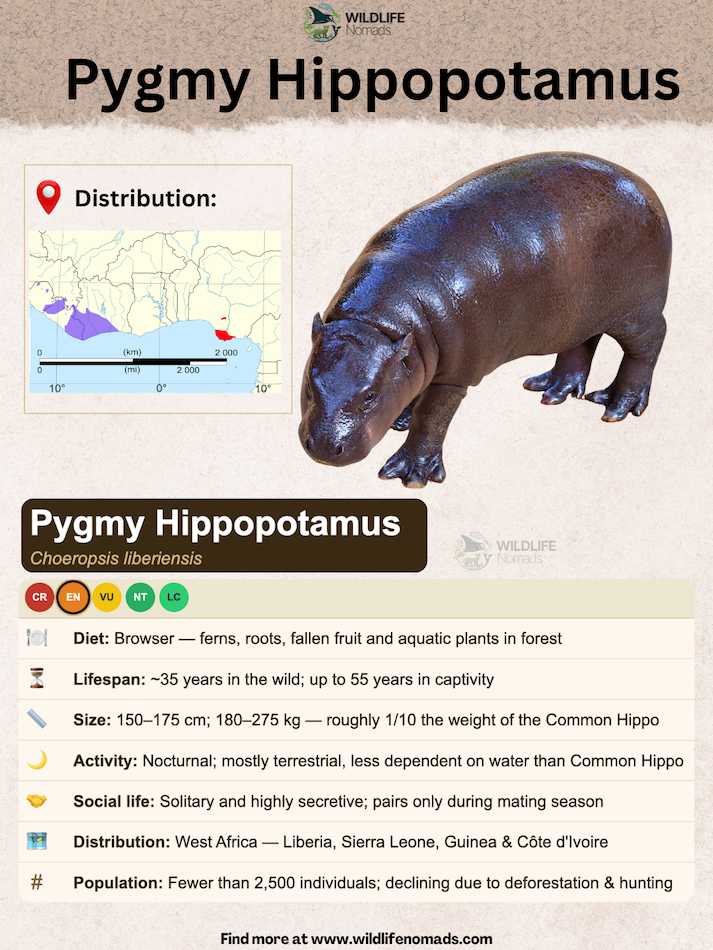
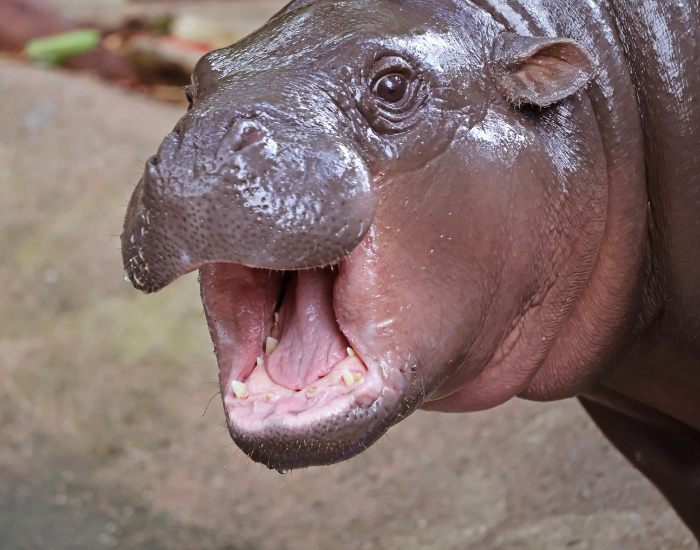
Pygmy hippos live in dense, low-lying rainforests and swamps in West Africa, particularly in Liberia, Sierra Leone, Guinea, and Côte d’Ivoire, where their elusive nature makes them difficult to observe. These forests provide exceptional cover, and pygmy hippos are primarily nocturnal and elusive, spending most of their time hidden in rivers and swamps during the day. Pygmy hippos spend daylight hours concealed in water or thick vegetation, emerging at dusk to forage, which makes them nearly impossible to track or count without advanced tools like camera traps.
Research conducted through Sapo National Park in Liberia produced the first photographic evidence of the species in the country — after 1,247 camera-trap days, scientists captured just seven photographs. That’s how elusive these animals truly are.
7. Their Diet Differs Completely From Common Hippos
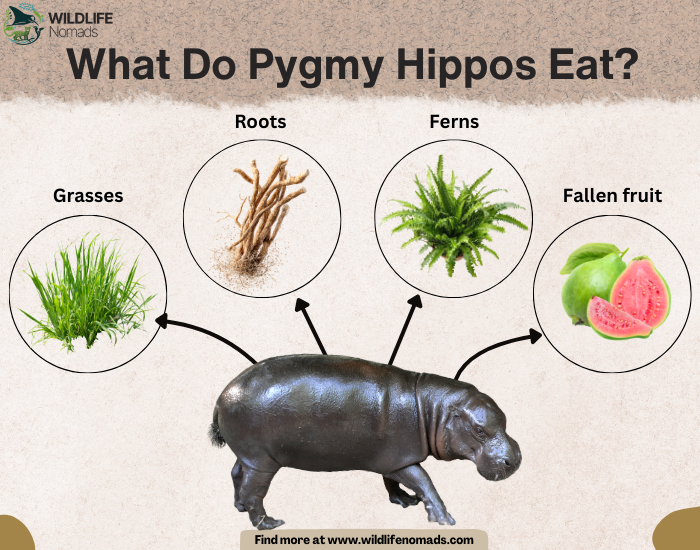
Common hippos are famous grass-grazers that dominate open riverbanks at night. The pygmy hippopotamus, however, is a dedicated browser. Studies of wild individuals in Taï National Park, Côte d’Ivoire, found their diet includes leaves, ferns, roots, and fallen fruits gathered from the forest floor.
Researchers found they functioned as intermediate feeders, consuming at least seven different plant species including monocots, dicots, and ferns. This niche diet keeps them tucked deep inside the forest and reduces competition with their larger relatives.
8. Reproduction Remains Poorly Understood
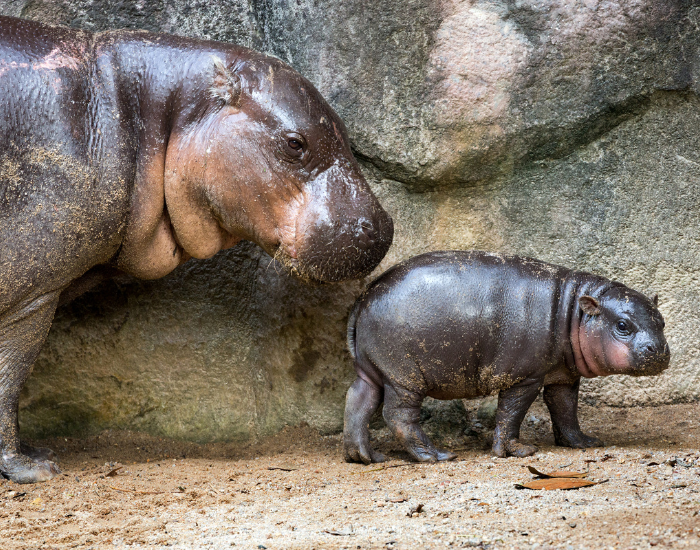
Because pygmy hippos are so elusive, most reproductive data comes from captive populations. In the wild, they are solitary animals that come together only to mate. They give birth to a single calf, twins are extremely rare. The gestation period lasts approximately six to seven months. After birth, the mother hides her calf in a secluded forest location, returning periodically to nurse. This ‘parking’ behavior is a classic survival strategy for forest ungulates, protecting the calf while the mother forages.
Captive studies have also revealed a female-biased sex ratio in zoo populations, along with a high rate of polycystic kidney disease. These findings highlight how much we still don’t understand about pygmy hippo biology.
9. The Size Difference Is Extraordinary
The scale comparison between these two hippopotamus species is striking. An adult common hippo can weigh between 1,500 and 3,000 kilograms. An adult pygmy hippo weighs just 160 to 270 kilograms. That’s roughly one-tenth the mass of its larger relative. At 75 to 100 centimetres tall at the shoulder and up to 175 centimetres in length, the pygmy hippo is perfectly proportioned for navigating dense tropical vegetation that would stop a common hippo entirely.
10. The Conservation Crisis Is Urgent
Fewer than 2,500 pygmy hippos are estimated to remain in the wild. The IUCN Red List classifies the species as Endangered. The Upper Guinea Forest — their primary habitat — has lost more than 90% of its original area since 1900. Between 2000 and 2019 alone, approximately 15,900 square kilometres of forest within pygmy hippo habitat were destroyed, primarily through shifting agriculture, according to satellite analysis of their West African range.
Additional threats include illegal gold mining, logging, bushmeat poaching, and political instability across range states. Because pygmy hippos are solitary and require large territories, habitat fragmentation isolates populations and prevents individuals from finding mates. Protecting their forest habitat isn’t just about saving a single charismatic species, it preserves an entire evolutionary lineage that has existed for millions of years.
11. They Are Evolutionary Relatives of Whales
It sounds strange, but if you look at their evolutionary lineage, pygmy hippos are closely related to other hippo species and share a surprisingly close common ancestor with whales. Both groups belong to the order Artiodactyla, and modern molecular research suggests that cetaceans branched off from an ancient, hippo-like ancestor.
12. A Presidential Connection and Delicate Biology
The history of this species in the West is as unique as the animal itself. In 1927, President Calvin Coolidge received a pygmy hippo named Billy as a gift from Harvey Firestone (of the tire company, who had plantations in Liberia). Billy eventually became the patriarch of most pygmy hippos found in American zoos today. However, caring for them is a challenge because of their physiology.
FAQs About Pygmy Hippos
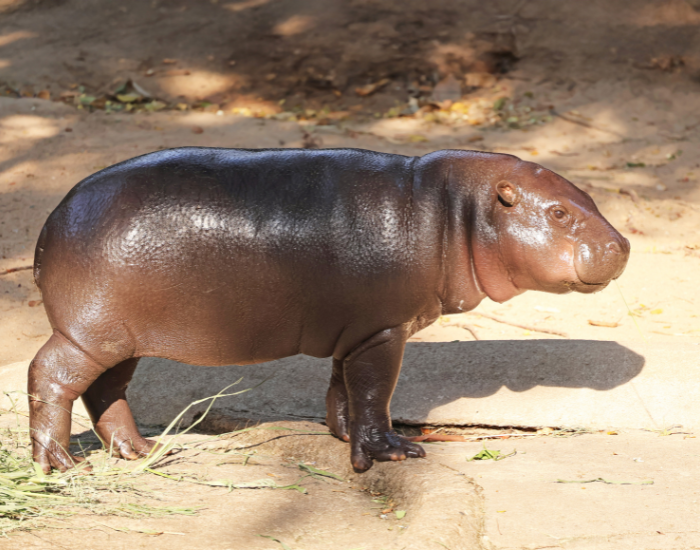
Current estimates suggest fewer than 2,500 individuals remain in the wild. The IUCN lists the species as Endangered, making conservation efforts critical to their survival.
Pygmy hippos are browsers rather than grazers. They eat leaves, ferns, roots, and fallen fruits found on the forest floor. Their diet distinguishes them clearly from common hippos, which primarily graze on grass.
Unlike common hippos, which are among the most dangerous animals in Africa, pygmy hippos are generally shy and non-confrontational. They prefer to disappear into the undergrowth rather than engage with threats.
Protecting the Forest’s Hidden Legacy
The pygmy hippopotamus stands as a testament to the wonders of biodiversity and the urgent need for conservation. As an endangered species, the pygmy hippo faces mounting threats from habitat loss, hunting, and human encroachment. Yet, its survival is vital, not only for the species itself but for the health of West Africa’s forests and the countless other animals that share its habitat.
Pygmy hippo conservation depends on a combination of scientific research, habitat protection, and public awareness. Learning about the pygmy hippopotamus inspires us to value the intricate web of life on our planet and reminds us that every species, no matter how elusive, has a role to play in the natural world. Let’s work together to protect the pygmy hippopotamus and the wild places it calls home.
References:
Collen, B., Howard, R., Konie, J., Daniel, O., & Rist, J. (2011). Field surveys for the Endangered pygmy hippopotamus Choeropsis liberiensis in Sapo National Park, Liberia. Oryx, 45(1), 35–37. https://doi.org/10.1017/S0030605310001444
Conway, A. L., Hernandez, S. M., Carroll, J. P., Green, G. T., & Larson, L. (2015). Local awareness of and attitudes towards the pygmy hippopotamus Choeropsis liberiensis in the Moa River Island Complex, Sierra Leone. Oryx, 49(3), 550–558. https://doi.org/10.1017/S003060531300077X
Flacke, G. L., Chambers, B. K., Martin, G. B., & Paris, M. C. J. (2015). The pygmy hippopotamus Choeropsis liberiensis (Morton, 1849): Bringing to light research priorities for the largely forgotten, smaller hippo species. Der Zoologische Garten, 84(5–6), 234–265. https://doi.org/10.1016/j.zoolgart.2015.07.006
Hillers, A., Buchanan, G. M., Garteh, J. C., Tommy, S. M., Fofana, M. L., & Lindsell, J. A. (2017). A mix of community-based conservation and protected forests is needed for the survival of the Endangered pygmy hippopotamus Choeropsis liberiensis. Oryx, 51(2), 230–239. https://doi.org/10.1017/S003060531600020X
Kardos, M. C., Velmurugan, S., & Janecka, J. E. (2023). Molecular data suggests a Pliocene – Early Pleistocene divergence date for the common and pygmy hippopotamus. Frontiers in Ecology and Evolution, 11, Article 1144711. https://doi.org/10.3389/fevo.2023.1144711
Ransom, C., Robinson, P. T., & Collen, B. (2015). Choeropsis liberiensis. The IUCN Red List of Threatened Species 2015: e.T10032A18567171. https://doi.org/10.2305/IUCN.UK.2015-2.RLTS.T10032A18567171.en
Saikawa, Y., Hashimoto, K., Nakata, M., Yoshihara, M., Nagai, K., Igarashi, M., & Komai, K. (2004). The red sweat of the hippopotamus. Nature, 429(6990), 363. https://doi.org/10.1038/429363a