When you think of Africa’s “Big Five,” the imposing hippo often gets overlooked. Yet, as a field biologist, I’ve always found this barrel-shaped behemoth to be one of the most fascinating subjects of study. While my personal encounters have primarily been within the controlled environments of world-class zoos, where their sheer mass and distinctive, pungent musk leave a lasting impression, their role in the wild is far more complex.
Beyond being “secretive and smelly,” hippopotamuses (Hippopotamus amphibius) are essential ecosystem engineers. In the field of evolutionary biology, they represent a stunning example of adaptation, filling a niche that bridges the gap between land and water. Today, we’re breaking down the science behind these giants, from their surprising relatives to their status as a keystone species in sub-Saharan Africa.
Meet the Most Dangerous Animal in Africa: Hippopotamuses
The journey to understanding these giants begins with their name. The full name comes from the Greek hippos (horse) and potamos (river).
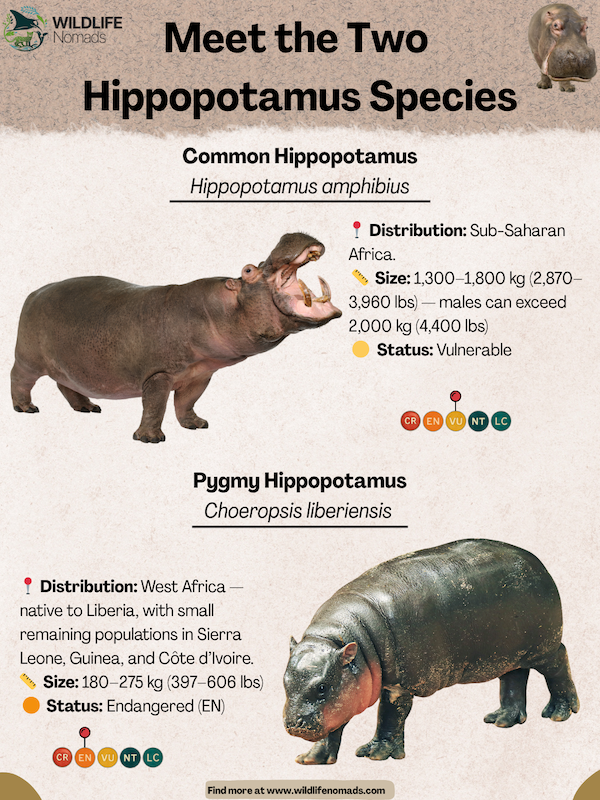
Two distinct hippopotamus species exist today. The massive common hippopotamus (Hippopotamus amphibius) and the smaller, more elusive pygmy hippopotamus (Choeropsis liberiensis). While the common hippo’s name suggests widespread abundance, the species is currently listed as Vulnerable on the IUCN Red List. The pygmy hippo faces even greater threats and is classified as Endangered.
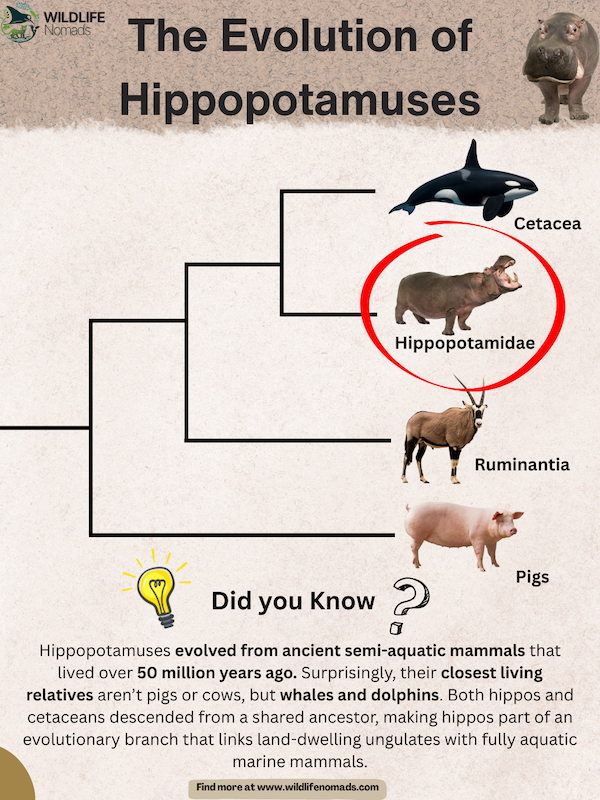
The Evolution of Hippopotamuses: Related to Pigs?
Perhaps the most astonishing fact about their biology is this: the hippopotamuses’ closest living relatives are cetaceans, the group that includes whales and dolphins. Forget the image of a hippo being a giant pig or a cow. But genetic studies revealed their evolutionary path diverged from these fully aquatic cousins approximately 55 million years ago
Fossils show that ancient hippo relatives such as Epiriaceratherium and later Anthracotheres were semi-aquatic mammals with long bodies, short legs, and broad feet—traits that hint at the amphibious lifestyle seen in modern hippos. Over millions of years, these species evolved into the two surviving members of the Hippopotamidae family: the common hippopotamus and the pygmy hippopotamus. Today’s hippos retain many adaptations from their ancient ancestors, including dense bones for underwater stability, eyes and nostrils positioned high on the skull, and a lifestyle centered around rivers and lakes.
Where Hippos Live: Habitat and Distribution
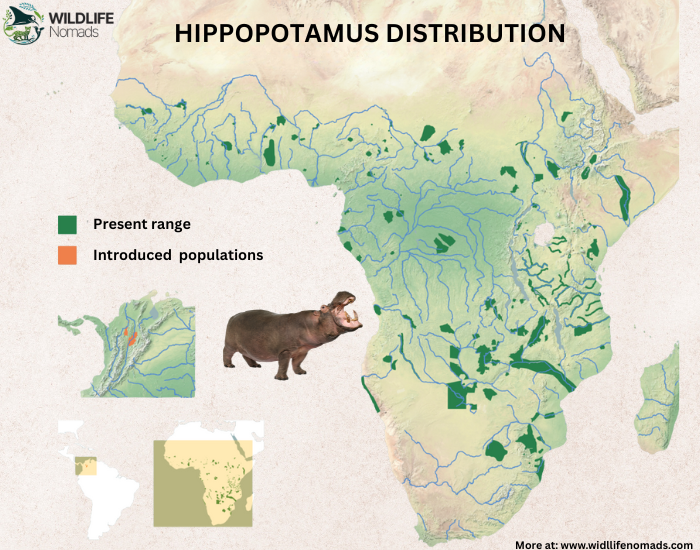
So, where do hippos live? And what exactly defines the hippopotamus habitat?
The common hippopotamus once ranged far and wide across Africa. Today, you will find the main hippo populations concentrated in the rivers, lakes, and extensive wetlands of sub-saharan Africa. East Africa and southern Africa host the largest concentrations. However, smaller populations exist in West Africa and central Africa. They are another star in one of the main spectacles on earth: The great wildebeest migration! Not as dramatic as lions or crocodiles, but the giants will be on the rivers of the Serengueti, interacting with the other actors.
Hippos rely entirely on access to water. This is why the question, “Why does the hippo live in water?” is so fundamental to understanding these semi-aquatic mammals.
The Hippo’s Day-Night Schedule
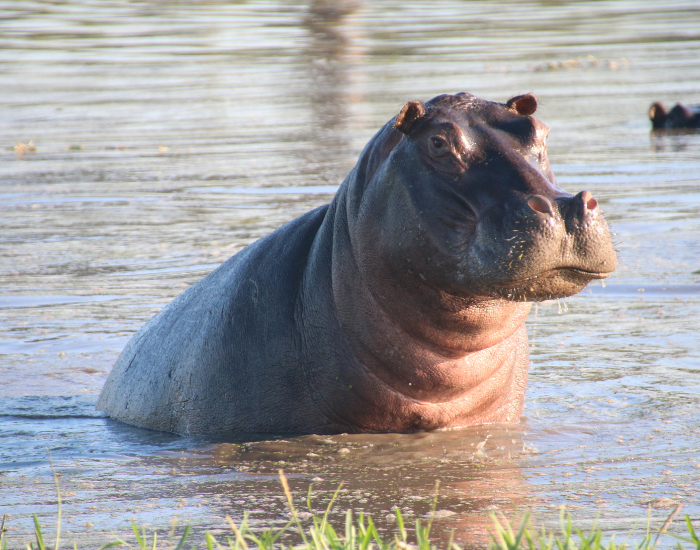
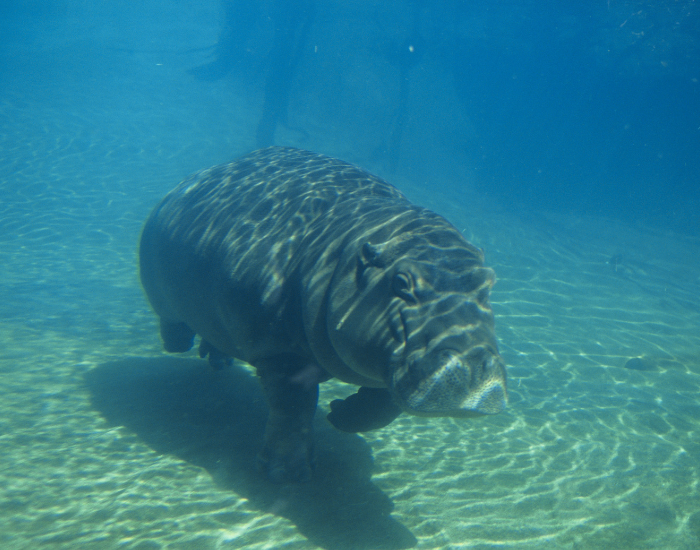
Daytime: Hippos spend nearly all day submerged in shallow water like a nearby pool. This isn’t for swimming, in fact, hippopotamuses are not great swimmers. Their dense body weight causes them to sink. Instead, they “walk” or “bound” along the river beds and lake bottoms.
The water serves as their natural air conditioner and sunblock. It prevents their sensitive hippo skin from drying out and cracking in the harsh African sun. Adult hippos can remain submerged for up to five minutes before surfacing to breathe.
Nighttime: As the sun sets, hippos emerge from the water and travel onto dry land for their nightly feast. They can roam several miles from the water source to graze on grass. This nightly commute is essential for their survival and, as we’ll see, for the entire ecosystem.
The hippo environment is truly semi-aquatic. They require a stable water source, whether a river, swamp, or lake, and adjacent grassy plains for feeding. Their range is often referred to as their hippo territory, which dominant males mark and fiercely defend.
Diet and Foraging: Do Hippos Eat Meat?
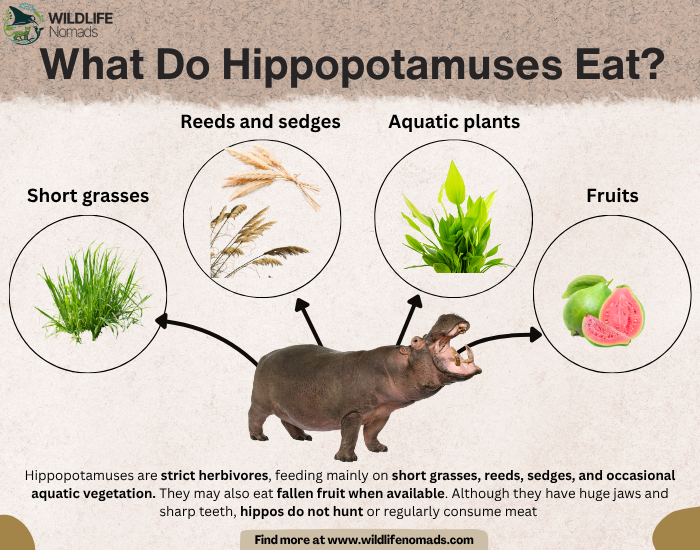
One common question is: Do hippos eat meat? And I understand the why, they have big mouth with massive fangs. But the answer is a resounding no. Hippos are herbivores.
While there have been rare, documented instances of hippos consuming a carcass (usually during periods of severe drought or stress), their primary and almost exclusive diet is grass. These impressive grazers can consume up to 40-50 kg (88-110 lbs) of grass in a single night. They use their wide, specialized lips to cut and tear grass, not their fearsome canine teeth.
In places like the San Diego Zoo, captive hippos receive a carefully controlled diet. Keepers provide hay, grains, and vegetables to mimic the nutrition they would get from wild grasses.
The Hippo’s Role as an Ecosystem Engineer
The hippo’s foraging habits are amazing. Their nightly commute from water to land and back again creates a vital ecological connection.
Nutrient Cycling: By feeding on land and then spending their days in the water, hippopotamuses act as critical nutrient transporters. Their dung (which can be a substantial amount) fertilizes the waterways. This provides essential nutrients for aquatic plants, invertebrates, and fish. In addition, this nutrient flow supports entire food webs.
Creating Channels: Their constant travel and massive body weight create deep, worn paths, or hippo trails. These trails can channel water flow, creating new pools and drainage areas. Other aquatic animals and species like fish, turtles, and amphibians benefit from this natural engineering. This engineering role is why scientists consider them keystone species in aquatic ecosystems.
Behavior and Social Structure: How Aggressive Are Hippopotamuses?
This is perhaps the most critical section. It addresses the single most common and most crucial question: How aggressive are hippopotamuses?
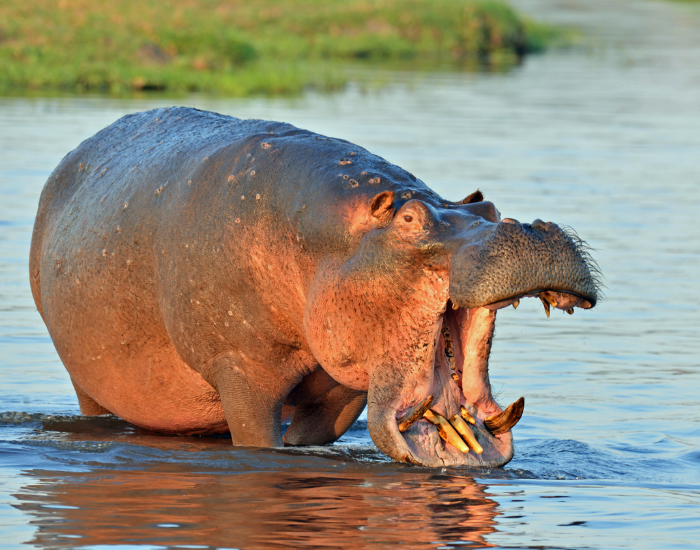
Let’s be clear: the common hippo is widely considered the world’s deadliest land mammal to humans. Hippos are responsible for more human fatalities in Africa than any other animal, including lions and crocodiles.

Are Hippos Aggressive to Humans?
Yes, they can be incredibly aggressive. Their aggression stems primarily from territorial instincts, perceived threats, and overwhelming physical power.
Territoriality: The dominant male fiercely defends his portion of the river. This is especially true for areas where the pod (or “bloat”) rests. An intrusion is met with an immediate, violent defense. Male hippos establish and maintain hippo territory through aggressive displays and physical combat.
Protection of Young: A female hippo protecting her hippo calf represents one of the most dangerous forces in the animal kingdom. Mother hippos are known for launching unprovoked attacks on boats. They can slice vessels in half with their powerful jaws.
Defense Mechanism: When startled on land, especially on the way back to the water—hippos will often charge toward their water refuge. They trample anything in their path. Therefore, never position yourself between a hippo and water.
Their aggression is not fueled by malice but by survival and defense. Their massive adult hippo size, incredibly dense muscle, and long tusks (their hippo teeth) are formidable weapons. Adult hippos can weigh up to 3,200 kg, making them the third-largest living land mammals after elephants and some rhinoceros species.
Unique Hippo Biology: “Blood Sweat”
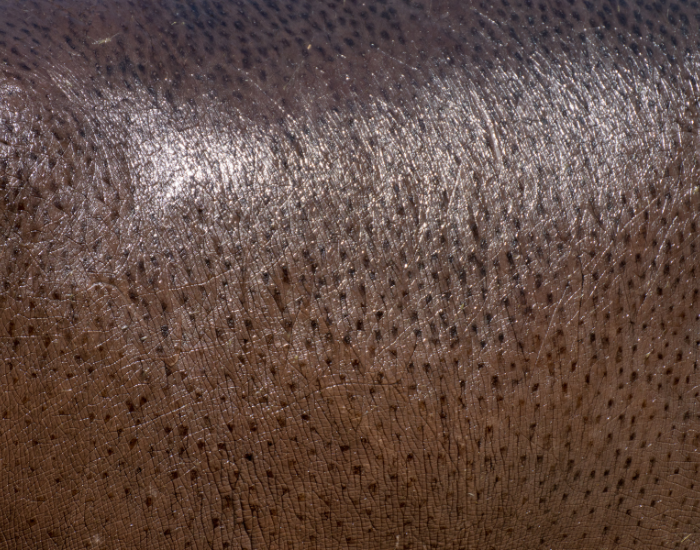
Beyond their aggression, a fascinating fact is their unique skin secretion. Hippos secrete a reddish-orange fluid often referred to as “blood sweat.” This is not actually blood or sweat. Instead, it’s a complex chemical combination that acts as a natural sunscreen (UV protection) and an antiseptic to prevent infection.
This secretion helps protect their frequently submerged, soft hippo skin from harsh sun exposure and bacterial infections. Scientists continue to study this remarkable adaptation for potential medical applications.
Social Dynamics in Hippo Populations
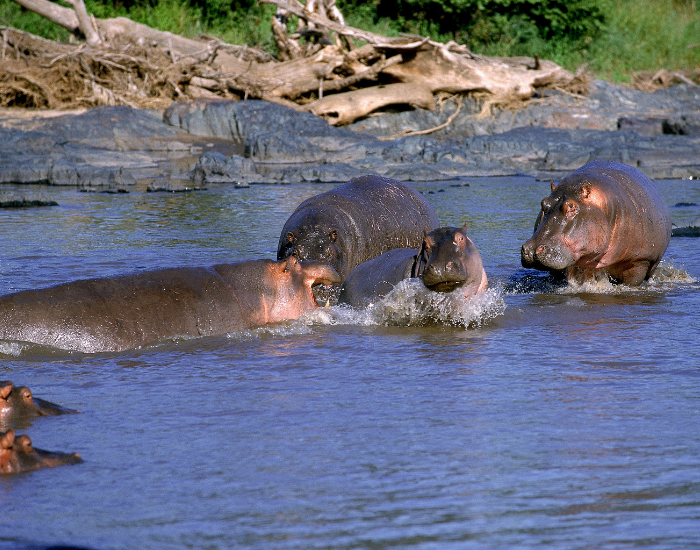
Hippos live in groups called pods or bloats, typically containing 10 to 30 individuals. However, groups can be larger in areas with abundant resources. The social structure revolves around a dominant male who controls access to a stretch of river and the female hippos within his territory.
Other males are tolerated but must show submission to the dominant male. Young hippos remain with their mothers for several years before becoming independent. Female hippos often stay in their birth group, while young male hippos eventually leave to establish their own territories.
Conservation Status and Threats to Hippo Populations
Despite their fearsome nature, hippos face existential threats. They are listed as Vulnerable, meaning they face a high risk of extinction in the wild. Some regional populations are even more critically endangered.
Key Threats to Hippo Populations
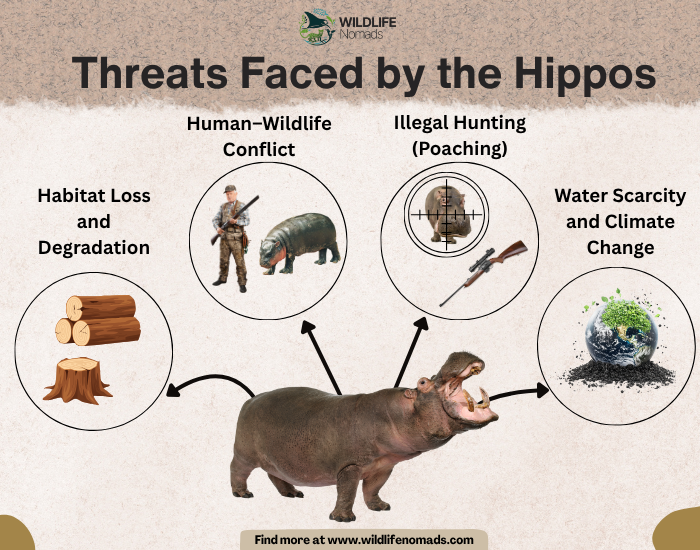
Habitat Loss: This is the number one threat facing hippos today. As human populations expand, wetlands are drained for agriculture, settlements, or livestock grazing. This destroys the vital hippopotamus environment and pushes hippos into closer proximity to people. Consequently, human-wildlife conflict increases dramatically.
National parks and protected areas provide crucial refuge. However, these protected zones face pressure from surrounding development and climate change impacts.
Poaching: Hippopotamuses are illegally hunted for two main reasons:
Hippo Meat: In some regions, hippo meat serves as a source of protein. Illegal hunting for meat threatens local populations, particularly in areas with weak law enforcement.
Hippo Ivory: Their massive canine teeth are made of dentin, a type of ivory. This hippo ivory is still illegally traded internationally. In some cases, it replaces or supplements the illicit trade of elephant ivory. The hippo teeth of adult males can grow up to 50 cm long, making them particularly valuable to poachers.
Human-Hippo Conflict: As their habitats shrink, conflicts with human populations increase. Farmers often view hippos as pests that destroy crops. A single hippo can devastate an entire field in one night. Their unpredictable aggression leads to retaliatory killings by communities seeking to protect their livelihoods.
Hippo Reproduction and Life Cycle
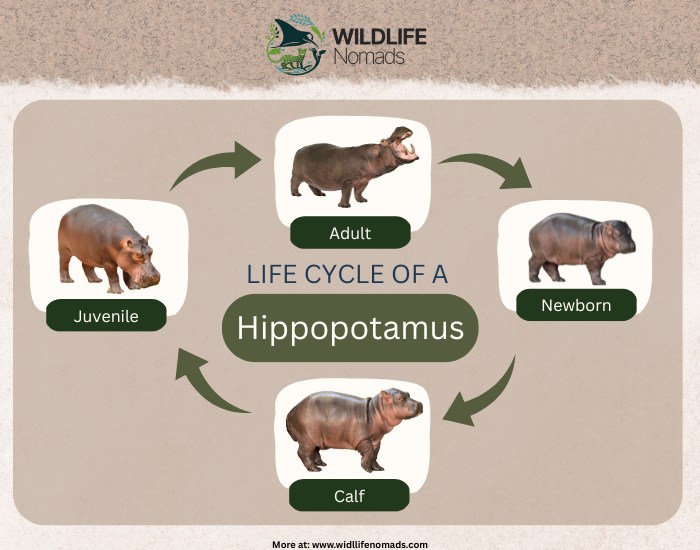
Understanding how hippos reproduce helps conservation efforts. Female hippos reach sexual maturity around 5-6 years, while male hippos mature around 7-8 years.
The gestation period lasts approximately 8 months. Female hippos typically give birth to a single hippo calf, though twins occur rarely. Mothers give birth either on land or in shallow water. Young hippos can swim almost immediately after birth.
The bond between mother and calf is strong. Mothers are fiercely protective, and calves nurse for 6-8 months. However, they begin eating grass within a few weeks. Young hippos stay close to their mothers for up to 8 years, learning essential survival skills.
In the wild, hippos can live 40-50 years. In captivity, with proper care, some hippos have lived beyond 50 years. The oldest hippo on record lived to 65 years.
Pygmy Hippos: The Smaller Cousins
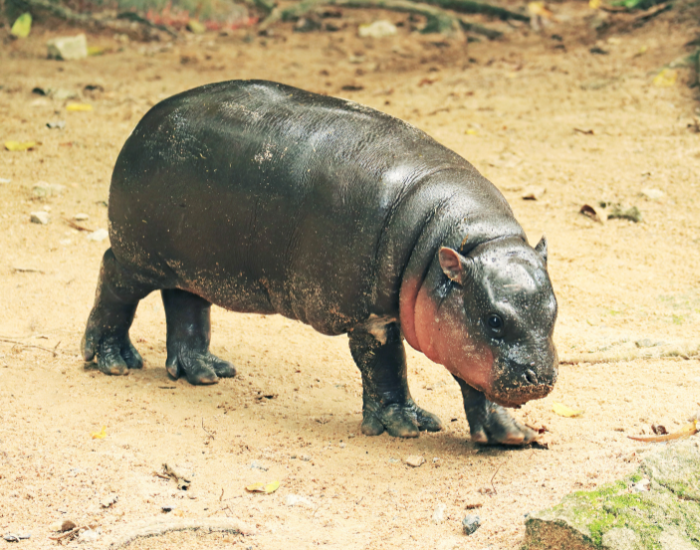
While common hippos get most attention, pygmy hippos deserve mention, and they are very cute. The pygmy hippopotamus (Choeropsis liberiensis) is significantly smaller, weighing only 180-275 kg compared to the common hippo’s 1,500-3,200 kg.
Pygmy hippos are native to the forests and swamps of West Africa, primarily in Liberia, Sierra Leone, Guinea, and Côte d’Ivoire. Unlike common hippos, pygmy hippos are more solitary and spend more time on land. They prefer dense forest streams rather than open rivers.
Pygmy hippos face even greater conservation challenges. Their habitat is rapidly disappearing due to logging and agricultural expansion. The IUCN lists them as Endangered, with possibly fewer than 2,500 individuals remaining in the wild.
Hippos and Human Culture
Throughout history, hippos have appeared in human culture and mythology. Ancient Egyptians both feared and revered hippos. The goddess Taweret, depicted as a pregnant hippopotamus, protected women during childbirth.
In modern times, hippos often appear in zoos worldwide. These captive populations help educate the public about conservation needs. However, they also present challenges. Hippos in captivity require large pools, substantial food, and careful management due to their aggressive nature.
Fascinating Hippo Facts: Quick Reference
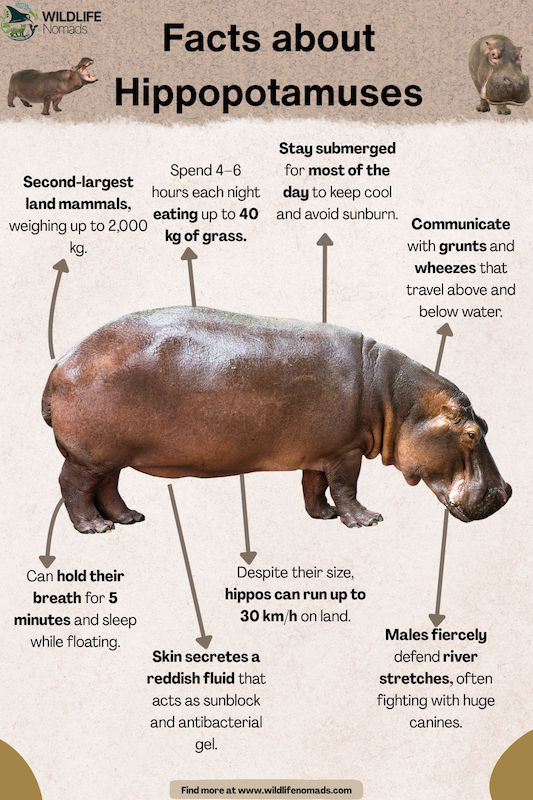
Not really. Hippos are too dense and sink in water. They walk or bounce along the bottom instead.
Adult hippos can stay submerged for 3-5 minutes. Young hippos surface more frequently.
No. Hippos must surface regularly to breathe. However, they can sleep partially submerged, automatically surfacing to breathe without fully waking.
No. Despite appearances, their closest living relatives are whales and dolphins.
On land, hippos can run up to 30 km/h (19 mph) in short bursts. Therefore, you cannot outrun an adult hippo.
Many countries ban hunting and trading hippo meat due to conservation laws. The species’ Vulnerable status necessitates protection from commercial exploitation.
The Future of Hippopotamuses
The future of hippos depends on our actions today. Climate change continues to alter the aquatic ecosystems these animals depend on. Human populations in Africa are growing rapidly, increasing pressure on wildlife habitats.
However, hope exists. Conservation programs are making a difference. National parks in East Africa, southern Africa, and West Africa protect crucial hippo populations. Community-based conservation initiatives are reducing human-wildlife conflict.
Young hippos born in these protected areas represent hope for the species. As awareness grows about the importance of hippopotamuses to aquatic ecosystems, support for conservation increases.
Protecting the African River Horse
The hippopotamus is a truly fascinating creature. This semi-aquatic giant’s power and territorial nature have earned it a fearsome reputation. Yet its very existence is crucial for the health of Africa’s water systems.
From their “blood sweat” sunscreen to their essential role as ecosystem engineers, the world of hippopotamuses is one of complexity, power, and surprising vulnerability. Common hippos and pygmy hippos both face uncertain futures without continued conservation efforts.
We must support the conservation efforts that safeguard hippopotamus habitats and mitigate human-wildlife conflict. The hippo populations we protect today will determine whether future generations can witness these incredible semi-aquatic mammals in the wild. Their survival depends on the choices we make now.
Quick Hippo Stats
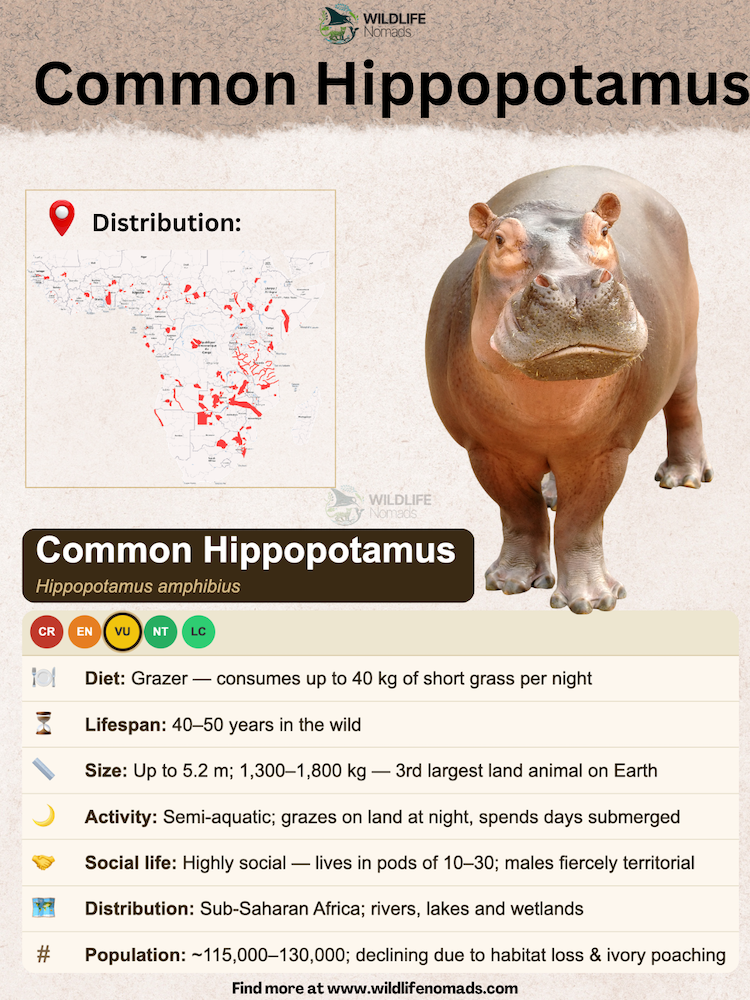
| Characteristic | Common Hippopotamus |
|---|---|
| Scientific Name | Hippopotamus amphibius |
| IUCN Status | Vulnerable (VU) |
| Typical Range | Sub-Saharan Africa |
| Diet | Herbivore (primarily grass) |
| Adult Weight | 1,500 kg to 3,200 kg |
| Lifespan (Wild) | Around 40-50 years |
Hippopotamus Challenge
Eight multiple-choice questions on Africa’s river behemoth. How many can you get right?
Find a Hippo in the Wild!
This blog is reader-supported. When you buy experiences through links listed on this site, we may earn an affiliate commission
References:
Britannica Editors (2025, July 10). Why Are Hippos Dangerous?. Encyclopedia Britannica. https://www.britannica.com/science/Why-Are-Hippos-Dangerous
Geisler, J. H., & Theodor, J. M. (2009). Hippopotamus and whale phylogeny. Nature, 458(7234), E1–E4. https://doi.org/10.1038/nature07776
Lacy, H., Beger, M., & Traill, L. W. (2024). Present distribution of common hippopotamus populations in southern Africa, and the need for a centralised database. Biological Conservation, 291, Article 110878. https://doi.org/10.1016/j.biocon.2024.110878
Lewison, R., & Pluháček, J. (2017). Hippopotamus amphibius. The IUCN Red List of Threatened Species 2017: e.T10103A18567364. https://dx.doi.org/10.2305/IUCN.UK.2017-2.RLTS.T10103A18567364.en
Saikawa, Y., Hashimoto, K., Nakata, M., Komura, M., Ueda, K., Tamura, H., Taniguchi, T., & Dadachova, E. (2004). The red sweat of the hippopotamus. Nature, 429(6990), 363. https://doi.org/10.1038/429363a
Utete, B. (2020). A review of some aspects of the ecology, population trends, threats and conservation strategies for the common hippopotamus, Hippopotamus amphibius L, in Zimbabwe. African Zoology, 55(3), 187–200. https://doi.org/10.1080/15627020.2020.1779613