My first hornbill stood on a sign at the beach. April 2024, my third day on Langkawi, Malaysia. It was an Oriental pied hornbill, perched right beside me. I had seen parrots and macaws across the Americas, and kookaburras in Australia. I had never seen a hornbill.
Birders call that a lifer: the first time you see a species. That moment is the whole hook of birding. With about 11,131 bird species recognised worldwide, nobody ever runs out of lifers to discover.
I trained as a conservation biologist, and I still misidentify birds. You will read about my worst mistakes below. This birdwatching guide covers the gear you need and the best times and places to watch birds. It shows you how to identify what you see. Finally, it covers etiquette, because good birding never costs the birds anything.
What Is Birding, Anyway?
Birding, or bird watching, is the practice of observing wild birds in their natural habitat. You can observe birds with binoculars, a camera, or simply your eyes and ears. Some people keep a casual eye on the birds at their feeder. Others fly to Costa Rica hoping for a resplendent quetzal.
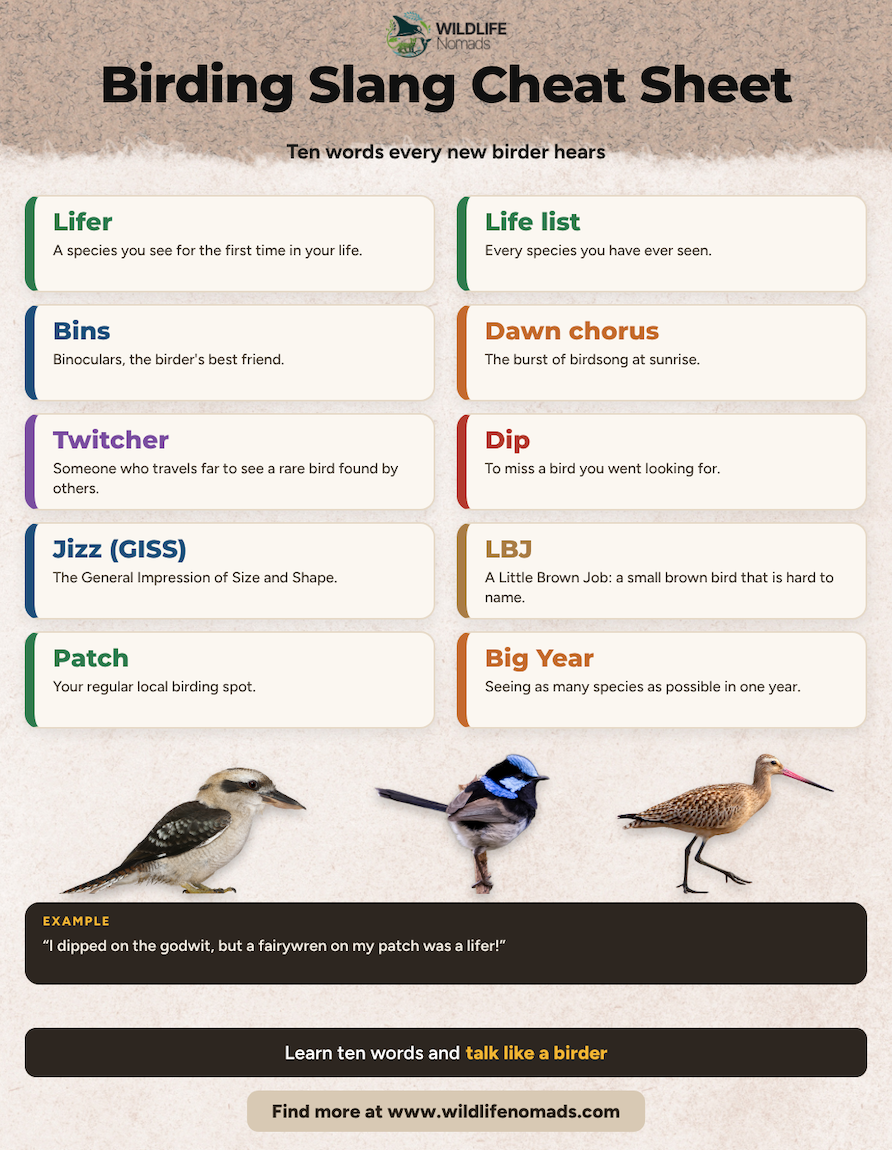
Birders have their own slang, and you will pick it up fast. A lifer is a species you see for the first time. Bins are binoculars. Your life list is every species you have ever seen. Twitching means chasing a rare bird that someone else has already found.
Not every chase ends well. I have trekked the rainforests of Chiapas many times and scanned the canopy at Palenque for quetzal plumes. I have still never seen a wild quetzal. It sits at the top of my list.
Recreational or Competitive?
Birding styles range from casual observation to serious listing. Many birders keep a calendar year list alongside their life list. The extreme version is a Big Year: seeing as many species as possible in one year. The 2011 film The Big Year follows three birders racing each other across North America.
Most of us sit somewhere in the middle. A recreational birder might simply want to know who is singing outside the window. That curiosity is enough to start.
A Brief History of Birdwatching
For centuries, studying birds usually meant shooting them first. Naturalists identified species from specimens in the hand, not living birds in the field. Bird watching as a hobby only took shape around 1900.
On Christmas Day 1900, ornithologist Frank Chapman proposed a count to replace the holiday “side hunt”. In a side hunt, teams competed to shoot the most birds and animals. Chapman’s alternative was simpler: count birds instead of killing them. Twenty-seven people took part across 25 locations. The Audubon Christmas Bird Count still runs every winter.
A year later, in 1901, Edmund Selous published a book titled Bird Watching. It is the first recorded use of the phrase in print. Then, in 1934, Roger Tory Peterson released A Field Guide to the Birds. His pocket guide let ordinary people identify birds by sight, and the hobby took off.
Birder, Birdwatcher or Twitcher?
The term birding is older than you might think. Shakespeare used it, but he meant hunting birds with guns or hawks. Today, many North Americans prefer the term birder for someone who pursues the hobby seriously. A 1969 glossary in Birding magazine drew exactly that distinction.
Twitchers are a British invention from the 1950s. The word describes people who travel long distances to tick off a rare bird. Not every birder is a twitcher. Plenty of folks would rather sit by one lake all morning.
Why Birdwatching Is Worth Your Time
You will be in good company. The US Fish and Wildlife Service found that about 96 million Americans watched birds in 2022. That is roughly 37% of people aged 16 and over. Around 91 million watched birds near home, and at least 43 million travelled to see them.
Birders also move serious money. In 2022 they spent $107.6 billion on trips and equipment, according to the same wildlife service report. That spending supported 1.4 million jobs and $279 billion in total economic output. In Texas alone, nature tourism led by birding brings over $300 million a year to the Rio Grande Valley.
The benefits reach your head, too. A UK study found that people with more afternoon birds around their homes reported less depression, anxiety and stress. A 2022 smartphone study went further. Seeing or hearing birds improved people’s mental wellbeing, and the lift lasted for hours. It held even for people diagnosed with depression.
Birding also gives you a reason to keep records. I log every species I see on my lap around Australia. By the seventh stop, my log held 74 species. Every one of them taught me something about the natural world.
How to Get Started With Birdwatching
1. Get the Right Gear
Birding is cheap to start. You can begin with just your eyes and ears, and many birders still find birds by sound first. A few tools make the hobby far easier, though.
- Binoculars
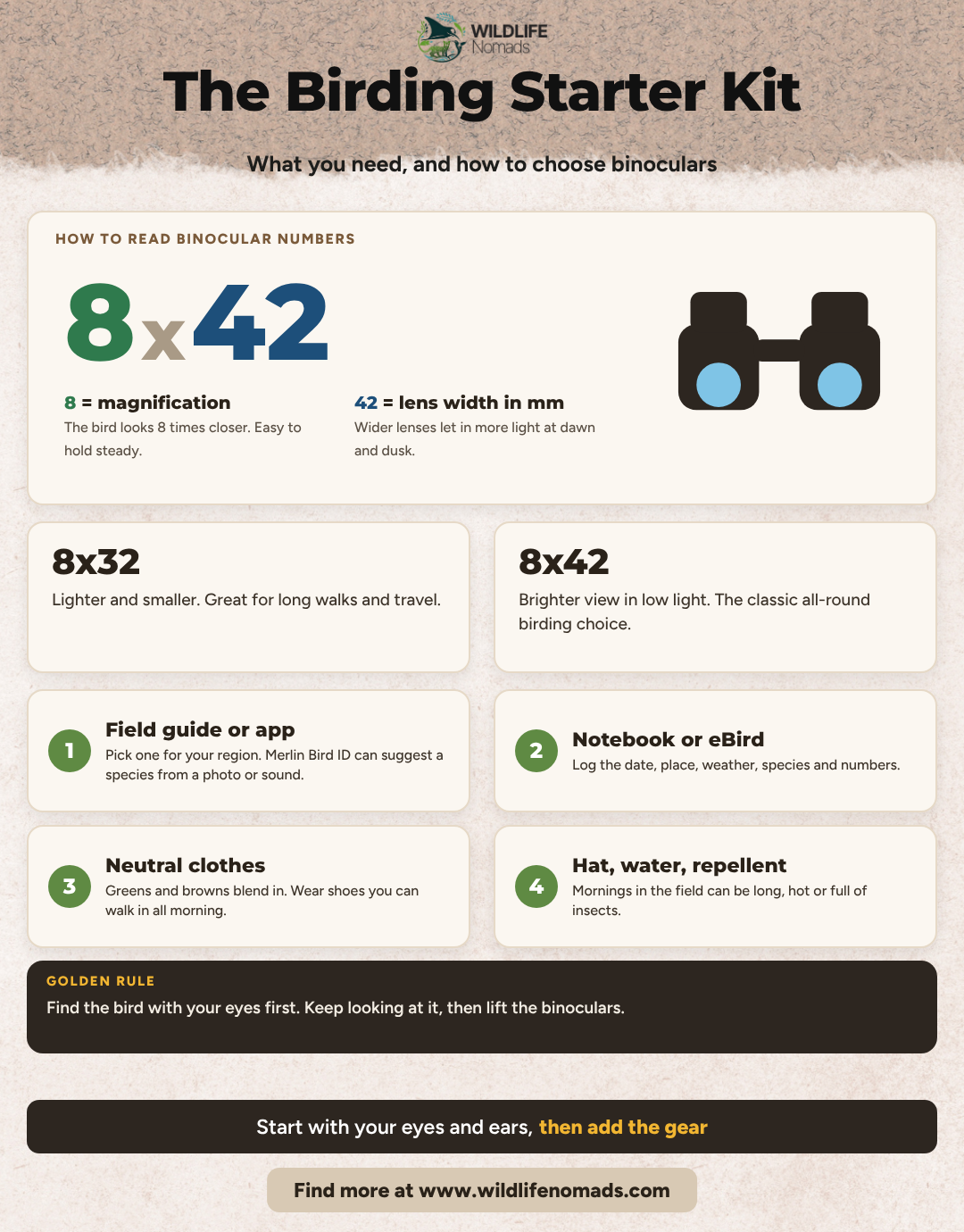
8×42 and 8×32 are the classic birding choices. The first number is magnification; the second is the front lens width in millimetres. Eight times magnification gives a steady, wide view for following moving birds. An 8×32 pair weighs less, while an 8×42 pair gathers more light at dawn and dusk. - Field guide
Pick a book or app for your region, with illustrations, range maps and calls. Mobile apps like Merlin Bird ID can also suggest a species from a photo or a recording. - Notebook or birding app
Record the date, site, weather, species and numbers. Apps like eBird and iNaturalist turn your sightings into citizen science. - Comfortable clothing
Wear neutral colours that blend into the habitat, plus shoes you can walk in all morning. Pack a hat, water and insect repellent.
Here is the method most beginners miss. Find the bird with your naked eye first. Keep your eyes locked on it, then lift the binoculars into your line of sight. Searching through the lenses wastes the few seconds a warbler gives you.

2. Choose the Best Time to Go Birdwatching
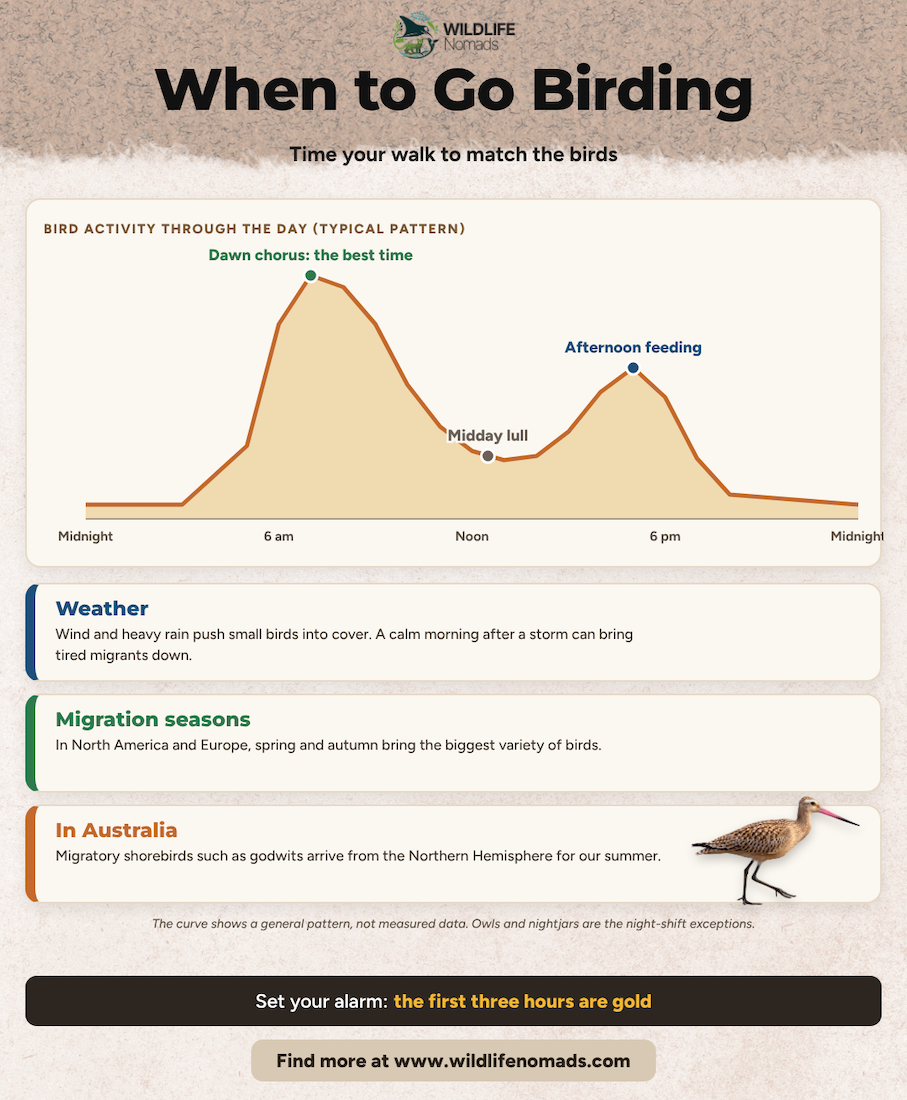
Birds are most active at dawn and during the first three hours of daylight. After a long night, they need to start feeding. Males also sing hard at dawn to defend territories and attract mates. This is the dawn chorus, and it is the easiest time to find birds by listening.
Late afternoon brings a second burst of foraging before birds settle to roost. Midday is usually quiet, especially in hot weather. Weather matters too. Strong wind and heavy rain push small birds into cover. A calm morning after a storm can bring tired migrants down.
Migration is the most exciting season of all. In North America and Europe, the peaks come in spring and autumn. In Australia, the big arrival is migratory shorebirds, which fly in from the Northern Hemisphere for our summer.
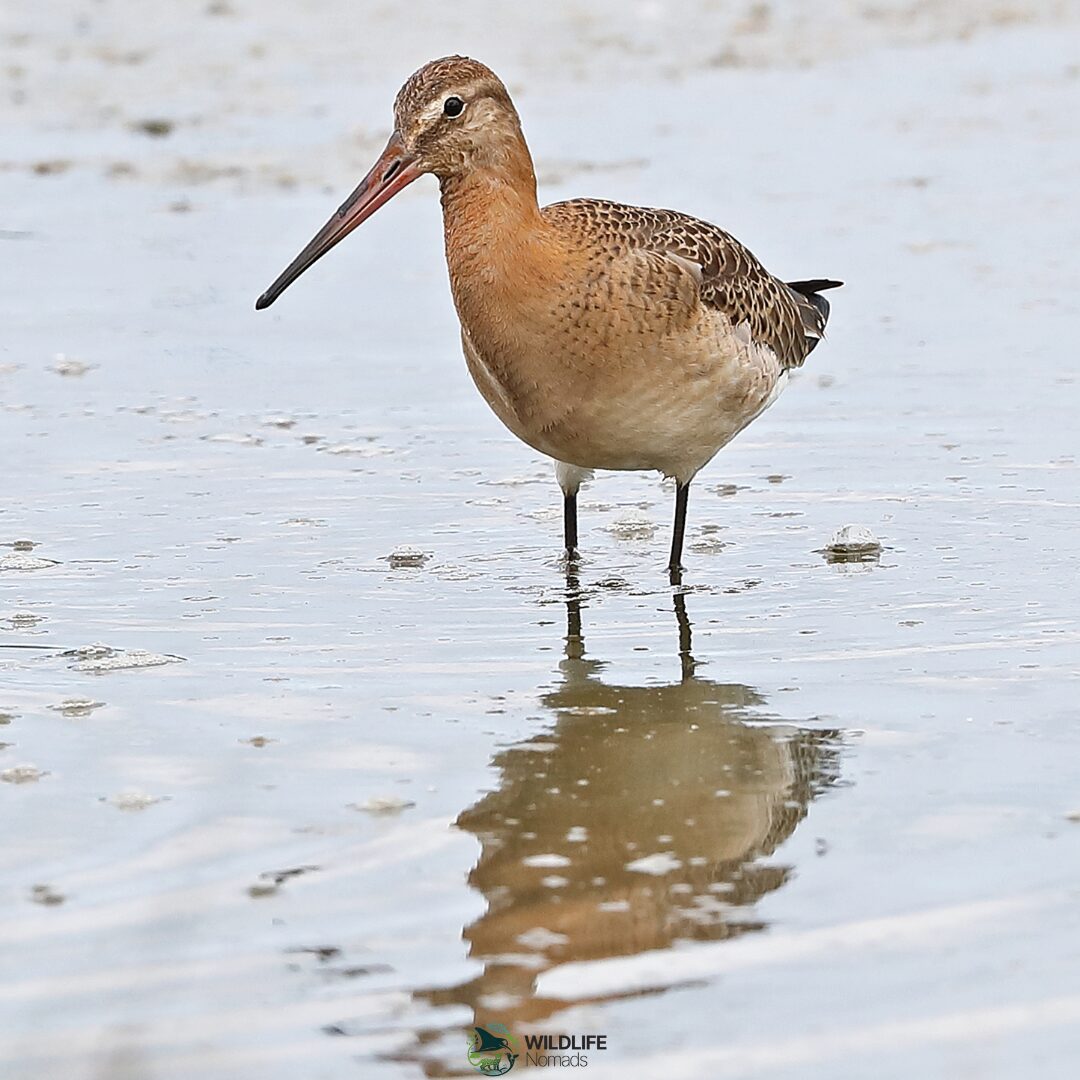
I learned that from a sign. Interpretive boards at Coombabah Lakelands first told me about the bar-tailed godwit. On an October 2025 hike there, I watched between five and fifteen godwits. Some of them fly nonstop from Alaska to New Zealand and eastern Australia. You can follow the whole route on our bar-tailed godwit migration map.
3. Find the Best Places for Birdwatching
Birds live almost everywhere, but each habitat holds its own set of bird species. A wetland, a rainforest and a city park can sit an hour apart and share very few birds. Visit several, and your list grows quickly.
- Your backyard
Native plants, a water bowl and shelter bring birds close. Our guide to building a wildlife-friendly garden shows you how. Birds even visit campsites: a superb fairywren perched on my camping chair at Gloucester River. - Local parks and nature reserves
Many local parks are hotspots, especially those with lakes or wooded edges. Start with the parks nearby that you already know. - National parks and wildlife refuges
Protected areas hold rare species and large bird populations. Great examples include Kruger National Park (South Africa), Yellowstone (USA) and the Pantanal (Brazil). - Tropical rainforests
For toucans, parrots and hummingbirds, head to Costa Rica, Ecuador or Indonesia. - Wetlands and coasts
Estuaries, mudflats and beaches hold herons, egrets, flamingos and shorebirds. Many birds on the coast feed on fish, so watch for diving and wading.
Look for ecological crossroads. Where two habitats meet, or where a peninsula funnels migrants, you find birds that rarely appear elsewhere. Check eBird hotspots before you go to see where local birders have recorded the most species.
Famous Birding Hotspots in the United States
| Hotspot | State | Best season | Why birders go |
|---|---|---|---|
| Cape May | New Jersey | Autumn | The peninsula funnels southbound hawks and songbirds; a hawk count has run every fall since 1976 |
| Magee Marsh | Ohio | May | As many as 37 warbler species pass through during the spring migration |
| Point Reyes National Seashore | California | Year-round | Nearly 490 species, the greatest bird diversity of any US national park |
| Sonny Bono Salton Sea NWR | California | November to May | Over 400 bird species recorded in a desert wetland |
| Bosque del Apache NWR | New Mexico | Late November to February | Typically over 10,000 sandhill cranes and 20,000 snow and Ross’s geese |
| Lower Rio Grande Valley | Texas | Winter and spring | Subtropical specialties such as the green jay and plain chachalaca |
| J.N. “Ding” Darling NWR | Florida | Winter | Mangrove wetlands full of wading birds, including roseate spoonbills |
For more ideas, see our list of the best bird watching destinations around the world. In Australia, read our guide to the best places to see wildlife in Australia.

How to Identify Bird Species Like a Pro
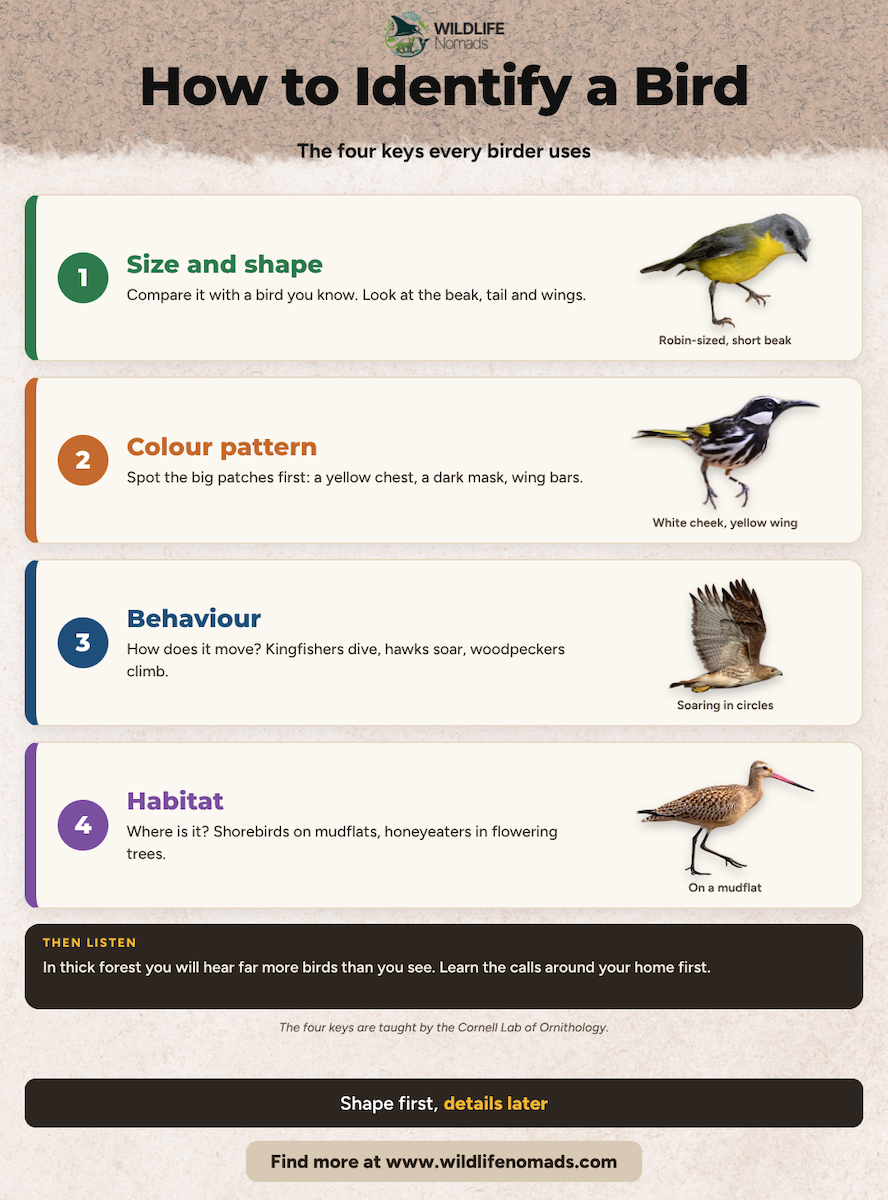
Identification is where birding gets addictive. The Cornell Lab of Ornithology teaches four keys: size and shape, colour pattern, behaviour and habitat. Work through them in that order before you hunt for small field marks. British birdwatchers call the overall impression “jizz”, sometimes written GISS: the general impression of size and shape.
- Size and shape
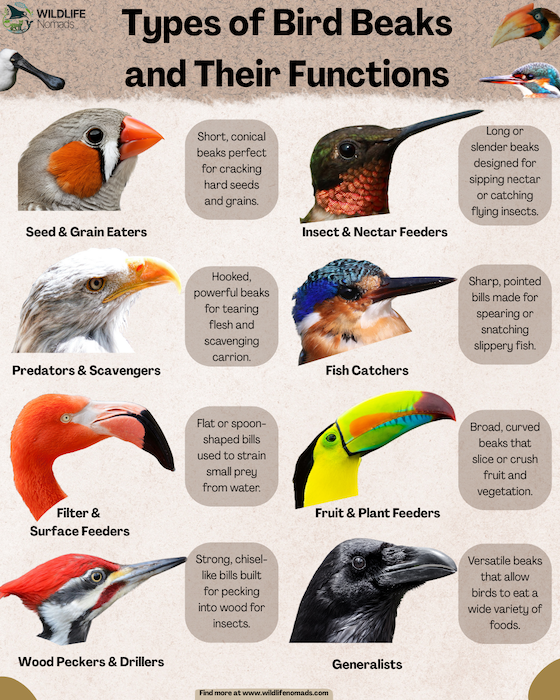
Compare the bird with one you know. Is it smaller than a sparrow, or as big as a crow? Check the tail, wings and beaks. Beak shape reveals diet. For example, hooked beaks tear meat, long slim beaks sip nectar, and chisel-like beaks drill wood. - Colour pattern
Note the big picture before tiny details. Look for wing bars, eye stripes and bright patches on the feathers. In many species, the male is far more colourful than the female. - Behaviour
Watch how the bird feeds, perches and flies. Woodpeckers hitch up trunks, hawks soar in circles, and kingfishers dive for fish. - Habitat
Different birds prefer different environments: plovers on beaches, woodpeckers in forests. Ask whether the species should even be there at this time of year.
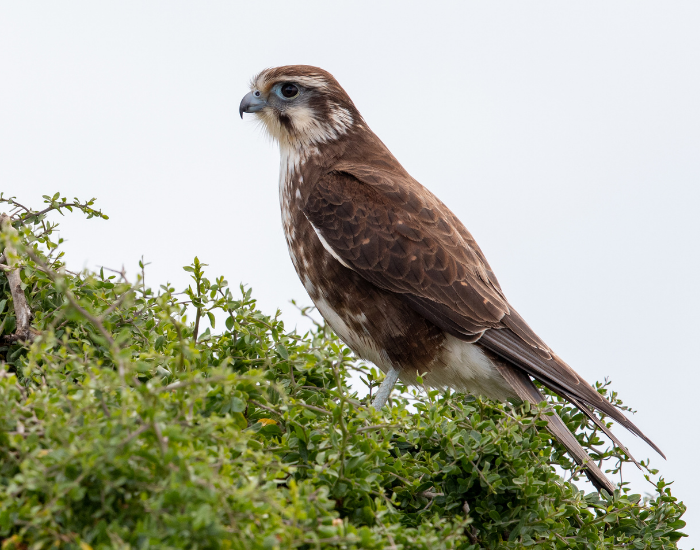
Shape fixed one of my biggest mistakes. Years ago, I called a raptor in an open field an eagle. A colleague corrected me: it was a brown falcon. It sat too far away to photograph, and it still bugs me. It is why I now want to photograph every falcon species in Australia.
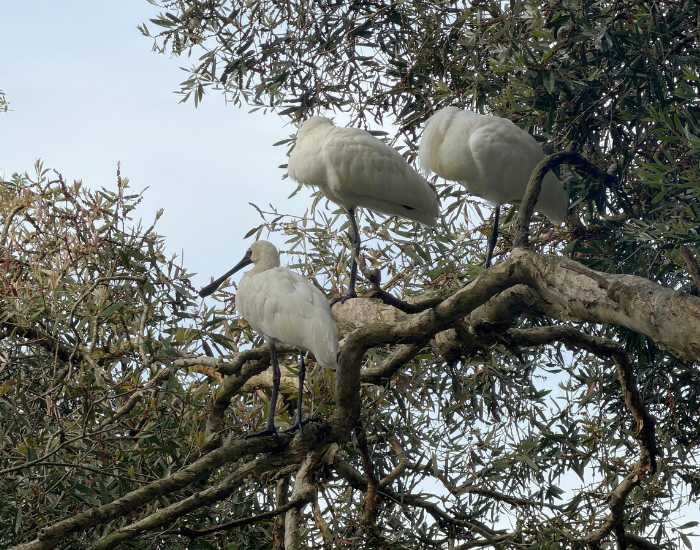
Posture can fool you too. At Evans Head, I saw three white birds in a tree in town and called them white ibis. A friend corrected me: they were royal spoonbills. A roosting spoonbill often tucks its head away, hiding the bill that gives it its name. Wait for the bird to move before you commit.
Listen to Their Calls
Hearing birds is often more effective than looking for them. In thick forest, you will usually hear far more species than you see. Learn the common calls around your home first, and the rest of the dawn chorus starts to make sense.
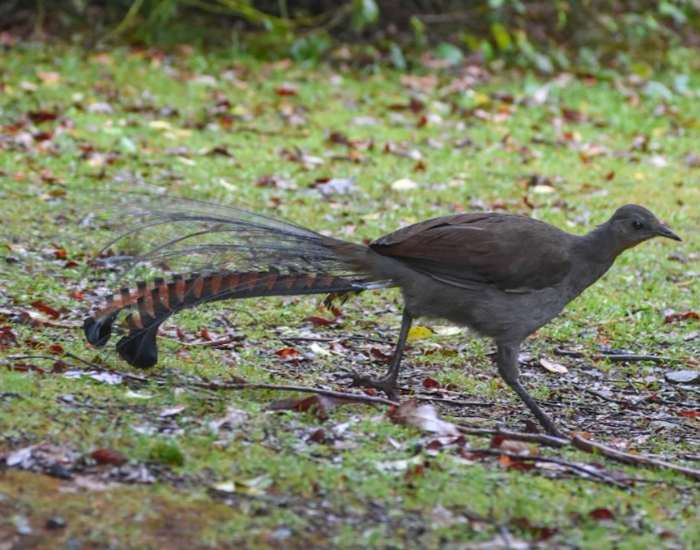
Calls can mislead, though. At Gloucester River, I finally saw my first wild superb lyrebird. I had watched Attenborough’s lyrebird documentaries as a kid. Lyrebirds copy other species so well that one bird can sound like a whole forest.
Mobile apps now help with sound. Merlin Bird ID‘s Sound ID could recognise 2,066 bird species by the end of 2025. Research tools such as BirdNET use similar deep learning to identify hundreds of species from recordings. Treat any app result as a suggestion, then confirm it with your own eyes.
Birding Techniques and Tips
1. Master the Art of Patience
These tips work in any habitat, from local parks to rainforests. Birding rewards patience more than skill. Sit still near water or a fruiting tree, and birds soon go back to normal behaviour. Bring a chair, a flask and no schedule.
I learned why during an ecology course in Sweden. With friends, I ran a short experiment on how a predator on an open plain changed birds’ foraging time. Every minute a bird spends watching for danger is a minute it is not feeding. For a small bird, that trade-off can decide its survival. To a bird, a person walking straight at it is that danger.
I see the same trade-off on the road. At Red Cliff, a blue-faced honeyeater darted into the open, searched for food and shot straight back into cover. Move slowly, stay low and stop at a distance. The birds will relax, and you will see real behaviour.
2. Use Technology Without Letting It Lead
Technology can be a birder’s best friend. Binoculars and spotting scopes bring birds closer, and camera traps record visitors while you are away. Apps handle identification and record keeping.
The scale is huge. eBird passed 2 billion bird observations in June 2025. Birders submitted more than 16 million complete checklists that year. Scientists use those sightings to map where species live and how populations change.
Make your sightings valuable. Record how long you birded and how far you walked. List every species you identified, not just the exciting ones. Complete checklists like these are far more useful to researchers.
3. Keep a Notebook
A notebook trains your eye. Write the date, site, weather and every species, with numbers. Sketch anything you cannot name, then check a field guide later. I log my Australian sightings in a spreadsheet and upload many of them to iNaturalist.
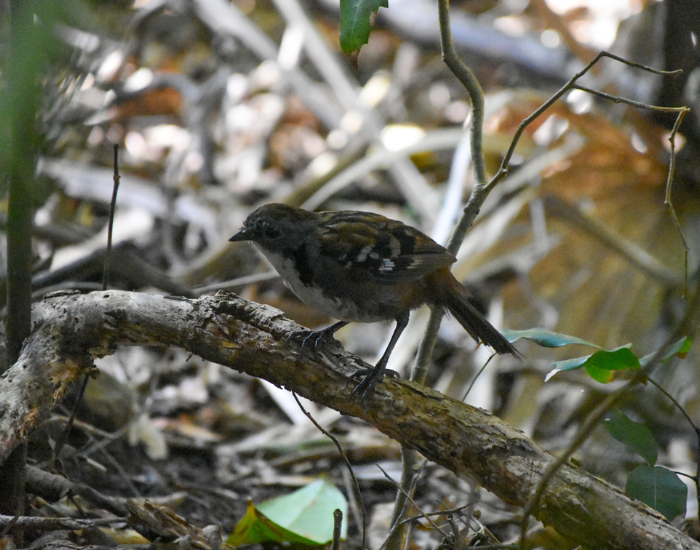
Birding Etiquette: Watch Birds Without Harming Them
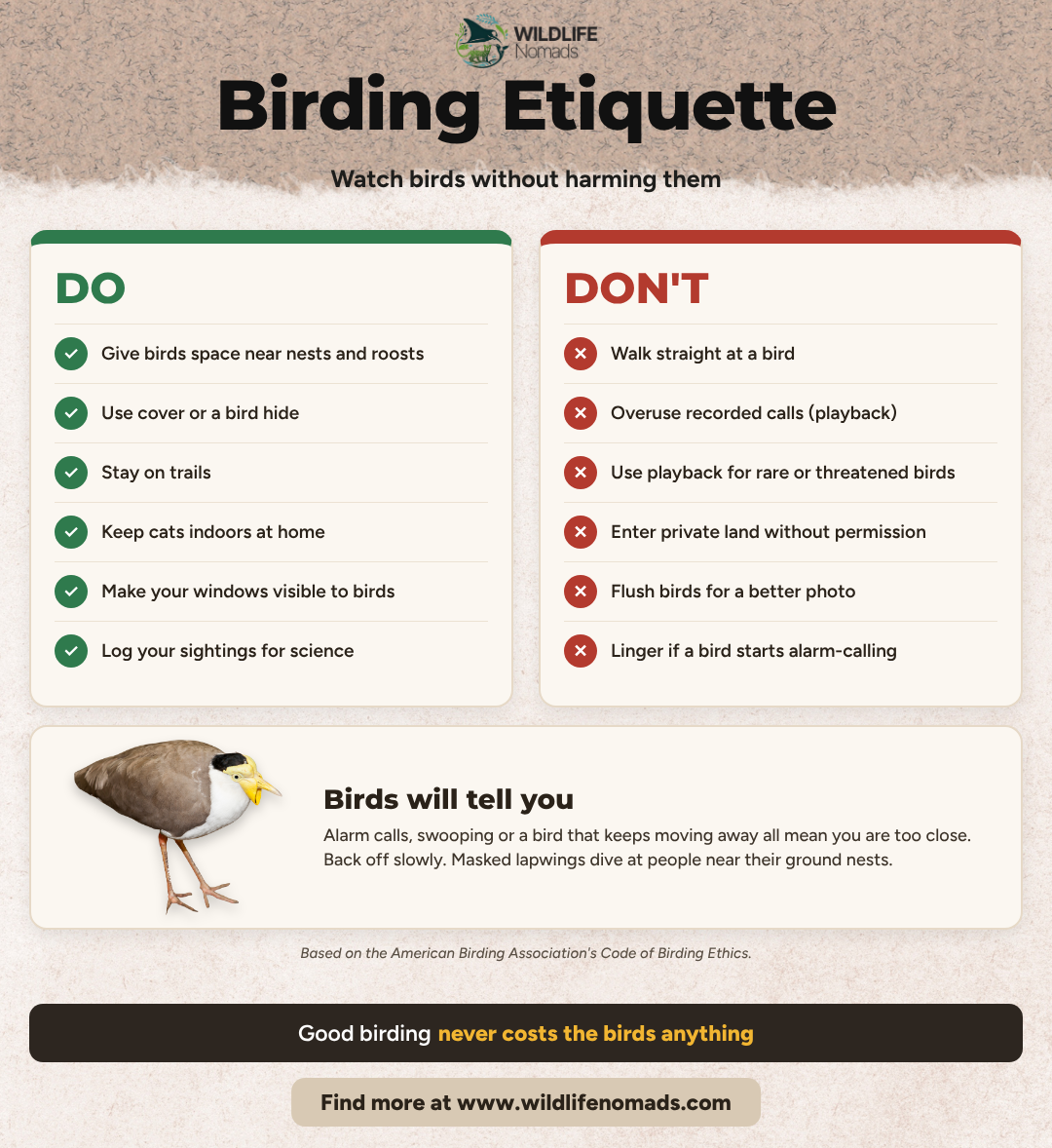
Birding should be fun, for you and for the birds. The American Birding Association’s Code of Birding Ethics sets out the basics most birders follow. Here is the short version.
- Give birds space, especially near nests, roosts and feeding sites. Use natural cover or a hide.
- Limit playback of recorded calls. Avoid it in busy birding areas and for rare or threatened species, and check park rules first.
- Stay on trails and keep habitat disturbance to a minimum.
- Never enter private property without the landowner’s permission.
- At home, keep cats indoors and make your windows visible to birds.
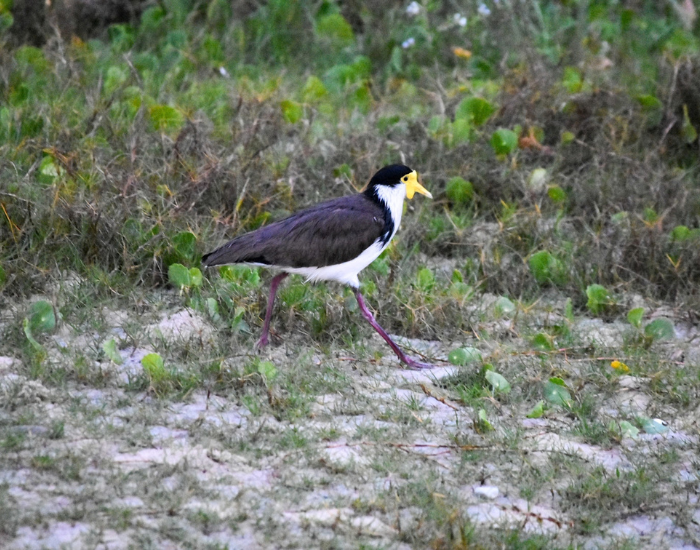
Birds will tell you when you are too close. In Australia, I have been swooped by more birds than by any other animal. Masked lapwings dive at people who wander near their ground nests. Back away, and you give them exactly what they want.
Birding Communities and Resources
Join a Local Birding Club
Birding is a social hobby. Local clubs run guided walks, workshops and talks, and fellow birders share knowledge freely. In the US, look for an Audubon chapter near you. In Australia, BirdLife Australia runs branches and events across the country.
The wider birding community lives online too. Regional groups share rare sightings, help with tricky IDs and organise trips. A good mentor saves you years of mistakes.
Take Part in Citizen Science
Counting birds is a simple act of conservation. The Christmas Bird Count runs every December and January, and the Great Backyard Bird Count runs each February. In Australia, the Aussie Bird Count takes place each October during National Bird Week. Our guide to wildlife citizen science lists more projects.
Why Your Sightings Matter
Long-term counts reveal what we have lost. North America now has about 2.9 billion fewer breeding birds than in 1970, a 29% drop. Grassland birds fell the hardest, by 53%. Wetland birds were the exception, rising 13% on the back of waterfowl conservation.
Declines like these come long before a species goes extinct. That is why counting common birds matters. Learn more about the endangered birds of the United States and why biodiversity is important.
FAQs About Birding for Beginners
Most people use the two words interchangeably. In North America, birding often suggests a more active, serious approach that includes finding birds by sound. Birdwatching can mean any casual observation of birds. Both describe watching wild birds in their natural habitat.
8×42 and 8×32 binoculars are the classic choices for birding. Eight times magnification gives a wide, steady view that makes moving birds easy to follow. An 8×32 pair is lighter to carry, while an 8×42 pair performs better in low light at dawn and dusk.
Early morning is best. Birds are most active at dawn and during the first three hours of daylight, when they feed and sing. Late afternoon brings a second, smaller burst of activity before birds roost.
Start with the four keys: size and shape, colour pattern, behaviour and habitat. Note the beak, tail and any bright patches, then check a field guide for your region. Apps like Merlin Bird ID can suggest a species from a photo or a recording.
A lifer is a bird species you see for the first time in your life. Birders add each lifer to their life list, the running record of every species they have ever seen.
About 96 million Americans watched birds in 2022, according to the US Fish and Wildlife Service. That is roughly 37% of people aged 16 and over. Around 91 million watched birds near home, and at least 43 million travelled to see them.
Research suggests it is. A UK study linked more birds around the home in the afternoon with lower depression, anxiety and stress. A 2022 smartphone study found that seeing or hearing birds improved wellbeing for hours, including in people with depression.
Look Up Tomorrow Morning
You do not need a plane ticket to start. Step outside at sunrise, stand still for ten minutes and count what you hear. Then grab your bins and find the singers.
When you are ready for bigger birding adventures, explore our types of birds guide and our Australian native birds. Heading to Asia? Try our Thailand birdwatching guide. Curious about the science behind it all? Read what ornithology is. Shopping for a birder? Try our gift ideas for bird lovers.
I found my first hornbill standing on a beach sign. What will your first lifer be? Tell me in the comments.
Ready to Start? Book a Guided Birding Experience
This website is reader-supported. When you book a wildlife experience through links listed on this site, we may earn an affiliate commission.
Prefer to plan your own trip? Browse our eco-friendly wildlife tours.
You scored
References:
Cox, D. T. C., Shanahan, D. F., Hudson, H. L., Plummer, K. E., Siriwardena, G. M., Fuller, R. A., Anderson, K., Hancock, S., & Gaston, K. J. (2017). Doses of neighborhood nature: The benefits for mental health of living with nature. BioScience, 67(2), 147–155. https://doi.org/10.1093/biosci/biw173
Hammoud, R., Tognin, S., Burgess, L., Bergou, N., Smythe, M., Gibbons, J., Davidson, N., Afifi, A., Bakolis, I., & Mechelli, A. (2022). Smartphone-based ecological momentary assessment reveals mental health benefits of birdlife. Scientific Reports, 12, 17589. https://doi.org/10.1038/s41598-022-20207-6
Johnston, A., Hochachka, W. M., Strimas-Mackey, M. E., Ruiz Gutierrez, V., Robinson, O. J., Miller, E. T., Auer, T., Kelling, S. T., & Fink, D. (2021). Analytical guidelines to increase the value of community science data: An example using eBird data to estimate species distributions. Diversity and Distributions, 27(7), 1265–1277. https://doi.org/10.1111/ddi.13271
Kahl, S., Wood, C. M., Eibl, M., & Klinck, H. (2021). BirdNET: A deep learning solution for avian diversity monitoring. Ecological Informatics, 61, 101236. https://doi.org/10.1016/j.ecoinf.2021.101236
Rosenberg, K. V., Dokter, A. M., Blancher, P. J., Sauer, J. R., Smith, A. C., Smith, P. A., Stanton, J. C., Panjabi, A., Helft, L., Parr, M., & Marra, P. P. (2019). Decline of the North American avifauna. Science, 366(6461), 120–124. https://doi.org/10.1126/science.aaw1313