
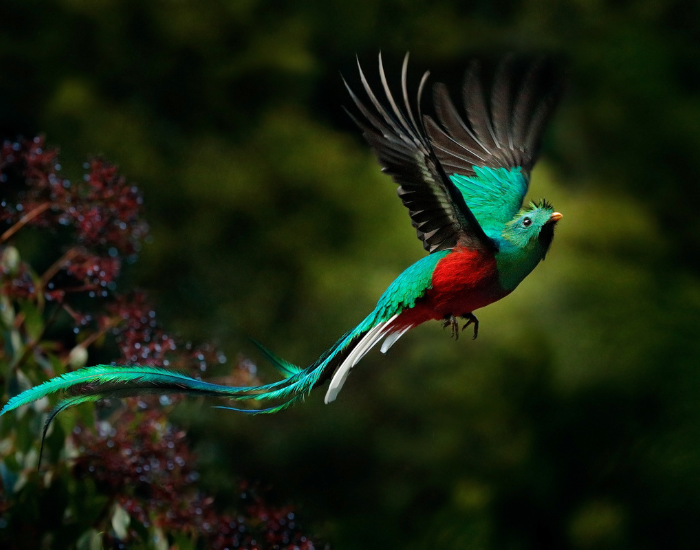
Recently, a video went viral showing a male resplendent quetzal taking flight from a misty branch. As it moved, its two-foot-long tail feathers rippled behind it in a serpentine wave of iridescent green. It didn’t look like a bird. It looked like a dragon. Exactly like the feathered serpent god, Quetzalcoatl, that I had spent years reading about while exploring the ancient Maya ruins of Palenque, Teotihuacan, and the towering pyramids of Chichén Itzá.
Even as a professional field biologist, I have to admit: seeing a quetzal bird in the wild feels like a glitch in the timeline. It’s a prehistoric creature that somehow survived the collapse of civilisations, Spanish conquest, habitat loss, and the shifting climate to remain the national bird of Guatemala today.
What is a Quetzal?
The resplendent quetzal (Pharomachrus mocinno) is far more than just a pretty face. This bird represents one of nature’s most stunning achievements. The quetzal scientific name comes from the Greek pharos (mantle) and makros (long), referring to those legendary long tail feathers that define the male resplendent quetzal’s appearance.
However, these aren’t actually tail feathers at all. They are upper tail coverts that grow during breeding season, reaching lengths of up to 24 inches. In addition, the male quetzals display these plumes during elaborate courtship displays that have inspired centuries of mythology.
Five Species of Quetzals You Should Know
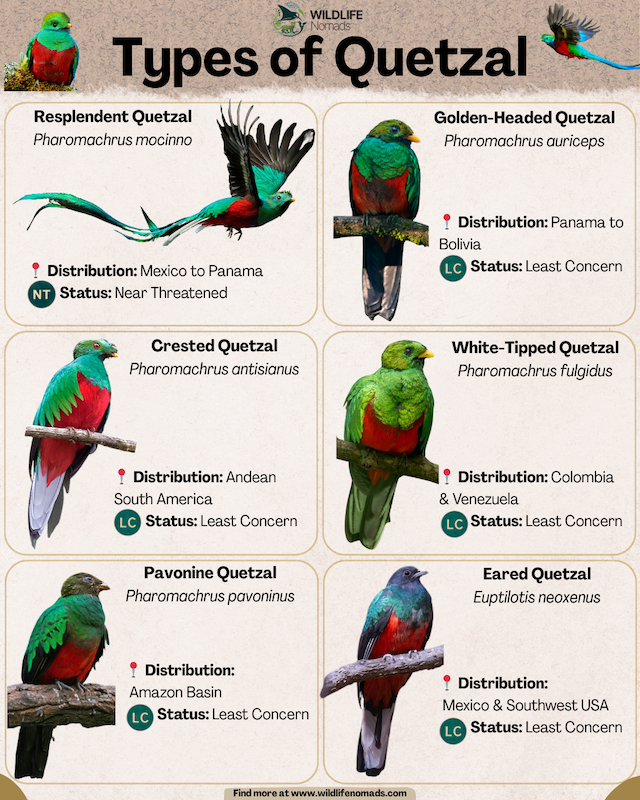
While the resplendent quetzal gets most attention, five species exist within the genus Pharomachrus:
1. Resplendent Quetzal (Pharomachrus mocinno) – Found from southern Mexico to western Panama, this is the most famous species and Guatemala’s national bird.
2. Golden-Headed Quetzal (Pharomachrus auriceps) – This South American species inhabits the cloud forests of the Andes.
3. Crested Quetzal (Pharomachrus antisianus) – Another Andean species known for its distinctive crest.
4. White-Tipped Quetzal (Pharomachrus fulgidus) – Found in Venezuela and Colombia with characteristic white tips on tail feathers.
5. Pavonine Quetzal (Pharomachrus pavoninus) – The Amazon Basin’s representative of these spectacular birds.
The eared quetzal (Euptilotis neoxenus) belongs to a different genus. Nevertheless, it’s worth mentioning as the only species occasionally spotted in the United States, specifically in Arizona.
Physical Characteristics That Define These Birds
Size and Appearance
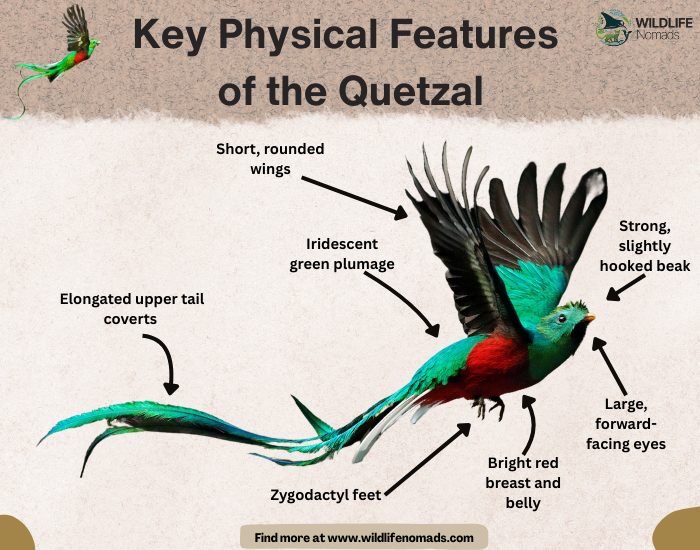
Quetzal birds measure approximately 13 to 16 inches in body length. However, male resplendent quetzals can reach total lengths of 36 inches when including their streaming tail feathers. These long tail plumes create one of nature’s most dramatic silhouettes.
The Spectacular Plumage
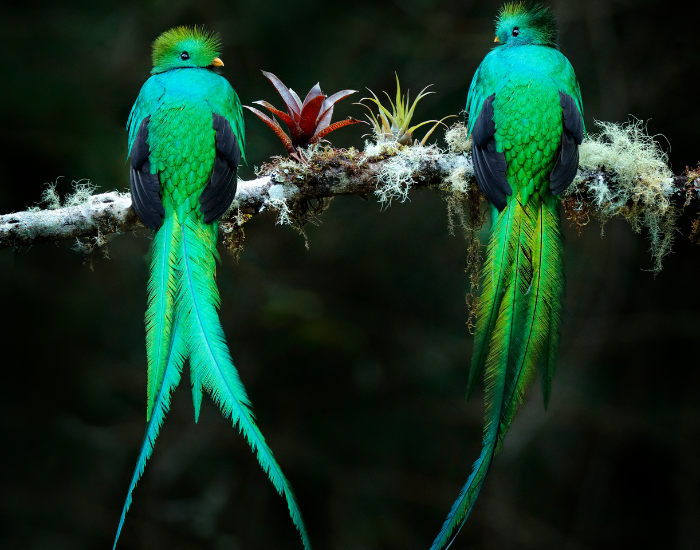
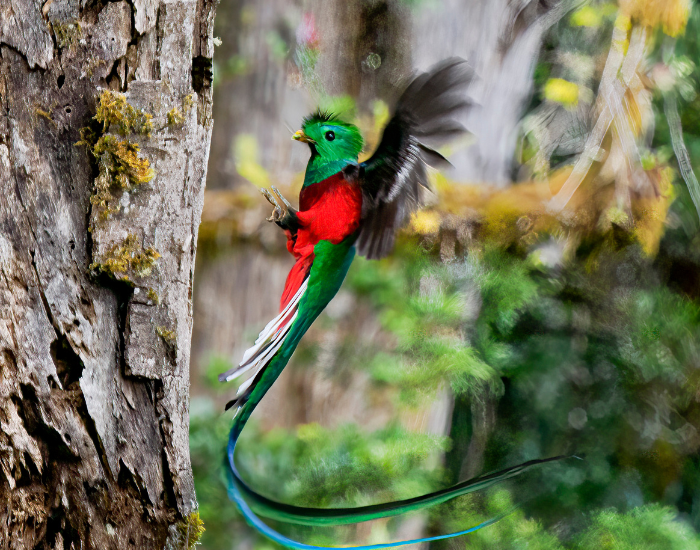
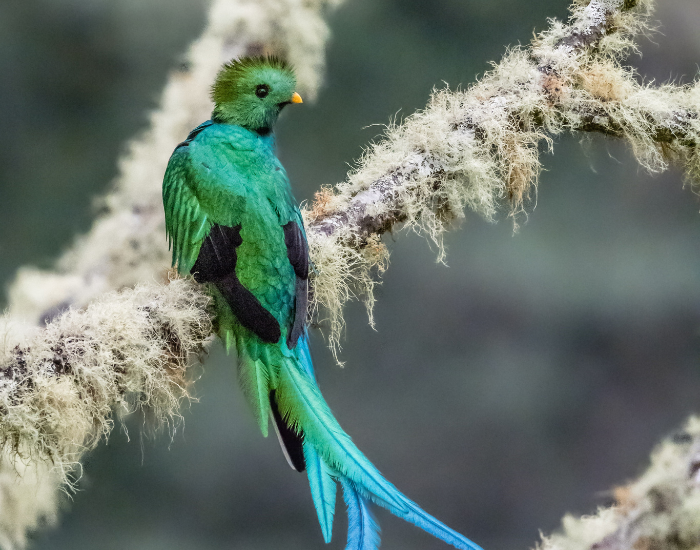
The quetzal colors are breathtaking. Males display iridescent golden green feathers on their heads, backs, and wings. Their chests feature vibrant red plumage, while white feathers appear under the tail. Females are duller in color, lacking the long tail feathers and showing more muted tones overall.
The shimmer of quetzal feathers comes from structural coloration. Light hits microscopic melanin layers, creating that famous iridescent effect. In the shadows of a nesting cavity, these birds simply vanish despite their bright colors.
Specialized Features
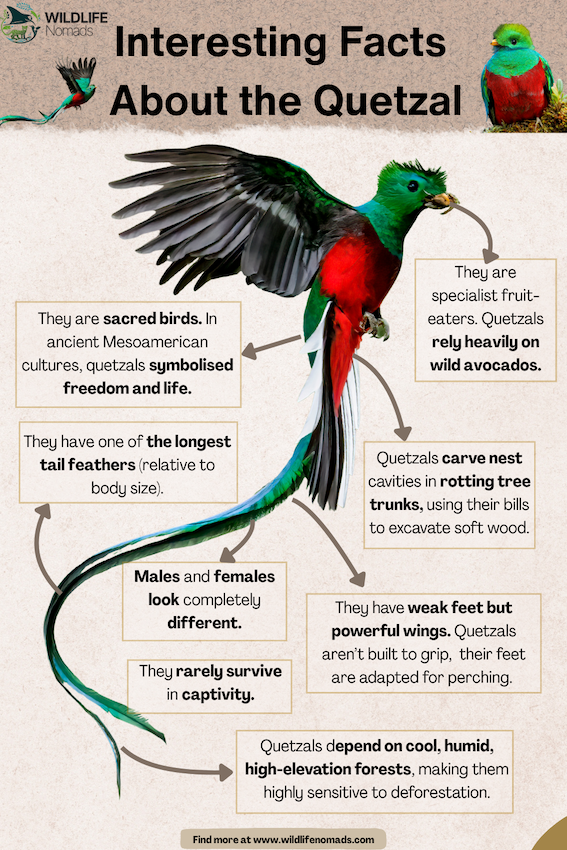
Quetzals have powerful beaks adapted for their frugivorous diet. Their feet show the heterodactyl arrangement typical of the trogon family, with two toes pointing forward and two back. This unique foot structure helps them perch high in the cloud forests of Central America.
Where Quetzals Are Found
Natural Habitat
Quetzals inhabit the cloud forests of Central America, thriving at high altitudes where mist and humidity dominate. These forests provide the specific conditions these birds require: dense vegetation, fruiting trees, and cool temperatures.
You can find quetzal birds in:
- Guatemala – The heartland of resplendent quetzal populations and the bird’s cultural home
- Costa Rica – The most accessible destination for bird watchers seeking quetzals
- Southern Mexico – Specifically the high-altitude forests of Chiapas
- Western Panama – Where cloud forests still provide suitable habitat
- El Salvador – In remaining patches of tropical forests
Geographic Distribution
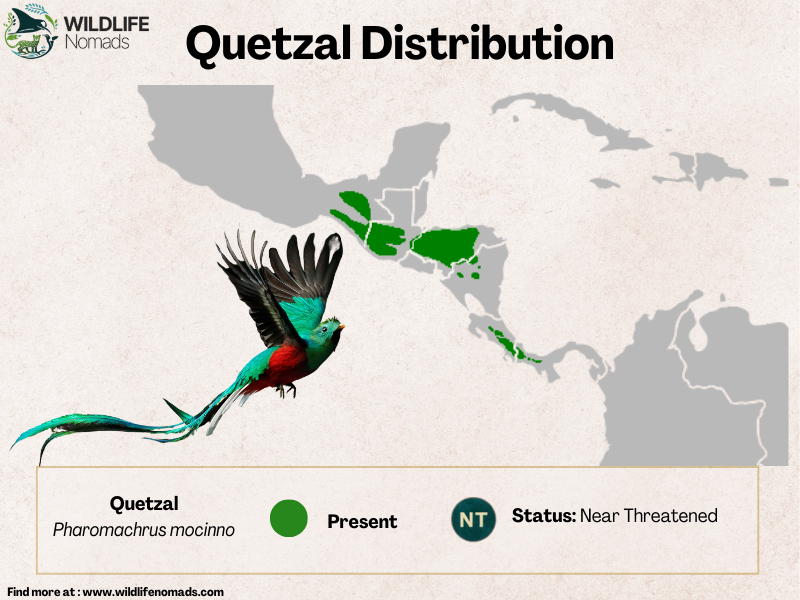
The resplendent quetzal ranges from southern Mexico through Central America to western Panama. Meanwhile, other quetzal species occupy distinct territories. The golden-headed quetzal and crested quetzal inhabit South American cloud forests along the Andes. The pavonine quetzal prefers the Amazon Basin’s tropical forests.
I’ve trekked through the rainforest of Chiapas multiple times. I’ve stood atop ancient Maya ruins in Palenque, looking out over the canopy, convinced I would spot those long tail plumes. Even thoug I have seen some iconic jungle birds and other birds of Mexico, I haven’t seen a Quetzal yet. That’s the thing about quetzal birds, despite their spectacular colors, they disappear into the mist with haunting ease.
The Diet of a Legend: What Does a Quetzal Eat?
What Quetzals Eat
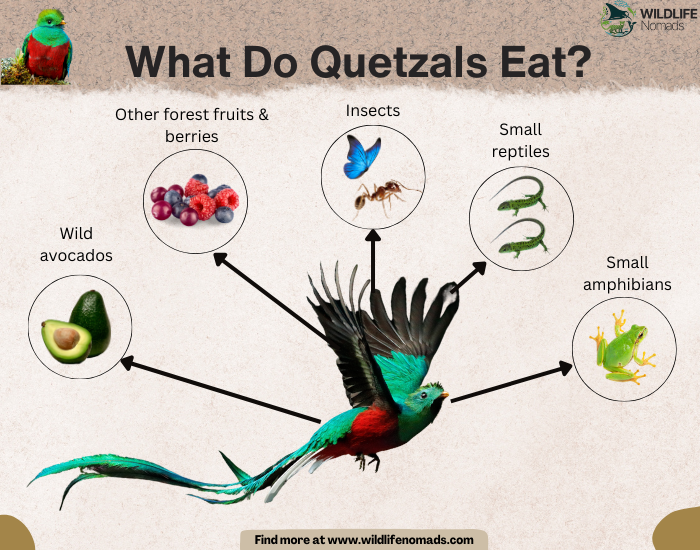
Quetzals are primarily frugivorous, meaning they feed mainly on fruit. Wild avocado trees provide their favorite food source. In fact, they swallow wild avocados whole, perch for about 20 minutes while their specialized stomach strips the pulp, then regurgitate the large pit.
This behavior makes quetzals essential seed dispersers. Without these birds, cloud forests literally couldn’t regenerate. The trees depend on quetzals to spread their seeds across the forest. Occasionally, quetzals supplement their diet with insects, small frogs, and lizards, especially when feeding young quetzals that need high protein for growth.
Breeding and Survival: The Cycle of the Serpent
Mating Displays
During mating season (typically March through June), male resplendent quetzals perform spectacular “sky-dance” displays. They dive from the canopy with long tail feathers streaming behind them, creating an unforgettable sight. These courtship displays help males attract females and establish pair bonds.
Nesting and Eggs
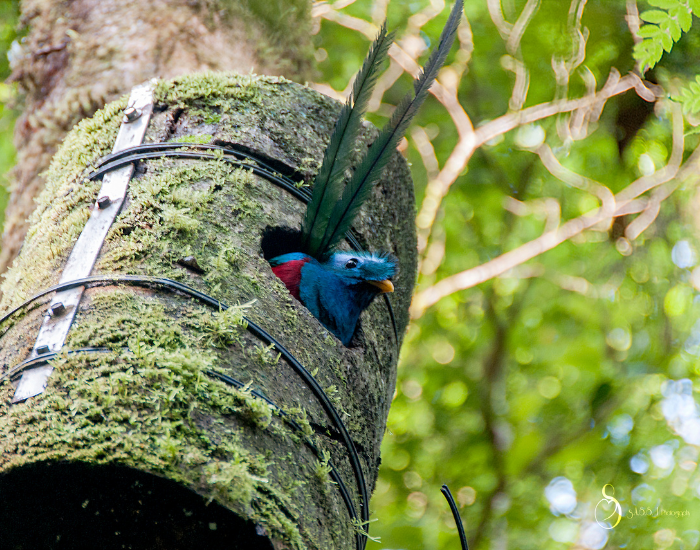
Once paired, quetzals find a nest site in a decaying tree’s cavity. Both parents share nesting duties equally. They take turns incubating one to three eggs per clutch. However, the male’s long tail creates challenges in cramped spaces. He often folds it over his head or leaves it sticking out the entrance.
The incubation period lasts 17 to 19 days. After chicks hatch, both parents feed the young quetzals. Within about three weeks, these young birds are ready to leave the nest. However, young males don’t develop their spectacular long tail feathers until they’re about three years old.
Life Cycle
Young quetzals can fly and fend for themselves after several months. Nevertheless, they may remain dependent on their parents for food and protection during this learning period. Quetzals can live up to 10 years in the wild, though their average lifespan is approximately five to seven years.
A Bird That Inspired Empires: Cultural Significance
The Feathered Serpent God
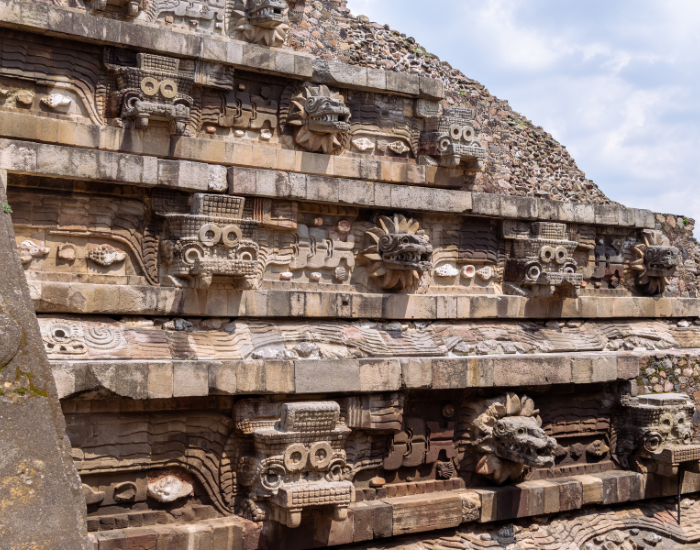
In Mayan culture and throughout Mesoamerica, the quetzal held sacred status. Ancient Maya and Aztecs associated these spectacular birds with Quetzalcoatl, the feathered serpent god. This connection between bird and deity shaped religious practices across several Mesoamerican languages and civilizations.
Killing a quetzal was a capital offense. Instead, ancient Maya would capture male quetzals, carefully pluck a few long tail feathers, then release the birds back into the wild. These quetzal feathers were worth more than gold to the Spanish conquistadors who later encountered them.
Symbol of Freedom
The Maya believed quetzals would die in captivity, though this is now known as myth. However, this beautiful story fueled the bird’s cultural significance as a symbol of freedom. When I walked through the ruins of Tikal and explored ancient Maya sites, I imagined rulers adorned in towering headdresses made of these iridescent plumes.
Modern Guatemala
The resplendent quetzal remains Guatemala’s national bird today. It appears on the country’s flag, coat of arms, and gives its name to the Guatemalan Quetzal currency. This cultural heritage extends beyond symbolic meaning, many local communities now rely on quetzal tourism for economic support.
Conservation Status and Threats
Current Status
The conservation status of the resplendent quetzal is listed as Near Threatened on the IUCN Red List. While not yet endangered, these birds face increasing pressures. As a biologist, I must move past the “wow” factor and examine the data.
Major Threats
Habitat Loss – The biggest threat isn’t hunting anymore; it’s habitat loss. Cloud forests of Central America are shrinking due to agriculture, deforestation, and development. Fragmentation makes it difficult for populations to interbreed.
Climate Change – As the planet warms, the mist that defines cloud forests moves higher up mountains. Eventually, there’s no more mountain left to climb. This threatens the entire ecosystem quetzals depend on.
Human Activity – Although hunting pressure has decreased, human activity continues affecting quetzals. Deforestation, agriculture expansion, and habitat fragmentation all impact these birds.
Best Places to See Quetzals
Costa Rica
Costa Rica offers the most accessible quetzal-watching (and other birds of Costa Rica) opportunities. Monteverde Cloud Forest Reserve and San Gerardo de Dota valley are prime locations. During breeding season, your chances of spotting these spectacular birds increase significantly.
Guatemala
As the cultural homeland of quetzals, Guatemala provides authentic experiences. Protected areas throughout the highlands offer habitat where bird watchers can observe these magnificent creatures. Moreover, seeing quetzals in Guatemala connects you to centuries of cultural significance.
Find birdwatching Tour to Spot the Quetzal!
As a biologist, I only recommend tours that follow strict ethical guidelines to ensure we don’t disturb wildlife. These are the three tours/ partners I trust most based on their conservation records:
Your FAQs about the Quetzal
Absolutely not. Beyond being illegal in most countries, quetzals have highly specific needs. They require high humidity, cool temperatures, and specialized diets. A quetzal bird belongs in cloud forests, not cages.
They aren’t “rare” in the sense of being nearly extinct. However, they are local and difficult to spot. In Costa Rica’s prime locations during breeding season, sightings are quite possible with patience.
Yes, but they’re limited to southern Mexico’s high-altitude cloud forests, primarily in Chiapas. This represents the northern edge of their range.
Their iridescent quality comes from structural coloration. Light hitting microscopic layers creates the shimmer, making these feathers unlike typical pigmented plumage.
Five species exist in the genus Pharomachrus, plus the eared quetzal in a separate genus. Therefore, six total quetzal species inhabit the Americas
Let’s Save the Flying Serpent
We live in an age where we’ve mapped almost every corner of the globe. Yet the quetzal reminds us that magic still exists in natural history. These birds look like they were designed by myth-makers, surviving on wild avocados and insects in Central America’s heart.
The fact that this animal quetzal, this living feathered serpent, still flies through forests testifies to nature’s resilience. However, that resilience has limits and we don’t want this bird to follow the path of other already extinct birds and other animals that went extinct recently. Whether you’re a bird watcher, traveler, or someone who appreciates spectacular wildlife, we all have a stake in ensuring cloud forests stay misty and quetzals stay free.
This blog is reader-supported. When you buy experiences through links listed on this site, we may earn an affiliate commission.