
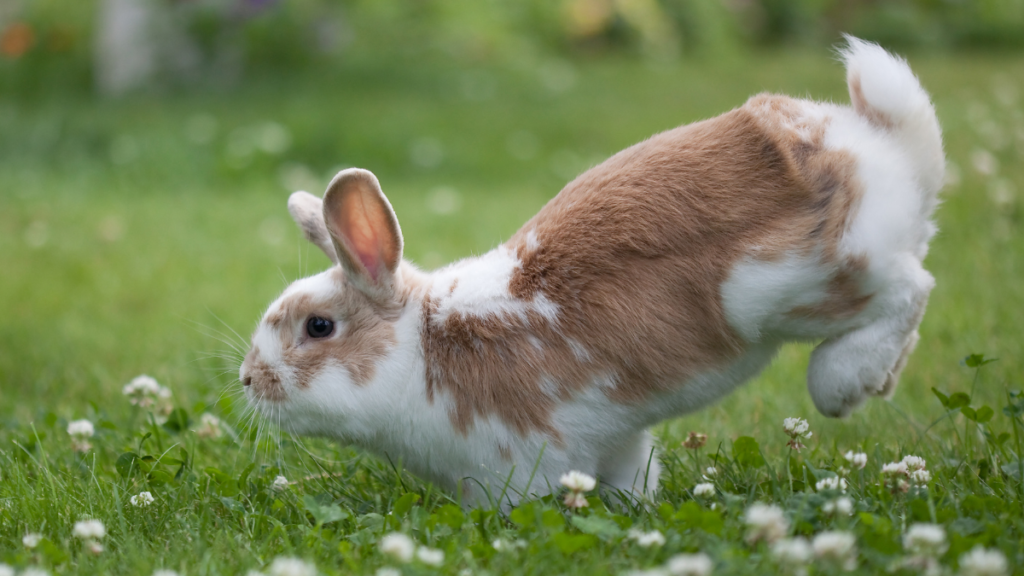
A few weeks ago I was walking a quiet street in Luxembourg. Right there, in the middle of the road beside a church that had stood for centuries, sat a rabbit. It stared at me, unbothered, framed by old stone. That little moment says everything about these animals. Rabbits slip into our cities, our gardens, and our stories without asking permission.
Not long ago I wrote a whole article about the types and breeds of domestic rabbits. This time I want to go further. We all know rabbits are cute as hell, but that is the least interesting thing about them. So for every bunny lover out there, this one is for you.
Rabbits keep surprising me anyway. Below are twelve rabbit facts worth knowing about the rabbit animal: the science, the myths, and a few stories from my own life. Some will make you rethink what a rabbit even is.
1. Rabbits Are Not Rodents… They Have Their Own Order
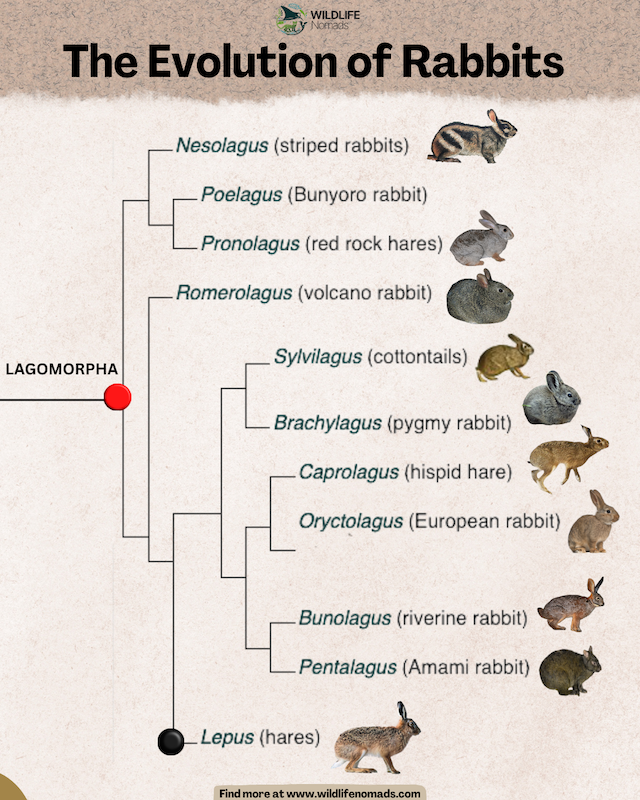
Here is the first myth to kill. A rabbit is not a rodent (like hamsters, coypus or even capybaras). Rabbits belong to the order Lagomorpha, a separate branch of small mammals that split from rodents long ago. The giveaway sits behind their front teeth. Rabbits have a second small pair of incisors, called peg teeth, that rodents lack.
So what is a rabbit animal, in plain terms? It is a long-eared herbivore in the family Leporidae, which holds more than sixty species of rabbits and hares. The best known species is the European rabbit, commonly called Oryctolagus cuniculus, the ancestor of nearly every pet on Earth. That single species reshaped how we describe the rabbit as we know it.
2. What a Rabbit Actually Looks Like
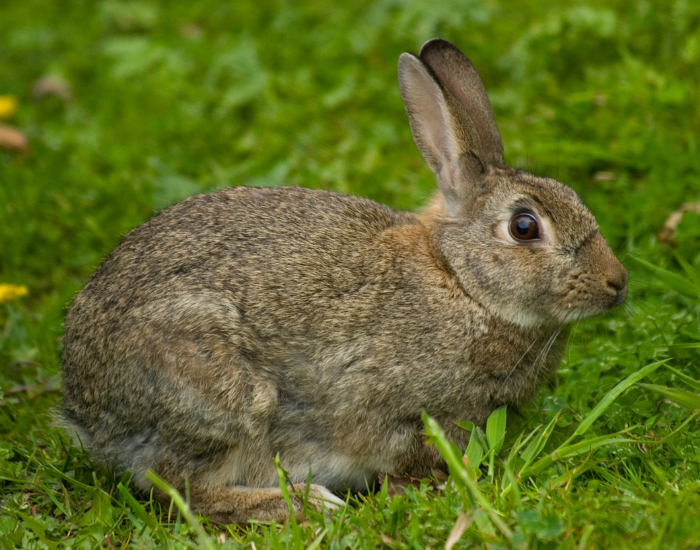
Slow down and study one and the body proportions make perfect sense. A wild rabbit is generally brownish, cloaked in dense, soft fur that hides it against soil and grass. The body is compact and almost egg-shaped, ending in a short tail like a puff of cotton. It is an attractive appearance built entirely for staying alive.
The famous features are working tools, not decoration. A rabbit’s ears are long for a reason, they catch faint sound and shed heat on hot days. Behind them sit powerful hind legs. Those muscular hind limbs launch the escape, and the long back feet give the animal grip and thrust that most predators never match.
3. Their Eyes and Ears See Almost Everything at Once
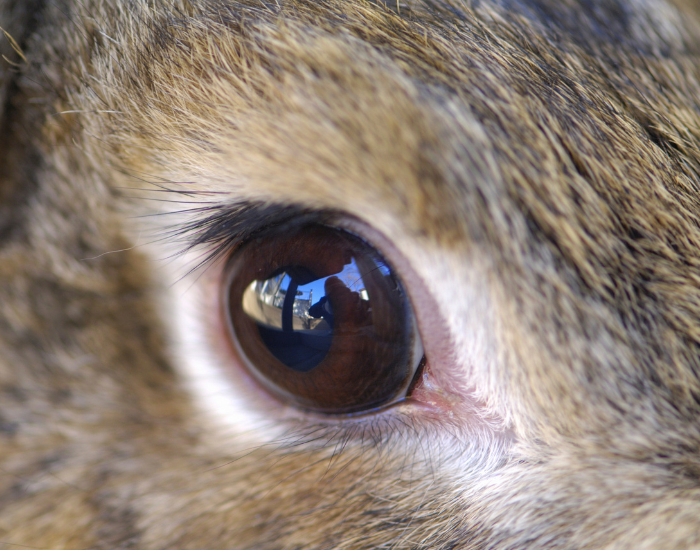
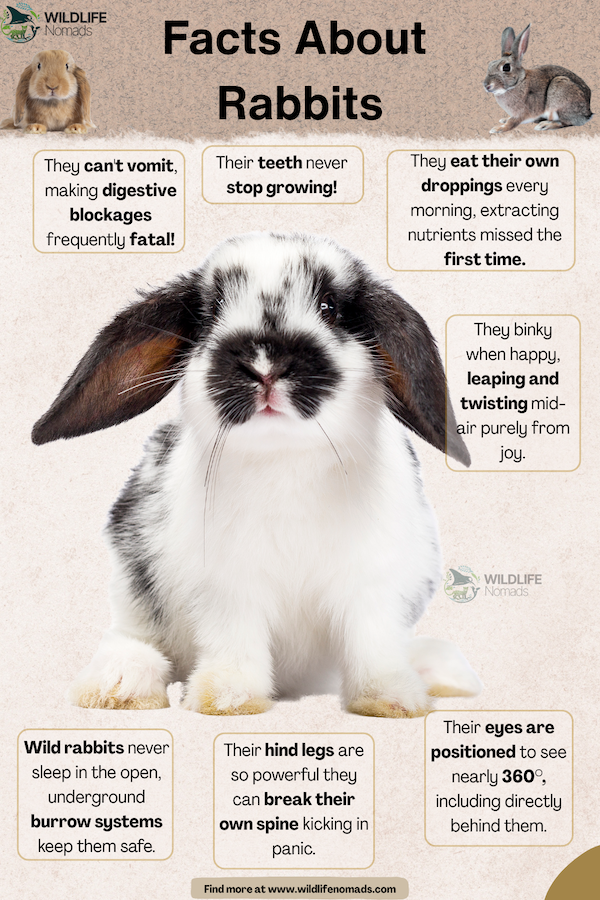
Prey animals live and die by what they notice. A rabbit’s eyes sit high on the sides of its skull, giving it a field of vision close to 360 degrees. Detecting predators early is the whole game, so it watches for a hawk overhead while grazing. There is one small blind spot, a tiny cone right in front of its nose.
Sound fills the gaps. I once kept a rabbit in Mexico, where caracaras and other birds of prey are common. Whenever one called overhead, her quiet manner vanished. Even asleep, she would snap awake, shoot her ears straight up, and listen hard. Wild rabbits read red foxes and raptors the same way, freezing at the first wrong rustle.
4. Rabbits Breed Faster Than Almost Any Mammal
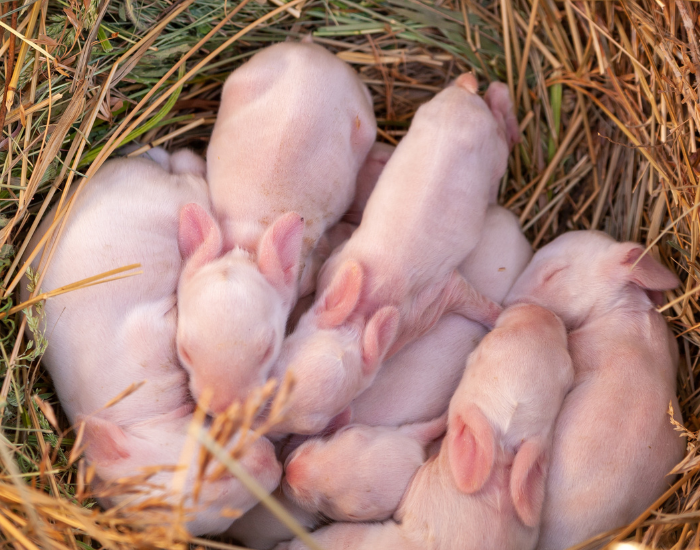
“Breeding like rabbits” is not a lazy cliché. Female rabbits, called does, can become pregnant from a young age, as early as four months old. The gestation period lasts only about a month, roughly 28 to 31 days. A single litter can hold one to twelve newborn rabbits, born naked, blind, and completely helpless.
Then it gets wild. Baby rabbits are called kittens, and a doe can conceive again within hours of giving birth. There is no tidy breeding season for prolific species; across a good year two rabbits become dozens. A doe may breed four or five times annually, producing young rabbits each round. Male rabbits, or bucks, simply keep pace.
5. They Live Almost Everywhere, and Some Species Are Vanishing
People picture rabbits in green meadows, yet the truth is far broader. Rabbits live across an enormous range, from scorching deserts to cold subalpine valleys, on nearly every continent. Most rabbits belong to a handful of familiar groups, but the world’s rabbit species are stranger and rarer than you would guess.
Consider the roll call. The cottontails of the genus Sylvilagus spread through North and South America, including the water-loving swamp rabbit. Elsewhere survive true rarities with dire conservation status: Mexico’s volcano rabbit, Japan’s Amami rabbit, Uganda’s Bunyoro rabbit, the Sumatran striped rabbit with its dark stripes, and the riverine rabbit and hispid hare of South Africa. Several species now cling to shrinking scraps of habitat.
6. Rabbits Are Master Diggers, and I Have the Proof
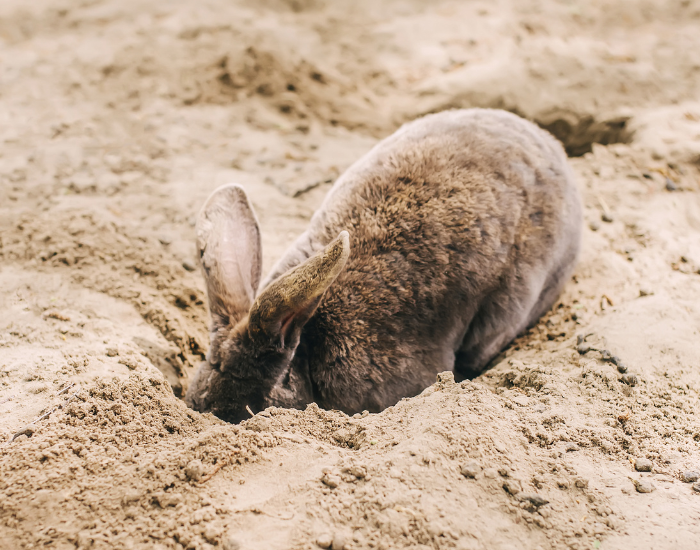
Wild European rabbits are social engineers. They dig extensive burrow systems called warrens and can form colonies of up to twenty individuals. Below ground they raise young, hide from predators, and stay cool. A single warren may serve generations of the same family.
I learned this the hard way as a kid. I had a rabbit I was sure was a boy, turns out she was a she. She would tear around our garden like a furry rocket and dig holes everywhere. One day she vanished down a hole so deep we genuinely thought we had lost her. We dug half the afternoon before she popped out, filthy and thrilled.
7. Their Digestion Runs a Clever Recycling Loop
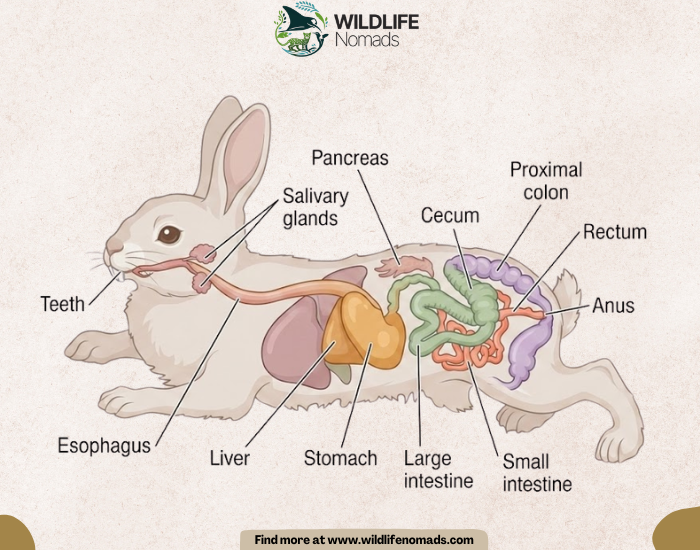
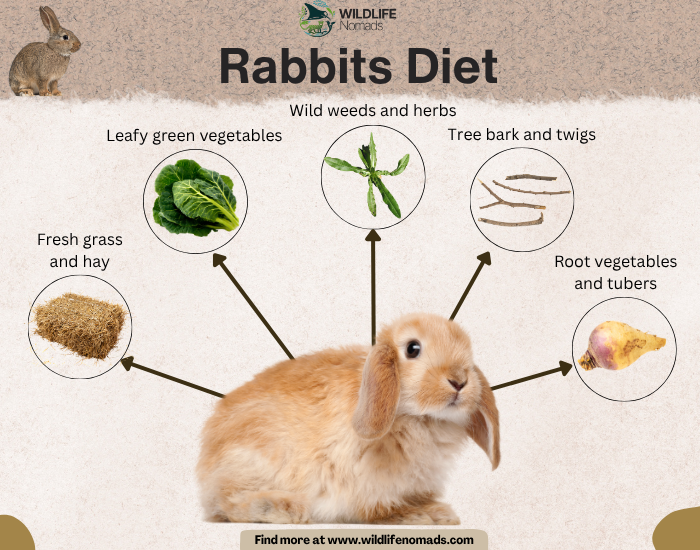
Rabbits are strict herbivores built to survive on high-fiber, low-energy plant material. Grass and hay are hard to break down, so rabbits ferment it in a large chamber called the cecum. One pass is not enough to pull out every nutrient, so evolution found a workaround.
Rabbits produce two kinds of droppings. The first are dry, round pellets you see in the hutch. The second are soft, nutrient-rich packets called cecotropes, which the rabbit eats directly. Yes — they re-ingest their own droppings on purpose. This behavior, called cecotrophy, recovers B-vitamins and protein missed the first time. Gross to us, essential to them.
8. Feed a Rabbit Hay, Not a Pile of Carrots
Cartoons lied to you. Carrots are candy for rabbits, high in sugar and fine only as an occasional treat. A healthy rabbit’s diet should be roughly 80% hay, with leafy plant material and a small measure of pellets alongside.
This matters more than most owners realize. Rabbits cannot vomit, so anything that slows the gut turns dangerous. A low-fiber diet can trigger gastrointestinal stasis, where digestion grinds to a halt and blockages form. For an animal this small, that becomes a true emergency. Good rabbit animal information almost always starts with the word hay.
9. There Are Over 300 Domesticated Breeds
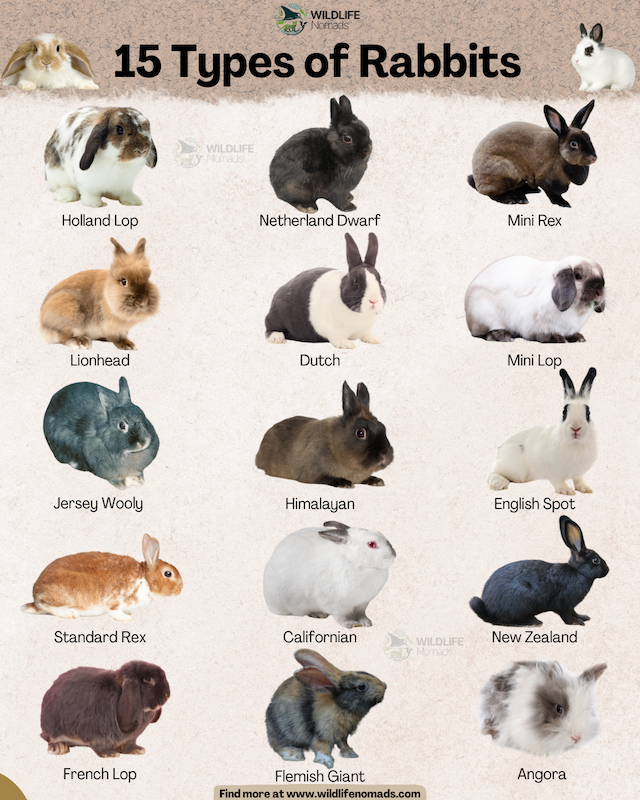
Here is where my last article picks up. People have kept domesticated rabbits since at least the Middle Ages, first for rabbit meat and soft rabbit fur, later as companions. Centuries of selective breeding followed. Selectively bred lines now number more than 300 distinct domestic rabbit breeds worldwide, varying in size, coat, ear shape, and temperament.
The range runs from tiny Netherland Dwarfs to giant Flemish rabbits and the elegant Belgian Hare. Many popular breeds are friendly and people-loving, which is why they make good pets — and why rabbits are also common laboratory animals in medical research. Still, personality varies widely from one rabbit to the next, regardless of breed.
10. Their Teeth Never Stop Growing
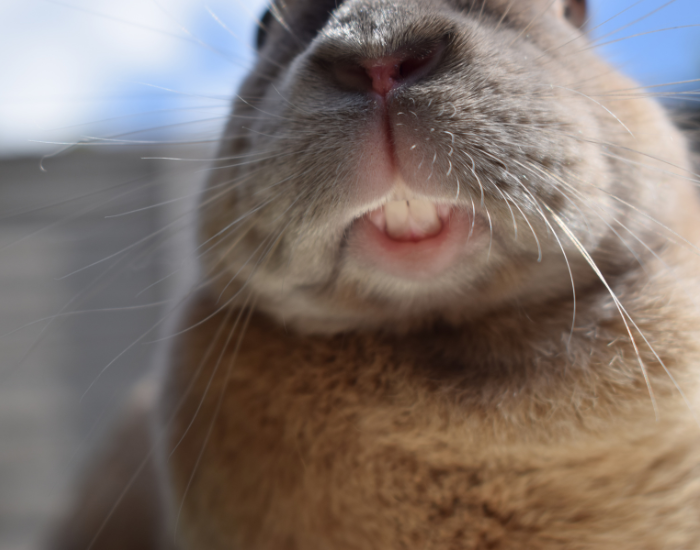
A rabbit’s teeth grow continuously for its entire life, at roughly 3mm per week. It sounds like a design flaw, but it is a feature. Constant grazing on abrasive plants wears the teeth down at the same pace they grow.
Take away the coarse diet and the system breaks. Without enough hay to grind against, teeth overgrow and curl into overgrown teeth that cause real pain. This is another reason fiber matters, and why a bored, pellet-fed rabbit often ends up at the vet with dental trouble.
11. A Happy Rabbit Literally Jumps for Joy
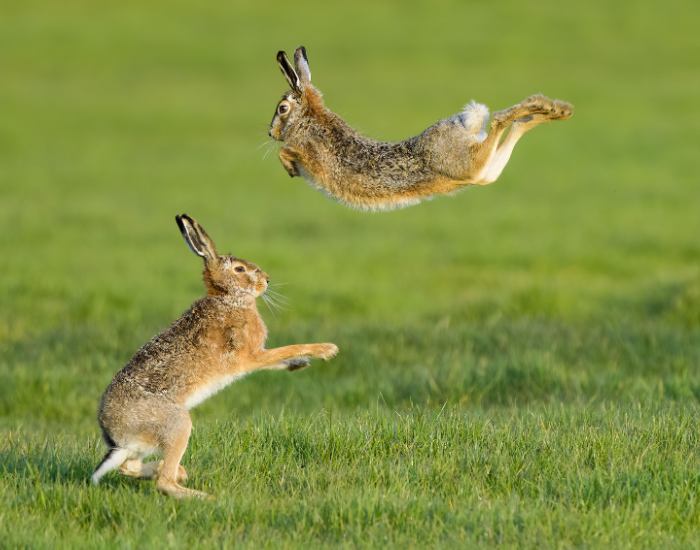
Rabbits have a move that will melt you. When a rabbit is genuinely happy, it leaps into the air and twists mid-jump, a burst of joy nicknamed a “binky.” I have watched wild and pet rabbits do it, and it never gets old.
There are quieter quirks too. Rabbits can sleep with their eyes open, a handy trick when you are prey and always half on guard. They are also crepuscular, most active at dawn and dusk. If your rabbit goes bananas at sunrise and sunset, that is not a phase — that is the schedule.
12. With Good Care, They Live Longer Than You Think
Lifespan reveals the gap between wild and domestic life. A wild rabbit typically survives only one to five years, hunted by foxes, hawks, and disease. A well-cared-for pet, by contrast, commonly lives 8 to 12 years, and the record holder reached an astonishing 18.
Keeping a rabbit healthy comes down to husbandry. Rabbits need daily exercise, mental enrichment, and an enclosure at least 6 feet long and 2 feet tall. A neutered male or female tends to live longer and calmer, and — crucially — most rabbits crave companionship. Bond two rabbits and stress drops. A lonely rabbit is rarely a healthy one.
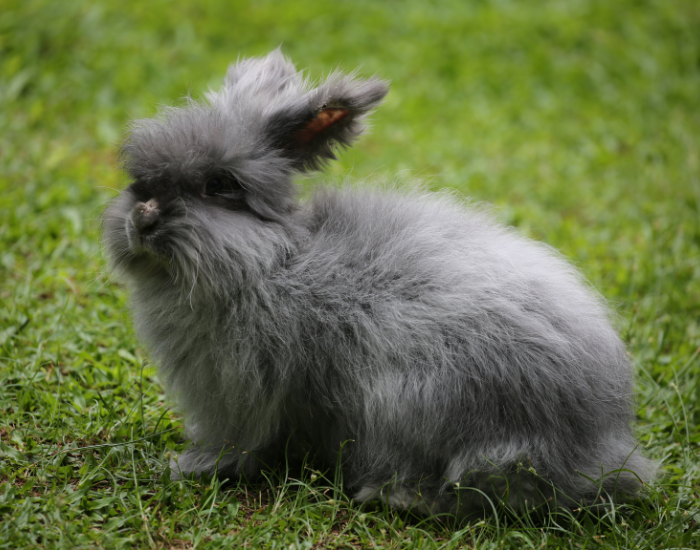
Rabbits Can Reshape Entire Ecosystems
For all their charm, rabbits carry a heavy ecological punch. In 1859, a settler released two dozen European rabbits in Australia for sport. Within decades they had overrun the continent, stripping vegetation and pushing native species toward collapse. It remains one of history’s fastest mammal invasions.
The damage is not only about grazing. Feral rabbits can cause extensive agricultural losses and spread diseases such as myxomatosis and rabbit hemorrhagic disease, first described in China in 1984. Rabbits can even carry tularemia (nicknamed rabbit fever) a bacterial infection that occasionally passes to humans. The same fertility that makes them endearing makes them formidable.
Frequently Asked Questions
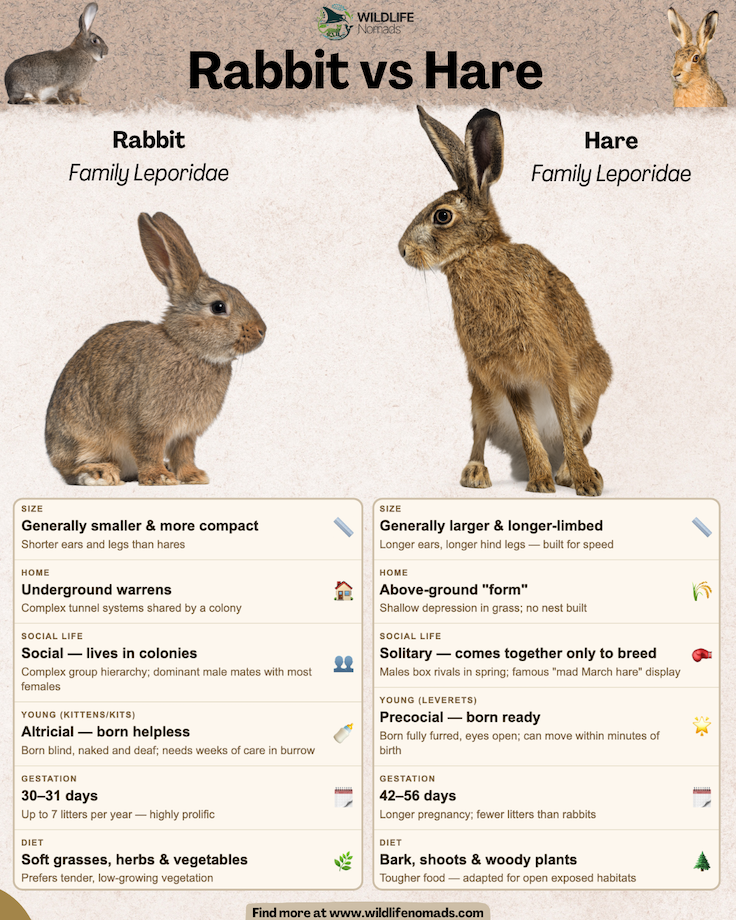
Not really. Jackrabbits are actually hares, and their default response to danger is to bolt, not fight. They rely on speed and those enormous ears rather than aggression. A cornered jackrabbit may kick with its powerful hind legs to defend itself, but unprovoked attacks on people essentially do not happen.
Rabbits are lagomorphs, not rodents; their teeth grow forever; they see nearly 360 degrees; they eat some of their own droppings; a happy rabbit “binkies”; they can sleep with eyes open; they run up to 45 mph; a group is a “fluffle”; they can breed almost monthly; and there are over 300 breeds. That is a solid start for any rabbits encyclopedia.
No. Despite the resemblance, rabbits belong to the order Lagomorpha, not Rodentia. The clearest difference is the extra pair of small peg teeth behind their upper incisors. This is a favorite trip-up in any description of rabbit biology.
The length of a rabbit ranges from the 7.9-inch pygmy rabbit to hefty domestic breeds over two feet long. Wild rabbits usually live one to five years, while pet rabbits average 8 to 12 years with proper care. Smaller breeds sometimes outlive larger ones.
The Takeaway
Strip away the fluff and the rabbit is a survival machine, a fast-breeding, sharp-eyed, hay-powered animal that has outlasted predators and colonized continents. That is what I think about now when one stares me down on an old European street.
If these facts hooked you, go deeper into the types of rabbits and meet the breeds behind the science. Curious about other pocket-sized companions? My guide to hamster facts is a good next stop. And if you want to understand what keeps rabbits so alert, read up on their predators — the types of foxes and the birds of prey like eagles, hawks, and the caracara that once made my own rabbit freeze. Then go outside, watch closely, and tell me what your local bunnies get up to in the comments.
Rabbits: Fact or Fiction? 🐰
Twelve statements about the garden’s fastest-breeding survivor — six true, six myths. Can you tell them apart?
Fact or Fiction?
References
Abrantes, J., van der Loo, W., Le Pendu, J., & Esteves, P. J. (2012). Rabbit haemorrhagic disease (RHD) and rabbit haemorrhagic disease virus (RHDV): A review. Veterinary Research, 43(1), 12. https://doi.org/10.1186/1297-9716-43-12
Alves, J. M., Carneiro, M., Day, J. P., Welch, J. J., & Jiggins, F. M. (2022). A single introduction of wild rabbits triggered the biological invasion of Australia. Proceedings of the National Academy of Sciences, 119(31), e2122734119. https://doi.org/10.1073/pnas.2122734119
Lees, A. C., & Bell, D. J. (2008). A conservation paradox for the 21st century: The European wild rabbit Oryctolagus cuniculus, an invasive alien and an endangered native species. Mammal Review, 38(4), 304–320. https://doi.org/10.1111/j.1365-2907.2008.00116.x
Matthee, C. A., van Vuuren, B. J., Bell, D., & Robinson, T. J. (2004). A molecular supermatrix of the rabbits and hares (Leporidae) allows for the identification of five intercontinental exchanges during the Miocene. Systematic Biology, 53(3), 433–447. https://doi.org/10.1080/10635150490445715
Prebble, J. L., & Meredith, A. L. (2014). Food and water intake and selective feeding in rabbits on four feeding regimes. Journal of Animal Physiology and Animal Nutrition, 98(5), 991–1000. https://doi.org/10.1111/jpn.12163
Cooke, B. D. (2012). Rabbits: Manageable environmental pests or participants in new Australian ecosystems? Wildlife Research, 39(4), 279–289. https://doi.org/10.1071/WR11166