In the last four years, I had the opportunity to dive in places like Komodo, the Philippines, the reefs off Australia, the warm shallows of Mexico, and now the Red Sea. The water changes color and temperature everywhere I go. The one constant is finfish. These fish inhabit every corner of the ocean, and the diversity of species stops me cold every single time.
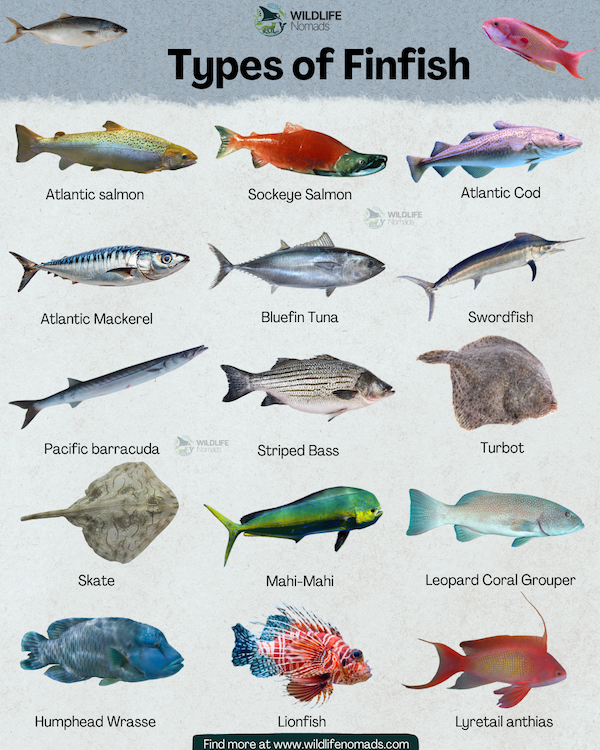
So I wrote this short guide to 15 types of finfish I have met face to face. Finfish are aquatic vertebrates with gills, fins, and a backbone, true fish, not shellfish like crustaceans, octopus, or jellyfish. They range from sweet white fillets on restaurant menus to ambush hunters that hang motionless over the coral.

Types of Finfish: What Counts as a Fin Fish?
A finfish is any true fish with fins, gills, and a spine. That definition separates them from invertebrates like crustaceans and octopus. Scientists describe finfish by habitat and by fat content, which shapes both their biology and their place as food on our plates.
Freshwater fish live in rivers, lakes, and streams. Saltwater fish inhabit the open sea. Many species also split into lean, medium-fat, and fatty categories. That oil content drives taste, texture, and the best way to cook each fillet. It also shapes quality on seafood menus, where chefs match the cooking method to the fat.
Biologists sort the huge fish family tree by more than habitat. We also group species by body shape. Round fish yield two fillets, while flatfish yield four. Freshwater species and saltwater species often differ in taste and fat. Know the family and you can guess whether a lean or medium fillet will cook fast before you buy it. Commercial fisheries and aquaculture farms both lean on these same categories of finfish. Medium-fat species sit between the lean and fatty extremes.
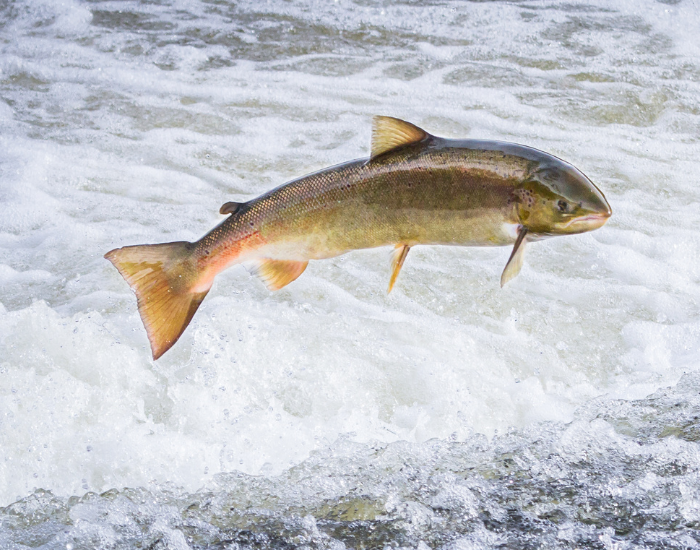
1. Atlantic Salmon
Atlantic salmon (Salmo salar) is the fish most people picture first. This salmon is a fatty species, rich in oil and omega-3 nutrients, with sweet flesh that ranges from pink to deep orange. Its dorsal and adipose fins mark it as a member of the salmon family, and the tail fin drives those long migrations.
Wild salmon migrate from rivers in northern Europe and the North Atlantic out to cold waters at sea, then home to breed. Today most fillets on seafood menus come from aquaculture. Salmon farming is now a massive global seafood industry. Escaped farmed salmon can compete with wild stocks for resources, a real quality and conservation concern. Pan-crisp the skin and the fatty flesh almost cooks itself.
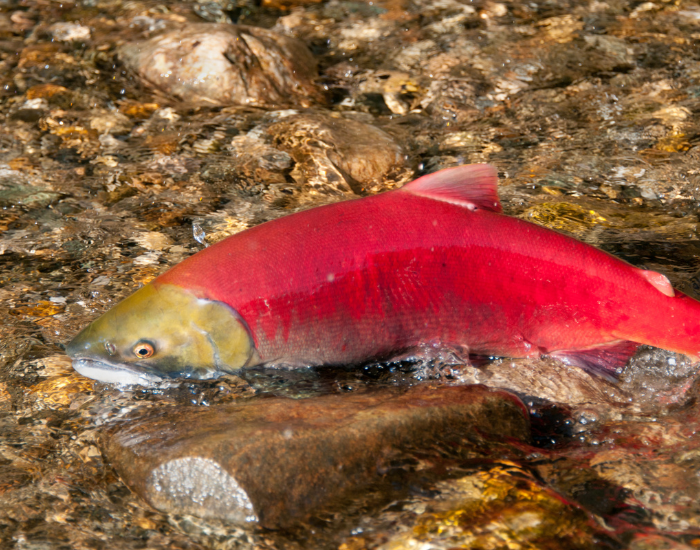
2. Sockeye Salmon
Sockeye (Oncorhynchus nerka) is the most valuable U.S. salmon species, and it earns the title. Its flesh glows a vivid red because the fish feeds heavily on krill at sea. A small adipose fin behind the dorsal fins marks it as a true salmonid. Chefs prize that color and its clean, rich taste and high quality.
Bristol Bay in Alaska hosts the largest sockeye fishery on Earth. These wild salmon are harvested commercially at enormous scale every summer, then sold as fresh, frozen, or smoked seafood. Smoking suits their fatty flesh beautifully, and the species drives some of the most valuable fisheries in the country.
These salmon return to the exact freshwater gravel beds where they hatched. That navigation across open sea still astonishes biologists like me.
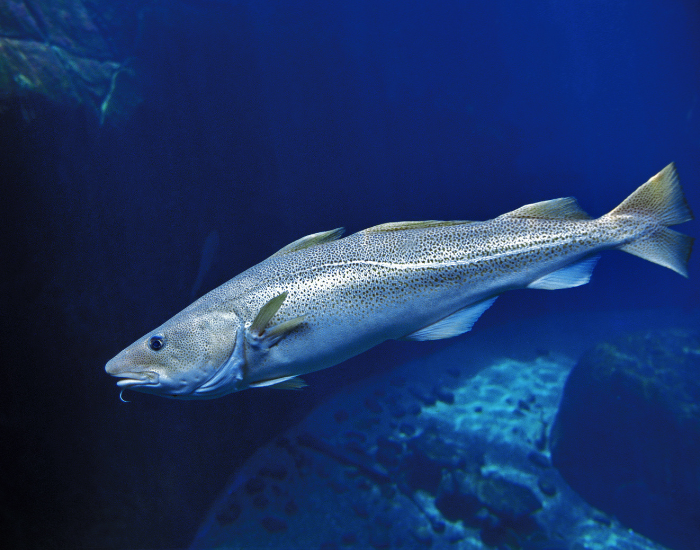
3. Atlantic Cod
Atlantic cod (Gadus morhua) is the lean white workhorse of the North Atlantic. This fish carries less than two percent fat, so its flaky flesh stays mild and delicate. Three rounded dorsal fins, twin anal fins, and a chin barbel make this fish easy to identify. Lightly salt the skin before cooking and the flakes hold together.
Trawl nets catch cod by dragging across the ocean floor. That efficiency nearly destroyed the catch. The Newfoundland cod fishery collapsed in 1992, a brutal lesson in how fast industrial fisheries can empty the sea.
Lean fish like cod cook best with moist heat. A gentle poach keeps the fillet tender rather than dry, with a clean, mild taste. Cod fisheries stay tightly managed today to avoid another crash.
4. Atlantic Mackerel
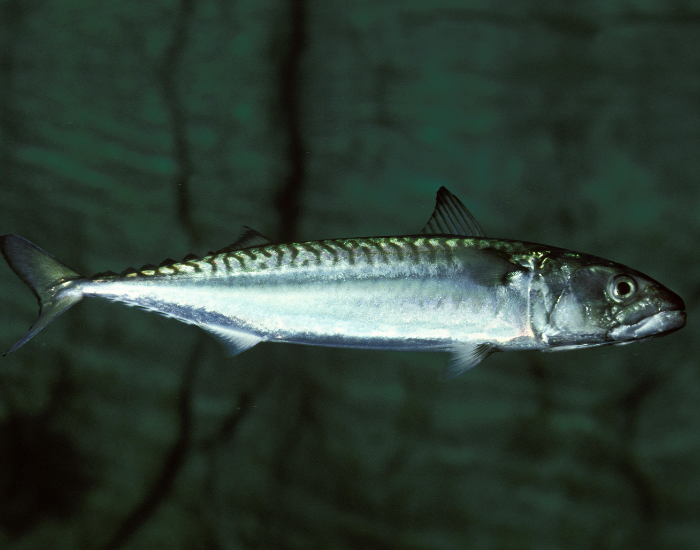
Atlantic mackerel (Scomber scombrus) is a small, fast fish built for distance. Its streamlined body, forked tail, and series of small finlets behind the dorsal fins scream speed. Iridescent skin shimmers blue-green over silver flanks. This is a fatty fish, oily and bold in flavor.
Huge schools roam cold waters across the North Atlantic, feeding near the surface in summer and moving deep in winter. Fishers catch and harvest them by line and net in vast numbers, supplying busy fisheries. This rich, oily seafood takes wonderfully to grilling and smoking, and its bold taste rewards a quick turn in a hot pan. Smoked mackerel is a northern staple.
For a deeper look at this family, I have written a full guide to the types of mackerels worth knowing.
5. Bluefin Tuna
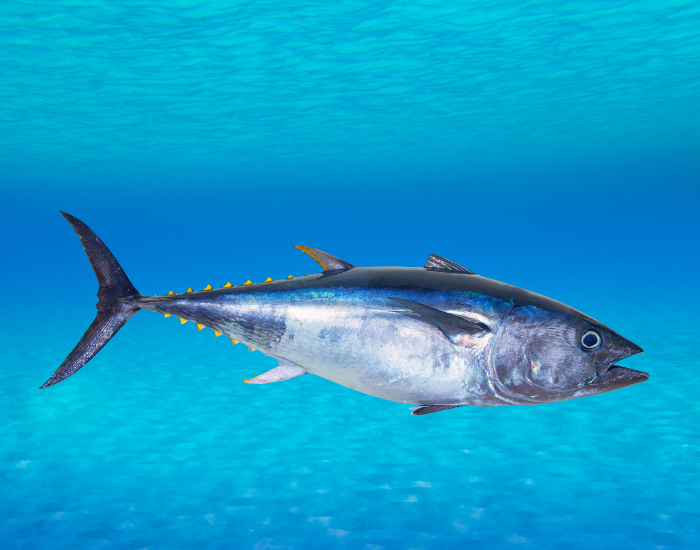
Bluefin tuna (Thunnus thynnus) is the muscle car of the fish world. A large adult can weigh over 400 kilograms and warms its own blood, a rare trait among big fish. Retractable fins fold into grooves to cut drag at speed.
A second dorsal fin and a row of yellow finlets trail toward the tail. Bluefin are apex predators that cross entire oceans hunting smaller fish. Their fatty belly fillet commands staggering prices on sushi menus, which has driven hard overfishing. Conservation quotas have helped Atlantic stocks recover in recent years.
I have only seen one wild bluefin underwater, a silver torpedo that vanished before I could breathe. Explore the wider types of tuna to see the full family.
6. Swordfish
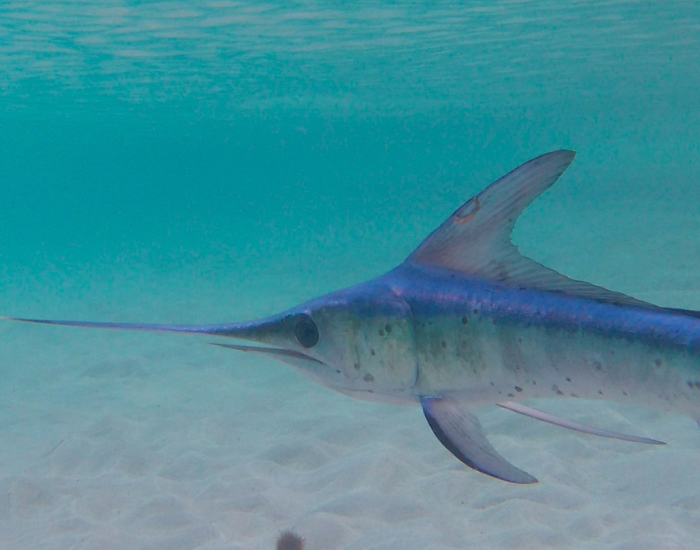
The only species of swordfish is Xiphias gladius, and one is plenty. That long flattened bill is not decoration. The fish slashes through bait schools, stunning prey before circling back to feed.
A tall, sickle-shaped dorsal fin and a stiff crescent tail mark its fins as built for speed. Swordfish live in deep open seas worldwide, diving by day and rising at night to hunt. Their firm, meaty flesh has almost no small bones, which makes the steak a chef favorite to cook over high heat for grilling. Longline boats harvest the catch, and swordfish is a serious commercial seafood species.
These fish stay mostly solitary as adults. You do not school when you carry a sword.
7. Pacific Barracuda
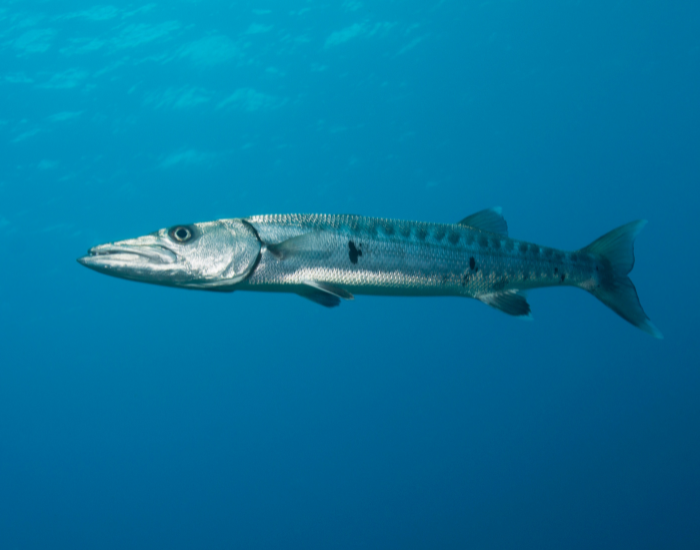
The Pacific barracuda (Sphyraena argentea) ranges from Baja up to Alaska, though it favors warmer southern waters. Its long silver body and underslung jaw, lined with teeth, make it a classic ambush hunter of the coral edge. Smooth pectoral fins and a forked tail give it explosive acceleration.
Barracuda hunt by sight, and the fish strikes fast at flashing prey. I have hung in the blue beside a wall of hundreds, a slow spiraling tornado of barracuda over a coral wall in Mexico. They ignored me completely.
Despite a fierce reputation, barracuda rarely bother divers. These fish run on curiosity, not aggression, in most close encounters.
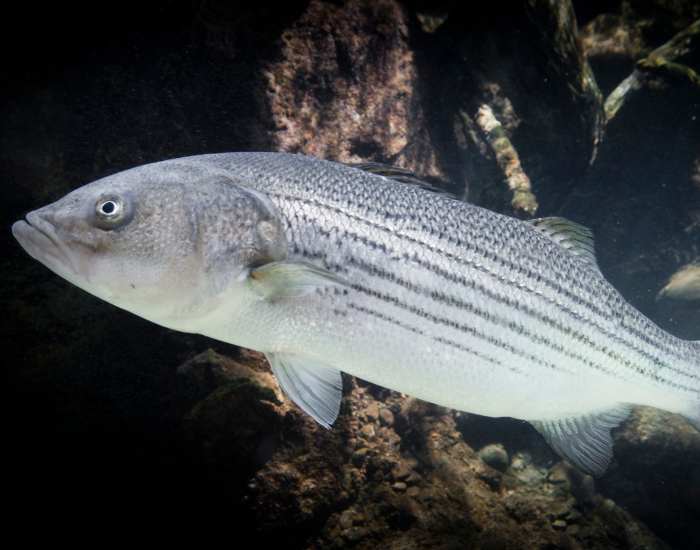
8. Striped Bass
Striped bass (Morone saxatilis) is a fish that lives a double life. It is anadromous, spawning in freshwater rivers but spending much of its life in the sea, with many fish running offshore through winter. Bold dark stripes run along its silver flanks, and spiny dorsal fins give it a rugged profile.
This species supports huge recreational and commercial fisheries along the U.S. East Coast. Anglers catch the fish in surf and freshwater estuary alike. The lean white flesh has a sweet, clean taste, a prized seafood that cooks well in the pan or on the grill.
Wild stripers tolerate a wide range of salinity, from freshwater to full ocean. This bass family thrives where rivers meet the sea.
9. Turbot
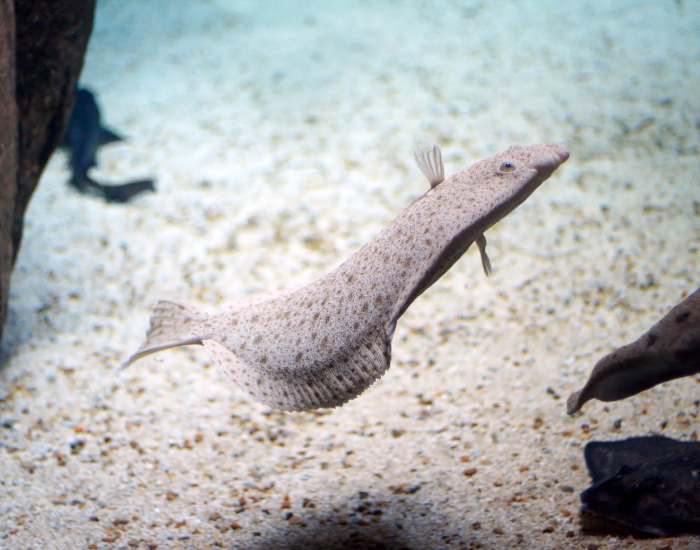
Turbot (Scophthalmus maximus) is a flatfish, and flatfish break your brain a little. These fish start life swimming upright. Then one eye migrates across the skull, and the fish settles onto the ocean floor to live on its side.
A favored flatfish of shallow inshore waters around northern Europe, turbot yields four prized fillets rather than two. Long dorsal and anal fins fringe its flat body, and tiny pelvic fins anchor it to the seabed. Its firm, sweet flesh and delicate flavor put it high on fine-dining menus. Chefs across the world love to cook this luxury seafood of rare quality.
Resting flat on the seabed, turbot vanish. I have nearly knelt on one before it bolted in a puff of sand.
10. Skate
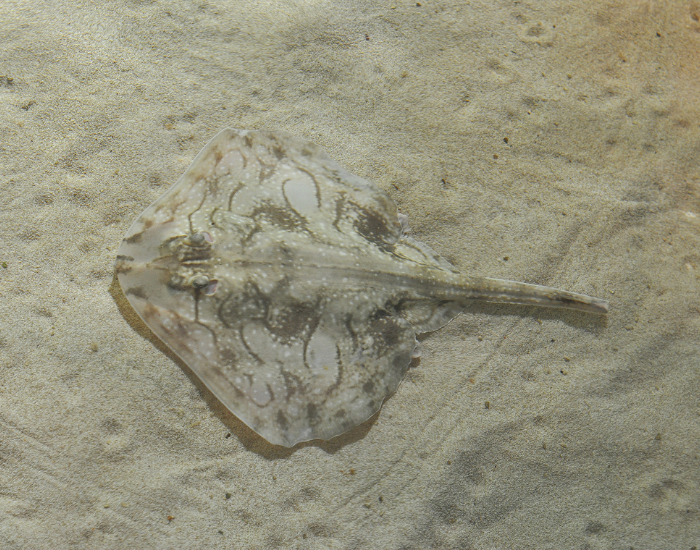
Skates look like someone crossed a fish with a kite. Flattened bodies and broad pectoral fins, the famous “wings,” let them glide across the seabed. Like sharks, they are cartilaginous fish, yet fisheries still group them among true fish.
Skates are caught with longlines and gillnets, mostly as a demersal catch near the bottom. Bottom-trawl fisheries harvest them for their wings alongside other groundfish. The wings are the prized cut, and skate wings carry sweet, stringy flesh that pulls off the cartilage in ribbons. A classic pan preparation browns the fins in butter, a bistro seafood staple.
Skates lay eggs in tough cases, the “mermaid’s purses” you find washed up on beaches. Their slow breeding makes some populations fragile.
11. Mahi-Mahi
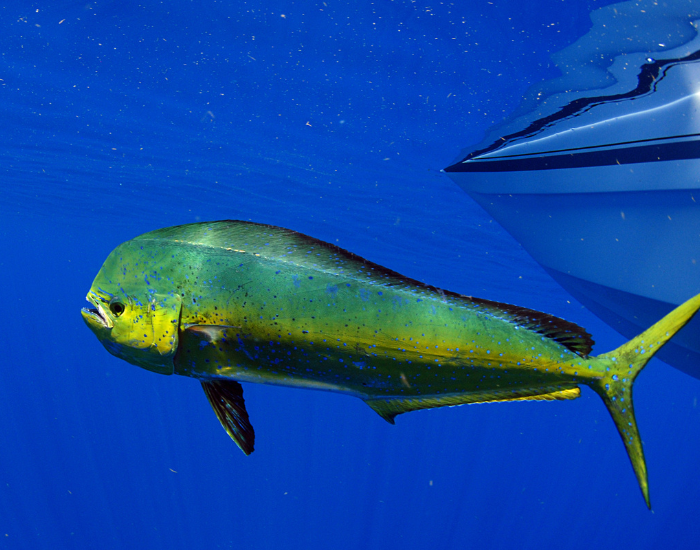
Mahi-mahi (Coryphaena hippurus), also called dorado, may be the most beautiful fish I know. Living animals flash electric blue, green, and gold, then fade the moment they leave the water. A tall continuous dorsal fin runs almost the full length of the body to the tail fins.
These fast-growing hunters roam warm open seas, often near floating debris where bait gathers.Cook the medium-fat fillet simply, because it is mild, sweet, and a staple on seafood menus.
Mahi-mahi grow and breed quickly. That speed makes them one of the more sustainable big-game fish to catch.
12. Coral Trout
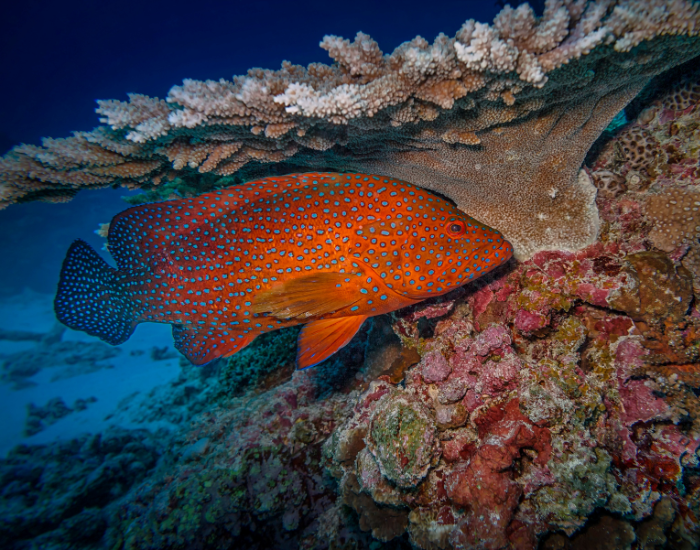
Coral trout (Plectropomus leopardus) belongs to the grouper family, and this fish owns the coral. Vivid red bodies dotted with neon blue spots make it unmistakable across the reefs of Australia and Southeast Asia. Rounded fins suit short, explosive ambush strikes rather than distance, and a spiny dorsal fin rises in threat.
This species is a sit-and-wait predator, exploding from cover to engulf smaller fish. On the Great Barrier Reef I have watched them shadow hunting octopus, stealing prey the octopus flushed from holes. Its firm white flesh is a premium catch and prized seafood across Asian markets, where quality fetches a high price.
Coral trout change color to communicate and to hunt. The coral is far more conversational than it looks.
13. Napoleon Wrasse
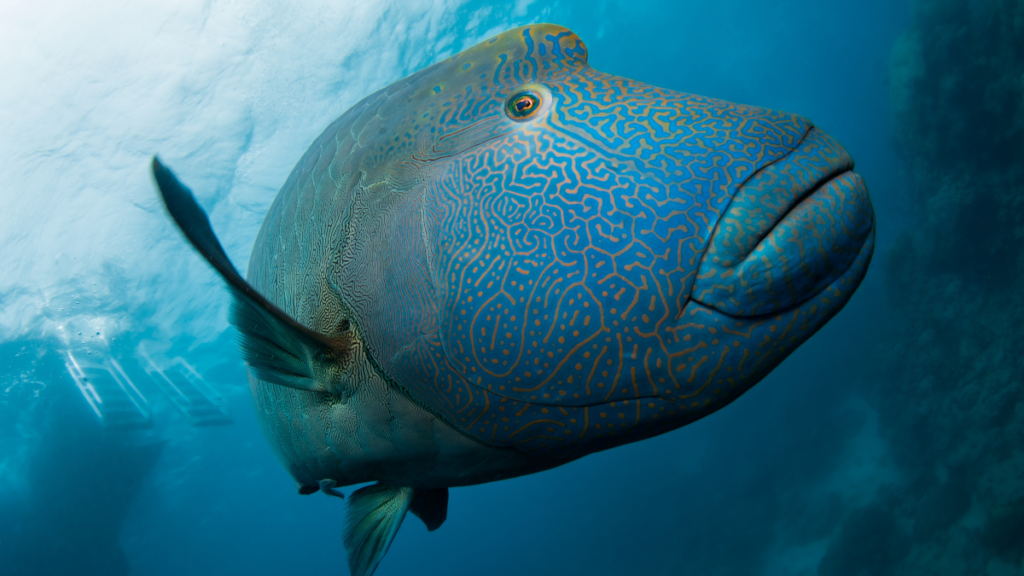
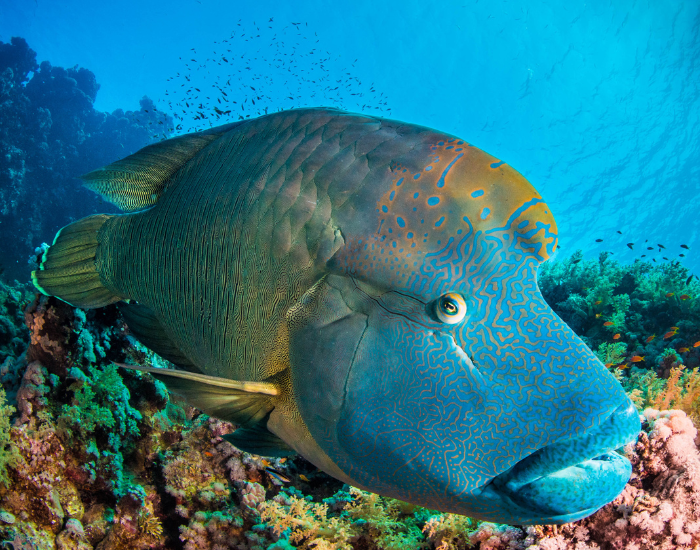
The Napoleon, or humphead wrasse (Cheilinus undulatus), is a giant. Adults reach two meters and wear a bulbous forehead above thick lips and maze-like green markings. Large paddle-shaped pectoral fins row them slowly along the coral wall, and the tail and dorsal fins ripple as they turn.
I met my first Napoleon in the Red Sea, a curious giant fish that followed me for two minutes. Sadly, the live reef food trade has hammered the species. Conservation groups now list it as endangered, and several countries protect the species outright.
These fish crunch hard-shelled prey, even toxic crown-of-thorns starfish. Losing them changes the whole ecosystem.
14. Lionfish
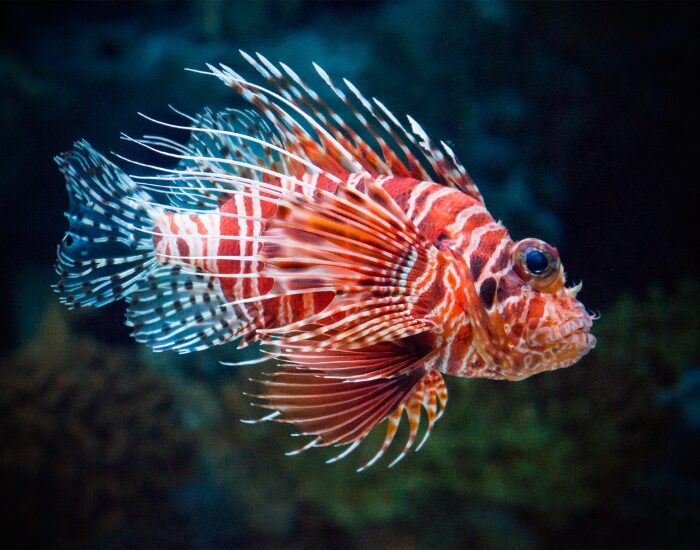
Lionfish (Pterois volitans and Pterois miles) are stunning, infamous animals. Fans of venomous spines and feathery pectoral fins make each fish look like an underwater firework. In their native Indo-Pacific and Red Sea, they sit in balance with the ecosystem.
In the Atlantic and Caribbean, they are a disaster. First recorded off Florida in 1985 (although genetic tracking and major population explosions began in the late 1990s and early 2000s), this invasive species has reduced some native fish populations by up to 95 percent. Cull-and-eat programs now turn the problem into firm, sweet, lean fillets, and divers harvest them by spear to protect the reef.
The biology that makes lionfish beautiful also makes them dangerous as invaders: no predators, fast breeding, and a bottomless appetite.
15. Lyretail Anthias
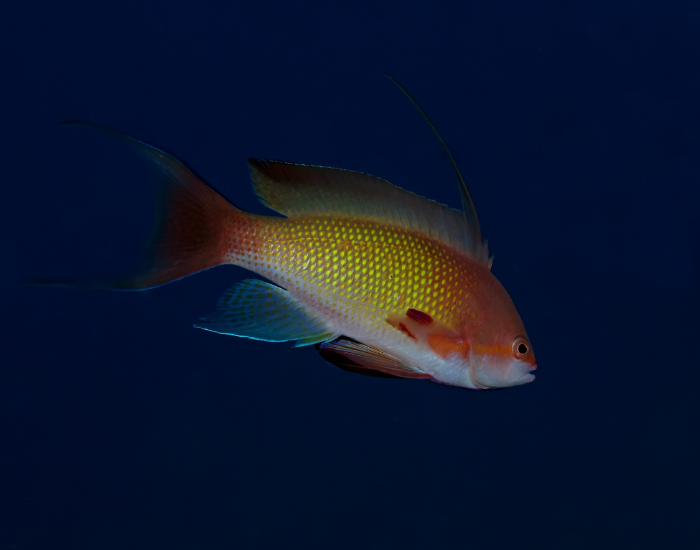
Lyretail anthias (Pseudanthias squamipinnis) prove that fish do drama. These tiny orange and pink fish swarm coral heads in their thousands, an abundant living cloud that pulses with the current. Trailing fins give the males their lyre-shaped tails, with long pelvic fins beneath.
These fish are also serial gender-benders. Born female, the most dominant individual switches to male when the resident male disappears. This sequential hermaphroditism is common across several species of coral fish.
Hovering inside a shimmering wall of anthias in the Red Sea is pure joy. No seafood market here, just spectacle.
Frequently Asked Questions
A finfish is any true fish with fins, gills, and a backbone, such as salmon, cod, or tuna. The term separates these aquatic vertebrates from shellfish, which include crustaceans and mollusks like octopus. Sharks and skates count as finfish too, despite their cartilage skeletons. Finfish are commonly grouped by habitat and by fat content.
Alaska leads the United States in fish, both in volume harvested and in fishery value. Its cold waters produce enormous runs of wild salmon, cod, and other commercial species every year. Bristol Bay alone hosts the largest sockeye salmon fishery on the planet, the heart of U.S. wild salmon. Florida ranks high for sheer freshwater and coral species diversity.
Large, long-lived predators are generally the least healthy fish to eat often. Bigeye and bluefin tuna, swordfish, king mackerel, and shark accumulate high mercury through predation up the food chain. Health agencies advise children and pregnant people to limit these species.
Most finfish beat chicken and beef on heart-healthy fats. Fatty species like salmon and mackerel are a rich source of omega-3 nutrients that red meat simply lacks. Even lean white fillets bring quality protein with less saturated fat. The trade-off is mercury in a few large predators, as noted above.
The Takeaway
Fifteen fish, one truth: finfish carry the whole story of the ocean in their fins. Some species feed billions of people. Some hold a reef together. A few do both, and we are only now learning to value them before they vanish.
Go meet them yourself. Snorkel a reef, visit a seafood market, or simply ask where your dinner fillet was caught and how. Curiosity is conservation’s first step. If ocean predators pull at you, read my guides to shark species, the types of mackerels, and the ocean-crossing types of tuna next. Then tell me in the comments which finfish surprised you most.
References:
Côté, I. M., Green, S. J., & Hixon, M. A. (2013). Predatory fish invaders: Insights from Indo-Pacific lionfish in the western Atlantic and Caribbean. Biological Conservation, 164, 50–61. https://doi.org/10.1016/j.biocon.2013.04.014
Naylor, R. L., Hardy, R. W., Buschmann, A. H., Bush, S. R., Cao, L., Klinger, D. H., Little, D. C., Lubchenco, J., Shumway, S. E., & Troell, M. (2021). A 20-year retrospective review of global aquaculture. Nature, 591, 551–563. https://doi.org/10.1038/s41586-021-03308-6
Popper, A. N., & Hawkins, A. D. (2019). An overview of fish bioacoustics and the impacts of anthropogenic sounds on fishes. Journal of Fish Biology, 94(5), 692–713. https://doi.org/10.1111/jfb.13948
Sadovy, Y., Kulbicki, M., Labrosse, P., Letourneur, Y., Lokani, P., & Donaldson, T. J. (2003). The humphead wrasse, Cheilinus undulatus: Synopsis of a threatened and poorly known giant coral reef fish. Reviews in Fish Biology and Fisheries, 13(3), 327–364. https://doi.org/10.1007/s11160-004-3326-5
Tocher, D. R. (2015). Omega-3 long-chain polyunsaturated fatty acids and aquaculture in perspective. Aquaculture, 449, 94–107. https://doi.org/10.1016/j.aquaculture.2015.01.010
Weber, M. J., & Brown, M. L. (2021). Towards environmental sustainability in marine finfish aquaculture. Frontiers in Marine Science, 8, 666662. https://doi.org/10.3389/fmars.2021.666662