A Safari Through Africa’s Wild Heart
If you are looking for your next safari destination, Kenya is one of the best wildlife photography destinations on the planet, home to vast savannas, towering mountains, and lush forests teeming with life. In this country you will find the legendary Big Five, but also rare and endemic species found nowhere else. But Kenya’s wildlife isn’t just about safaris, its biodiversity plays a crucial role in global conservation, making it a must-visit destination if you like animals.
In this guide, we’ll explore the most iconic wild animals in Kenya, answer common wildlife questions, and reveal the best spots to experience Kenya’s breathtaking natural wonders. But first, let’s understand a little bit of Kenya geography:
Why Are Animals of Kenya So Epic?
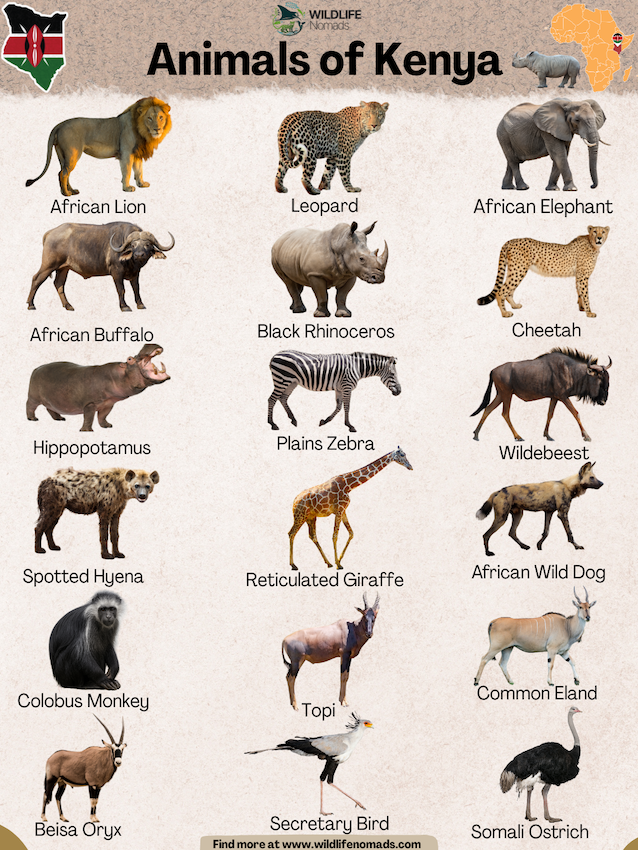
Kenya’s wildlife is next-level thanks to its insane geography, it’s got everything from the Rift Valley’s dramatic escarpments to coastal mangroves and arid northern deserts. Straddling the equator in East Africa, it juggles wet forests, dry plains, and snow-capped peaks like Mount Kenya, creating homes for a mind-blowing mix of critters. The stats? Over 315 mammals, 1,100 birds, 191 reptiles, and counting.
Toss in ancient migration routes and a conservation game that’s been kicking since the 1940s, and you’ve got a recipe for wildlife in Kenya Africa that’s pure magic, perfect for adventurers hungry to see animals from Kenya Africa in their prime!
What Animal is Only Found in Kenya?
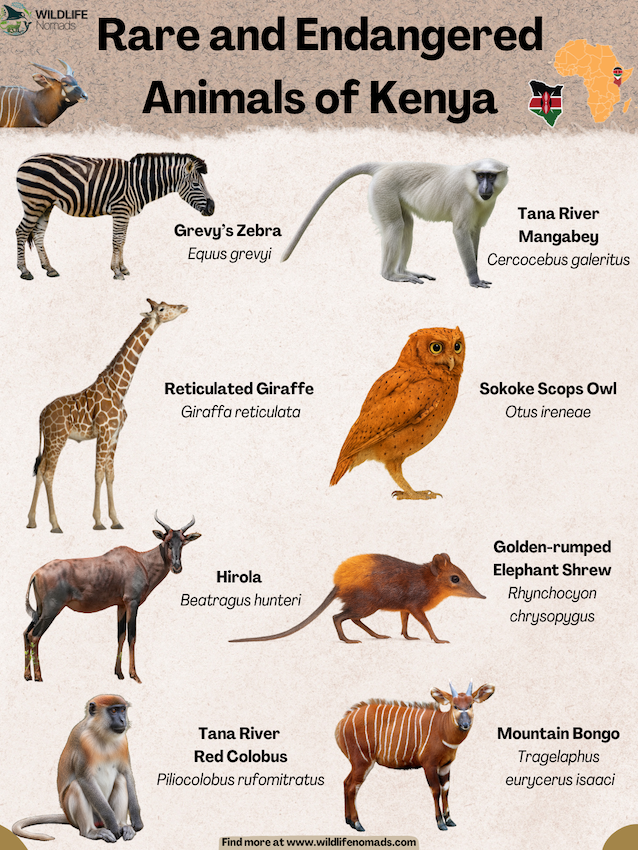
Kenya is home to several endemic species, animals that can’t be found anywhere else in the world. One of the most famous is the Hirola antelope (Beatragus hunteri), also known as the “four-eyed antelope” due to the distinctive white markings above its eyes. This critically endangered species is found only in the remote grasslands along the Kenya-Somalia border. Conservation efforts are underway to protect the Hirola from habitat loss and poaching.
Northern Kenya is renowned for its unique wildlife, including the Grevy’s zebra and reticulated giraffe, which are found in this region’s exclusive safari lodges and conservation areas.
Another rare species exclusive to Kenya is the Mount Kenya mole rat, a burrowing rodent that thrives in high-altitude regions of Mount Kenya. While less famous than the Big Five, these species highlight the country’s unique ecological diversity.
What Are the Top 10 Animals in Kenya?
While Kenya’s wildlife is incredibly diverse, some of the most iconic animals in africa can be found here, but these ten species stand out as must-sees for visitors:
1. Lion
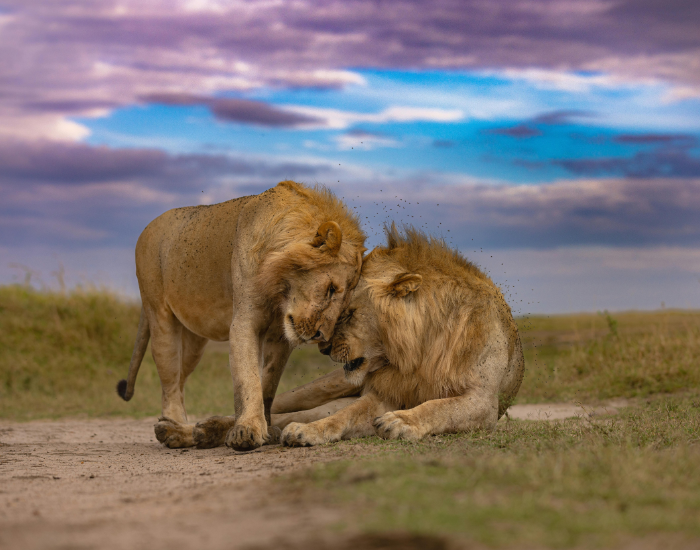
The lion, often referred to as the “king of the jungle,” is one of the most iconic animals in Kenya and anywhere in Africa. Visitors can spot these majestic creatures in various national parks and reserves.
2. African Elephant
The African elephant, the largest land animal, is a common sight in Kenya’s national parks. Amboseli National Park is famous for its herds of elephants roaming beneath Mount Kilimanjaro. Due to conservation efforts, elephant populations are stabilizing after years of poaching threats.

3. Gerenuk
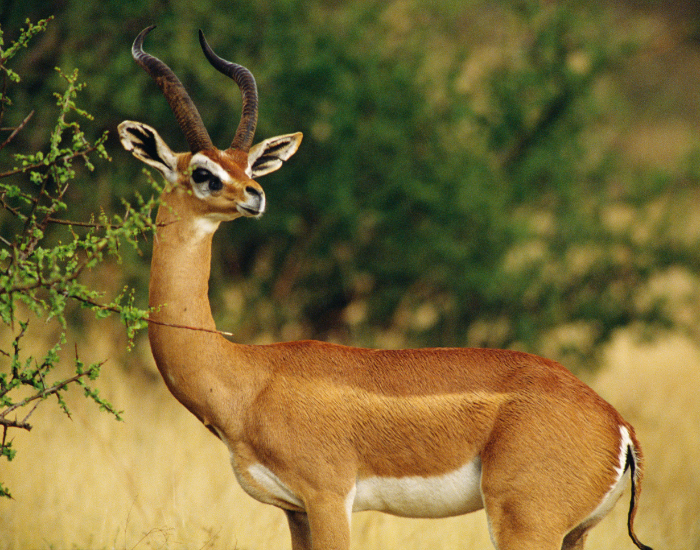
With their slender necks and long legs, gerenuks are one of the most distinctive antelopes of East Africa. Often spotted in dry, thorny bushlands of northern Kenya and southern Ethiopia, they’re known for standing upright on their hind legs to reach leaves high in acacia trees, a trait few other antelopes possess.
4. Leopard
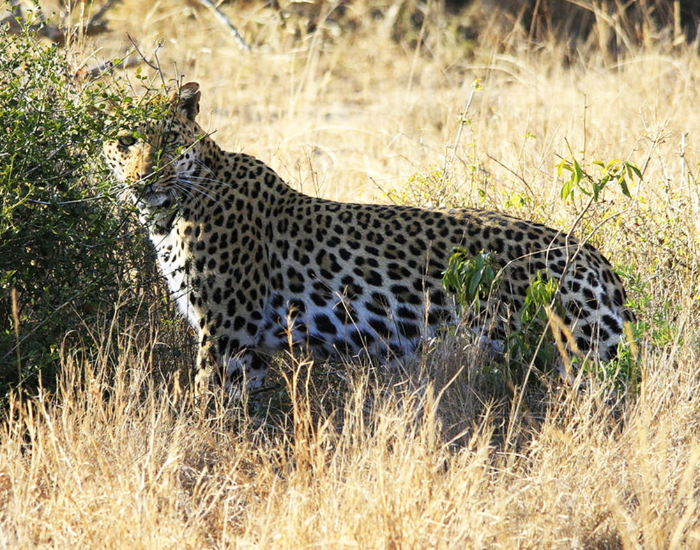
Leopards are among the most elusive and sought-after animals in Kenya, captivating wildlife enthusiasts with their striking appearance. Sporting a light brown coat adorned with dark spots, these solitary felines are the epitome of stealth and grace. Leopards can be found in various national parks and reserves, including the renowned Maasai Mara National Reserve and Amboseli National Park.
5. Cheetah
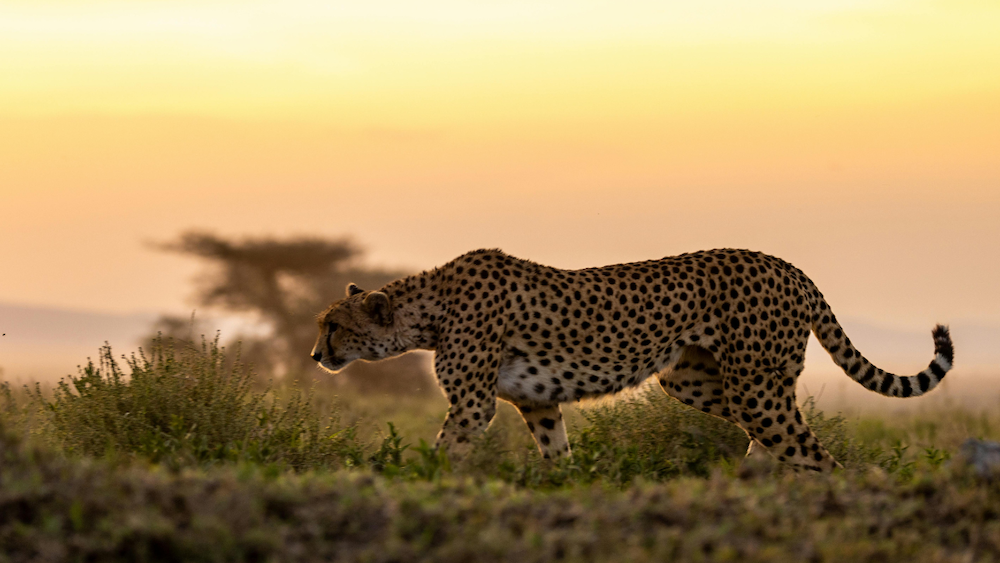
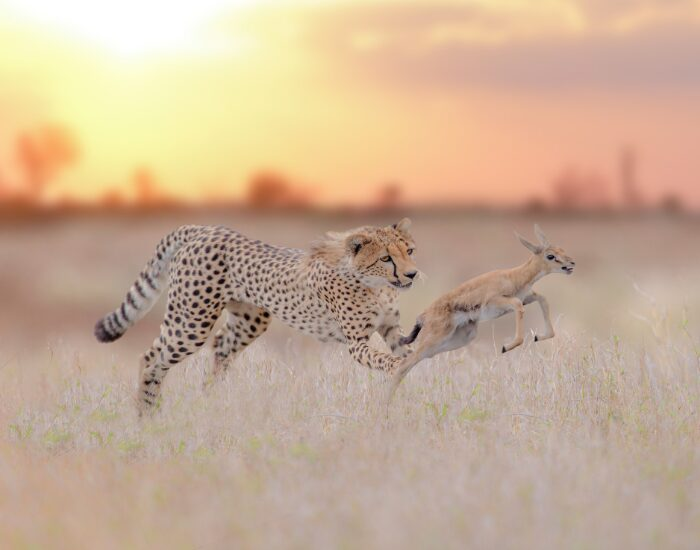
Known for their incredible speed as one of the fastest animals on land, cheetahs are another highlight of Kenya’s wildlife. They are most commonly seen in the Maasai Mara, where they hunt in the open savannah.
6. Bat-Eared Fox
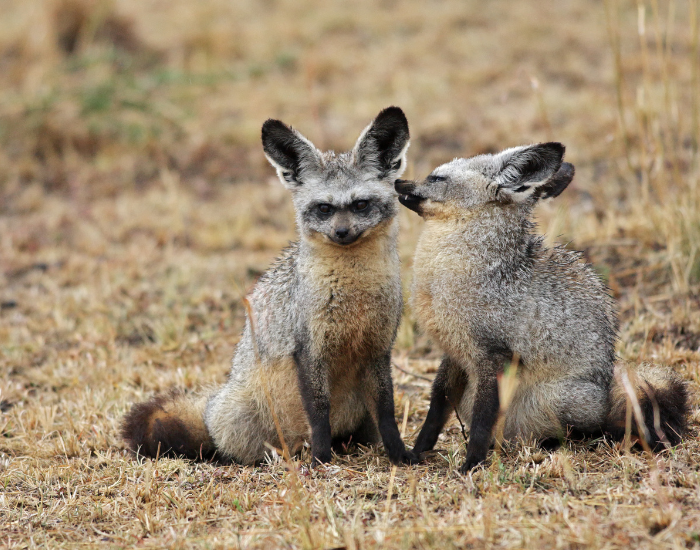
The bat-eared fox is a unique species notable for its large ears, which help it locate insects and other small prey. This small fox is typically found in the savannahs and arid grasslands of Kenya. Its diet mainly consists of termites, beetles, and other insects, but it also eats small mammals and birds. Bat-eared foxes are social animals, often seen in pairs or small family groups, and are most active during the cooler parts of the day and night.
7. Giraffe
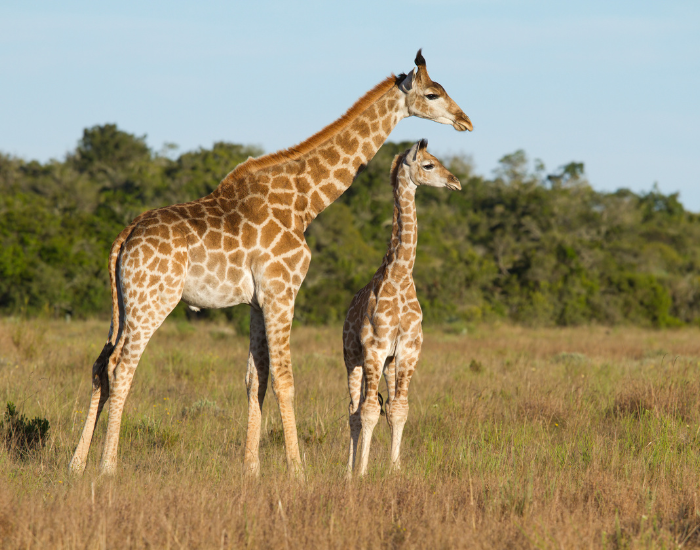
Kenya is home to three giraffe subspecies: the Maasai giraffe, the Rothschild’s giraffe, and the Reticulated giraffe. You can see these gentle giants at the Giraffe Centre in Nairobi or roaming freely in Laikipia and Samburu.
8. Black and White Rhinos
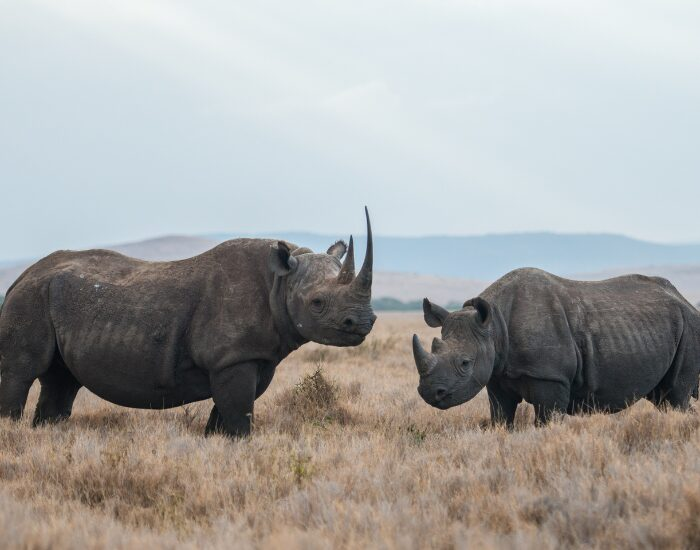
Once on the brink of extinction, black rhinos and white rhinos are making a comeback thanks to conservation efforts in Ol Pejeta Conservancy and Nairobi National Park. Seeing these armored giants in the wild is a truly unforgettable experience.
9. African Wild Dog
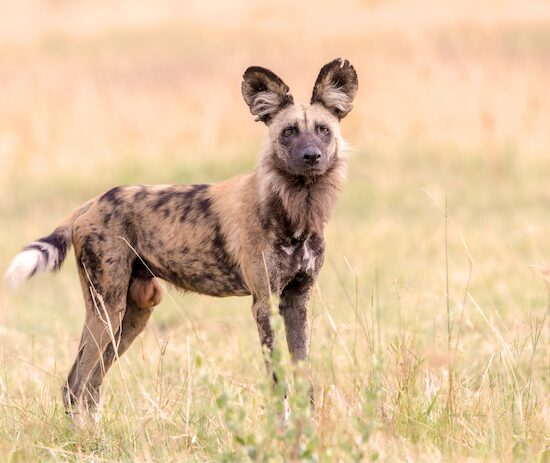
With their mottled coats and large, rounded ears, African wild dogs are among Africa’s most charismatic and endangered predators. Highly social and known for their cooperative hunting strategies, they thrive in packs that cover vast distances across open savannas and woodlands. Found in places like Botswana’s Okavango Delta and Zimbabwe’s Hwange National Park, their elusive nature and dwindling numbers make sightings especially memorable.
10. Wildebeest
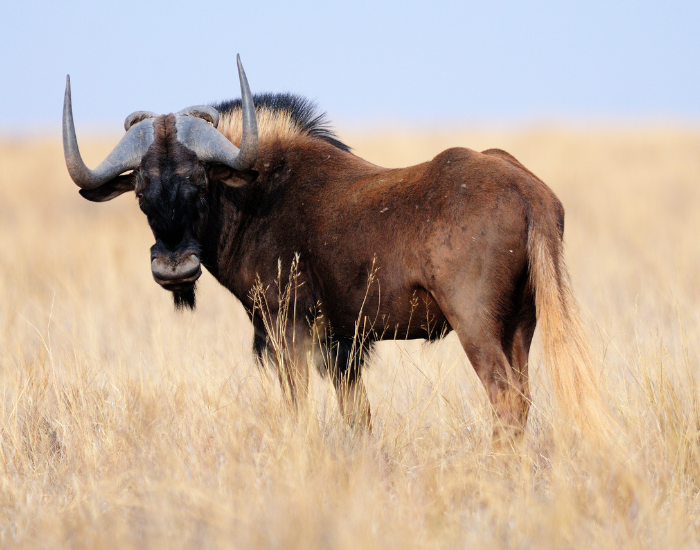
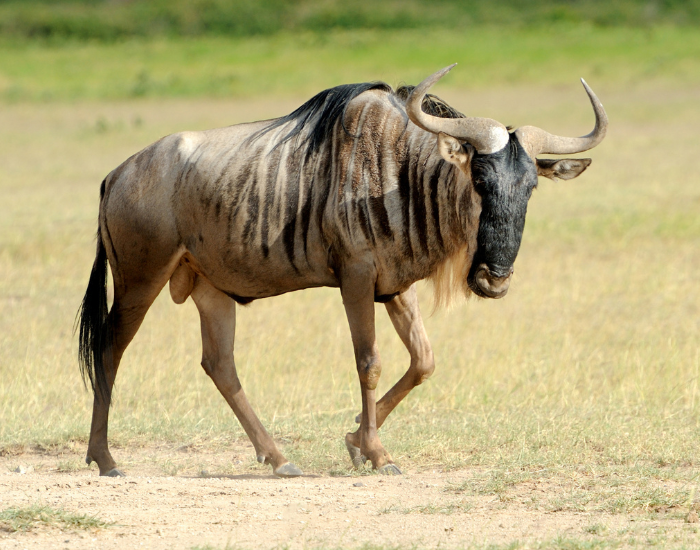
Famous for their dramatic migrations, wildebeest are a defining species of the Serengeti and Masai Mara ecosystems. These grazing herbivores move in vast herds, sometimes numbering in the millions, following seasonal rains in search of fresh grass. Their migration attracts predators like lions, hyenas, hippopotamuses, and crocodiles, creating one of the most iconic wildlife spectacles on Earth.
11. Hippopotamus
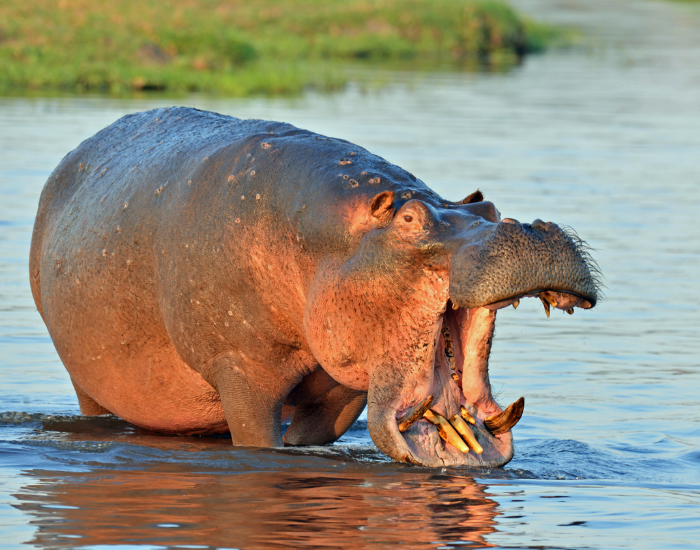
These massive semi-aquatic herbivores dominate Kenya’s river systems, including the Mara and Talek Rivers. Resting in water pods during the day to prevent sunburn, hippopotamus head onto land at night to graze on vast quantities of grass. During the Great Migration, their river territories form one of the primary physical hurdles for crossing herds.
12. Spotted Hyena
Far from being simple scavengers, spotted hyenas are highly skilled, highly social endurance hunters operating in complex, female-dominated clans. As key apex predators across the Maasai Mara, Lake Nakuru, and Amboseli ecosystems, their powerful jaws allow them to digest bone, playing a critical nutrient-recycling role in the savanna.

13. Serval
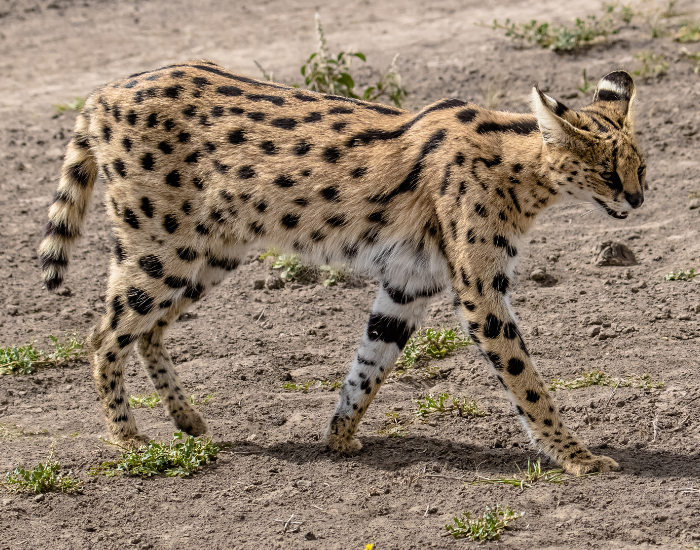
Boasting the longest legs relative to body size of any cat species, the serval is a slender, solitary predator tailored for hunting in tall grasslands. Their oversized ears function like radar dishes to detect small rodents beneath dense cover, culminating in a distinctive high-arching pounce.
14. Olive Baboon
Highly adaptable and living in large, structured troops, olive baboons inhabit landscapes ranging from open savannas to highland forests across Kenya. Their omnivorous diet and complex social interactions make them a frequent sighting in parks like Nakuru and Amboseli.

15. Lesser Kudu
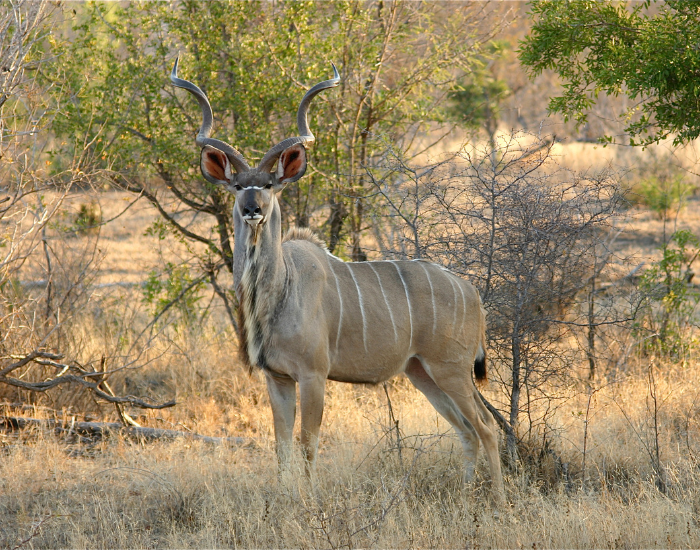
Characterized by elegant spiral horns and fine vertical white stripes along their flanks, these elusive forest antelopes thrive in the dry thornbushes of northern Kenya, including Samburu and Tsavo. Excellent jumpers and browsers, their striking camouflage keeps them hidden within dense acacia thickets.
What about Birds? The Feathered Stars of Wildlife in Kenya!
If you are more into birding, Kenya’s animals of Kenya include 1,100 bird species, making it some of the best bird watching destinations in the world. Here’s the fab four with quick hits:
- Flamingos: Lesser Flamingo, millions turn Nakuru pink, slurping algae with curved bills—stunning overload!
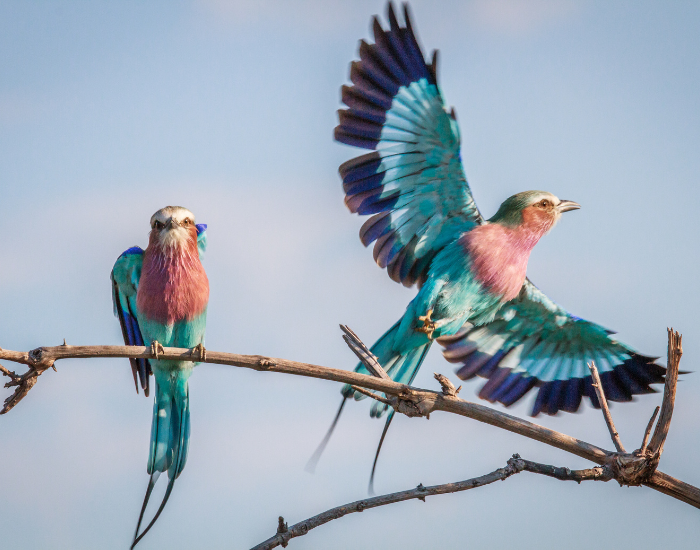
- Lilac-Breasted Roller: Rainbow flyers, lilac chest, turquoise wings, photo ops in the Mara soar!
- Ostrich: Somali Ostrich, world’s largest bird, strutting savannahs with 50 mph sprints, wild speed!
- Grey Crowned Crane: Elegant dancers, golden crests, red throats.
- Verreaux’s Eagle-Owl: This bird of prey is Africa’s largest owl, unmistakable with its massive size and distinctive pink eyelids, an amazingl nocturnal hunter!
Best Places to See Wildlife in Kenya:
Here are some of the Best National Parks in Kenya to see wildlife and have an incredible safari
1. Maasai Mara National Reserve
- Best for: Lions, cheetahs, and the Great Migration
- Best time to visit: July to October for the wildebeest migration
2. Amboseli National Park
- Best for: Elephants with Mount Kilimanjaro as a backdrop
- Best time to visit: June to October (dry season, easier wildlife spotting)
3. Samburu National Reserve
- Best for: Unique species like the Grevy’s zebra and reticulated giraffe
- Best time to visit: December to March and June to October
4. Lake Nakuru National Park
- Best for: Flamingos, rhinos, and diverse birdlife
- Best time to visit: All year round, but the dry season (June to February) is best
5. Tsavo National Park
- Best for: Red-dusted elephants, leopards, and dramatic landscapes
- Best time to visit: June to October
Recommended Tours in Kenya:
The Great Migration: Nature’s Mega Show
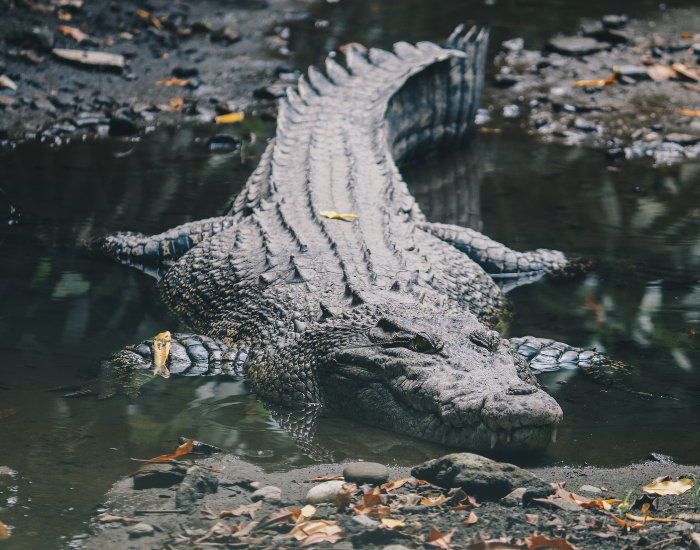
The Great Migration’s Kenya’s wildlife in Kenya Africa blockbuster, 1.5 million wildebeest, zebras, and antelopes thunder from Tanzania’s Serengeti to the Maasai Mara, July to November. August’s Mara River crossings are chaos, Nile crocs snag stragglers, and dust flies thick. It’s raw, wild, and a once-in-a-lifetime spectacle—book a July-October tour to catch the peak stampede!
Marine Life in Kenya
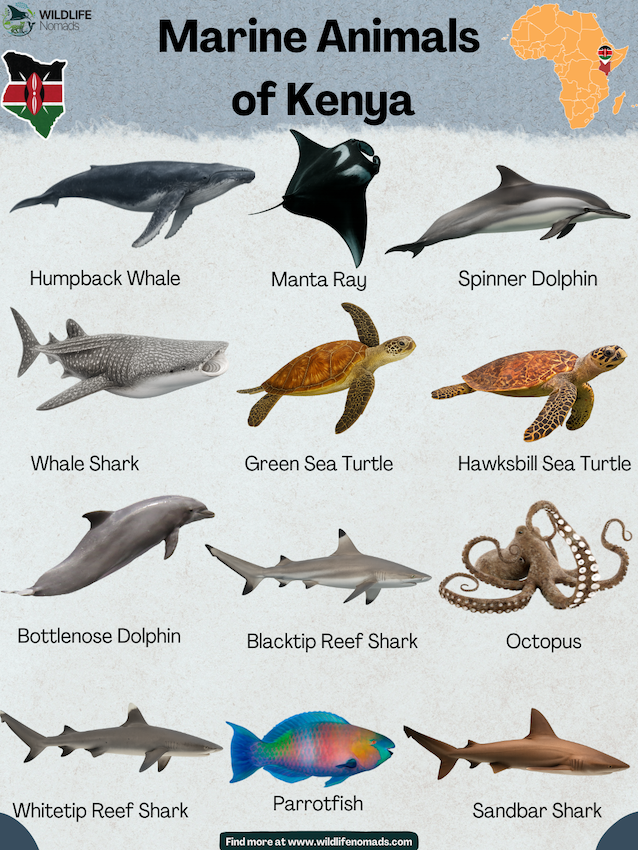
Kenya’s coastline is a treasure trove of marine biodiversity, offering a vibrant underwater world teeming with life. From the colorful coral reefs to the playful dolphins, the marine life in Kenya is as diverse as it is enchanting. The country’s marine national parks, such as Watamu Marine National Park, provide a sanctuary for a myriad of species, including the endangered African fish eagle, five species of sea turtle, parrot fish, dolphins, and different types of whales and sharks
These protected areas are crucial for the conservation of marine ecosystems, allowing species to thrive in a safe habitat. Visitors to Kenya can explore this underwater paradise through activities like snorkeling, diving, and boat tours, gaining a deeper appreciation for the country’s rich marine heritage. Whether you’re gliding over coral gardens or encountering a school of fish, Kenya’s marine national parks offer an unforgettable adventure beneath the waves.
How Tourism Helps Animals of Kenya
Kenya’s thriving wildlife tourism industry plays a crucial role in protecting its incredible biodiversity. Every year, millions of visitors travel to the country’s national parks and conservancies, generating significant revenue that directly funds conservation efforts. Entrance fees to parks like the Masai Mara, Amboseli, and Tsavo support anti-poaching patrols, habitat restoration, and community-led conservation projects. Additionally, eco-tourism initiatives, such as wildlife conservancies owned and managed by local Maasai communities, provide sustainable alternatives to industries that threaten wildlife, like agriculture and land development.
Safari lodges and tour operators that follow responsible tourism practices also educate visitors about the importance of conservation and help enforce ethical wildlife viewing guidelines. Safari tourism’s a lifeline for animals of Kenya, $1.5 billion flowed in 2019, per Conservation Biology, funding 8,000 rangers who nab poachers (arrests up 40% since 2015). Park fees, $80/day in the Mara, bankroll fences, water pumps, and vet care, elephants treated for spear wounds jumped 30% in five years. Lodges like Basecamp Maasai Mara train ex-hunters as guides, 1,200 jobs in 2022 swapped rifles for binocs. Your tour dollars plant trees, 500,000 since 2018, and educate kids on wildlife in Kenya Africa. A single trip can save a rhino, book it, and you’re a conservation rockstar
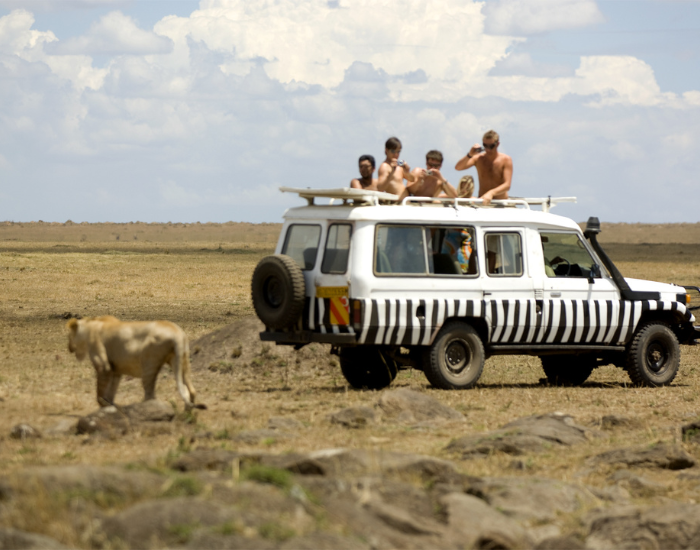
Kenya, A Wildlife Paradise
From the roaring lions of the Masai Mara to the gentle giraffes of Samburu, the animals of Kenya make this country one of the most thrilling wildlife destinations in the world. Whether you’re a first-time visitor or a seasoned traveler, Kenya’s diverse landscapes and conservation success stories will leave you in awe.
Planning your next adventure? Make sure Kenya is at the top of your list. Witnessing its magnificent wildlife in person is an experience you’ll never forget.
References:
Ali, A. H., Ford, A. T., Evans, J. S., Mallon, D. P., Mubarak, M., King, J., Amin, R., & Goheen, J. R. (2017). Resource selection and habitat avoidance by the critically endangered hirola antelope (Beatragus hunteri) in off-reserve rangelands of Kenya. Journal of Mammalogy, 98(3), 855–863. https://doi.org/10.1111/1365-2664.12856
Cromsigt, J. P. G. M., & Te Beest, M. (2014). Restoration of a megaherbivore: The white rhinoceros (Ceratotherium simum) as an architect of savanna dynamics. Journal of Ecology, 102(5), 1141–1152. https://doi.org/10.1111/1365-2745.12218Digital Object Identifier (DOI)
Garnier, R., Ezenwa, V. O., & Giles, J. (2020). Socio-ecological factors influencing foraging strategies and insectivory in the bat-eared fox (Otocyon megalotis) in East African rangelands. African Journal of Ecology, 58(2), 211–220. https://doi.org/10.1111/j.1469-7998.1986.tb01907.xDigital Object Identifier (DOI)