I visited Florida only once, as a kid. Years later, I worked in a zoo reptile and amphibian house in North America. There I cared for Burmese pythons and tegus, two species that now live wild in Florida.
That job made me look at Florida differently. Its wildlife story mixes rare endemic species with invaders from Asia, Africa and South America. Few states show both sides so clearly.
Florida’s subtropical climate supports a huge variety of habitats. Pine forests, swamps, springs, mangroves, coral reefs and long sandy coasts all sit within one state. As a result, animals in Florida range from tropical crocodiles to temperate black bears.
Below, I cover 15 species you should know. I chose a mix of mammals, birds, reptiles and one tiny butterfly. For each one, you will learn what makes it special and what threatens it.
Think you know Florida’s wild side? Gators, panthers and pink birds wait in 15 quick questions. Read on, then take the quiz at the end and see if you’re a Gator Great or a Hatchling. Jump to the quiz ↓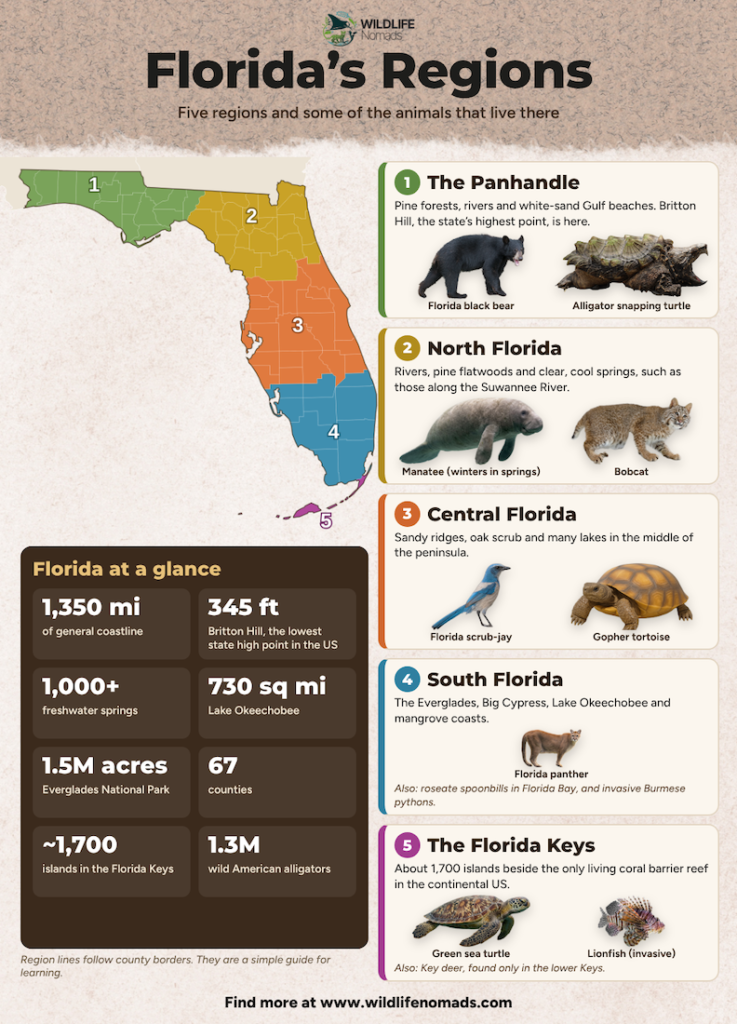
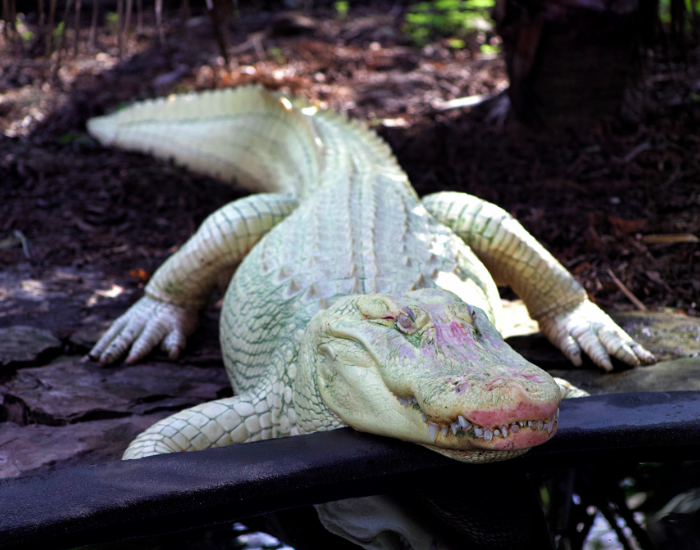
1. American Alligator
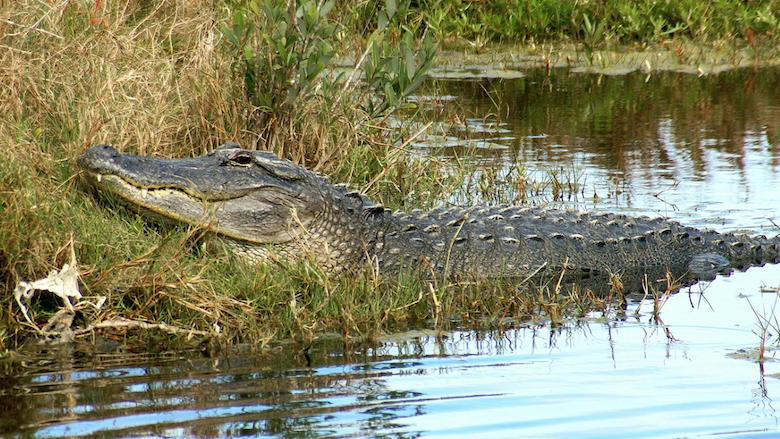
The American alligator (Alligator mississippiensis) is Florida’s official state reptile. About 1.3 million live in the state, in all 67 counties. You will find them in lakes, rivers, swamps and even golf course ponds.
Large males can grow over 13 ft (4 m) long and weigh more than 1,000 lb (450 kg). Yet this recovery story almost did not happen. Hunting pushed alligators toward collapse, and they joined the first US endangered species list in 1967.
Protection worked. The US Fish and Wildlife Service declared them recovered in 1987. In the dry season, alligators dig “gator holes” that hold water for fish, turtles and birds.
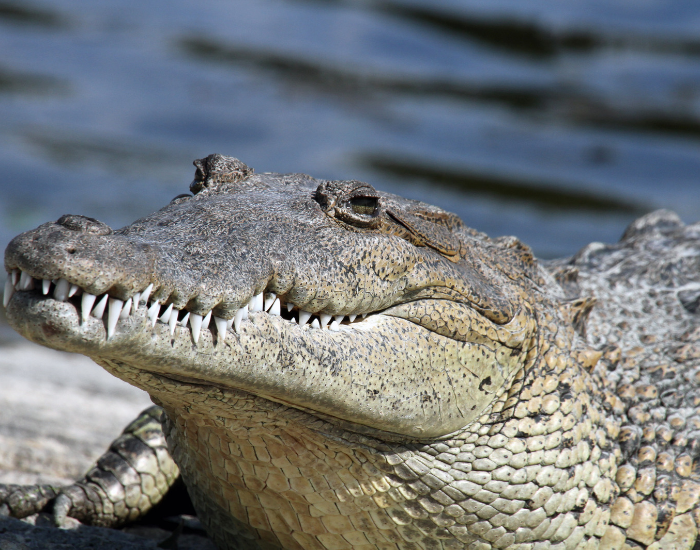
2. American Crocodile
South Florida is the only place where alligators and crocodiles live side by side. The American crocodile (Crocodylus acutus) prefers brackish and salt water in Florida Bay and the Keys. Its narrow snout and visible lower teeth set it apart.
I spent several years of my childhood in Villahermosa, Tabasco. Our home faced a river where crocodiles were part of daily life. Respect for these animals came early for me.
Florida’s crocodiles once dropped to only a few hundred. Habitat protection helped them recover, and the US downlisted them from endangered to threatened in 2007. You can compare both reptiles in my guide to the difference between alligators, crocodiles and caimans.
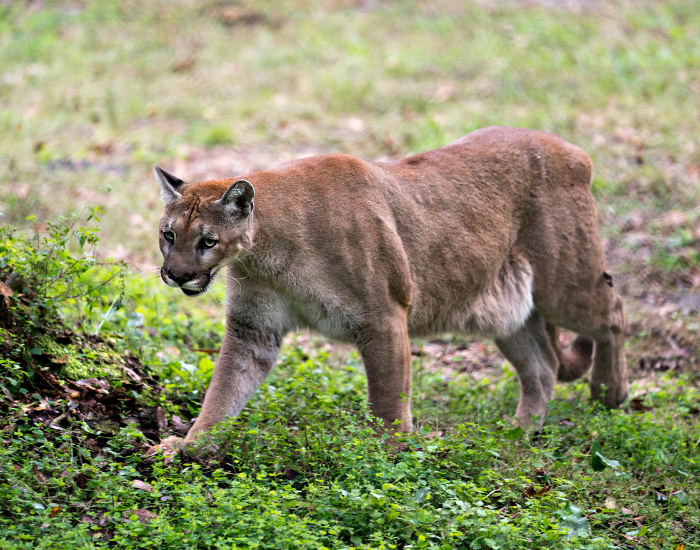
3. Florida Panther
The Florida panther is a subspecies of puma, and the only breeding puma population in the eastern United States. Federal agencies estimate 120 to 230 adults and subadults in the wild. It has held endangered status since 1967.
By the early 1990s, only 20 to 30 panthers remained. Inbreeding caused kinked tails, heart defects and low sperm quality. In 1995, biologists released eight female pumas from Texas into South Florida.
The rescue worked. A 2010 study found the population roughly tripled after this genetic restoration. Today, vehicle collisions remain the biggest threat, killing dozens of panthers in a bad year.
4. Florida Black Bear
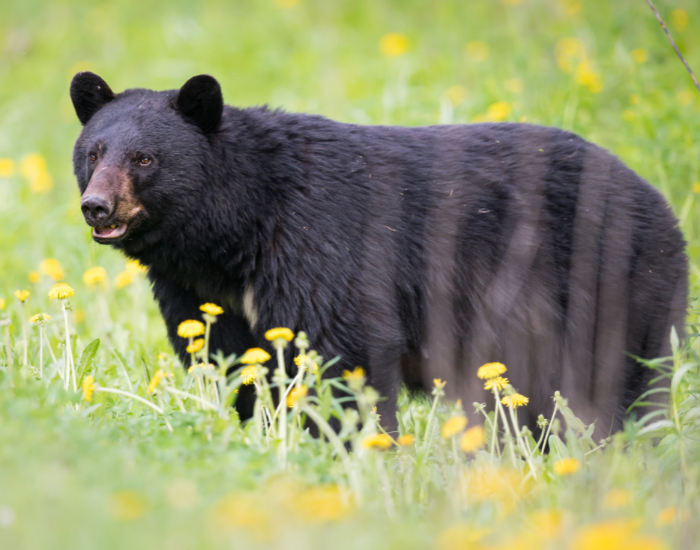
The Florida black bear (Ursus americanus floridanus) is a subspecies of the American black bear. Biologists estimate about 4,000 live in the state. Bears inhabit forests and swamps from the Panhandle to the Big Cypress.
My own wild black bear moment came near Vancouver, Canada. One crossed a hiking trail right in front of me. It reminded me how quietly such a big animal moves.
Florida bears eat mostly plants, including acorns, berries and palmetto fruit. Insects make up much of the rest. Trash attracts them into towns, which creates most human conflicts.
5. West Indian Manatee
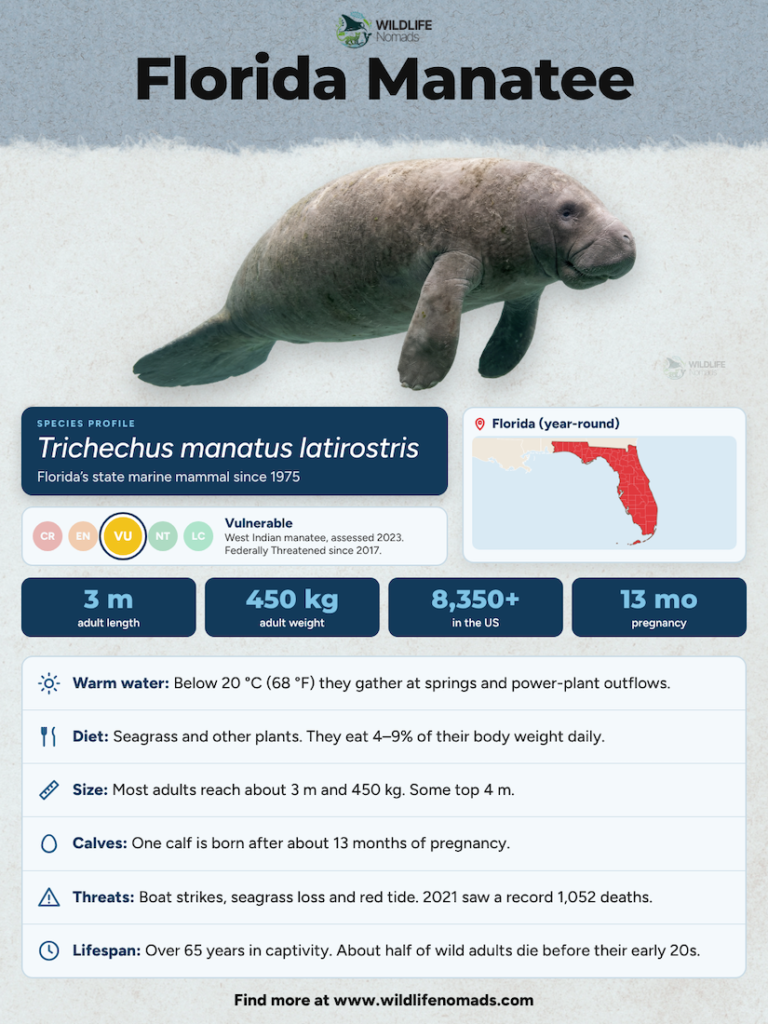
The West Indian manatee (Trichechus manatus) is Florida’s gentlest giant. Adults often weigh 800 to 1,200 lb and grow about 10 ft (3 m) long. They graze on seagrass and other aquatic plants for hours each day.
Manatees cannot tolerate cold water. When temperatures drop below about 68°F (20°C), they move into warm springs and power plant outflows. Hundreds gather at Blue Spring State Park every winter.
In 2021, Florida recorded more than 1,100 manatee deaths, many from starvation after seagrass died off. I snorkelled a lot in the Red Sea hoping to see their cousin, the dugong. I still have not found one.
6. Florida Scrub-Jay
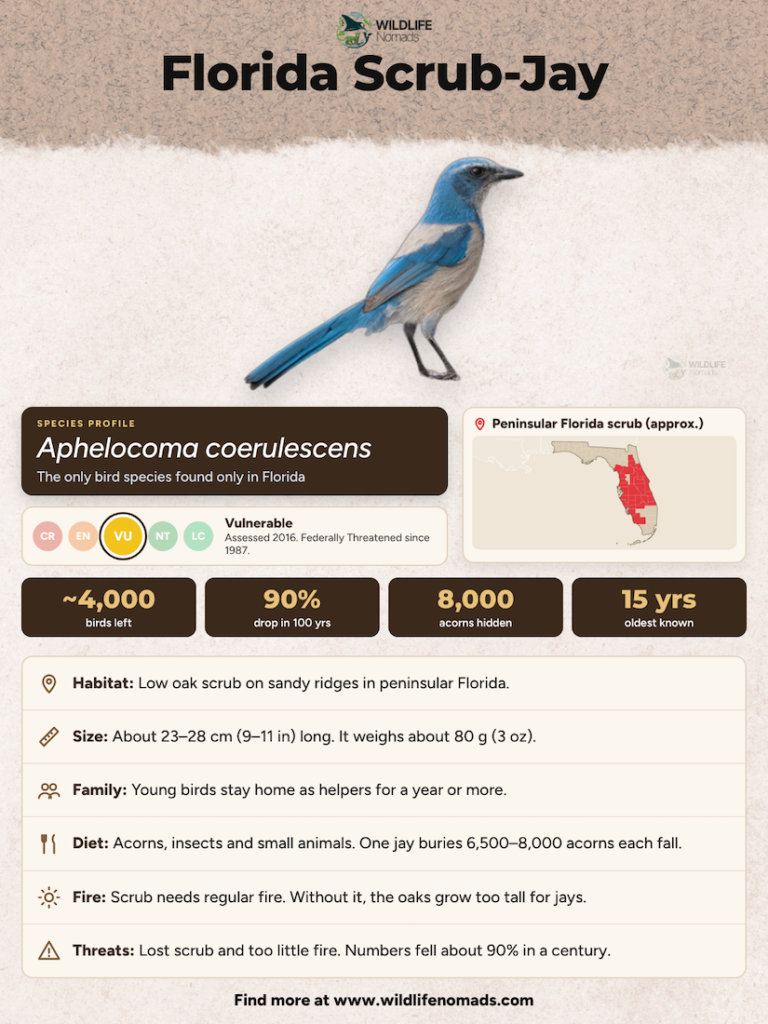
The Florida scrub-jay (Aphelocoma coerulescens) is the only bird species found exclusively in Florida. It lives in low oak scrub on old sand dunes. The federal government listed it as threatened in 1987.
Scrub-jays breed cooperatively. Young birds often stay home for a year or more to help their parents raise new chicks. In autumn, each jay buries thousands of acorns to eat during winter.
Development has destroyed much of its sandy habitat. Scrub also needs regular fire, or it grows too tall for the jays.
7. Roseate Spoonbill
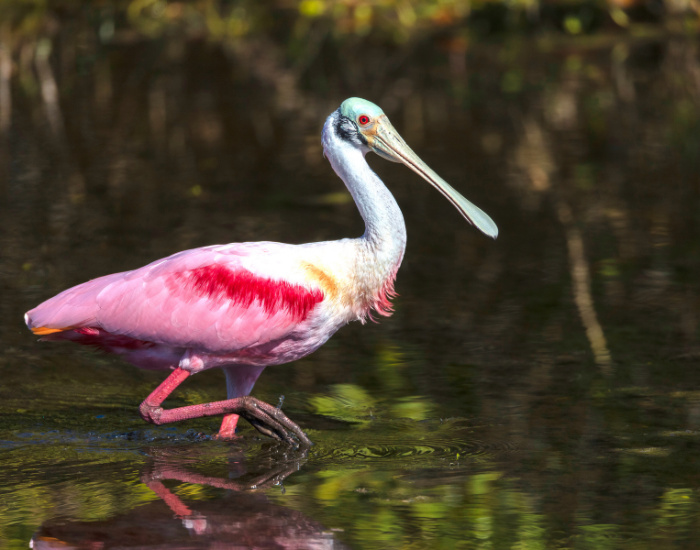
The roseate spoonbill (Platalea ajaja) is impossible to miss. Its pink colour comes from carotenoid pigments in the shrimp and small fish it eats. It sweeps its spoon-shaped bill through shallow water to find prey by touch.
Plume hunters nearly wiped spoonbills out of Florida in the late 1800s. Protection brought them back. More recently, nesting in Florida Bay has dropped as water conditions changed, and many birds have shifted north.
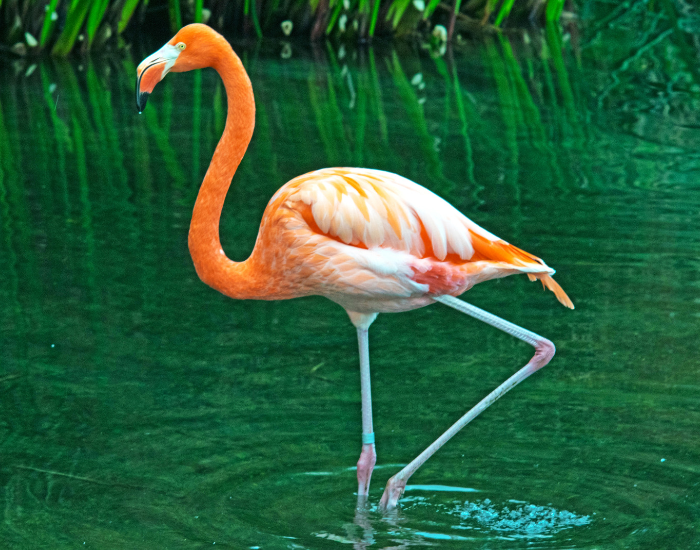
8. American Flamingo
The American flamingo (Phoenicopterus ruber) once lived in Florida in large flocks. Hunters probably eliminated it from the state around 1900. For decades, people assumed most sightings were zoo escapees.
A 2018 study changed that view. It found strong evidence that many flamingos arrive naturally from Mexico and the Caribbean. The authors argued Florida flamingos belong to the state’s native wildlife.
In 2023, Hurricane Idalia blew dozens of flamingos into Florida and far up the East Coast. I have spotted American flamingos in the Caribbean myself, and Florida’s returning flocks come from those same populations.
9. Gopher Tortoise
The gopher tortoise (Gopherus polyphemus) is Florida’s state tortoise. Its burrows average about 15 ft (4.5 m) long and can reach 40 ft (12 m). Each burrow stays cool in summer and mild in winter.
More than 350 other species shelter in these burrows. Snakes, frogs, mice and insects all move in. That makes the tortoise a keystone species, and Florida lists it as threatened.

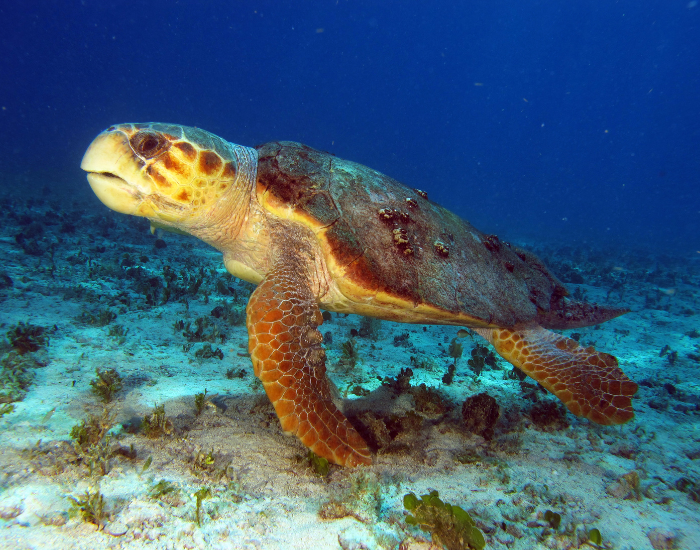
10. Loggerhead Sea Turtle
Five species of sea turtles swim in Florida waters. Loggerheads, greens and leatherbacks nest on its beaches regularly. Kemp’s ridleys and hawksbills nest only rarely.
Loggerheads (Caretta caretta) dominate. About 90% of loggerhead nesting in the United States happens in Florida. The nesting season runs from March to October, with a peak in June and July.
Each female lays around 100 eggs per nest and may nest several times a season. I once helped release olive ridley hatchlings, a close relative, in Puerto Escondido, Mexico.
11. Key Deer
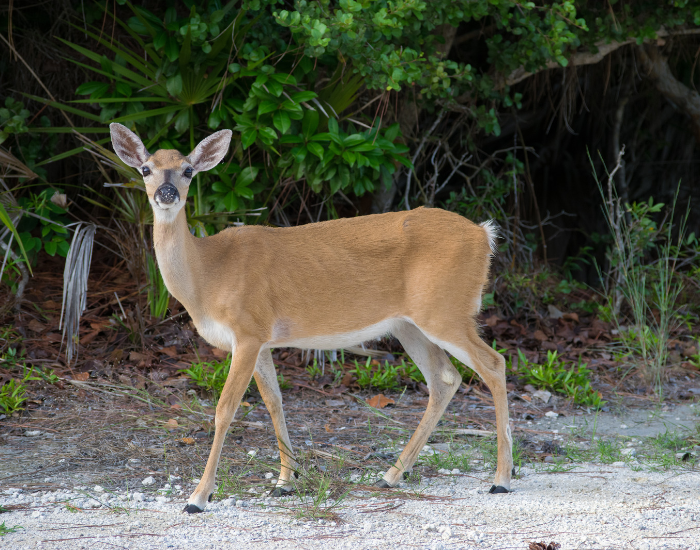
The Key deer (Odocoileus virginianus clavium) is the smallest subspecies of white-tailed deer. Adults stand only about 2.5 ft (76 cm) at the shoulder. The entire population lives in the lower Florida Keys, mostly on Big Pine Key.
Key deer have been endangered since 1967. Cars kill more of them than anything else. In 2016, a screwworm outbreak killed around 135 deer before officials stopped it.
12. Bobcat
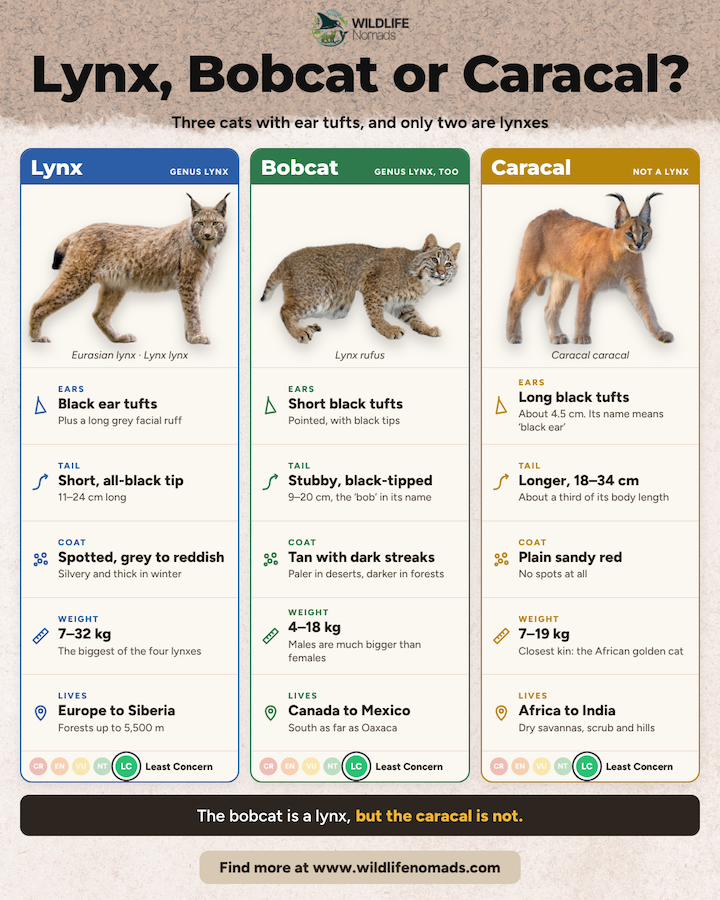
The bobcat (Lynx rufus) is Florida’s most widespread wild cat. It lives in almost every habitat in the state, from swamps to suburbs.
Unlike the panther, the bobcat is common. It hunts rabbits, rodents and birds, mostly at dawn and dusk. That said, Burmese pythons have hit bobcats hard in the Everglades.
13. Bottlenose Dolphin
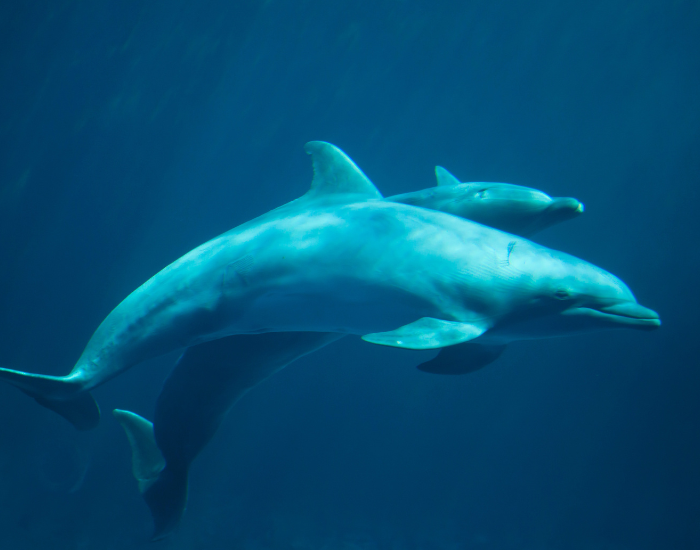
Common bottlenose dolphins (Tursiops truncatus) live in Florida’s bays and along its Gulf Coast and Atlantic coasts. Many coastal dolphins stay in the same home range for life. That loyalty makes them ideal for research.
Sarasota Bay hosts the world’s longest-running study of a wild dolphin population, which began in 1970. Researchers there know individual dolphins across several generations.
14. Miami Blue Butterfly
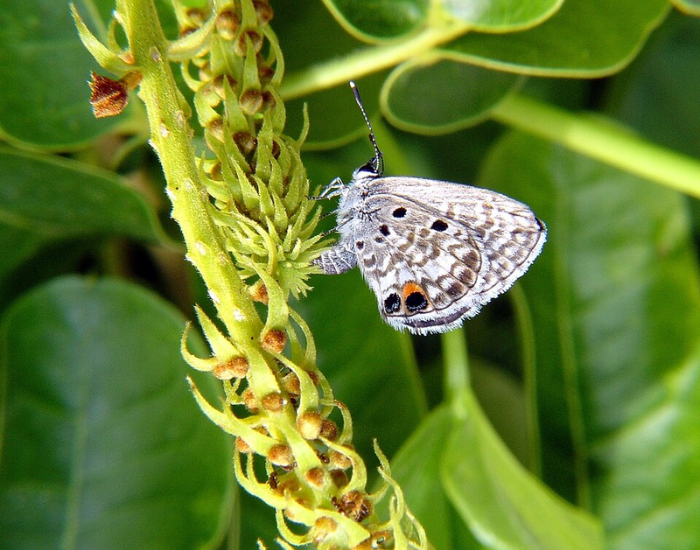
The Miami blue (Cyclargus thomasi bethunebakeri) is a tiny blue butterfly found only in Florida. Its wingspan reaches just about 1 in (2.5 cm). Males flash bright blue above, while females show more grey.
Once common along the coast, it nearly vanished after Hurricane Andrew in 1992 and decades of development. The US listed it as endangered in 2012. Today, it survives mainly on remote islands in the Key West National Wildlife Refuge.
15. Burmese Python (Invasive)
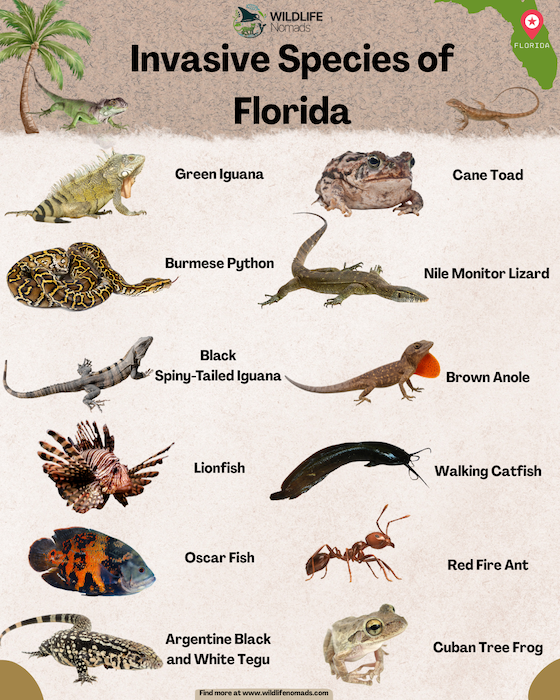
The Burmese python (Python bivittatus) is native to Southeast Asia, not Florida. Released and escaped pets established a breeding population in the Everglades. Today, it is one of the state’s most serious invasive species.
When I cared for Burmese pythons in the zoo, I saw how much they eat. Wild ones in Florida eat mammals, birds and even alligators. A 2012 study linked them to severe mammal declines in Everglades National Park. Raccoon sightings fell by 99.3% and opossums by 98.9%.
Florida has recorded more than 500 nonnative animal species. The Florida Fish and Wildlife Conservation Commission runs removal programs, including the yearly Florida Python Challenge. Read the full story in my post on Burmese pythons in Florida and my guide to invasive species of Florida.
Frequently Asked Questions
The Florida scrub-jay is the only bird species found exclusively in Florida. Several endemic subspecies also live here, including the Key deer, the Florida panther and the Miami blue butterfly. Florida’s sandy ridges and springs host many more endemic plants and invertebrates.
Yes. About 4,000 Florida black bears live in the state, mostly in large forests and swamps. They are shy and eat mostly plants and insects. Securing trash is the best way to avoid conflicts.
Sea turtle nesting season in Florida runs from March to October. Loggerhead nesting peaks in June and July. Hatchlings emerge about two months after the female lays her eggs, so hatching continues into autumn.
Yes. A 2018 study found that American flamingos lived in Florida before hunters wiped them out around 1900. Many flamingos seen today arrive naturally from Mexico and the Caribbean. Hurricane Idalia brought dozens more in 2023.
Florida has about 50 native snake species. Only six are venomous: three rattlesnakes, the cottonmouth, the copperhead and the eastern coral snake. Meet them in my guide to Florida native snakes.
Two Faces of Florida’s Wildlife
Animals in Florida show the best and worst of human impact. Alligators, spoonbills and panthers came back because people protected them. Pythons and lionfish spread because people released them.
The difference comes down to choices. Urban development, agriculture and invasive species remain the biggest threats to Florida’s native wildlife. Protection, by contrast, has a strong track record here.
If you visit Florida, look for a manatee at a winter spring or a scrub-jay on a sandy ridge. Which of these animals would you most like to see? Tell me in the comments. For birds, start with my guide to birds of Florida, then explore the sharks of Florida.
Gator Believe It? The Florida Wildlife Quiz
15 quick questions on Florida’s wild side. Pick your answer, unlock a surprising fact, and see how you rank.
Still curious? Find the sharks of Florida, explore the birds of Florida, or see Florida’s native snakes.
References:
Dorcas, M. E., Willson, J. D., Reed, R. N., Snow, R. W., Rochford, M. R., Miller, M. A., Meshaka, W. E., Jr., Andreadis, P. T., Mazzotti, F. J., Romagosa, C. M., & Hart, K. M. (2012). Severe mammal declines coincide with proliferation of invasive Burmese pythons in Everglades National Park. Proceedings of the National Academy of Sciences, 109(7), 2418–2422. https://doi.org/10.1073/pnas.1115226109
Johnson, W. E., Onorato, D. P., Roelke, M. E., Land, E. D., Cunningham, M. W., Belden, R. C., McBride, R., Jansen, D., Lotz, M., Shindle, D. B., Howard, J., Wildt, D. E., Penfold, L. M., Hostetler, J. A., Oli, M. K., & O’Brien, S. J. (2010). Genetic restoration of the Florida panther. Science, 329(5999), 1641–1645. https://doi.org/10.1126/science.1192891
Krysko, K. L., Burgess, J. P., Rochford, M. R., Gillette, C. R., Cueva, D., Enge, K. M., Somma, L. A., Stabile, J. L., Smith, D. C., Wasilewski, J. A., Kieckhefer, G. N., III, Granatosky, M. C., & Nielsen, S. V. (2011). Verified non-indigenous amphibians and reptiles in Florida from 1863 through 2010: Outlining the invasion process and identifying invasion pathways and stages. Zootaxa, 3028(1), 1–64. https://doi.org/10.11646/zootaxa.3028.1.1
Laist, D. W., & Reynolds, J. E., III. (2005). Florida manatees, warm-water refuges, and an uncertain future. Coastal Management, 33(3), 279–295. https://doi.org/10.1080/08920750590952018
Whitfield, S. M., Frezza, P., Ridgley, F. N., Mauro, A., Patterson, J. M., Pernas, A., & Lorenz, J. J. (2018). Status and trends of American flamingos (Phoenicopterus ruber) in Florida, USA. The Condor, 120(2), 291–304. https://doi.org/10.1650/CONDOR-17-187.1