I moved to Australia in January 2022, first to Sydney, then to the Gold Coast in June 2023. Currumbin sat on my list the entire time. Eighteen months passed before I finally walked through the gate in December 2024.
My partner booked it as a Christmas gift through her business, Gifting Owl. I am a field biologist who has chased animals across several continents. Even so, I felt like a kid again in that queue.
That excitement is the honest reason I am writing this. Currumbin Wildlife Park Gold Coast is one of the best places to see Australian wildlife without a four-wheel drive. You get marsupials, endangered species, dangerous snakes, and a working wildlife hospital on one site.
It also runs real wildlife and conservation programs, not just animal enclosures with signage. A captive breeding facility for one of Australia’s rarest frogs sits behind the scenes here. That combination makes it an iconic wildlife experience rather than a standard day out.
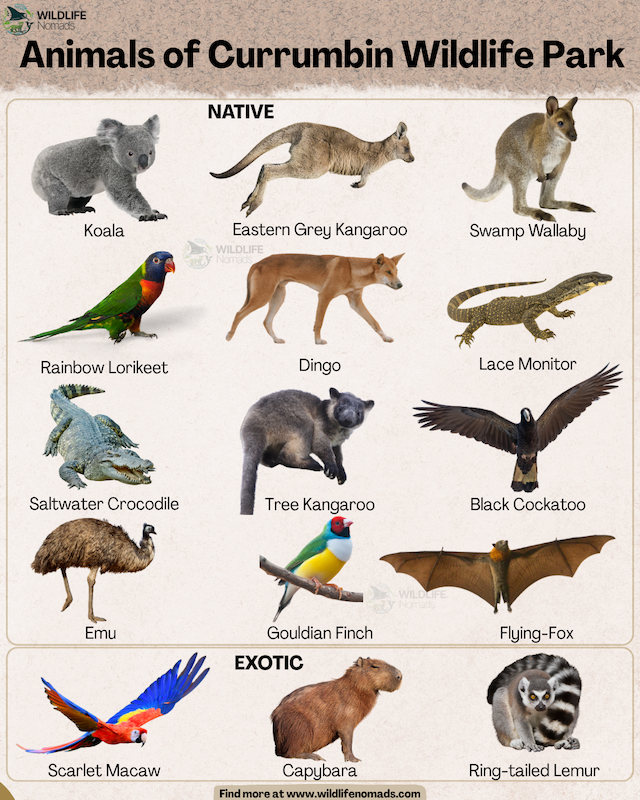
Below are the 15 amazing animals that stopped me, plus what makes each one biologically interesting. I have added the timing tips I wish I had. Allow enough time, half a day is the floor.
Why Currumbin Wildlife Sanctuary is different from a zoo
The sanctuary began in 1947. Beekeeper Alex Griffiths started feeding wild lorikeets to stop them wrecking his flower crops. He gifted the land to the National Trust in the 1970s. The site joined the Queensland Heritage Register in 2009.
Today it runs as a not-for-profit across 27 hectares of subtropical rainforest and bushland. Ticket money funds conservation programs, research, and the wildlife hospital. That structure changes what you are buying at the gate.
Currumbin Wildlife Hospital treats over 16,000 sick and injured animals every year! Free of charge. It ranks among Australia’s busiest wildlife hospitals. Glass viewing windows give you access to triage and surgery as it happens. A daily presentation usually runs at 11:30am, so check the board on arrival.
The conservation programs extend well past the hospital doors. Staff run a dedicated frog breeding and release program, a koala nursery, and research partnerships across south east Queensland ecosystems. Your ticket pays for that work, which is a rare thing among Gold Coast attractions.
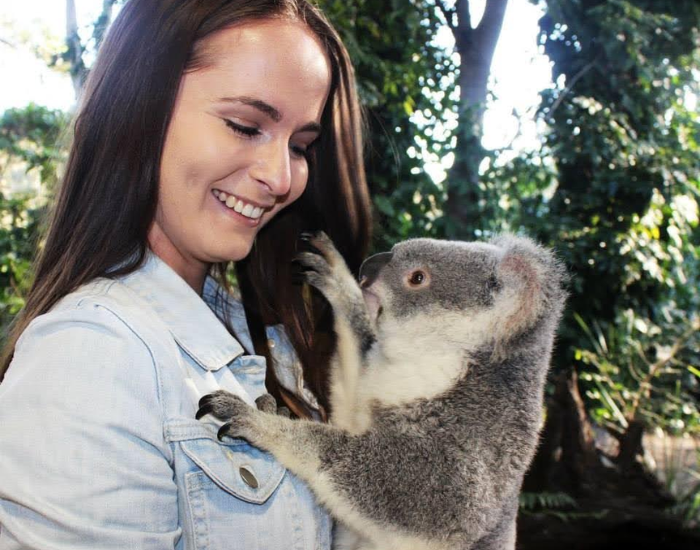
1. Koala (Phascolarctos cinereus)
We stopped at the koala section on the way back from the reptile house. We skipped the paid photo, though plenty of visitors take one.
They are not bears. Koalas are marsupials, closer to wombats than to anything in the family Ursidae. Their gut microbiome breaks down eucalyptus toxins that would kill most mammals.
Their decline here is well documented. A 17-year study of over 20,000 koala hospital admissions in south-east Queensland found chlamydial disease and vehicle trauma dominating. The Koala Nursery keeper talk at 11:45am covers this better than any signage.
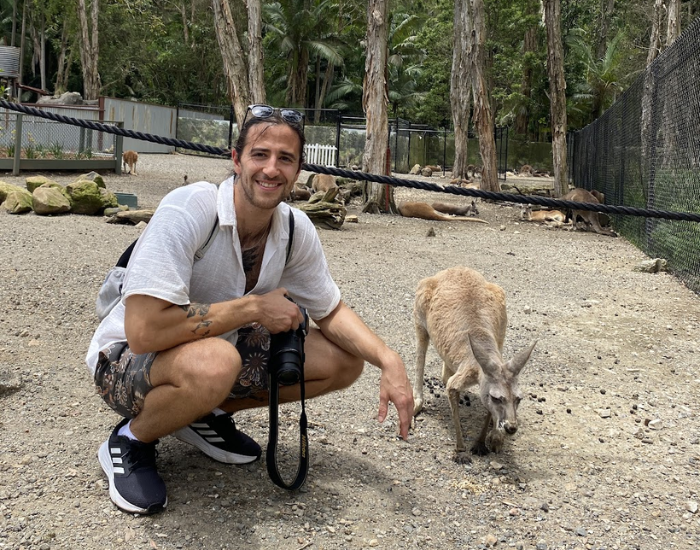
2. Eastern Grey Kangaroo (Macropus giganteus) and wallabies
The free-range kangaroo area is the classic Currumbin wildlife moment. Hand-feeding is available, and the animals are relaxed rather than pushy.
Look past the kangaroos for the wallabies. The sanctuary keeps brush-tailed rock-wallabies (Petrogale penicillata), swamp wallabies, tammar wallabies, and red-necked wallabies. Rock-wallabies are the interesting ones, with granular foot pads built for near-vertical stone.
Watch how they move. Macropods recycle elastic energy in their tendons, so hopping gets cheaper as they speed up. Few mammals get faster and more efficient at once.
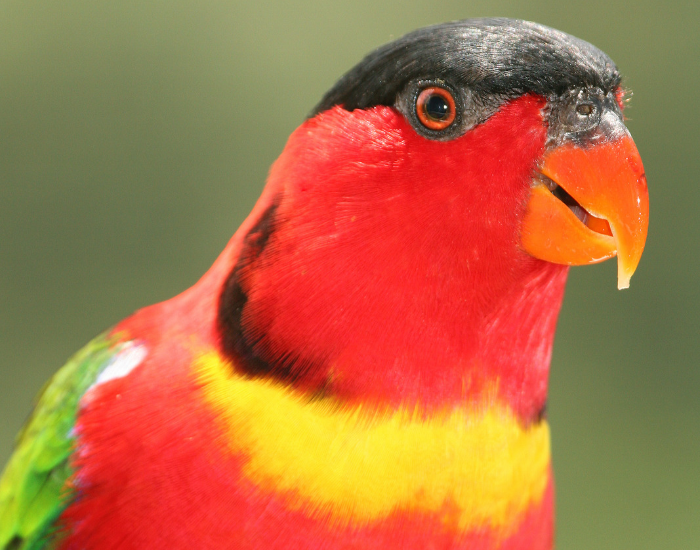
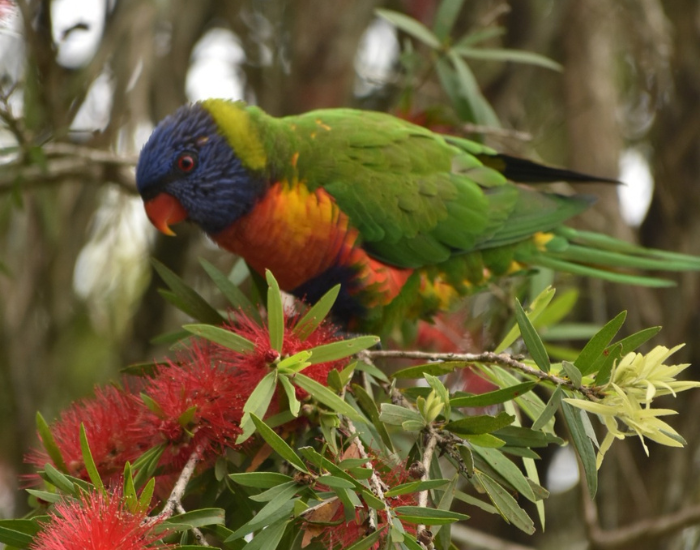
3. Rainbow Lorikeet (Trichoglossus moluccanus)
We walked straight past the lorikeet feeding habitat, and I felt slightly guilty about it. I have fed wild lorikeets and galahs on housesits in Tallebudgera Valley, where they land on your arms uninvited. Familiarity does not dull them, they are still one of my favourite birds in the country.
The wild lorikeet feeding is the sanctuary’s founding ritual, held daily at 8am and 4pm. Arrive for the 8am session if you want it quiet. Get there early, because the good spots go while people are still waiting at the car park.
Lorikeets have brush-tipped tongues for nectar and pollen, not seed-crushing beaks. That is exactly why feeding them bread or honey water at home does damage. Their nutritional needs are narrow, and cheap substitutes cause real disease.
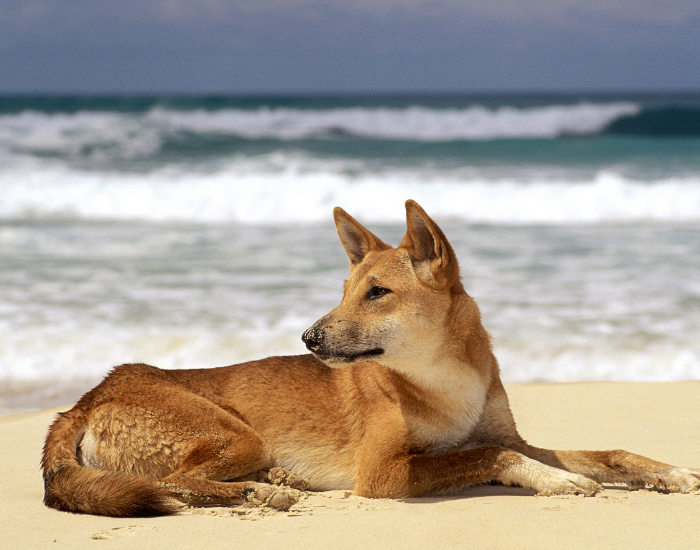
4. Dingo (Canis dingo)
The dingo habitat hit me differently. I have watched dingoes in the wild on K’gari (Fraser Island), loose-limbed and constantly scanning. Seeing them in an enclosure is a quieter, sadder kind of encounter.
Their taxonomy remains unsettled. Some researchers treat dingoes as a distinct species, others as a subspecies of domestic dog. Genomic work published in 2024 found extreme inbreeding in the K’gari population.
That matters for management. Island populations look pristine, but isolation carries a genetic cost that takes decades to surface.
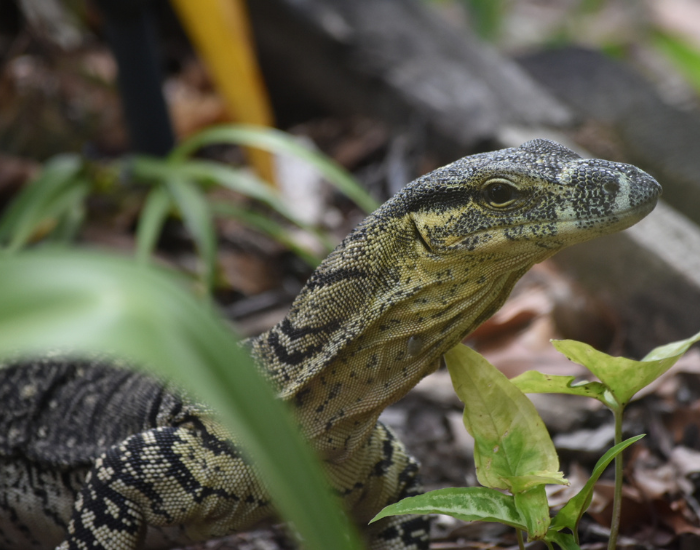
5. Lace Monitor (Varanus varius)
We started the day in the reptile section, and the goannas were the highlight. The enclosures there hold iconic Australian species alongside overseas snakes and lizards, so it pays to slow down and read. Lace monitors climb well, raid nests, and follow their tongues to carrion from surprising distances.
They possess venom glands, which surprises most visitors. The old story that goanna bites turn septic from mouth bacteria has largely collapsed, the toxins do the work. It is a good reminder that “everyone knows” is not a source.
6. Saltwater Crocodile (Crocodylus porosus)
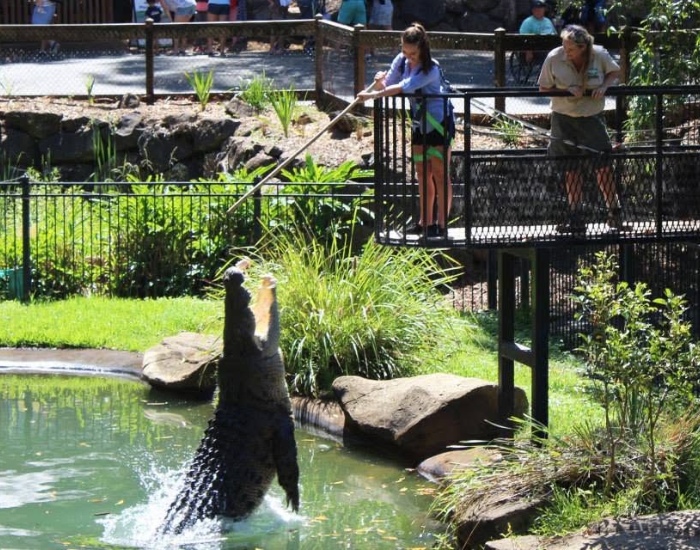
One f my favourite animal of the whole trip was this giant creature! and I am not going to pretend otherwise. I grew up watching Steve Irwin wrangle these creatures on television. Standing a metre from a full-grown saltie, with only glass between us, brought all of that straight back.
The croc wetlands hold both saltwater crocodiles and American alligators, which makes a useful side-by-side. Look at the snouts: broad and rounded on the alligator, narrower with a visible fourth tooth on the croc.
Salties are a conservation success story people rarely tell. Northern Territory populations collapsed under unregulated hunting, then rebuilt across decades after protection in 1971. Recovery was slow, non-linear, and driven by habitat, not just legislation.
7. Lumholtz’s Tree Kangaroo (Dendrolagus lumholtzi)
This was a first for me. I had never seen a tree kangaroo in the flesh.
They look wrong in the best way. Short hind legs, thick forelimbs, curved claws, and a long tail used as a counterweight. Evolution took a hopping grassland animal and pushed it back into the canopy.
Wild populations sit in the Wet Tropics rainforest of far north Queensland. Sightings there take patience and a good neck.

8. Binturong (Arctictis binturong)
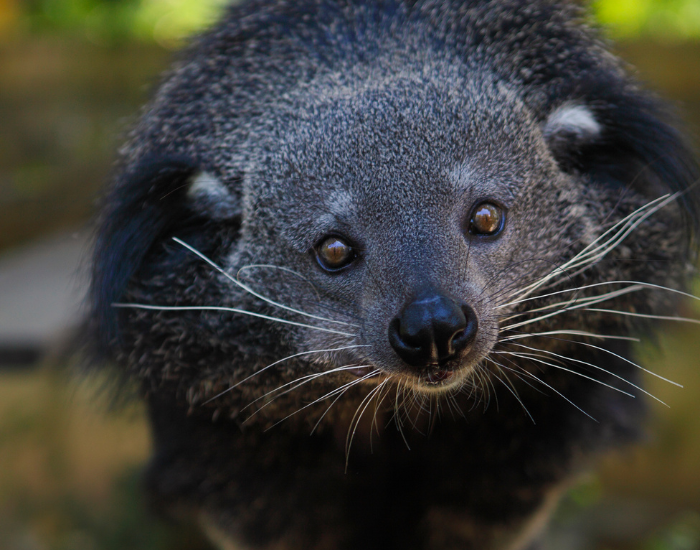
My second first-timer, and honestly the strangest animal in the park. A binturong reads like something assembled from a wolverine and a small bear, with a prehensile tail attached.
They are viverrids, related to civets. Their scent glands produce 2-acetyl-1-pyrroline, the same compound that makes popcorn smell like popcorn. Stand downwind and you will notice it.
Ecologically they matter as seed dispersers, particularly for strangler figs. The Lost Valley boardwalk talk at 1:30pm covers them.
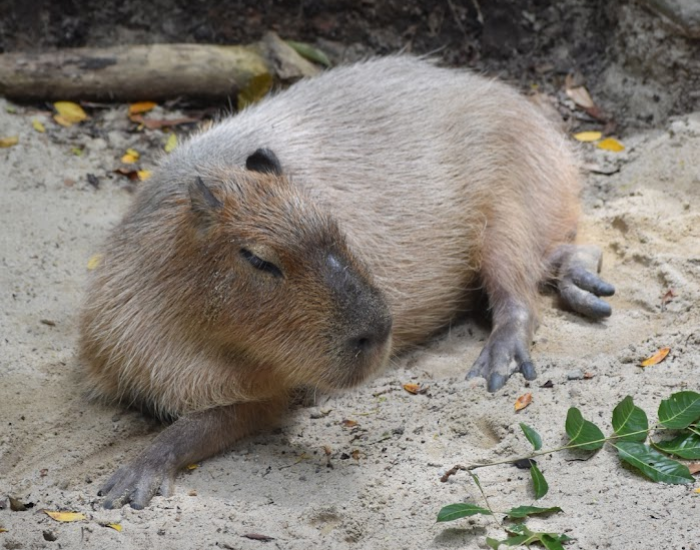
9. Capybara (Hydrochoerus hydrochaeris)
The Lost Valley is the exotic precinct, and the capybaras own it. They are the world’s largest rodents, (not pigs) they basically look like oversized guinea pigs, despite the shape and the common confusion.
Semi-aquatic by design, they have partially webbed feet and eyes set high on the skull. In South American wetlands they graze like small ungulates and get eaten by almost everything larger.
I have covered the biology properly in this piece on whether capybaras are rodents.
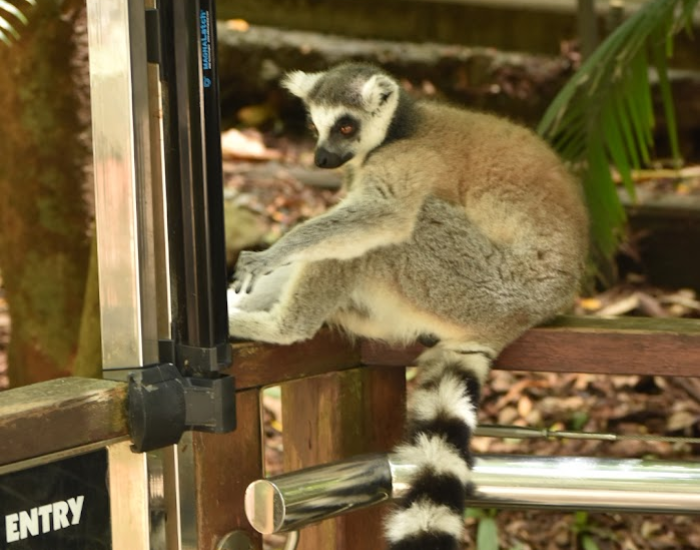
10. Ring-tailed Lemur (Lemur catta) and Cotton-top Tamarin (Saguinus oedipus)
The Lost Valley primates were my partner’s favourite. Ring-tailed lemurs are the most terrestrial lemur, and their groups run on female dominance, unusual among primates.
Cotton-top tamarins are the tiny ones with the punk crest. They are critically endangered, restricted to a shrinking pocket of north-west Colombia.
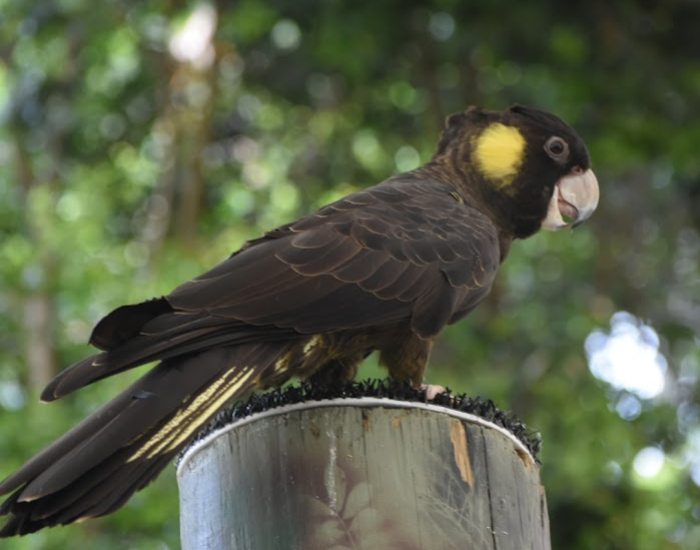
11. Yellow-tailed Black Cockatoo (Zanda funerea)
Black cockatoos always get me. I once did a housesit in Western Australia, minding a greyhound in a suburb ringed by reserves. Flocks crossed the yard most afternoons, and that soundtrack is hard to beat.
Those were western species, though. The yellow-tailed is the eastern bird, and it is the one you hear over the Gold Coast and south. I once spotted one in Coffs Harbour. Listen for a long, drawn-out wail rather than a screech, you usually hear them well before you see them.
They are enormous, pushing 65cm, with pale yellow cheek patches and yellow tail panels. Watch what they eat and the beak makes sense. Beyond banksia and casuarina seeds, they chew into wood to extract boring beetle larvae, which few other birds bother with.
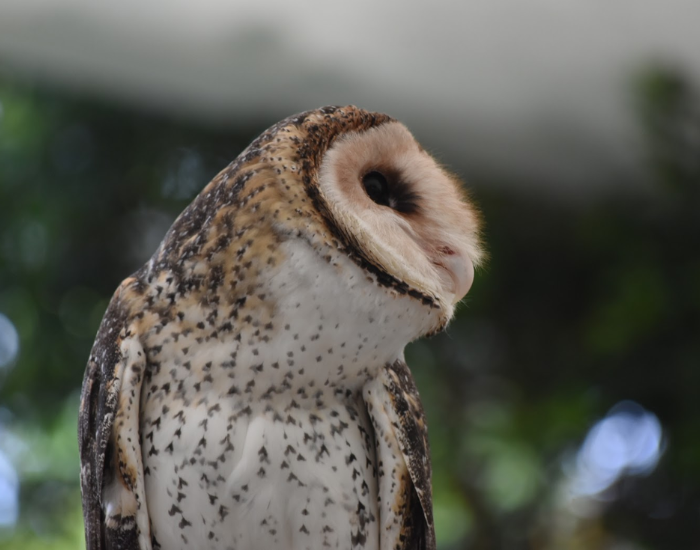
12. Barn Owl (Tyto alba)
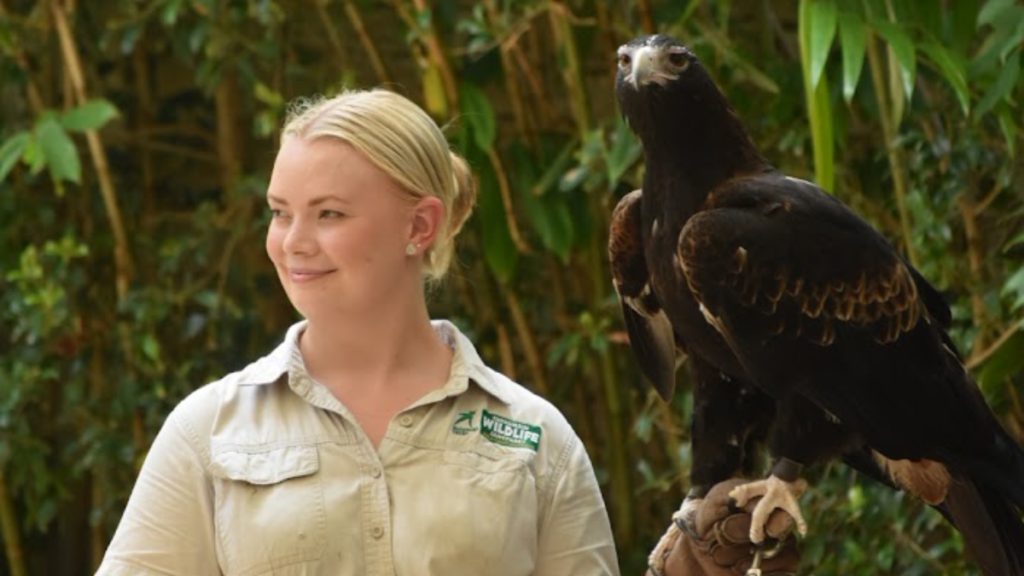
The WildSkies bird show runs at 10:45am and 2:15pm. Bird shows have been my favourite thing in any zoo since childhood. Macaws, owls, and native raptors all fly low over the seating here.
Barn owls are the most widely distributed owl on earth. Their asymmetric ear openings let them map prey in vertical space, and their fringed flight feathers kill turbulence noise. They hunt rodents in near-total silence.
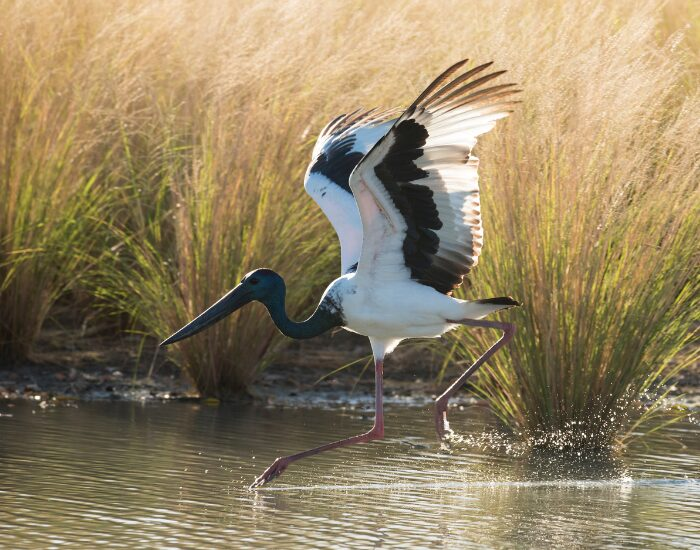
13. Black-necked Stork (Ephippiorhynchus asiaticus)
Australians call it the jabiru, which is technically a South American bird’s name. The confusion is old and unlikely to be fixed.
It is Australia’s only stork species, and it is enormous. Really looks like small dinosaur. The wingspan passes two metres, and the bill is built for spearing fish. Northern wetlands are the stronghold, and the species is listed as endangered in New South Wales.
14. Black Flying-Fox (Pteropus alecto)
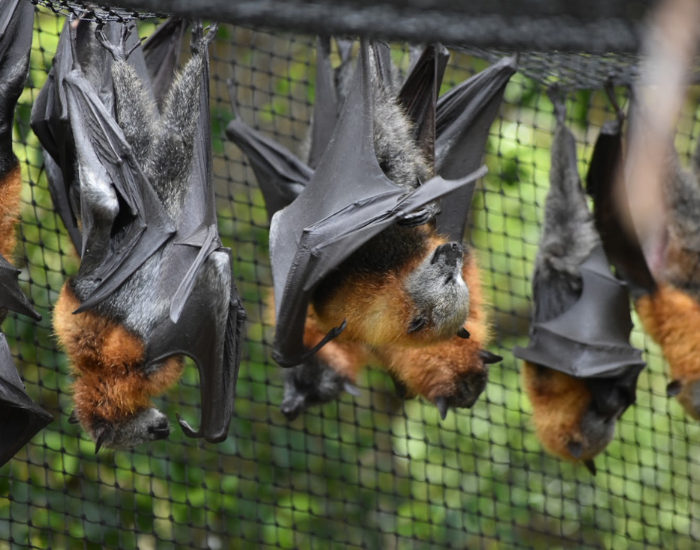
I once shared a tree with a flying-fox where I lived. He was, functionally, my neighbour, and I still think of him that way.
Flying-foxes are keystone pollinators and long-distance seed dispersers for eucalypts and rainforest trees. Nothing else moves that much pollen that far in a single night. Whole forest ecosystems quietly depend on them, and losing them degrades those systems invisibly.
Their biggest threats are human-made. A Victorian study of over 500 flying-fox hospital cases found entanglement in backyard fruit netting caused nearly 37% of admissions. Wildlife-safe netting is a genuinely effective fix. More bat biology in my fruit bat guide.
15. Gouldian Finch (Chloebia gouldiae)
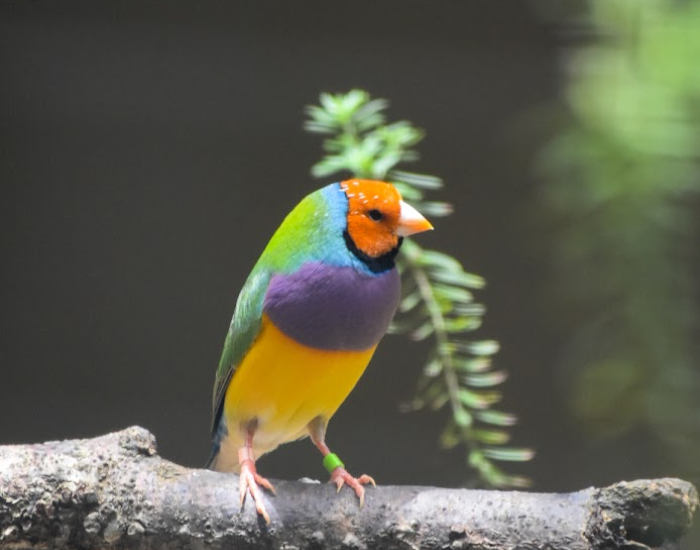
The bird aviary held the finch I photographed, and it stopped me mid-sentence. Gouldian finches look painted rather than evolved. Green back, purple breast, yellow belly, turquoise collar, nothing about it looks accidental.
Head colour is the interesting part. Wild populations carry black-headed, red-headed and rare yellow-headed birds. The red morph I photographed makes up under a third of wild individuals, and the colour is genetically controlled.
That colour also signals temperament. Experimental work found red-headed birds dominate black-headed birds in contests over food and nest sites. Black-headed birds largely avoid picking those fights, which lets both morphs persist.
Planning a visit to Currumbin Wildlife Park Gold Coast
The sanctuary opens 9am to 4pm daily, with last admission at 3:30pm. It closes on Anzac Day and Christmas Day. We arrived early and still used most of the day, so budget four to five hours minimum.
Current day-pass prices are $70 adult, $55 concession, $50 youth aged 3–17, and free for infants. Parking costs $10 per car for the day. Prices change, so confirm before you go.
Build the day around the fixed events. The Pelican and Eel Show runs at 10am and WildSkies at 10:45am and 2:15pm. The Tasmanian devil keeper talk follows at noon, and the tinkerfrog talk at 12:15pm.
Then use the miniature railway. The small train has been running since 1964, and the ride saves tired legs between precincts. We walked everything and regretted it by mid-afternoon.
Several precincts are worth hunting down. The Outback Springs precinct hosts a billy tea presentation at 9:30am. If you are into dinosaurs, the Extinction Trail runs a dinosaur theme that children love, and the Art Trail threads sculpture through the bushland. Wild Island is a splash zone for younger kids. Anyone chasing adventure can explore the TreeTop Challenge, with high ropes and zip lines above the canopy.
Make time for the Ngari-bah culture show at 3pm. The Yugambeh Aboriginal Dance Group performs with clapsticks, didgeridoo and song across 15 to 20 minutes. The sanctuary also acknowledges Aboriginal and Torres Strait Islander cultures through its Yagaleh Dreaming Stories mural.
Getting there is easy from anywhere on the coast. The sanctuary is located at 28 Tomewin Street, just off the Gold Coast Highway, with an on-site car park. Allow 25–30 minutes from Surfers Paradise and about 10 minutes from the airport.
Frequently Asked Questions
Yes. Concession tickets currently sit at $55 and cover seniors, pensioners, veterans, and students. You must present valid identification on arrival. National Trust members also receive free parking, which is worth checking if you already hold a membership.
Yes, subject to conditions. Queensland is one of the few states that permits koala holding. The sanctuary runs a paid koala photo experience daily between 10am and 2pm. Guests must be at least 140cm tall and able to support the animal. Keepers assess each guest and may offer a tree photo instead, which protects the koala from stress.
Yes, you can buy general admission at the entry gate on the day. Booking online is still smarter, particularly for animal encounters, which sell out. Online booking also saves time in the queue during school holidays.
Go to Currumbin!
Eighteen months of driving past taught me something simple. The wildlife on your doorstep deserves the same attention as the wildlife you fly for. Currumbin Wildlife Park Gold Coast handed me two species I had never seen. It also gave me a frog program doing serious work.
Go early, take the whole day, and spend ten minutes at the hospital window. Watching a vet work on a car-struck possum reframes everything else you see. Of course the koalas and crocs pull the crowds. The real wonder sits in the small stuff, the insects, the finches, the frog you nearly walked past.
How Well Do You Know Currumbin? 🐨
Ten questions on the sanctuary and its animals — first a fact-or-fiction round, then multiple choice. Perfect prep for your visit. How many can you get?
References:
Dutton-Regester, K. J. (2025). Hospital admissions to a major wildlife hospital in south-east Queensland, Australia, over a 10-year period, 2012–2022. Australian Journal of Zoology, 73(4), ZO24036. https://doi.org/10.1071/ZO24036
Leon-Apodaca, et al., (2024). Genomic consequences of isolation and inbreeding in an island dingo population. Genome Biology and Evolution, 16(7), evae130. https://doi.org/10.1093/gbe/evae130
Scheelings, T. F., & Frith, S. E. (2015). Anthropogenic factors are the major cause of hospital admission of a threatened species, the grey-headed flying fox (Pteropus poliocephalus), in Victoria, Australia. PLOS ONE, 10(7), e0133638. https://doi.org/10.1371/journal.pone.0133638