I was ten years old, pressed against a zoo railing, staring at a white bengal tiger. That cat shattered every rule my brain held about what a tiger should look like. I can still replay the image decades later, stripe for stripe.
I also called it albino. But I was wrong.
White tigers carry a pigment mutation, yet they keep dark stripes and blue eyes. Jungle cats and other animals labelled albino in zoos usually turn out the same way. Albinism in animals means something stricter: a congenital absence of pigmentation across the whole body.
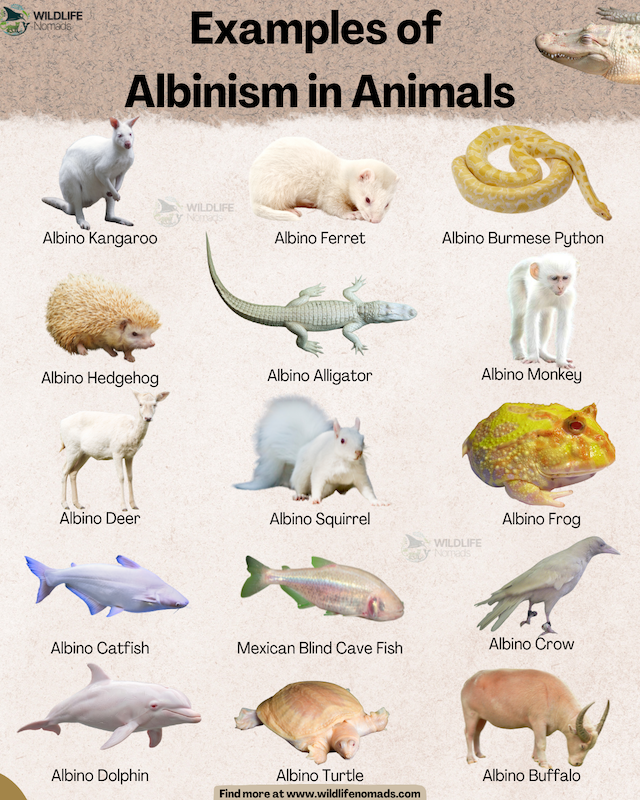
That childhood mistake started a twenty-year obsession, from Australian scrubland to Mexican cave systems. Below you will meet 15 species where the condition appears, from alligators to birds. You will also learn what albinism does to an animal’s eyes, skin and survival odds, and why the “albino animals always die young” story is only half true.
What Is Albinism in Animals?
So what are albino animals, exactly? Albinism is the congenital absence of the pigment melanin, and it turns up in animal species across every vertebrate group. Melanin comes from specialized cells called melanocytes. Without it, an animal has no usual colour left to show.
The result is white fur, pale skin, and blood vessels visible through unpigmented tissue. Those vessels explain the famous pink or red eyes. No pigment sits in the iris, so light passes straight through. Red or pink eyes remain the most reliable field mark separating a true albino from a lookalike.
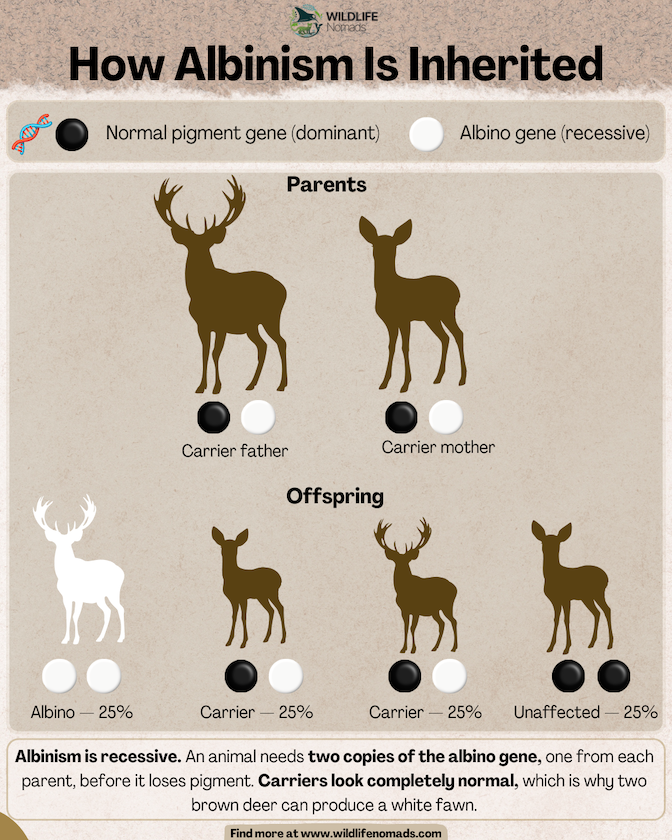
The genetic mutation behind it follows a recessive pattern. Both parents must carry the variant, which is why albinism occurs in clusters within small populations. In mice alone, researchers have mapped over 100 genes influencing coat colour and albino phenotypes.
The TYR gene is the headline act. It encodes tyrosinase, the enzyme that starts melanin synthesis, and mutations there cause type 1 oculocutaneous albinism. Other genes, including OCA2 and SLC45A2, produce a rare form marked by partial absence of pigment rather than total loss.
How Rare Are Albino Animals?
Albinism in mammals occurs in roughly 1 in 10,000 births. Birds beat that comfortably, with albinism appearing in about 1 in 1,800 individuals across surveyed bird species.
Those figures describe births, not living adults. Many albino animals die before breeding, so in most species the wild frequency sits far below the birth rate. A 2023 study of Australian rodents recorded albinism in free-ranging populations at under 0.1%.
Albinism vs. Leucism: The Distinction Almost Everyone Gets Wrong
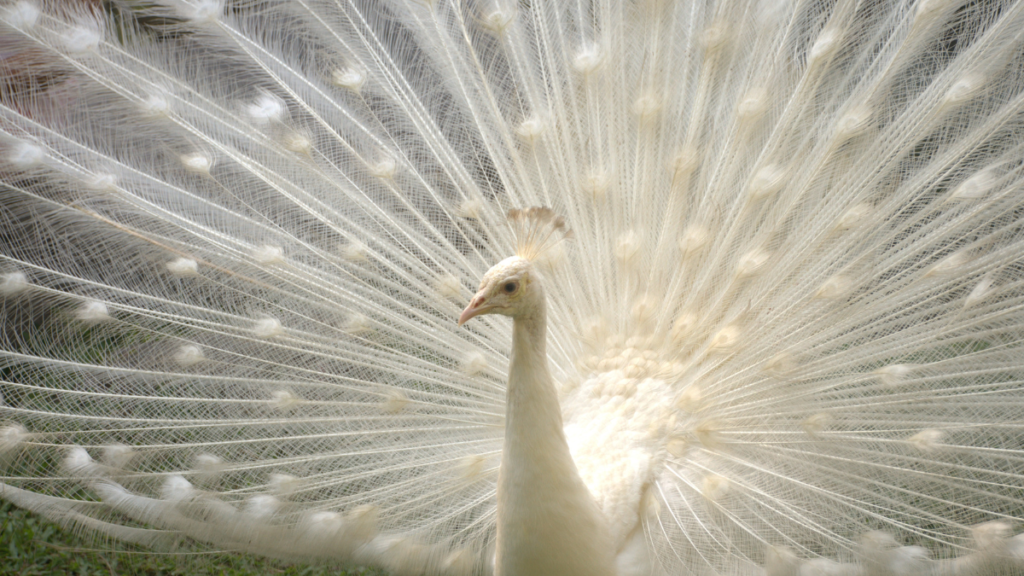
Leucism causes a partial or complete loss of multiple pigment types, yet it leaves the eyes normally pigmented. A leucistic animal therefore has dark eyes and a pale body. Most “albino” photos that go viral show leucistic animals.
Partial albinism, sometimes called imperfect albinism, describes patchy pigment loss on an otherwise normally pigmented body. A partial albino might show a pink nose and white fur while retaining brown pigments elsewhere.
Three related conditions round out the picture. Melanism produces an excess of melanin and darker pigmentation. Erythrism comes from overproduction of reddish pigments, while xanthochromism creates abnormal yellow coloration in several species of birds and fish. Interestingly, those last two show a limited taxonomic range compared with albinism, which spans the whole animal kingdom. Plant variations follow parallel logic, producing albino seedlings that cannot make chlorophyll.

1. Albino American Alligator (Alligator mississippiensis)
Region: Southeastern United States
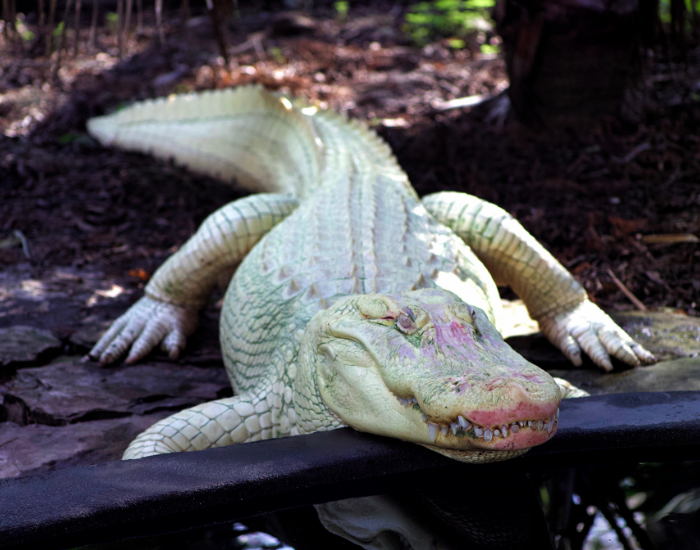
Albino alligators are extremely rare, and estimates of known living individuals range from under 100 to around 200. Nearly every one lives under human care. Alligator Bay Zoological Park in France and the California Academy of Sciences both keep famous residents.
Wild albino alligators are usually eaten before reaching adulthood. A white hatchling against dark swamp water is a beacon for herons, raccoons and larger gators. Compare it with Australia’s crocodiles and the camouflage gap is brutal.
2. Albino White-Tailed Deer
Region: North America
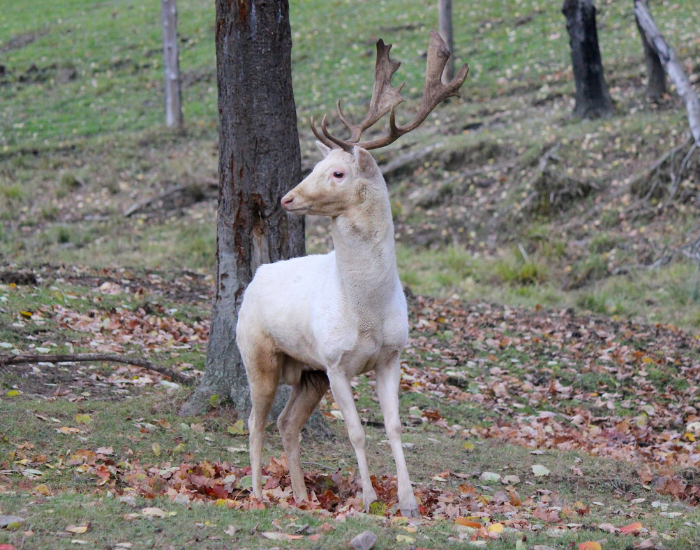
Albino deer are born at roughly 1 in 20,000 to 30,000 births. Look for the full package: white fur, a pink nose, and red or pink eyes. Anything with dark eyes is piebald or leucistic instead.
Albino deer are sometimes abandoned or harassed by their herd, and does occasionally reject white fawns. Piebald deer turn up around 1 in 1,000, far more common than most woodland animals enthusiasts realise.
3. Snowflake, the Albino Gorilla
Region: Equatorial Guinea, later Barcelona Zoo
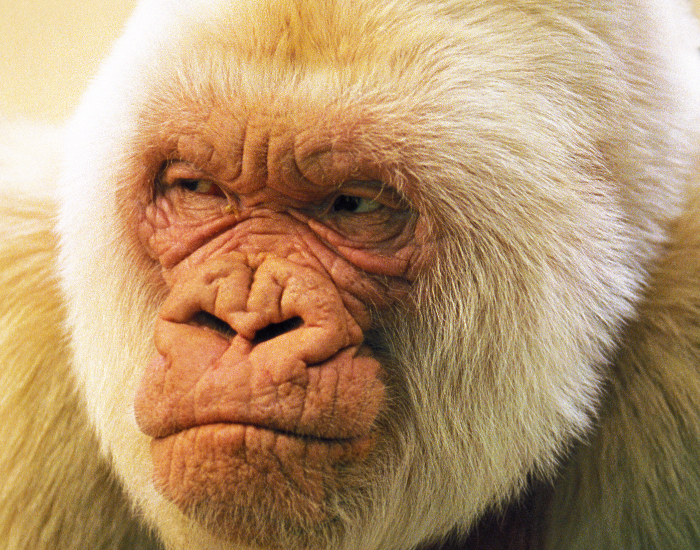
Snowflake was the only known albino gorilla, and he lived at Barcelona Zoo until 2003. He had white hair, pale skin, light sensitive eyes and poor visual acuity, textbook oculocutaneous albinism.
In 2013, researchers sequenced his genome and pinned the cause to SLC45A2. The same study revealed an unusually high inbreeding coefficient, suggesting his parents were closely related. He remains the most thoroughly documented albino individual of any wild species.
4. Albino Kangaroo
Region: Australia
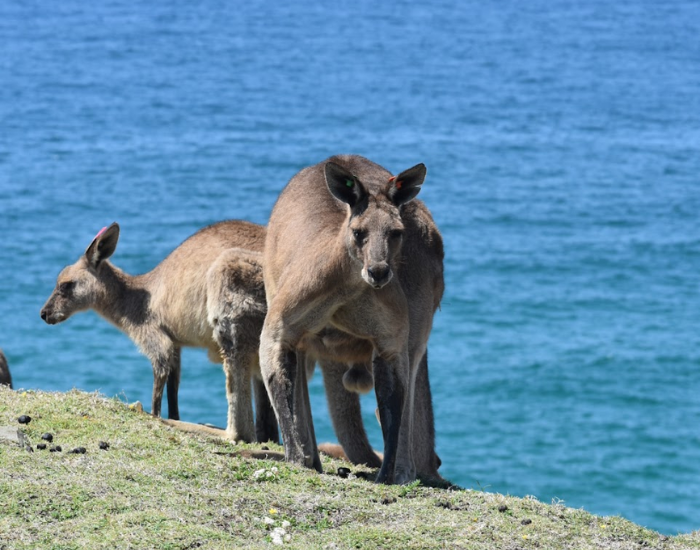
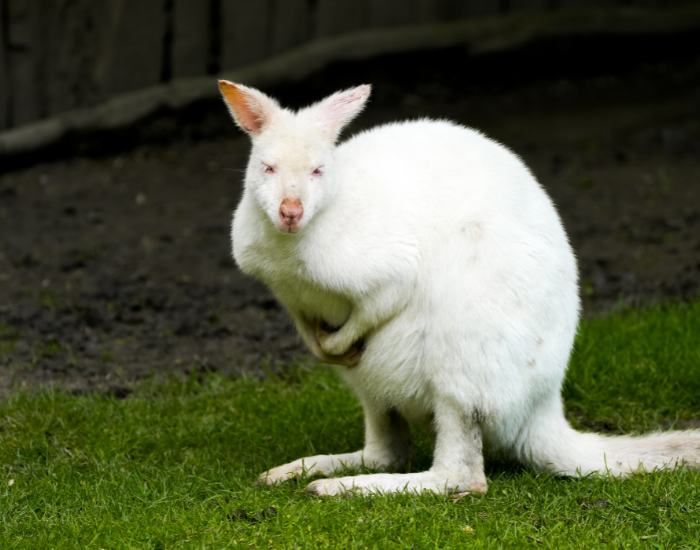
Albino kangaroos occur in roughly 1 in 50,000 to 100,000 individuals. I have seen one wild candidate, a pale grey kangaroo in New South Wales at dusk. Its eyes were dark, leucistic, not albino.
Sunburn is the real killer here. Australian light punishes any animal without melanin, and skin cancer risk climbs steeply. These marsupials also read visual signals within the mob, so impaired visual communication carries a social cost.
5. Albino Squirrels
Region: North America and Europe
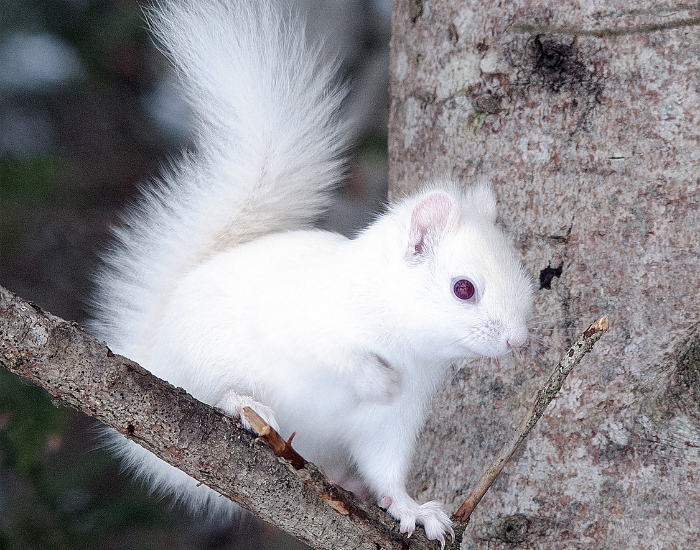
Albino squirrels rank among the most famous albino mammals on Earth, largely thanks to Olney, Illinois. The town protects a population of white eastern grey squirrels and has enforced squirrel right-of-way laws for a century.
Urban settings help enormously. Fewer hawks, fewer foxes and reliable food let albino creatures persist where forest populations cannot. That fact explains most of why albino animals vanish from wild landscapes.
6. Albino Ferrets
Region: Domesticated worldwide
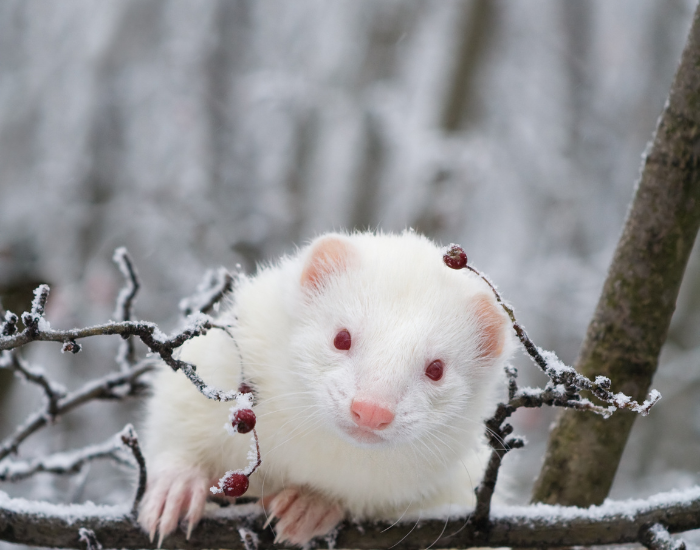
Albino ferrets have white fur and pink or red eyes, and breeders have selected for them across centuries. European hunters favoured them because pale animals stayed visible inside dim burrows.
Their eyesight is poor even by ferret standards. They navigate by scent and whisker contact instead, which works indoors and fails outdoors.
7. Albino Frogs
Region: Global, most familiar in Xenopus laevis
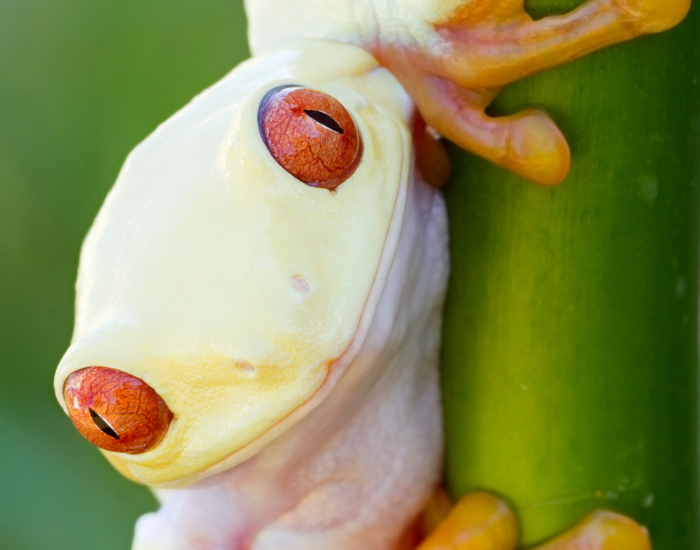
Albino frogs struggle to find food because their eyesight is genuinely bad. Amphibian eyes need melanin for normal retinal development, so the deficit is structural rather than cosmetic. Albinism in frogs traces directly to mutations in the tyrosinase gene.
Laboratory albino strains of the African clawed frog are now standard research animals. In the wild, an albino frog surfaces occasionally among amphibian species and rarely lasts long. Watch the world’s biggest frogs hunt and you see how completely they rely on movement.
8. Albino Snakes and Reptiles
Region: Worldwide
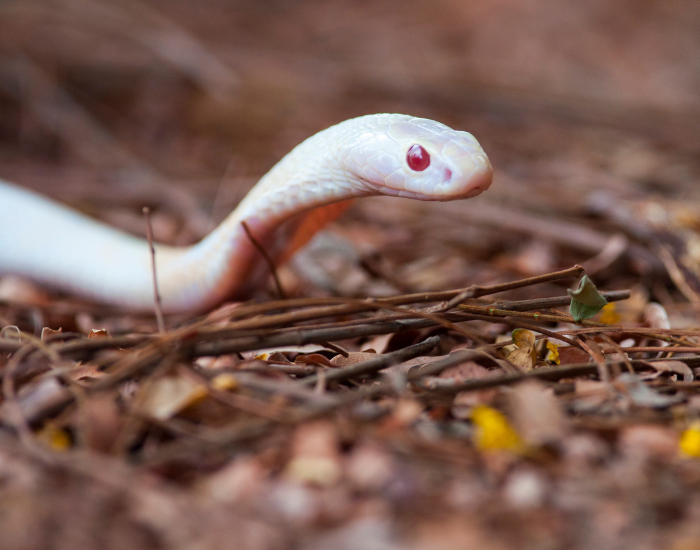
Albinism in reptiles works differently, and the terminology gets interesting fast. Reptiles carry several pigment cell types, so stripping out melanin still leaves green and yellow pigments behind.
The outcome is an amelanistic snake showing pale yellow blotches and red or pink eyes. Keepers often call it a yellow mutation rather than a white albino. Ball pythons and corn snakes dominate the pet reptile trade for this reason. A 2022 study tested whether birds attack albino garter snake models more often, and found no difference.
9. Albino Channel Catfish
Region: North American rivers and aquaculture ponds
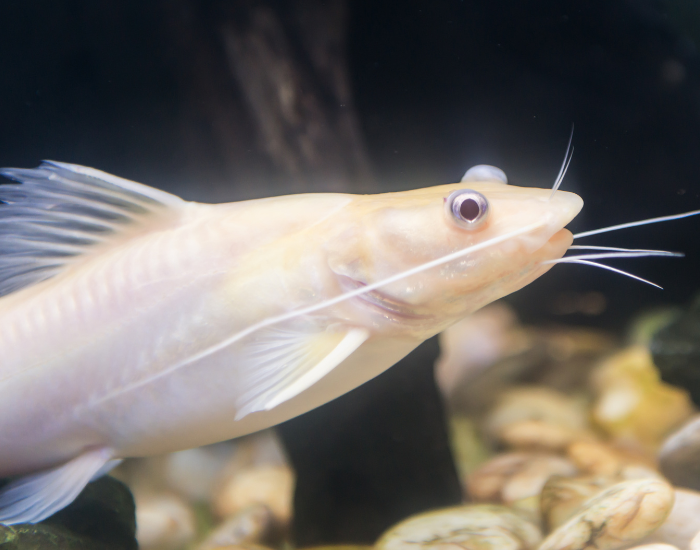
Albino channel catfish appear regularly in hatcheries, where recessive traits concentrate fast inside closed breeding stock. Set one beside a pigmented channel catfish and the contrast is startling: cream-white skin, pink barbels, pale eyes.
Catfish hunt by taste and electroreception rather than sight. Poor eyesight therefore costs them little, and albino individuals feed normally in murky water.
10. Mexican Blind Cave Fish
Region: Caves of northeastern Mexico
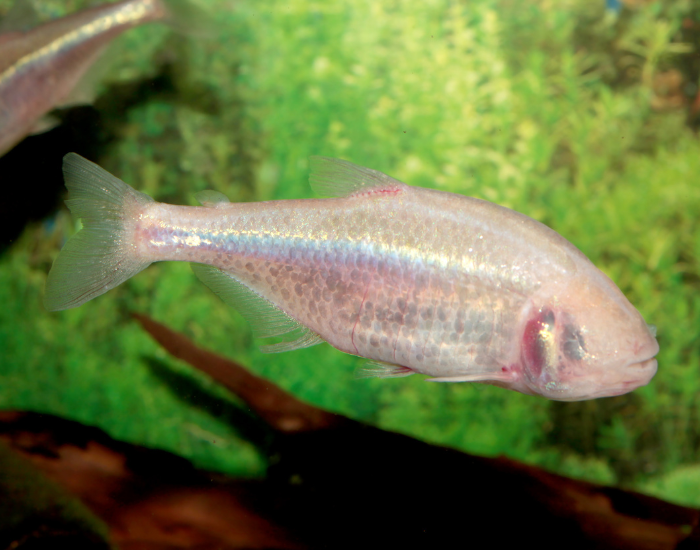
The Mexican blind cave fish is my favourite argument against treating albinism as pure defect. Cave populations of Astyanax mexicanus lost both eyes and pigment across thousands of generations underground.
Research suggests the pigment loss may actually help. Downregulating OCA2 frees tyrosine for catecholamine production, which supports foraging in total darkness. Cave and surface forms are not separate species, making them a live laboratory for how genetic mutations spread.
11. Albino Birds
Region: Worldwide
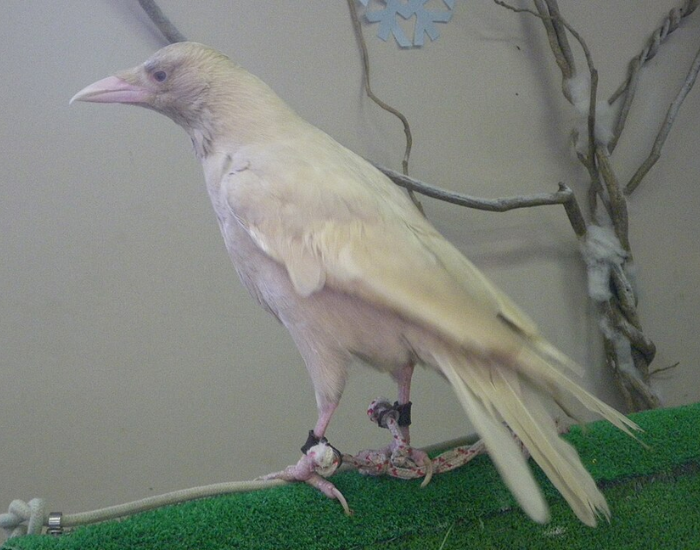
Avian albinism appears in more bird species than people expect, including robins, sparrows, crows and hummingbirds. Reported rates cluster near 1 in 1,800, making birds the standout group among animal albinos.
Feathers pay a hidden price. Melanin strengthens feather keratin, so unpigmented flight feathers wear and break far faster than pigmented counterparts. Many albino birds therefore fly badly long before a predator finds them.
12. Albino Monkeys (Macaques, Capuchins, and Spider Monkeys)
Region: Tropical rainforests of Central/South America and Asia
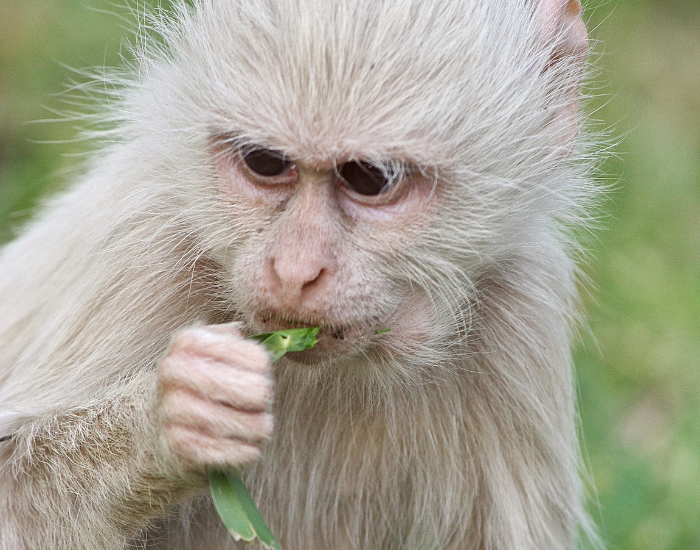
True albinism in non-human primates is exceptionally rare. Documented cases: such as albino white-faced capuchins and Central American spider monkeys, show pure white fur, unpigmented pale skin, and pink or light blue eyes.
For social primates, albinism is a double blow. Beyond losing canopy camouflage, structural eye defects severely impair their depth perception, while unpigmented facial skin leaves them vulnerable to intense tropical UV radiation and social exclusion
13. Albino Turtles and Tortoises
Region: Worldwide
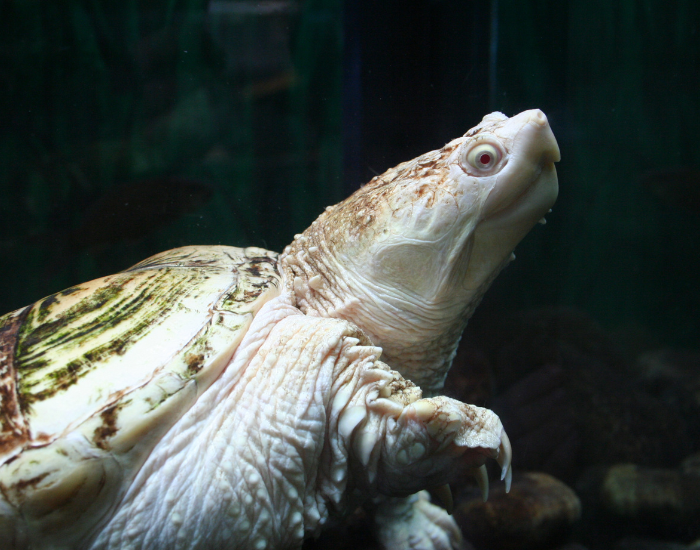
In May 2022, the Tropiquarium of Servion in Switzerland hatched the first albino Galápagos giant tortoise ever recorded. It arrived with a pale shell, unpigmented skin and bright red eyes, alongside a normally pigmented sibling.
Keepers estimate albinism in tortoises at roughly 1 in 100,000 hatchlings. Other turtles, like an albino red-eared sliders appear far more often, because breeders select the recessive line deliberately. On a wild beach, a white hatchling crossing open sand rarely reaches the water.
14. Albino Buffalo
Region: North American plains
White bison carry deep sacred significance for many Plains nations, and that importance is genuine and ongoing. The biology, however, gets misreported constantly.
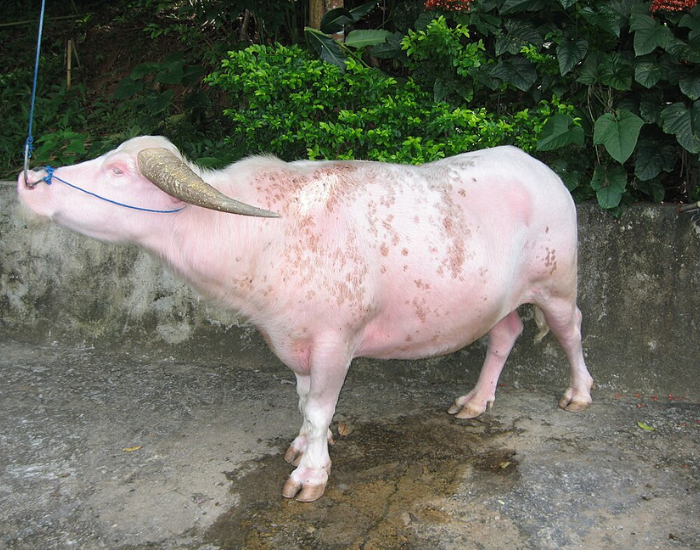
Most famous white buffalo are leucistic, or they carry cattle genetics from historical crossbreeding. A true albino buffalo – either african buffalo or water buffalo – (white coat plus pink eyes) is far rarer than headlines suggest. Check the eyes before believing the caption.
15. Albino Whales and Marine Mammals
Region: Global oceans
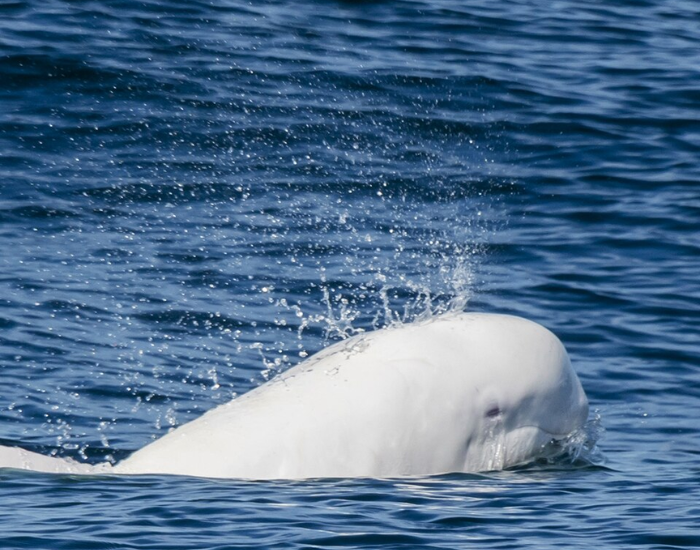
Migaloo, the white humpback first recorded off eastern Australia in 1991, is the best known of all albino marine mammals. Researchers still debate whether he is a true albino or simply hypo-pigmented.
Pinky, a pink bottlenose dolphin in Louisiana, shows reddish skin and pale eyes consistent with albinism. Sun damage is documented in both, since surfacing exposes unprotected skin for hours. Cetaceans already face enough pressure from whaling.
Why Albino Animals Struggle in the Wild
Three problems compound each other. Albinism reduces camouflage and makes animals conspicuous. Light sensitive eyes and reduced visual acuity make hunting and threat detection harder. The absence of melanin also raises sunburn and skin cancer risk.
Social costs matter too. Albino individuals often fail at species-specific visual signalling, so mates and group members treat them as strangers.
That said, the evidence is messier than the standard story. The garter snake experiment found no elevated predation on albino models. Correlated health problems, not visibility, may drive most mortality.
Frequently Asked Questions About Albinism in Animals
Most albino animals die young from combined pressures: predation, sun damage and poor eyesight. Without melanin they cannot camouflage, see sharply, or shield their skin from UV radiation. However, one controlled study found no increase in predator attacks on albino snake models. Internal health costs may matter more than visibility.
Albinism results from mutations in genes controlling melanin production, most often TYR, OCA2 and SLC45A2. These mutations stop melanocytes from making functional pigment. Genetics alone is what causes albino animals to appear — diet and environment play no role. The trait passes down recessively, surfacing only when an animal inherits two copies.
No. Many white animals are leucistic, seasonally moulted, or simply pale colour morphs. The eyes settle it: albinism produces pink or red eyes, while leucism leaves eye colour untouched. Arctic foxes, snowy owls and white tigers all keep normal pigmentation in their eyes.
The Detail That Changes How You Look
Albinism in animals is not a costume. It is one broken step in a chemical pathway that touches skin, fur, feathers, scales and eyesight simultaneously. Once you know that melanin is vital for normal eye development, every albino animal stops being merely beautiful and becomes a story about survival odds.
Next time someone shows you a white animal photo, check the eyes first. Dark eyes mean leucism. Pink eyes mean you are looking at something that beat roughly 1 in 10,000 odds, then had to survive its own biology.
Seen one yourself? Drop a comment below with where and what — I read every one. If this hooked you, keep going with our guides to Australia’s most threatened animals, cold-blooded animals, and how to save endangered species.
Albinism in Animals: Test Yourself 🤍
Eight multiple-choice questions on the science of albino animals. Go back and change any answer before you score.
References:
Abreu, M. S. L., Machado, R., Barbieri, F., Freitas, N. S., & Oliveira, L. R. (2013). Anomalous colour in Neotropical mammals: A review with new records for Didelphis sp. Brazilian Journal of Biology, 73(1), 185–194. https://doi.org/10.1590/S1519-69842013000100020
Bilandžija, H., Ma, L., Parkhurst, A., & Jeffery, W. R. (2013). A potential benefit of albinism in Astyanax cavefish: Downregulation of the oca2 gene increases tyrosine and catecholamine levels as an alternative to melanin biosynthesis. PLoS ONE, 8(11), e80823. https://doi.org/10.1371/journal.pone.0080823
Grønskov, K., Ek, J., & Brøndum-Nielsen, K. (2007). Oculocutaneous albinism. Orphanet Journal of Rare Diseases, 2, 43. https://doi.org/10.1186/1750-1172-2-43
Poulter, J. A., et al., (2013). Recessive mutations in SLC38A8 cause foveal hypoplasia and optic nerve misrouting without albinism. The American Journal of Human Genetics, 93(6), 1143–1150. https://doi.org/10.1016/j.ajhg.2013.11.002
Stephenson, B. P., Velani, Z., & Ihász, N. (2022). The effect of albinism on avian predator attack rates in eastern garter snakes (Thamnophis sirtalis sirtalis). Zoology, 150, 125987. https://doi.org/10.1016/j.zool.2021.125987
Watchorn, D. J., Dickman, C. R., Dunlop, J., Sanders, E., Watchorn, M., & Burns, P. A. (2023). Ghost rodents: Albinism in Australian rodent species. Ecology and Evolution, 13(3), e9942. https://doi.org/10.1002/ece3.9942