During my master’s in conservation biology in Australia, a biologist friend flew in to visit. We drove out to a sanctuary near Brisbane one evening, headlamps on, scanning the creek edges. That’s when we spotted her, a giant barred frog, one of the biggest frogs in Australia, sitting on a mossy rock like she owned the place. I remember thinking she was enormous. Then my friend laughed and said, “You should see the goliath frogs in Cameroon.” We spent the rest of the night listing every massive frog species we’d encountered or studied. This article is essentially that conversation, refined with years of additional fieldwork and research.
Before we dive in, a quick note. People often use “frog” and “toad” interchangeably, but there’s a real distinction worth knowing. All toads are technically frogs, they belong to the order Anura. However, true toads (family Bufonidae) tend to have dry, warty skin, shorter legs, and prefer walking over jumping. Frogs generally have smooth, moist skin and long, powerful hind legs built for leaping and jumping long distances. This list focuses strictly on frogs, not toads. So you won’t find the cane toad here, despite its large size.
Now, here are the 15 biggest frogs in the world, ranked from absolute giant to impressively large.

1. Goliath Frog (Conraua goliath) — The Undisputed Giant
No list of the biggest frogs on Earth starts anywhere else. The goliath frog is the largest frog in the world by a massive margin. Adult goliath frogs reach up to 32 centimeters snout-to-vent and weigh as much as 3.25 kilograms. That’s roughly the size of a house cat. For perspective, most frogs fit in the palm of your hand. Goliath frogs need both hands, and strong arms. Despite their bulk, these giant frogs can jump nearly three meters when startled, launching themselves off rocks into the water below.
Goliath Frog Reproduction and Tadpoles
One of the most fascinating discoveries about goliath frogs came in 2019, when scientists documented their nest-building behavior for the first time. Male goliath frogs move rocks — some weighing up to two kilograms, to construct rock pools along riverbanks. These nests protect eggs and goliath frog tadpoles from being swept away by fast flowing rivers. Females deposit hundreds of eggs in these sheltered pools.
When the eggs hatch, tadpoles develop in the protected rock pools before venturing into open water. Interestingly, goliath frogs lack a vocal sac entirely. Unlike most frogs, males cannot produce loud mating calls. Without a vocal sac, they rely on other strategies to attract mates. Scientists believe their large size may partially explain this, visual displays and nest construction may replace the need for acoustic signaling. Males and females are about the same size, though males tend to be slightly heavier during breeding season.
Conservation of the Goliath Frog
The goliath frog is classified as endangered by the IUCN. Their population has declined sharply due to habitat destruction, deforestation, and hunting. In Cameroon and Equatorial Guinea, local communities have traditionally hunted goliath frogs for food. The pet trade also threatens wild populations, adult goliath frogs and goliath frog tadpoles are captured and exported despite international regulations. Climate change compounds these threats by altering rainfall patterns and river flow.
Conservation efforts are underway, but progress is slow. The San Diego Zoo and other institutions have attempted to breed goliath frogs in captivity with limited success. These frogs simply do not thrive outside their natural habitat of fast flowing rivers and waterfalls. Without stronger protections in Cameroon and Equatorial Guinea, the world’s biggest frog faces a grim future. Scientists working with local communities to establish protected breeding sites along rivers represent perhaps the best hope for this species.
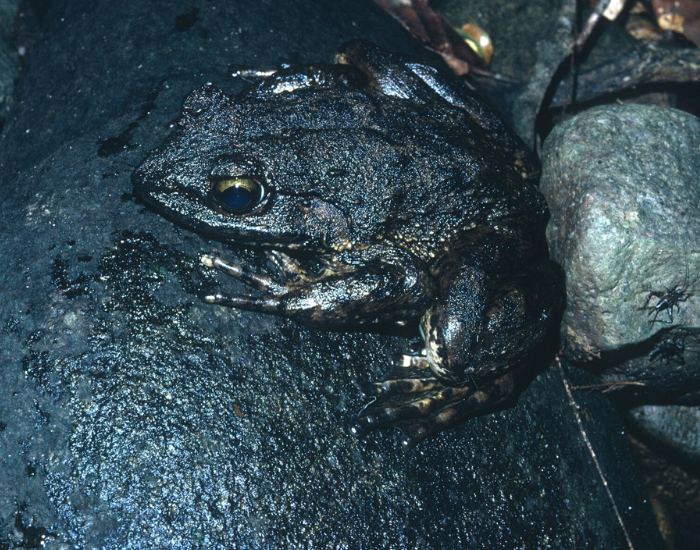
2. Blyth’s River Frog (Limnonectes blythii)
Southeast Asia’s largest frog doesn’t get nearly enough attention. Blyth’s river frog reaches 26 centimeters and up to one kilogram. Males are considerably larger than females — a sharp contrast to most frogs, where females are bigger. Males also sport fang-like projections on their lower jaw, which they use in territorial combat along rocky streams.
I’ve spoken with herpetologists who’ve worked in Borneo and Thailand, and they describe these frogs as genuinely intimidating. Their habitat mirrors that of goliath frogs: fast-flowing, rocky rivers in dense rain forests. Unfortunately, they face heavy hunting pressure across their native range. Local markets in Myanmar, Thailand, and Malaysia sell them as food, and their population status is Near Threatened.
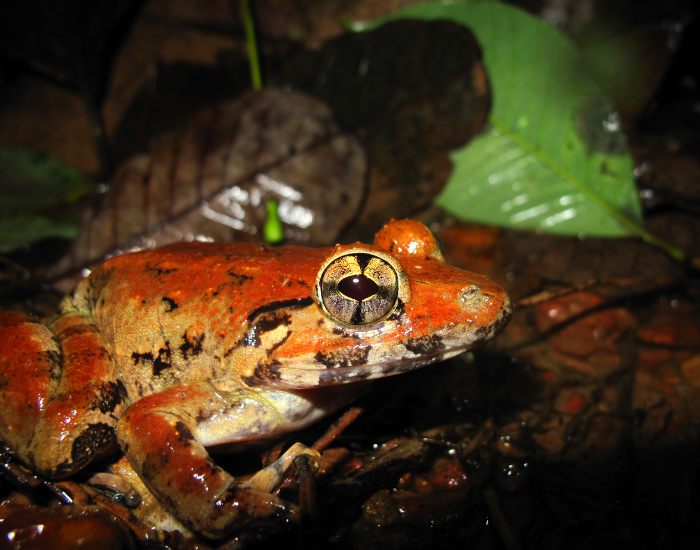
3. African Bullfrog (Pyxicephalus adspersus)
The African bullfrog is a tank of an amphibian. Males reach 24.5 centimeters and 1.4 kilograms, making them one of the heaviest frogs alive. They inhabit savannas and grasslands across sub-Saharan Africa, a very different habitat from the river-dwelling goliath frogs. What sets them apart is paternal care. M
ales guard their eggs and tadpoles aggressively, even digging channels to move tadpoles to deeper water during the dry season. They possess tooth-like projections strong enough to draw blood from a human hand. During extended droughts, African bullfrogs burrow underground and encase themselves in a mucus cocoon, surviving for years without food or water. They are cold blooded animals that have mastered extreme environments.
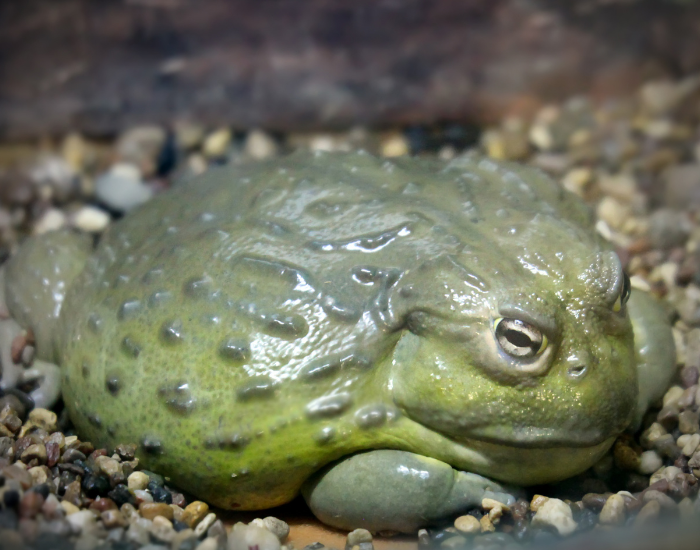
4. Mountain Chicken Frog (Leptodactylus fallax)
Despite the name, this is very much a frog, and one of the most endangered amphibians on the planet. Found only on Dominica and Montserrat in the Caribbean, the mountain chicken frog reaches 21 centimeters and nearly a kilogram. It earned its common name because locals hunted it for food, claiming the meat tastes like chicken.
Chytridiomycosis, the fungal disease devastating amphibians worldwide, has wiped out over 80 percent of the population. Conservation efforts are fighting to save this species through captive breeding. Females produce foam nests and feed unfertilized eggs to their tadpoles, a remarkable example of parental investment among frogs.
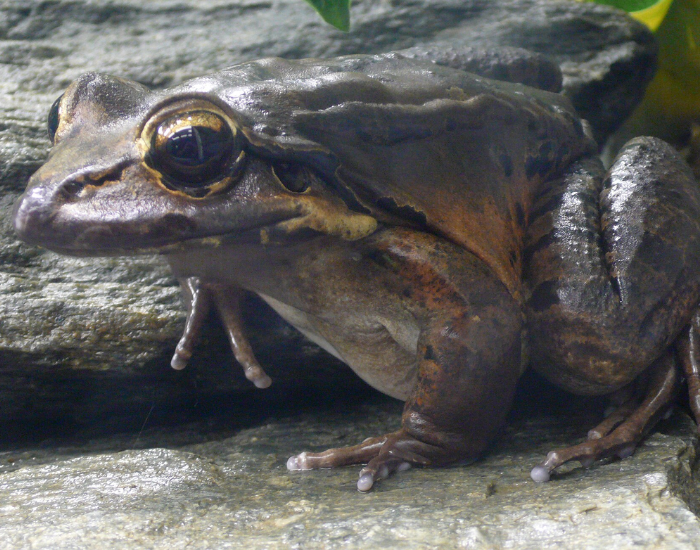
5. Lake Junín Giant Frog (Telmatobius macrostomus)
At 20 centimeters, this critically endangered aquatic frog lives entirely underwater in the high-altitude lakes of Peru’s Andes, above 4,000 meters. Its extremely baggy, wrinkled skin increases surface area for absorbing oxygen directly from cold water. Scientists have nicknamed it the “scrotum frog” for obvious reasons.
Tragically, it faces hunting pressure from local markets where it is blended into smoothies believed to have medicinal properties. Habitat degradation from mining runoff adds further stress. This aquatic species rarely surfaces and remains one of the least-studied giant frogs on Earth.
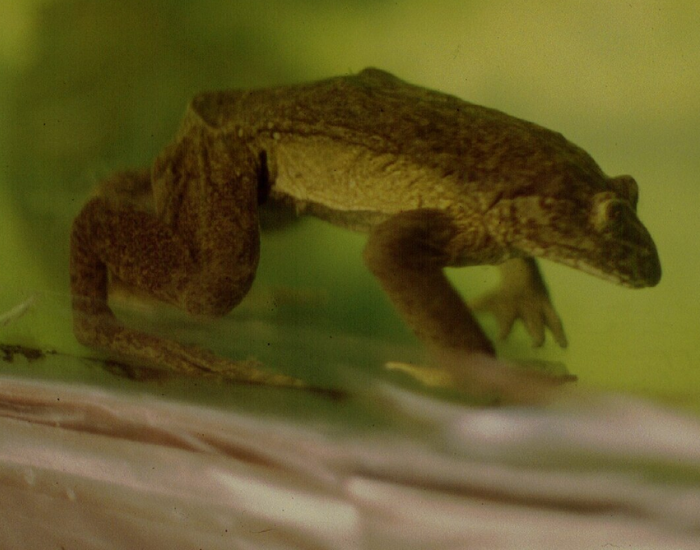
6. Chilean Giant Frog (Calyptocephalella gayi)
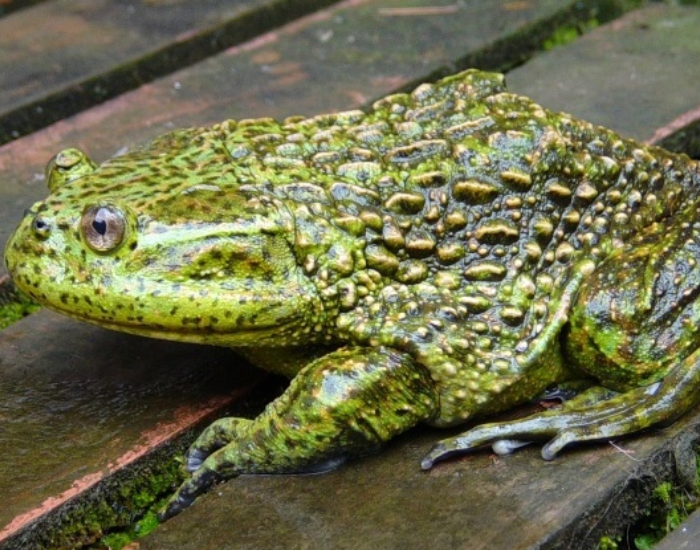
Don’t let the alternative name “helmeted water toad” fool you, this is a true frog. Reaching 20 centimeters, it’s the largest frog in South America by body length. It’s also a living fossil. Its lineage dates back to the age of dinosaurs, with fossil relatives from the Cretaceous period. Chilean giant frogs are ambush predators that eat other frogs, fish, and even small mammals. They sit motionless in ponds and slow rivers until prey wanders close, then strike. Their conservation status is Vulnerable, primarily due to habitat loss and water pollution across central Chile.
7. Surinam Horned Frog (Ceratophrys cornuta)
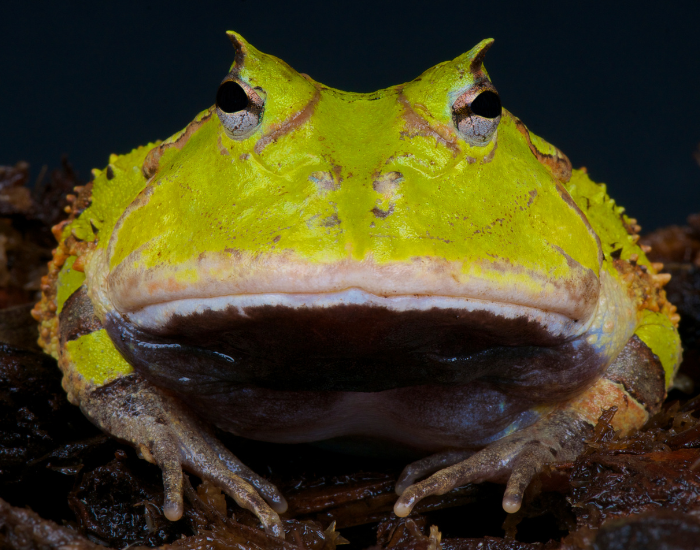
If you’ve ever seen a Pac-Man frog, you know the family. The Surinam horned frog is the wild ancestor of the popular pet species, reaching up to 20 centimeters. Found in the Amazon Basin’s leaf litter, this ambush predator eats prey nearly its own size, including other frogs, reptiles, and small mammals. Their bite force, relative to body weight, is extraordinary. Scientists have measured jaw strength that, scaled up, would rival wolves.
The horn-like projections above their eyes provide camouflage among fallen leaves. Here’s something worth noting: being the biggest frog doesn’t necessarily make you the most dangerous. Tiny poison dart frogs pack far more lethal power than any giant species on this list.
8. Smoky Jungle Frog (Leptodactylus pentadactylus)
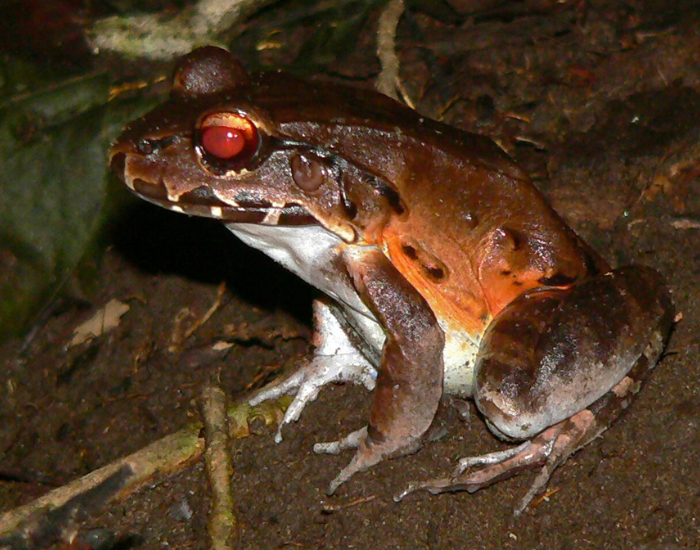
Reaching 18.5 centimeters across Central and South American rainforests, the smoky jungle frog is impossible to ignore, literally. When grabbed by predators, it produces a piercing scream loud enough to startle humans. Its skin secretions cause sneezing and eye irritation, making it unpleasant prey for most animals. Females lay eggs in foam nests on the forest floor. These frogs are terrestrial and nocturnal, prowling the jungle floor for insects, crustaceans, and smaller frogs.
9. White-Lipped Tree Frog (Nyctimystes infrafrenatus)
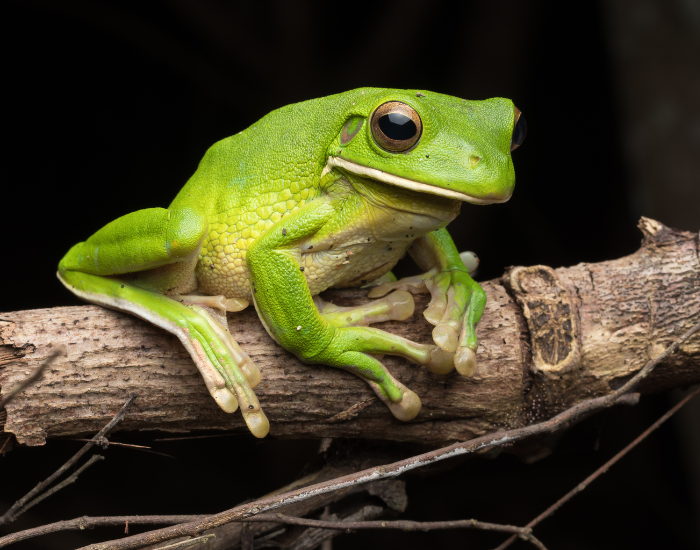
This is the world’s largest tree frog, reaching 14 centimeters. Native to northern Australia and New Guinea, it’s the species I became most familiar with during my time living in Queensland. These green, arboreal frogs frequently invade bathrooms and kitchens in tropical homes. Their loud barking calls carry through the rain forest canopy at night. If you’re interested in other green frogs, there’s remarkable diversity in coloration across species worldwide. The Australian white tree frog is a close relative that’s equally charismatic but slightly smaller.
10. Budgett’s Frog (Lepidobatrachus laevis)
At 12.5 centimeters, Budgett’s frog compensates for its moderate length with sheer attitude. Found in Argentina, Paraguay, and Bolivia, this flat-bodied predator opens its enormous mouth and screams when threatened. It’s basically the angriest frog alive. During the dry season, it burrows underground and forms a hardened cocoon from layers of shed skin, surviving months without water. It hunts from shallow, temporary pools in the Gran Chaco region, ambushing fish and insects.
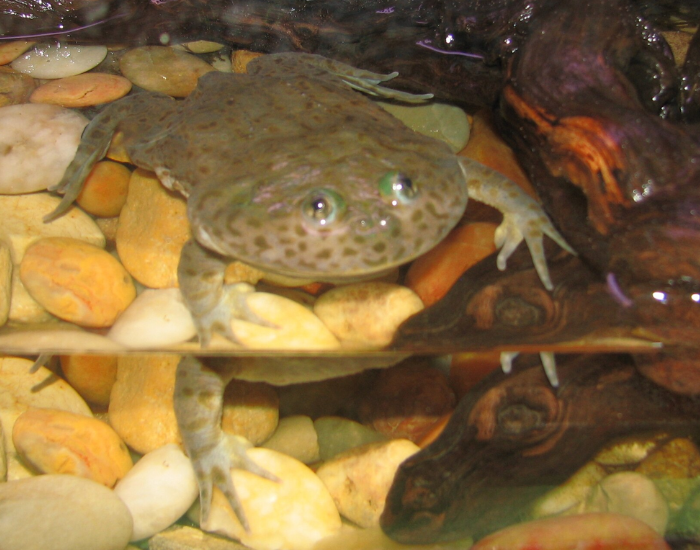
11. Chinese Giant Spiny Frog (Quasipaa spinosa)
Males of this species develop sharp nuptial spines on their chest during breeding season. Reaching 12 centimeters and up to 500 grams, these aquatic frogs live in clean mountain streams across southern China and northern Vietnam. They’re heavily harvested as a delicacy, leading to severe population crashes. Their conservation status is Vulnerable. Males use their chest spines in combat with rivals, wrestling along rocks in fast-flowing rivers, a behavior that echoes the territorial aggression seen in goliath frogs.
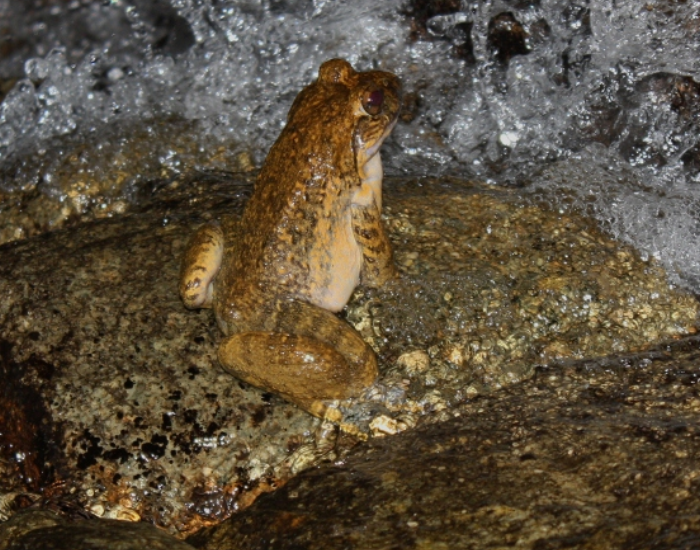
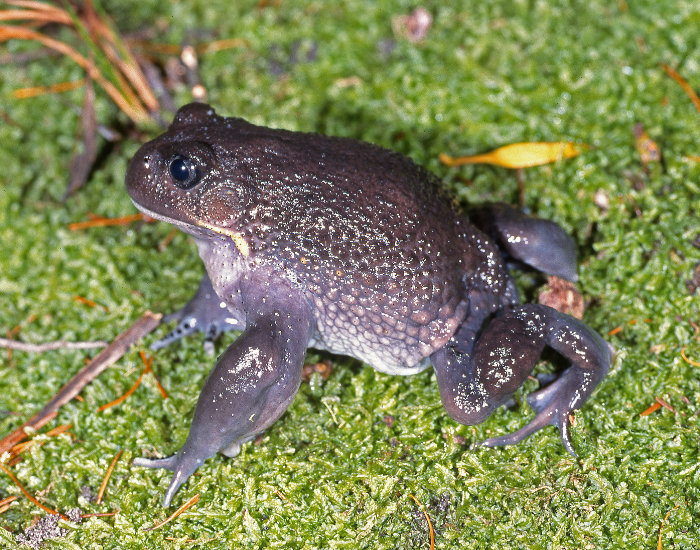
12. Giant Barred Frog (Mixophyes iteratus)
This is the frog that started the whole conversation. The giant barred frog reaches 11.5 centimeters and is one of Australia’s largest native frogs. Found along streams in the rain forests of Queensland and New South Wales, it’s endangered due to habitat destruction and chytrid fungus. Males call from rocks beside flowing water at night. Seeing one in the wild remains one of my favorite field memories, these frogs have a prehistoric presence about them, sitting stone-still on wet boulders.
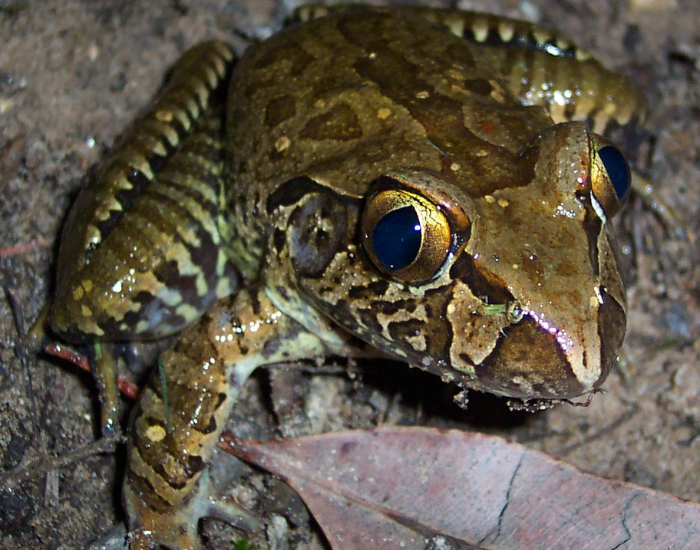
13. Giant Slippery Frog (Conraua robusta)
A close relative of the goliath frog, the giant slippery frog shares the rivers of Cameroon. Reaching about 11 centimeters, Conraua robusta is stocky and powerful. Like adult goliath frogs, they depend on fast flowing rivers with rocky substrates. They are endangered, facing the same threats: deforestation, hunting by local communities, and habitat loss. Scientists studying goliath frogs often encounter this species along the same waterways, though it receives far less research attention.
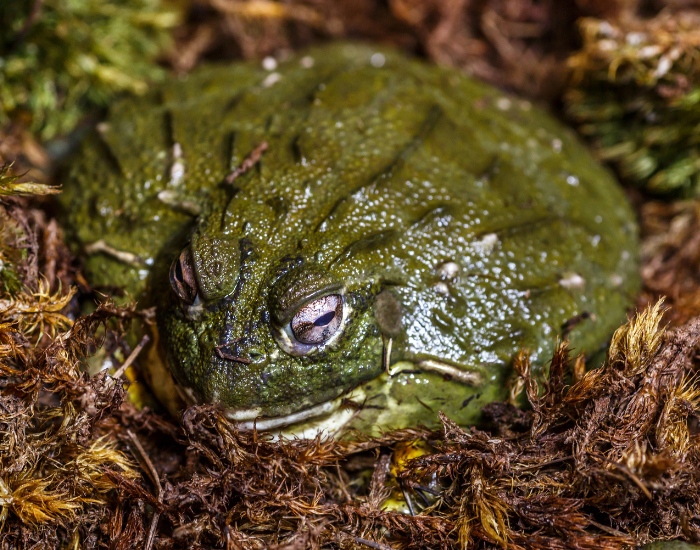
14. Giant Burrowing Frog (Heleioporus australiacus)
Another Australian species on this list, the giant burrowing frog reaches 10 centimeters across sandstone woodlands in southeastern Australia. Females lay eggs in foam nests inside underground burrows. When heavy rains flood the burrows, tadpoles wash into nearby streams to complete development. These frogs can live over a decade — unusually long for amphibians of this size. Their Vulnerable status reflects ongoing habitat loss from urban development.
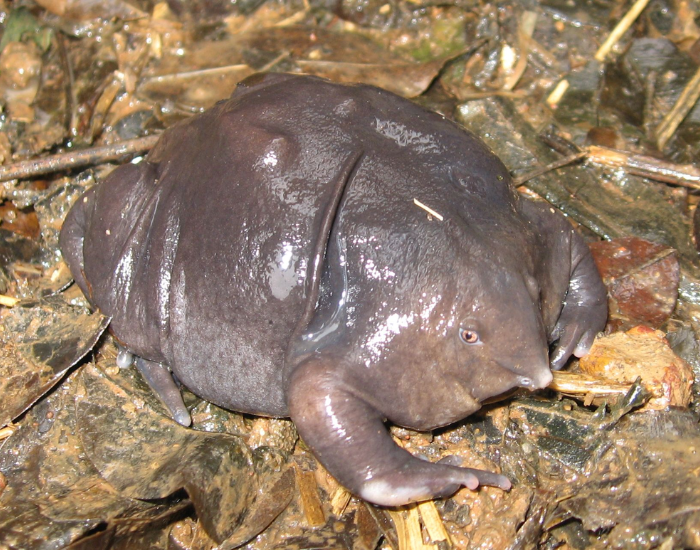
15. Purple Frog (Nasikabatrachus sahyadrensis)
The purple frog closes our list at 9 centimeters, but it earns its place through sheer biological strangeness. Discovered only in 2003 in India’s Western Ghats, it spends almost its entire life underground. It surfaces for roughly two weeks per year to breed during monsoon season. Its lineage split from its closest relatives approximately 130 million years ago — meaning this frog has been doing its own thing since dinosaurs roamed the Earth. It’s a living time capsule among amphibians, and its endangered status makes conservation efforts urgent. Wildlife researchers in India continue studying its subterranean natural history.
FAQ
The goliath frog (Conraua goliath) is the biggest frog in the world. Adult goliath frogs reach up to 32 centimeters in body length and weigh as much as 3.25 kilograms. They are found only in Cameroon and Equatorial Guinea in western Africa, living near fast flowing rivers and waterfalls in tropical rain forests.
The largest frog ever recorded was a goliath frog measuring 32 centimeters from snout to vent — about 87 centimeters (nearly three feet) with legs fully extended. A jump from a frog this size covers serious distance. Most other large frog species max out between 12 and 26 centimeters. The African bullfrog and Blyth’s river frog are among the next biggest, reaching 24.5 and 26 centimeters respectively.
Goliath frogs live exclusively in the rain forests of Cameroon and Equatorial Guinea in western Africa. They inhabit fast flowing rivers and streams near waterfalls, where they build nests from rocks along gravel riverbanks. Their habitat is shrinking due to deforestation and human encroachment.
The World’s Biggest Frogs Need Our Attention
From the goliath frogs of Cameroon to the purple frog hiding underground in India, the world’s largest frogs represent millions of years of evolution, and many face serious threats. Habitat destruction, hunting, the pet trade, climate change, and disease are pushing several of these species toward extinction. What strikes me most after years of fieldwork is how little most people know about these animals. Frogs aren’t just small, green things in ponds. Some are the size of housecats. Some build stone nests. And some scream when you pick them up.
If this list surprised you, dig deeper. Check out our guides on types of amphibians and Amazon milk frogs for more on these incredible animals. And if you’ve encountered any of these giant frogs in the wild, drop a comment — I’d love to hear your story.
References:
Luedtke, J. A., Chanson, J., Neam, K., Hobin, L., Maciel, A. O., Catenazzi, A., & Stuart, S. N. (2023). Ongoing declines for the world’s amphibians in the face of emerging threats. Nature, 622, 308–314. https://doi.org/10.1038/s41586-023-06578-4
Schäfer, M., Tsekané, S. J., Mahlow, K., Lindecke, O., Class, B., & Hofreiter, M. (2019). Goliath frogs build nests for spawning — the reason for their gigantism? Journal of Natural History, 53(21–22), 1263–1276. https://doi.org/10.1080/00222933.2019.1642528
Nguete Nguiffo, D., Mpoame, M., & Wondji, C. S. (2019). Genetic diversity and population structure of goliath frogs (Conraua goliath) from Cameroon. Mitochondrial DNA. Part A, DNA mapping, sequencing, and analysis, 30(4), 657–663. https://doi.org/10.1080/24701394.2019.1615060
Scheele, B. C., Pasmans, F., Skerratt, L. F., Berger, L., Martel, A., Beukema, W., & Canessa, S. (2019). Amphibian fungal panzootic causes catastrophic and ongoing loss of biodiversity. Science, 363(6434), 1459–1463. https://doi.org/10.1126/science.aav0379
Van Rooij, P., Martel, A., Haesebrouck, F., & Pasmans, F. (2015). Amphibian chytridiomycosis: a review with focus on fungus-host interactions. Veterinary research, 46, 137. https://doi.org/10.1186/s13567-015-0266-0