I’ll never forget the first time I really got to observe a milk frog up close. During my internship in the reptile and amphibian area at the zoo—the same place where I learned about crocodiles and caimans, blue poison dart frogs and other toxic frogs, Mexican tarantulas, and other fascinating creatures—I spent many hours watching these blue-gray amphibians in their carefully designed canopy habitat.
.While most amphibians seem content hopping around at ground level, milk frogs (Trachycephalus resinifictrix) had this almost zen-like commitment to staying up high. They’d perch on branches, barely moving for hours, waiting for nightfall when the real action began.
Here’s the thing about milk frogs: they’re not your typical green frog. These guys have carved out one of the most specialized lifestyles in the rainforest, and honestly, the more you learn about them, the weirder and more fascinating they become.
Maybe you’re here because you’re thinking about getting one as a pet, they’ve become pretty popular in the exotic pet trade. Or maybe you’re just curious about what makes a frog decide to spend its entire life in the treetops, never touching the ground. Either way, having spent real time observing these amazing amphibians, I can give you the full story.
1. Why Are They Called “Milk Frogs”?
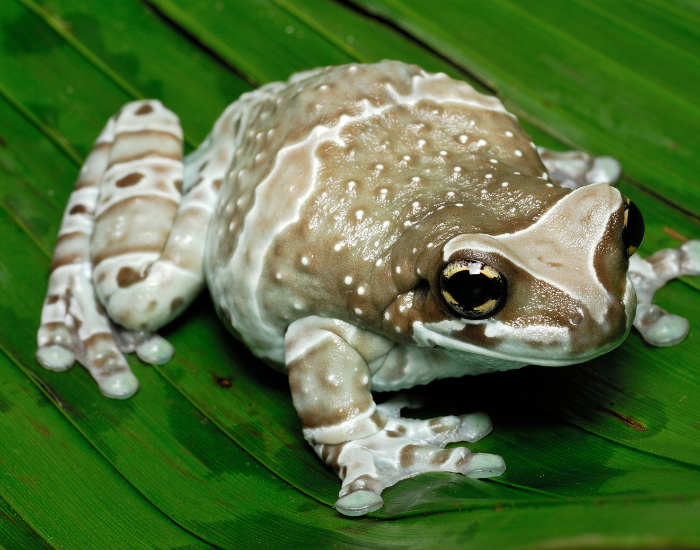
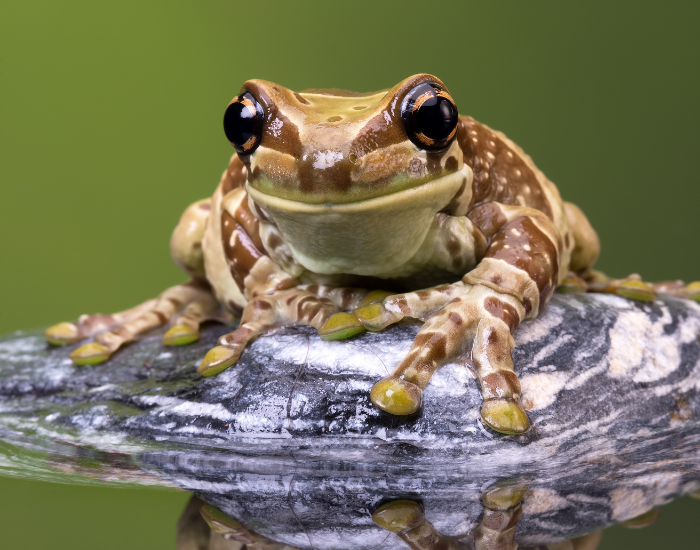
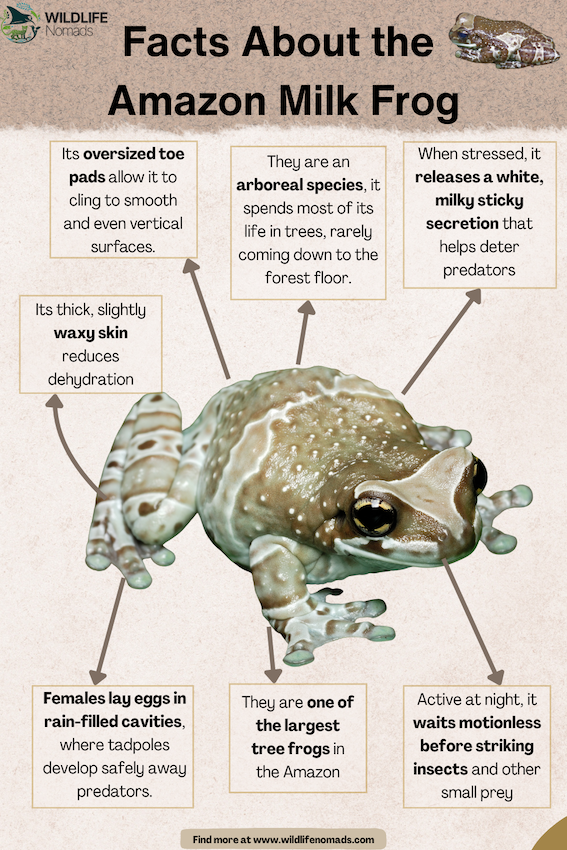
The name milk frog refers to a poisonous white secretion they release when threatened. This milky substance comes from glands in their skin. Therefore, it’s a defensive mechanism against predators.
Do not to provoke this response. While not as lethal as poison dart frogs, the toxin is sticky and irritating. It’s designed to make any predator, or curious biologist, regret their decision.
The secretion contains toxins that deter most animals from eating them. However, the milk frog isn’t venomous. They don’t inject poison through bites. Instead, their skin produces the poisonous substance as protection.
2. They Are True Canopy Dwellers
The amazon milk frog habitat is almost exclusively arboreal. Unlike many frogs that return to the forest floor, these tree frogs spend their entire lives in the canopy. They rely on water-filled tree holes and bromeliads to survive.
These specialized habitat requirements make them dependent on healthy tropical rainforests. In addition, they rarely descend to ground level. The canopy provides everything they need: food, water, and breeding sites.
You’ll find them in the Amazon Basin’s upper levels. This arboreal lifestyle keeps them safe from many ground-dwelling predators. However, it also makes them vulnerable to habitat loss from deforestation.
3. Those Striking “Golden” Eyes
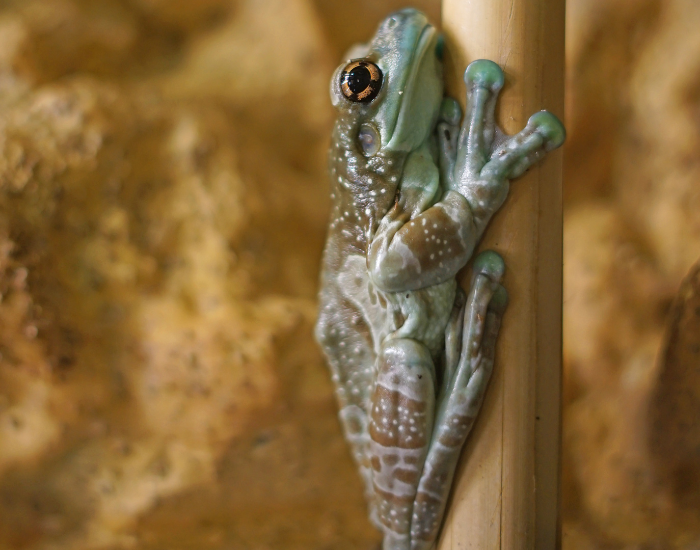
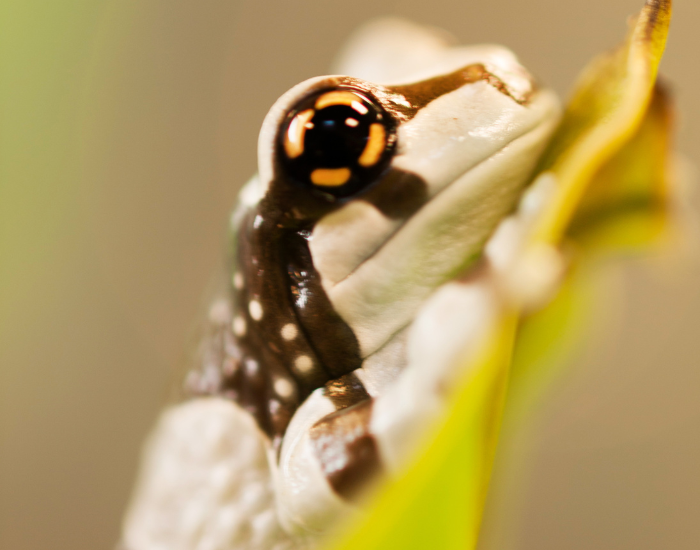
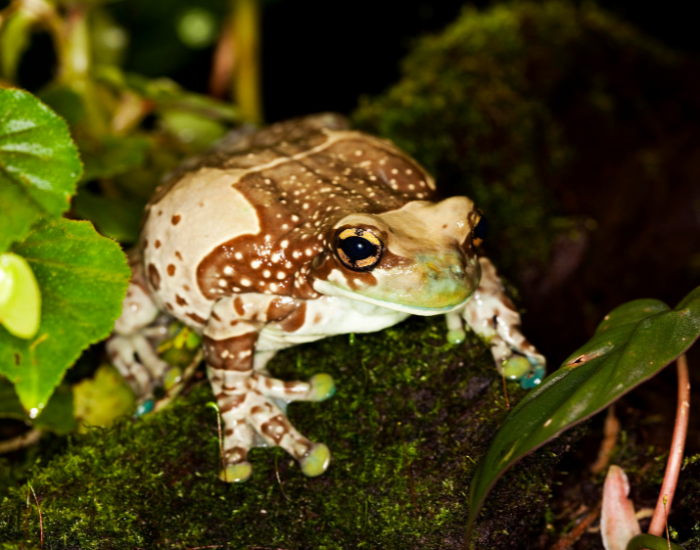
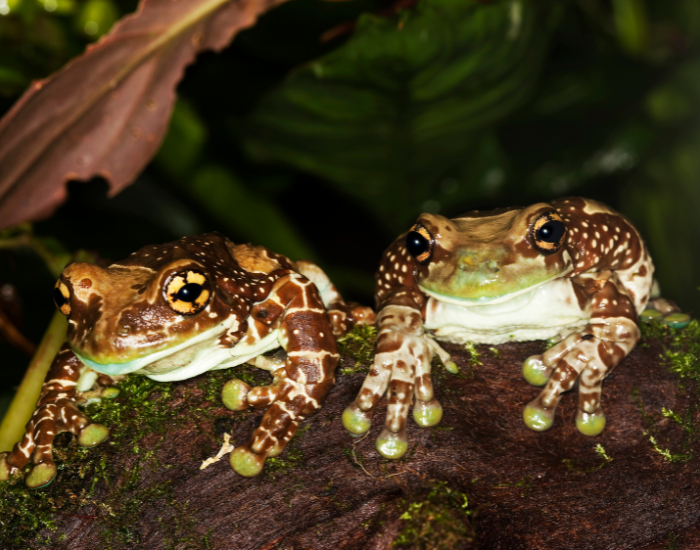
One of their most beautiful features is their golden iris. Often called the mission golden-eyed tree frog, they possess a golden iris with a black “Maltese Cross” centered on the pupil. This isn’t just aesthetically pleasing—it’s a diagnostic feature of the genus Trachycephalus.
The eyes help them hunt at night. Their large pupils allow maximum light intake in the dark rainforest. Therefore, they can spot small invertebrates more easily.
4. Size and Growth: The Full-Grown Amazon Milk Frog
A full-grown amazon milk frog is surprisingly robust compared to other tree frogs.
Female frogs: Can reach up to 4 inches (10 cm) in length. Male frogs: Generally smaller, around 2.5 to 3 inches.
In captivity, adult frogs often look more rotund. This happens because they don’t work as hard for food. In the wild, their active lifestyle keeps them lean as they leap between trees.
Juveniles start much smaller. They grow rapidly during their first year. By 12-18 months, most reach adult size. However, growth rates depend on diet and habitat quality.
5. They Actually Have Blue Blood
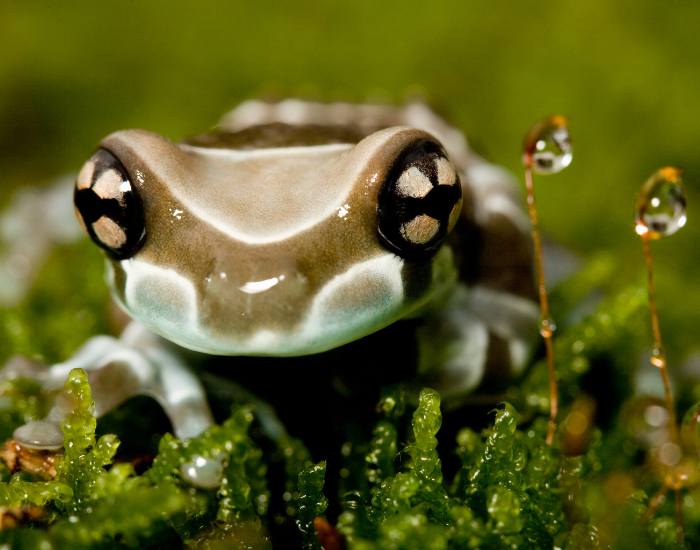
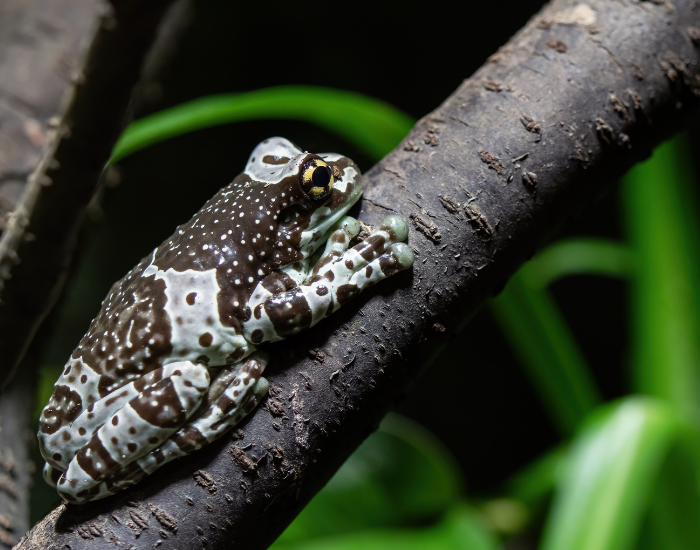
Well, sort of. If you examine the mouth or underside of their legs, you’ll notice a distinct blue or turquoise tint. This coloration comes from a bile pigment called biliverdin. It gives their skin and bones a bluish hue.
This blue coloration is especially visible in juveniles. As they mature, the blue becomes less prominent. Nevertheless, it remains a fascinating characteristic of the species.
The blue pigment may serve multiple purposes. Some researchers believe it helps with camouflage in certain lighting. Others suggest it could play a role in communication between frogs.
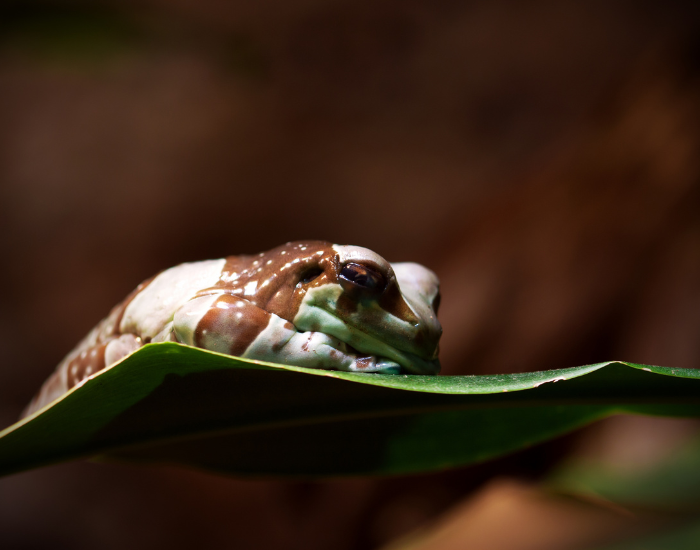
6. A Unique Diet: Small Invertebrates and More
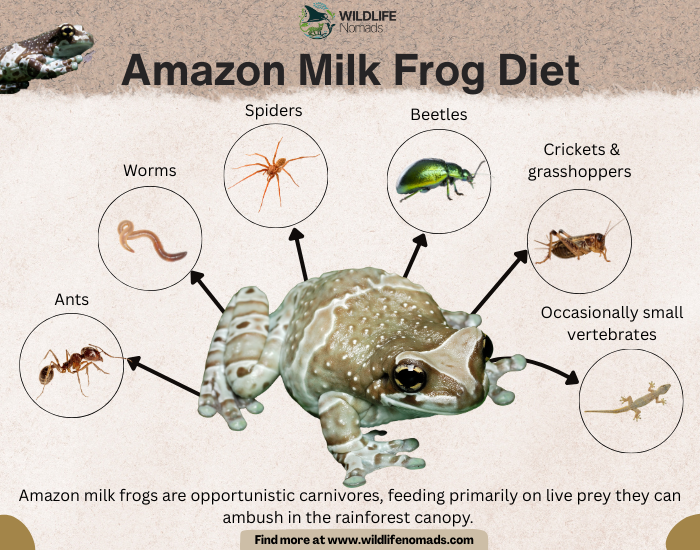
What do amazon milk frogs eat in their natural habitat? They are opportunistic carnivores with a varied diet:
- Insects (ants, beetles, and flies)
- Crickets and grasshoppers
- Mealworms and waxworms
- Other small invertebrates
- Occasionally small vertebrates like tiny lizards
In captivity, their diet consists primarily of crickets and mealworms. However, variety is crucial for their health. Therefore, owners should rotate different feeder insects regularly.
Adult frogs can eat larger prey than juveniles. They use their sticky tongues to catch food quickly. The hunting process is lightning-fast and fascinating to watch.
7. The Breeding Season: A Father’s Responsibility
The breeding season usually coincides with the rainy season (November to May). During this time, male frogs become more vocal and active.
Male frogs find a water-filled tree hole and produce loud calls. These calls attract female frogs to the breeding site. The male uses large vocal sacs to amplify his call. In Brazil, they’re known as sapo canoeiro (the boatman frog) because the call sounds like oars hitting a boat.
Here’s a remarkable aspect of their biology: The male may lure a female to lay a clutch of up to 2,500 eggs in the tree hole. Then, he might lure a second female to the same spot. She lays unfertilized eggs, which become food for the tadpoles from the first clutch.
This unusual reproductive strategy ensures tadpole survival. The tree hole environment is isolated, so external food sources are limited. Therefore, the unfertilized eggs provide essential nutrition.
8. Distribution Across the Amazon Basin
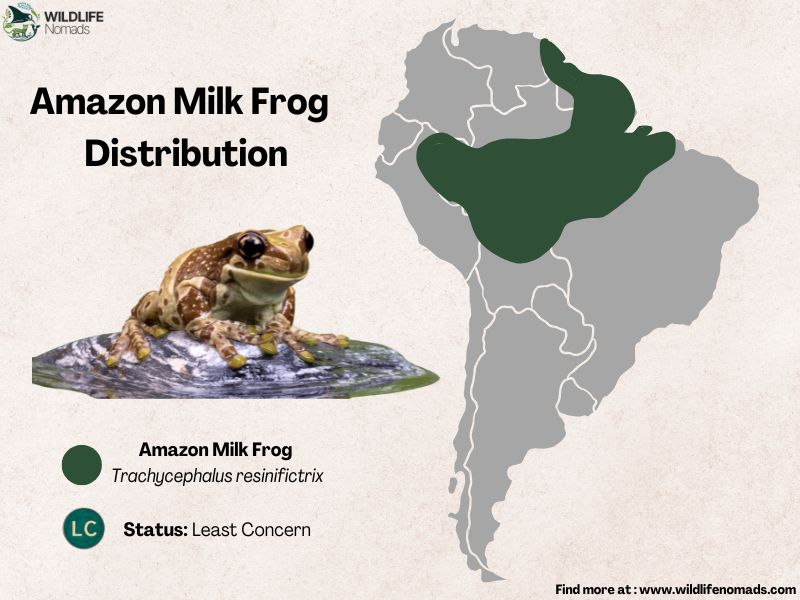
You can find the Amazonian milk frog across a widespread range in South America:
- Brazil (particularly the Amazon region)
- Peru and Colombia
- Venezuela and Suriname
Despite being listed as “Least Concern” by the IUCN, populations face threats from habitat loss. Logging and deforestation destroy the tropical rainforests they depend on. In addition, climate change affects rainfall patterns that influence breeding season timing.
Conservation efforts are crucial for maintaining healthy populations. Many zoos participate in breeding programs. Furthermore, some organizations work to protect their natural habitat in the rainforest.
9. Are They Noisy? The “Boatman” Frog
If you keep amazon milk frogs as pets, be prepared for noise. A healthy male can be quite loud at night! Their deep, croaking call carries far in the rainforest.
The vocalization serves multiple purposes. Primarily, it attracts females during breeding season. However, males also use calls to establish territory. Each male has a slightly different call, allowing females to distinguish between potential mates.
The large vocal sacs amplify the sound dramatically. When multiple males call together, the chorus can be overwhelming. This is normal behavior and indicates your frogs are healthy.
10. They Use “Toe Pads” to Defy Gravity
Like most tree frogs, milk frogs have specialized toe pads. These pads act like suction cups, allowing them to stick to smooth surfaces. Therefore, they can climb glass walls in captivity or glossy leaves in the wild.
The toe pads contain specialized cells that create adhesion. This arboreal adaptation is essential for their canopy lifestyle. In addition, the pads help them maintain stability when catching prey.
You’ll often see them pressed flat against glass in zoo exhibits. This demonstrates how well the toe pads work. The adhesion is so strong they can hang upside down without falling.
11. Keeping Them as Pets: The Basics
Can you own an amazon milk frog? Yes! They’re considered a great intermediate species for amphibian enthusiasts. However, they require specific care.
Habitat requirements:
- Vertical terrarium (minimum 18x18x24 inches for a pair)
- Temperature: 72-82°F (22-28°C)
- Humidity: 60-80%
- Multiple hiding spots and branches
- Water-filled tree holes or similar structures
The habitat should mimic their natural rainforest environment. Therefore, include live plants if possible. Bromeliads work particularly well because they hold water naturally.
Substrate: Use a moisture-retaining substrate like coconut fiber. This helps maintain proper humidity levels. In addition, it allows for easier cleaning.
Lighting: Provide a 12-hour day/night cycle. UVB lighting isn’t essential but can be beneficial. However, avoid excessive heat from lights.
12. Handling: Can You Touch Them?
You can touch amazon milk frogs, but you shouldn’t unless necessary. Amphibians breathe and absorb water through their skin. The oils and salts on human hands can be harmful toxins to them.
If you must handle them, use unpowdered, wet gloves. Alternatively, wet your hands thoroughly before contact. Keep handling time minimal to reduce stress.
Remember, these frogs are best enjoyed as display animals. They’re not interactive pets like reptiles such as bearded dragons or turtles. However, watching their behavior provides endless entertainment.
13. High Metabolism and Frequent Feeding
Because milk frogs are so active, they have high energy needs. Juveniles need to eat daily to support their rapid growth. Adult frogs can be fed every 2-3 days.
Always “gut-load” your feeder insects before offering them. This means feeding the insects nutritious food 24 hours before. Therefore, your frogs receive essential vitamins and minerals.
Feeding tips:
- Dust crickets with calcium powder
- Vary diet between crickets, mealworms, and other insects
- Remove uneaten food after 24 hours
- Monitor body condition to avoid overfeeding
Food intake affects overall health significantly. Well-fed frogs have better coloration and more active behavior. However, obesity can occur in captivity with overfeeding.
14. Vulnerability to Chemicals
As a biologist, I’ve seen how sensitive these amphibians are to their environment. Their permeable skin makes them extremely vulnerable to chemicals.
Household cleaners, perfumes, and tap water can be fatal. Always use dechlorinated water for misting and water bowls. In addition, avoid handling them after applying lotions or hand sanitizer.
This sensitivity makes them excellent indicator species. Their health directly reflects environmental quality. In the wild, declining populations often signal broader ecosystem problems.

15. The “Mission” Behind the Name
The name mission golden-eyed tree frog comes from a historical misinterpretation. Early naturalists misidentified the collection locality. Nevertheless, the name stuck.
Regardless of naming confusion, these frogs serve an important ecological role. They control insect populations in the canopy. In addition, they’re prey for larger animals like birds and snakes.
Their presence indicates healthy rainforest ecosystems. Therefore, protecting their habitat benefits countless other species.
Wild vs. Captivity: A Comparison
| Feature | Wild (Amazon Basin) | Captivity (Pet/Zoo) |
|---|---|---|
| Lifespan | Unknown (est. 5-8 years) | 8-15+ years |
| Diet | High variety (wild insects) | Crickets, mealworms, feeder insects |
| Humidity | Fluctuating with weather | Strictly controlled (60-80%) |
| Size | Up to 4 inches | Up to 4.5 inches (often heavier) |
| Threats | Predators, habitat loss | Improper care, disease |
Captivity offers protection from natural threats. However, it requires diligent husbandry. In the wild, populations face increasing pressure from deforestation.
Threats to Wild Populations
While listed as Least Concern, amazon milk frog populations face several threats:
Habitat loss: Deforestation destroys the tropical rainforests they inhabit. Logging removes the large trees containing essential breeding sites.
Climate change: Altered rainfall patterns affect breeding season timing. In addition, temperature changes impact tadpole development.
Pet trade: While captive breeding is common, some wild collection still occurs. However, most pets come from reputable breeders.
Conservation efforts focus on habitat protection. Several organizations work to preserve Amazon rainforest areas. In addition, captive breeding programs help maintain genetic diversity.
Frequently Asked Questions
No, they are poisonous, not venomous. They don’t inject toxins via bites. Instead, they secrete toxins through their skin as a defense mechanism. The poisonous secretion deters predators but rarely harms humans seriously.
With proper care, they can live between 8 to 15 years. Some individuals in zoo settings have lived even longer. However, lifespan depends heavily on diet, habitat quality, and overall care.
No. Most amphibians find handling stressful. They’re best enjoyed as “display animals” rather than interactive pets. Furthermore, handling can harm them due to oils on human skin.
If you’re willing to invest in proper setup, they’re excellent intermediate species. They require a tall glass terrarium and consistent misting system. However, they’re hardier than delicate poison dart frogs. Therefore, they’re good for keepers with some experience.
Juveniles should eat daily to support growth. Adult frogs can be fed every 2-3 days. However, monitor body condition and adjust feeding frequency accordingly.
Generally, it’s best to house them with their own species only. Mixing species risks disease transmission. In addition, different species have different care requirements.
A Rainforest Treasure
The amazon milk frog is a masterpiece of South American jungle evolution. From their blue blood to their milky defenses, they remind us of incredible biodiversity.
Whether you’re observing them through a glass terrarium or spotting them in a Brazilian mahogany tree, these frogs deserve respect and protection. Their populations depend on us preserving the tropical rainforests they call home.
As indicator species, they reflect the health of entire ecosystems. Therefore, protecting them means protecting countless other species. Conservation efforts benefit the entire Amazon Basin.
For those considering them as pets, remember the commitment involved. They require proper habitat, consistent care, and respect for their needs. However, the reward is watching these remarkable amphibians thrive.
The mission golden-eyed tree frog continues to fascinate researchers and enthusiasts alike. Their complex breeding behavior, unique adaptations, and striking appearance make them stand out. In addition, their role in the rainforest ecosystem is irreplaceable.