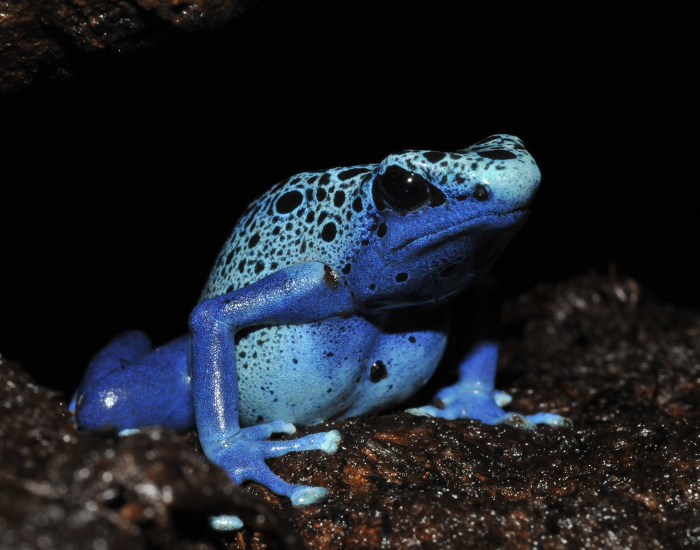
When people imagine blue frogs, the one that stands out is the striking blue poison dart frog, the Dendrobates tinctorius azureus morph. This tiny blue frog, found in the Sipaliwini savannah of Suriname and northern Brazil, is famous for its vivid azure blue color dotted with black spots. Beyond their beauty, these amphibians are packed with fascinating science: unique toxins, complex breeding behaviors, and a delicate balance between survival in the wild and captivity.
Here are 12 incredible facts about blue poison dart frogs that blend biology, conservation, and cultural significance.
1. Blue Frogs Are a Morph of Dendrobates tinctorius
Blue poison dart frogs, sometimes called azureus frogs or blue arrow frogs, were once classified as a separate species (Dendrobates azureus). Today, they’re recognized as a morph of Dendrobates tinctorius. Their irregular pattern of dark blue to sky blue coloration and scattered black spots makes each frog unique, like a fingerprint.
These frogs are part of the larger poison dart frog species group, which includes over 100 brilliantly colored frogs across Central and South America.
2. Their Color Is a Survival Strategy
The azure blue color of these frogs isn’t for camouflage, it’s a warning to potential predators. This adaptation, known as aposematic coloration, tells snakes, birds, and mammals: “don’t eat me.” Bright colors in dart frogs often mean toxic compounds in the skin, used to kill potential predators or at least make them very sick.
Interestingly, the background coloration and black mid belly stripe vary between individuals, which scientists use to distinguish one frog from another in field studies.
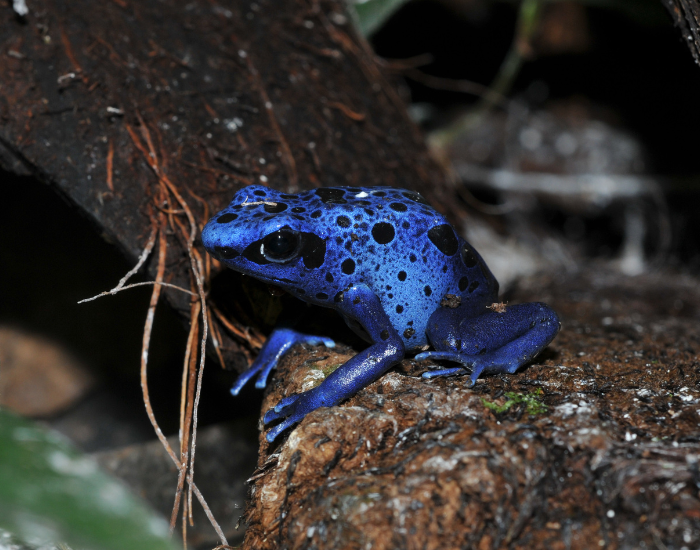
3. Poison Comes from Their Diet
Blue frogs don’t make toxins themselves, they sequester alkaloid poisons from the ants, tiny beetles, and mites they eat in the wild. These toxic compounds concentrate in the frogs’ skin, creating powerful defenses. In captivity, where frogs eat fruit flies and springtails, their poisons disappear.
This explains why a blue poison dart frog diet in the wild consists of small insects, while in captivity it’s “diet consists” of fruit flies, ants, springtails, and other tiny invertebrates. Without alkaloid-rich prey, captive frogs are not poisonous.
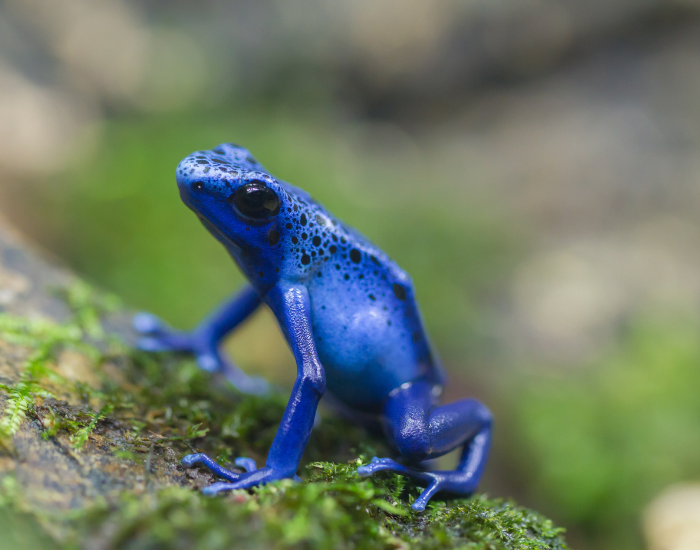
4. They Live in a Very Small Range
Blue frogs are native to a restricted part of South America, specifically the Sipaliwini savannah in Suriname and nearby northern Brazil. They thrive in isolated areas of rainforest “islands” within savannah grasslands. These forest islands provide shady, humid environments with moss-covered rocks, leaf litter, and bromeliads.
Because of their limited distribution, the morph is vulnerable to habitat destruction and overcollection for the pet trade.
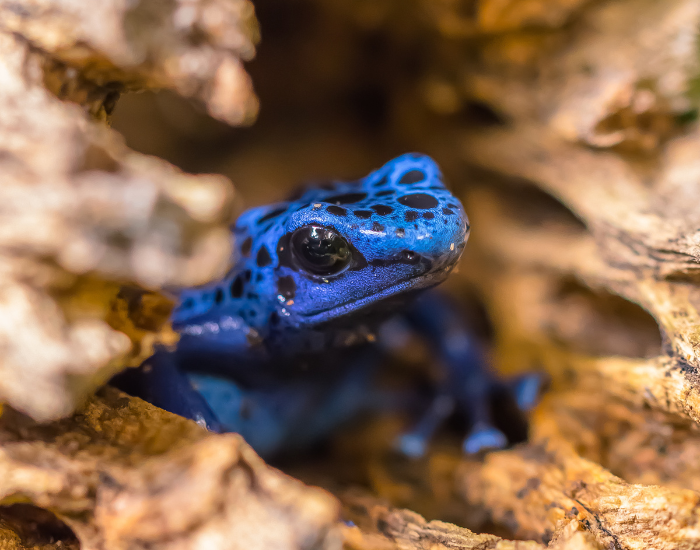
5. They’re Small but Mighty
Despite their reputation, adult frogs measure only about 3–5 cm long. They have suction cup pads on their toe tips that help them grip slippery surfaces and climb vegetation.
Females are often slightly larger than males and have a heart-shaped body profile, while males typically have more prominent toe pads.
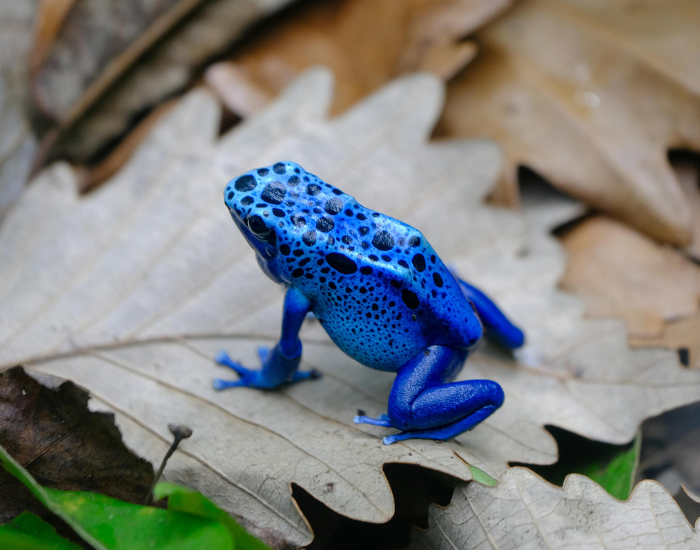
6. They Have Complex Courtship Rituals
Breeding involves elaborate behaviors. Males use quiet calls and body posture to attract mates. During the courtship ritual, a female may be seen gently stroking a male’s back before following him to a nest site.
Sometimes females show aggressive behavior, even fighting aggressively with rivals over the right to mate. This reversal of roles, where females compete, makes their breeding biology especially fascinating.
7. They Lay Eggs on Land, But Tadpoles Grow in Water
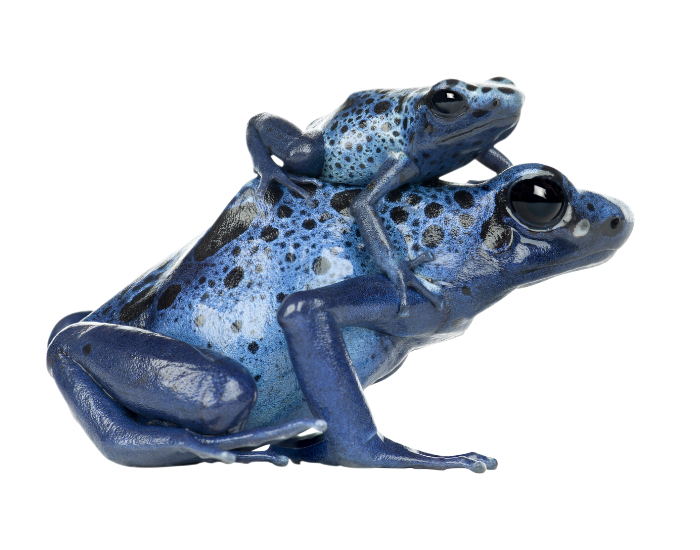
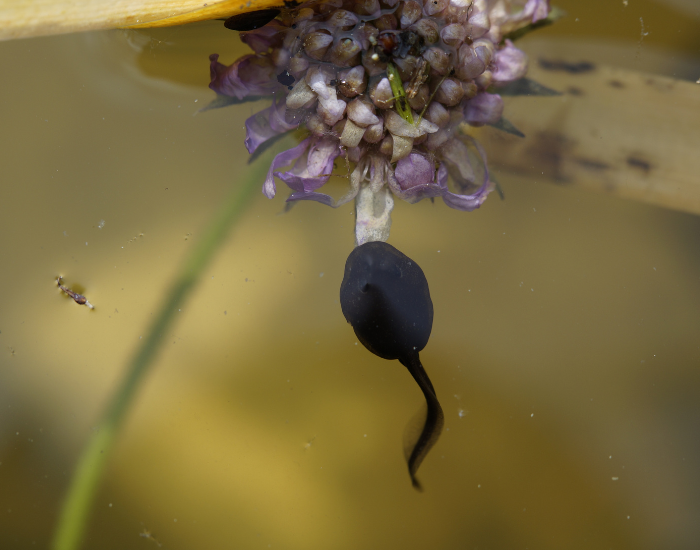
Blue poison dart frogs lay eggs on the forest floor or under leaves. After about two weeks, the eggs hatch, and the male transports each tadpole on his back to a small pool of water, often in a bromeliad plant.
These tiny pools protect tadpoles from would-be predators and desiccation. Parental care continues until the young frogs metamorphose.
8. Females Wrestle for Mates
Unlike most frog species, it’s the females that often fight for access to males. Researchers have observed victorious female begins scenarios where the winning female pushes aside her rival and claims the male’s attention.
This unusual sexual maturity dynamic highlights how diverse reproduction strategies can be among amphibians.
9. Their Lifespan Is Longer Than You Think
These frogs may not be the first organisms in mind when you think about animals with long life spans, but they will surprise you, or t least, it surprised me when I found out! In the wild, data is limited, but captive blue poison dart frog species can live 10 to 15 years with proper care. Their expected lifespan depends heavily on diet, stable humidity, and disease prevention. This makes them a long-term commitment in captivity.
10. They Are Popular in the Pet Trade
Because of their striking sky blue appearance, these frogs are among the most common dart frogs in the pet trade. Only captive-bred species should ever be kept, as wild collection threatens fragile populations.
They require enclosures that mimic the forest floor, with live plants, leaf litter, and pools. A pair or trio typically needs at least a 45–60 cm enclosure with space to establish territories.
11. They Face Real Conservation Threats
Though classified as Least Concern, Dendrobates tinctorius azureus is highly localized and vulnerable. Habitat destruction, disease like chytrid fungus, and unsustainable collection are key threats.
Conservationists emphasize protecting forest islands and limiting wild capture to safeguard natural populations.
12. Blue Frogs Are Ambassadors for Amphibians
Blue poison dart frogs symbolize both the wonder and fragility of amphibians. They remind us that dazzling colors come with ecological costs and evolutionary trade-offs. They also serve as ambassadors for global amphibian conservation, drawing attention to the crises facing frogs worldwide.

FAQs About Blue Frogs
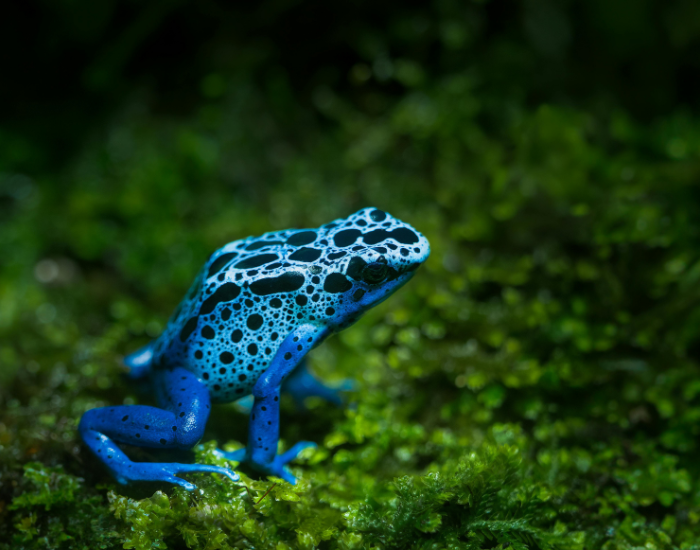
The blue poison dart frog (Dendrobates tinctorius azureus), known for its black spots on an azure blue color background.
They are poisonous, not venomous. They secrete alkaloid poisons from their skin, dangerous to predators but not injected like venom.
Less toxic than the golden poison frog, but still able to deter or kill small predators in the wild.
Not advised. Even if captive frogs lack toxins, their sensitive ventral surface absorbs oils and pathogens from human skin.
The golden poison frog (Phyllobates terribilis), bright yellow rather than blue.
In South America, specifically the Sipaliwini savannah in Suriname and northern Brazil.
In the wild: ants, mites, small insects. In captivity: a diet consists of fruit flies, springtails, and isopods.
The azureus morph is naturally rare due to its tiny range, though common in captivity.
In nature: certain resistant predators, disease, and habitat destruction. In captivity: poor care, dehydration, or infection.
At least 10 gallons per frog; a pair or trio needs a forest floor enclosure of 45–60 cm.
Yes, breeding often coincides with the rainy season, when water availability supports tadpoles.
Their expected lifespan in captivity is up to 15 years.
Let’s Take care of Them
Blue frogs, especially the blue poison dart frog, embody the brilliance and fragility of amphibians. From their dazzling sky blue skin to their survival strategies on the forest floor of South America, these frogs tell a story of evolution, adaptation, and conservation challenges. Whether admired in the wild or responsibly kept in captivity, blue frogs remind us why amphibian protection is urgent and why even the smallest creatures deserve attention.