The swallow was the first bird I ever learned to name on sight. A friend dragged me birding at university, out in the green forested edges of campus, and pointed to one carving over a pond. It banked, dropped, and skimmed the water like it was stitching the air. I was hooked on the spot. Since then I’ve watched swallows in Turkey, over rice fields in Bali, across Mexico, and all through Australia, and they still stop me mid-sentence.
Most people know these small birds as “those fast ones near the barn.” They deserve better. Here are 12 things about the swallow bird that I’ve come to love. If you want to name the species you see, pair this with my guide to 15 swallow species.
1. The barn swallow is one of the most widespread birds alive
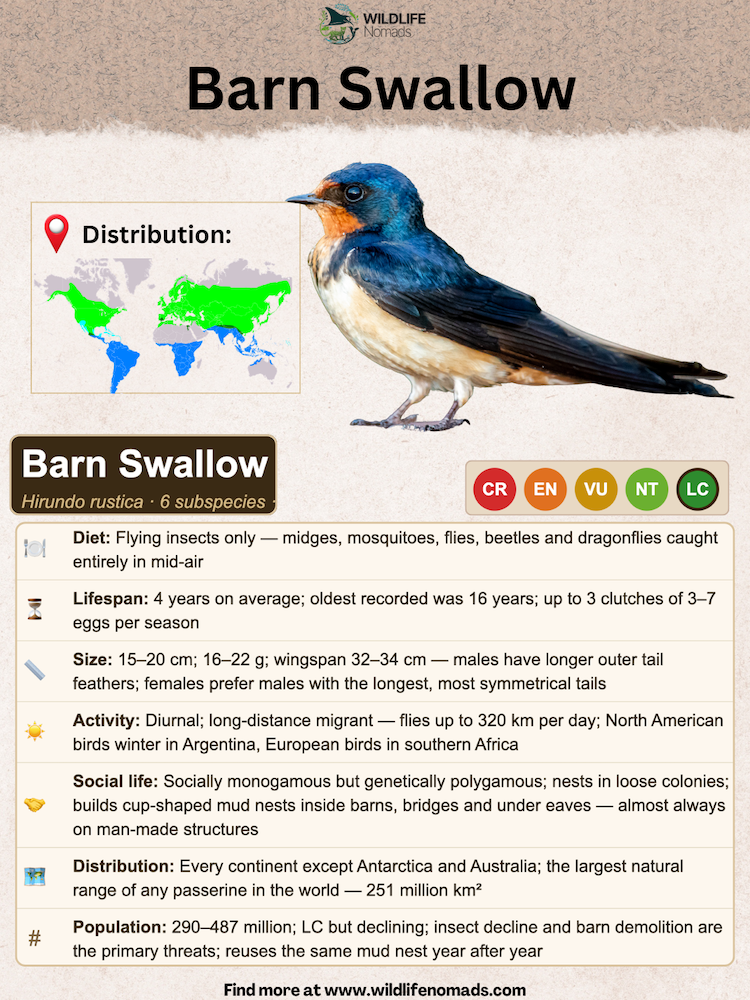
The barn swallow, Hirundo rustica, breeds across the entire Northern Hemisphere and winters as far south as Australia. Few land birds are this widespread. When I saw one hawking insects over Turkish farmland, then met its cousins in Bali, I was watching essentially the same species spanning the planet.
That success comes from flexibility. The barn swallow will nest in barns, under bridges, on porches, almost anywhere humans build. Its range makes it one of the most familiar of all the world’s swallows.
2. Swallows are an ancient family with a 22-million-year pedigree
Every swallow belongs to the family Hirundinidae, first introduced as a group in 1815. The family holds roughly 92 species across 21 genera, found on every continent except Antarctica. These are not new birds. Genetic work suggests they diverged from their closest relatives around 22 million years ago.
The fossil record backs this up. The oldest known swallow, Miochelidon eschata, dates to the Early Miocene of Siberia. Across all that time, swallows kept the same streamlined shape, proof that a good design rarely needs fixing.

3. A male’s deeply forked tail is really a dating profile
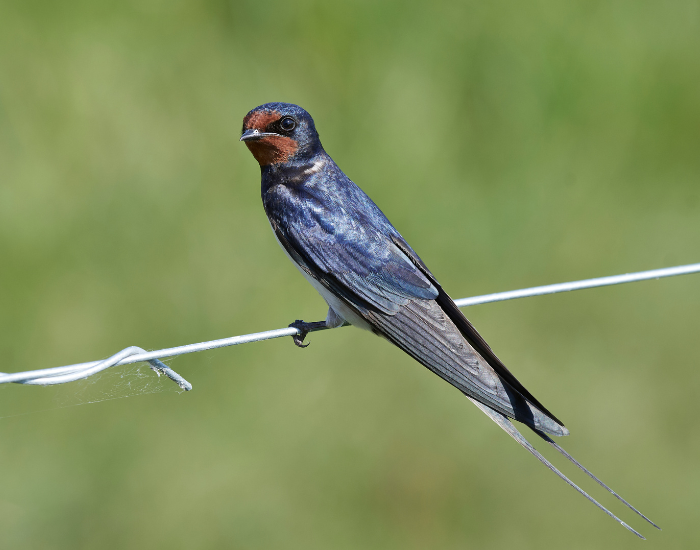
The barn swallow’s deeply forked tail is not just for show, well, actually, it is. Male swallows grow longer tail streamers than females, and research shows females prefer the longest ones. A long, symmetrical forked tail signals a healthy mate.
That rusty throat plays a part too. Darker, richer throat color often marks a stronger male. So when you watch males chasing over a field each spring, you’re watching a competition to look good and win a partner.
4. They eat, drink, and bathe without ever landing
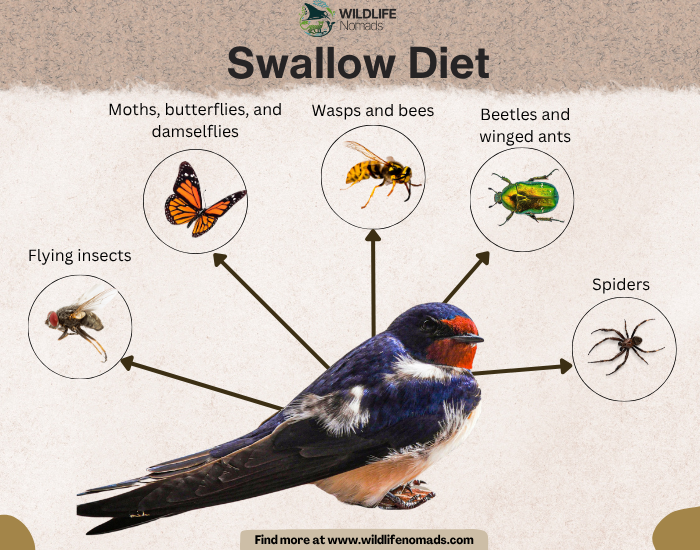
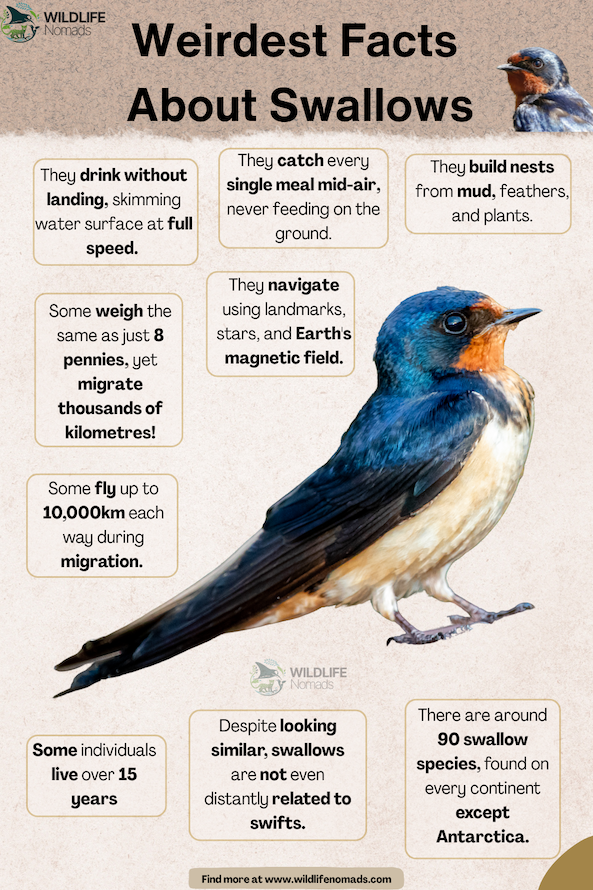
Swallows are aerial insect eaters, and nearly everything they do happens on the wing. They catch flying insects mid-air (flies, moths, midges, dragonflies, swarming bees and bumblebees) snapping up insect prey caught in a single graceful pass. One feeding session can bring in 10 to 100 insects.
Water works the same way. A swallow will skim low over lakes and ponds, dipping its bill to drink or splashing to bathe, all in flight. This is why swallows gather over water: not to swim, but to hunt the food rising above it.
5. Swallows are master masons who build with mud and spit
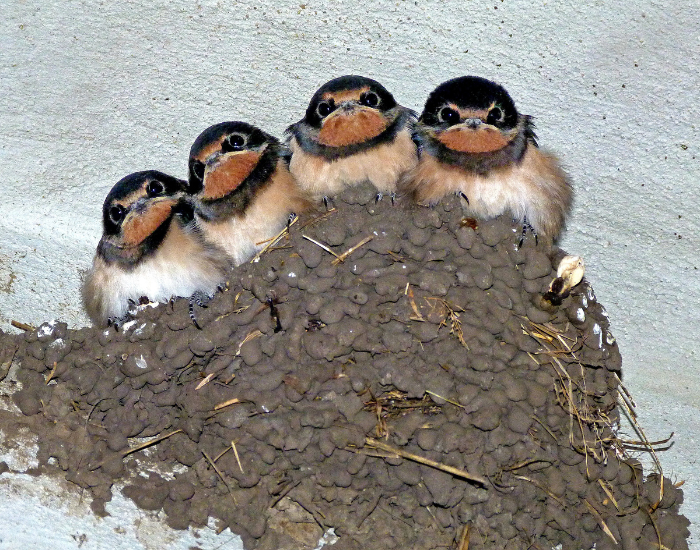
Many swallows build with mud, and their nest construction is genuine engineering. A pair gathers wet mud one beakful at a time, mixing in feathers and grass to bind the cup. They place these mud nests close under an overhang (an eave, a cliff, a barn beam) to shelter the young from rain and predators.
The work takes patience. Full nest construction can span days of steady trips. Some nesting swallows repair an old nest from a previous year; others build fresh nearby. Either way, the mud cup is a small architectural marvel.
6. Not every swallow uses mud… some are tunnel diggers
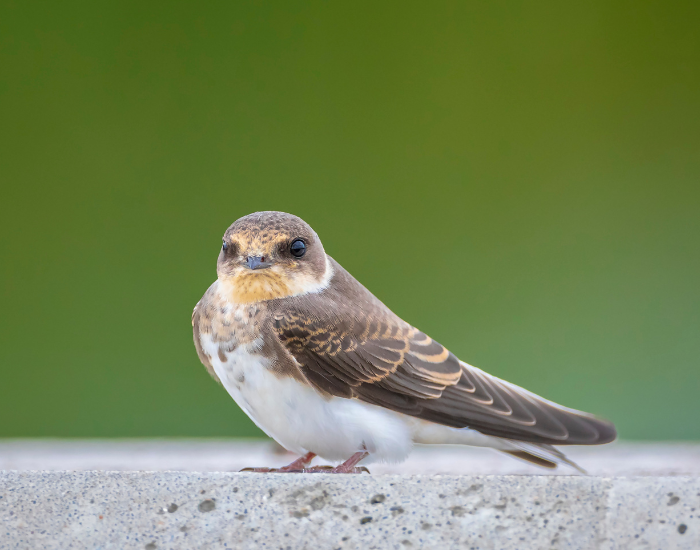
Here’s where people get surprised. The bank swallow, known as the sand martin across Europe and Asia, skips mud entirely. Instead, it digs burrows into vertical sandy banks beside rivers and lakes, nesting in colonies of hundreds of holes.
The northern rough-winged swallow does something similar, a plainer brown bird that nests in burrows, drainpipes, and crevices along the ground. Sand martins and their relatives prove that “swallow nest” doesn’t always mean mud on a wall.
7. There are far more swallows than the one on the barn
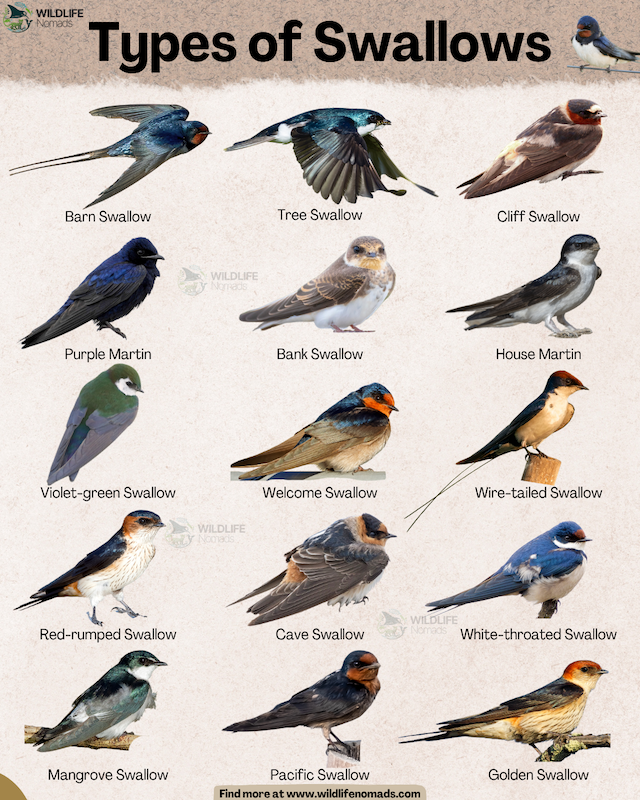
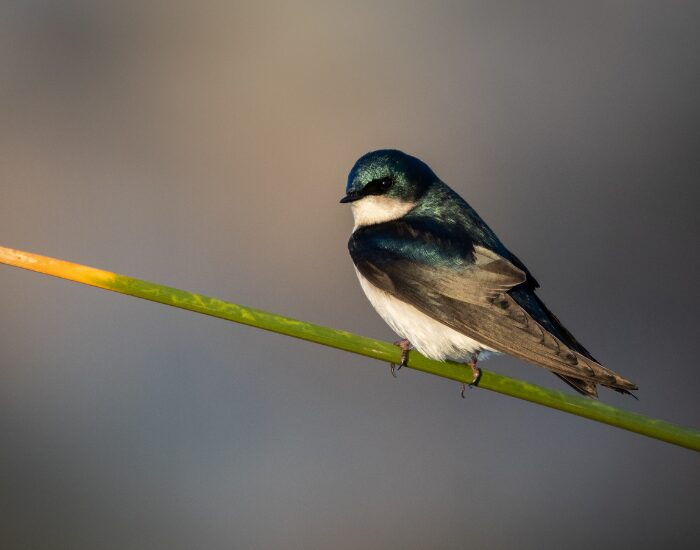
Beyond the barn swallow lies a whole cast of characters. The cliff swallow builds gourd-shaped mud nests in dense colonies, birds living side by side in close proximity. The cave swallow, closely related, moved into highway culverts and expanded its range. The tree swallow nests in tree cavities and flashes a dark, metallic blue-green back.
The variety runs deeper still. The purple martin is North America’s largest swallow, while house martins plaster white-rumped nests under European eaves. In Africa you’ll find the dark saw-wings, named for tiny serrations on the wing. No other group of small birds packs this much variety into one silhouette.
8. Swallows can raise two families in a single summer
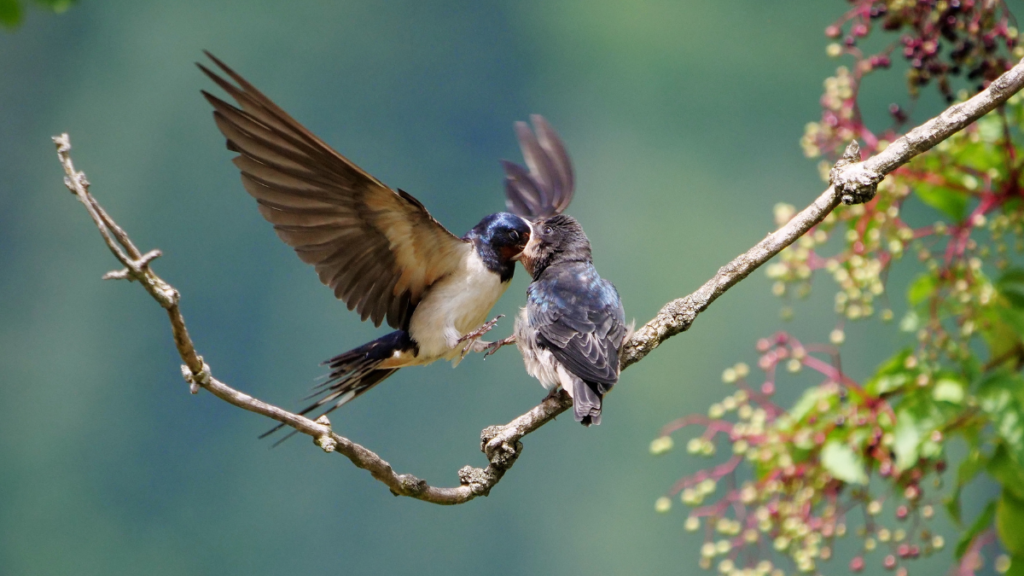
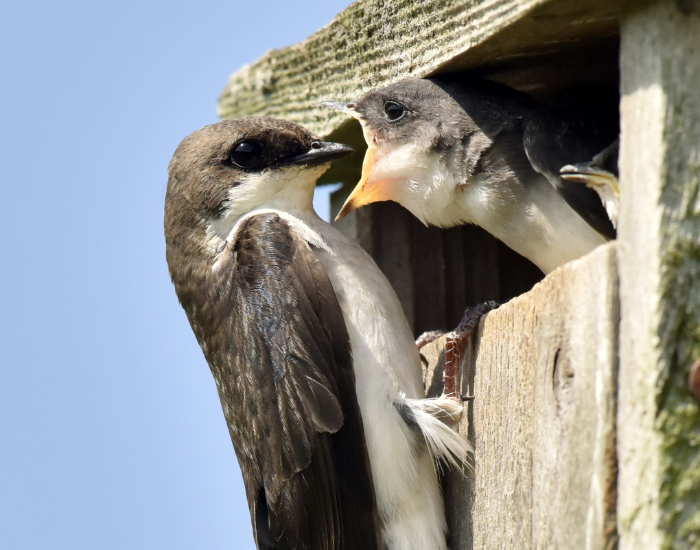
Swallows work fast during the breeding season. A typical clutch holds 3 to 5 eggs, and many pairs raise two clutches in one summer. Both parents share the feeding, delivering insects to the nest hundreds of times a day.
The young grow quickly. Chicks fledge after 18 to 24 days, though the parents keep feeding their offspring for several weeks beyond that. Watching a row of young birds beg from a wire is one of the quiet joys of summer fieldwork.
9. Some swallows cross oceans and deserts to reach winter
Most swallows are long-distance migrants, and their journeys astonish me every time. European barn swallows cross the Mediterranean and the Sahara to reach wintering grounds in sub-Saharan Africa. Purple martins funnel down to their wintering grounds in Central America and South America.
How do 20-gram birds find their way? They navigate using the sun, the stars, Earth’s magnetic field, and remembered landmarks. In the UK, people mark spring by the date these birds arrive back at the same barns each year.

10. At dusk, they gather in roosts thousands strong
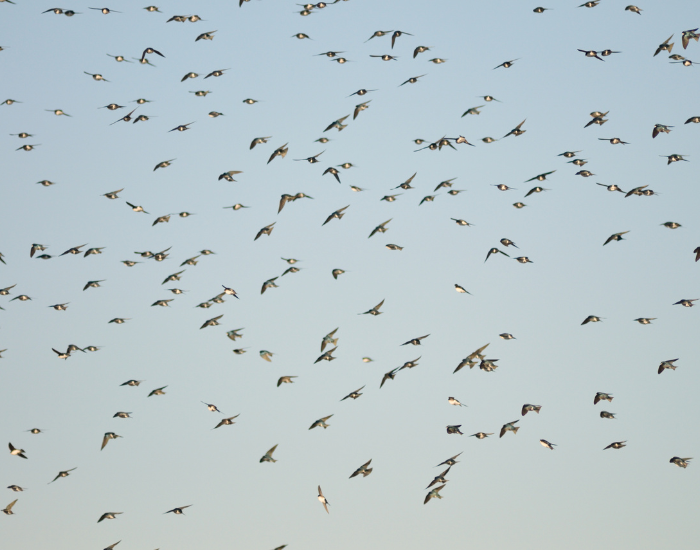
Swallows are intensely social. Outside the breeding season, they migrate and roost in enormous flocks, sometimes with thousands of birds living together in a single reedbed. I’ve stood beneath one of these roosts at dusk as the sky filled with wings, a sight that beats almost anything else in birding.
These gatherings serve a purpose. Roosting together offers safety in numbers against predators and helps young birds learn migration routes. Few other birds put on a show quite like a swallow roost pouring into the reeds.
11. Swifts look like swallows but aren’t even close relatives
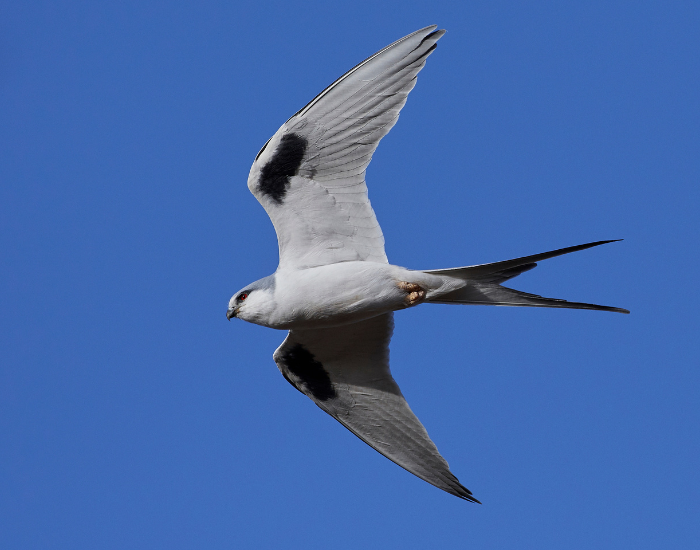
This one trips up nearly everyone. Swifts slice through the air just like swallows and catch the same flying insects, yet the two are not closely related at all. Their resemblance is convergent evolution, two lineages solving the same problem the same way.
The tell is in the perch. Swifts almost never land on wires and have stiff, sickle-shaped wings. Swallows perch happily and fly with looser strokes. And neither should be confused with sparrows, seed-eating birds from a separate family; see my guide to types of sparrows for that contrast, or my wren facts for another lookalike myth.
12. Some of the world’s swallows are quietly disappearing
Not every swallow story is a happy one. The blue swallow of African montane grassland is vulnerable from habitat loss, its range shrinking as humans convert grassland to plantations. The golden swallow was last seen in Jamaica in 1989 and is likely gone from the island.
Saddest of all is the white-eyed river martin, unseen since around 1980 and possibly extinct. Because swallows are aerial insect eaters, their decline often signals trouble for insects too. In North America, swallows are protected under the Migratory Bird Treaty Act of 1918, a reminder that even widespread, familiar birds need our care.
Frequently asked questions
Yes. Swallows are songbirds in the order Passeriformes, so they do sing — just not melodically. They produce warbling twitters, bubbling chatter, and sharp calls rather than rich musical phrases. Both males and females vocalize to stay in contact and warn of predators.
No. Swallows are aerial insectivores, not waterfowl. They gather over lakes and rivers because those spots produce clouds of flying insects, and they drink by skimming the surface in flight. Some nest near water, but they neither swim nor wade.
No. Swallows belong to the family Hirundinidae, while sparrows sit in Passeridae, different families entirely. Swallows have long, pointed wings and hunt insects on the wing. Sparrows have short wings and feed on seeds, mostly on the ground.
Their command of the air. Swallows catch nearly all their food in flight, drink without landing, and migrate thousands of miles guided by the sun, stars, and magnetic field. They’re also skilled mud-nest builders and valuable natural insect controllers.
Pure coincidence of language. The bird “swallow” and the throat action “swallow” are unrelated words spelled the same way. The throat sense refers to deglutition, the muscular process of moving food to the stomach. The bird’s name comes from a separate old Germanic root.
Go look up!
A swallow is a small aerial songbird so committed to flight that it eats, drinks, nests, and migrates on the wing, and reshaped everything else about itself to do it. Once that clicks, you can’t watch one the same way again.
So step outside at dusk and find one working the sky. Then, when you’re ready to put names to the birds overhead, head to my guide to the 15 swallow species, and tell me in the comments which one you found, and where. For more, explore my roundups of owls, birds of prey, and crows.
Swallows: Fact or Fiction? 🐦
Twelve statements about the sky’s most graceful acrobat — six true, six myths. Can you tell them apart?
Fact or Fiction?
References:
Dor, R., Safran, R. J., Sheldon, F. H., Winkler, D. W., & Lovette, I. J. (2010). Phylogeny of the genus Hirundo and the barn swallow subspecies complex. Molecular Phylogenetics and Evolution, 56(1), 409–418. https://doi.org/10.1016/j.ympev.2010.02.008
Liechti, F., Scandolara, C., Rubolini, D., Ambrosini, R., Korner-Nievergelt, F., Hahn, S., Lardelli, R., Romano, M., Caprioli, M., Romano, A., Sicurella, B., & Saino, N. (2015). Timing of migration and residence areas during the non-breeding period of barn swallows Hirundo rustica in relation to sex and population. Journal of Avian Biology, 46(6), 561–569. https://doi.org/10.1111/jav.00485
Møller, A. P. (1988). Female choice selects for male sexual tail ornaments in the monogamous swallow. Nature, 332, 640–642. https://doi.org/10.1038/332640a0
Zelenkov, N. V. (2024). The oldest swallow (Aves: Passeriformes: Hirundinidae) from the upper Lower Miocene of southeastern Siberia. Doklady Biological Sciences, 517, 200–204. https://doi.org/10.1134/S0012496624600258
BirdLife International. (2024). Species factsheet: White-eyed River Martin (Eurochelidon sirintarae). https://datazone.birdlife.org/species/factsheet/white-eyed-river-martin-eurochelidon-sirintarae