

I remember being out on a field trip a few years back, catching up with a biologist friend who had just returned from a stint in Costa Rica. He had actually gone there to study bats, but half of our conversation ended up being about a chance encounter he had with a troop of capuchin monkeys. He described the way they didn’t just swing by; they stopped and evaluated him with a piercing, almost human-like curiosity.
That’s the thing about monkeys capuchin, they aren’t just “wild animals.” They are high-functioning, problem-solving, and deeply social world primates that constantly challenge our understanding of animal intelligence. As a biologist myself, I’ve always been fascinated by how these New World monkeys have managed to “colonize” such a wide variety of habitats, from dry deciduous forests to the humid Atlantic forest of Brazil.
In my years of research and managing Wildlife Nomads, I’ve realized that most people think there’s just one “type” of capuchin. But the term covers a massive range of diversity. In this guide, we’re going to dive deep into the different types of capuchin monkeys, their scientific name, and the behaviors that make them the “Einsteins of the primate world.”

What Exactly is a Capuchin Monkey?
Before we list the species, let’s get the taxonomy straight. To begin with, capuchins belong to the subfamily Cebinae. For a long time, they were all lumped into the genus Cebus. However, recent genetic research has split them into two distinct groups:
- Gracile Capuchins (Genus Cebus): The slender, “classic” capuchins found mostly in Central America and the northern parts of South America.
- Tufted Capuchins (Genus Sapajus): Also known as robust capuchins, these guys have characteristic “tufts” of hair on their heads and are famous for their tool-using social behavior.
These New World primates are famous for their prehensile tails, which act like a fifth limb, and their opposable thumbs, which allow them to manipulate objects with a precision that rivals human children.
While they share a remarkable level of intelligence with chimpanzees and macaques, capuchins are unique in that they achieved this cognitive complexity independently, and at a much smaller body size.

The 15 Types of Capuchin Monkeys You Should Know
1. Panamanian White-faced Capuchin (Cebus imitator)
This is the “poster child” of capuchin monkeys. Found throughout Costa Rica and Panama’ with ‘found from Honduras through Nicaragua, Costa Rica, and western Panama. They are incredibly bold and have been documented using medicinal plants to rub on their fur, a clear sign of social learning.
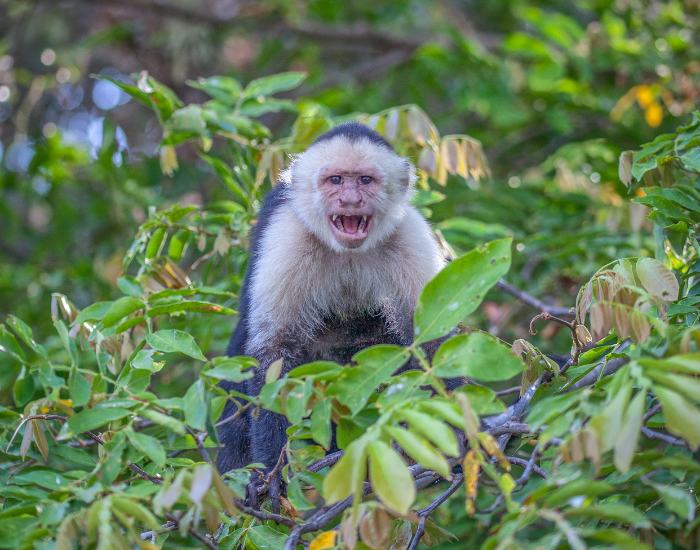
2. Colombian White-faced Capuchin(Cebus capucinus)
Also called White-throated, it is often confused with its Panamanian cousin (I mean look at them, they look alike very much), this species is native to Colombia and Ecuador. Their scientific name for capuchin monkey often defaults to this species in older literature. They live in large groups and are vital seed dispersers for the tropical rainforests they inhabit.

3. Tufted Capuchin (Sapajus apella)
Also known as the Brown Capuchin, these are the heavyweights of the genus. I’ve seen these males crack nuts using heavy stones, a behavior that requires years of practice and social behavior observation from young capuchins. They have a massive exact range across the Amazon basin.

4. White-fronted Capuchin (Cebus albifrons)
These white fronted capuchins are lighter in build and much more agile. They are primarily found in the upper Amazon and are known for being less aggressive than their tufted relatives. Their diet often includes a large portion of fruit, but they won’t pass up small vertebrates if the opportunity arises.
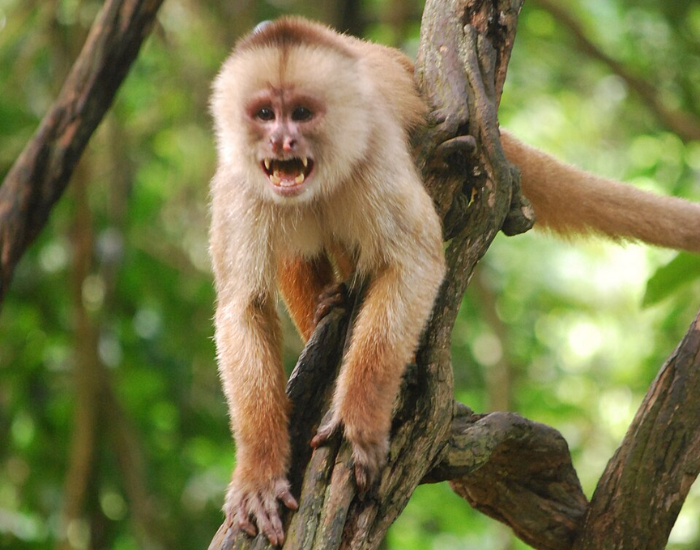
5. Weeper Capuchin (Cebus olivaceus)
The weeper capuchins get their name from the dark “peak” on their forehead that makes them look perpetually sad. They are common in French Guiana, Venezuela, and Brazil. In the field, you can identify them by their various calls, which they use to keep the group members coordinated in dense foliage.
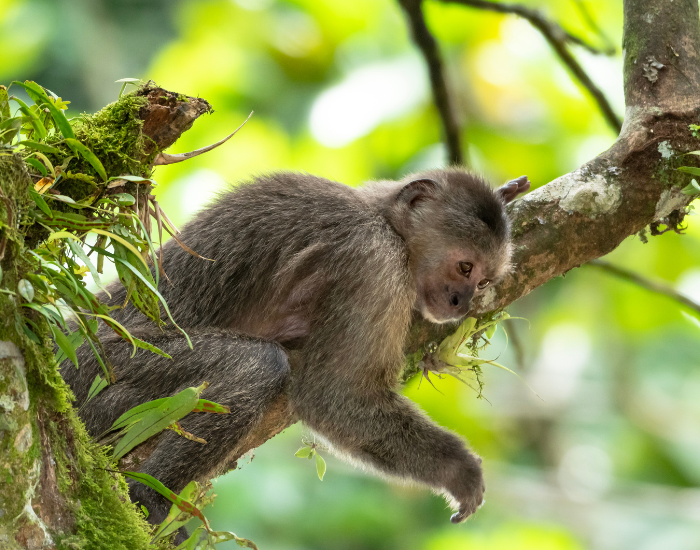
6. Blond Capuchin (Sapajus flavius)
Once thought to be extinct, this stunning golden-colored monkey was rediscovered in the Atlantic forest of Brazil in 2006. They are currently endangered due to habitat loss. Their survival is a major focus for world monkeys conservation groups. currently it is estimated that less than 200 individuals remain.
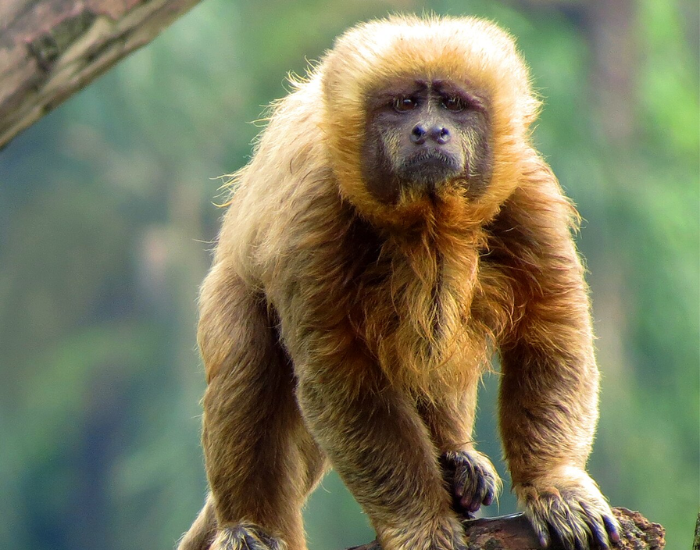
7. Kaapori Capuchin (Cebus kaapori)
This is one of the rarest species in the world. Found only in a small patch of Brazil, they are Critically Endangered. Unlike other types of capuchins, they are very shy and rarely seen near humans.
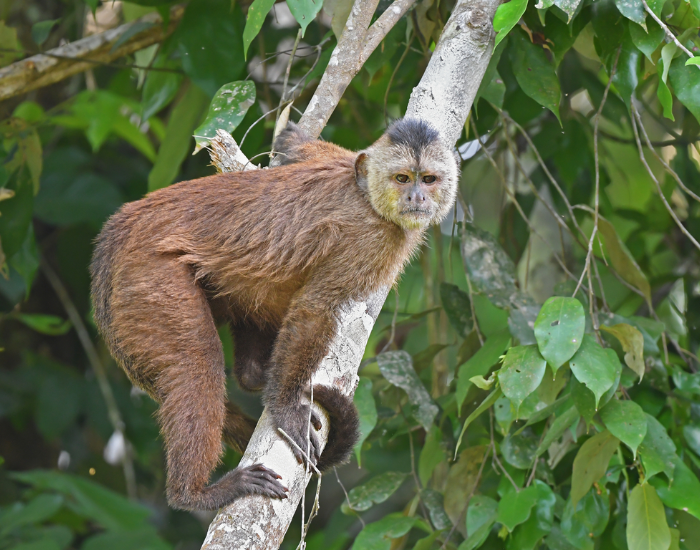
8. Black-striped Capuchin (Sapajus libidinosus)
If you want to see a “Stone Age” primate, this is it. These monkeys in Northern Argentina, Bolivia, Paraguay, and Brazil are famous for using anvils and “hammer stones” to crack open palm nuts. It’s a level of social learning that is truly mind-blowing to witness in person.
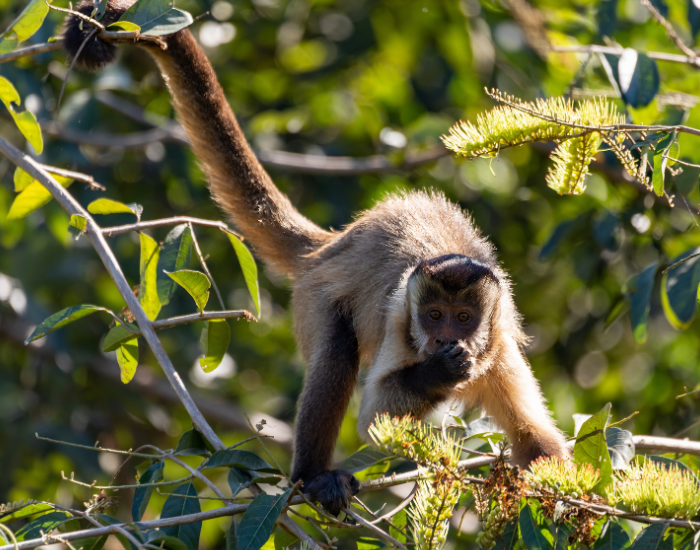
9. Golden-bellied Capuchin (Sapajus xanthosternos)
Another resident of the Brazilian Atlantic forest, these monkeys have a striking yellow-to-orange chest. Because of the illegal pet trade and habitat destruction, their populations are fragmented, making them a high priority for research institutions.
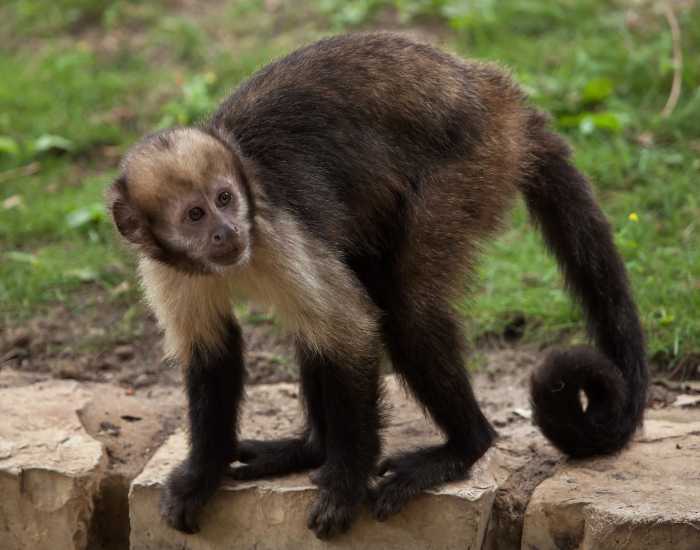
10. Marañón White-fronted Capuchin (Cebus yuracus)
Found in the foothills of the Andes, these capuchins are adapted to slightly higher altitudes than their lowland cousins. They are often found in secondary forests, showing they can easily adapt to environments that have been previously disturbed by humans.
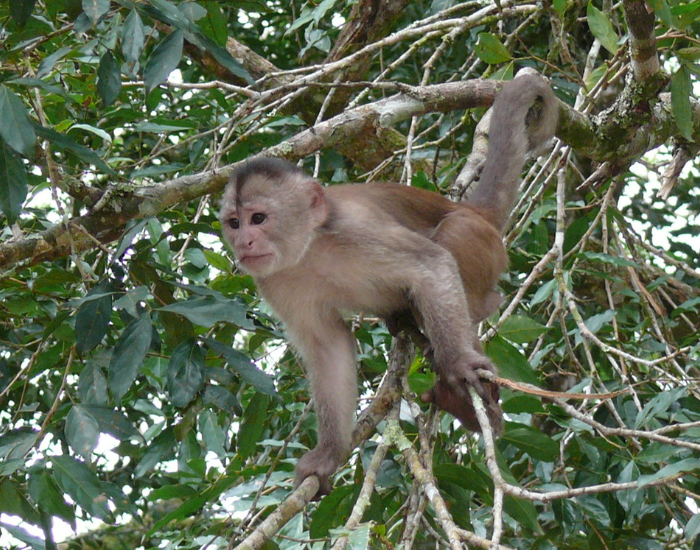
11. Crested Capuchin (Sapajus robustus)
True to their name, these tufted capuchins have a very prominent medial crest. They are endemic to Brazil and are unfortunately threatened by the expansion of agriculture into their habitat.
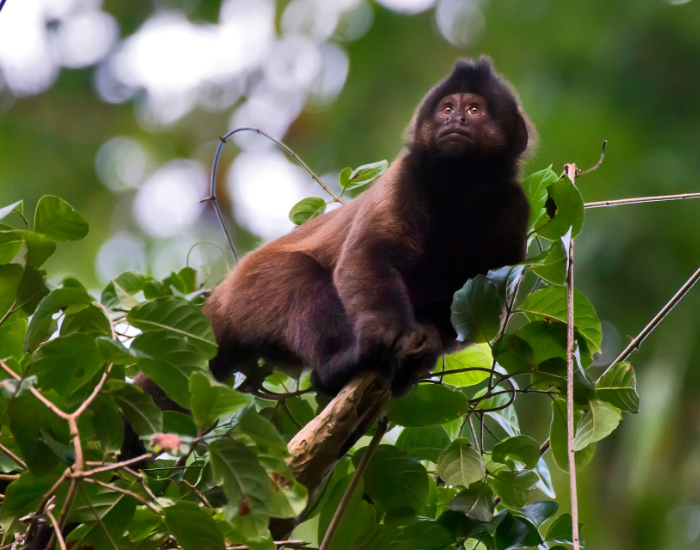
12. Azaras’s Capuchin (Sapajus cay)
Named after the naturalist Félix de Azara, these monkeys are found in the drier regions of South America, including the Pantanal. They are highly social, with a clear hierarchy led by an alpha male and supported by subordinate males.
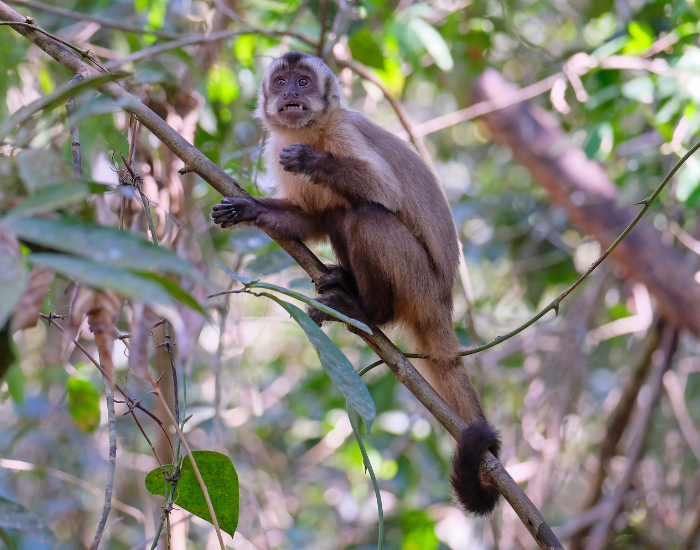
13. Large-headed Capuchin (Sapajus macrocephalus)
As the name suggests, this species has a notably large body size and skull, likely an adaptation for eating tougher fruits and seeds. They are a staple of the western Amazonian ecosystem.
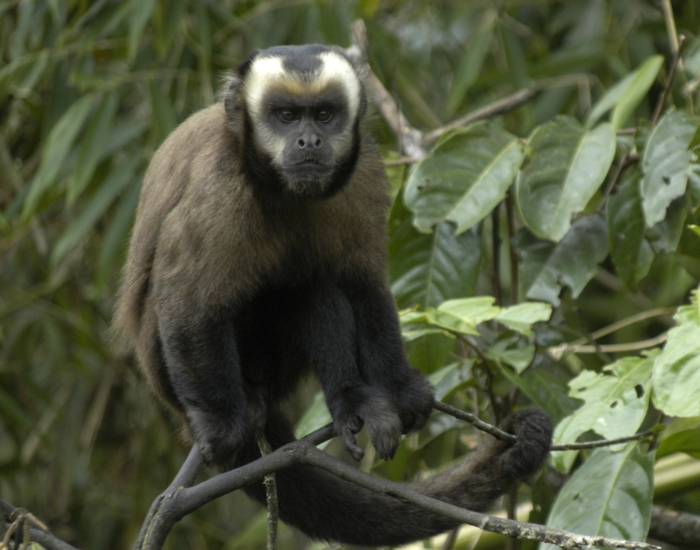
14. Spix’s White-fronted Capuchin (Cebus unicolor)
A more pale-colored species, Spix’s capuchin inhabits the heart of the Amazon. They boast an incredibly varied diet, consuming everything from birds and lizards to insects and even frogs.
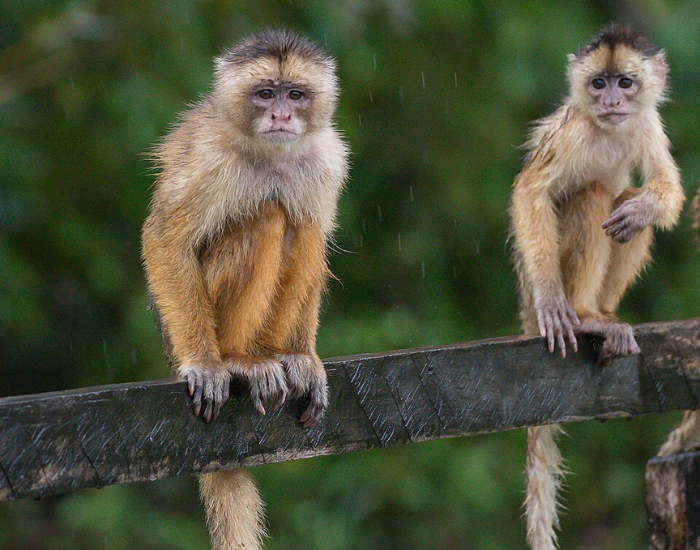
15. Sierra de Perijá White-fronted Capuchin (Cebus leucocephalus)
Found in the mountain ranges between Colombia and Venezuela, these capuchins are specialists in cloud forest environments. Their conservation status is worrying due to the political instability and lack of protected areas in their range.

Survival of the Smartest: Threats to Capuchin Monkeys
While capuchins are known for being able to easily adapt, they are facing unprecedented threats. In my travels, the two biggest issues I see are:
- Habitat Destruction: Whether it’s the Atlantic forest being cleared for cattle or roads fragmenting tropical forests in Costa Rica, these monkeys are losing the “highways” of the trees they need to survive.
- The Pet Trade: Because they look like human children and are so smart, traders frequently snatch them from their mothers and sell them as pets. In captivity, they often develop severe psychological issues because they lack the complex social behavior of a new group.
FAQs about Capuchin Monkeys
They are found throughout Central America and South America, ranging from the Pacific coast of Honduras down to Northern Argentina.
It depends on the type. Gracile capuchins belong to the genus Cebus, while tufted capuchins belong to the genus Sapajus.
Many species, like the Blond Capuchin and the Kaapori Capuchin, are Critically Endangered. Others, like the Panamanian White-faced, are more stable but still face habitat threats.
Yes! They are among the few non-ape primates to use tools in the wild, specifically using stones to crack nuts and sticks to dig for insects.
In the wild, they have a complex social structure. While usually focused on foraging, the alpha male will fiercely defend the group from other monkeys or predators.
Why We Must Protect the “World Primates”
Capuchin monkeys are more than just clever animals; they are a window into the evolution of intelligence. Seeing a mother capuchin teach her infant how to find frogs or crack a nut is a reminder that we aren’t the only ones with a culture of learning.
If you want to help, support organizations like the WWF or the Rainforest Trust that work to protect the places colonized by these incredible primates.
Where to see them in the Wild?
Here is a list of 3 tours where you can see capuchin monkeys in the wild. As a biologist, I only recommend tours that follow strict ethical guidelines to ensure we don’t disturb wildlife. These are the three tours/ partners I trust most based on their conservation records:
This blog is reader-supported. When you buy experiences through links listed on this site, we may earn an affiliate commission.
References
Baker, M. (1996), Fur rubbing: Use of medicinal plants by capuchin monkeys (Cebus capucinus). Am. J. Primatol., 38: 263-270. https://doi.org/10.1002/(SICI)1098-2345(1996)38:3<263::AID-AJP5>3.0.CO;2-X
Fragaszy, D. M., Visalberghi, E., & Fedigan, L. M. (2004). The Complete Capuchin: The Biology of the Genus Cebus. Cambridge University Press.
Lynch Alfaro, J. W., Silva Jr., J. de S., & Rylands, A. B. (2012). How different are robust and gracile capuchin monkeys? An argument for the use of Sapajus and Cebus. American Journal of Primatology, 74(4), 273–286. https://doi.org/10.1002/ajp.21013
Lynch Alfaro, J. W., Boubli, J. P., Olson, L. E., Di Fiore, A., Wilson, B., Gutiérrez-Espeleta, G. A., … & Alfaro, M. E. (2012). Explosive Pleistocene range expansion leads to widespread Amazonian sympatry between robust and gracile capuchin monkeys. Journal of Biogeography, 39(2), 272–288. https://doi.org/10.1111/j.1365-2699.2011.02609.x
Mangalam, M., Ross, C. F., Izar, P., Visalberghi, E., & Fragaszy, D. M. (2022). How capuchin monkeys use their semi-prehensile tails. Current Science, 122(2), 195–200. https://doi.org/10.18520/cs/v122/i2/195-200
Valença-Montenegro, M. M., Bezerra, B. M., Martins, A. B., Jerusalinsky, L., Fialho, M. S., & Lynch Alfaro, J. W. (2021). Sapajus flavius (amended version of 2020 assessment). The IUCN Red List of Threatened Species 2021: e.T136253A192592928. https://dx.doi.org/10.2305/IUCN.UK.2021-1.RLTS.T136253A192592928.en







_3.jpg)

