There are 289 animals that start with S in English, from the Saanen goat to the shih tzu, the sheep to the sperm whale. That is more animals than most people could name in an hour. I write these articles on animals that start with specific letters as part of a longer series of articles, and the letter S has proven one of the hardest to keep short. Below are 12 animals that start with the letter S, grouped by class — mammals, birds, reptiles and amphibians, and sea animals — because that grouping reveals patterns a flat list of animal names never would.

Mammals That Start with the Letter S
1. Snow Leopard
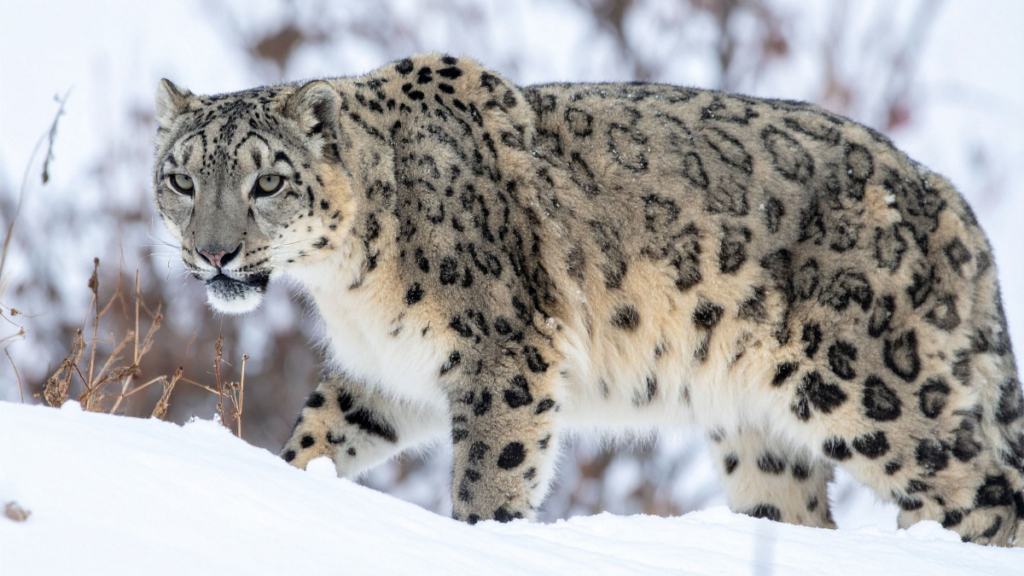
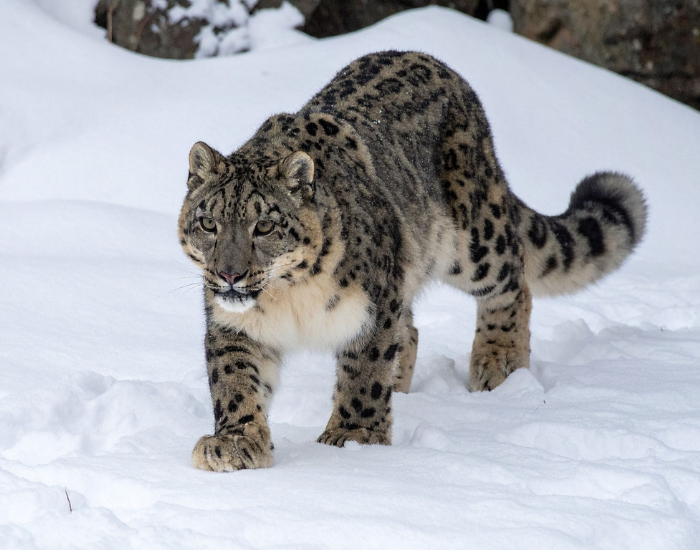
The snow leopard is one of the animals most people will never see in the wild, and that is entirely by design. Known as the “ghost of the mountains,” this big cat ranges across Central Asia from the Himalayas to the Altai of Mongolia. Their wide paws act like snowshoes, their long tails double as scarves, and their thick fur traps heat at altitude.
The IUCN classifies the snow leopard as Vulnerable, with an estimated 4,000 individuals remaining in nature. It is a clear example of how form and environment shape one another, arguably the most atmospheric of all the mammals starting with the letter S.
2. Sloth
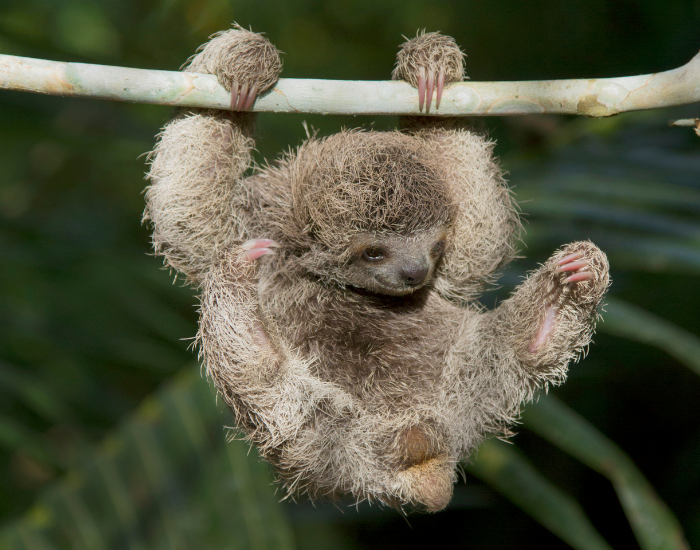
The sloth is arguably the most iconic. It eats leaves with such low nutritional content that the only viable strategy is to burn almost no energy at all. Their metabolism runs at 40–74% of predicted levels for a mammal their size. The Wildlife nomads team once timed a sloth crossing a jungle trail in Costa Rica. Eleven minutes. Four meters. Sloths are herbivores hunted by harpy eagles and ocelots, but their algae-covered fur makes them genuinely hard to spot in the canopy.
3. Serval
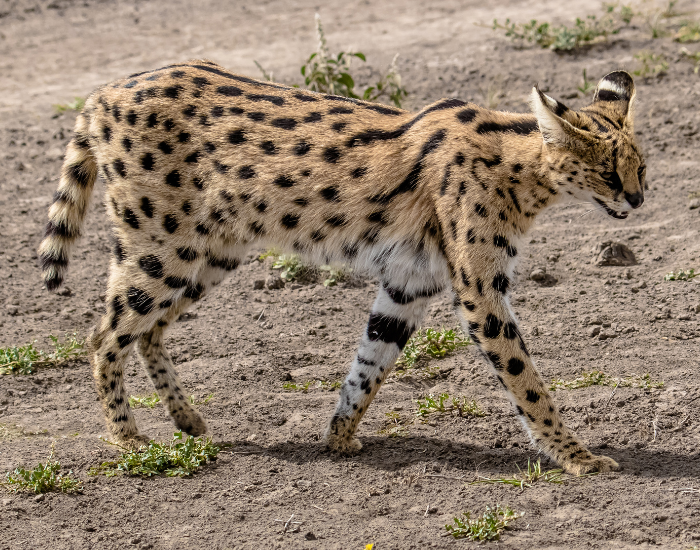
The serval is a medium-sized wild cat, one of the animals that most people mistake for a a wild cat like a cheetah. Built for precision hunting in tall African grassland, it can jump over three feet vertically and more than twelve feet horizontally. Servals prey on rodents, frogs, birds, and insects, guided roughly 50% of the time by hearing rather than sight. Hear a serval hunt and you understand immediately how ear anatomy defines a strategy, a compelling example of nature at work.
4. Skunk
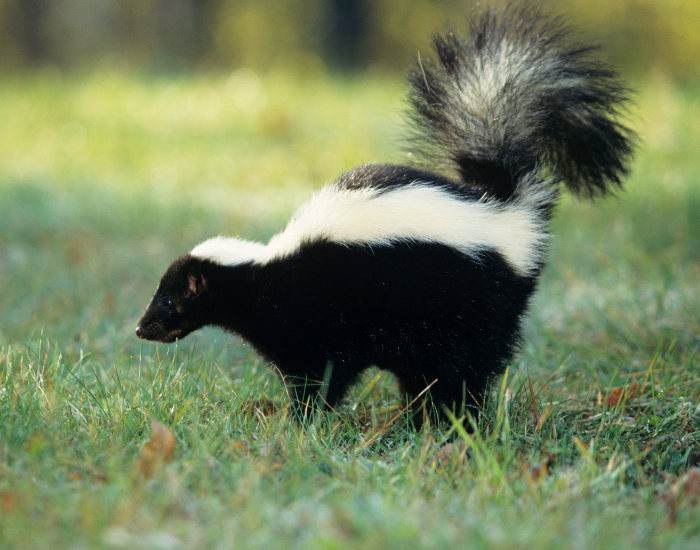
Skunks are nocturnal mammals native to the Americas, instantly recognizable by black-and-white fur that functions as a warning to other animals rather than camouflage. The chemical defense skunks deploy is a sulfur-containing thiol that carries ten feet with accuracy and clings to surfaces for days.
Skunks are reluctant to spray, reserves take two weeks to replenish, so they stomp, raise their tail, and perform a handstand first. The skunk is among the animals starting with the letter S where one anatomical feature defines every interaction with nature.
5. Squirrel
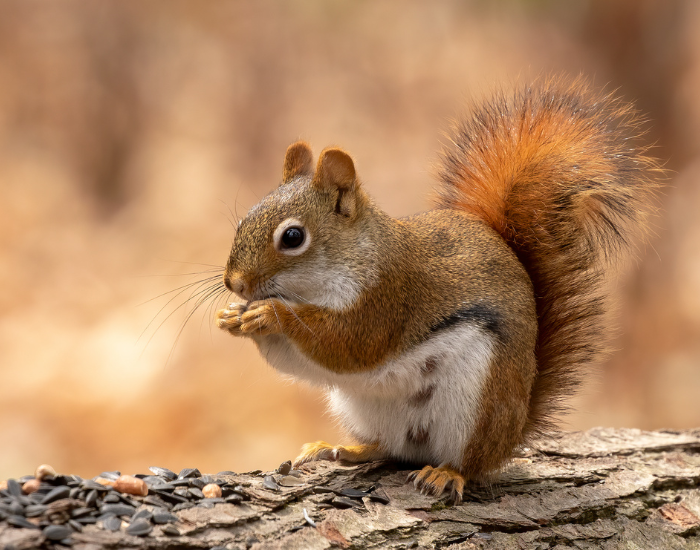
Squirrels are among the most widespread animals beginning with the letter S, found on every continent except Australia and Antarctica. Over 200 types exist, from the tiny African pygmy squirrel to the Malabar giant squirrel at over a meter long. What surprises me most is their spatial memory and strategic deception.
A single gray squirrel caches thousands of items and relocates most of them months later. More striking: they create fake caches when other squirrels watch. Squirrels are also hunted by hawks, foxes, and cats, which likely drove that vigilance to evolve.
Birds That Start with the Letter S
6. Sparrow
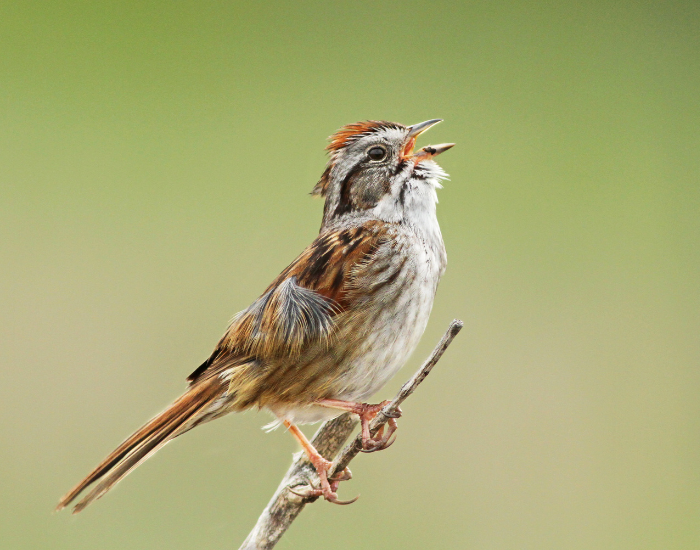
Among birds that start with the letter S, the sparrow is the easiest to overlook and, looked at carefully, one of the most interesting animals on this list. The house sparrow, Passer domesticus, has followed human civilization to every inhabited continent, establishing itself in cities from Bogotá to Bangkok.
No other bird has spread so effectively alongside human expansion. I’ve watched sparrows in a dozen countries. What is consistent is their social intelligence, tight groups, alarm calls with specific meanings, and cultural variation in song between populations only a few hundred kilometers apart.
7. Stork
Storks are tall wading birds known for building massive nests on chimneys, clock towers, and telephone poles. Storks communicate through bill-clattering rather than calls. The white stork migrates from Europe to sub-Saharan Africa each year, covering 20,000 kilometers on thermals. Among birds starting with the letter S, the stork pairs quiet elegance with extraordinary endurance.

8. Swan
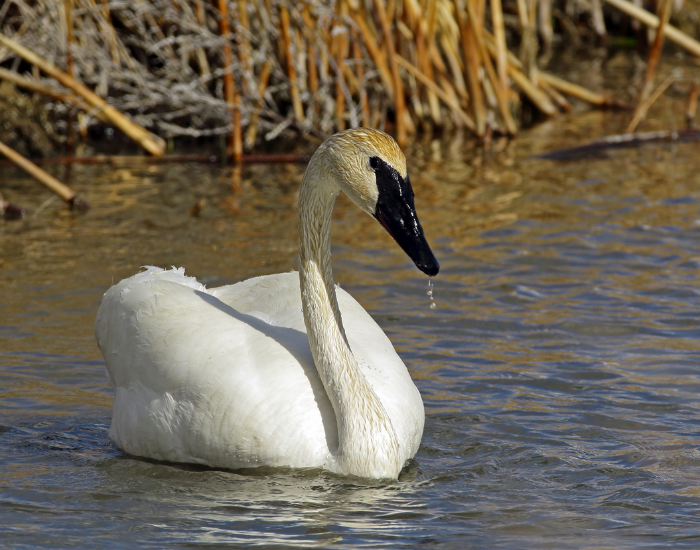
Swans are among the largest waterfowls, and among the most visually striking. The mute swan, the whooper, the trumpeter — each carries a distinct silhouette and range.
Swans mate for life, and you can hear genuine behavioral changes — reduced feeding, prolonged isolation — when a partner dies. Young swans are hunted by foxes, raptors, and pike, but adults have very few natural threats. The swan shows that among animals starting with the letter S, peaceful appearances can be deeply deceptive.
Reptiles and Amphibians That Start with the Letter S
9. Snake
The snake carries more cultural weight than almost any other. Over 3,700 types exist — from Burmese pythons in the Everglades to black mambas in East African savanna. Remove snakes from an ecosystem and rodent populations spike, cascading through plant communities and disease rates.
Snakes are hunted by raptors, mongooses, and larger reptiles, making them simultaneously hunter and prey. Most snake types produce dozens of offspring per year, which is why snake populations hunted heavily can still recover.

10. Salamander
The salamander is one of my favorite animals, most people haven’t heard of most types until they flip a rock in the right forest. Salamanders are lizard-like amphibians with moist skin that facilitates oxygen absorption; many breathe entirely through their skin.
They have been on Earth for over 160 million years, predating the dinosaurs. The Chinese giant salamander, for example, reaches 1.8 meters and is the largest amphibian in existence. The axolotl can regenerate entire limbs and portions of its brain. Salamanders are hunted by snakes, birds, and fish, but their skin toxins make many types unpalatable.

11. Skink
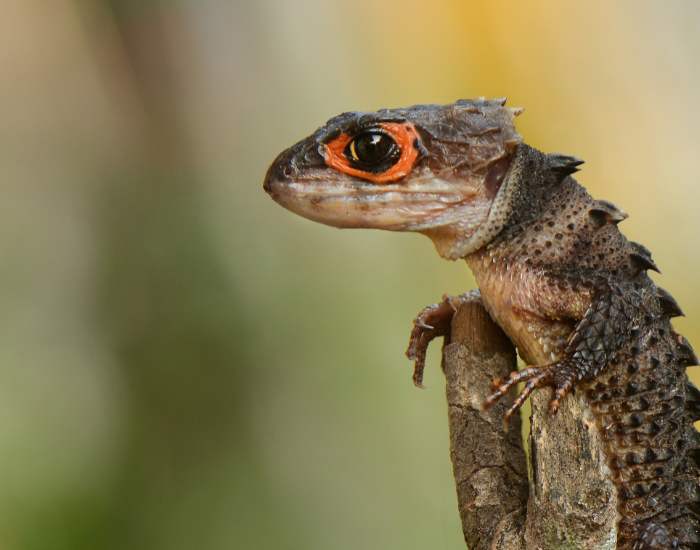
Skinks are the most type-rich group of lizards on Earth. They are low-profile, fast-moving, doing most of their living under leaf litter or beneath rocks. I’ve turned up blue-tongued, five-lined, and fire varieties in Australian suburbs, North American forests, and West African grassland.
Among animals starting with the letter S in the reptile world, they are the ones most likely living under something in your backyard. What makes this group scientifically fascinating is reproductive flexibility — some lay eggs, others give live birth, and a few do both.
Sea Animals That Start with the Letter S
12. Shark
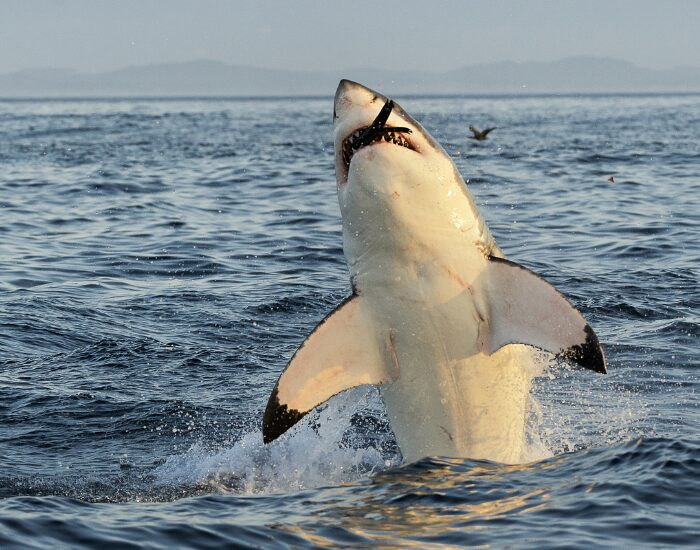
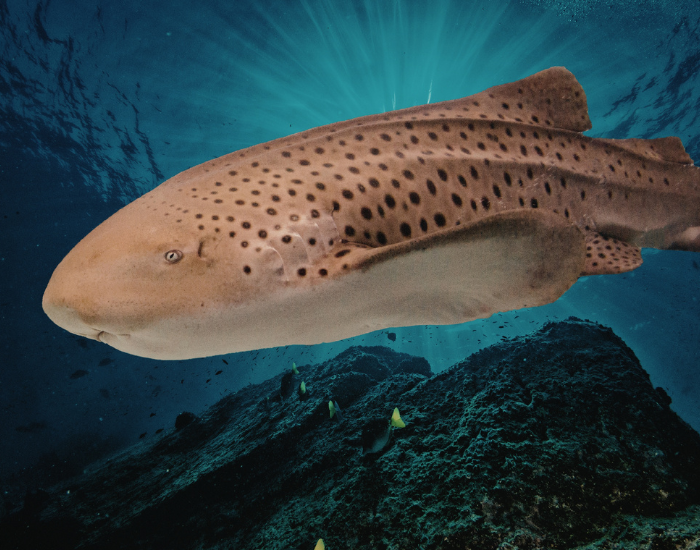
The shark is the apex sea hunter most people picture when they think of animals that start with the letter S in marine environments. Sharks have existed for over 450 million years, they predate trees, the dinosaurs, and most major extinction events in Earth’s history. There are over 500 types of shark, from the dwarf lanternshark that fits in a human hand to the whale shark, the largest fish on Earth. Sharks have cartilage skeletons, continuously replacing teeth, and sensory organs called the ampullae of Lorenzini that detect electromagnetic fields from prey in sand. I’ve dived with nurse sharks in the Caribbean, leopard sharks in Australia, and Hammerhead sharks in Galápagos, every time, a reminder of whose seas these really are.
Other Notable Animals That Start with the Letter S
The list of animals that start with the letter S runs far deeper than 12. Below are the animals and animal names that come up most in these articles and across related English-language resources.
Swordfish:
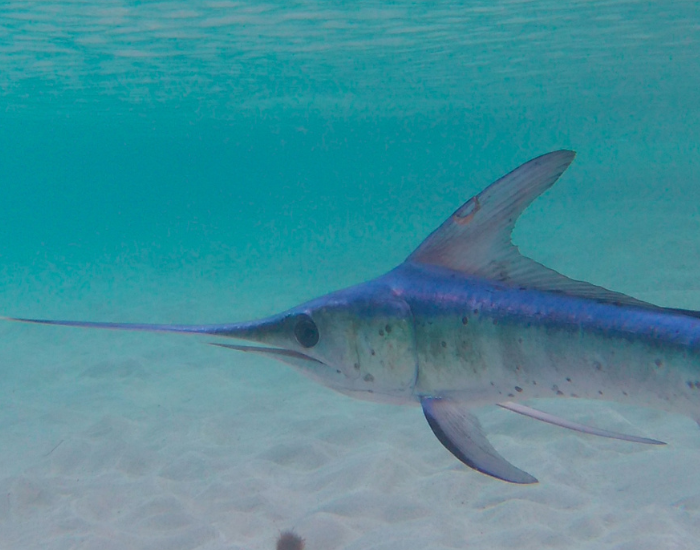
It is one of the fastest sea animals that start with the letter S in the sea, exceeding 30 -40 mph. They also use its elongated bill, a flat, sword-like extension of its head — to slash through schools of fish before collecting stunned prey. The swordfish is a highly migratory animal found in warm and temperate waters worldwide. The swordfish is one of the most commercially important animals in any fishery, and one of the most recognizable animal names in sport fishing globally.
Seal
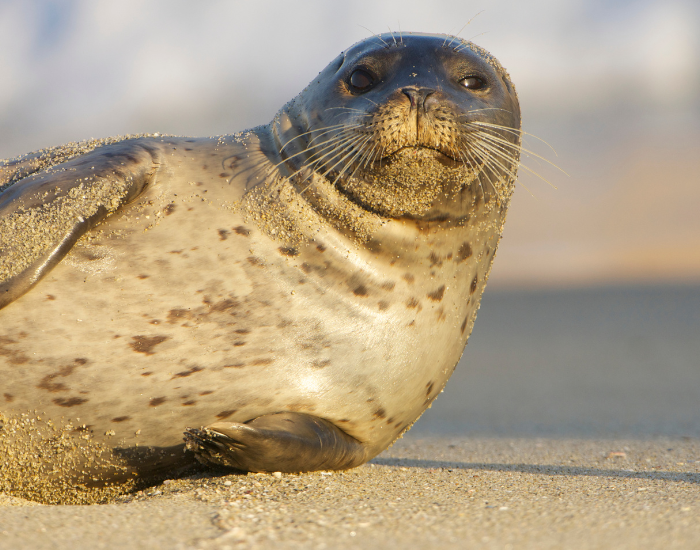
Seals are one of the most important animals in cold and temperate marine environments. Seal types range from the harbor seal to the elephant seal, the largest of all seal types at up to 2,000 kilograms. Seal colonies form some of the most watchable wildlife on any beach. A seal can dive over 1,500 meters on a single breath. The sex of a seal matters in terms of size: male elephant seals are vastly larger than females, making that seal type easy to identify in the field. Read about seal types here and sea lion types here.
Sea slug
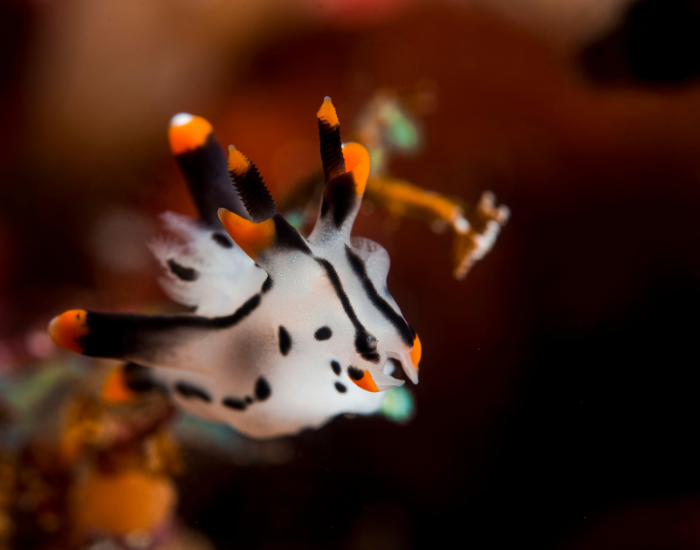
Sea slugs, or properly a nudibranch — borrows chemical defenses from the organisms it eats; the sea slug is one of the most visually spectacular animals starting with the letter S in any reef system. More on sea slugs here.
Among extinct animals from the ice age that start with the letter S, the sabre-toothed cat or previously know as the sabre-toothed tiger (Smilodon) is the most recognized. The sabre-toothed tiger’s canines reached 28 centimeters. A common error is grouping the sabre-toothed cat with modern big cats, it belonged to a separate subfamily. Another error is assuming those canines were for display; evidence shows the sabre-toothed cat used them to deliver a precise kill bite to large prey.
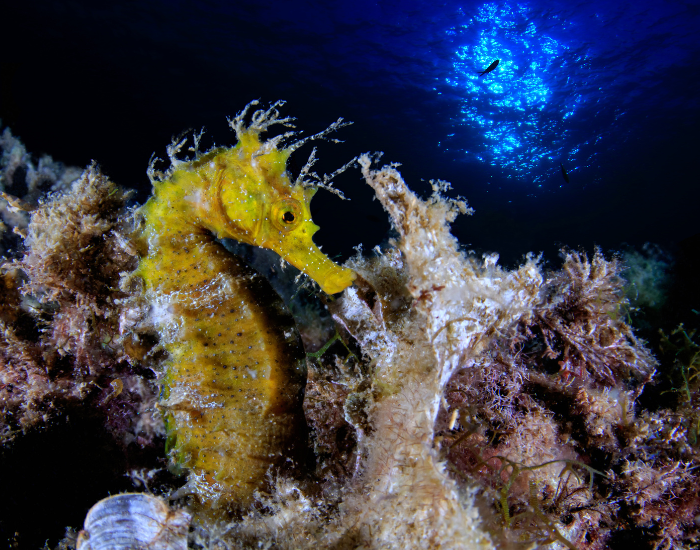
Sheep are among the earliest domesticated animals, with evidence going back 10,000 years in Mesopotamia. Sheep remain one of the most economically important animals starting with the letter S on Earth, with over a billion sheep kept worldwide. The Saanen goat is a Swiss dairy breed now kept as livestock on every continent. The shih tzu is one of the most popular pet animals that start with the letter S globally. Sea horses are unique fish in which males carry the eggs; unlike horses on land, sea horses move slowly using a dorsal fin that beats up to 35 times per second. The sperm whale is the largest toothed animal on Earth.
FAQ: Animals That Start with the Letter S
The most recognized animals that start with the letter S include the shark, snake, sloth, swan, squirrel, sparrow, and seal. Among domesticated animals that start with S, sheep, the Saanen goat, and the shih tzu are known worldwide. In English, the letter S produces more familiar animal names than almost any other letter. Share these articles with anyone building a list of animal names for school or nature study.
The shih tzu is the most popular pet among animals that start with the letter S. Other animals that start with S kept as pets include certain snake types, the Syrian hamster, and some salamander and lizard types. The Saanen goat is widely kept as livestock.
Yes — the sabre-toothed tiger is one of the most iconic animals that start with the letter S, extinct for around 10,000 years. A common error is to treat it as an ancestor of modern big cats; it was not. Its genus, Smilodon, also starts with S. The sabre-toothed tiger’s canines were used to dispatch large prey, not for display. Evidence suggests it hunted in groups — a behavior shared by few other animals that start with S in the fossil record.
In the sea, the whale shark is the largest the largest fish on Earth at up to 12 meters. The sperm whale and the sei whale both are among the largest toothed hunter on the planet. On land, the saltwater crocodile is the largest living reptile and also starts with the letter S. The hope of seeing any of these animals in nature is what keeps field biologists exploring year after year.
Many More That You can Think Of
Animals that start with the letter S cover more ecological ground than almost any other letter. The sloth processes leaf content no other mammal can be bothered with. The shark regulates sea populations that would cascade without it. The snake controls rodent numbers across entire landscapes. None of these animals is replaceable, every one fills a role nothing else occupies.
I hope this list gave you something to share. I write these articles because fieldwork keeps delivering animals that start with the letter S that most people never encounter in nature. Explore each one further: squirrels, skinks, sea slugs, salamanders, seals, and sea lions.
References:
Fardell, L. L., Pavey, C. R., & Dickman, C. R. (2020). Fear and stressing in predator-prey ecology: considering the twin stressors of predators and people on mammals. PeerJ, 8, e9104. https://doi.org/10.7717/peerj.9104
Carrier, J. C., Musick, J. A., & Heithaus, M. R. (Eds.). (2012). Biology of sharks and their relatives (2nd ed.). CRC Press. https://doi.org/10.1201/b11867
Mahmood, T., Younas, A., Akrim, F., Andleeb, S., Hamid, A., & Nadeem, M. S. (2019). Range contraction of snow leopard (Panthera uncia). PloS one, 14(8), e0218460. https://doi.org/10.1371/journal.pone.0218460
Pauli, J.N., Carey, C.C. and Peery, M.Z. (2017), Green sloths and brown cows: the role of dominant mammalian herbivores in carbon emissions for tropical agro-ecosystems. Mam Rev, 47: 164-168. https://doi.org/10.1111/mam.12086