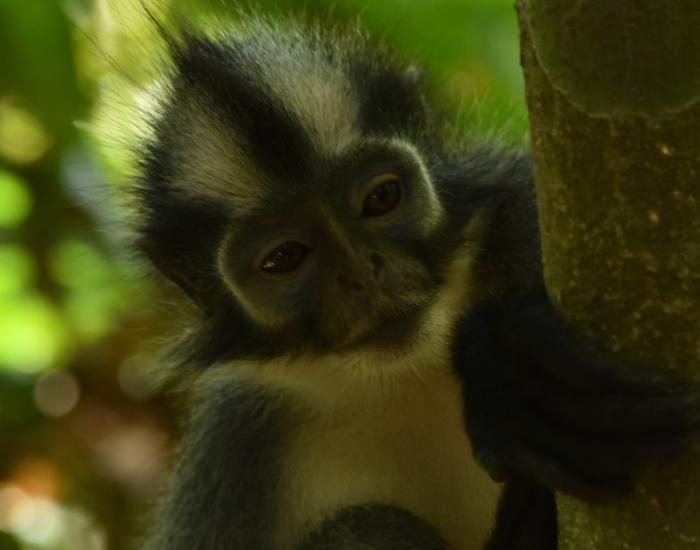
Three years ago, we, the Wildlife Nomads team were trekking through the Sumatran rainforest searching for orangutans. We reached a small clearing and noticed two hikers standing motionless, staring into the undergrowth. When we joined them, we got a big surprise! A Thomas leaf monkey sat barely two meters away, studying us with eyes so deep it felt like looking into another consciousness. Orangutans were the goal. We were expecting it to be breathtaking. However, this unexpected type of monkey stole the trip. That quiet, unplanned encounter changed how I think about every monkey species I’ve met since.
With over 330 known monkey species spread across the tropics, the variety of monkeys alive today is staggering. From tiny pygmy marmosets weighing less than an apple to mandrills with technicolor faces, every type of monkey fills a unique ecological role. This guide covers 15 types of monkey — split between new world monkeys of the Americas and old world monkeys of Africa and Asia — that every wildlife enthusiast should learn to recognize. Think of it as your field checklist for all types of monkeys worth knowing.
New World Monkeys vs. Old World Monkeys
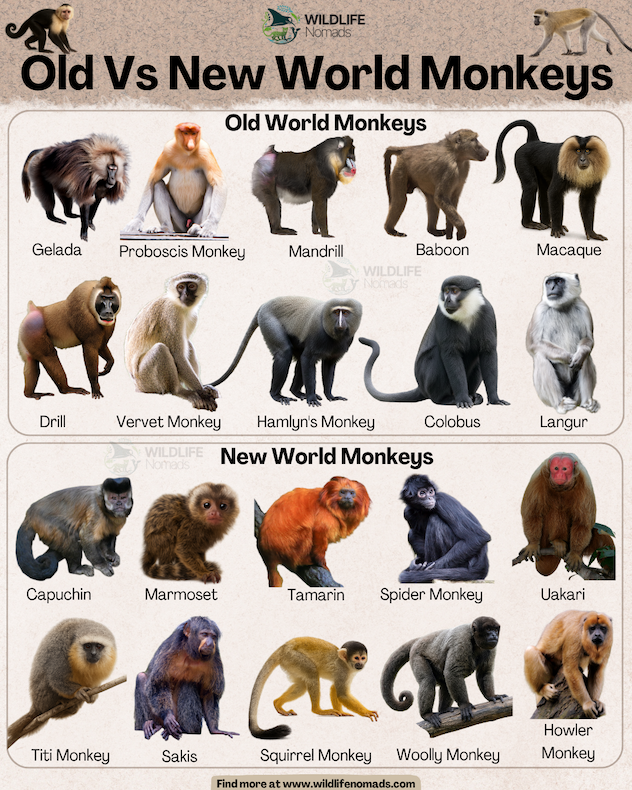
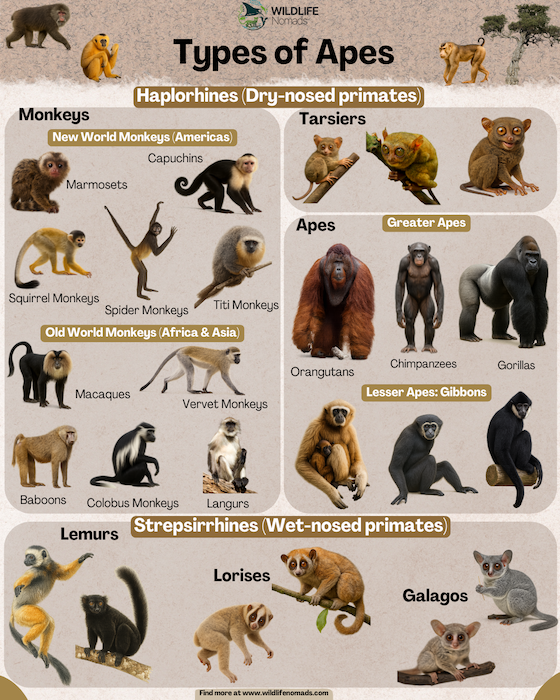
Before jumping into individual species, it helps to understand the two major groups of all monkeys on Earth. New world monkeys live in South America and Central America. They tend to have flat, wide-set nostrils, and many species sport prehensile tails that function like a fifth limb. Old world monkeys inhabit Africa and Asia. Their nostrils point downward, and most species have tough sitting pads called ischial callosities. Neither group includes great apes like chimpanzees, bonobos, or gorillas — those belong to a separate branch of the primate family tree. Knowing this split is the first step to identifying any type of monkey in the wild.
Part 1: New World Monkeys (The Americas)
New world monkeys evolved in isolation after South America split from Africa roughly 40 million years ago. That long separation produced an incredible breed of monkeys found nowhere else, from the loud howler monkey to the agile spider monkey.
1. Golden Lion Tamarin
The golden lion tamarin might be the cutest type of monkey in all of South America. Weighing just 620 grams, this small primate wears a mane of fiery orange-gold fur framing its face like a tiny lion. Found only in Brazil’s Atlantic Forest, golden lion tamarins were critically endangered, by the 1970s, fewer than 200 survived. Conservation work pushed numbers above 3,700. The closely related black lion tamarin faces even greater threats with fewer than 1,000 left. Lion tamarin species collectively remind us how fragile these ecosystems truly are.

2. Pygmy Marmoset
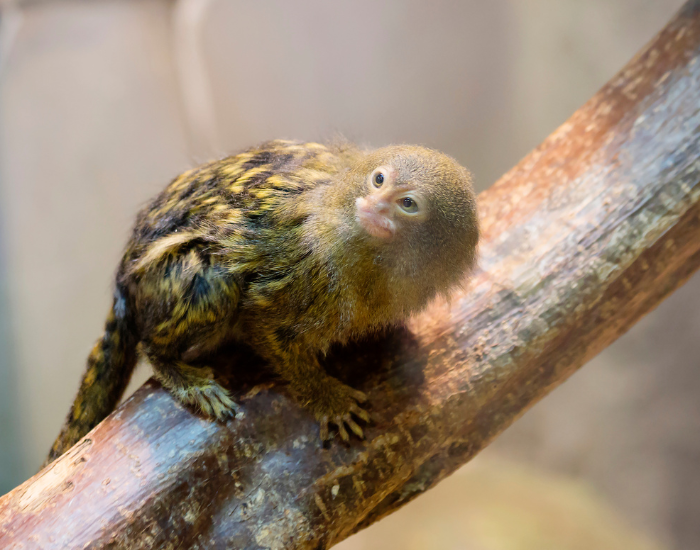
The pygmy marmoset holds the title of world’s smallest type of monkey. Adults weigh around 100 grams, roughly the weight of an apple or a small orange. Found in the western Amazon Basin of South America, these tiny new world monkeys cling vertically to tree trunks and gouge bark to feed on sap. Their heads rotate nearly 180 degrees for predator awareness.
The eastern pygmy marmoset, recently recognized as a separate monkey species, occupies a range east of certain river barriers. The common marmoset, another well-known breed of monkeys, thrives in Brazil’s northeastern forests.
3. Black Howler Monkey
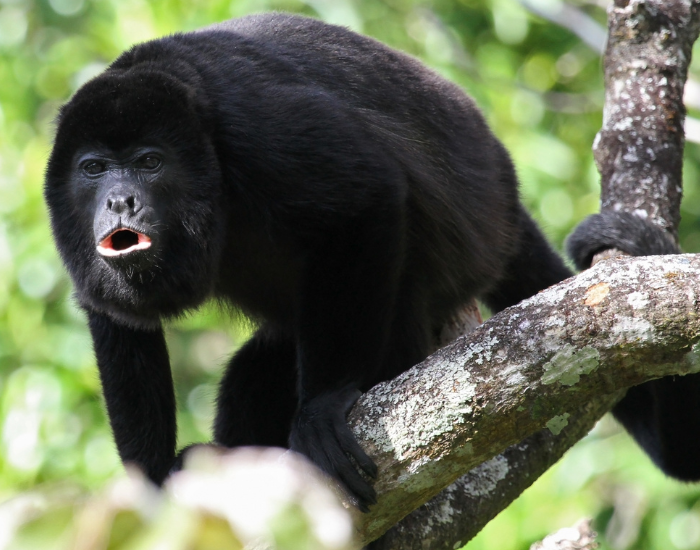
You hear a howler monkey long before you see one. I experienced this firsthand years ago in the jungles of Chiapas, Mexico, where the pre-dawn roar woke me from a dead sleep. Their hyoid bone, a uniquely enlarged throat structure, amplifies vocalizations to over 130 decibels, making the howler monkey one of the loudest land animals on Earth.
Black howler monkeys range from southern Mexico through central South America. Males are jet-black while females sport golden fur. Howler monkeys include several species, from the red howler to the mantled howler, all united by that voice. Among new world monkeys, no other type of monkey announces itself so dramatically.
4. Spider Monkey
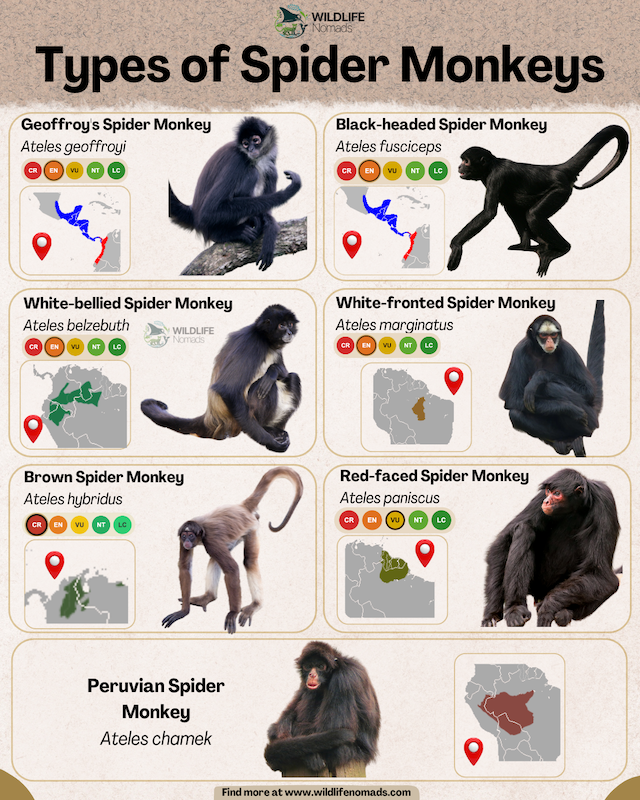
Spider monkeys are the acrobats of the canopy. Their extraordinarily long limbs and prehensile tail let them swing through trees at remarkable speed. I’ve watched spider monkeys in the forests of Chiapas, they look boneless, flowing between branches like water.
Seven recognized spider monkey species exist, including the black headed spider monkey, Geoffroy’s spider monkey of Central America, and the white fronted spider monkey. Several spider monkey species rank among the most endangered new world monkeys due to habitat destruction across South America.
5. Tufted Capuchin
Tufted capuchin monkeys rank among the most intelligent of all monkey species. Researchers have documented them cracking nuts with stones, behavior once thought exclusive to great apes. Found across South America, capuchin monkeys thrive in diverse forest types. The gracile capuchin monkey and the black striped capuchin represent related species within this group. For a deeper look, see our guide on types of capuchin monkeys.

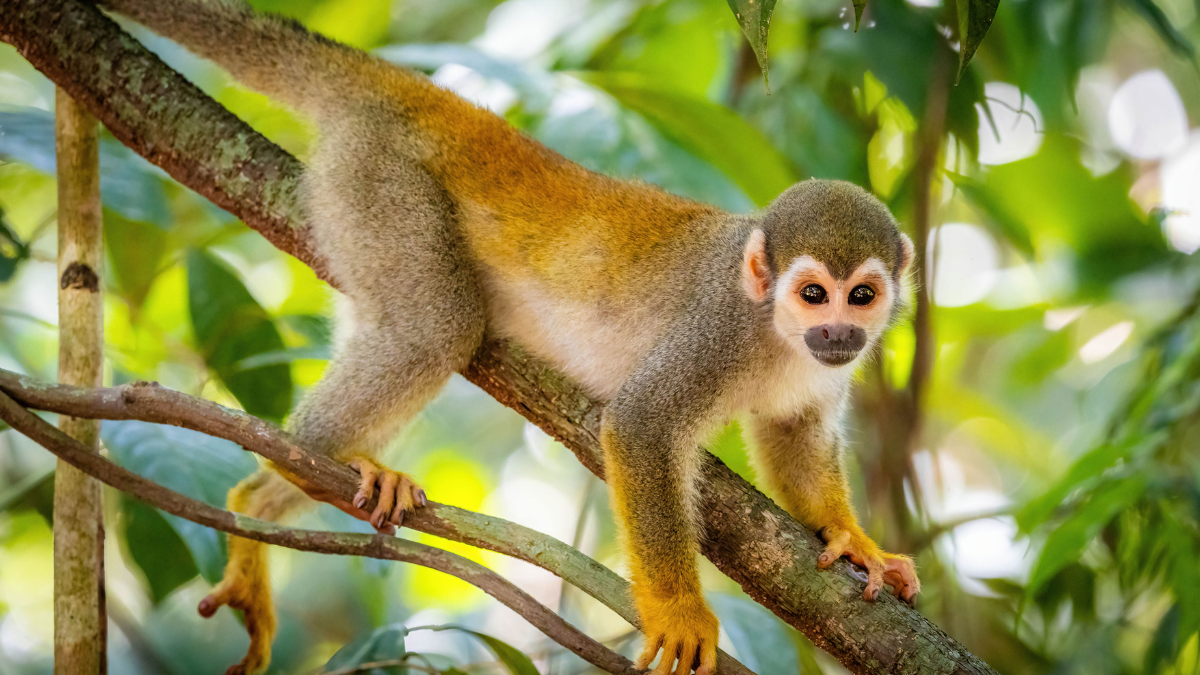
6. Common Squirrel Monkey
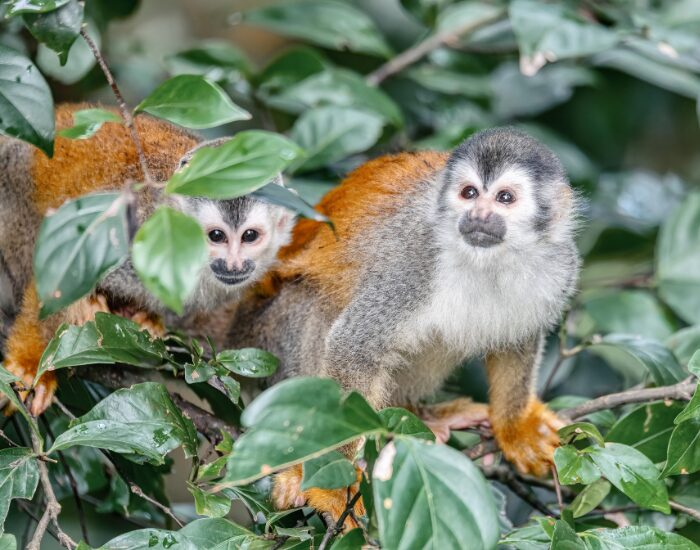
Common squirrel monkeys are the social butterflies of the new world monkey family. Troops can exceed 100 individuals, creating a chattering cloud of activity in the mid-canopy. Found across central South America, squirrel monkeys have olive-green fur and white faces with dark muzzles.
The central American squirrel monkey, a related species from Costa Rica and Panama, is among the most endangered monkey species in the region. The bare eared squirrel monkey, another lesser-known variety of monkeys, survives in restricted parts of Brazil.
7. Emperor Tamarin
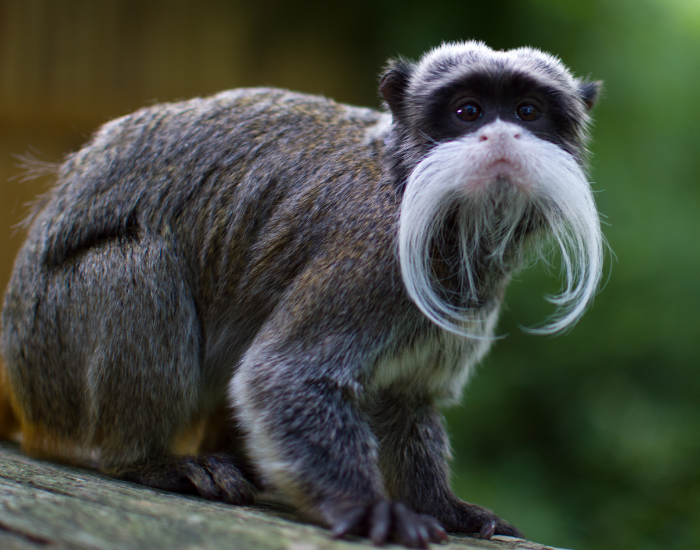
The emperor tamarin is instantly recognizable by its long, white, drooping mustache, named in jest after Kaiser Wilhelm II. These small new world monkeys weigh around 500 grams and inhabit the southwestern Amazon. Emperor tamarins are cooperative breeders, with the entire group raising offspring. They share habitat with other kinds of monkeys, including saki monkeys like the black bearded saki and faced saki.
8. Bald Uakari
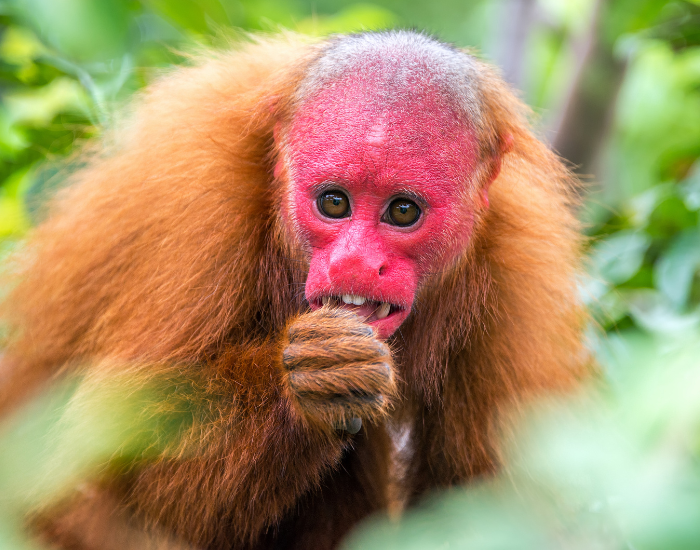
The bald uakari looks like nothing else in the primate world. Its bright crimson, hairless face and shaggy reddish fur create an almost alien appearance. That red face signals health, pale coloring indicates illness. Found in flooded forests along the Amazon in Brazil, Peru, and Colombia, uakaris are unusual among new world monkeys for having a short, non-prehensile tail.
Nearby, night monkey species like Nancy Ma’s night monkey and Spix’s night monkey share these forests, though as nocturnal primates, night monkeys rarely cross paths with daytime species. The red bellied titi, another South American type of monkey, also inhabits these same river-edge forests.
Part 2: Old World Monkeys (Africa and Asia)
Old world monkeys are the most diverse group of primates after rodents claim the overall mammal crown. They range from the snow-covered mountains of Japan to the semi-deserts of Ethiopia. These seven types of monkey showcase just how adaptable old world monkeys can be.
9. Mandrill
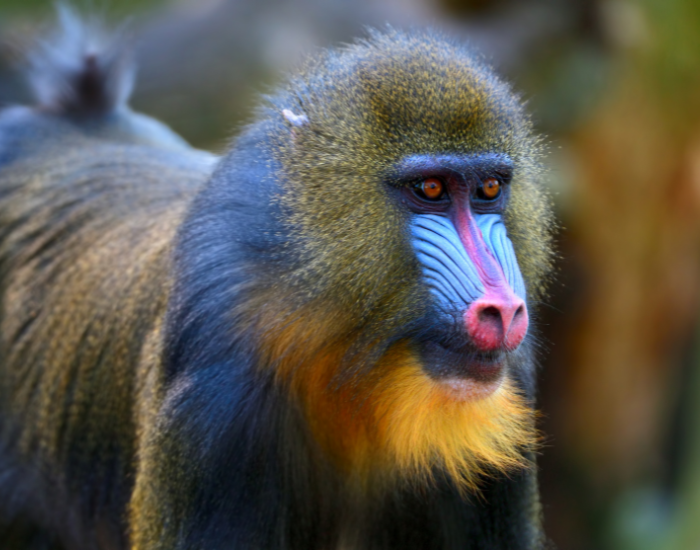
The mandrill is the world’s largest type of monkey, with males tipping 35 kilograms. Those electric blue and red facial ridges result from structural coloration — collagen fibers in the skin — and intensify with social rank. Mandrills live in the rainforests of equatorial West Africa, forming hordes exceeding 600 individuals. Despite their size, mandrills are shy and difficult to study. Nearby, other old world monkeys like the drill, Diana monkey, golden bellied mangabey, and Lowe’s mona monkey share overlapping habitat.
10. Japanese Macaque (Snow Monkey)
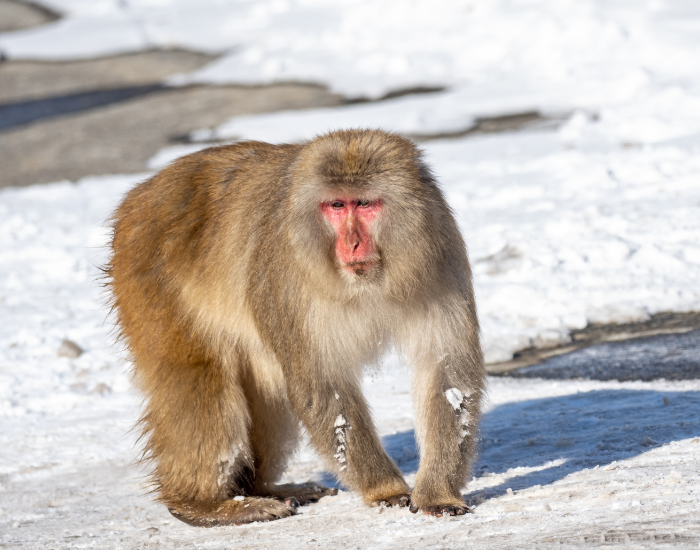
The Japanese macaque is the most northern-living non-human primate on Earth. In the mountains of Honshu, this type of macaque endure temperatures as low as -20°C. Their famous hot spring bathing at Jigokudani began in the 1960s when a young female started soaking to retrieve soybeans, the behavior spread through social learning.
During our Sumatra trek, we encountered pig tailed macaques foraging on the trail, a reminder of how widespread macaques truly are. The family includes the crab eating macaque, northern pig tailed macaque, lion tailed macaque, assam macaque, stump tailed macaque, and celebes crested macaque.
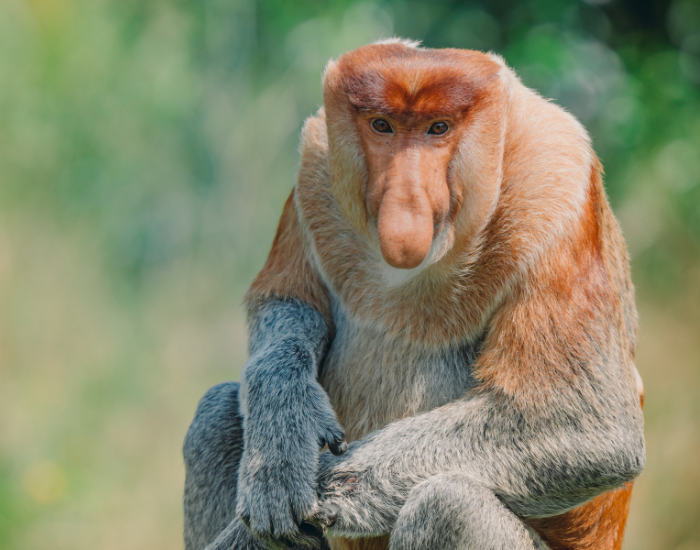
11. Proboscis Monkey
Endemic to Borneo, the proboscis monkey is among the most unmistakable types of monkey alive. Males sport an enormous pendulous nose exceeding 10 centimeters. Research suggests the nose amplifies vocalizations and signals fitness, bigger nose, better mate. Proboscis monkeys are strong swimmers, unusual for primates, and inhabit mangrove forests.
Their pot-bellied physique comes from a specialized digestive system that ferments leaves like a ruminant. Across Southeast Asia, related old world monkeys like the black sumatran langur and Pagai Island macaque face similar habitat pressures.
Want to see where the proboscis monkey lives? Find it up in the canopy in my interactive climb down the rainforests of Borneo and Sumatra.
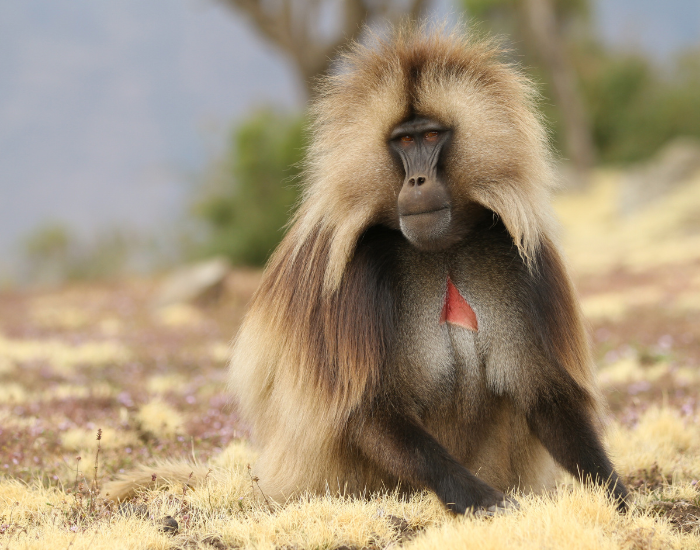
12. Gelada
Geladas are the last surviving members of a once-widespread group of grazing primates. Found only in the Ethiopian Highlands above 1,800 meters, they are the only primates whose diet is primarily grass. Their bright red chest patch communicates reproductive status. Geladas live in multi-level societies reaching 1,200 individuals.
The patas monkey, southern patas monkey, and vervet monkey, all African old world monkeys, occupy radically different niches on the same continent. In Asia, the gray langur fills a specialized leaf-eating role, while de Brazza’s monkey inhabits central African swamp forests.
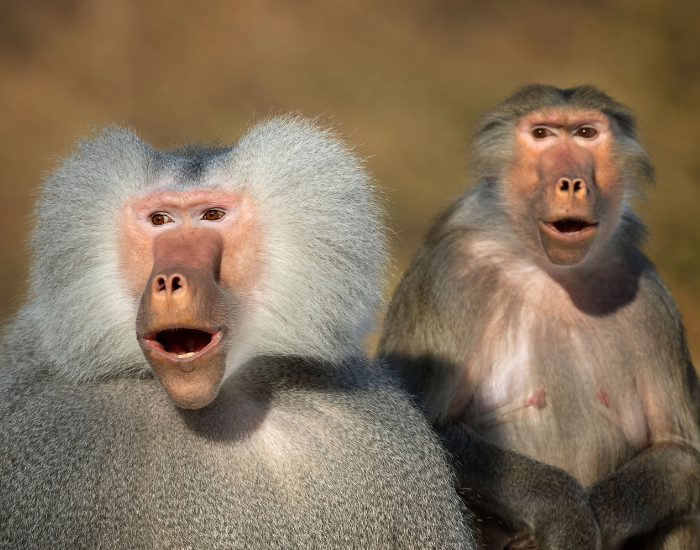
13. Hamadryas Baboon
Hamadryas baboons hold a unique place in human history as Ancient Egyptians considered them sacred, associating them with Thoth, the god of wisdom. We spotted several hieroglyphs of macaques in our trip to Egypt in May of 2026.
Males display impressive silver manes while females remain smaller and olive-brown. Their social structure is among the most complex of all monkey species: one-male units, clans, bands, and troops. Found in the Horn of Africa and southwestern Arabia, they thrive in semi-desert. The olive baboon, yellow baboon, and chacma baboon represent related old world monkey species across sub-Saharan Africa.
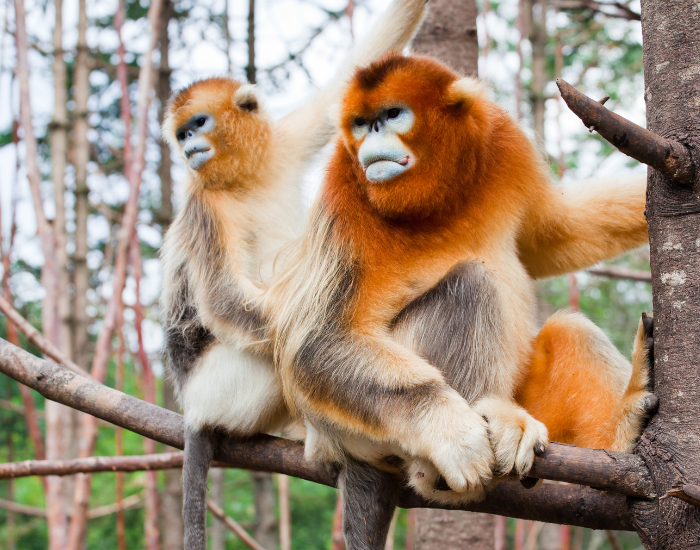
14. Golden Snub-Nosed Monkey
The golden snub-nosed monkey is a high-altitude specialist from central China’s temperate forests, living at elevations up to 4,500 meters. Their thick orange fur and upturned nose create an otherworldly look. These old world monkeys form bands exceeding 600 individuals and survive harsh winters by eating lichen. The tonkin snub nosed monkey, a critically endangered relative in Vietnam, numbers fewer than 250. The golden snub nosed monkey has become a symbol of Chinese conservation. In Africa, the Preuss’s monkey and wolf’s mona monkey face similar habitat pressures.
15. Vervet Monkey
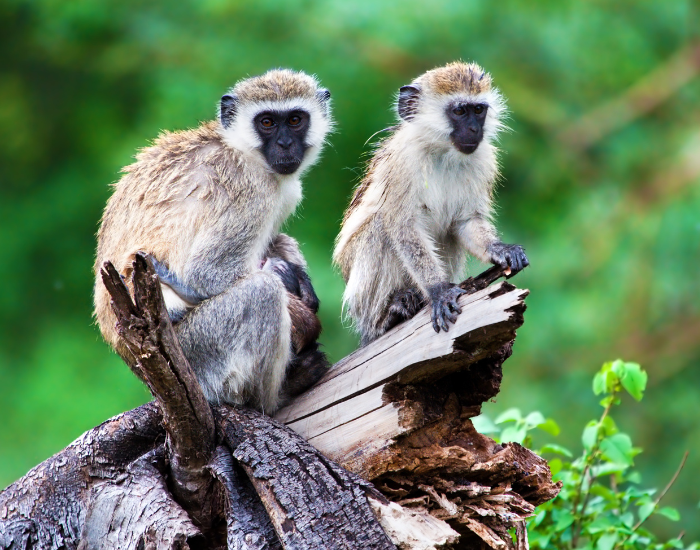
The vervet monkey is arguably the most scientifically important type of monkey on this list. In the 1980s, researchers Seyfarth and Cheney discovered that vervet monkeys use distinct alarm calls for different predators — one for leopards, another for eagles, a third for snakes. That research revolutionized animal cognition science. Vervet monkeys range across sub-Saharan Africa from savanna woodland to coastal forest.
The green monkey, their close West African relative, shares many behavioral traits. Related old world monkey species include the blue Nile patas monkey, tantalus monkey, blue monkey, mona monkey, Campbell’s mona monkey, crested mona monkey, Dent’s mona monkey, greater spot nosed monkey, sun tailed monkey, and Dryas monkey. The rhesus monkey, meanwhile, has become the most studied type of monkey in biomedical research.
Monkeys, Apes, and Common Confusion
One question I hear constantly: are gorillas, chimpanzees, and bonobos monkeys? They are not. Great apes lack tails and diverged from monkeys roughly 25 million years ago. Bush babies, often confused with monkeys, are prosimians — a far more ancient primate branch. The woolly monkey, common woolly monkey, and yellow tailed woolly monkey are sometimes mistaken for apes due to their robust build, but they are firmly new world monkeys. The night monkey, including the gray bellied night monkey, black headed night monkey, and three striped night monkey, gets confused with bush babies because of its enormous eyes. Night monkeys are the only truly nocturnal monkeys in South America.
FAQ
Five widely recognized types of monkey are the howler monkey, spider monkey, Japanese macaque, mandrill, and common squirrel monkey. These span new world monkeys from the Americas and old world monkeys from Africa and Asia.
Bonobos and chimpanzees, sharing roughly 98.7% of our DNA. These are great apes, not monkeys. Gorillas follow at 96%. Monkey species diverged from the ape lineage about 25 million years ago.
Not exactly. What looks like a “smile” in many monkey species is often a fear grimace — a submissive signal showing teeth. However, rhesus monkeys display relaxed open-mouth expressions during play that researchers consider analogous to laughter.
Every Encounter Counts
From the deafening roar of howler monkeys in Chiapas to the soul-piercing gaze of a Thomas leaf monkey in Sumatra, each encounter with a different type of monkey reshapes how I understand intelligence and adaptation. At the start of 2024, I spent a month on Langkawi Island, Malaysia — a place not famous for wildlife. One humid morning, a group of dusky leaf monkeys moved across electrical cables above me, their long tails acting as elegant counterweights, their white eye rings giving them a permanent look of gentle surprise. Those calm, curious old world monkeys reminded me that nature surprises you most when you stop expecting it.
Whether you are planning a wildlife trip or deepening your knowledge of all types of monkeys, these 15 species offer a strong foundation. Start noticing the differences between new world monkeys and old world monkeys, and every primate encounter becomes richer. Explore our guide on types of primates, discover black and white colobus monkeys, or learn what makes macaques the most adaptable monkey family on Earth. Drop a comment with your own monkey encounter — which type of monkey left the biggest impression on you?
Monkey Species Field ID Challenge 🐒
Ten photo-based questions to test your monkey species recognition and taxonomy knowledge!
Species Identification
References:
Balolia, K. L., & Fitzgerald, P. L. (2024). Male proboscis monkey cranionasal size and shape is associated with visual and acoustic signalling. Scientific Reports, 14, Article 10715. https://doi.org/10.1038/s41598-024-60665-8
Deshpande, A., van de Waal, E., & Zuberbühler, K. (2023). Context-dependent alarm responses in wild vervet monkeys. Animal cognition, 26(4), 1199–1208. https://doi.org/10.1007/s10071-023-01767-0
Dominy, N. J., Ikram, S., Moritz, G. L., Wheatley, P. V., Christensen, J. N., Chipman, J. W., & Koch, P. L. (2020). Mummified baboons reveal the far reach of early Egyptian mariners. eLife, 9, e60860. https://doi.org/10.7554/eLife.60860
Falótico, T., Proffitt, T., Ottoni, E. B., Staff, R. A., & Haslam, M. (2019). Three thousand years of wild capuchin stone tool use. Nature Ecology & Evolution, 3(7), 1034–1038. https://doi.org/10.1038/s41559-019-0904-4
Guo, S., Li, B., & Watanabe, K. (2007). Diet and activity budget of Rhinopithecus roxellana in the Qinling Mountains, China. Primates, 48(4), 268–275. https://doi.org/10.1007/s10329-007-0048-z
Kierulff, M. C. M., Ruiz-Miranda, C. R., Oliveira, P. P., et al. (2012). The Golden Lion Tamarin Leontopithecus rosalia: A conservation success story. International Zoo Yearbook, 46(1), 36–45. https://doi.org/10.1111/j.1748-1090.2012.00170.x
Estrada, A., Garber, P. A., Rylands, A. B., et al. (2017). Impending extinction crisis of the world’s primates: Why primates matter. Science Advances, 3(1), e1600946. https://doi.org/10.1126/sciadv.1600946
Rowe, N., & Myers, M. (Eds.). (2016). All the World’s Primates. Pogonias Press. https://www.alltheworldsprimates.org/