When you think of African primates, gorillas and chimpanzees probably come to mind first. But there’s another remarkable monkey swinging through Africa’s forests that deserves just as much attention, the black and white colobus monkey. These stunning colobus monkeys are amazing acrobats, capable of leaping up to 25 feet between trees with their flowing white fur acting like a natural parachute.
Colobus monkeys live in the dense canopies of African forests, where they’ve evolved as specialized leaf-eaters. The guereza colobus monkey and other colobus species have developed unique digestive systems that let them thrive on a diet that would be toxic to most other primates. From the mantled colobus with its distinctive white cape to the various subspecies found across Africa, these Old World monkeys have carved out an incredible niche in their ecosystems.
Let’s dive deep into the world of the black and white colobus monkey and discover why these remarkable creatures are both a conservation success story and a species still facing significant challenges.

What Exactly Is a Black and White Colobus Monkey?
The black and white colobus monkey belongs to the Old World monkey family, specifically the genus Colobus. Colobus monkeys are closely related to red colobus monkeys from Zanzibar, Tanzania, though they occupy different ecological niches. When people ask “what kind of monkey is black and white?” or “what are black and white monkeys called?”, they’re usually thinking of these striking primates. The name “colobus” comes from the Greek word κολοβός (kolobós), meaning “mutilated,” referring to their distinctive thumbless hands, or more accurately, their extremely reduced thumbs that appear as small stumps.
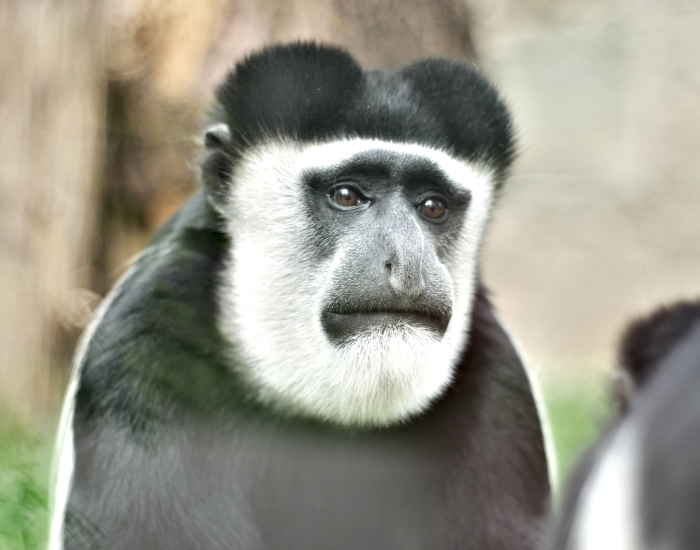
Colobus monkeys aren’t your typical monkeys. Monkeys black and white in coloration are relatively rare in the primate world, making colobus species particularly eye-catching. The eastern black-and-white colobus (Colobus guereza), also known as the mantled guereza, is probably the most recognizable species. The guereza colobus monkey features dramatic white fur flowing from shoulders to lower back in a distinctive U-shape, creating one of nature’s most striking primate displays.
Physical Characteristics That Make Them Unique
Size and Build
The eastern black-and-white colobus can grow over 2 feet long (excluding tail) and weigh up to 30 pounds. That’s a substantial primate, roughly the size of a medium dog but with the agility of an Olympic gymnast. Adult colobus monkeys typically weigh between 20-30 pounds, with males generally being larger than females. The dominant male in each group is usually the largest and most impressive specimen.
Their Stunning White Fur and Markings
What makes black white monkeys so visually striking is their dramatic coloration. White colobus markings create stunning contrasts against their dark fur:
- Glossy black fur covering most of their body
- Long white mantle flowing like a cape from their shoulders
- White fur whiskers and beard framing their black faces
- Bushy white tail that can be longer than their body
- Distinctive white markings that vary between subspecies
The eastern black-and-white colobus features that characteristic U-shaped white colobus mantle, while the colobus guereza displays particularly striking white fur patterns. Other monkeys in the colobus family, like the Angolan colobus, have different white marking patterns. It’s worth noting that infant colobus monkeys are born completely white, gradually developing their adult black and white coloration as they mature, a fascinating example of developmental biology at work.

Built for Arboreal Life
These monkeys are perfectly designed for life in the trees. The long black and white fur of adult colobus monkeys acts as a parachute as they jump, allowing them to jump distances of 20-25 feet in one leap. Their reduced thumbs, while initially seeming like a disadvantage, actually help them move through branches more efficiently without getting caught on twigs and leaves.
Where Do Black and White Colobus Monkeys Live?
Geographic Distribution
Black-and-white colobus monkeys have a surprisingly wide range across Africa. The species’ distribution extends in an easterly direction from Nigeria, covering much of central and eastern Africa. Colobus monkeys live in montane and gallery forests throughout their range. You’ll find different subspecies in countries including:
- Nigeria and Cameroon in West Africa
- Central African Republic and Democratic Republic of Congo
- Kenya, Uganda, and Tanzania in East Africa
- Parts of Ethiopia and Sudan
The Angolan colobus can be found throughout central Africa, with a range that extends from Gabon and Cameroon in the west, showing just how widespread these remarkable primates are.
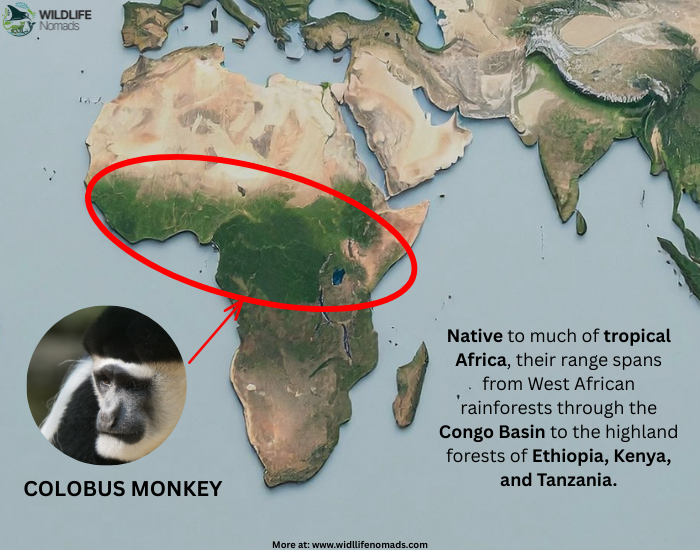
Habitat Preferences: Where Colobus Monkeys Live
When it comes to habitat, colobus monkeys are surprisingly adaptable. Colobus monkeys live in diverse forest environments across their range. They thrive in:
- Primary and secondary forests with dense canopy cover
- Montane forests at higher elevations
- Gallery forests along riverbanks
- Wooded grasslands with sufficient tree cover
- Bamboo stands in certain regions
These monkeys live in all types of closed forests, including montane and gallery forests. Bamboo stands are also popular dwelling spots. What’s particularly interesting is their ability to adapt to fragmented habitats, they are often able to thrive in small pockets of habitat in between human settlements.

Diet and Feeding Behavior: Nature’s Leaf-Eating Specialists
A Unique Digestive System
Here’s where colobus monkeys get really interesting from a biological standpoint. These primates are essentially the ruminants of the monkey world. They’ve evolved a complex, multi-chambered stomach similar to cows, allowing them to extract maximum nutrition from leaves, something most primates can’t do effectively.
What Colobus Monkeys Eat: A Specialized Diet
Black and white colobus monkeys are primarily folivores (leaf-eaters), with a diet colobus monkeys have perfected over millions of years. Their specialized diet colobus monkeys consists of:
- Tender young leaves (their preferred food)
- Mature leaves when young leaves aren’t available
- Fruits (particularly unripe fruits that other primates avoid)
- Flowers and buds
- Bark and twigs occasionally
- Lichen as fallback food during lean periods
Their ability to digest mature and even toxic leaves gives them access to food sources that most other primates can’t utilize. This evolutionary adaptation has allowed them to thrive in environments where fruit-eating monkeys might struggle.
Daily Feeding Patterns
Research shows that colobus monkeys spend approximately 150 minutes (about 2.5 hours) actively feeding each day. The rest of their time is spent resting and digesting, a necessary behavior when your diet consists mainly of tough, fibrous plant material.

Social Structure and Behavior
Group Dynamics
Colobus monkeys live in social groups typically consisting of:
- One dominant adult male
- Multiple adult females (usually 3-4)
- Their offspring of various ages
These groups are generally peaceful, with minimal aggression between members. The dominant male’s primary role is protecting the group from potential threats and leading them to food sources.
Are Colobus Monkeys Aggressive?
This is a common question, and the answer is: not particularly. Colobus monkeys are generally peaceful animals. While males may show territorial behavior toward other groups, they’re not inherently aggressive toward humans or other species. Their primary defense strategy is escape rather than confrontation.
Communication
Colobus monkeys have a sophisticated communication system involving:
- Loud roaring calls that can be heard over a mile away
- Soft contact calls between group members
- Visual displays using their dramatic white mantles
- Scent marking to define territory
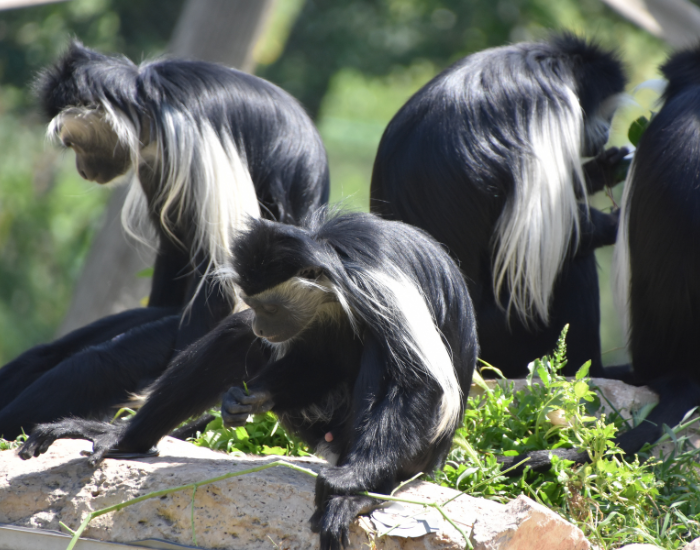
Conservation Status: Success Story or Cause for Concern?
Current Conservation Status
The conservation picture for black and white colobus monkeys is complex and varies by subspecies and location. The mantled guereza is listed as Least Concern by the International Union for Conservation of Nature (IUCN) because it is widespread, which might seem like good news at first glance.
However, the reality is more nuanced. The black-and-white colobus monkey is locally endangered yet widespread. The IUCN does not consider them to be endangered. However, habitat loss continues to be a significant threat in many regions.
Historical Threats
Historically, these monkeys faced severe hunting pressure. In the past colobus have been hunted excessively for their beautiful fur, as well as for skin and meat, leading to its extermination in some areas. Their striking white mantles made them particularly valuable for traditional ceremonies and colonial-era fashion.
Current Threats
Today’s primary threats include:
Habitat Loss: Its greatest threat is habitat loss as forests are cleared for timber, agriculture, and human development.
Fragmentation: They are sometimes killed when they try to move between forest fragments, highlighting how habitat fragmentation creates deadly obstacles for these arboreal primates.
Human-Wildlife Conflict: As human settlements expand into forest areas, conflicts inevitably arise.

Different Species and Subspecies
The Eastern Black-and-White Colobus
The eastern black-and-white colobus (Colobus guereza) is the most well-known and widespread species. Found from Nigeria to Kenya, this is the colobus monkey most people picture when they think of black white monkeys.
The Angolan Colobus
The Angolan colobus (Colobus angolensis) is distinguished by its unique white markings. These strikingly beautiful primates can be found throughout central Africa, with a range that extends from Gabon and Cameroon in the west. They have white hair that flares only at the shoulders, creating a different silhouette than their eastern cousins.

Other Species
The colobus genus includes several other species:
- King colobus (Colobus polykomos)
- Ursine colobus (Colobus vellerosus)
- Various subspecies with distinct regional variations
The Colobus genus includes at least 6 species and 17 subspecies, showing the remarkable diversity within this group of primates.
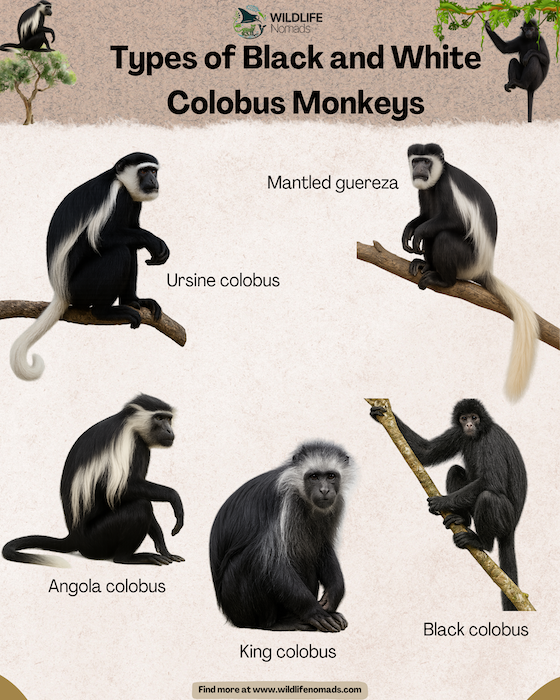
Conservation Efforts and Success Stories
Protected Areas
Many black and white colobus monkeys live within protected national parks and reserves. The king colobus monkey is found in a number of protected areas throughout western Africa, including Sapo National Park and Grebo-Krahn National Park in Liberia; Gola Forest National Park, Loma Mountains National Park, demonstrating how protected areas are crucial for colobus conservation.
Community-Based Conservation
Local communities play a vital role in colobus conservation. In many areas, traditional beliefs protect these monkeys, while ecotourism provides economic incentives for conservation.
Research and Monitoring
Ongoing research helps us understand colobus ecology and develop better conservation strategies. Long-term studies in places like Kenya’s Kakamega Forest have provided crucial insights into their behavior and habitat needs.
What You Can Do to Help
Support Conservation Organizations
Several organizations work specifically on primate conservation in Africa:
- African Wildlife Foundation (AWF)
- New England Primate Conservancy
- Local conservation groups in range countries
Responsible Tourism
If you’re planning to visit Africa, consider ecotourism opportunities that support colobus conservation. Many national parks offer guided primate watching tours that directly fund conservation efforts.
Spread Awareness
Simply learning about and sharing information about black and white colobus monkeys helps raise awareness about these remarkable primates and their conservation needs.
Frequently Asked Questions
No, black and white colobus monkeys are not extinct. While some local populations have been extirpated and the species faces ongoing threats, several species and subspecies remain widespread across their African range.
When people ask about “black and white monkeys with long tails,” they’re typically referring to colobus monkeys. The distinctive long, bushy white tail is one of their most recognizable features.
It depends on the species and location. Red colobus monkeys are also found in East Africa, but are endangered and quite rare, while some black and white colobus populations remain relatively stable.
Eastern black-and-white colobus monkeys can be over 2 ft long (excluding tail) and up to 30 lb, making them substantial primates well-adapted to their arboreal lifestyle.

The Future of Black and White Colobus Monkeys
The future of black and white colobus monkeys largely depends on our ability to balance human development with wildlife conservation. These remarkable primates have shown impressive adaptability to changing landscapes, but they still need our help to ensure their long-term survival.
In the wild, they live about 20 years, giving each individual a substantial opportunity to contribute to their species’ continuation, if we can protect their habitat and reduce human-wildlife conflict.
So… Why These Monkeys Matter
The black and white colobus monkey represents something truly special in the animal kingdom. These primates have evolved unique solutions to life in the forest canopy, from their parachute-like fur that enables incredible leaps to their cow-like digestive system that lets them thrive on leaves other monkeys can’t digest.
But beyond their fascinating biology, colobus monkeys serve as important indicators of forest ecosystem health. Their presence signals a functioning forest ecosystem, while their absence often indicates environmental degradation.
As we continue to learn more about these remarkable black white monkeys, one thing becomes clear: protecting colobus monkeys means protecting some of Africa’s most precious forest ecosystems. And in doing so, we preserve not just a species, but an entire web of life that depends on healthy African forests.
The next time you see footage of these graceful primates soaring through the African forest canopy, their white mantles flowing like capes, remember that you’re watching millions of years of evolution in action, and a species that, with our help, will continue to grace Africa’s forests for generations to come.
Find a Colobus Monkey in the Wild
These six are our recommendation if you are looking for a safari where you will have the chance to spot a black and white colobus monkey: