Meeting the Dusky Leaf Monkey in the Wild
At the start of 2024, I spent just over a month living on Langkawi Island, Malaysia, a place we chose almost on impulse. Unlike Penang or Borneo, Langkawi isn’t usually the first stop for wildlife seekers, and I hadn’t done much research on what animals we might find there. We simply wanted to explore somewhere new, somewhere quieter.
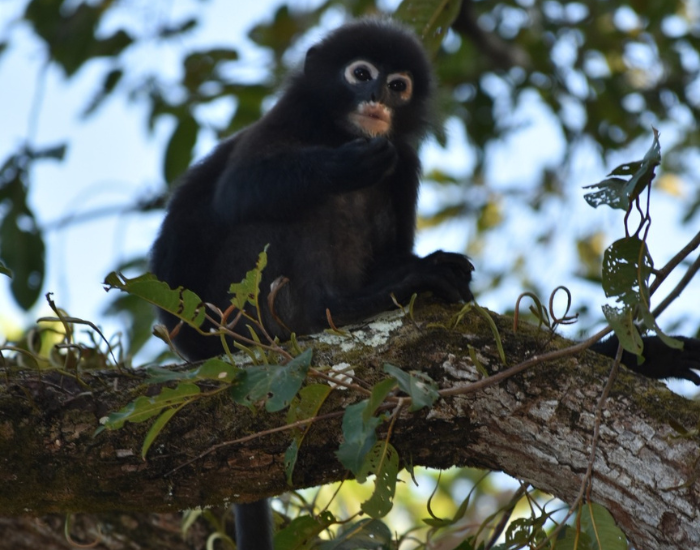
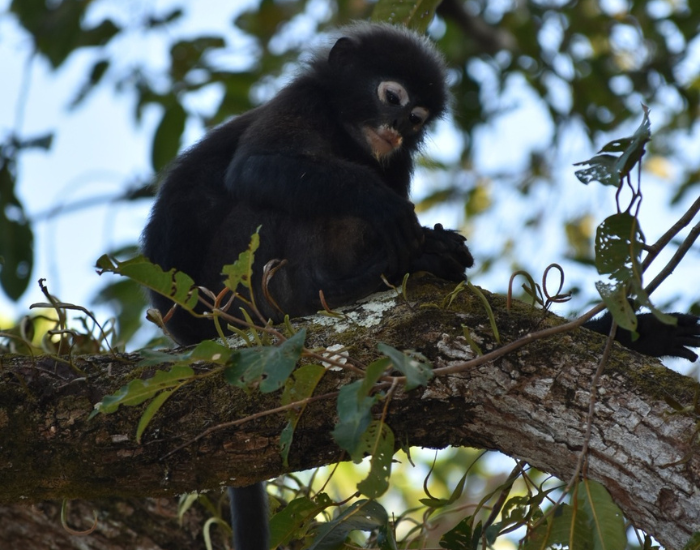
One humid and hot morning near our accommodation, I caught sight of movement among the trees. The electrical cables above me hummed as a group of dusky leaf monkeys (also known as spectacled langurs) moved effortlessly across the wires, their long tails acting like elegant counterweights. Their soft gray fur and striking white eye rings gave them a permanent look of surprise, gentle, intelligent, and almost human.
These weren’t the bold, mischievous macaques I’d grown accustomed to across Peninsular Malaysia. The dusky leaf monkeys were calm and curious, pausing to observe rather than approach. That encounter changed how I saw Langkawi, and reminded me that even on islands not famed for wildlife, nature often finds a way to surprise you.
What Is a Dusky Leaf Monkey?
The dusky leaf monkey (Trachypithecus obscurus) belongs to the Colobinae subfamily. Scientists also call them spectacled leaf monkey or spectacle monkey due to their distinctive facial markings. These small primates inhabit Southeast Asian forests across multiple countries.
Adult dusky leaf monkeys weigh between 5 and 9 kilograms. Their bodies measure compact compared to other primate species like the proboscis monkey. Yet their most striking feature remains their face. Circular patterns of bright white fur surround their eyes and mouth. This creates the appearance of wearing permanent spectacles.
The species earned recognition as Trachypithecus obscurus in scientific literature, and researchers continue studying Malaysian populations to better understand their behavior and ecology. Scientists currently recognize six subspecies of dusky leaf monkeys across Southeast Asia, each with subtle differences in color and distribution, from Peninsular Malaysia and southern Thailand to Langkawi, Penang, and Carimata Island.
The Mystery of Orange Coat Babies
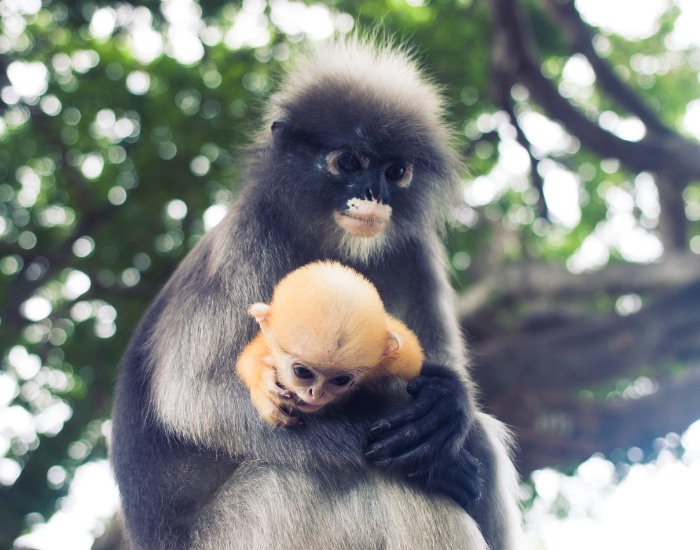
Infant dusky leaf monkeys arrive wearing very orange coats. This striking color serves a critical evolutionary purpose. The bright orange signals to every adult in the group that this individual needs protection. Other females remain alert, ready to help if danger threatens.
Over several months, the orange coat gradually darkens. The fur transforms into the species’ characteristic grey, black, or brown shades. Eventually, those signature circular patterns of white fur emerge around the eyes. This color variation marks the transition from infant to juvenile.
Many seasonal breeders in Southeast Asia display similar patterns. However, few match the dramatic contrast of the dusky leaf monkey’s infant coloring. The transformation fascinates both researchers and wildlife enthusiasts who encounter these groups in their natural habitat.

Where Dusky Leaf Monkeys Live
Dusky leaf monkeys inhabit tropical forests throughout Southeast Asia. Their range extends from southern Myanmar through Thailand and across the Malay Peninsula. Small populations also exist in Singapore, though conservationists debate whether these represent natural migration or human introduction.
These spectacled langurs prefer primary forests with dense canopy cover. However, habitat degradation has forced populations into secondary forests and disturbed areas. I’ve observed dusky langur groups in rubber plantations near protected areas. They’ve also adapted to living in rural gardens and urban edges where old-growth forests once stood.
The species shows remarkable flexibility in habitat use. Dusky leaf monkeys live in montane forests at higher elevations. They also thrive in riparian zones along waterways. This adaptability proves crucial as anthropogenic land use continues expanding across Southeast Asia.
Peninsular Malaysia supports significant populations, particularly in Langkawi Geopark. Thailand’s protected areas also provide crucial habitat. These regions maintain the tropical forests essential for the species’ survival.

Diet and Feeding Behavior
The term “leaf monkey” perfectly describes their primary food source. Dusky leaf monkeys consume vast quantities of leaves daily. Their specialized digestive systems break down fibrous plant material that most primates cannot process.
These folivorous primates possess chambered stomachs similar to ruminants. Beneficial bacteria in their gut ferment leaves, extracting nutrients from cellulose. This adaptation allows them to thrive on a diet that would starve other monkey species.
However, leaves alone don’t provide complete nutrition. Dusky leaf monkey groups also eat fruit when available. They consume seeds, flowers, and young shoots to supplement their diet. The foraged vegetation varies seasonally based on fruit availability in their territory.
I’ve watched these spectacled leaf monkey groups spend hours selecting specific leaves. They show clear preferences for certain plant species. Young, tender leaves receive priority over mature, tougher foliage. This selective feeding reflects their sophisticated understanding of nutritional content.
The species’ diet also makes them important for forest health. As they eat fruit and move through the canopy, they facilitate seed dispersal. This ecosystem service helps maintain the biodiversity of Southeast Asian forests.

Social Structure and Behavior
Dusky leaf monkeys are diurnal and arboreal creatures. Most activity occurs during daylight hours high in the forest canopy. Groups typically number between 10 and 30 individuals, though size varies by habitat quality.
Each group maintains a complex social hierarchy. Multiple females form the core of dusky leaf monkey populations. One dominant male leads and protects the group. This male fathers most offspring and defends territory from rival males.
Females remain in their birth groups throughout their lives. Males, however, leave upon reaching maturity. They either join bachelor groups or challenge established males for leadership. This system prevents inbreeding while maintaining stable female lineages.
Groups defend territories ranging up to 33 hectares. They mark boundaries through vocalizations and visual displays. Unlike macaques, dusky leaf monkeys rarely show aggressive behavior toward humans. When threatened, they typically retreat rather than confront.
I’ve observed these groups navigating through canopy gaps with impressive coordination. Their long tail provides balance during risky jumps. Mothers carry infants while leaping between trees, demonstrating remarkable strength and agility.

Reproduction and Mating Period – What You need To Know
Dusky leaf monkeys function as seasonal breeders in many populations. Mating activity increases during specific times annually, though timing varies across their range. This seasonal variation depends on food availability and environmental conditions.
Gestation lasts approximately six to seven months. Females typically give birth to single infants, though twins occasionally occur. The bright orange newborn immediately attracts attention from all group members.
Females remain the primary caregivers throughout infancy. However, other females often help with infant care. This cooperative breeding strengthens social bonds within the group. It also increases infant survival rates when mothers face challenges.
The seasonal mating period coincides with peak fruit availability in many regions. This timing ensures mothers have adequate nutrition during pregnancy and nursing. Such adaptations demonstrate how deeply these primates connect to their forest environment.
Conservation Status: An Endangered Species
The International Union for Conservation of Nature lists dusky leaf monkeys as endangered species. Population declines have accelerated across their range. Several factors threaten their survival, creating a complex conservation challenge.
Habitat loss represents the primary threat. Oil palm plantations replace tropical forests throughout Southeast Asia. Rubber plantations also consume vast areas of suitable habitat. This habitat degradation fragments populations, isolating groups from potential mates.
Anthropogenic land use continues expanding into remaining forest areas. As humans encroach, conflict increases. Some communities consider these monkeys agricultural pests when they raid crops. This perception leads to persecution despite their protected status.
Domesticated dog packs pose another serious threat. Near villages, these dogs attack dusky leaf monkey groups when they descend to lower branches. I’ve documented multiple instances where packs killed individuals, particularly juveniles.
The illegal pet trade targets infant dusky leaf monkeys specifically. Hunters kill mothers to capture those appealing orange-coated babies. This practice devastates local populations while fueling demand for exotic pets.
Research suggests noticeable population declines across fragmented habitats. The species’ slow reproductive rate makes recovery difficult. Females produce only one infant annually under ideal conditions, limiting population growth.

The Singapore Population Controversy
Small numbers of dusky leaf monkeys live in Singapore, creating conservation debate. These individuals likely crossed from Malaysia through connected forest patches. However, their presence raises concerns among wildlife managers.
Some conservationists worry about competition with other primate species native to the region. Others fear disease transfer risks, as these sampled primates interact with established populations. The Singapore population remains controversial within conservation circles.
Despite concerns, these monkeys demonstrate the species’ adaptability. They inhabit urban edges and disturbed forests successfully. This resilience offers hope for populations facing similar pressures elsewhere.
Threats from Warming Climates
Climate change compounds existing conservation challenges. Warming climates alter flowering and fruiting patterns in tropical forests. These changes disrupt the seasonal cycles that dusky leaf monkey reproduction depends upon.
Temperature increases also affect the nutritional content of leaves. Some plant species respond to heat stress by increasing defensive compounds. These changes make leaves less digestible or even toxic to leaf monkeys.
Extreme weather events occur more frequently across Southeast Asia. Severe storms damage canopy structure, reducing available habitat. Droughts affect water availability in territories far from permanent streams.
Research suggests warming climates experienced by populations will intensify these pressures. Conservation strategies must incorporate climate adaptation to remain effective long-term.
Dusky Leaf Monkey vs. Other Malaysian Monkeys
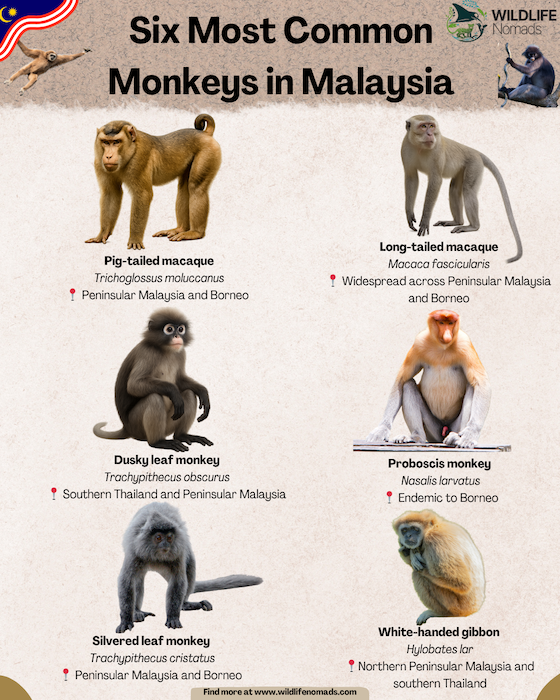
Malaysia hosts diverse primate species beyond the dusky leaf monkey. Understanding these differences helps identify species correctly during wildlife encounters.
Macaques represent the most commonly seen Malaysian monkeys. They display bold, often aggressive behavior toward humans. Long-tailed macaques raid garbage bins and steal food from tourists. In contrast, spectacled langurs show hostile behaviour rarely and retreat when confronted.
Proboscis monkeys inhabit Borneo’s coastal forests. These distinctive primates possess enormous noses and reddish fur. They grow much larger than dusky leaf monkeys, reaching 20 kilograms or more.
Gibbons swing through canopy using their elongated arms. Their haunting calls echo through forests at dawn. Unlike dusky langurs, gibbons form pair bonds rather than multi-female groups.
Silvered leaf monkey species share similar ecological niches with dusky leaf monkeys. However, silvered langurs display grey coloring without the distinctive white eye rings. Their ranges overlap in some regions, occasionally leading to misidentification.
Latests Research on These Monkeys
Recent studies have deepened our understanding of how dusky leaf monkeys (Trachypithecus obscurus) adapt to changing environments and how their genetic diversity reflects complex evolutionary histories. A field study in Penang, Malaysia, examined activity patterns, habitat use, and diet across disturbed and undisturbed areas, revealing that dusky leaf monkeys show surprising behavioral flexibility. Even in fragmented landscapes, they adjust their feeding strategies and movement patterns to cope with habitat loss — a promising sign of ecological resilience.
At the genetic level, phylogeographic research using mitochondrial DNA has begun to challenge long-standing subspecies classifications. A 2020 analysis found that several traditionally recognized forms within Peninsular Malaysia may not represent distinct evolutionary lineages, suggesting that genetic variation is more continuous than previously thought, Together, these findings highlight the importance of integrating ecological observation and molecular genetics to guide future conservation strategies for one of Southeast Asia’s most misunderstood primates.
Questions you May Have
No, keeping dusky leaf monkeys as pets is illegal and harmful. They appear on Appendix II species lists under CITES, prohibiting trade. These primates require specialized diets and social groups that captivity cannot provide. The pet trade drives population declines through capture of infants.
Infant dusky leaf monkeys have bright orange coats that serve as visual signals. This coloring helps adults quickly identify and protect vulnerable infants. The orange coat gradually darkens over several months as juveniles mature. This dramatic color variation represents an evolutionary adaptation for infant survival.
Dusky leaf monkeys are primarily folivorous, consuming large quantities of leaves daily. They also eat fruit, seeds, and flowers to supplement their diet. Specialized stomachs allow them to digest fibrous plant material. They show preferences for young, tender leaves over mature foliage.
You can observe dusky leaf monkeys in national parks across Thailand and Malaysia. Kaeng Krachan National Park in Thailand and Langkawi Geopark in Peninsular Malaysia offer good viewing opportunities. They also inhabit forests in Myanmar and have a small presence in Singapore. Early morning provides the best observation times.
Yes, dusky leaf monkeys are classified as endangered species by the IUCN. Habitat loss from plantations, the pet trade, and climate change threaten populations. Noticeable population declines have occurred across fragmented habitats. Conservation efforts focus on protecting remaining forest areas and enforcing trade restrictions.
Protecting Southeast Asia’s Spectacled Langurs
That morning in Langkawi, watching dusky leaf monkeys navigate electrical cables, crystallized something for me. These spectacled langurs embody the adaptability of nature. Yet adaptability alone cannot overcome habitat loss, climate change, and human persecution.
The species’ survival requires immediate action. Expanding protected areas, enforcing trade laws, and engaging communities all matter. Research suggests we understand the threats clearly. Now we need collective will to address them.
When you encounter these remarkable primates, whether in person or through documentation, remember what they represent. They are indicators of forest health across Southeast Asia. Protecting them means preserving tropical forests that benefit countless species, including humans.
The dusky leaf monkey’s future remains unwritten. With dedicated conservation, these masked monkeys with their orange babies and distinctive white eye rings can thrive. The alternative, a Southeast Asia without their graceful presence in the canopy, is too tragic to accept.
Further Reading
- Types of Macaques
- Everything You Need to Know About the Rhesus Macaque
- Types of Primates
- 14 Fun and Surprising Facts About Gibbons