Meet the Rhesus Macaques
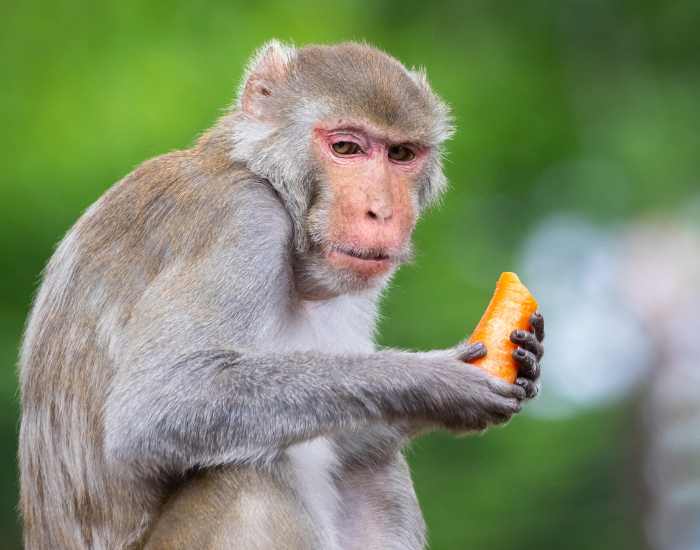
The rhesus macaque monkey (Macaca mulatta) is one of the most recognized primate species in the world. These Old World monkeys are highly adaptable, found everywhere from rural forests to bustling city streets in Asia, and even in introduced populations across the Americas.
I first encountered them in Thailand, where troops of rhesus macaques roamed freely around temple ruins. They weren’t shy about snatching food from tourists or raiding market stalls. At first glance, I thought I was looking at crab-eating macaques in Bali, but these were a different species of macaques altogether. The rhesus macaque monkey is often confused with other primate species, sometimes even with gibbons, which shows just how diverse macaques can be. I couldn’t help but wonder: how many different macaque species exist, and why do they adapt so well to life alongside humans? That curiosity set me down the path of learning about these fascinating animals.

Habitat and Distribution
The native range of rhesus macaques covers a huge swath of Asia, including Afghanistan, Pakistan, Nepal, Bangladesh, Bhutan, India, China, and much of Southeast Asia. Within this range, they occupy almost every environment imaginable.
- In northern India, you’ll spot them in Himalayan foothills.
- In tropical forests, they forage for fruit and seeds.
- In mountainous regions, they adapt to cold winters and scarce food.
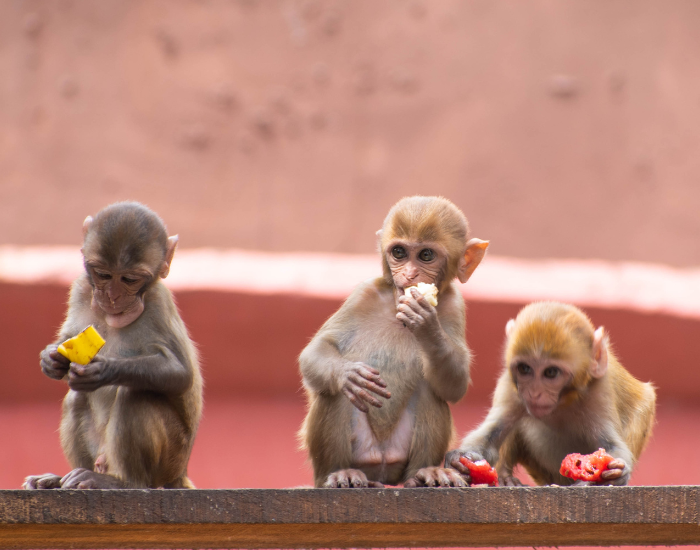
- In urban landscapes, they thrive by raiding markets and taking handouts.
Their ability to exploit natural habitats as well as human-modified landscapes explains why they are so abundant. However, this adaptability often leads to human-wildlife conflict, with reports of crop raids, home invasions, and even monkey “gangs” harassing city dwellers.
Outside Asia, introduced rhesus macaques live in places like Puerto Rico’s Cayo Santiago (the famous “Monkey Island”), Florida, and smaller Caribbean islands. While these populations provide scientists with valuable opportunities for long-term research, they also highlight the macaques’ potential as an invasive species, threatening local ecosystems and agriculture.
Unlike many endangered species of primates, such as the golden snub-nosed monkey or the lion-tailed macaque, the rhesus macaque monkey is thriving thanks to its adaptability. But that abundance doesn’t mean conservation is simple

Ecology of Rhesus Macaque
Rhesus macaques are classic omnivores, which is why they’re so successful. Their diet includes fruits, leaves, roots, flowers, seeds, and crops such as rice or wheat. But they’re not strictly plant eaters, they’ll also take bird eggs, insects, and the occasional small animal. In city environments, human food becomes a major part of their diet, from discarded snacks to offerings left at temples.
This flexible diet allows for dense populations in areas where food is abundant. Scientific studies have shown that population densities of rhesus macaques can skyrocket in urban areas, creating both opportunities (more research, more visibility) and challenges (disease transmission, conflict).
Ecologically, they are important as seed dispersers. By eating fruits and passing seeds through their digestive system, they play a role in regenerating forests, especially in fragmented landscapes.
Urban food sources dramatically alter rhesus macaque population patterns, leading to unnaturally high densities in cities. Their presence ties them directly to biodiversity and the health of ecosystems, and their ability to thrive in cityscapes contrasts sharply with other endangered species that depend on pristine habitats.
Behavior and Social Structure – How is Their Hierarchy?
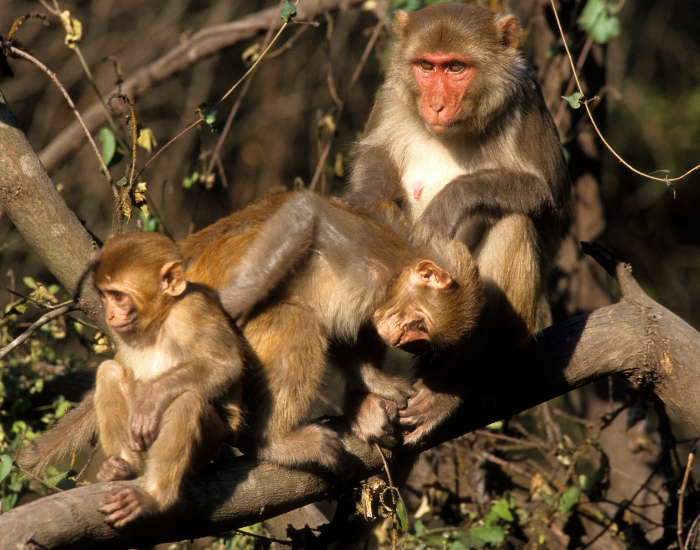
Primate behavior is fascinating, specifically, Rhesus macaques are a cornerstone of behavioral ecology, offering insights into dominance, grooming, and social alliances that shape primate societies. Troops often consist of 20–200 individuals and are organized around strict dominance hierarchies.
- Female macaques: Adult females and young, they both remain in their natal groups, forming long-standing matrilines. These lines determine rank, and interestingly, younger females can sometimes outrank older ones, depending on social alliances.
- Adult males: At sexual maturity, males leave their natal troop to join or challenge other groups. This dispersal reduces inbreeding but sparks aggressive interactions as they compete for dominance and for acces to an adult female.
- Submissive behavior: To avoid conflict, macaques use clear body language like lip-smacking, crouching, or turning away.
Watching a troop in northern India, I saw these behaviors in action: one dominant male rhesus macaque fiercely guarded a fruit pile while others approached cautiously, showing submissive signals. At the same time, juveniles played nearby, blissfully ignoring the social rules. It reminded me of human societies, where authority and rebellion constantly push and pull.
Social interaction isn’t just about aggression. Grooming is a cornerstone of macaque society. Adult females form bonds by grooming each other, and these bonds translate into protection and cooperation when disputes erupt.
Rhesus Monkey Size and Lifespan – How Long Do They Live?
- The rhesus monkey size depends on sex:
- Males: 7–12 kg (15–26 lbs), body length up to 53 cm (21 in).
- Females: 5–7 kg (11–15 lbs), smaller and less muscular.
- Tails: Around 20–30 cm (8–12 in), though not prehensile.

Regional Variations: Subspecies and Populations
The rhesus macaque isn’t a uniform species; it has subspecies that reflect regional differences, mainly thi chinese and indian subspecies:
- Indian subspecies: Darker coats, widespread across northern India and Nepal.
- Chinese rhesus macaques : Paler, slightly larger, and frequently used in biomedical research.
- Chinese origin rhesus macaques : A subgroup often referenced in genetic studies because of their unique adaptations.
These differences matter for science. For example, researchers compare Indian origin rhesus macaques with Chinese subspecies to study reproductive success, disease resistance, and genetic variation.
Human Connections: Research, Disease, and Ethics
The rhesus macaque has been called the “unsung hero” of biomedical research. Their importance in behavioral ecology research has helped scientists draw parallels between primate and human social dynamics.
- They were used to develop the polio vaccine.
- Their role in HIV/AIDS research helped shape treatments.
- The rhesus macaque genome was sequenced, providing insights into gene function and human evolution.
- They remain crucial animal models in studies of aging, behavior, and human disease.
Institutions like the Caribbean Primate Research Center and National Primate Research Centers in the U.S. maintain large colonies for ongoing field and laboratory research.
But this raises ethical debates. While rhesus monkeys have advanced our understanding of human health, they are also sentient beings with complex social lives. Balancing disease control research with animal welfare is one of science’s most difficult challenges.
10 Fascinating Rhesus Monkey Facts
- Highly adaptable: They thrive in natural habitats and urban landscapes alike.
- Temple dwellers: In India, they’re often considered sacred, yet also crop raiders.
- Excellent swimmers: Rhesus monkeys can cross rivers with ease.
- Reproductive success: Females can give birth every year, boosting population growth.
- Younger females outranking elders: Social status isn’t always tied to age.
- Disease carriers: Some rhesus monkeys carry herpes B virus, dangerous to humans.
- Sexual dimorphism: Males are visibly larger and more aggressive.
- Population densities: Can reach extremely high numbers in cities like Delhi.
- Submissive behavior: Lip-smacking and crouching reduce conflict.
- Natural predators: In the wild, they face leopards, large raptors, and even humans.

Conservation Status and Threats
- Globally, rhesus macaques are listed as Least Concern by the IUCN, but their story isn’t straightforward.
- In rural Asia, they face habitat loss from expanding agriculture.In cities, their abundance leads to conflict, with reports of monkeys injuring people or damaging property.As an invasive species in Puerto Rico and Florida, they threaten biodiversity and agriculture.
Natural History and Evolution
The rhesus macaque’s story goes back to the Pleistocene epoch, when their ancestors spread across Asia. As Old World monkeys, they share ancestry with baboons and langurs, but their adaptability gave them a unique evolutionary advantage.
Today, they are studied not just as monkeys but as model organisms for human evolution. Their role in physical anthropology has helped scientists understand migration, adaptation, and the roots of human social structures.
Rhesus Monkeys and Human Health
This primate species play a paradoxical role in human health. On one hand, they are invaluable for research on human disease, disease control, and reproductive biology. On the other hand, they are potential carriers of zoonotic diseases like herpes B virus.
Their study in laboratory research has expanded our knowledge of aging, immunity, and genetics. In the wild, though, their close proximity to humans in cities raises public health concerns. This dual identity, as both risk and remedy, makes them one of the most important primates in science.

FAQ: Rhesus Macaque Monkey
They’re among the most widespread monkeys, known for their adaptability and their role in scientific research that has transformed human health.
Males can be aggressive, particularly in the mating season, but aggression is balanced with grooming, cooperation, and clear social rules.
They live across Asia, from India to China and Southeast Asia, but introduced populations exist in Florida, Puerto Rico, and Caribbean islands.
Yes. They are strong swimmers and have been documented crossing large rivers in search of food or new territory.
Some carry herpes B virus, which is dangerous to humans, along with other zoonotic diseases. This makes human contact risky and emphasizes the importance of keeping them wild.
My Reflections
As a biologist traveling through Asia, I’ve often marveled at how nonhuman primates adapt to human worlds. It is amazing that rhesus macaque thrive in so many habitats, it isn’t just a symbol of resilience, it’s also a reminder of how closely our species is linked to others.
Watching them balance between wild ecosystems and city streets, I often ask myself: are they adapting to us, or are we adapting to them? Maybe both.
Lessons From a Monkey That Thrives
The rhesus macaque monkey is one of the most fascinating primates alive today. From rhesus monkey facts about their size and diet, to their role in science and culture, their story is inseparable from ours.
Key takeaways:
- They are among the most widespread rhesus monkey species, thriving in both wild and urban settings.
- Their social behavior mirrors human complexity.
- They’ve shaped, and been shaped by, human health research.
- Conservation and management are critical to balance their survival with ecosystem health.
Next time you encounter a rhesus monkey, whether in a forest, a temple, or a news headlin, pause and consider just how much history and biology sits behind those sharp, curious eyes.