In nature, many animals usually prefers camouflage to hide. Most animals want to disappear. However, the mandrill breaks every rule in the book.
I remember my first time seeing a mandrill up close. Like many of you, my first introduction was through a screen. We all remember Rafiki from The Lion King, the wise, colorful-faced shaman. Or perhaps you’ve stood in front of a zoo enclosure, captivated by those impossible blue ridges and bright red snouts.
There’s a common misconception that these animals are just aggressive baboons. In the field, there is palpable tension when you encounter a troop. They are powerful and vocal. They possess extremely long canine teeth that could make a leopard think twice. But beneath that fierce exterior lies a complex social world.
Today, we’re diving into one of most iconic animals in Africa, in the heart of tropical rainforests to explore a type of primate, the mandrill. Let’s uncover the top 12 facts about the world’s most vibrant primate.
(If you are interested about more African animals, have a look at our ebook!)
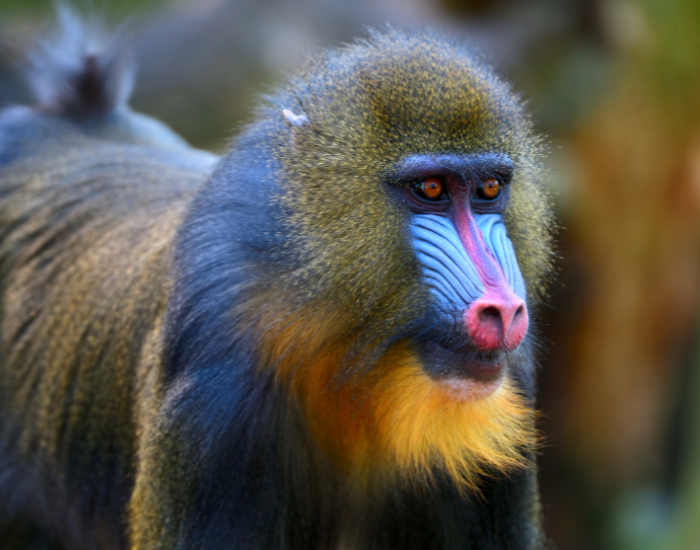
1. Mandrills Are the Largest Monkeys in the World
Are mandrills the world’s largest monkeys?” the answer is absolutely yes. The mandrill (Mandrillus sphinx) is firmly an Old World monkey, not an ape.
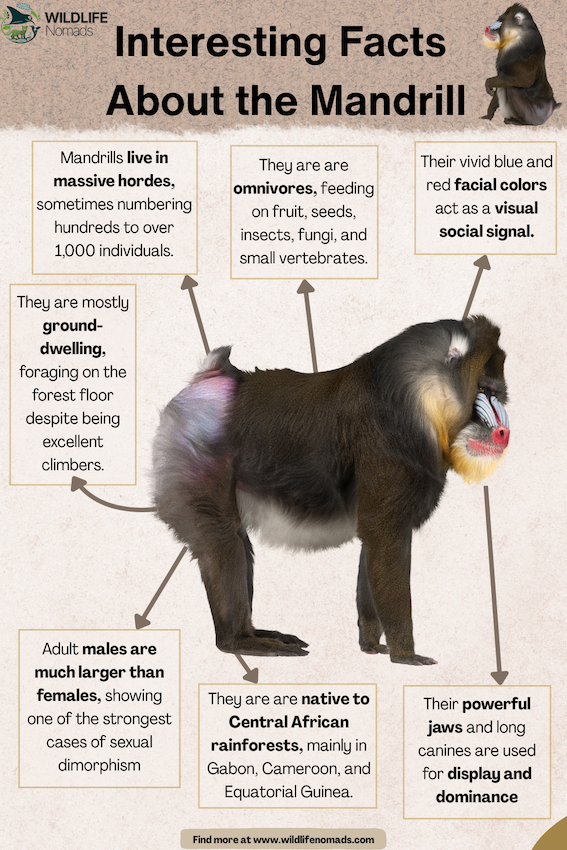
Adult male mandrills are absolute enormous creatures. Males typically weigh between 60 and 100 pounds (Note that the largest males can reach up to 54 kg – approx. 119 lbs). In comparison, female mandrills weigh significantly less. A male mandrill can be double the size of a female. This massive size difference makes them highly sexually dimorphic.
Sexual dimorphism usually signals high-stakes dominance hierarchies. In these hierarchies, size equals power. The dominant male defends his position through displays of strength and bright coloration.

2. Their Bright Coloration Is a Biological Billboard
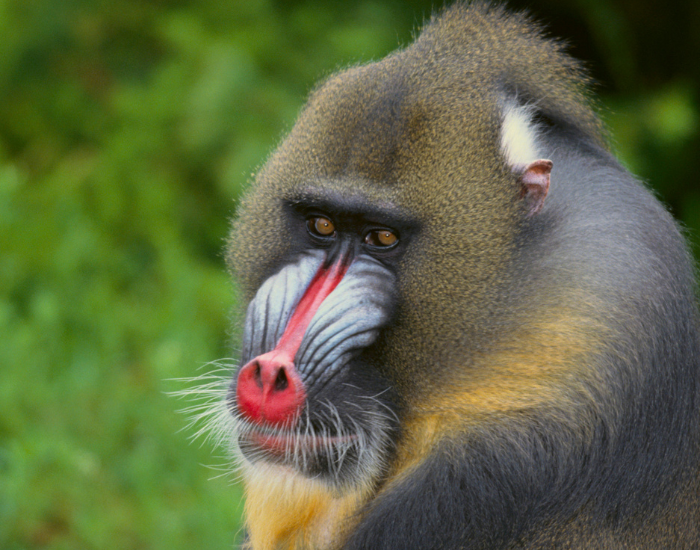
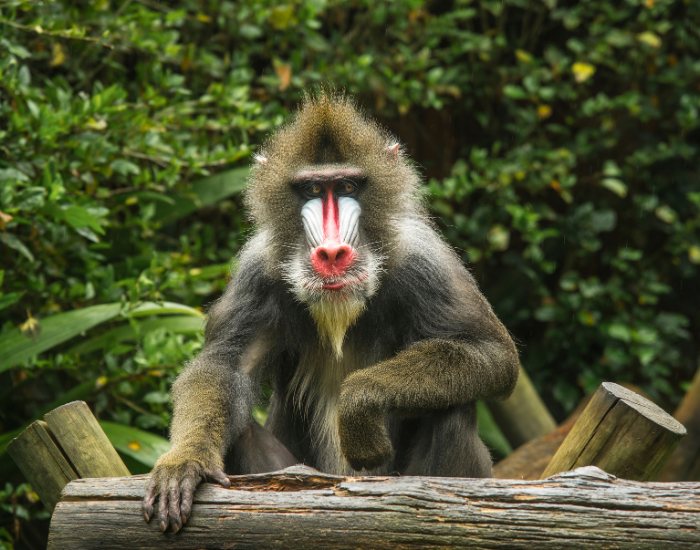
The most striking feature of the mandrill is its facial coloring. Adult male mandrills possess bright red noses and vibrant blue ridges along their faces. However, this isn’t just for show.
In the world of mandrills, color is communication. Studies show that color intensity in adult males directly links to testosterone levels. The alpha male of the group will have the brightest face. Additionally, he displays the most vivid bright rump coloration.
This bright coloration helps individuals navigate dominance hierarchies. Therefore, they can avoid constant physical confrontations. The distinctive colors signal status instantly within larger groups.
3. Mandrill Hordes Are Massive Social Gatherings
While most primates live in troops, mandrills take it further. They form enormous groups called mandrill hordes. A standard family group might number just a few individuals. However, researchers in Western Gabon have documented mandrill hordes exceeding 800 individuals.
Imagine several adult females and their young moving through thick bush together. It’s one of nature’s most incredible spectacles. These massive gatherings typically include multiple family groups. Adult males join primarily during the breeding season.
Mandrill populations organize into smaller family groups within these hordes. Several adult females lead these units. Other males roam more independently outside breeding season.
4. Mandrill vs Baboon: Clearing Up the Confusion
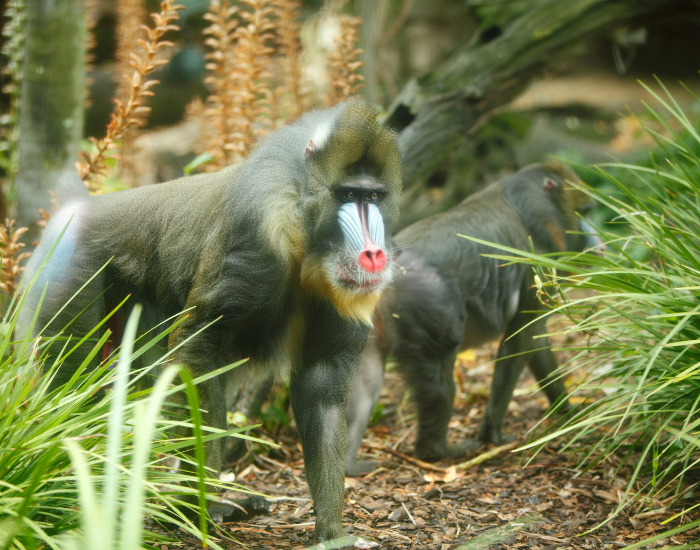
Is a mandrill a baboon? This question confuses many people. For a long time, science actually classified them as baboons. However, modern genetic testing revealed the truth. Mandrills are more closely related to mangabeys than baboons.
Key Differences: Mandrill vs Baboon
Mandrills:
- Scientific name: Mandrillus sphinx
- Blue ridges and bright red facial features
- Short, vestigial tail
- Live in tropical rainforests and thick secondary forests
- Native to West Central Africa
Baboons:
- Scientific name: Papio (various species)
- Long, dog-like muzzle
- Longer, arched tail
- Inhabit savannas and woodlands
- Widespread across Africa
While both are Old World monkeys, the mandrill vs baboon debate is settled. They are distinct cousins, not the same animal. In addition, can mandrill and baboon mate? No. Their habitats and genetics prevent interbreeding in the wild.

5. Large Cheek Pouches Work Like Storage Bags
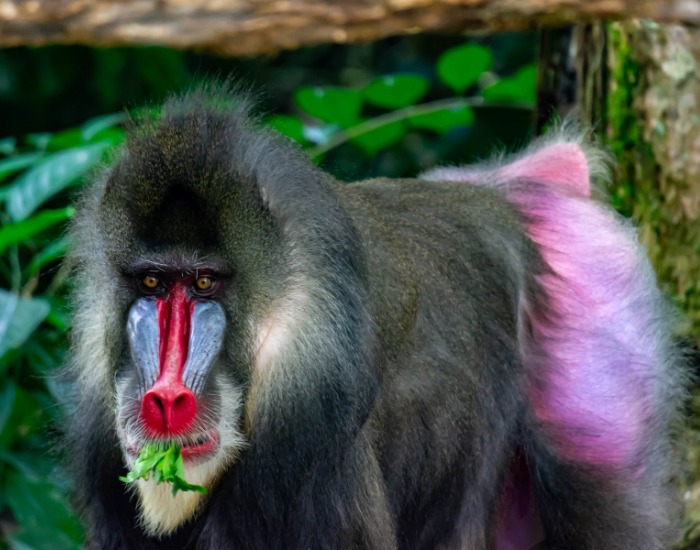
If you’ve seen a mandrill’s face look bloated, it’s probably not a dental issue. They have large cheek pouches that extend down the neck. These internal pockets serve a crucial purpose.
As they forage on the forest floor, they stuff food into these pouches. They collect fruits, seeds, and small animals quickly. Afterward, they retreat to safety in the trees to eat. This strategy protects them in vulnerable open areas.
The cheek pouches allow mandrills to spend less time exposed. Therefore, they minimize predation risk while maximizing food intake.
6. Their Highly Varied Diet Includes Everything
What do mandrills eat? They are ultimate omnivores with an incredibly diverse menu. Their highly varied diet adapts to seasonal availability.
Fruits and Seeds: These form the bulk of their intake. Mandrills prefer ripe, fallen fruit on the forest floor.
Insects: They flip over every log in the mandrill habitat looking for protein. Ants, termites, and beetles are favorites.
Small Vertebrates: Mandrills hunt small animals including duikers (small antelopes). Sometimes they catch snakes and other reptiles.
Fungi: Mushrooms provide excellent protein on the forest floor during certain seasons.
This dietary flexibility helps mandrill populations survive in changing environments. In addition, their omnivorous nature makes them important seed dispersers in tropical rainforests.

7. The “Friendly Gesture” That Looks Fierce
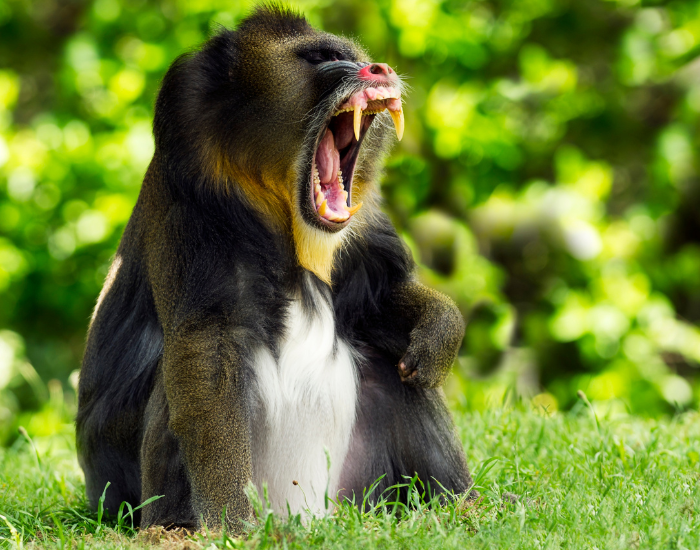
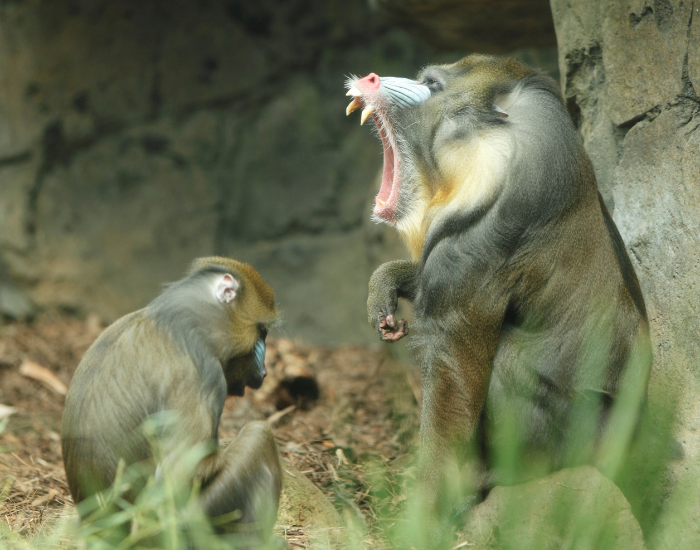
Despite their extremely long canine teeth, mandrills aren’t always aggressive. They have very specific body language cues. When a mandrill bares its teeth, it might actually signal peace.
Known as a “silent bared-teeth display,” this gesture serves multiple purposes. Males use it to appease a dominant male. Other mandrills use this friendly gesture to reduce tension within larger groups.
However, don’t test this in the wild. Are mandrills aggressive to humans? Generally, they prefer to avoid us. But any 100-pound animal with canine teeth can be dangerous. They become aggressive when cornered or when human settlements expand into their territory.
8. Masters of Both Ground and Canopy
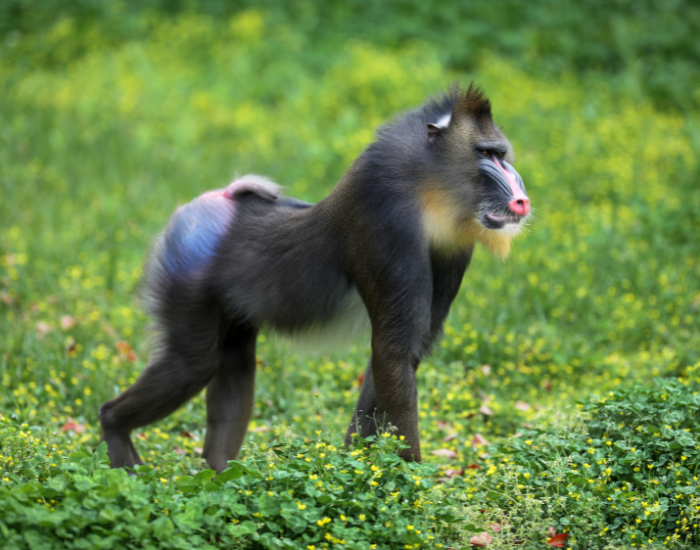
Mandrills are heavy and spend much time on the ground. Nevertheless, they are excellent climbers. Every night, they climb trees to sleep safely from predators.
Their opposable thumbs provide excellent grip. Strong limbs make them surprisingly agile in thick bush. Leopards are their primary predators, so elevation provides crucial safety.
During the day, mandrills spend significant time on the ground foraging. At dusk, however, entire troops move into the canopy. This balance between terrestrial and arboreal life is unique among primates of their size.
9. Wild Mandrills Live in Equatorial Africa
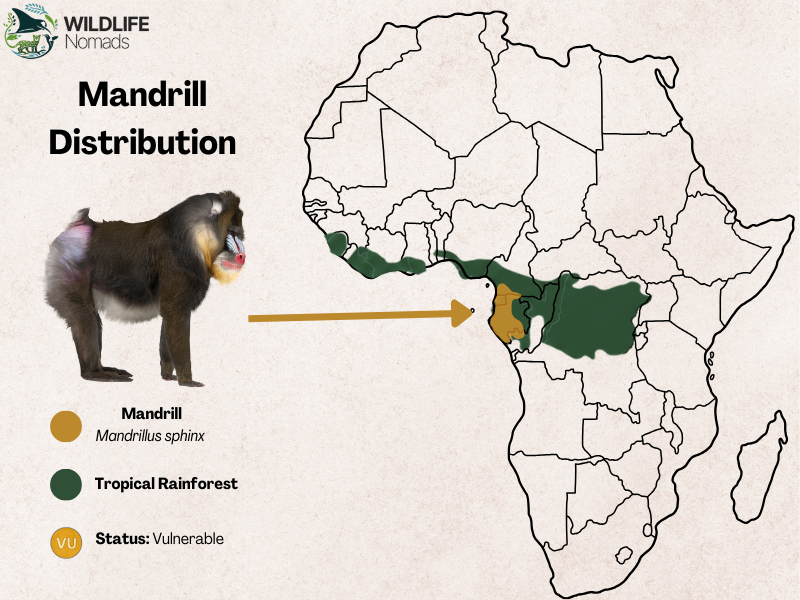
Where do mandrill monkeys live? They are native to a specific region of Africa. Specifically, their range covers Equatorial Africa in West Central Africa. You can find wild mandrills in:
Gabon: Home to the largest population of mandrills. Western Gabon contains extensive mandrill habitat.
Equatorial Guinea: Dense forests provide ideal mandrill habitat here.
Cameroon: Southern regions host significant mandrill populations.
Republic of Congo: Northern areas contain mandrill groups.
They prefer tropical rainforests with thick secondary forests. The canopy provides cover while the forest floor offers abundant food. Mandrill habitat requires both dense vegetation and fruit-bearing trees.
Unfortunately, this limited range makes them vulnerable. As human settlements expand, mandrill habitat shrinks rapidly.
10. Young Mandrills Have a Black Natal Coat
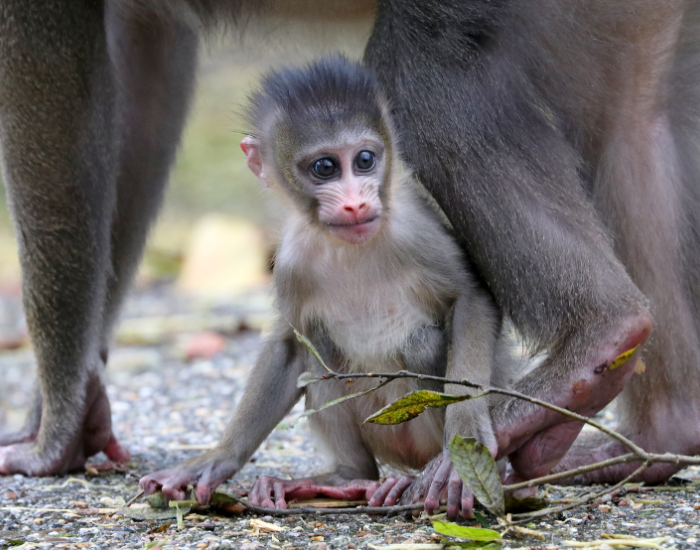
Unlike vibrant adults, young mandrills look completely different at birth. They are born with a distinctive black natal coat and pink skin. This dramatic color difference serves an important purpose.
The dark brown crest and black coat act as a social “pass” within the troop. Adult females and other mandrills show more tolerance toward infants with this coloring. As they mature, young mandrills gradually develop olive brown fur.
Eventually, adult male mandrills develop the spectacular bright coloration we recognize. Females retain more subdued coloring throughout life. This transformation takes several years to complete.
11. Scent Marking Functions Like Social Media
Beyond their visual displays, mandrills communicate through scent. Male mandrills possess a specialized gland on their chest. They rub this gland against trees to mark territory.
This scent marking signals their presence to other males and potential mates. It’s the primate equivalent of leaving a status update. Dominant males mark more frequently than other males. This establishes dominance without physical confrontation.
In addition, mandrills communicate through vocalizations. They produce grunts, roars, and screams that carry through thick bush. This complex communication system maintains troop cohesion in dense forests.
12. Endangered Species Status Demands Action
Sadly, the mandrill is currently listed as vulnerable by the IUCN. Mandrill populations have declined over 30% in recent decades. This trend continues across their range.
Primary Threats to Mandrills
Habitat Loss: As human settlements grow, forests disappear. Fragmentation isolates mandrill populations from each other. Logging and agriculture destroy mandrill habitat rapidly.
Bushmeat Trade: Their large size makes them valuable targets. Commercial hunting threatens wild mandrills significantly. Local and international demand drives this destructive trade.
Conservation efforts are underway across Equatorial Africa. Organizations like WWF work with local communities. National parks in Gabon protect crucial mandrill habitat. However, more action is needed urgently.
Mandrill Behavior and Social Structure
Understanding mandrill behavior reveals their complexity. Dominant females often lead family groups day-to-day. They decide movement patterns and feeding locations. Meanwhile, adult males maintain overall troop protection.
During breeding season, competition intensifies among males. The dominant male defends exclusive mating rights with several adult females. Other males must wait their turn or challenge for position.
Mandrills communicate constantly within their troop. Body language conveys hierarchy and intentions. In addition, facial expressions indicate mood and social status. This sophisticated communication prevents unnecessary violence.
FAQ: Common Questions About Mandrills
Baboons have long, dog-like muzzles and longer tails. Mandrills have colorful faces with blue ridges and bright red noses. In addition, mandrills live in tropical rainforests while baboons prefer savannas. They are different species despite superficial similarities.
A male mandrill is generally heavier and more powerful than most baboon species. However, baboons are exceptionally aggressive and fight in coordinated groups. In reality, these species rarely encounter each other in the wild.
The mandrill is definitely a monkey, specifically an Old World monkey. The easiest way to tell? Mandrills have tails, albeit very short ones. Apes like chimpanzees and gorillas have no tails.
Wild mandrills live exclusively in West Central Africa. Their range includes Gabon, Equatorial Guinea, Cameroon, and Republic of Congo. They inhabit tropical rainforests with thick bush and abundant fruit trees.
Leopards are the primary predators of mandrills. Large pythons occasionally catch young mandrills. Eagles may target very small infants. However, adult male mandrills have few natural predators due to their size and aggressive defense.
Dominant male mandrills display the brightest coloration—both facial and rump. They also use body language, vocalizations, and physical displays. Fighting occurs but often isn’t necessary. Bright colors alone establish hierarchy effectively.
Final Thoughts: The Mandrill’s Remarkable Story
The mandrill stands out in the animal kingdom for many reasons. Their bright coloration defies typical camouflage strategies. The size makes them the largest monkeys on Earth. Their complex social behavior rivals any primate species.
From the thick bush of Western Gabon to protected reserves across Equatorial Guinea, these remarkable animals continue their ancient rhythms. Several adult females lead their family groups through familiar territories. Dominant males display their spectacular colors to maintain order.
Yet each year, their world shrinks a little more. Tropical rainforests fall to agriculture and development. Commercial hunting and illegal trade continues despite its illegality. Time is running short for wild mandrills.
The story of the mandrill isn’t over yet. However, the ending depends on choices we make today. Will future generations see these technicolor primates in the wild? Or will they know them only through photographs and stories?
The answer lies with us. By supporting conservation, spreading awareness, and making sustainable choices, we can ensure the mandrill’s survival. These extraordinary Old World monkeys deserve nothing less.
After all, a world without the vibrant, powerful, complex mandrill would be a diminished world indeed. Their presence reminds us that nature’s creativity knows no bounds. Protecting them protects that endless natural wonder for generations to come.