The first humpback whale I ever saw properly was from a beach in Puerto Escondido, Mexico. I spent a month there. Every morning I walked to the local market. Most mornings I stopped on the sand and watched blows on the horizon.
One day we booked a dolphin tour. We found dolphins, and then we found humpbacks, which was not the point of the trip at all. A colossal shape burst from the Pacific, hung there, and crashed back down. That was the moment.
I moved to Australia in January 2022. Sydney first, then the Gold Coast from June 2023. In between, a lot of driving through the Northern Rivers up to the Sunshine Coast. I have now seen humpback whales from more headlands than I can list. one of the best ones is in Burleigh Heads.
For two months I did a housesit of a cat on a flat with an ocean view. I watched whales from the balcony every single day of it. That is where most of what follows comes from.
Below are twelve humpback whale facts. Each one covers what it looks like in the field and where to go and see it. You can also follow the east Australian migration month by month on our humpback whale migration map.
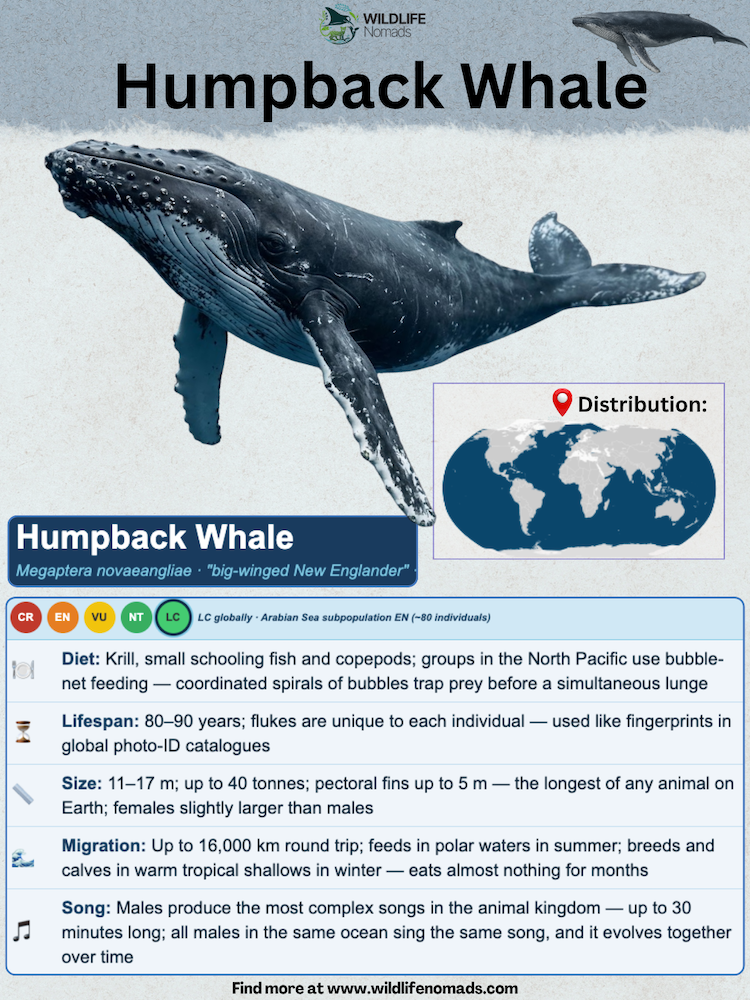
1. They Are Not Named for a Hump
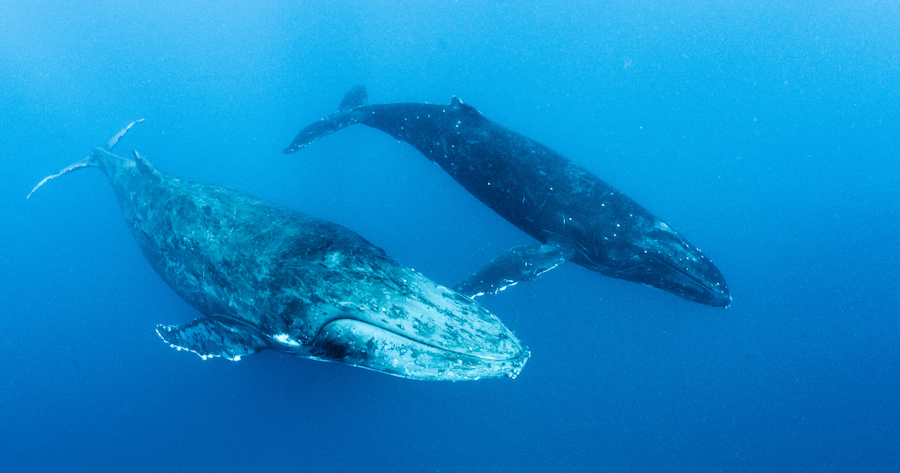
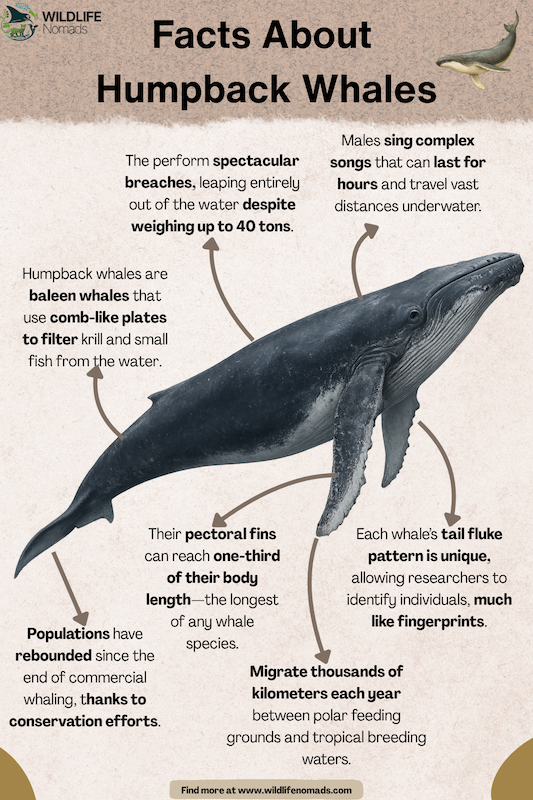
Humpback whales do not carry a permanent camel-like hump. The name comes from the arch they make just before a deep dive. The back rolls up, a small rounded dorsal fin appears, and then the tail flukes lift clear.
Watch one dive and you understand the name in about two seconds. Early whalers named what they saw from a boat, not what they measured on a beach.
The scientific name is better. Megaptera novaeangliae means “large-winged New Englander”. It refers to the enormous pectoral fins and the coast where the species was first described. The humpback whale Megaptera novaeangliae sits in the baleen whale suborder Mysticeti, alongside fin whales, minke whales and right whales.
Humpbacks belong to the wider group of cetacean species, which covers every whale, dolphin and porpoise. That makes them relatives of pilot whales, sperm whales and even bottlenose dolphins. It is a mammalian species group with enormous internal range.
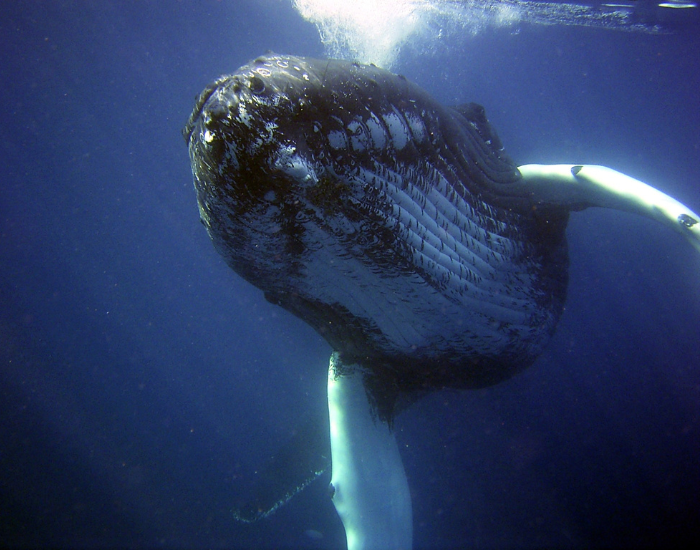
2. Their Pectoral Fins Are the Longest of Any Whale
A humpback’s pectoral fins reach five metres, up to 30% of total body length. No other whale species comes close, proportionally or absolutely.
Those fins are not decoration. Research published in 2025 measured the lift they generate and found humpbacks produce far more than other baleen whales. That extra lift lets them turn tightly enough to bubble-net feed. No other species can.
The dorsal side is generally black. The underside varies, and the pattern on the tail flukes is unique to individual whales. Researchers photograph flukes the way police take fingerprints, and global catalogues now hold tens of thousands of identified animals.

3. They Reach 17 Metres, but They Are Not the Biggest
Adults measure 14 to 17 metres, or 46 to 56 feet. Adult humpback whales can weigh up to 40 metric tons, about 44 short tons. Female humpback whales grow one to one and a half metres longer than males.
The flukes alone can span 5.5 metres. The largest humpback ever recorded measured 89 feet and weighed 180,000 pounds.
Impressive, and still mid-table among great whales. A humpback is roughly half the length of the biggest whale in the world. It weighs about a quarter of what a blue whale weighs. Because they breach and expose up to 90% of the body, they look larger than they are.
To better grasp the true size, have a look at the
All fourteen whales are drawn at one true scale, with a two-metre diver alongside each of them. For the full version, with every species, its measurements and the notes behind them, open the whale size comparison.

4. They Filter Everything Through 270 to 400 Baleen Plates
Humpback whales have 270 to 400 baleen plates hanging from the upper jaw. The plates are keratin, the same material as your fingernails.
The method is simple and enormous. The whale takes in a huge volume of water and closes its mouth. Then it pushes that water back out through the baleen plates. Whatever is too big to pass through stays behind.
Humpback whales primarily feed on krill and small schooling fish such as herring and capelin. An adult can filter up to 1,360 kilograms, about 3,000 pounds, in a single day of the summer feeding season.
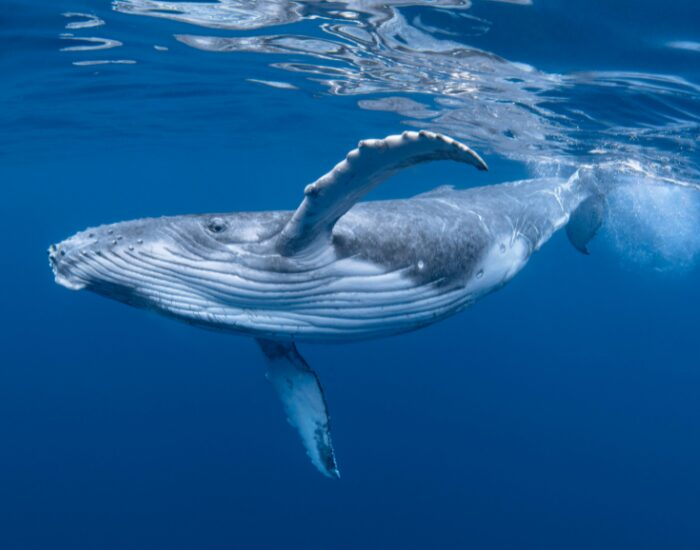
5. Only Humpbacks Bubble-Net Feed
This is the behaviour I most want to see and still have not. Humpback whales feed by blowing a rising spiral of bubbles around a school of fish. The bubbles pack the prey into a tight column. Then the whales lunge upward through the middle with mouths open.
They can dive to around 20 metres to set the net. Humpbacks forage in groups of up to 200 individuals in the richest grounds. The coordinated bubble-net teams are usually much smaller. Southeast Alaska, the Bering Sea and the Aleutian Islands are the classic places to watch it.
The 2025 morphology study settled a long argument. Humpback whale flippers generate the lift needed for those tight, fast turns. Other baleen whales are simply not built to catch prey this way.
6. They Migrate Up to 8,000 km a Year and Fast the Whole Way
Humpback whales migrate between polar summer feeding grounds and tropical breeding grounds. The annual round trip runs to 8,000 kilometres, and some populations cover 5,000 miles or more. Some humpbacks travel 3,000 miles from Alaska to Hawaii.
Northern Hemisphere humpbacks feed from June to October. Southern Hemisphere humpback whales breed between July and October. The two halves of the world run opposite calendars and rarely mix. Not every population moves: humpbacks in the Arabian Sea stay put year-round, the only non-migratory population known.
They do the whole trip on stored blubber. No feeding, for months. In 2024 researchers matched photos of one male seen off Colombia in 2013 and again off Zanzibar in 2022. The two sightings sit 13,046 kilometres apart, the longest distance ever recorded between two breeding grounds. Humpbacks are among the longest-migrating animals on Earth.
Interactive
Fourteen populations, two hemispheres, six months apart
Drag the slider, or press play. The map opens on today’s date, so you are looking at roughly where each population is right now.
Open the full humpback migration map · See all six migration maps
7. The Australian Humpback Highway Runs Past My Balcony
For two months I lived in a flat in Kings Cliff, Australia, with an uninterrupted ocean view. I watched humpback whales from that balcony every day. Not most days. Every day.
Once you know the migration is on, you stop scanning and start waiting. A blow, then a second blow in the same place, then the back and the small dorsal fin. If you are lucky, the flukes.
The east coast population breeds in the warm water of the Great Barrier Reef. They head north between May and July, then come back south between September and November with new calves. I have watched them from Byron Bay, Pottsville, Burleigh Heads and, absurdly, from Surfers Paradise. Burleigh Head National Park is the only place I know where you watch a humpback breach from inside a rainforest.
The west coast is a separate biological stock. I spent three months in Western Australia and took a dedicated humpback tour out of Albany. It was winter and it was freezing. We saw many whales and a couple breached right beside the boat, close enough that nobody spoke afterwards.
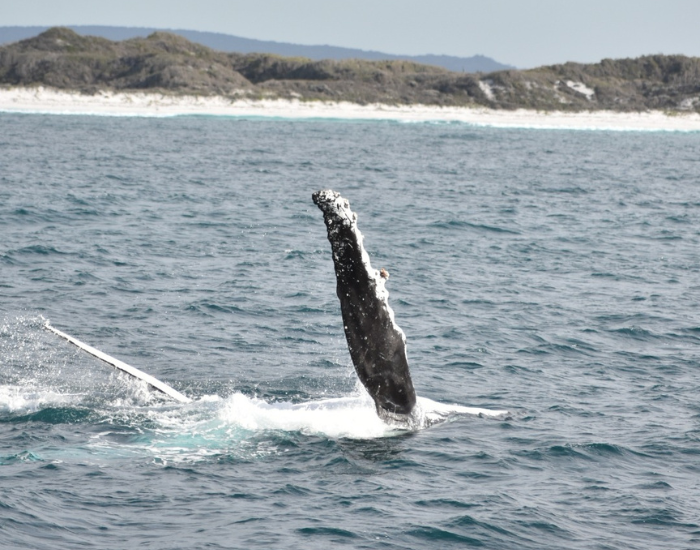
Humpback whale in Albany, Western Australia | Photo by Cesar Medina Davila
8. You Can Hear Them Before You See Them
We went out to Cook Island looking for wobbegongs, sea turtles and whatever else turned up. While snorkelling we found a zebra shark. We did not see a single whale.
But we also heard them! Underwater, clear, with no animal in sight. I knew they were out there because I had been watching them from the balcony for weeks. Hearing a humpback whale song through the water, with nothing to look at, remains my best encounter with the species.
Male humpback whales produce complex songs lasting 4 to 33 minutes, repeated for hours. Whale song carries at least 10 kilometres, and in quiet deep water far further. Every male in a population sings the same song each season. It changes over the year as neighbouring males copy each other. A 2025 study in Science found humpback whale songs carry the same statistical structure that makes human language learnable.
They also use snorts, grumbles and bubble clouds for ordinary social business, not just song.
9. Breaching Is Not Random
Humpback whales are the most acrobatic of the large whales. Breaching, tail slapping and pectoral fin slapping are all common, and none of it appears to be accidental.
Researchers have proposed four main functions. A breach is a long-distance acoustic signal, and the splash carries further through a noisy ocean than a vocal call. During breeding season it is also a display of size between rival males. The impact dislodges barnacles and whale lice. And young whales breach more than adults, which points at play and practice.
Off Albany I watched two whales breach repeatedly beside the boat. Sitting under a forty-tonne animal leaving the water rearranges your sense of what is possible.
10. Reproduction Is the Reason the Whole Migration Exists
Humpback whales mate primarily in winter months, in warm tropical breeding grounds. Gestation lasts about 11.5 months, and females typically give birth every two years.
A humpback whale swims in the sunlight zone of my deep sea dive. Calves are born at roughly 13 to 16 feet, four to five metres. Mothers nurse them for up to a year on extremely rich milk. A newborn lacks the blubber to survive polar water, so it has to grow fast. Humpback whales reach sexual maturity between four and ten years old. A young whale stays with its mother through one full migration before going alone.
Warm, shallow, calm water gives a humpback calf its best chance. That single requirement drives the entire annual journey. Female humpback whales are fiercely protective. Marine regulations enforce wider distances for whale watching vessels whenever a mother and calf are present.
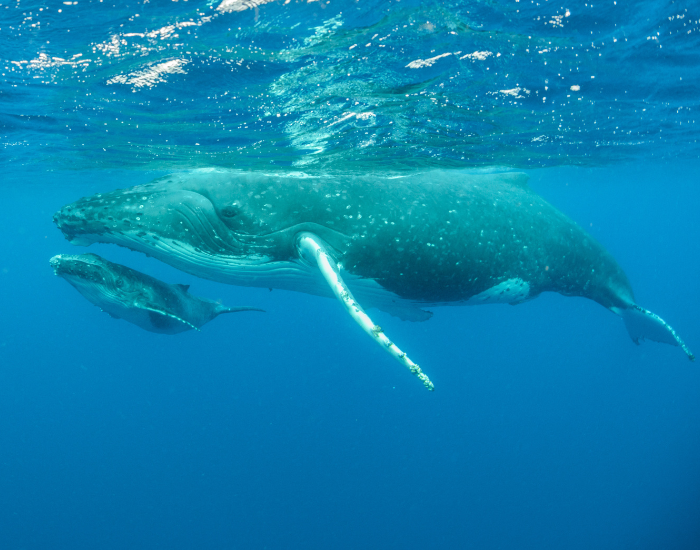
They are protective mothers | Getty Images
11. They Break Up Killer Whale Attacks on Other Species
Killer whales are the main natural predator of humpback calves. Rake marks on flukes show how many young whales survive an attempt.
What is strange is what humpbacks do next. They have been documented breaking up orca hunts on seals, sunfish and other species entirely unrelated to them. Whales have swum in, positioned themselves between predator and prey, and stayed.
Nobody has settled why. It may be generalised mobbing of a shared enemy, the same instinct that makes small birds harass a hawk. It may be something else. Either way, few wild animals are documented defending a species other than their own.

12. They Came Back From a 90% Collapse
Commercial whaling reduced humpback whale populations by more than 90%. Catching humpback whales was industrial, global and very nearly terminal for several stocks.
The International Whaling Commission banned commercial whaling of humpbacks in 1966. Recovery since has been remarkable. The global population is now around 135,000 individuals, and the IUCN lists the species as Least Concern. A 2019 assessment put the western South Atlantic population at 93% of its pre-exploitation size. It had fallen to roughly 450 animals in the 1950s.
The recovery is not uniform. Four distinct humpback whale populations are still listed as endangered or threatened species under the Endangered Species Conservation Act. They include the western North Pacific stock, the Cape Verde and Northwest Africa population, and the Arabian Sea population. Only about 80 Arabian Sea humpback whales remain. The National Marine Fisheries Service reclassified nine of fourteen recognised populations in 2016. That was a genuine conservation win, but not a finished one. Whale hunting has not ended everywhere either.
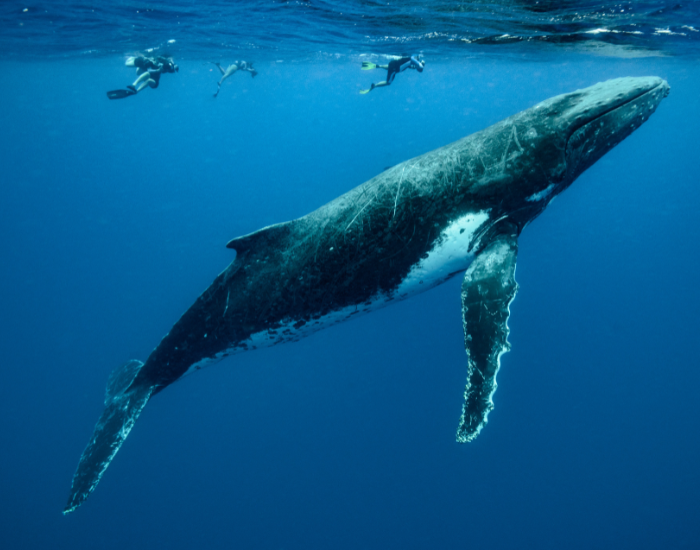
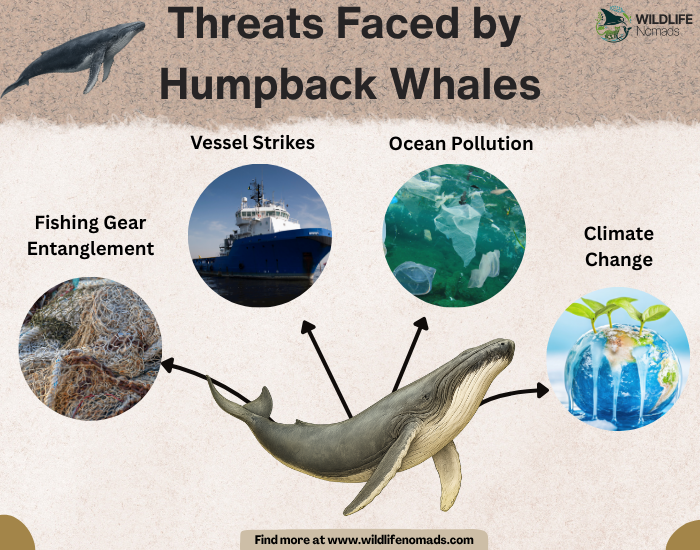
What Still Threatens Humpback Whales
Humpback whales are protected as a migratory species under several international agreements, and organisations like the Marine Mammal Center run rescue and disentanglement work in the field. The harpoon has been replaced by four quieter problems.
Fishing gear entanglement. This is now a leading cause of human-caused humpback whale deaths. Juveniles get caught in pot lines and gillnets, then drown, starve or carry the gear for years.
Vessel strikes. Humpbacks migrate close to shore, straight through busy coastal shipping. Collisions rise wherever traffic and migration overlap.
Ocean noise. Shipping, seismic survey and sonar mask the frequencies humpbacks use to find each other. A whale that cannot hear a song cannot answer it.
Climate change. Warming water moves krill and small schooling fish. A 2024 study in Marine Ecology Progress Series found humpbacks now feed predictably in a Mexican breeding area during cooler La Niña winters, behaviour that used to be considered anomalous. When the ocean changes, the whales change with it, and not always fast enough.
Threats Faced by Humpback Whales | Wildlife Nomads
Where to See Humpback Whales
Their coastal migration makes humpbacks the most accessible of the great whales for whale watchers. Choose your location by whether you want feeding behaviour or mothers with calves.
Australia, migration highway. Sydney headlands, Byron Bay, the Gold Coast and Hervey Bay on the east coast; Albany and Augusta on the west. May through November. This is the most reliable shore-based whale watching in the world, and it costs nothing from a headland.
Alaska, USA, summer feeding grounds. Glacier Bay, the Gulf of Alaska and Icy Strait Point, May through September. This is the place to see bubble net feeding.
Hawaii, USA, winter breeding grounds. Maui and the Hawaiian Islands Humpback Whale National Marine Sanctuary, November through April. Best for mothers with calves.
Mexico, Pacific coast. Banderas Bay, Puerto Escondido and the Riviera Nayarit, December through March. Our Mexico whale watching guide covers the seasons in detail.
Caribbean, breeding grounds. Silver Bank in the Dominican Republic, January through March. Permit required, and worth it.
California, USA. Monterey Bay and Dana Point, June through October along the Pacific coast. See our California whale watching guide.
Iceland, North Atlantic Ocean. Skjálfandi Bay and Húsavík, April through October. Pairs well with the rest of Iceland’s wildlife.
Whale watching vessels change whale behaviour and raise stress levels, particularly around calves. Keep your distance, let the whale choose the encounter, and pick operators who do the same. The same principles apply across responsible marine wildlife tourism and dolphin conservation.
This blog is reader-supported. When you buy experiences through links listed on this site, we may earn an affiliate commission.
Frequently Asked Questions
Humpback whales are non-aggressive toward humans and often curious, approaching boats and divers of their own accord. They are not dangerous by intent. The risk is size. An accidental tail slap from a forty-tonne animal can injure a swimmer or damage a small boat. Mothers with calves are the exception and react defensively to anything they read as a threat.
Humpback whales live for several decades, with estimates for some individuals reaching 80 to 90 years. Age is calculated from ear plug layers and, more recently, from DNA methylation. Researchers identify individual whales by their tail flukes. Some North Atlantic humpbacks have now been tracked for over forty years.
They are named for the arch, or hump, the back makes just before a deep dive. It appears immediately in front of the small dorsal fin. The scientific name Megaptera novaeangliae means “large-winged New Englander”. It refers to their pectoral fins and the coast of first description.
All baleen whales filter feed through baleen plates rather than teeth, but humpbacks are distinct in three ways. Their pectoral fins are proportionally the longest of any whale. They are the only species that bubble-net feeds. Males also produce long structured songs that change every season. Compared with fin whales or blue whales, humpbacks are also far more acrobatic at the surface.
Stop and Watch
I have seen humpback whales from a market walk in Mexico and a balcony on the Gold Coast. Also a freezing boat in Albany, and a dozen headlands in between. The novelty has not worn off once.
Their recovery is one of conservation’s genuine successes, and few marine mammals have come back so visibly. It also happened because people decided a species was worth more alive, and then wrote that decision into law. Entanglement, ship strikes and a warming ocean are the version of that fight we have now.
Find the migration season where you live. Walk to a headland, sit down, and give it twenty minutes. Check where the east Australian population is this month on our humpback whale migration map. Or compare their route with the other great animal migrations.
Humpback Whale Challenge
Ten questions on the ocean’s great acrobat and singer — first a fact-or-fiction round, then multiple choice. How many can you get?
References:
Arnon, I., Kirby, S., Allen, J. A., Garrigue, C., Carroll, E. L., & Garland, E. C. (2025). Whale song shows language-like statistical structure. Science, 387(6734), 649–653. https://doi.org/10.1126/science.adq7055
Kalashnikova, E., Botero-Acosta, N., Duque Mesa, E., Palanca Gascón, M., Lyne, P., Cheeseman, T., Vogel, A., Kennedy, A., & Akkaya, A. (2024). Interbreeding area movement of an adult humpback whale between the east Pacific Ocean and southwest Indian Ocean. Royal Society Open Science, 11(12), 241361. https://doi.org/10.1098/rsos.241361
Nemeth, C., Gough, W. T., Segre, P. S., Fish, F. E., Szabo, A., Fassmann, W. N., Bejder, L. (2025). The key to bubble-net feeding: How humpback whale morphology functionally differs from other baleen whales. Journal of Experimental Biology, 228(16), jeb249607. https://doi.org/10.1242/jeb.249607
Ransome, N., Frisch-Jordán, A., Cheeseman, T., Calambokidis, J., Kew, A., Titova, O., Filatova, O., Loneragan, N. R., & Smith, J. N. (2024). Environmental drivers of persistent humpback whale Megaptera novaeangliae feeding events in a Mexican breeding area. Marine Ecology Progress Series, 726, 161–179. https://doi.org/10.3354/meps14464
Zerbini, A. N., Adams, G., Best, J., Clapham, P. J., Jackson, J. A., & Punt, A. E. (2019). Assessing the recovery of an Antarctic predator from historical exploitation. Royal Society Open Science, 6(10), 190368. https://doi.org/10.1098/rsos.190368