The first brush turkey I ever saw was scratching leaf litter at Burleigh Heads. That was January 2019. I had flown out to visit my sister in Melbourne, then driven up the east coast on a whim. I stopped at the headland for a hike. Twenty minutes later I had two new species: a scrub turkey on the track, a water dragon frozen on a rock.
Then I did not come back for four years. I moved to Australia in January 2022, lived in Sydney, and landed on the Gold Coast in June 2023.
Now Burleigh is the place I return to most. I once house-sat two shelties here for three weeks. I walked the headland twice a day, morning and evening, for twenty-one days straight. That is where this list comes from. Burleigh Head National Park is the only place I know where you can watch humpback whales breach from inside a rainforest.
Why This Small Headland Holds So Many Animals
Burleigh Heads is a coastal village between Broadbeach and Coolangatta, about an hour south of Brisbane. The national park sits on a basalt hill. Lava from the Tweed shield volcano built it 20 to 23 million years ago, then cracked into six-sided columns as it cooled. Those columns tumbled seaward and formed the rocky foreshore you scramble over today.
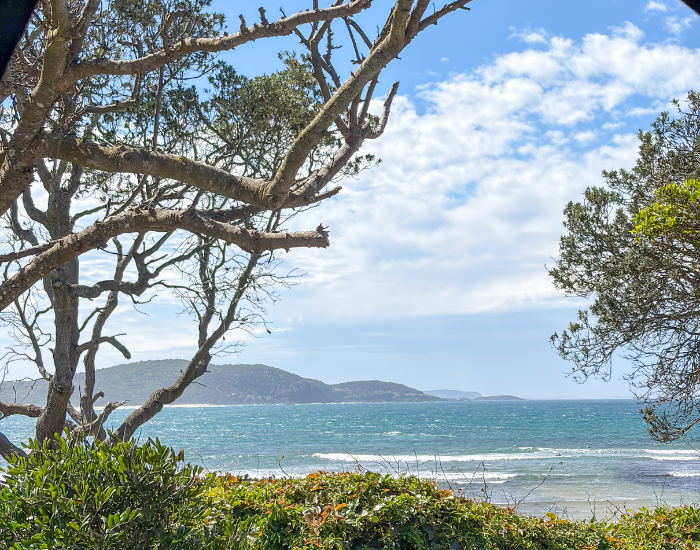
That geology matters biologically. Four habitats stack up in a short walk: littoral rainforest, open eucalypt forest, pandanus on the seaward slopes, and rocky intertidal below. Add Tallebudgera Creek to the south and open ocean to the east. You get land birds, reptiles, seabirds and marine giants on one loop.
The Burleigh headland also anchors the northern end of the Gold Coast World Surfing Reserve, dedicated in 2016 as the world’s eighth.
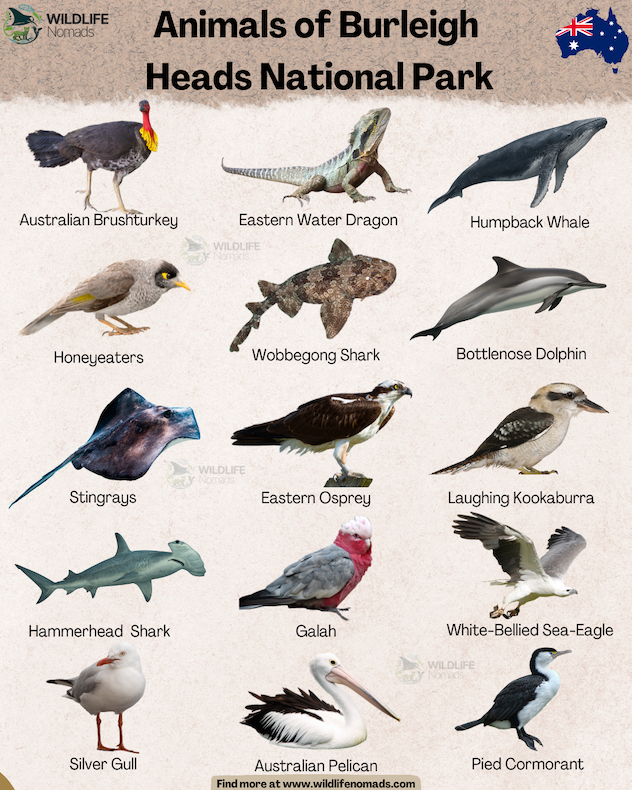
Getting There, Parking, and the Loop I Walk
The Rainforest Circuit runs 2.3 km return, about 45 minutes, with a steep pinch near Tumgun Lookout. The Oceanview track is 1.2 km one way. That headland walk takes roughly 30 minutes and delivers the whale views. Both walking tracks start within walking distance of Burleigh Beach.
When I drive, I park at Justins Park on the Esplanade. It fills fast on weekends. My backup is the quieter streets behind the national park, off the Gold Coast Highway near Sixth Avenue. The extra ten minutes on foot has never cost me a sighting.
Two insider tips. Burleigh Beach Tourist Park sits roughly 200 metres from the main beach, which makes it the easiest base for dawn walks. North Burleigh Lookout, a few minutes north toward Miami Beach, offers a second set of ocean views when the headland gets busy.
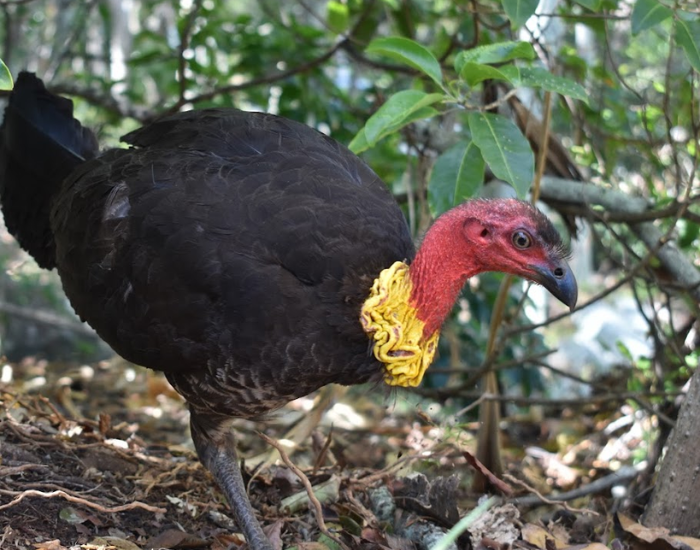
1. Australian Brush Turkey (Alectura lathami)
This is the bird that started everything for me at Burleigh. You will meet one the moment you enter the rainforest, kicking litter backwards with heavy legs.
Males build enormous compost mounds and hold them near 33°C, adding or removing material as the pile heats and cools. No body heat is involved. Hall and colleagues showed brush turkeys shift so much leaf litter that they measurably change decomposition rates in urban reserves. That makes them ecosystem engineers, not garden pests.
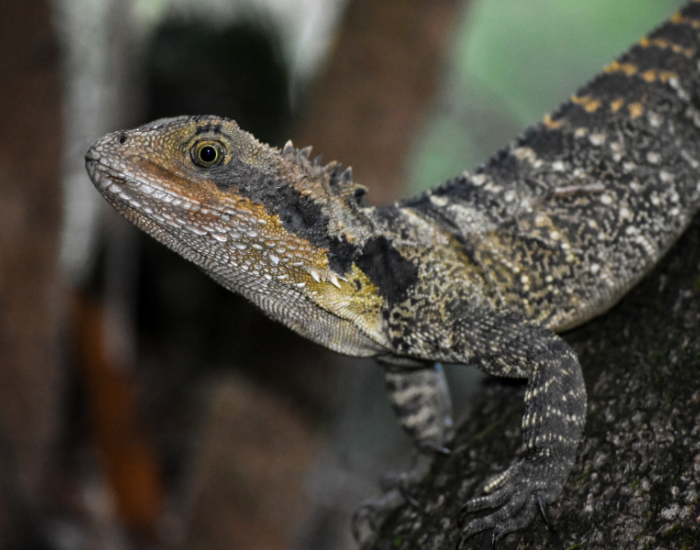
2. Eastern Water Dragon (Intellagama lesueurii lesueurii)
My second first-ever species from that 2019 trip. A big male sat motionless beside the track. He let me get within two metres before deciding I was boring.
Water dragons rely on stillness, then explosive speed toward water. Interestingly, a 2022 study of Brisbane populations found rapid, fine-scale evolution between dragons in city parks only kilometres apart. Urban green spaces behave like islands. Look on shaded rainforest sections and warm rocks near the creek.
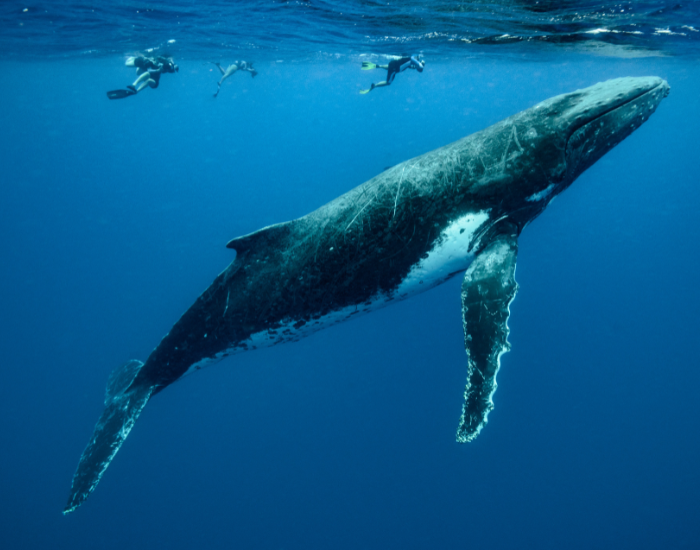
3. Humpback Whale (Megaptera novaeangliae)
Walk the Oceanview track between May and November and you will find a small crowd at the lookout, all facing one direction. Someone always points. Then a white splash goes up a kilometre offshore… a humpback whale!.
The east Australian population is a genuine recovery story. Noad and colleagues estimated around 24,500 whales in 2015, growing near 10.9% per year after near-collapse by the 1960s. I once caught the Gold Coast Whale and Ocean Festival at Justins Park. Live music, researcher talks, and the whole beachfront themed around whales.
4. Bottlenose Dolphin (Tursiops spp.)
Dolphins are my favourite sighting here, and they turn up more often than whales. On good mornings you can watch the surfers at the point break share waves with a pod of eight.
They rarely travel alone. Ansmann and colleagues documented distinct dolphin communities in nearby Moreton Bay with different foraging strategies. “Bottlenose dolphin” hides a lot of local variation. Scan just beyond the breakers from Burleigh Hill in the first hour of light.

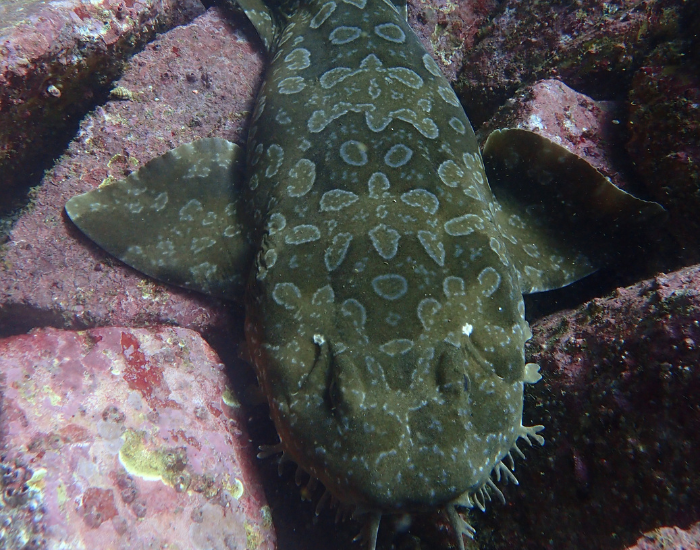
5. Wobbegong Shark (Orectolobus spp.)
Snorkel Tallebudgera Creek on a clear incoming tide and check under the rock ledges. That is where I found my first wobbegong (or the “grandpa shark due to its cute mustache) flattened on the bottom, fringed with skin lobes that erase its outline.
These are ambush predators, not swimmers. Carraro and Gladstone documented strong site fidelity in ornate wobbegongs on New South Wales reefs. Individuals returned to the same resting spots over months. Problems happen when people grab their tails.
6. Stingrays
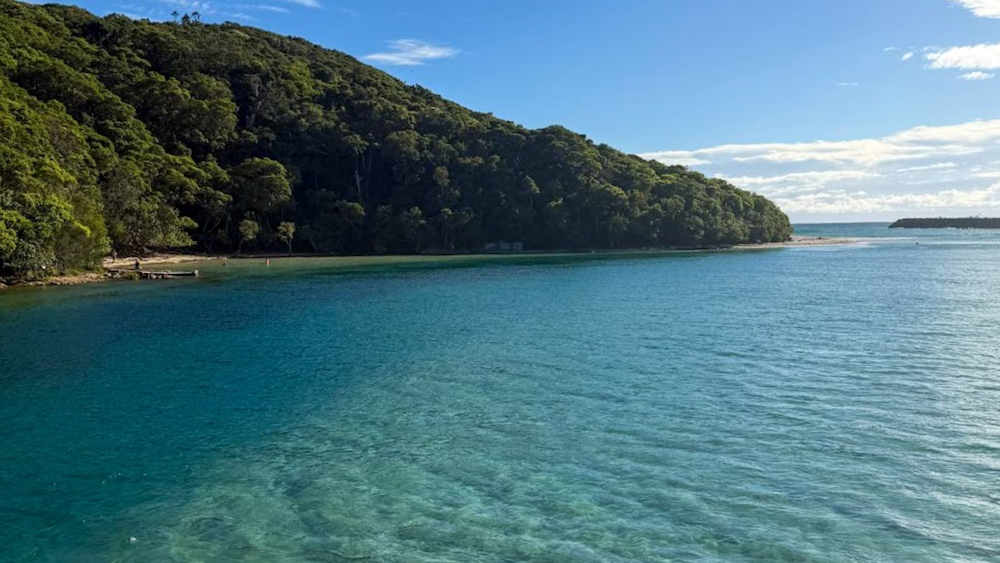
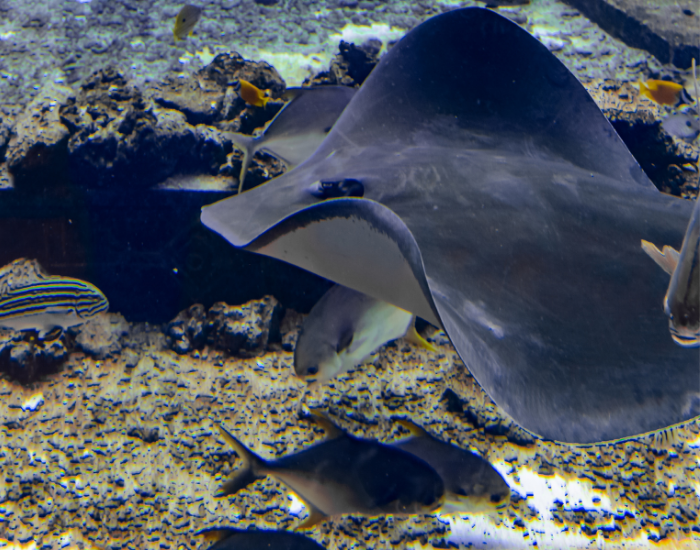
Always a pleasure to spot a stingray on a morning snorkel. Tallebudgera Creek is ideal for swimming, kayaking and fishing, and its sandy shallows hold rays that glide off before most people notice.
Giaroli and colleagues mapped stingray feeding pits across Quandamooka (Moreton Bay). Each pit is a small excavation that reshuffles the seabed while the animal hunts buried prey. Shuffle your feet entering the water, keep your distance, and you will have no trouble.
7. Hammerhead and Other Sharks
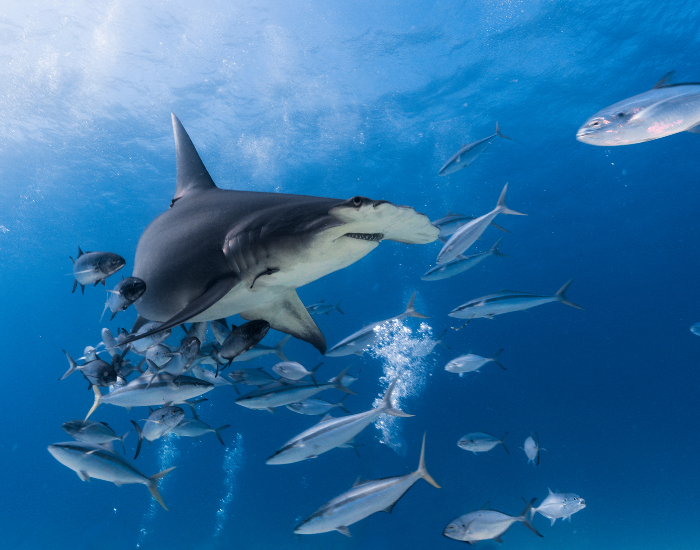
Every so often the shark sign goes up at Burleigh Beach. In three years I have seen exactly one shark from the sand, a dark shape sliding through a wave face. A freediver friend, by contrast, has watched hammerheads out past the point.
That surprised me until I checked the range maps. Great hammerheads (Sphyrna mokarran) are listed as Critically Endangered globally. Their famous cephalofoil spreads electroreceptors across a wider search area for buried prey. Sharing this water with them is a privilege.
8. Laughing Kookaburra (Dacelo novaeguineae)
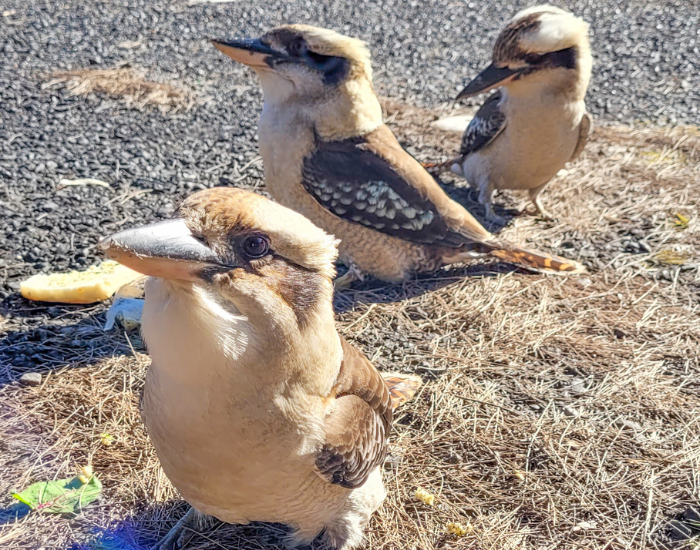
During the house-sit I woke to kookaburras every morning. I never once got tired of it. They perch low over the walking tracks and watch the ground with total focus.
Kookaburras are the world’s largest kingfishers. They hunt lizards, insects and small snakes rather than fish. That laugh is territorial advertising, usually performed by a family group holding a patch of forest. See where they fit among the kingfishers of Australia.
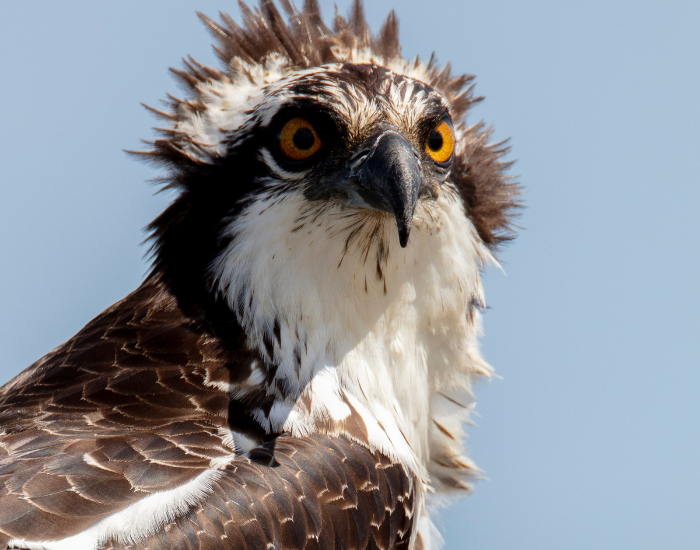
9. Eastern Osprey (Pandion haliaetus cristatus)
I watched one hunt the mouth of Tallebudgera Creek on a still afternoon. It hovered, folded, and hit the water feet first. Then it came up empty and did it again four minutes later.
Ospreys are built for this. A reversible outer toe and spiny footpads called spicules grip slippery fish from any angle. Thomson and colleagues found that in developed parts of south-east Queensland, ospreys nest heavily on towers and navigation beacons.
10. White-Bellied Sea Eagle (Icthyophaga leucogaster)
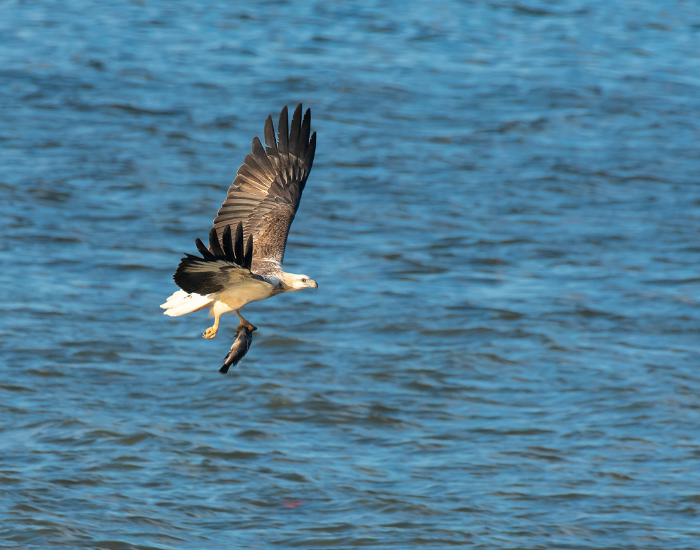
I have seen one here, once, and I still remember the shape. It came along the headland at eye level from Tumgun Lookout, then tilted out over the ocean without a single wingbeat.
Australia’s second-largest raptor carries a wingspan over two metres. It holds its wings in a shallow V while soaring. Sea eagles hunt fish and sea snakes, and they also rob other birds mid-air, which is efficient rather than lazy. Compare it with other types of eagles.
11. Australian Pelican (Pelecanus conspicillatus)
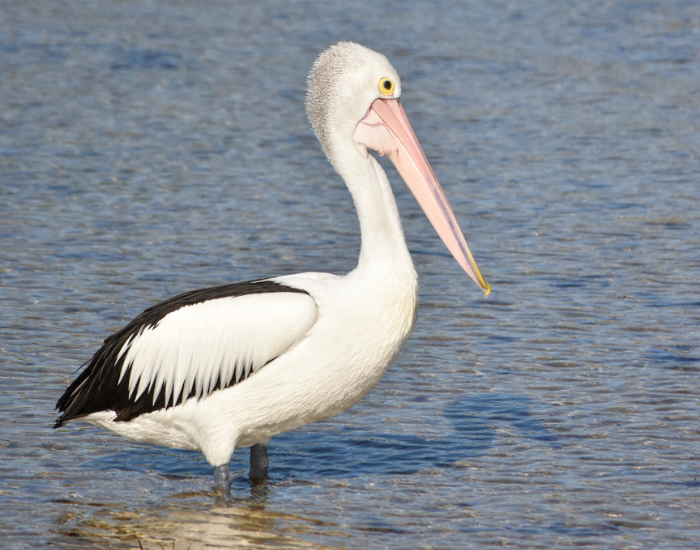
Pelicans loaf on the Tallebudgera Creek sandbanks like they own the place. Watching one land is watching physics get away with something.
This species carries the longest bill of any bird on Earth, up to around 50 cm. The elastic pouch works as a net, not a storage bag. They are also nomadic. Birds loafing on the coast may end up breeding on flooded inland lakes hundreds of kilometres away. They feature in my list of 12 seabirds you must know.
12. Pied Cormorant (Phalacrocorax varius)
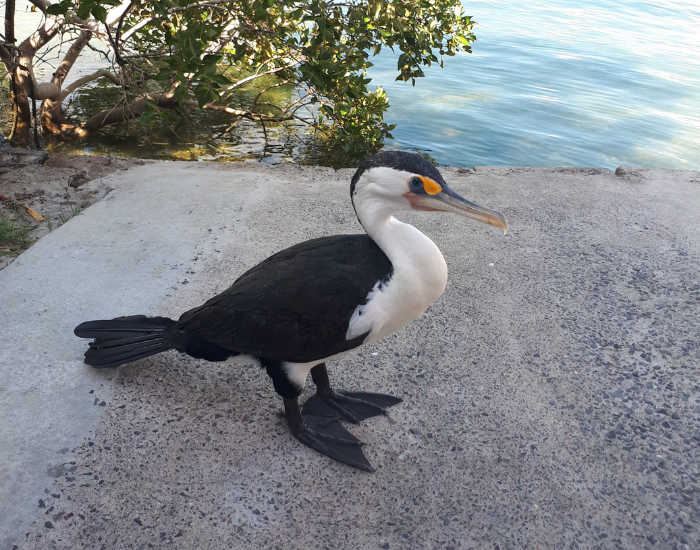
Look for a black and white bird on the rocky foreshore with its wings held open. People assume it is sunbathing. It is not.
Cormorant feathers are deliberately wettable. That reduces buoyancy and lets the bird chase fish underwater instead of bobbing on the surface. Drying out afterwards is the cost of being a better diver. I find them most reliably on the creek side at low tide.
13. Silver Gull (Chroicocephalus novaehollandiae)
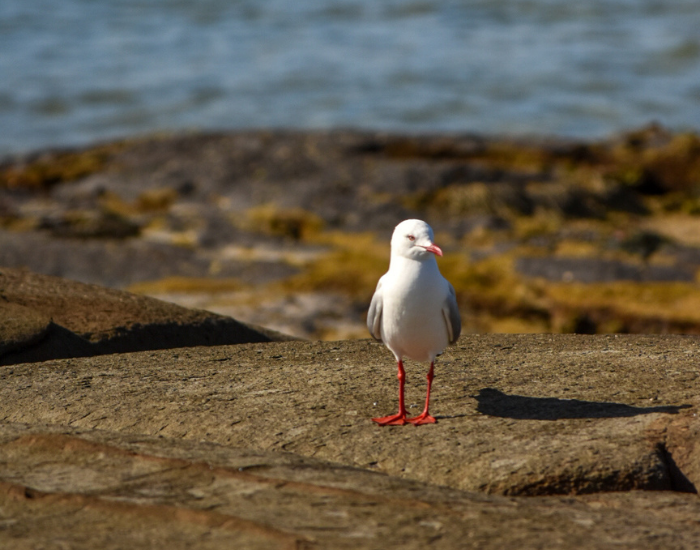
The most underrated bird on this list, purely because it is everywhere. Sit at Justins Park with hot chips and you get a free behavioural study.
Adults show bright red bills and legs. Juveniles have brown-mottled wings and dark bills, so the ones harassing you are often teenagers. This is the only common gull across eastern Australia, which surprises visitors from Europe or North America.
14. Honeyeaters
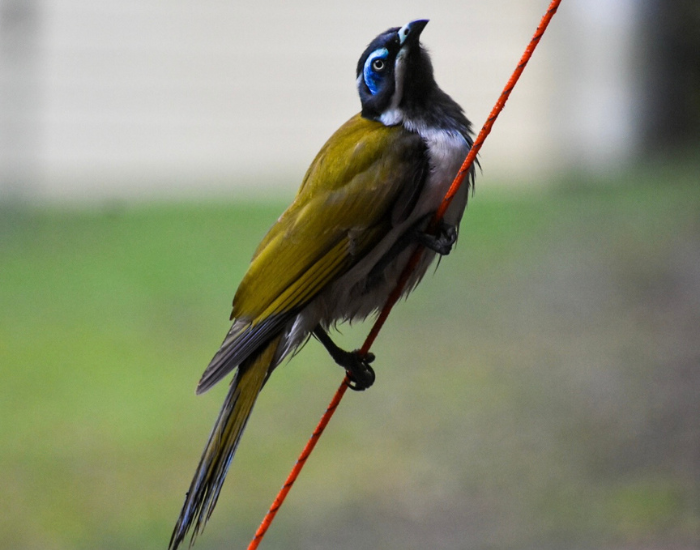
Lewin’s honeyeater gave me one of my favourite Burleigh moments. A machine-gun rattle came from deep in the rainforest and I could not place it for a full minute. Blue-faced honeyeaters, by contrast, work the picnic areas openly.
Honeyeaters carry brush-tipped tongues that mop nectar from flowers. In doing so they pollinate a huge share of Australian plants, including the banksias and grevilleas on this headland. Therefore the flowering calendar, not the season, tells you when to look. My guide to Australian native birds has the wider family.
15. Galahs and Rosellas
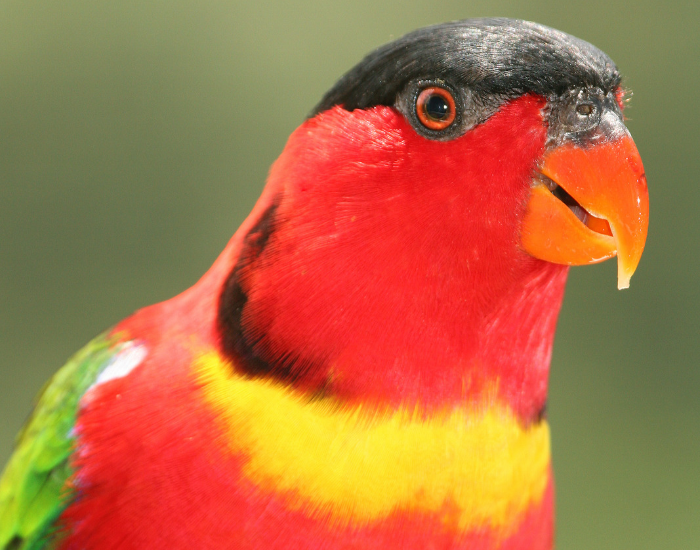
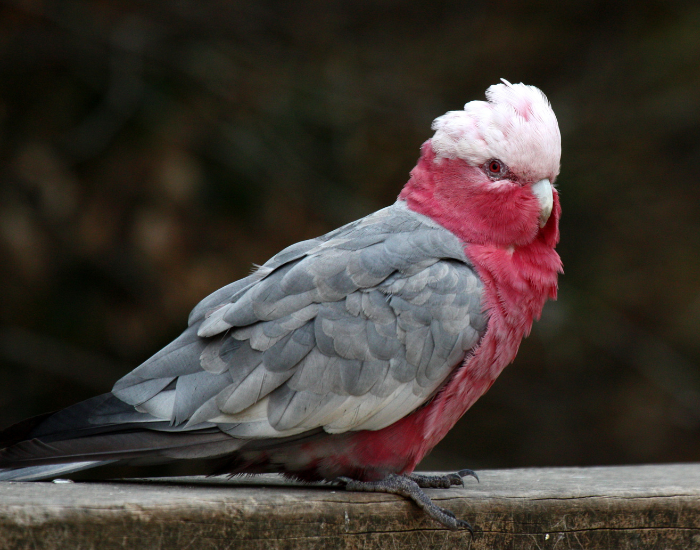
Late afternoon on the grass near the surf club, galahs drop in to feed on seed heads and shout at each other. Pale-headed rosellas stay quieter and higher, usually in eucalypts on the western edge.
Galahs are long-lived cockatoos that pair for life and reuse the same nesting hollow for years. Rosellas need those hollows too, which is why old trees matter far more than their timber value suggests.
What Else Turns Up on the Headland
I have watched a common brushtail possum work the branches after dark, ears forward, unbothered by my torch. Nocturnal marsupials are the reward for staying past sunset.
Carpet pythons are the species I keep missing. One evening I walked the same track ten minutes behind a group who had just photographed one on a branch. Queensland Parks lists them here, alongside koalas and echidnas, and locals do find all three. I have had better luck with koalas at Coombabah Lakelands and with echidnas elsewhere in Queensland.
Frequently Asked Questions
Yes. Whale watching from Burleigh Heads is popular during the migration season, roughly May to November. The best land-based viewing is from the Oceanview track and Burleigh Hill. Bring binoculars and give it twenty minutes. The Gold Coast Whale and Ocean Festival at Justins Park celebrates the same migration each July.
The Oceanview track is 1.2 km one way and takes about 30 minutes. The Rainforest Circuit is 2.3 km return, around 45 minutes, with a steep section near Tumgun Lookout. Both are short walks. Combined, they make an easy morning with ocean views throughout.
Sharks live in these waters, as they do along the whole coast. Wobbegongs and stingrays are common in Tallebudgera Creek. Incidents remain rare. Swim between the flags near the surf club, avoid dawn and dusk in murky water, and never handle a resting shark.
Early morning, before the beach crowds arrive. Reptiles bask as the rocks warm, birds feed hardest at first light, and the ocean is glassy enough to spot dolphins. Late afternoon works too, especially for galahs and possums. Skip the middle of a hot Queensland day.
How Well Do You Know Burleigh Heads?
Ten questions on the headland and its wildlife — first a fact-or-fiction round, then multiple choice. Perfect prep for your walk. How many can you get?
Walk It Twice
Twenty-one days on the same two kilometres taught me what no single visit can. Burleigh Heads is not one habitat with one animal list. It is a rainforest, a headland, a creek mouth and an ocean stacked together, and each hands you different species at different hours.
Go once in the morning and once at dusk. Take the Rainforest Circuit up, the Oceanview track back, then swim at Tallebudgera Creek. If you spot the carpet python I keep missing, tell me in the comments. Then compare notes with my guides to Coombabah Lakelands, Woody Head and Currumbin Wildlife Park.
References:
Carraro, R., & Gladstone, W. (2006). Habitat preferences and site fidelity of the ornate wobbegong shark (Orectolobus ornatus) on rocky reefs of New South Wales. Pacific Science, 60(2), 207–223. https://doi.org/10.1353/psc.2006.0003
Giaroli, M. L., Byrne, I., Gilby, B. L., Taylor, M., Chargulaf, C. A., & Tibbetts, I. R. (2024). The distribution and significance of stingray feeding pits in Quandamooka (Moreton Bay), Australia. Marine and Freshwater Research, 75(18), MF23247. https://doi.org/10.1071/MF23247
Hall, M. J., Martin, J. M., Burns, A. L., & Hochuli, D. F. (2023). Mound-building behaviour of a keystone bioturbator alters rates of leaf litter decomposition and movement in urban reserves. Austral Ecology, 48(7), 1426–1439. https://doi.org/10.1111/aec.13409
Jackson, N., Littleford-Colquhoun, B. L., Strickland, K., Class, B., & Frère, C. H. (2022). Selection in the city: Rapid and fine-scale evolution of urban eastern water dragons. Evolution, 76(10), 2302–2314. https://doi.org/10.1111/evo.14596
Noad, M. J., Kniest, E., & Dunlop, R. A. (2019). Boom to bust? Implications for the continued rapid growth of the eastern Australian humpback whale population despite recovery. Population Ecology, 61(2), 198–209. https://doi.org/10.1002/1438-390X.1014