I’ve written about wildlife across several South American countries on this site, including the animals of Argentina, the animals of Brazil, and the animals of Peru. The animals in Colombia sit in a league of their own. Colombia is the world capital of avian life, with over 1,900 bird species documented inside its borders, and ranks among the most biodiverse countries on Earth.
Below are the 14 animals in Colombia I’d put at the top of any field list, plus the parks where you can actually find them. I’ve spent fieldwork seasons across the Andes mountains, the Llanos, and the Amazon, and the Colombian animals on this list are the ones I send first-time visitors after.
Why Colombia Holds So Much Wildlife
Colombia sits along the equator with two coastlines — Pacific and Caribbean — plus the Andes mountains slicing through the country and the Amazon basin in the south. The result is an almost unmatched mosaic of ecosystems. The numbers tell the story: 467 mammal species, 518 reptile species, over 750 amphibian species, around 3,000 fish species, and more than 4,000 butterfly species — the highest butterfly diversity of any country on Earth. Colombia protects more than 500 mammal species when you include marine taxa, and many of those species share habitat with each other across overlapping ranges.
Colombian wildlife thrives because the geography pushes evolution. Millions of years of Andean uplift created isolated “islands” of habitat that drove independent speciation. The forests also acted as ice age refuges, where ancient species survived while much of the planet froze. Stable wet forests allowed complex food webs to evolve, and the result is the rich biodiversity we see today. The Sierra Nevada de Santa Marta and the Chocó-Darién rainforest on the Pacific shore are among the most biodiverse areas on the planet, with high rates of endemism for both animal and plant species.
Many of these species are also native to Central and South America more broadly, but a striking number are found nowhere else. That mix of regional and endemic species is what makes Colombia such a magnet for field biologists.
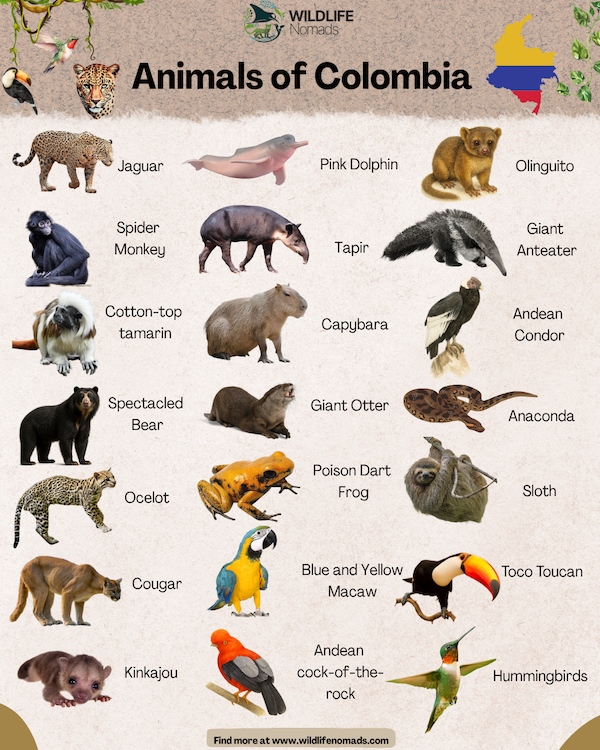
The 12 Colombian Animals You Should Know
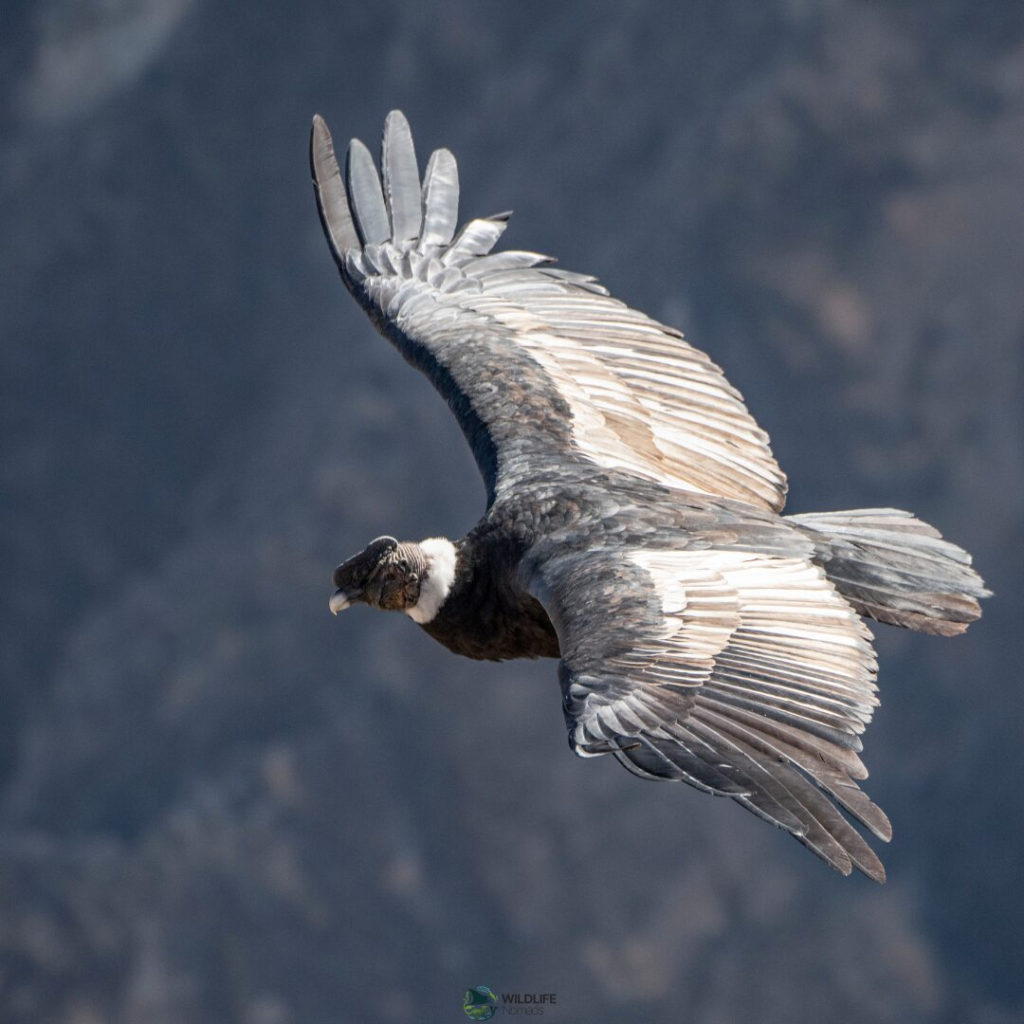
1. Andean Condor (Vultur gryphus)
If one creature symbolizes Colombia’s mountains and skies, it’s the Andean condor — the national bird and official national animal of Colombia since 1834. With a wingspan stretching over 10 feet and a body weight up to 25 pounds, it’s one of the largest flying birds on Earth.
These birds of prey glide above the mountain peaks. As scavengers, they feed on large carcasses like cattle, cleaning up the natural environment and slowing disease spread. In Andean mythology, they represent power, foresight, and the link between earth and sky. Puracé National Park in Cauca is the most reliable spot to see them.
Status: Vulnerable (IUCN)
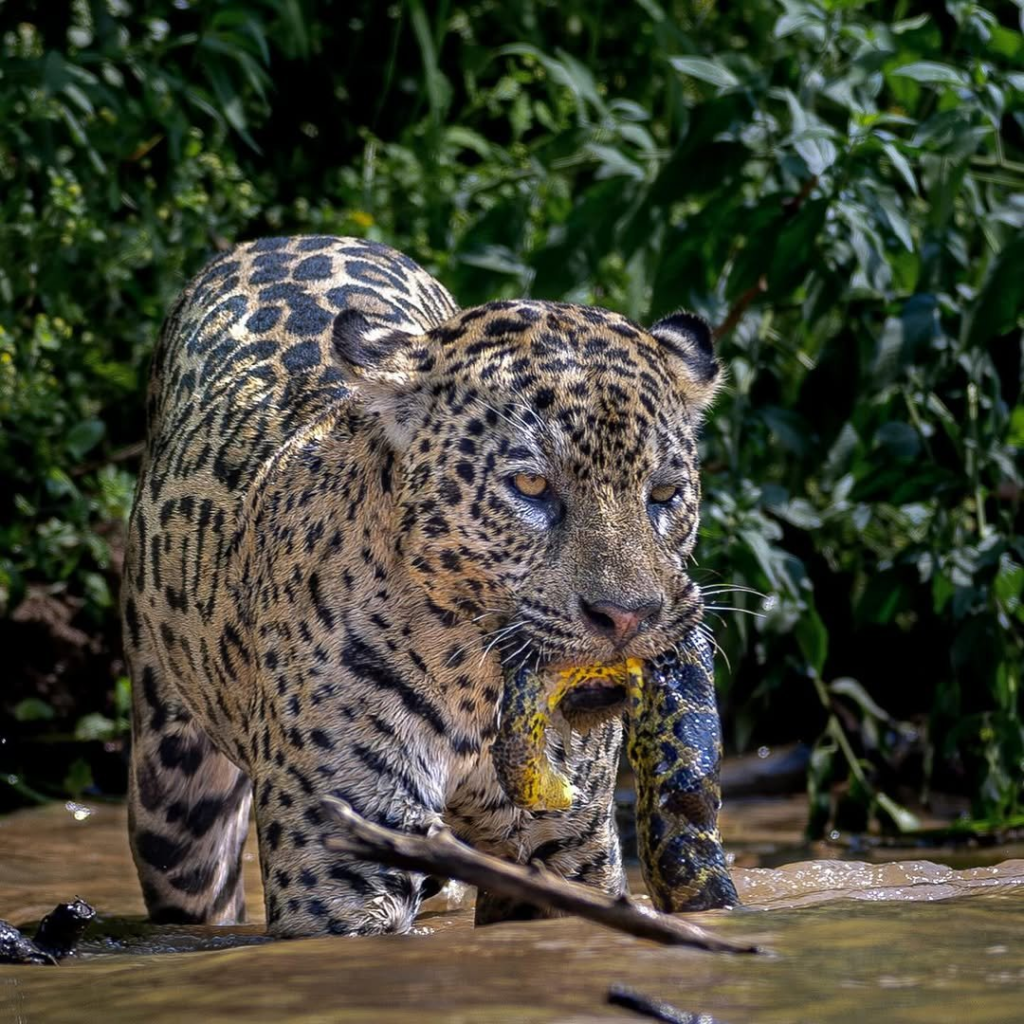
2. Jaguar (Panthera onca)
The jaguar is Colombia’s apex land predator: the largest feline in the Americas, mostly nocturnal, and deeply symbolic in many Indigenous cultures. Jaguars stalk the dense rainforests of the Amazon and Orinoco basins. They’re harder to spot than other cats, but tracks turn up across Chiribiquete and Amacayacu national parks.
These solitary hunters are keystone species. Their presence signals a healthy forest. Habitat fragmentation and retaliatory killing over livestock losses are driving them into shrinking ranges. The biggest snake in the world, the green anaconda, a non-venomous snake that constricts prey, hunts the same rivers and oxbow lakes.
Status: Near Threatened (IUCN)
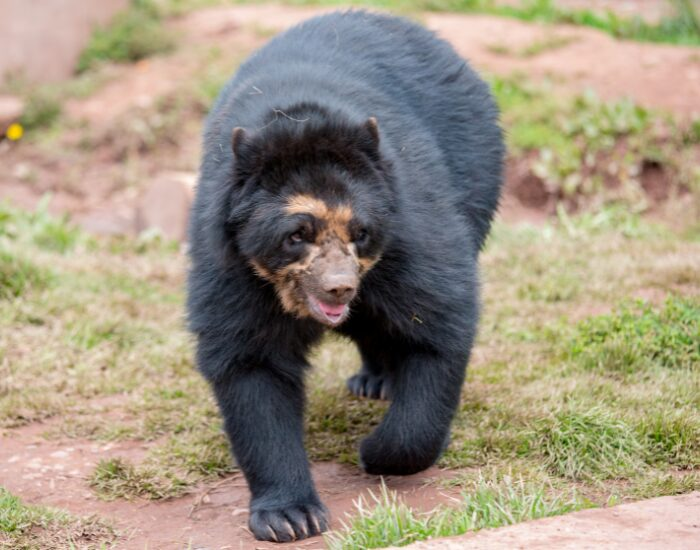
3. Spectacled Bear (Tremarctos ornatus)
Also called the Andean bear, the spectacled bear is the only bear species native to South America. White markings around the eyes give the species its name. Chingaza National Park outside Bogotá is the premier location for spotting one.
Despite a plant-heavy diet, habitat loss is squeezing its range. The bear is frequently caught between expanding agriculture and vanishing cloud forests.
Status: Vulnerable (IUCN)
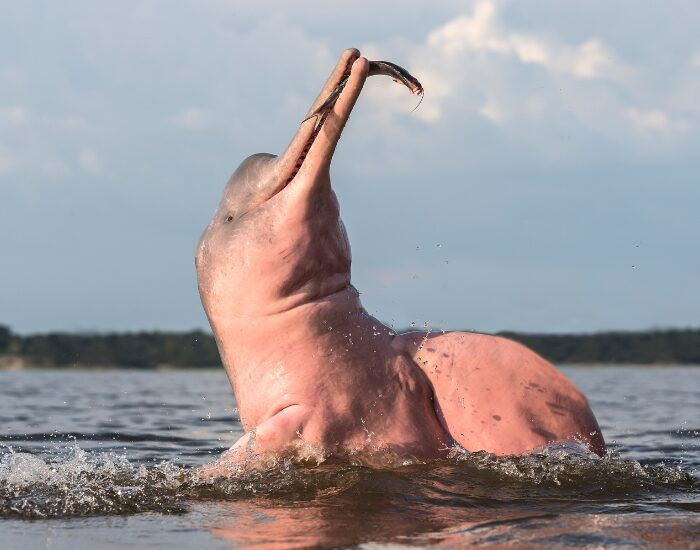
4. Pink River Dolphin (Inia geoffrensis)
Gliding through the Amazon and Orinoco river basins is one of Colombia’s most mystical creatures, the pink river dolphin, also called the boto or Amazon river dolphin. Pink dolphins are the largest freshwater dolphins in the world, weighing up to 185 kg and reaching 2.5 meters in length.
Unlike their ocean cousins, these freshwater dolphins are adapted to murky jungle rivers. They have flexible necks and a pink coloration that intensifies with age. In Indigenous lore, they shapeshift into handsome men by moonlight. Scientists value them for their intelligence and their role in maintaining aquatic ecosystems. The pirarucu, the largest freshwater fish in the Amazon, shares the same waters.
Status: Endangered (IUCN)
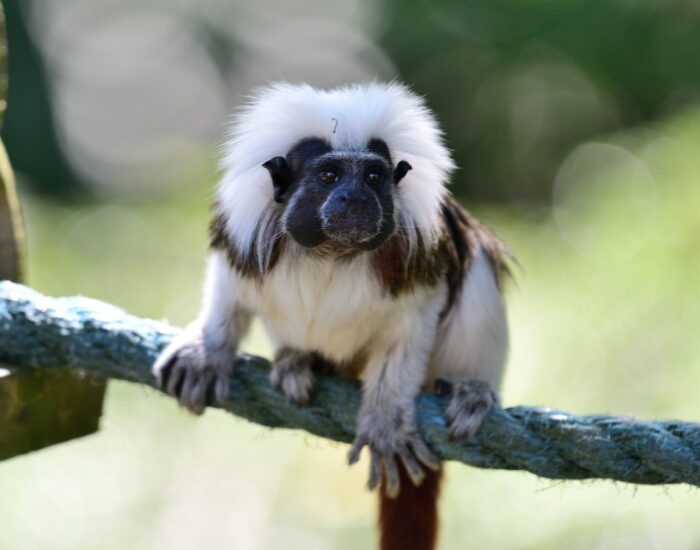
5. Cotton-top Tamarin (Saguinus oedipus)
With a punk-like white crest and a body no bigger than a squirrel, the cotton-top tamarin is one of Colombia’s most charismatic monkeys, and one of its rarest. This pint-sized primate lives only in Colombia’s northwestern dry and tropical forests. Roughly 6,000 individuals remain in the wild, and they’re regularly spotted in Tayrona National Park.
Family-centered and expressive, they communicate with chirps, squeals, and head shakes. Illegal pet trade and habitat fragmentation are the main threats, but Proyecto Tití has slowed the decline through reforestation, community work, and education. The forests they share also host the Colombian red howler monkey, whose deep, rolling calls travel for kilometers across the canopy.
Status: Critically Endangered (IUCN)
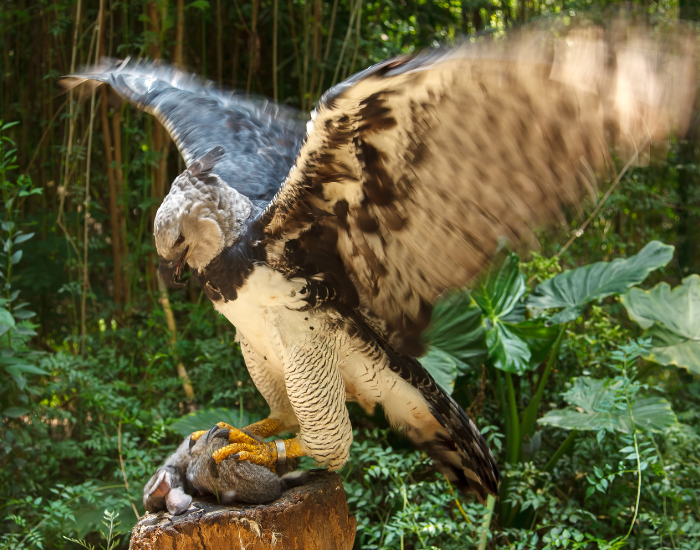
6. Harpy Eagle (Harpia harpyja)
If the jaguar rules the forest floor, the harpy eagle commands the canopy. No other eagle compares to this one. This apex predator has talons as long as grizzly bear claws, snatching monkeys and sloths straight out of the trees.
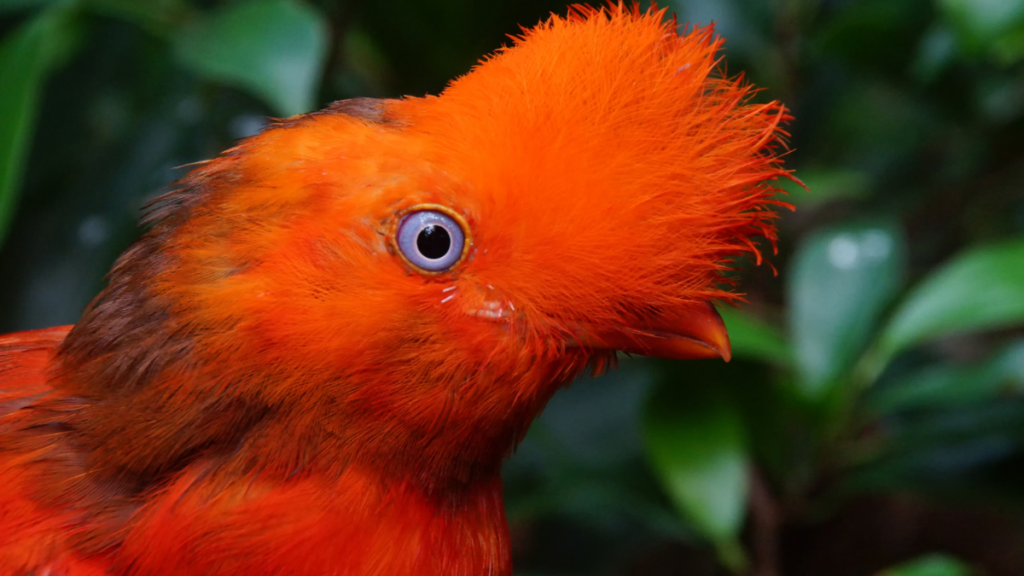
With a striking crown of feathers and piercing eyes, it’s one of the most powerful birds of prey in the world. Harpy eagles are an essential part of Colombia’s tropical forest ecosystems. The Andean and Guianan cock-of-the-rock, two species with vibrant plumage and elaborate courtship leks — share the same forests.
Status: Vulnerable (IUCN)
7. Capybara (Hydrochoerus hydrochaeris)
Meet the world’s largest rodent, and one of Colombia’s most relaxed wild animals. The capybara lives in herds near lakes, rivers, and wetlands of the Llanos. You’ll see them lounging in the sun or wading through shallow water.
Social and oddly charismatic, they tolerate plenty of other animals, including birds perched on their backs and nearby caimans. Young anacondas in the Orinoco river basins often eat rodents and other small mammals.
Status: Least Concern (IUCN)

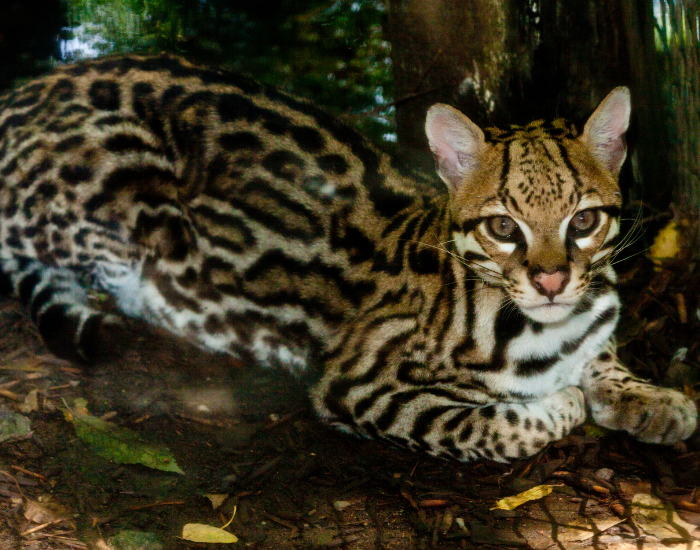
8. Ocelot (Leopardus pardalis)
With golden fur and bold black rosettes, the ocelot is the rainforest’s night stalker. Roughly twice the size of a domestic cat, it’s a stealthy predator of small mammals and reptiles, a crucial link in Colombia’s food chain. Habitat loss and hunting have pushed it into fragmented pockets of forest.
Status: Least Concern (IUCN), but decreasing
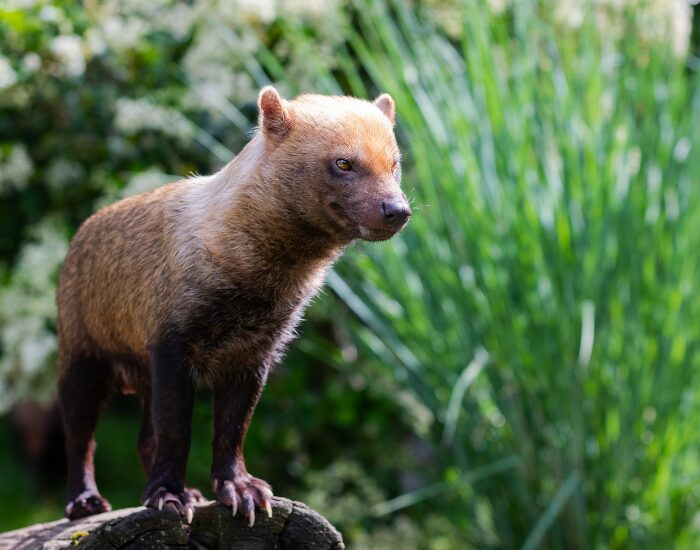
9. Bush Dog (Speothos venaticus)
One of the most iconic animals of Peru as well. Rarely seen and poorly understood, the bush dog is one of Colombia’s most elusive predators. Often mistaken for wild pigs or badgers, these canids are efficient predators that thrive in dense rainforests, if we let them.
Status: Near Threatened (IUCN)
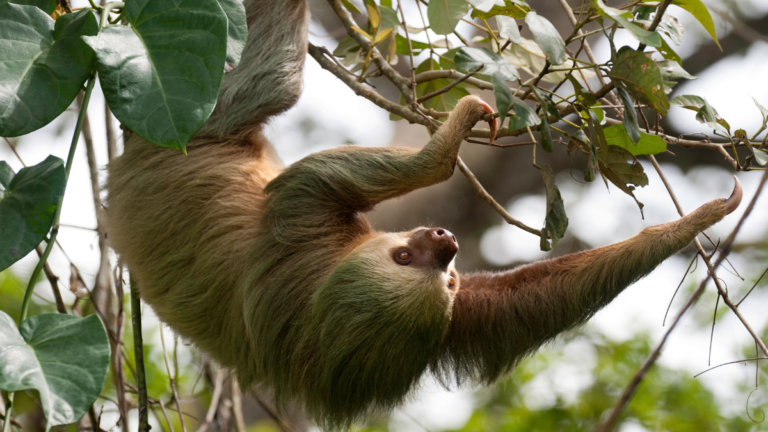
10. Brown-throated Sloth (Bradypus variegatus)
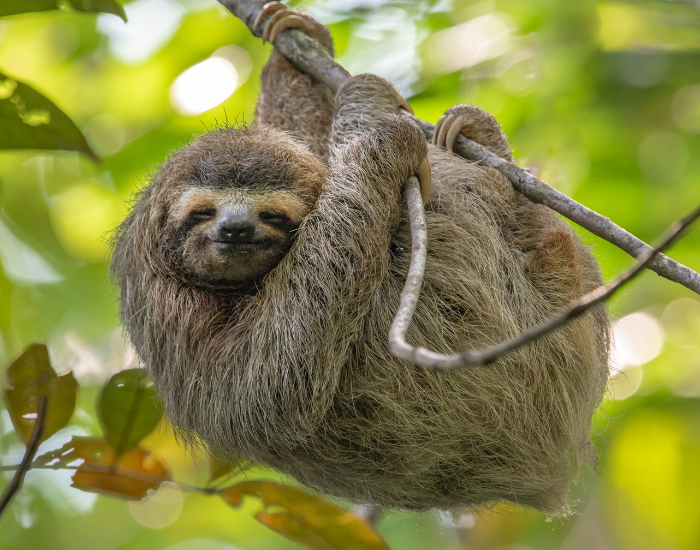
Colombia’s iconic tree-hugger, the brown-throated sloth is a master of slow living. It spends nearly 90% of its life hanging upside-down and blends beautifully into the foliage.
Sloths play an underappreciated role in forest ecology. They grow algae in their fur, host moths and beetles, and disperse seeds in the canopy. They use their hind legs to anchor while feeding.
Status: Least Concern (IUCN)
11. Tamandua (Tamandua tetradactyla)
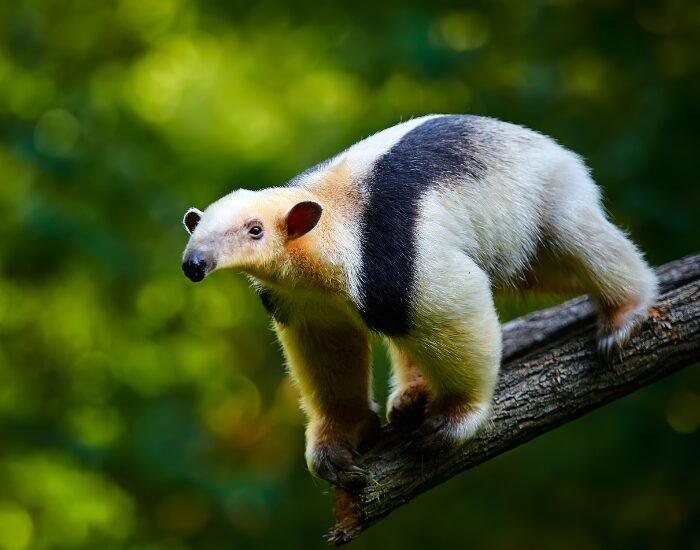
Also known as the lesser anteater, the tamandua, a member of the anteater family, is a strong climber with a 40-cm tongue and a serious taste for ants and termites. The giant water lily, an iconic species in the Amazon, adds to the region’s majestic presence and biodiversity, appealing to plant lovers. It’s nocturnal, solitary, and surprisingly adaptable, spotted from tropical forests to dry savannas.
With a prehensile tail and long claws, it’s better equipped for climbing than most anteaters, making it a quiet but essential part of Colombia’s wild tapestry.
Status: Least Concern (IUCN)
12. Poison Dart Frog (Dendrobatidae spp.)
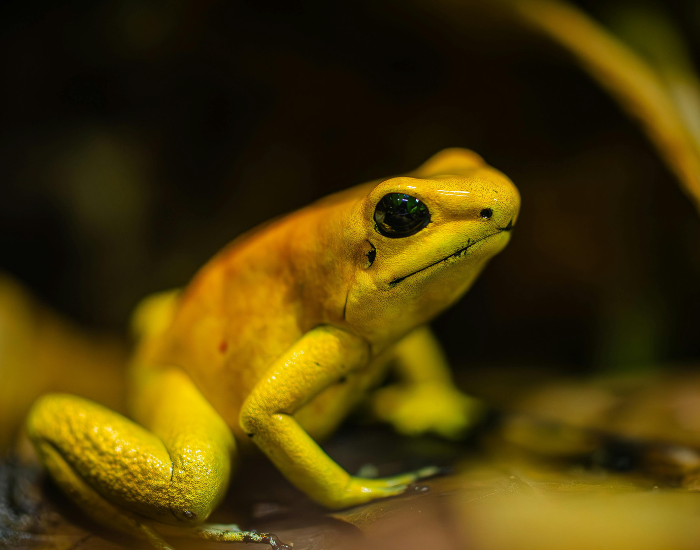
Tiny but deadly, Colombia’s golden poison frog is among the most lethal vertebrates on Earth. A single frog stores enough alkaloid in its skin glands to kill 10 to 20 humans. The toxin comes from a diet of small invertebrates in the Chocó rainforest, and Emberá Indigenous hunters have used the frog’s skin for centuries to coat blow-dart tips.
These poisonous frogs use bright colors as a warning to predators. The frog’s skin is also a major focus of biomedical research because of its complex alkaloids
Status: Varies by species, many are endangered or threatened
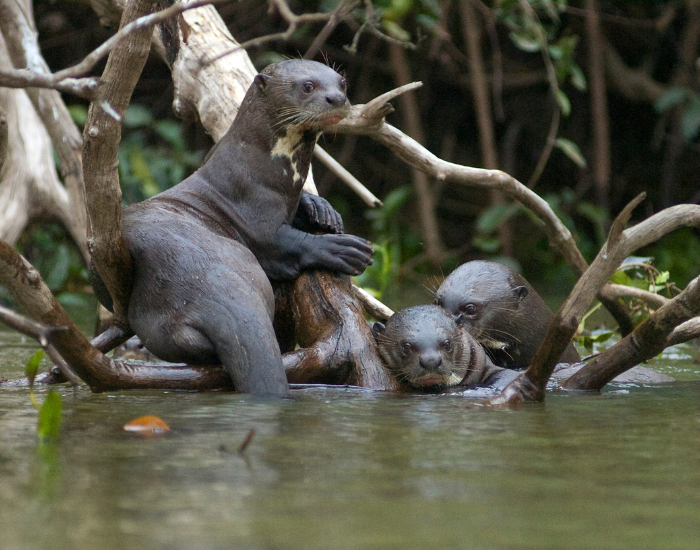
13. Giant Otter (Pteronura brasiliensis)
The giant otter is one of the largest species of mustelid on Earth, reaching up to 1.8 meters from nose to tail. These social carnivores live in family groups of up to 20 along the rivers of the Amazon and Orinoco. They’re vocal, intelligent, and unmistakable on the water, pups beg loudly while adults patrol the riverbanks.
Once heavily hunted for their pelts, the species now faces habitat degradation from gold mining and mercury contamination of fish stocks. El Tuparro and Cahuinarí national parks are among the best places to see a family group in the wild.
Status: Endangered (IUCN)
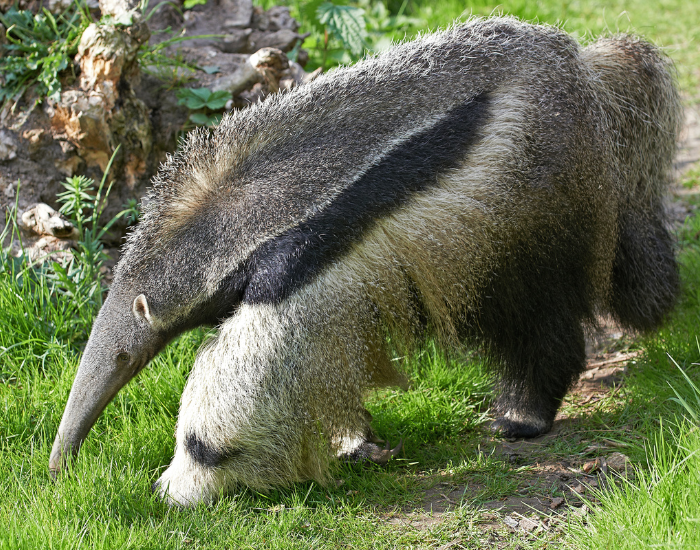
14. Giant Anteater (Myrmecophaga tridactyla)
Easy to recognize by its long snout and famously bushy tail, the giant anteater is the largest member of the anteater family. It uses a sticky, 60-cm tongue to lap up ants and termites, roughly 35,000 a day — and walks on its knuckles to keep its claws sharp for ripping into mounds.
Closely related to the smaller tamandua, the giant anteater turns up in the open savannas of the Llanos. Casanare in eastern Colombia is the single best place to see one in the wild.
Status: Vulnerable (IUCN)
What about the Marine Life?
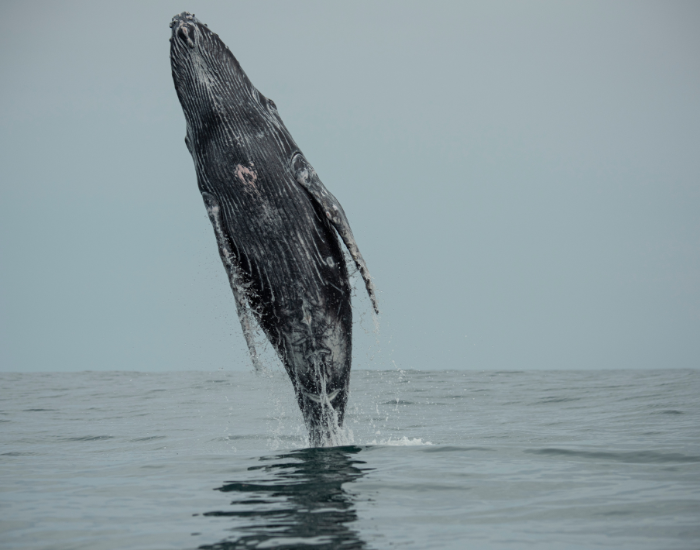
Colombia’s two coastlines hold radically different marine worlds. On the Pacific side, humpback whales migrate thousands of miles from Antarctic feeding grounds to breed and calve in warm waters near Bahía Solano, Nuquí, and Gorgona Island. The whale watching season runs from July through October. Humpback whale calving displays: breaches, flipper slaps, and male song competitions during mating season, are some of the best in the world. Two species of sea turtles, the olive ridley and the leatherback, nest along the same stretch of pacific coast.
The Caribbean coast tells a different story. Vibrant coral reefs around the Rosario and San Bernardo islands shelter coral fish, sea turtles, dolphins, parrotfish, and hundreds of other marine species. These reefs support commercial fisheries and tourism alike, and they’re under steady pressure from warming seas and coastal development. Humpback whales rarely cross over to Caribbean waters, but bottlenose dolphins and the occasional pilot whale do, and four species of sea turtle nest along the Caribbean shoreline. Mangrove channels host the American crocodile, manatees, and dozens of fish species that move between freshwater and salt.
And so many….Endemic Species
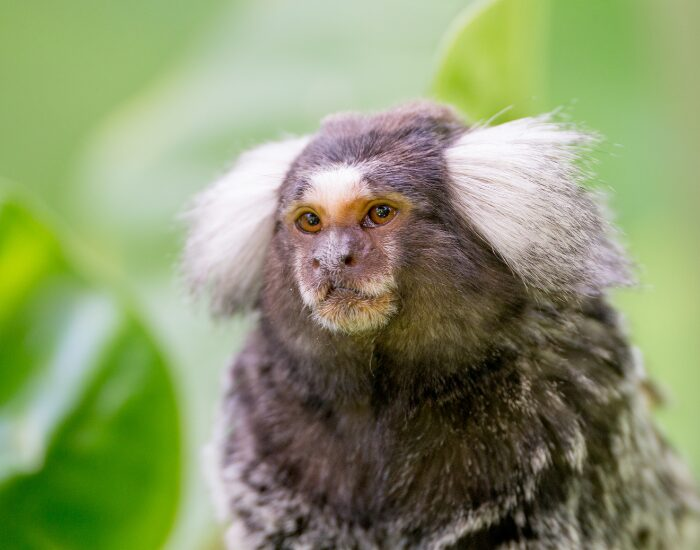
Colombia shelters more endemic species than nearly any country on Earth. Endemic monkeys are a standout: the cotton-top tamarin, the brown titi monkey, the white-footed tamarin, and the silvery-brown tamarin all evolved in isolated pockets of Colombian forest. The Andean bear roams the highland forests, a marker of intact cloud forest. Cotton-top tamarins, several titi monkey lineages, and dozens of bird species live nowhere else.
These animals evolved in Colombia’s isolated ecosystems, shaped by unique geography and climate. Habitat loss is the top threat for most of them, particularly along tropical forest edges that fragment year after year. Migratory species pass through too, using Colombia as a critical stopover on their north-south routes — more than 200 species of Nearctic migrants reach the country each year, from raptors to warblers.
Ecosystems of Colombia: Where Different Animals Live
One of the most compelling reasons to explore Colombia is its sheer ecosystem diversity. Each region hosts a distinct cast of incredible animals adapted to specific habitats. Colombia’s national parks are the prime spots for wildlife watching and conservation.
- Amazon Rainforest: Home to pink dolphins, jaguars, tamarins, and river otters. Rivers snake through dense jungle and support thousands of species in interconnected webs of life. Migratory species pass through during their north-south journeys.
- Andes Mountains: Home to spectacled bears, Andean condors, and most of Colombia’s endemic hummingbirds. Cloud forests, valleys, and páramos each support their own micro-ecosystems and a distinct set of mammal and bird species.
- Chocó Rainforest: One of the wettest places on Earth. Poison dart frogs, harpy eagles, and a long list of endemic plant species thrive in its isolated valleys.
- Llanos (Orinoco Region): Eastern savannas hosting capybaras, anacondas, giant otters, and giant anteaters. Wet-season flooding turns the plains into a temporary wetland paradise — and an ideal spot for wildlife watching in the dry season.
- Caribbean Coast and Mangroves: Sloths, iguanas, and the crab-eating fox: a small carnivore that overlaps in ecology with members of the raccoon family, live among the coastal mangroves and dry forests around Tayrona and La Guajira. Hundreds of fish species cycle in and out of the mangrove root systems with the tides.
- Páramo: Unique to the Andes mountains, this high-altitude tundra-like ecosystem supports mountain tapirs and several critically endangered frogs and hummingbirds. Espeletia plant species, with their woolly leaves, dominate the landscape and have evolved nowhere else.
Each habitat faces its own threats but also offers strong opportunities for conservation and ecotourism.
Threats Facing Colombian Wildlife
Colombia’s biodiversity is under serious pressure. Deforestation, driven by agriculture, illegal logging, mining, and land grabbing, is the most immediate threat. The Chocó and Amazon basins are losing forest at alarming rates, and the loss is dragging dozens of frog and bird species toward extinction.
Illegal wildlife trade remains a major issue, particularly for cotton-top tamarins, reptiles, and tropical birds captured for the exotic pet market. Many of Colombia’s most dangerous animals — including the Orinoco crocodile, listed as Critically Endangered after decades of hunting for skins, and the black caiman, which can grow up to 5 meters long, face their own pressures. The bullet ant, infamous for the most painful sting recorded in any insect, also lives across Colombian rainforests, and several venomous snake species share the same forest floor.
Climate change is altering rainfall patterns and elevational temperature ranges, creating a perfect storm for biodiversity loss in specialized ecosystems like páramos and cloud forests. Even resilient species are showing range shifts upslope as temperatures rise.
FAQ: Animals in Colombia
Colombia is home to over 1,900 bird species, around 500 mammal species, 518 reptile species, more than 750 amphibian species, 3,000 fish species, and roughly 4,000 butterfly species. It leads the world in bird and butterfly diversity.
The golden poison frog is the most toxic. A single frog carries enough alkaloid to kill 10 to 20 adults, though the toxin only acts if it enters the bloodstream or mucous membranes. The black caiman, which can reach 5 meters in length, is the largest predator in Colombia’s rivers and one of the most physically dangerous animals you might encounter.
The Pacific coast around Bahía Solano, Nuquí, and Gorgona Island offers the best whale watching. Humpback whales migrate from Antarctic feeding grounds to Colombian waters between July and October to mate and give birth, and small boats run daily during the season.
The Andean condor is Colombia’s national animal and national bird, designated in 1834. It appears on the national coat of arms.
Colombia shelters thousands of endemic plant species and hundreds of endemic animal species. Endemic monkeys like the cotton-top tamarin and several titi monkey lineages, alongside thousands of orchids and dozens of hummingbirds, live nowhere else on Earth.
More than 1,900 — the highest bird diversity recorded for any country on Earth. About 80 of those are endemic, found only within Colombian borders.
References:
Restrepo-Cardona, J. S., Parrado, M. A., Vargas, F. H., Kohn, S., Sáenz-Jiménez, F., Potaufeu, Y., & Narváez, F. (2022). Anthropogenic threats to the Vulnerable Andean Condor in northern South America. PloS one, 17(12), e0278331. https://doi.org/10.1371/journal.pone.0278331
Savage, A., Guillen, R., Lamilla, I., & Soto, L. (2010). Developing an effective community conservation program for cotton-top tamarins (Saguinus oedipus) in Colombia. American Journal of Primatology, 72(5), 379–390. https://doi.org/10.1002/ajp.20770
Trujillo, F., Crespo, E., Van Damme, P. A., & Usma, J. S. (Eds.). (2010). The action plan for South American river dolphins 2010–2020. WWF, Fundación Omacha, WDS, WDCS, Solamac. https://www.iucn-csg.org/
Velez-Liendo, X., & García-Rangel, S. (2017). Tremarctos ornatus (errata version published in 2018). The IUCN Red List of Threatened Species 2017: e.T22066A123792952. https://doi.org/10.2305/IUCN.UK.2017-3.RLTS.T22066A45034047.en