The first wild koala I ever saw was here. June 2023, a few weeks after moving to the Gold Coast, neck bent back, squinting at a fork in a eucalypt. I had spent twenty years chasing animals across several continents. My first koala took me eleven minutes on a flat track twelve kilometres from Surfers Paradise.
I have been back at least seven times since. Every visitor I host ends up at Coombabah Lakelands Conservation Area, because it delivers the three animals people fly here for: kangaroos, wallabies and koalas. Friends from Mexico, friends from the UK, nobody has left disappointed.
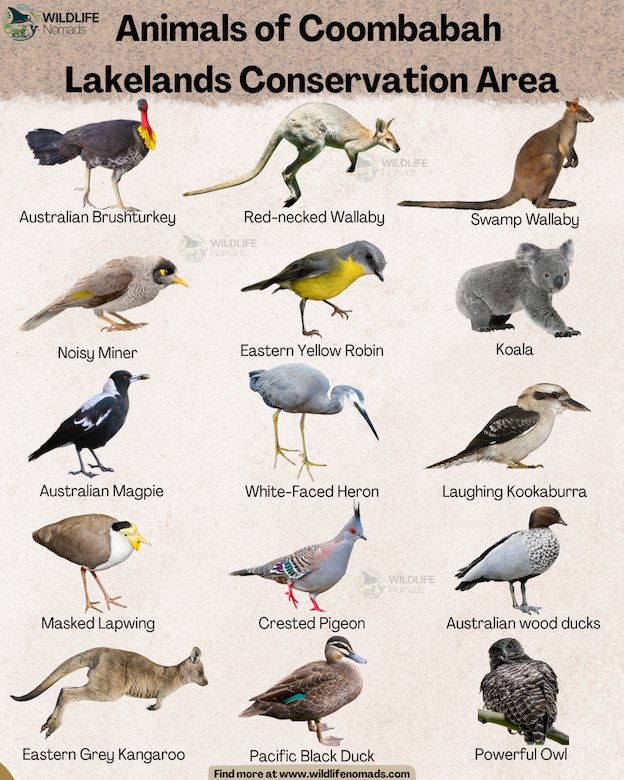
Below are the twelve species you will realistically see, where each one hides, and the timing that makes the difference. I have also written up the best places to see wildlife in Australia and the animals of Currumbin Wildlife Park. Between that sanctuary and this reserve, the northern Gold Coast is one of the easiest places on the continent to meet Australian wildlife.
Why This Conservation Area Works So Well
Coombabah Lakelands covers more than 1200 hectares, which is enormous for a suburb-fringed reserve. The size is exactly why the animals stay.
Four habitats sit side by side: open grasslands, dry eucalypt forest, salt marsh, and mangrove swamps ringing Lake Coombabah. Cross between them in twenty minutes and your species list doubles. Over 274 animal species have been recorded here.
The wetlands do quiet, unglamorous work. Mangroves and salt marsh filter runoff before it reaches the estuarine system, and they act as nurseries for juvenile fish and prawns. Research on estuarine vegetation shows these habitats support far more juvenile fish than adjacent open water.
Those same wetlands feed migratory birds. Twenty-four internationally protected migratory bird species use this area, arriving from breeding grounds as far north as Siberia. The system forms part of the Moreton Bay Ramsar site, so Australia holds an international obligation to keep it intact. The land also carries deep cultural significance for the Yugambeh people.
Getting There, Parking, and the Entrance I Got Wrong
I always drive, and from central Gold Coast it takes under twenty-five minutes. There is plenty of free parking at every gate.
Most visitors should use the Shelter Road car park in Coombabah. That is the main access point, and the bird hide sits 800 metres along a flat path from it. There is also a Pine Ridge Road entrance off Lakelands Road, and a smaller one at Myola Court.
Learn from my mistake. On one trip I picked the wrong entrance, ended up on the opposite side of the reserve, and walked forty minutes of track I had not planned. Entrances here are not interchangeable, so check a map first.
You can also arrive on foot or by bike. I once rode in from my partner’s place in Paradise Point — fifteen minutes, and the trip that finally taught me the scale of this place. From behind a windscreen it looks like a park. On a bike it looks like a landscape.
The Trails: Over 16 Kilometres of Flat Tracks
More than 16 km of walking trails run through Coombabah Lakelands, and almost all of them are flat. Any reasonable fitness level handles this.
The Melaleuca boardwalk trail is a 1.2 kilometre loop through paperbark wetland, raised above the mud on timber. The Myola Court boardwalk trail runs 2 kilometres return. The koala trail links to several other trails, so you can stitch together a short stroll or a two-hour circuit from one car park.
Two things the reserve does not have: toilets and drinking water. Dogs are prohibited too, which is precisely why the wildlife here stays so relaxed.
Bring insect repellent. I mean this. Twice I have been eaten alive by mosquitoes and sand flies near the mangroves, and the itching lasted days.
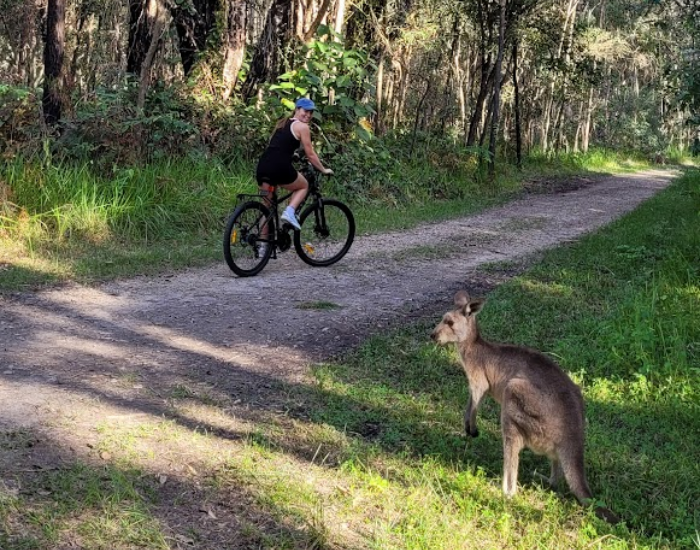
1. Eastern Grey Kangaroo (Macropus giganteus)
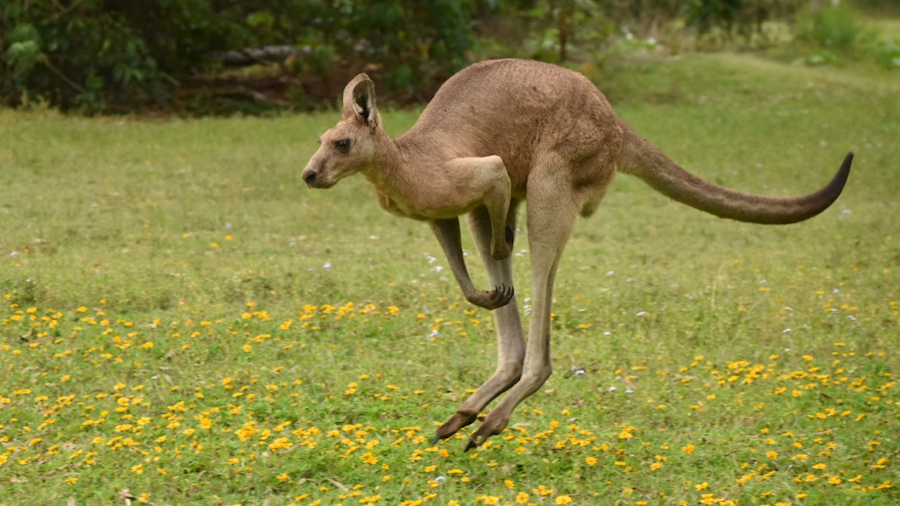
You will see kangaroos. Not “might”, will. They graze the open grasslands in loose mobs, and on most visits I spot my first within three minutes of leaving the car.
I have watched joeys tumble out of pouches and shove their heads back in to feed. I have also watched two big males box, forearms locked, balanced back on their tails to kick. It is not play. Dominance decides breeding access, and the sound of a connecting kick carries.
They tolerate people here, but tolerance is not tameness. A study comparing eastern greys in human-modified and natural environments found vigilance behaviour shifts measurably with human presence. Give them ten metres and they ignore you completely. Australia also has macropods that abandoned the ground entirely, tree kangaroos climb for a living in the far north rainforests.
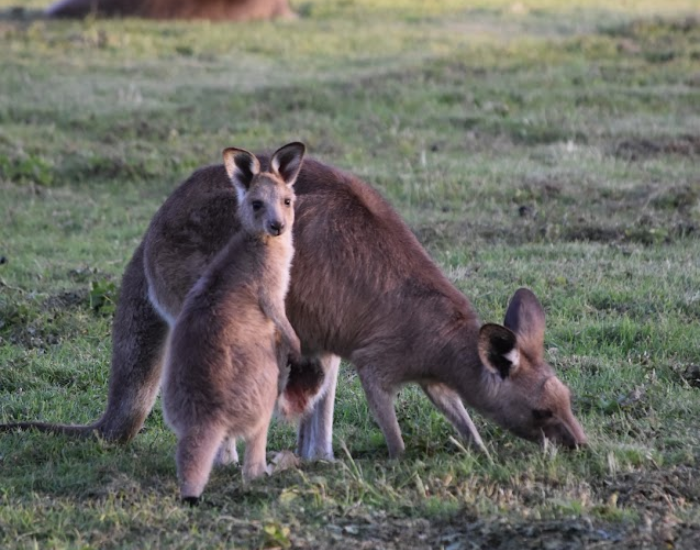
2. Swamp Wallaby (Wallabia bicolor)
The dark one. Chocolate-brown body, rusty chest, blunt face, and a habit of moving low through thick cover rather than out in the open.
Swamp wallabies browse rather than graze. They eat shrubs, ferns, bark and fungi, and research on their diet shows they switch food sources readily as availability changes. That flexibility is why they persist in fragmented habitat where grazers struggle.
Look for them at the edges, where eucalypt forest meets grassland, usually alone. If a wallaby vanishes into scrub instead of bounding across grass, you have found a swampy. I have covered more swamp wallaby behaviour here.

3. Red-Necked Wallaby (Notamacropus rufogriseus)
Every single time I bring someone new, I run the same test. Two wallabies feeding fifty metres apart, and I ask: “can you tell the wallabies apart?”
Most people say no at first. Then they see it. Red-necked wallabies wear a rust-orange wash across the shoulders and nape, they sit higher and greyer, and they graze out in the open in small groups. Swamp wallabies skulk. Once you catch the difference, you cannot unsee it.
They mix together here, which is what makes the puzzle work. If you also want the bigger picture, I broke down wallaby versus kangaroo differences in detail.
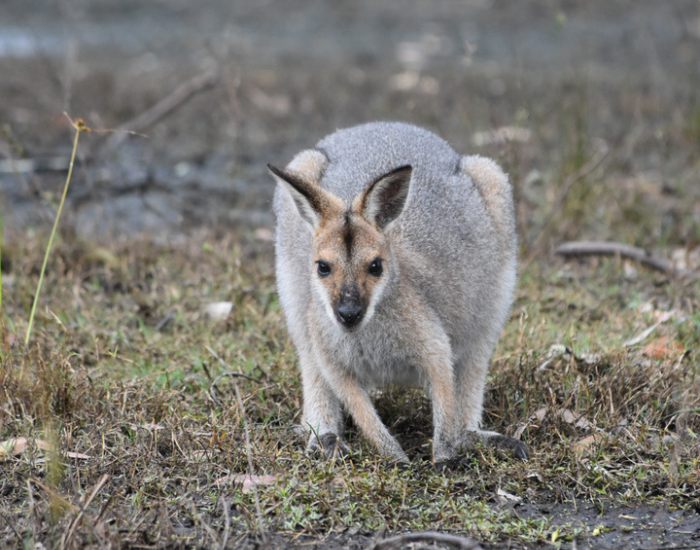
4. Koala (Phascolarctos cinereus)
Seven visits, over 15 koalas. Some days I find one in ten minutes; other days it takes an hour and I start quietly panicking that today breaks the streak.
Here is the method. Ignore everything that is not a eucalypt. Scan the upper third of the canopy, looking for a grey lump in a fork rather than a whole animal. Koalas sleep up to twenty hours a day, so most of the time you are searching for a shape, not movement.
Research using remote sensing across south-east Queensland found koalas favour areas of higher canopy within their home ranges, which is exactly why craning your neck beats scanning eye level. More than 150 koalas are estimated to live across this conservation area, one of the healthiest populations left on the Gold Coast.
Go in the afternoon. They wake, shift position and feed as the heat drops. Last visit, with a friend visiting from the UK, we counted five in a single afternoon.
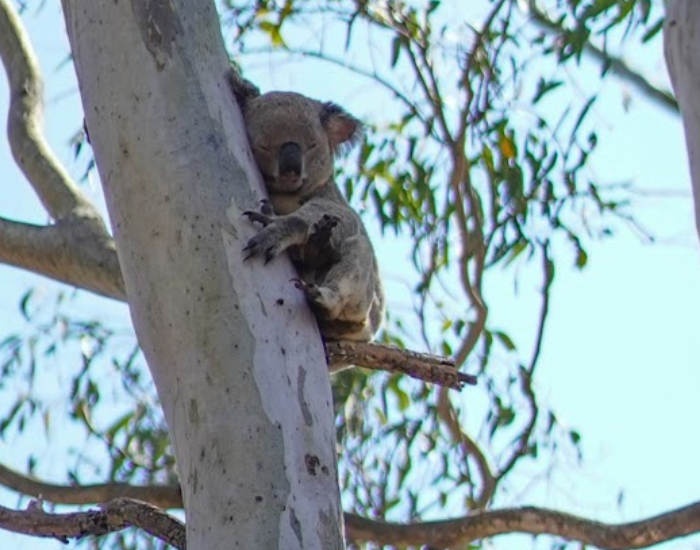
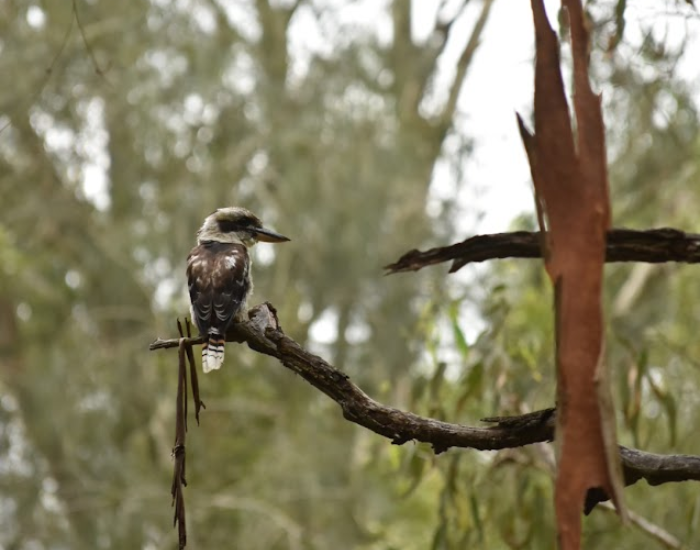
5. Laughing Kookaburra (Dacelo novaeguineae)
You hear them before you see them. The cackle is territorial advertising, usually performed by family groups at dawn and dusk, and it carries across the whole reserve.
Kookaburras are kingfishers that gave up fishing. They hunt from a low perch, drop onto lizards, snakes, insects and mice, then batter larger prey against the branch before swallowing. I once watched one work a skink for a solid minute. They also sit still and let you approach, which makes them a gift for photographers, more kookaburra facts here.
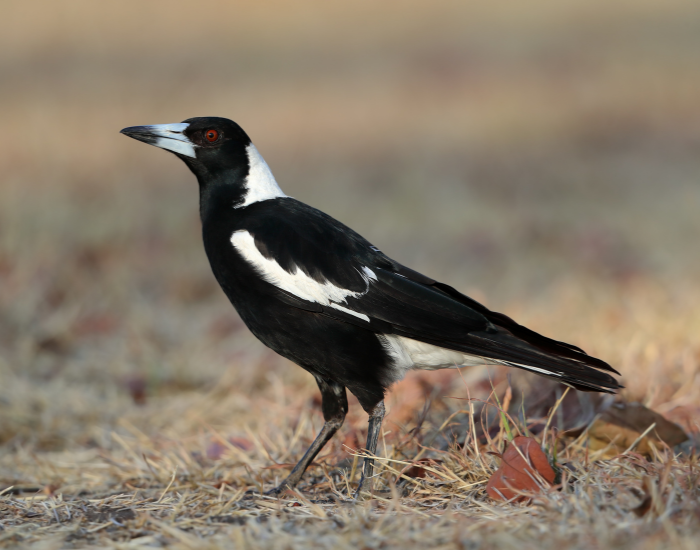
6. Australian Magpie (Gymnorhina tibicen)
I always look up in spring. Not for koalas, for magpies.
Swooping is brood defence, and it is short-lived. A study of magpie attacks on humans found aggression concentrated in a small subset of males during the nesting window, rather than being general behaviour across the population. Most magpies here have never swooped anybody.
Their real talent is acoustic. The warbling is one of the most complex songs of any Australian bird, and pairs sing duets to hold territory. Stand still near the picnic grass at dusk and listen properly, it is worth two full minutes of your attention.
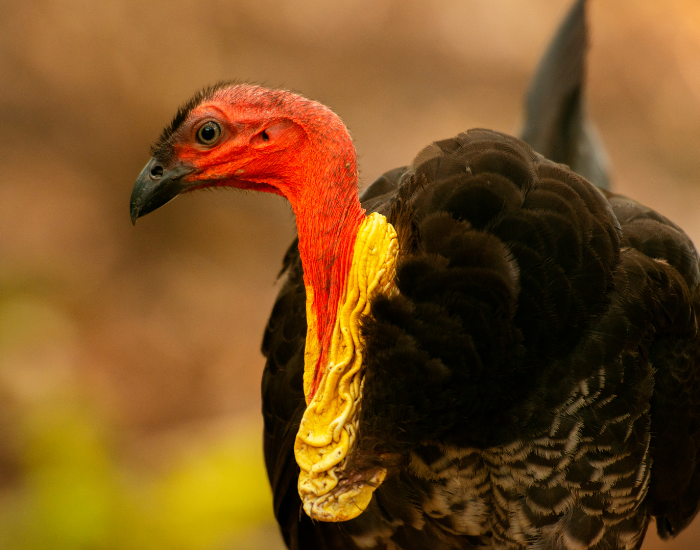
7. Australian Brush-Turkey (Alectura lathami)
Black body, bare red head, yellow wattle, and total indifference to your presence.
The males build enormous mounds of leaf litter and regulate the internal temperature by adding or raking material away, testing it with their beaks. The chicks hatch underground, dig themselves out, and receive no parental care whatsoever, they can fly within hours.
I see them in the shaded forest sections and near the car parks, scratching through litter. Read more in my brush-turkey deep dive.
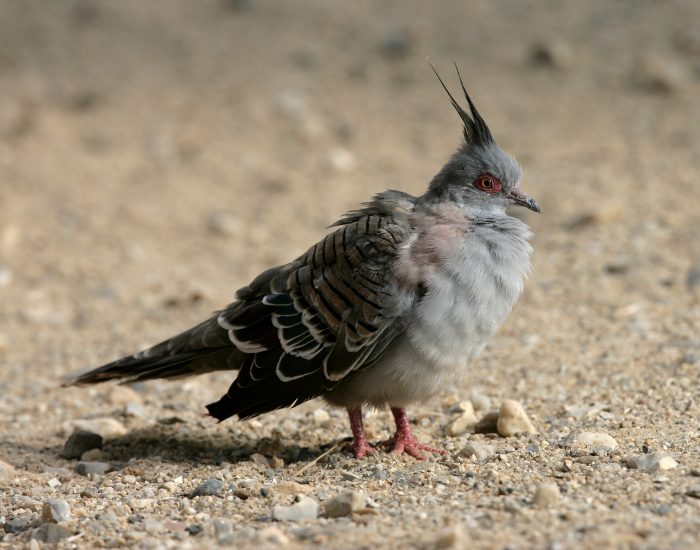
8. Crested Pigeon (Ocyphaps lophotes)
The punk pigeon. That thin black crest sticks straight up like gelled hair, and the wing coverts flash bronze and green in direct sun.
Their alarm system is mechanical, not vocal. A modified primary feather produces a high metallic whistle on take-off, and flock-mates read it as a warning, sound as an accidental byproduct turned into signal.
They feed on open ground and along the track edges near Shelter Road. I covered the native pigeons of Australia in a separate post.
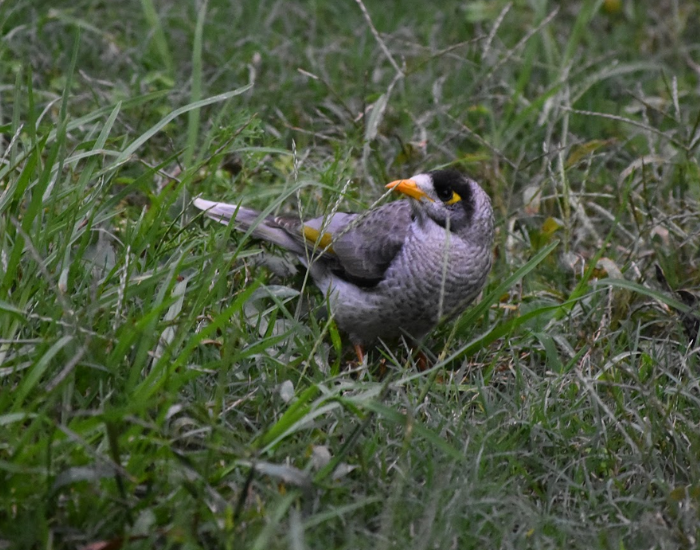
9. Noisy Miner (Manorina melanocephala) and Other Honeyeaters
Grey body, yellow eye patch, and an attitude vastly disproportionate to its size. Noisy miners are honeyeaters, and they operate as cooperative gangs that mob anything entering their patch.
Their aggression shapes the whole bird community. Where miners dominate, smaller honeyeaters and insectivores drop out. Watch a group harass a kookaburra three times their weight and you will understand why ecologists track them. You will also find blue-faced and Lewin’s honeyeaters in the flowering eucalypts, my roundup of Australian native birds covers the wider family.
10. Eastern Yellow Robin (Eopsaltria australis)
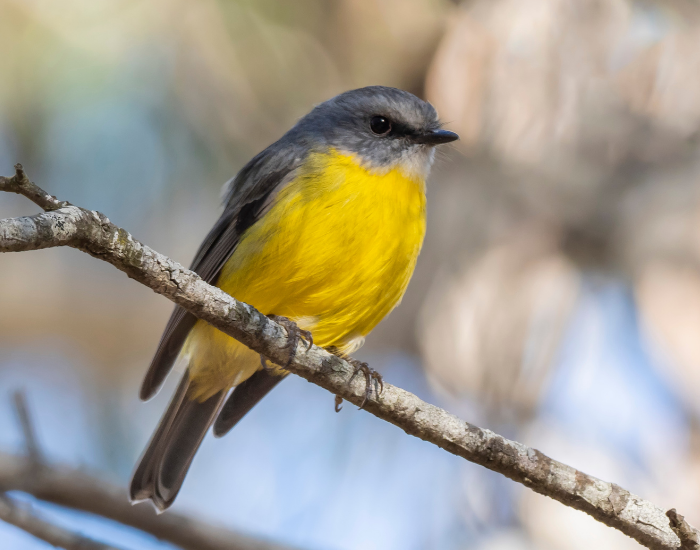
My favourite bird in this reserve, and the one most visitors walk straight past.
They cling sideways to tree trunks, low down, watching the ground for movement. Bright yellow underneath, soft grey above, holding still until they drop on an insect. Look in shaded forest, early morning.
They also follow walkers, because footsteps disturb invertebrates in the leaf litter. The robin simply lets you do the flushing. I profiled the robins of Australia separately.
11. Pacific Black Duck (Anas superciliosa) and Other Native Ducks
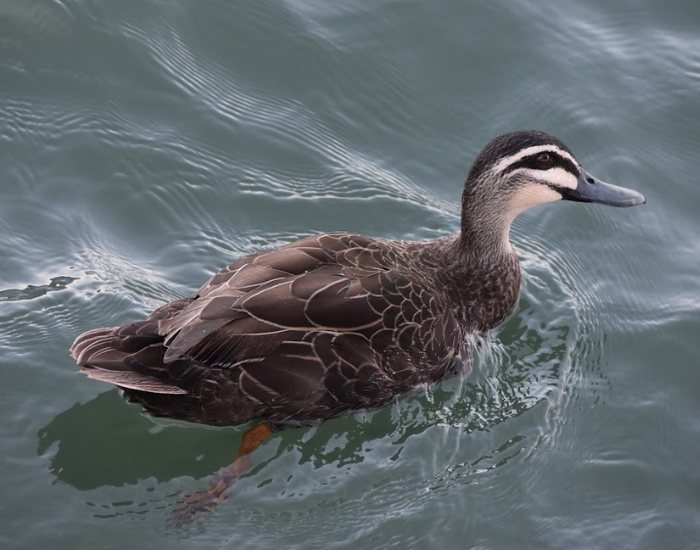
Look for the face, not the body. Two dark stripes run across a pale cream head, and that pattern separates a Pacific black duck from a feral mallard at fifty metres.
They dabble in the shallow margins of Lake Coombabah, upending to reach submerged plants and invertebrates. Australian wood ducks graze the grass nearby, behaving more like small geese than ducks. Hybridisation with introduced mallards and domestic ducks is the quiet national threat to this species, the birds here look reassuringly pure.
12. White-Faced Heron (Egretta novaehollandiae)
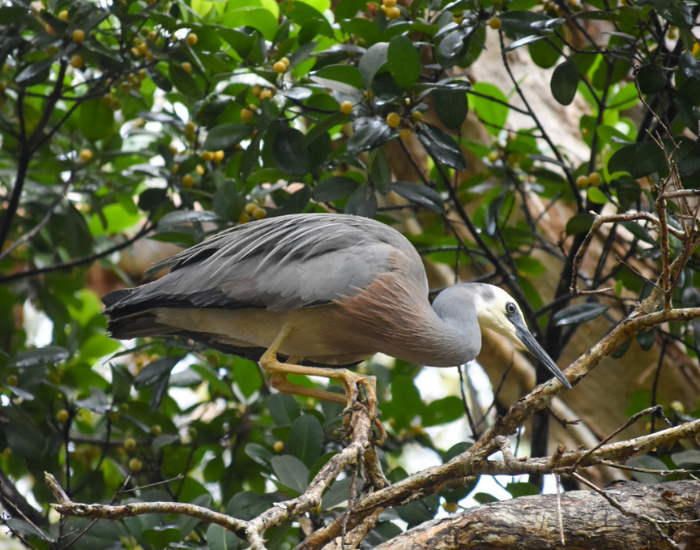
Slate-grey, long-legged, permanently patient. White-faced herons hunt the mudflats and salt marsh edges, stalking in slow motion, then striking at fish, crabs and frogs.
The bird hide is the place to watch them properly. It sits 800 metres from the Shelter Road car park, carries informational signage, and gives you a screened view across the wetland, the most peaceful spot in the reserve.
Sit for fifteen minutes and other things arrive. Royal spoonbills sweeping their bills through shallow water. Egrets. In summer, migratory birds resting on the flats. Numbers of these migrants have fallen sharply across Moreton Bay in recent decades, which makes each sighting matter more than it used to.
What Else Turns Up
Photographers I meet on the trails feed me the good intel. Powerful owls (Ninox strenua) roost in the taller eucalypts, usually found by their whitewash and pellets. Grey-headed flying-foxes camp in the melaleucas. Yellow-tailed black-cockatoos pass overhead in slow, mournful groups.
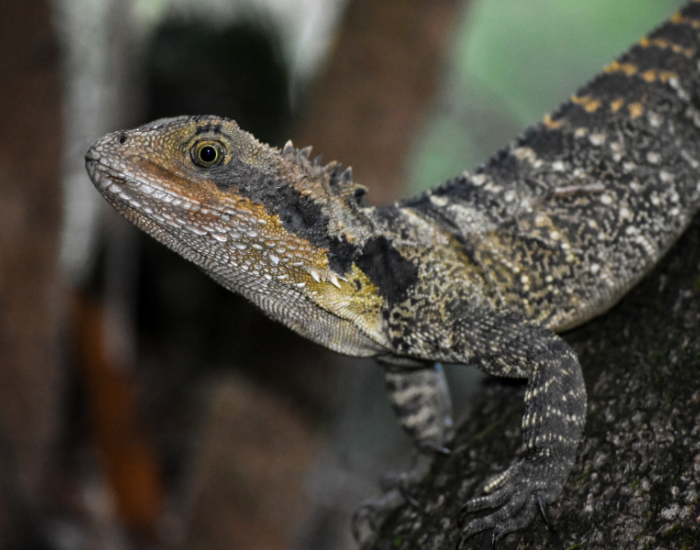
Add red-winged fairywrens in the low scrub, frogs calling from the wetland after rain, and eastern water dragons along the boardwalks. The reserve provides habitat for several vulnerable and near-threatened species, and City of Gold Coast runs habitat management and restoration programs alongside community nature walks and educational workshops. If this kind of count-what-comes trip appeals, my write-up on the animals of Woody Head campground covers a similar approach further south.
Frequently Asked Questions
Yes. Entry to Coombabah Lakelands Conservation Area is free for all visitors, and parking at Shelter Road, Pine Ridge Road and Myola Court is free as well. The gates open daily at 6am and you must exit before they close at 6pm.
Coombabah Lakelands is the most reliable free option in the northern Gold Coast. Kangaroos graze the open grasslands near every entrance, and over 150 koalas live in the surrounding eucalypt forest. Visit in the late afternoon and walk the koala trail, scanning the upper canopy.
Over 16 km of trails run through the reserve, and the tracks are flat and well maintained. The Melaleuca boardwalk trail is a 1.2 km loop, the Myola Court boardwalk trail is 2 km return, and the koala trail links to several others. There are no toilets or drinking water inside, so plan accordingly.
Go in the Afternoon
Seven visits and the pattern never changes: kangaroos in the first five minutes, wallabies at the forest edge, koalas only after I stop rushing and start looking up. Coombabah Lakelands Conservation Area is not a hidden gem, it is a 1200-hectare working ecosystem sitting quietly behind the suburbs, doing the unglamorous job of filtering water, raising fish and holding one of the region’s last strong koala populations.
Take repellent. Arrive after 3pm. Give yourself two hours and walk slowly.
Then come back and tell me in the comments how many koalas you found, and whether your group could tell the wallabies apart. If you want more of this kind of thing, my guide to the animals of Australia is the place to start.
How Well Do You Know Coombabah? 🦘
Ten questions on the reserve and its wildlife — first a fact-or-fiction round, then multiple choice. Perfect prep for your walk. How many can you get?
References:
Di Stefano, J., & Newell, G. R. (2008). Diet selection by the swamp wallaby (Wallabia bicolor): Feeding strategies under conditions of changed food availability. Journal of Mammalogy, 89(6), 1540–1549. https://doi.org/10.1644/07-MAMM-A-193.1
Hume, G., Brunton, E., & Burnett, S. (2019). Eastern grey kangaroo (Macropus giganteus) vigilance behaviour varies between human-modified and natural environments. Animals, 9(8), 494. https://doi.org/10.3390/ani9080494
Mitchell, D. L., Soto-Berelov, M., & Jones, S. D. (2023). Remote sensing shows south-east Queensland koalas (Phascolarctos cinereus) prefer areas of higher tree canopy height within their home ranges. Wildlife Research, 50(11), 939–953. https://doi.org/10.1071/WR22093
Warne, R. M., Jones, D. N., & Astheimer, L. B. (2010). Attacks on humans by Australian magpies (Cracticus tibicen): Territoriality, brood-defence or testosterone? Emu, 110(4), 332–338. https://doi.org/10.1071/MU10027
Whitfield, A. K. (2017). The role of seagrass meadows, mangrove forests, salt marshes and reed beds as nursery areas and food sources for fishes in estuaries. Reviews in Fish Biology and Fisheries, 27(1), 75–110. https://doi.org/10.1007/s11160-016-9454-x
Wilson, H. B., Kendall, B. E., Fuller, R. A., Milton, D. A., & Possingham, H. P. (2011). Analyzing variability and the rate of decline of migratory shorebirds in Moreton Bay, Australia. Conservation Biology, 25(4), 758–766. https://doi.org/10.1111/j.1523-1739.2011.01670.x