A few years ago in Malaysia, I was watching a wetland from the deck of my island accommodation at dusk. A massive figure broke through the reeds. Then another. Two pairs of swept-back horns rose above the waterline, semi-domesticated water buffaloes, picking their way through the shallows. I have read about animals with horns since I was eight years old. Watching those bulls move past me, I finally understood something textbooks never quite explain. These structures are not decoration. They are weapons, status symbols, and evolutionary signatures forged across millions of years.
Since then I’ve tracked horned species on five continents. I’ve watched bighorn rams collide at 30 mph in the Rockies. I’ve photographed wild water buffalo wallowing in Indonesian floodplains. This guide pulls together 15 of the most fascinating animals with horns, some of which I’ve encountered myself in the wild. Along the way I’ll explain what makes their horns unique, how each species uses them, and why so many unrelated lineages evolved similar headgear. Welcome to one of nature’s clearest case studies in convergent evolution.
What Counts as a True Horn?
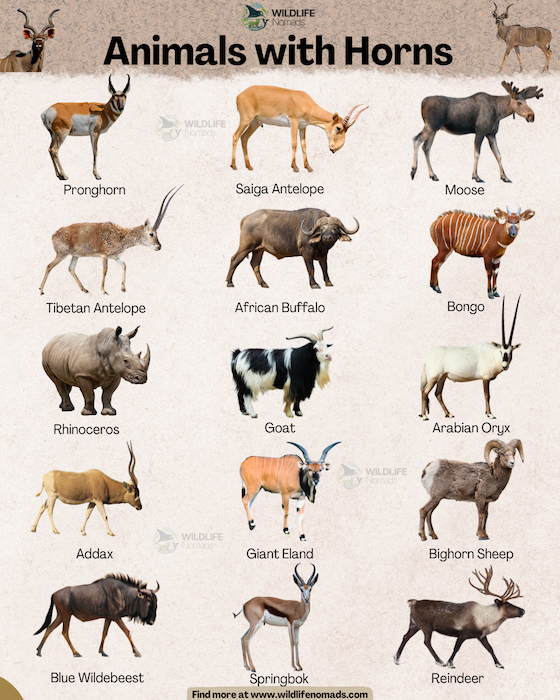
Not every animal that looks horned actually has horns. True horns belong only to the bovid family: cattle, sheep, goats, and antelope. Each horn has a living bony core growing out of the skull. That core is covered by a permanent sheath of keratin — the same material that builds your fingernails and a rhino’s snout weapon. True horns never branch, and with one exception they never shed.
Antlers are a completely different structure. They belong to deer, including moose, elk, fallow deer, and reindeer. Antlers are pure bone, regrow every year, and often fork into elaborate tines. A bull moose can grow antlers the size of a coffee table in a single summer, then drop the pair by late winter. Giraffes carry skin-covered bone projections called ossicones. Pronghorns do their own weird thing, more on that below. And rhino horns? Pure keratin, no bone at all. They are closer to a tightly compressed hairball than to anything on a goat’s head.
The fact that animals with horns evolved independently across so many lineages tells us these structures solve real problems. Defense, mate competition, species recognition, natural selection keeps stumbling onto similar answers. Convergent evolution is everywhere in the animal kingdom once you know what to look for, and hoofed animals are its loudest example.
The Big African Bovids
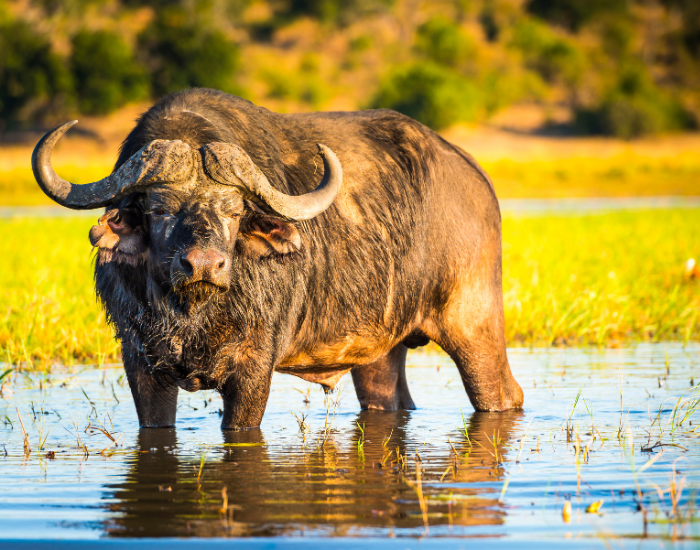
1. African Buffalo (Syncerus caffer)
The Cape buffalo is the only wildlife species that has ever truly frightened me in the field. I was tracking a herd in Botswana’s Okavango when a lone bull stepped out of a thicket twenty meters away. His fused horns — what biologists call the “boss” — spread across his forehead like a battle helmet. Buffalo kill more hunters in africa than lions, and the boss is a literal battering ram.
Both sexes carry true horns, though the male’s boss is dramatically heavier. Herds can exceed a thousand individuals across east africa‘s Serengeti, and they defend their young with coordinated charges. For a deeper dive into their social structure and the legendary “dagga boys,” see my full piece on African buffalo.
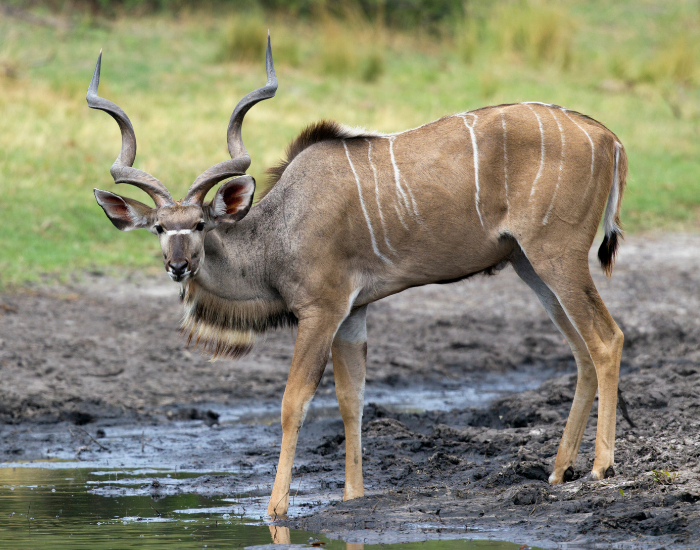
2. Greater Kudu (Tragelaphus strepsiceros)
Greater kudu bulls grow the most beautiful horns on the continent, in my opinion. Their corkscrew spirals can exceed six feet long along the curve. Females typically lack horns, a trait shared with many forest-dwelling antelope where stealth beats visible weaponry.
I once watched a kudu bull stand frozen in mopane scrub for nearly a minute. His vertical white stripes broke up his outline against the brush. When he finally moved, those enormous horns tipped backward over his spine. That posture lets him slip through dense forest without snagging.
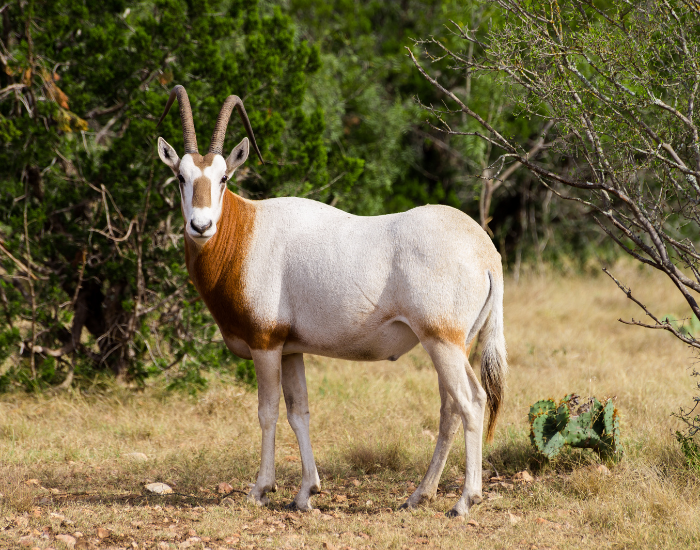
3. Scimitar-Horned Oryx (Oryx dammah)
The scimitar horned-oryx is one of conservation’s quiet success stories. Declared extinct in the wild around 2000, hunting and habitat loss had wiped this species from north africa entirely. The scimitar oryx has since been reintroduced to Chad through a remarkable captive-breeding partnership. Their backswept horns reach 1.2 meters in both sexes. For more on the genus, see my full guide to oryx.
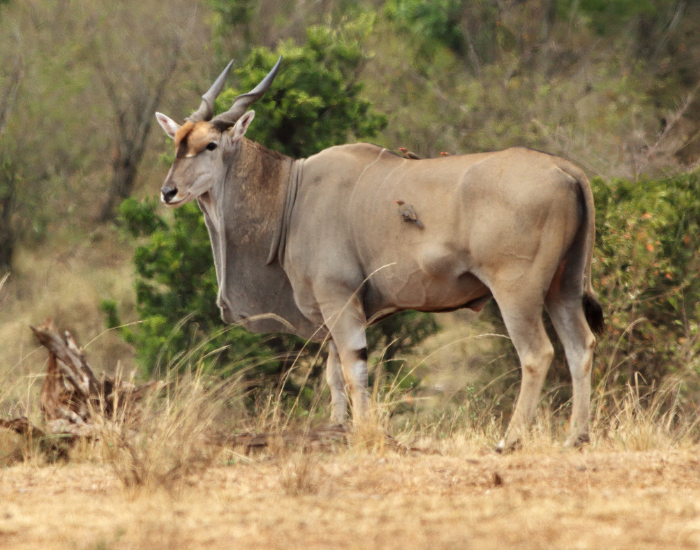
4. Giant Eland (Taurotragus derbianus)
The giant eland is the largest antelope on Earth. Bulls top 1,000 kg. Despite their size, giant eland are nervous and tough to approach.You can spend days in Cameroon’s Bénoué National Park before you get one clear sighting. Both sexes carry tightly twisted spiral horns up to 120 cm long. Central africa is the giant eland‘s last stronghold, though poaching for meat still hammers the population.
5. Springbok (Antidorcas marsupialis)
Springbok are the gymnasts of southern Africa. Their lyre-shaped horns are modest — under 50 cm — but their pronking behavior is unforgettable. The animal launches stiff-legged into the air, flashing a white dorsal crest. The leading hypothesis is that pronking signals fitness to predators: “Don’t bother chasing, I’m too quick.” My springbok deep-dive goes deeper on this behavior.

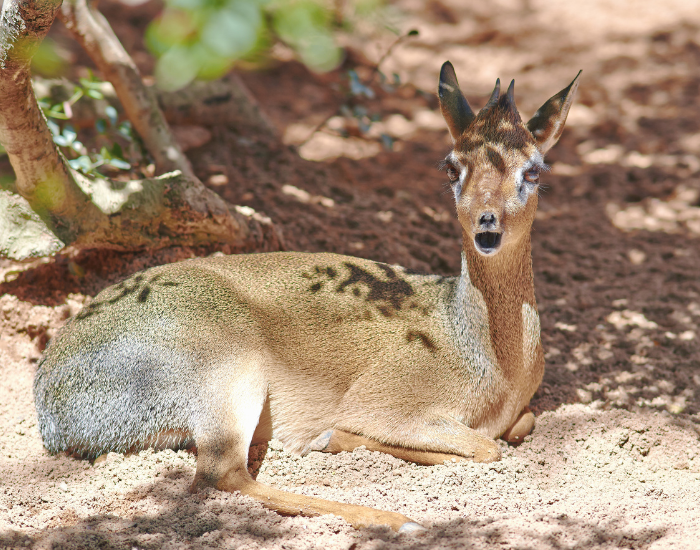
6. Royal Antelope (Neotragus pygmaeus)
The royal antelope is the world’s smallest antelope, barely 25 cm at the shoulder. Males carry tiny, smooth horns about 2.5 cm long. They navigate the forest floor like deer mice, hiding in undergrowth and exploding into flight when startled. The royal antelope offers one example of how horn size scales with body size and habitat, small forest dwellers evolve modest weaponry.
Asian Horned Species
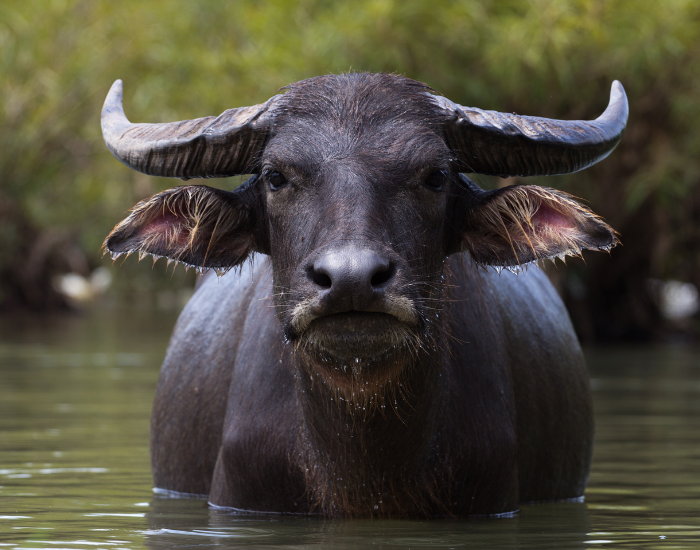
7. Water Buffalo (Bubalus bubalis and Bubalus arnee)
I grew up thinking water buffalo were docile farm animals. Then I met Bubalus arnee, the wild Asian variety, in northeastern india. They are enormous. Bulls exceed 1,200 kg, and their swept-back long horns can span over three meters tip to tip, the widest horn pair of any living mammal. My piece on water buffaloes covers both the domestic and wild forms.
8. Nilgai (Boselaphus tragocamelus)
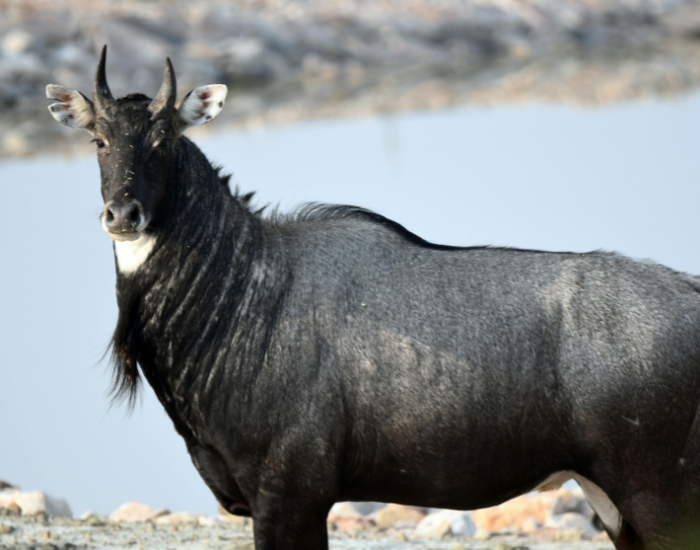
The nilgai is the largest Asian antelope. Only males carry horns, which are short, sharp, and forward-pointing. I tracked nilgai across the dry forests of Gujarat. They look more like a horse than an antelope, with a steel-blue coat that earned them the name “blue bull.” Read my full nilgai write-up for the strange story of their semi-sacred status in India.
9. Markhor (Capra falconeri)
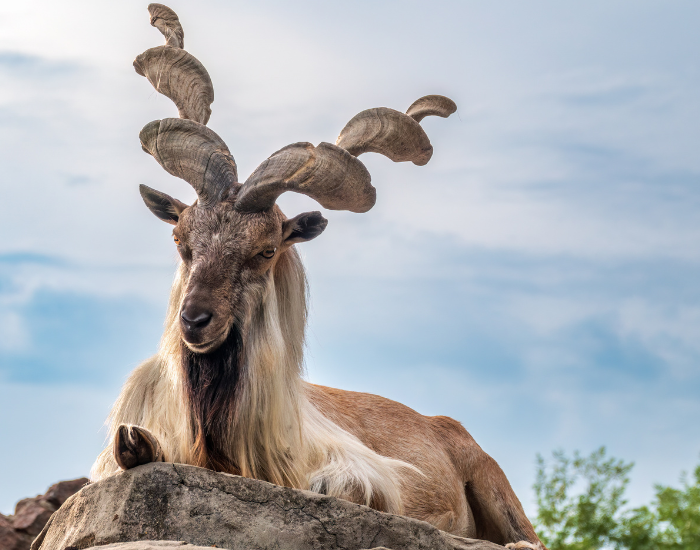
The markhor is Pakistan’s national animal. Wild goats of the Karakoram, the males grow horns into magnificent corkscrews. I’m still chasing my first sighting in the Chitral Valley. Markhor horns can exceed 1.5 meters along the spiral. For a broader survey of the family, see my types of goats guide.
Mountain and Cliff Specialists
10. Bighorn Sheep (Ovis canadensis)
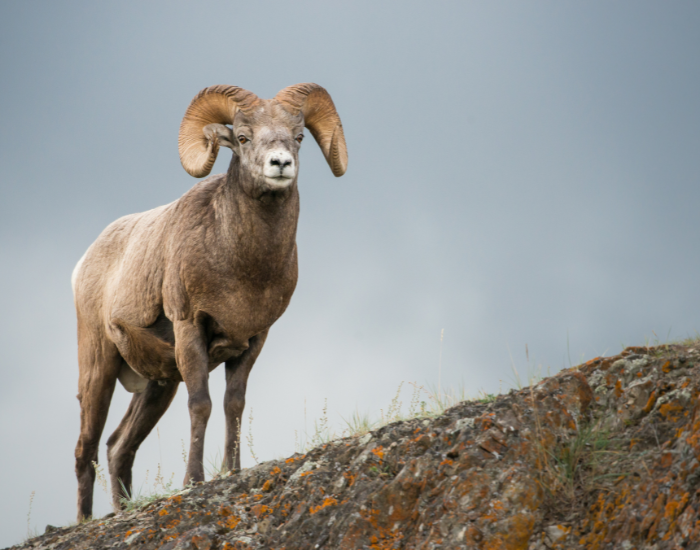
If you have never heard two bighorn sheep rams collide in autumn, you have missed one of the wild‘s great sounds. The impact rings off canyon walls like a rifle shot. Rams fight with curved horns that weigh up to 14 kg — more than all the bone in the rest of the skull combined. Other males watch from nearby ridges, learning the choreography of combat. I’ve spent autumns photographing these clashes in Glacier National Park. Few photo sessions in my career have been as adrenalized.
11. Nubian Ibex (Capra nubiana)
The males’ long, ridged, backward-curving horns can exceed a meter. They walk near-vertical rock with a casualness that defies physics. Females carry shorter horns but the same gravity-mocking footwork. The Bedouin local guides called them “mountain ghosts,” and after three days of failed approaches I started to agree.

North American and Eurasian Steppe
12. American Bison (Bison bison)
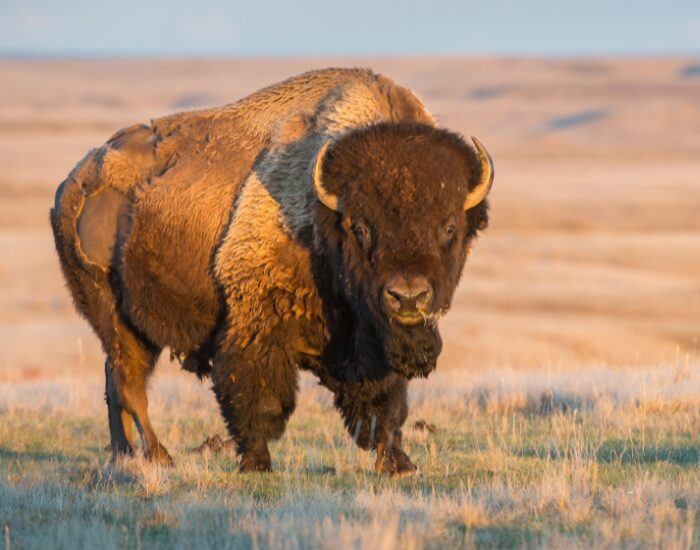
TheAamerican Bison nearly vanished in the 1880s. From perhaps 60 million animals down to a few hundred survivors before conservationists pulled them back from the brink of extinction. Today around 500,000 bison live across native range and protected lands. Both sexes carry short, sharp, upward-curving horns. A friend in Canada spent a winter looking at herds in Yellowstone and watched a cow defend her calf from a wolf pack, using nothing but those horns and 900 kg of resolve. The American buffalo, as the species is also called, is a textbook case of conservation pulling a species back from oblivion.
13. Saiga Antelope (Saiga tatarica)
The saiga is one of the strangest mammals alive. It’s a Pleistocene survivor with a bulbous, downward-pointing nose that filters dust and warms freezing steppe air. Only males carry the amber-colored, lyre-shaped horns. The species is also under enormous pressure. Killing for the horn — used in traditional medicine — drove the population near collapse. A 2015 bacterial outbreak then killed over 200,000 saiga in a few weeks. My saiga write-up has the full story.

14. Pronghorn (Antilocapra americana)
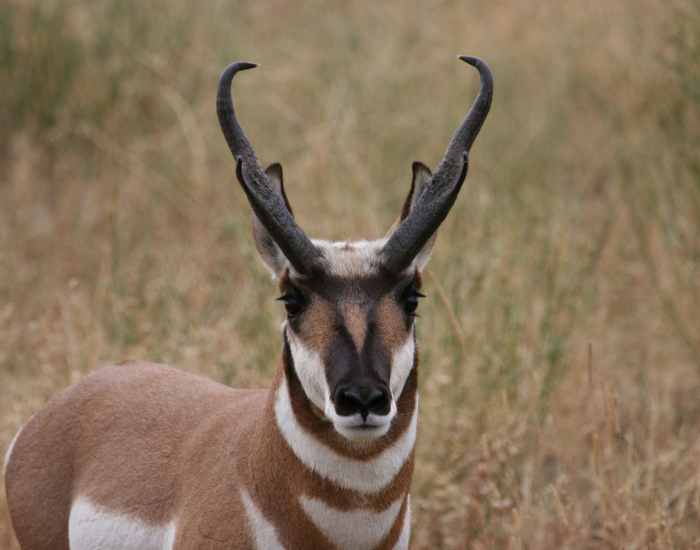
The pronghorn is a category of one. It looks like an antelope but isn’t. Their closest living relatives are the family Moschidae (musk deer). Together with deer, bovids, and giraffes, they share a deeper common ancestor. Pronghorn horns sit on a permanent bony core, but the keratin sheath is shed annually and regrown each year. The horn even forks, which no true horn does. Pictures rarely do justice to how fast this animal moves. Pronghorns can sustain 55 mph for miles. They evolved to outrun an extinct American cheetah and now have no predator they cannot leave behind.
The Outliers
15. White Rhinoceros (Ceratotherium simum)
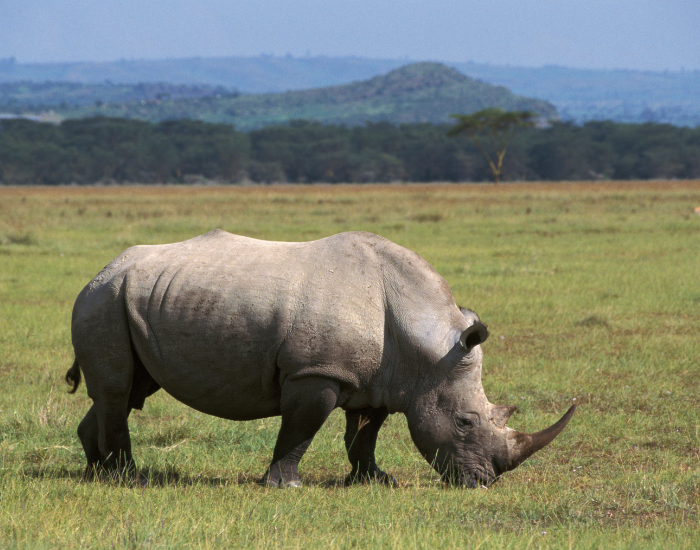
Rhino horns are not horns in the technical sense (Including Javan, Sumatran, Black and White Rhinos). White rhinos carry two front-and-back projections made entirely of compressed keratin. No bone, no living core. Specifically, rhino horn is actually a solid mass of filamentous keratin, densely packed and cemented together with specialized calcium and melanin structures in the core to prevent UV damage and breakage.
This matters because dehorning programs, controversial but effective in some reserves — can save individuals without permanent harm. A colleague helped a nonprofit to immobilize white rhinos for translocation in South Africa. The front horn on a mature bull can exceed 150 cm. Poachers have been killing roughly a thousand rhinos a year through the 2010s. The slaughter is still ongoing, just quieter.
Honorable Mentions
A few other animals wear horn-like structures that don’t fit the bovid family but deserve a nod. Jackson’s chameleon males grow three forward-pointing horns used in male-on-male jousting, yes, lizards joust, and they’re surprisingly aggressive about it. Giraffes carry ossicones, which are bone covered by skin rather than keratin.
The casque of a hornbill, the rostral spine of a narwhal, the tusks of an elephant or walrus, none of these are horns. Tusks come from the mouth, not the head. They are modified teeth, not skull projections. But all these structures solve similar problems in unrelated lineages, creating what biologists call convergent evolution. Beautiful animals, every one of them.

Frequently Asked Questions
True horns belong only to the bovid family: buffalo, sheep, goats, and the entire antelope tribe. Pronghorns have a horn-like structure whose outer sheath is shed annually. Rhinos carry pure keratin horns with no bone core. Deer grow antlers, not horns, and giraffes grow ossicones. Most animals with horns are hoofed animals, though males of jackson’s chameleon prove there are exceptions outside the mammals.
No. Tusks are elongated teeth; the mouth, not the head, is their origin. Elephant and walrus tusks are modified incisors. Warthog tusks are canines. Horns grow from the cranium and combine bone and keratin. The difference matters for ivory law and conservation policy worldwide.
Horns evolved primarily for combat over mates and territory. Males use them to spar with other males. Females in many species carry smaller versions for defense and range disputes. In some lineages horns also help attract females, signaling genetic fitness through size and symmetry. Humans have hunted animals with horns for food, trophies, and medicine for millennia.
Horns: Evolution’s clearest fingerprints
The same problem keeps getting solved by lineages separated by millions of years. From the bighorn ram colliding head-on at 30 mph to the white rhino swinging two keratin spikes that aren’t technically horns, every species here tells a story about combat, signaling, and survival in its own corner of the world.
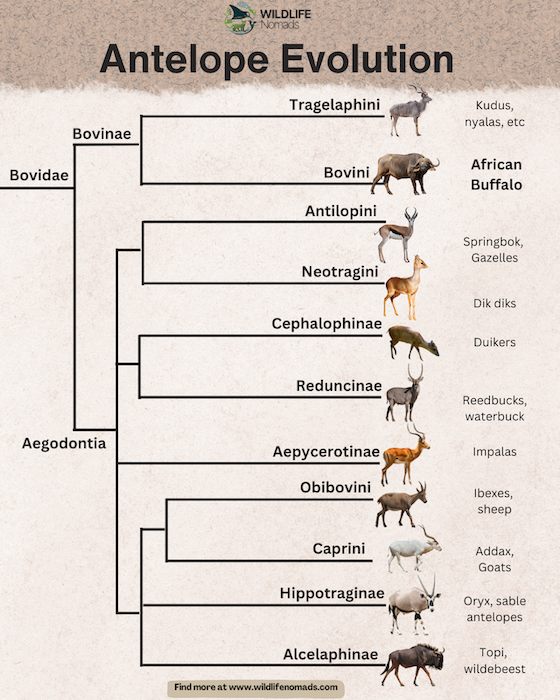
If you’ve watched a horned species in the wild — whether American bison in Yellowstone, water buffalo in a Mekong delta, or a wild goat on a Himalayan road — leave a note in the comments. I read every one. And if you want more, dig into my pieces on the types of antelope, the different kinds of deer, the reindeer and caribou guide, the fallow buck deer profile, or the tiny but unforgettable dik-dik. The next horn you spot in the field will mean a little more.
References:
Bro-Jørgensen, J. (2007). The intensity of sexual selection predicts weapon size in male bovids. Evolution, 61(6), 1316–1326. https://doi.org/10.1111/j.1558-5646.2007.00111.x
IUCN SSC Antelope Specialist Group. (2017). Oryx dammah (Scimitar-horned oryx): The IUCN Red List of Threatened Species. https://www.iucnredlist.org/species/15568/50191470
Fereidouni, S., Freimanis, G. L., Orynbayev, M., Ribeca, P., Flannery, J., King, D. P., Zuther, S., Beer, M., Höper, D., Kydyrmanov, A., Karamendin, K., & Kock, R. (2019). Mass Die-Off of Saiga Antelopes, Kazakhstan, 2015. Emerging infectious diseases, 25(6), 1169–1176. https://doi.org/10.3201/eid2506.180990
Kock, R. A., Orynbayev, M., Robinson, S., Zuther, S., Singh, N. J., Beauvais, W., Morgan, E. R., Kerimbayev, A., Khomenko, S., Martineau, H. M., Rystaeva, R., Omarova, Z., Wolfs, S., Hawotte, F., Radoux, J., & Milner-Gulland, E. J. (2018). Saigas on the brink: Multidisciplinary analysis of the factors influencing mass mortality events. Science Advances, 4(1), eaao2314. https://doi.org/10.1126/sciadv.aao2314
Lundrigan, B. (1996). Morphology of horns and fighting behavior in the family Bovidae. Journal of Mammalogy, 77(2), 462–475. https://doi.org/10.2307/1382822
FARKE, A.A. (2010), Evolution and functional morphology of the frontal sinuses in Bovidae (Mammalia: Artiodactyla), and implications for the evolution of cranial pneumaticity. Zoological Journal of the Linnean Society, 159: 988-1014. https://doi.org/10.1111/j.1096-3642.2009.00586.x
Save the Rhino International. (2024). Rhino poaching statistics. https://www.savetherhino.org/rhino-info/poaching-stats/
Stankowich, T., & Caro, T. (2009). Evolution of weaponry in female bovids. Proceedings of the Royal Society B: Biological Sciences, 276(1677), 4329–4334. https://doi.org/10.1098/rspb.2009.1256