The first time I stood in front of a dik dik, I genuinely could not believe what I was looking at. I was at a zoo, leaning over a low fence, staring at an antelope the size of a house cat with enormous dark eyes, pencil-thin legs, and a trunk-like nose that looked borrowed from another animal entirely. My brain kept trying to categorize it, is this a dik-dik deer? Some kind of baby antelope? A creature Jim Henson dreamed up? None of those labels fit. The dik dik is its own kind of strange, and that strangeness runs deep.
Next year, I am heading to Africa specifically to find these animals in the wild. While most people plan their safaris around cheetahs, buffalos, and lions, I think some of the creatures that never get the spotlight deserve far more attention. These small antelopes is at the top of that list. Here are twelve facts that explain why.
1. The Dik Dik Is One of the Smallest Antelopes on Earth
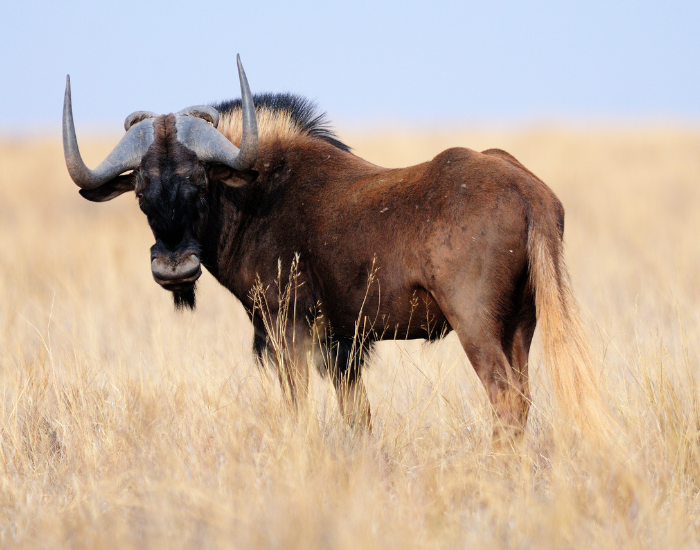
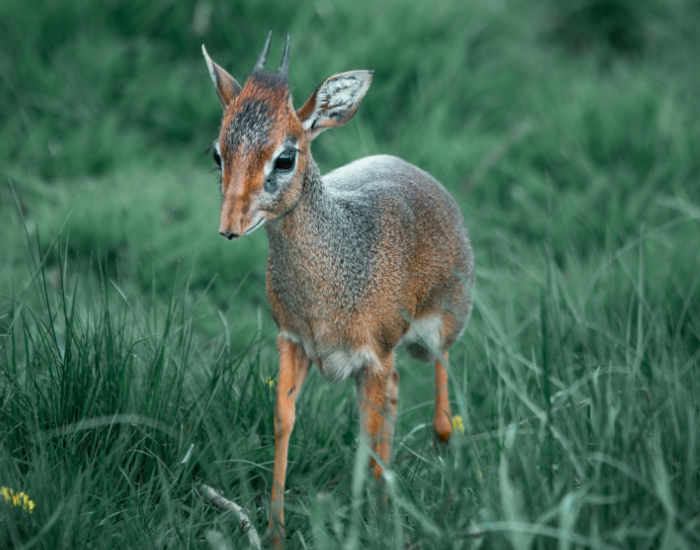
When people hear “antelope,” they picture wildebeest or impala, large herbivores thundering across the African plains. This antelope shatters that image. These tiny antelopes stand only 30 to 40 centimeters at the shoulder and weigh between 3 and 6 kilograms. For reference, that is roughly the size of a small dog. Their legs are so thin they look almost fragile, yet those legs carry them at speeds up to 42 kilometers per hour when predators close in.
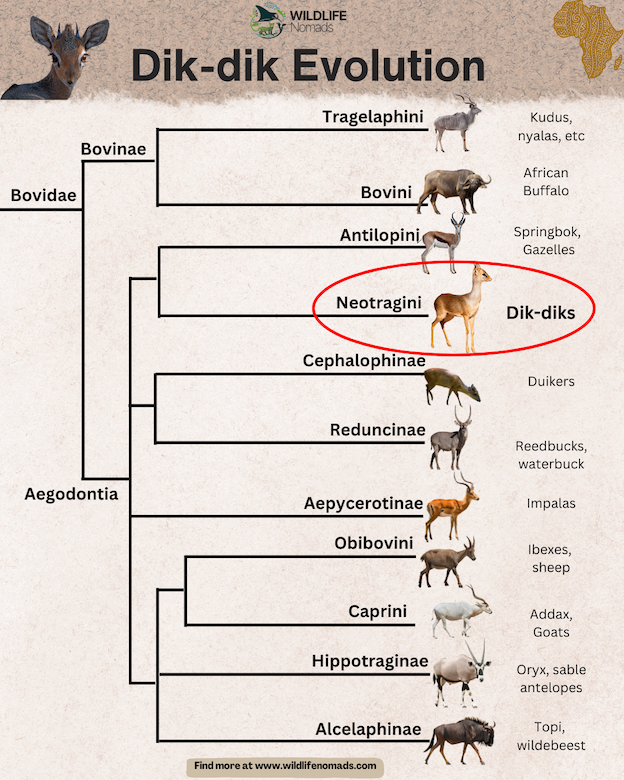
They belong to the tribe Neotragini within the family Bovidae, a tribe of dwarf antelope that bears little resemblance to its larger cousins. They are even-toed ungulates, placing them in the same broad group as springboks, wildebeest, goats and the oryx, though you would never guess it from their size. Their foreleg bones are thinner than a pencil, yet these animals are built to survive some of the harshest landscapes in eastern and southern Africa. Unlike the massive herds of wildebeest that dominate safari footage, members of this tribe live quiet, paired-down lives in the scrub.
2. Their Name Comes from a Tiny Alarm Call
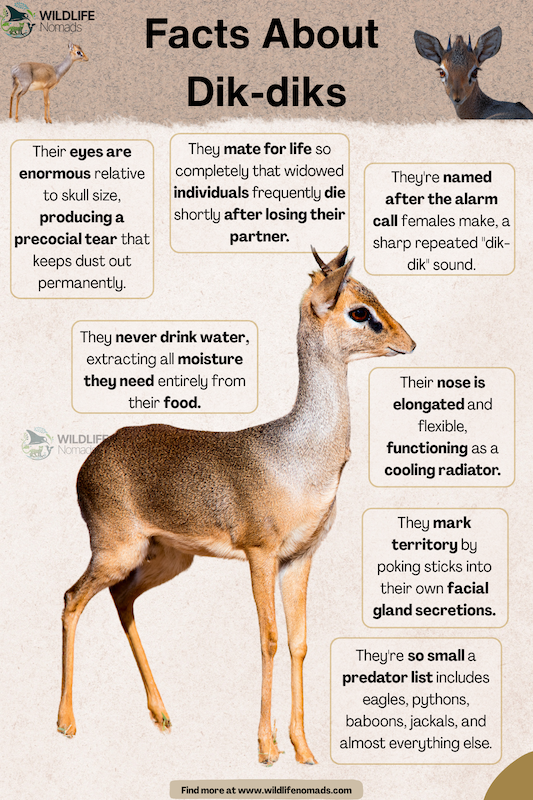
So what is a dik dik animal, exactly, and why the funny name? The answer is sound. When a dik dik senses danger — a jackal approaching, an eagle circling overhead — it produces a sharp, repetitive whistling sound through its elongated snout. That call sounds like “zik zik” or “dik dik,” and local communities named the animal after it. Females are the primary alarm callers, blasting that zik zik cry to warn their mate and other animals nearby.
That whistling sound serves double duty. It alerts the dik dik’s partner, but it also functions as a general alarm for other species in the area. Zebras, wildebeest, and other herbivores often pay attention to dik dik alarm calls. In effect, these tiny antelopes act as the neighborhood watch of the savanna.
3. There Are Four Species… Not Just One
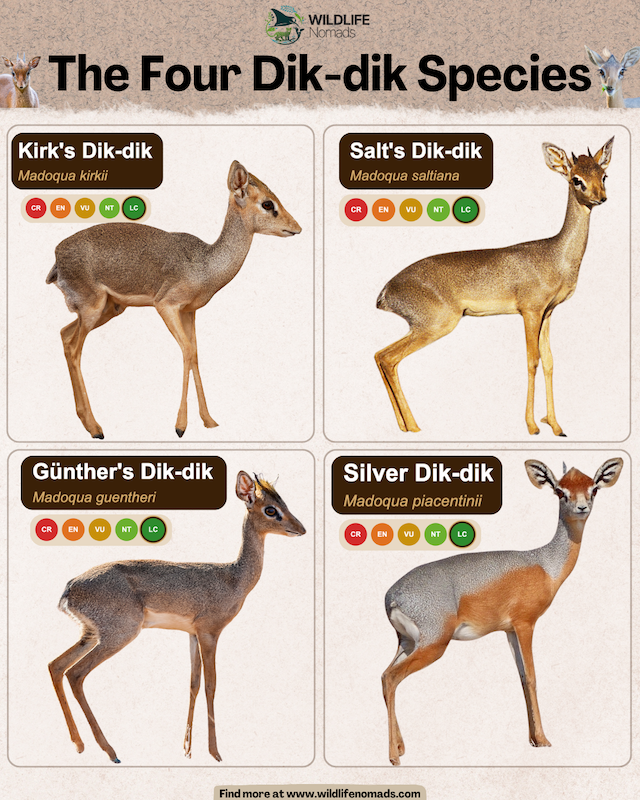
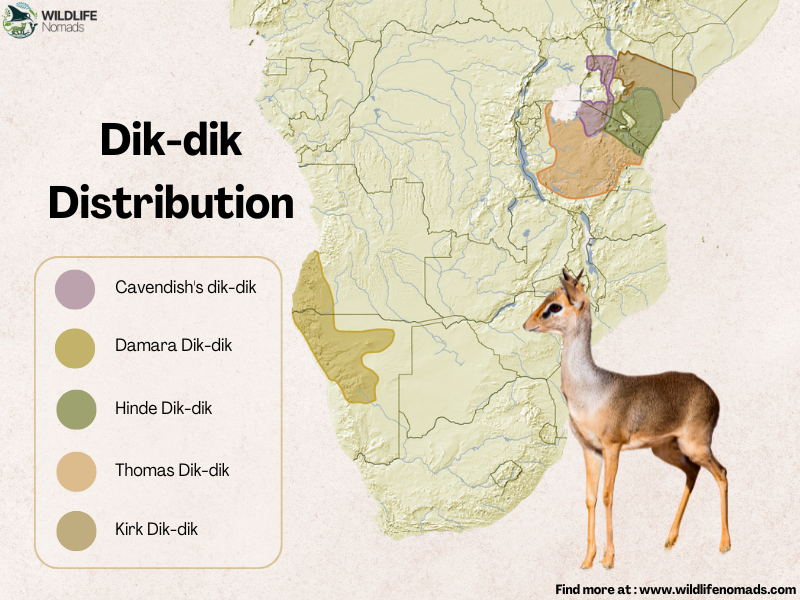
Most people talk about “the dik dik” as if there is only one kind. There are actually four species in the genus Madoqua. Kirk’s dik dik is the most widespread and best-known, found across Kenya, Tanzania, and parts of southern Africa. Guenther’s dik dik ranges across the Horn of Africa and into Uganda. Salt’s dik dik lives in Ethiopia and Eritrea. The silver dik dik, the rarest of the four species, occupies a small range in Somalia and eastern Ethiopia.
Kirk’s dik dik (the best-studied member of the tribe) has been the subject of most scientific research, including landmark studies on monogamy published in the Proceedings of the Royal Society. The silver dik dik, by contrast, is listed as Data Deficient by the IUCN, biologists suspect its populations are declining, but hard data remains scarce. That gap in knowledge is itself a call to action for wildlife researchers and conservation programs in east Africa.
4. They Have a Built-In Air Conditioner in Their Nose
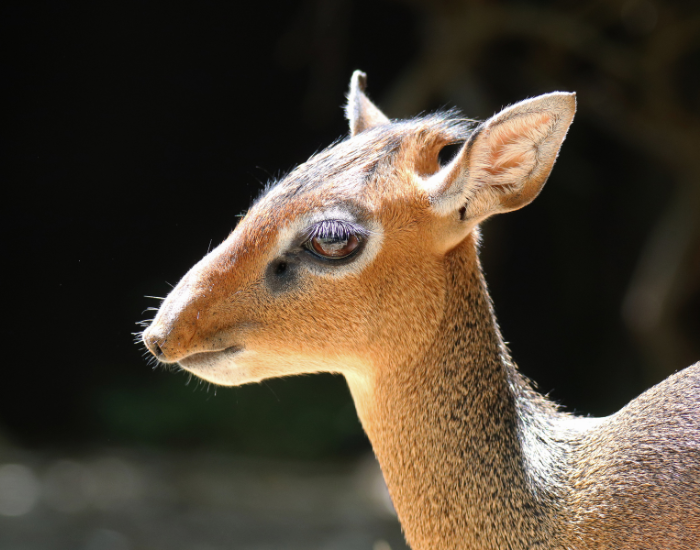
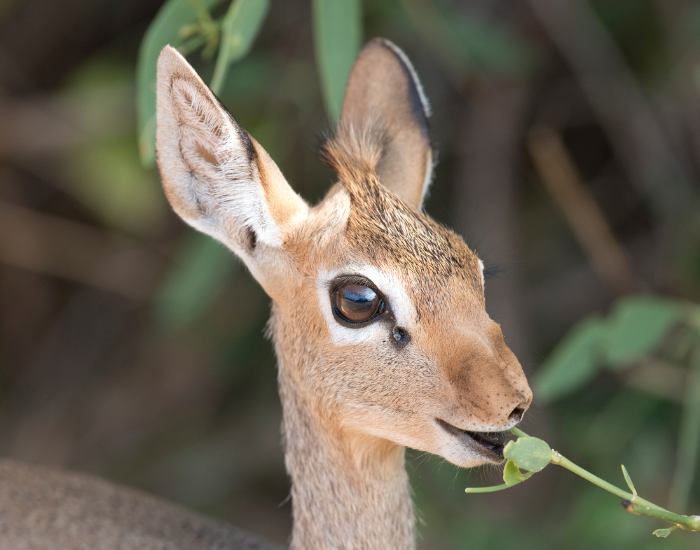
This is the fact that blew my mind at the zoo and still fascinates me. They have elongated snouts — almost like a small trunk — and those snouts are not just for show. Inside, an enlarged nasal chamber is richly supplied with blood vessels. When temperatures climb, bellows-like muscles pump blood through this chamber. Rapid nasal panting causes evaporation that cools the blood before it recirculates to the body and brain. The process is remarkably efficient. They lose minimal water in the exhaled air, which is critical for animals that survive in arid grasslands where water is scarce.
A 1984 study published in Respiration Physiology examined the nasal passages and carotid rete of Kirk’s dik dik and confirmed this cooling system. The researchers found that they can tolerate air temperatures up to 40°C (104°F) before they even need to activate heavy panting. Combined with concentrated urine, dry dung, and the ability to rest in shade during peak african heat, these antelope are superbly equipped to survive waterless bush country.
5. Only Males Have Horns — And They Are Tiny
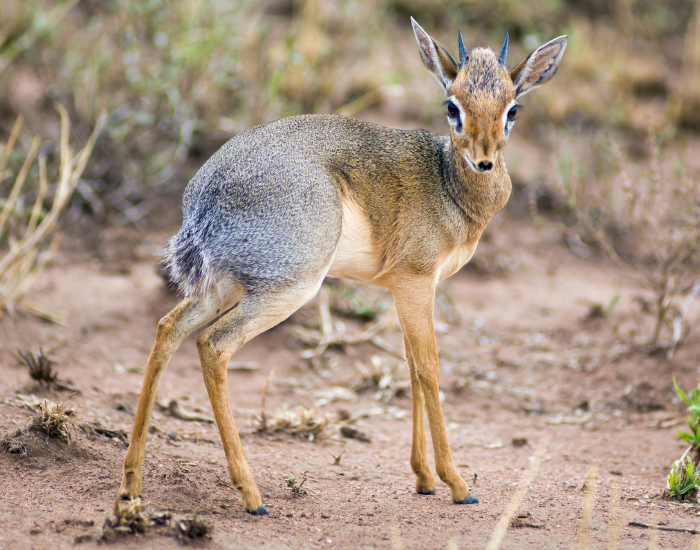
Both sexes look similar at first glance, but there is one easy way to tell males from females. Males grow short, ridged horns that reach only about 7 to 8 centimeters long. Females have no horns at all. In many populations, the horns are partially hidden by a tuft of fur on the forehead, making males look like they are wearing a small, spiky crown.
Those horns are not built for serious combat. Males rarely fight other males with them. Instead, they rely on scent-marking and territorial displays to settle disputes. Interestingly, females tend to be slightly larger than males in most dik dik species — a pattern called reverse sexual dimorphism that appears in several small antelope species. The size difference between the sexes is subtle but consistent across populations studied in Kenya and Tanzania.

6. Dik Diks Form Monogamous Pairs for Life
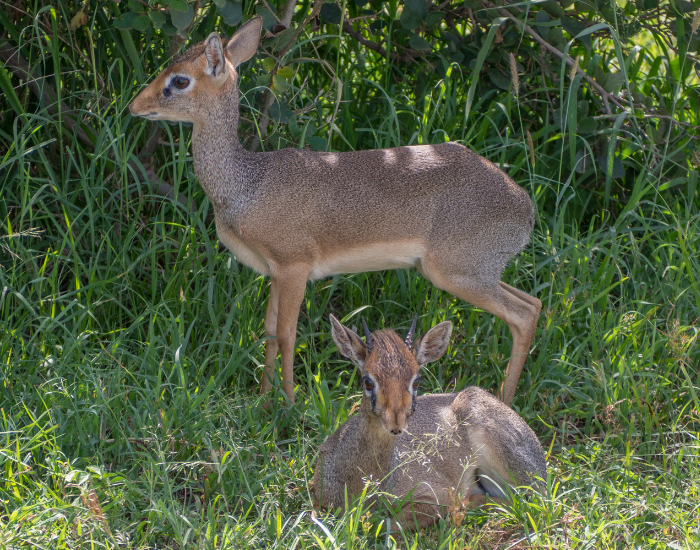
Here is where the dik dik gets genuinely romantic. Unlike most antelope species that gather in large herds, they form monogamous pairs. A male and female will bond, establish a shared territory, and stay together, often for life. Research published in the Proceedings of the Royal Society of London Series B: Biological Sciences used DNA microsatellite analysis to test whether Kirk’s dik dik pairs were truly faithful. The results were striking: zero evidence of extra-pair paternity across all twelve juveniles tested. The mated pair stayed loyal.
Males spend roughly 64% of their time within close proximity of their partner. They follow their females’ activity patterns, guard them closely during oestrus, and over-mark every scent deposit their mate leaves behind. The pair bond is maintained through daily rituals rather than dramatic displays. Behaviorist Richard Estes documented these bonds extensively in his field studies across east Africa.
Why monogamy? One hypothesis is that female dispersion drives it, females space themselves so widely across the landscape that males cannot defend access to more than one. However, researchers have challenged this view. A study by Komers and Brotherton argued that female dispersion does not fully account for monogamy in the dik dik. Instead, they proposed that monogamy evolved primarily through male mate guarding. With so many predators around, the pair bond is a survival strategy.
7. Their Territory Marking Ritual Is Fascinatingly Elaborate
They maintain territories ranging from 1 to 35 hectares, depending on available cover and food. They defend these territories through one of the most elaborate scent-marking ceremonies in the wildlife world, the “dung ceremony.”
It works like this. First, the female walks to a boundary spot, urinates, and defecates. The male approaches, sniffs her urine carefully, then kicks vigorously at the ground. He deposits his own dung and urine on top of hers. Finally, both animals press their preorbital glands, small glands located in the inside corner of each eye that produce a dark, sticky secretion — against nearby grass stems and twigs. These preorbital glands leave a bare black spot of scent on branches that signals ownership to other dik diks. Males do most of the scent-marking work, but females contribute too. The ceremony reinforces both the territorial boundary and the pair bond simultaneously.
8. They Have Four-Chambered Stomachs Like Cows
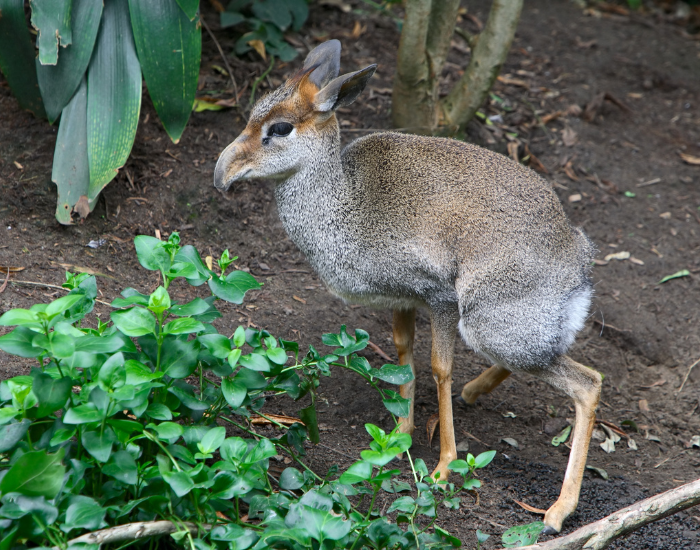
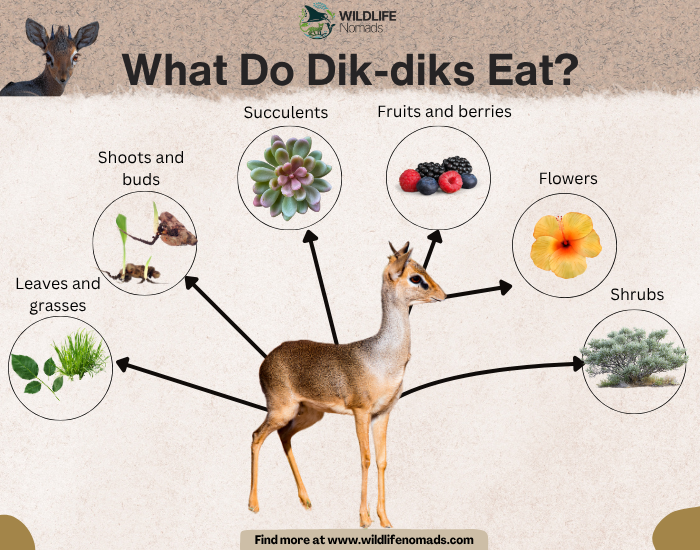
Despite being among the smallest antelope on the continent, they share a digestive trait with cattle and other large ruminants. They have four-chambered stomachs that allow them to extract maximum nutrition from tough, fibrous plant material. They eat leaves, shoots, fruits, berries, and forbs, selectively browsing on the most nutritious parts of each plant rather than grazing on grass like wildebeest or zebras.
This selective browsing strategy means they rarely need to drink water directly. They get most of their moisture from the plants they consume. Combined with their ability to produce highly concentrated urine and dry dung, this makes them remarkably water-efficient herbivores. They thrive in scrublands and arid savannas where other animals would struggle.
9. Baby Dik Diks Are Hidden Like Secrets
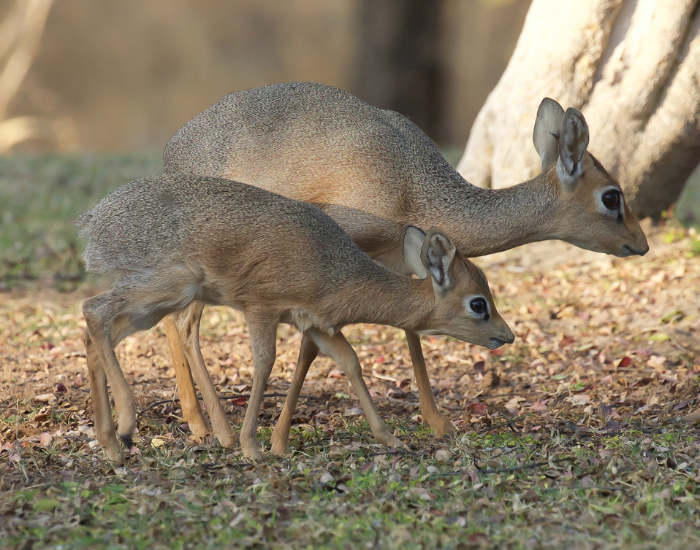
Females typically gives birth to a single baby after a gestation period of about 170 days. The newborn weighs roughly 700 grams, small enough to hold in one hand. For the first few weeks of life, the baby stays hidden in dense vegetation while the mother forages nearby. Good cover is essential. Without thick bushes or scrub, the baby becomes easy prey for jackals, baboons, birds of prey, and other predators.
The offspring stays with its parents for several months, learning territorial boundaries and foraging patterns. Eventually, the parents chase the young ones away to establish its own territory. Males typically disperse first. This pattern prevents inbreeding and ensures healthy populations across the landscape. A mated pair generally produces one or two offspring per year, and in areas with abundant resources, females may breed twice annually.
10. They Face a Surprising Number of Predators
For an animal so small, the list of predators targeting them is staggering. Leopards, hyenas, jackals, wild dogs, pythons, eagles, and even large monitor lizards all consider them prey. Humans also hunt them, in some regions, their hides are used to make gloves, and they are sometimes caught as bushmeat.
They survive this pressure through several strategies. They rely on good cover, pressing themselves flat against the ground when a threat appears. If detected, they explode into a zigzag sprint, darting into the nearest thicket. Their gray-brown coloring provides camouflage against dry scrubland. Their enormous eyes give them excellent vision, especially in low light. And that alarm call, the sharp whistling sound, buys precious seconds by startling predators and alerting the mate.
11. Dik Dik Populations Are Mostly Stable — With Some Worrying Exceptions
Three of the four species — Kirk’s dik, Guenther’s, and Salt’s — are currently listed as Least Concern by the IUCN. Their populations remain stable across large parts of their range in Africa. Kirk’s dik dik, in particular, is abundant in Kenya and Tanzania, with healthy populations in protected areas like the Serengeti.
The silver dik dik tells a different story. As I mentioned before, they are liisted as Data Deficient, this species occupies a limited range in Somalia and eastern Ethiopia — regions where political instability has made wildlife surveys extremely difficult. Biologists working in biological sciences suspect its populations are declining due to habitat loss from overgrazing by cattle and agricultural expansion. Across all species, the primary threats are hunting, habitat destruction, and competition with livestock. In densely settled areas, numbers drop noticeably.
12. Dik dik Urine Tells a Chemical Story
They use urine in ways that go far beyond simple waste elimination. When a male sniffs his partner’s urine during the dung ceremony, he is reading a chemical report. The urine contains hormones and metabolites that reveal the female’s reproductive status, health, and stress levels. Males can detect whether a female is approaching oestrus, which triggers closer mate guarding.
Both sexes produce highly concentrated urine as a water conservation adaptation. In the wild, they deposit urine at specific latrines, shared sites that accumulate dung and urine from the mated pair. These latrines serve as information hubs for neighboring dik diks, communicating territory boundaries, pair status, and reproductive condition. It is a chemical communication network hidden in plain sight, pumped full of biological data that humans cannot detect without lab analysis. Each deposit bears a timestamp of sorts, fresher scent signals an active, healthy pair, while fading marks suggest a territory ripe for takeover.
Frequently Asked Questions
They are a small antelope belonging to the genus Madoqua. There are four species, all native to the bushlands and grasslands of eastern and southern Africa. Despite sometimes being called a dik-dik deer, they are not related to deer at all — they belong to the family Bovidae, making them more closely related to cattle and goats. DThey stand about 30–40 cm tall at the shoulder and weigh 3–6 kg, making them one of the smallest antelope species in the world.
A Tiny Antelope Worth the Trip
The dik dik will never headline a safari brochure. It will not charge your vehicle or roar at sunset. What it will do is stop you in your tracks with its oversized eyes, make you laugh with its ridiculous nose, and then quietly reveal one of the most sophisticated survival toolkits in the animal kingdom — from a built-in air conditioner to a lifelong pair bond sealed in dung. These animals remind me why I do this work. The flashy wildlife gets the attention, but the strange, small, overlooked creatures often carry the best stories.
If you are planning a trip to the African savannas and want to learn more about the ecosystems these antelope call home, check out my guide to savanna animals. And if someone ever tells you dik diks are just “tiny deer,” send them my article on the actual types of deer — the difference matters.
References:
Brotherton, P. N. M., & Rhodes, A. (1996). Monogamy without biparental care in a dwarf antelope. Proceedings of the Royal Society of London. Series B: Biological Sciences, 263(1366), 23–29. https://doi.org/10.1098/rspb.1996.0005
Brotherton, P. N. M., Pemberton, J. M., Komers, P. E., & Malarky, G. (1997). Genetic and behavioural evidence of monogamy in a mammal, Kirk’s dik-dik (Madoqua kirkii). Proceedings of the Royal Society of London. Series B: Biological Sciences, 264(1382), 675–681. https://doi.org/10.1098/rspb.1997.0096
Komers, P. E. (1996). Obligate monogamy without paternal care in Kirk’s dik-dik. Animal Behaviour, 51(1), 131–141. https://doi.org/10.1006/anbe.1996.0011
IUCN SSC Antelope Specialist Group. (2016) Madoqua piacentinii. The IUCN Red List of Threatened Species 2016: e.T12667A50190430. https://dx.doi.org/10.2305/IUCN.UK.2016-1.RLTS.T12667A50190430.en.
Kranz, K. R. (1991). Monogamy in the dik-dik. Applied Animal Behaviour Science, 29(1–4), 87–105. https://doi.org/10.1016/0168-1591(91)90239-T
Maloiy, G. M., Rugangazi, B. M., & Clemens, E. T. (1988). Physiology of the dik-dik antelope. Comparative biochemistry and physiology. A, Comparative physiology, 91(1), 1–8. https://doi.org/10.1016/0300-9629(88)91583-6