
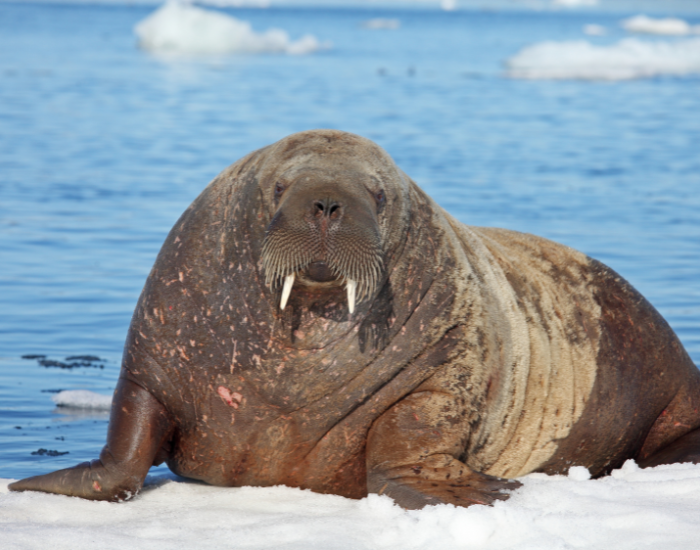
There is something undeniably charismatic about a walrus animal. With those iconic ivory tusks, a mustache that would make a Victorian gentleman jealous, and a personality ranging from “sleepy potato” to “unstoppable force,” the walrus (Odobenus rosmarus) is a true titan of the north.
Beyond the memes and funny pictures, these highly sophisticated marine mammals survive in one of Earth’s harshest environments. Whether hauling their massive bodies onto ice floes or diving to the ocean floor for a snack, walrus life exemplifies Arctic adaptation at its finest.
In this deep dive, we explore 10 incredible facts about the walrus animal, their habitat, and cutting-edge methods scientists use to monitor walrus populations today.
1. The Tooth-Walker: What’s in a Name?
The scientific name Odobenus rosmarus literally translates to “tooth-walker” in Greek. If you’ve seen images of these giants using their tusks to haul 2,000 kg bodies onto slippery sea ice, you understand why. In addition to their prominent tusks, walruses have relatively few teeth, with most of their other teeth being rudimentary.
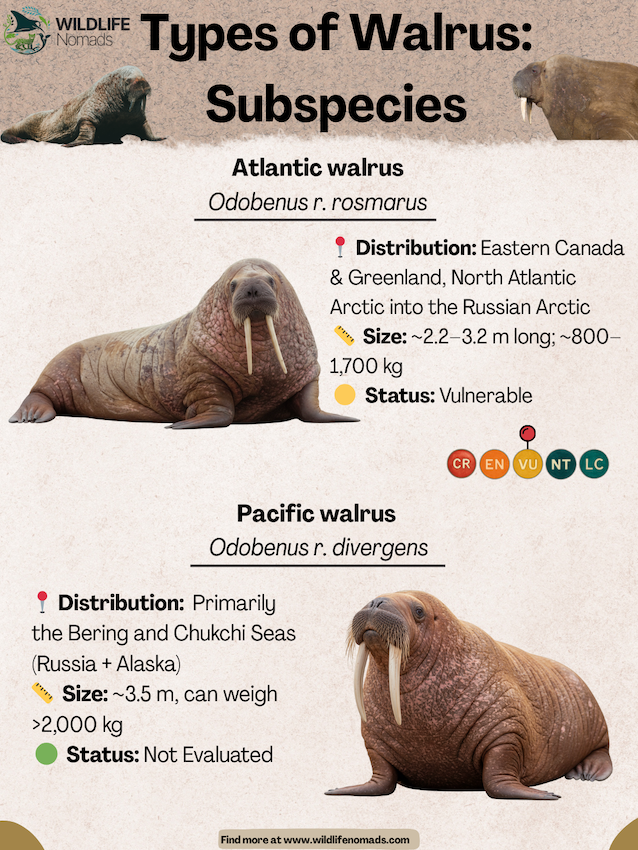
Two main subspecies exist: the Pacific walrus (Odobenus rosmarus divergens) and the Atlantic walrus (Odobenus rosmarus rosmarus). Atlantic walrus populations are primarily found in the Canadian Arctic. Additionally, the Laptev walrus inhabits the Laptev Sea between eastern Russia and the Russian Arctic. The population of Atlantic walruses is estimated to be below 20,000 due to historical overhunting, while the Pacific walrus population was estimated at around 129,000 in 2006, down from approximately 200,000 in 1990. More recent estimates are around 260,000-270,000.
The Pacific walrus generally claims the heavyweight championship. Adult males boast larger body mass and longer tusks compared to their Atlantic walrus cousins. Male Pacific walrus can reach impressive sizes in the Bering Strait and Chukchi Sea regions.
2. A Family of One: The Odobenidae
The walrus family tree looks lonely at the top. The walrus is the sole surviving member of the family Odobenidae. While they are pinnipeds, related to fur seals, elephants seals, and sea lions, they split from a common ancestor about 20 million years ago.
Unlike sea lions that use long front flippers to walk on land, or ringed seals that galumph on their bellies, walruses possess a unique pelvic structure. Therefore, they can move all four flippers under their body. They represent the ultimate hybrid design of the pinniped world.
Walruses are a key subject in polar biology, as their unique adaptations to Arctic environments provide important insights into the evolution, behavior, and ecological roles of marine mammals in polar ecosystems.
3. The Multi-Tool Tusks
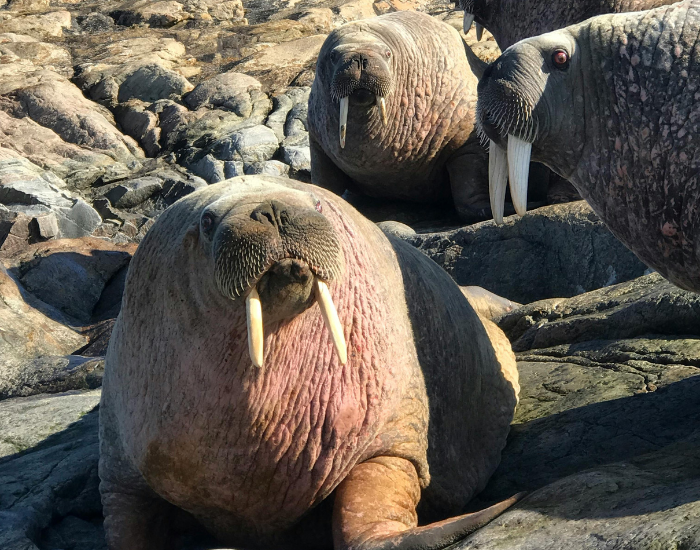
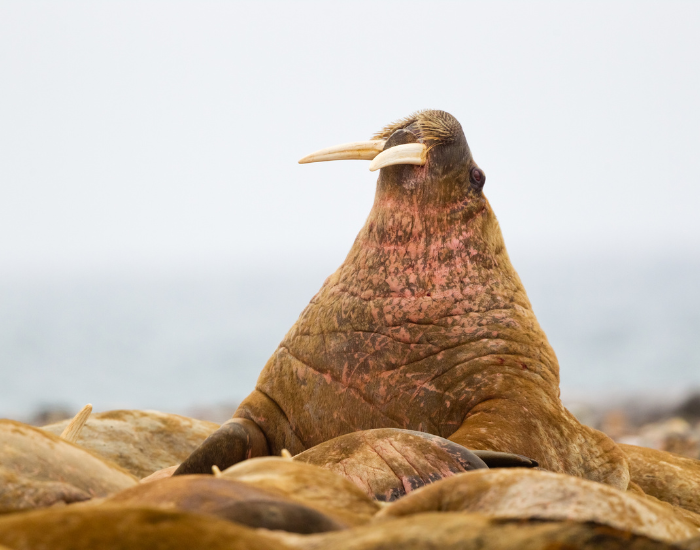
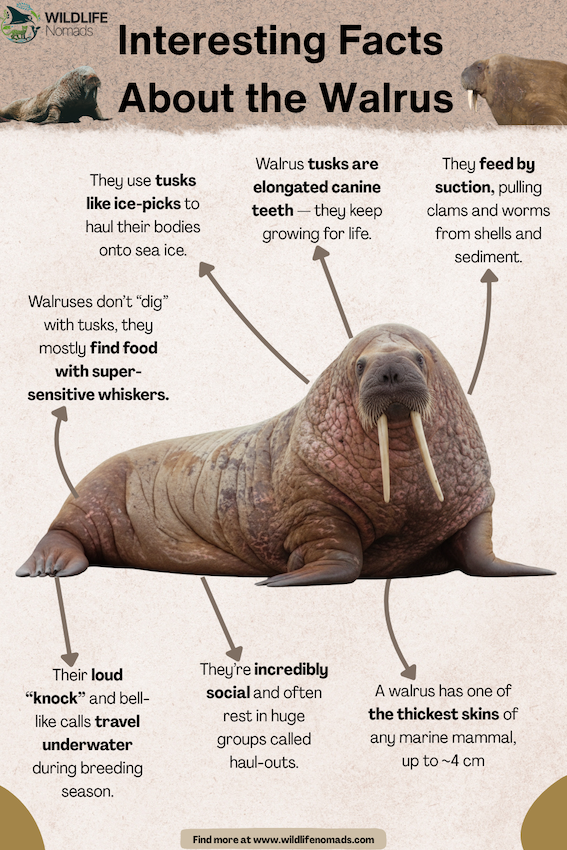
Both male and female walruses grow long tusks, actually elongated canine teeth. These aren’t just for show; they serve as essential survival tools for the walrus animal.
Defense: Ivory tusks help them fight off natural predators like polar bears or killer whales.
Social Status: In walrus populations, bigger tusks mean higher rank. Adult males with the most impressive ivory usually dominate the breeding season. Male walrus with relatively shorter tusks often rank lower in the social hierarchy.
Mobility: Tusks act as ice axes, helping them climb onto ice floes from shallow waters.
Walrus ivory has been traditionally used in art and handicrafts by Arctic indigenous peoples, including mask-making, scrimshaw, and tools. Walrus tusk carving and engraving remain a vital art form in some indigenous cultures.
Interestingly, female walruses have relatively shorter tusks and a more streamlined snout. However, male and female walruses both use their tusks for defense and social interactions throughout the mating season.
4. Master Foragers of the Sea Floor and Ocean Floor
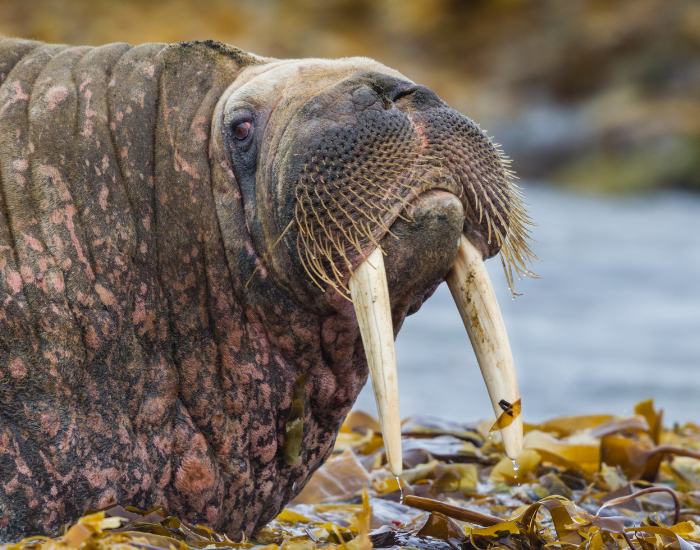
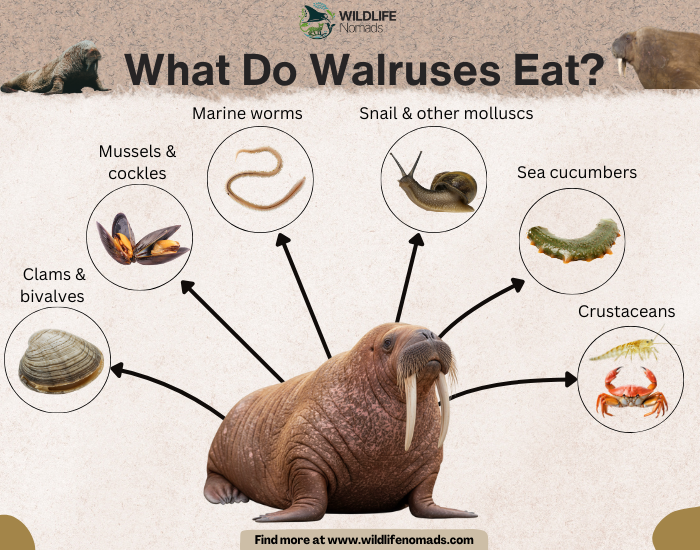
Walruses don’t use tusks to hunt. Instead, these marine mammals are suction feeders. They spend most of their time in shallow waters, diving to the sea floor and ocean floor to find their favorite meal: bivalve mollusks such as clams and mussels.
Using incredibly sensitive whiskers, they detect prey in murky darkness. Once they find a clam, they use their tongue like a powerful piston to create a vacuum. This suction feeding technique allows them to extract meat right out of shells.
A single walrus can consume thousands of bivalve mollusks in one feeding session, up to 4% of its body weight daily. They also occasionally prey on sea cucumbers and other marine animals. In rare cases, walrus hunting extends to eat seals, though they are not primarily seal predators.
5. The Walrus Detective: Counting from Space
How do you count a walrus population scattered across millions of miles of moving ice? You call in the walrus detectives.
The World Wildlife Fund and the British Antarctic Survey launched a groundbreaking space project called “Walrus from Space.” This initiative asks citizen scientists to examine high-resolution satellite images and satellite imagery to identify mass haul-outs.
By counting walruses from orbit, researchers monitor walrus distribution without disturbing animals in sensitive Arctic regions. This conservation science approach helps track Atlantic walrus populations, Pacific walrus numbers, and even Laptev walruses in remote areas like Arctic Canada and the Norwegian Arctic.
The Fish and Wildlife Service collaborates on these conservation efforts. Satellite imagery reveals how climate change affects walrus distribution across the Bering Sea, Chukchi Sea, and beyond.
6. Living in a Social “Blubber”
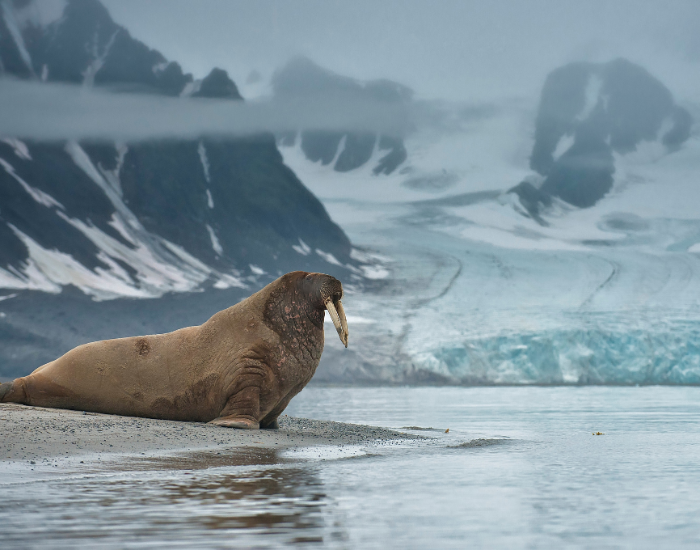
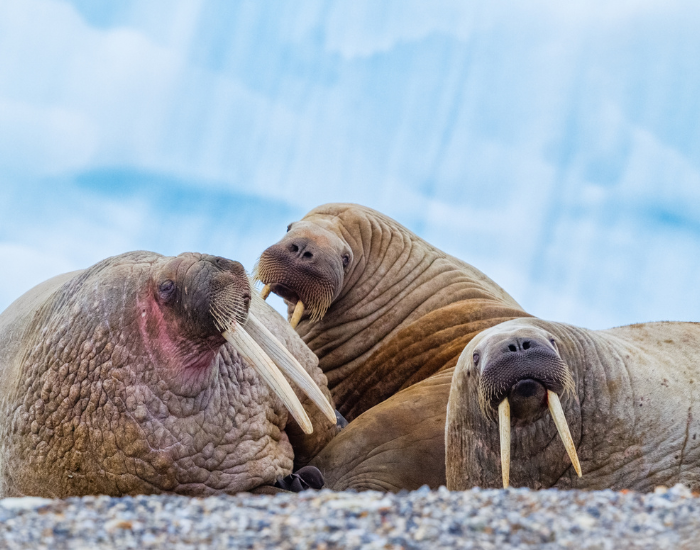
Walruses are incredibly social creatures. They don’t just hang out together, they pile on top of each other, constantly interacting with other walruses in their herd. This behavior isn’t merely friendship; it serves heat conservation and safety purposes, and also establishes social structure and competition within the group. In a massive herd, more eyes watch for polar bears.
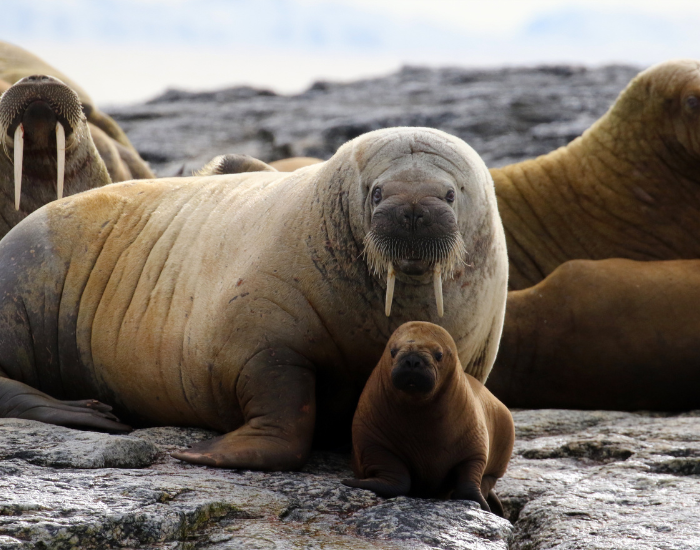
Walruses gather in large herds called pods and communicate with bellows and whistles, highlighting their social nature. However, this social nature makes them vulnerable. If a herd on sandy beaches gets spooked by a low-flying plane or boat, they can stampede. This poses particular danger to the walrus pup, which is especially vulnerable in these situations due to its dependence on its mother and the protection of the herd, as well as to other young walruses.
These gatherings occur on ice floes and sandy beaches throughout Arctic regions. Indigenous communities have observed these patterns for generations, noting how walrus calves and walrus pups stay close to their mothers in crowded haul-outs.
7. The Breeding Season and Arctic Romance
Reproduction walruses involves a complex and slow process. Males reach sexual maturity as early as seven years but typically do not mate until around 15 years of age. Females begin ovulating as soon as four to six years old and are diestrous, coming into heat in late summer and again around February. Breeding occurs from January to March, peaking in February, when males gather with females in areas of broken ice and perform competitive vocal displays, underwater songs consisting of bell-like sounds, clicks, and pulses, to attract mates.
Gestation lasts 15 to 16 months, with the first three to four months spent in suspended development before implantation. Calves are born during the spring migration, from April to June, weighing 45 to 75 kg at birth and are able to swim immediately. Mothers nurse their calves for over a year before weaning, but the young may remain with their mothers for up to five years, learning essential survival skills such as how to find bivalve mollusks on the ocean floor.
Because walruses invest substantial time raising young and only give birth every few years, this slow reproduction rate means walrus populations recover very slowly from major losses. During breeding season, male Atlantic walrus and male Pacific walrus compete for female attention, with the largest males and those with impressive tusks typically succeeding in reproduction. Walrus hunting by natural predators increases risk during this vulnerable period.
8. The Climate Crisis Threatens Walrus Habitat
Perhaps the most critical aspect of the walrus animal is its dependence on sea ice. Melting sea ice is the biggest threat to walruses, forcing them ashore and increasing stampede risk. The Arctic is warming almost four times faster than the global average, and summer Arctic sea ice extent is shrinking by 12.6% per decade. This climate crisis represents the biggest threat to walrus populations worldwide.
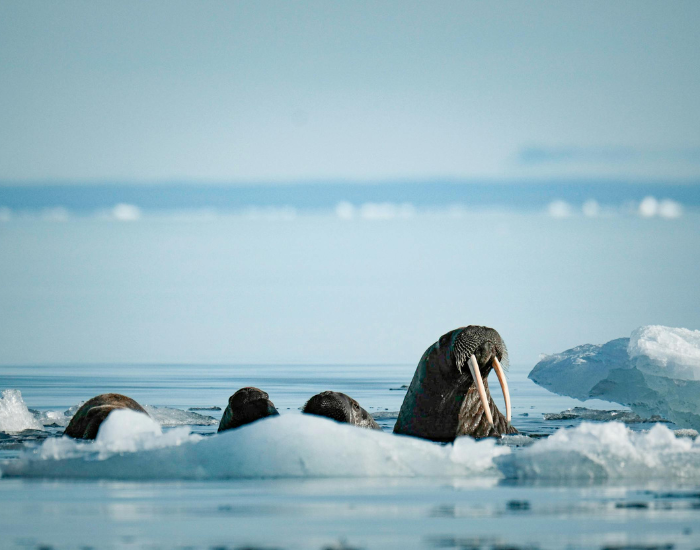
Walruses use ice floes as platforms to rest between feeding dives in shallow waters. As ice disappears, they must swim much farther to reach feeding areas. Alternatively, they haul out on land in massive, overcrowded numbers. Reduced coastal sea ice has been implicated in the increase of stampeding deaths crowding the shorelines of the Chukchi Sea, especially along the southern coast and eastern coast. The loss of sea ice is also making walrus populations more vulnerable to disturbances from shipping traffic and industrial development.
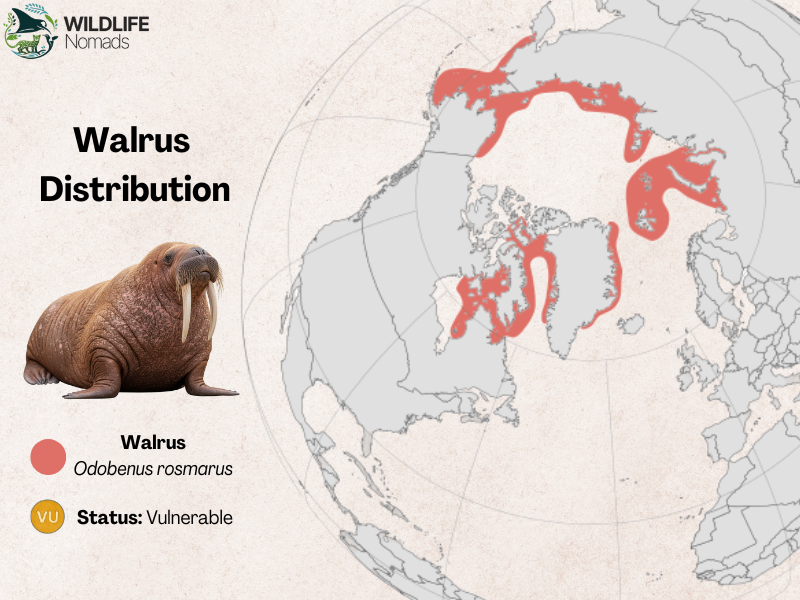
This habitat change affects Atlantic walrus and Pacific walrus populations differently. In the Chukchi Sea and Bering Sea, diminishing ice forces walruses onto sandy beaches along the southern coast and eastern coast of Alaska and Siberia, key areas affected by these changes in walrus habitat and migration. Meanwhile, in the Atlantic Ocean and Norwegian Arctic, similar patterns emerge.
9. Cultural Icons for Indigenous Communities
For thousands of years, indigenous communities in Arctic Canada, eastern Russia, and Alaska have lived alongside walruses. The animal remains central to their diet, craft, and spirituality.
Walrus hunting continues among these communities. However, it operates under strict regulation based on traditional knowledge that prioritizes walrus species health. Indigenous hunters understand walrus distribution patterns and respect breeding season restrictions.
Commercial hunting decimated walrus numbers in past centuries. Today, indigenous communities lead conservation efforts, working with the Fish and Wildlife Service to protect walrus populations while maintaining cultural practices.
These communities also contribute valuable observations about climate change impacts. They notice shifts in walrus distribution, changes in ice floe patterns, and variations in when young walruses appear on sandy beaches.
10. Long-Lived Giants of the Arctic Ocean
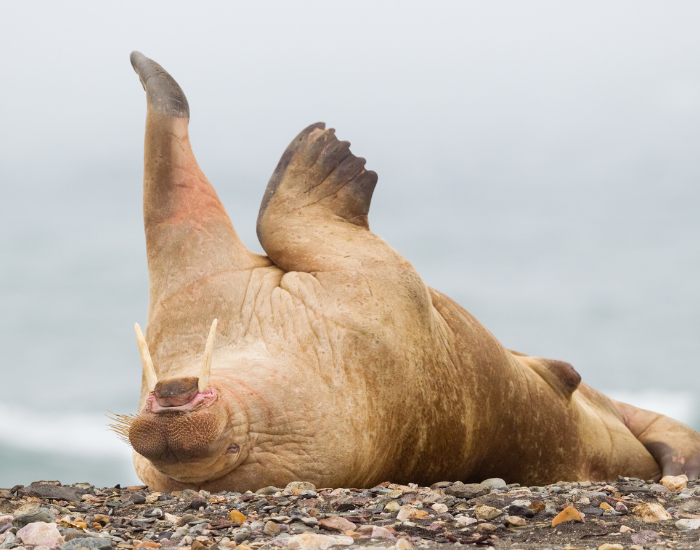
A walrus has surprisingly long lifespan potential. In the wild, they typically live 30 to 40 years. Their thick skin, up to 10 cm thick, and even thicker blubber layer keep them insulated in the freezing Arctic Ocean.
Over their lifetime, an Atlantic walrus or Pacific walrus travels thousands of miles. They navigate through the Bering Strait, across the Chukchi Sea, and into the Atlantic Ocean. Some venture into the Norwegian Arctic and Russian Atlantic regions.
Adult males can weigh up to 2,000 kg, making them significantly larger than sea lions and fur seals. Female walruses typically weigh less but still represent formidable marine mammals.
Walrus age determination helps scientists understand population health. Researchers examine tusks, similar to counting tree rings, to estimate individual ages and track population dynamics across Arctic regions.
Walrus Conservation: What Is Being Done?
Conservation efforts currently focus on several critical fronts to protect walrus populations from climate change and other threats.
Protecting Habitat: Organizations identify and protect essential feeding areas on the sea floor and ocean floor. These zones support bivalve mollusks that walruses depend on for survival.
Reducing Human Disturbance: The Fish and Wildlife Service creates buffer zones around haul-outs on sandy beaches and ice floes. These measures prevent stampedes that threaten walrus pups and young walruses.
Monitoring: Projects like the World Wildlife Fund’s “Walrus from Space” use satellite imagery to understand shifting walrus distribution. The British Antarctic Survey contributes expertise in analyzing these patterns across Arctic Canada, the Norwegian Arctic, and the Bering Sea.
Climate Action: Ultimately, protecting walrus habitat requires addressing climate change. As sea ice continues declining, immediate action becomes essential for walrus survival.
FAQs about Walruses
Walruses are best known for their impressive ivory tusks, prominent whiskers, and massive size. Scientists consider them a keystone species of the Arctic Ocean floor ecosystem.
In the wild, walruses typically live 30 to 40 years. Some individuals can reach 50 years. Walrus age varies between Atlantic walrus and Pacific walrus populations.
Walruses primarily consume bivalve mollusks including clams and mussels from the ocean floor. They use suction feeding to extract meat from shells. Occasionally, they eat sea cucumbers and, rarely, they may prey on seals.
Walruses inhabit Arctic regions including the Bering Sea, Chukchi Sea, Atlantic Ocean areas, and Norwegian Arctic. Atlantic walrus populations live from Arctic Canada to the Russian Atlantic. Pacific walrus concentrations exist in the Bering Strait and eastern Russia.
Only one walrus species exists: Odobenus rosmarus. However, it divides into two subspecies: the Atlantic walrus, Pacific walrus, and sometimes the Laptev walrus is recognized as a third subspecies, but thats outdated.
A walrus is significantly bigger than sea lions. An adult male Pacific walrus can weigh up to 2,000 kg, while the largest sea lion tops out around 1,000 kg. Walruses also dwarf fur seals and ringed seals in size.
Why the Walrus Animal Matters
The walrus animal represents more than an Arctic curiosity. It serves as a sentinel of the north. By watching how walrus populations move and thrive, or struggle, we gain direct insight into the health of our planet’s northernmost reaches.
From the Laptev Sea to the Norwegian Arctic, from the Chukchi Sea to the Atlantic Ocean, these “tooth-walkers” remind us that climate change isn’t merely a future threat. It’s happening now on ice floes, in shallow waters, and across Arctic regions.
The future of the walruses depends on actions we take today. As these magnificent marine mammals navigate changing seas, they remind us that protecting Arctic regions protects all of us.
The breeding season continues, walrus pups are born, and young walruses grow. However, their world shrinks as sea ice disappears. Through satellite imagery, conservation efforts, and global cooperation, we can ensure that walrus animals continue their ancient patterns for generations to come.
The question isn’t whether walruses matter, it’s what we’ll do to protect them.