My First Encounter With a Burrow
Before I ever set foot in Australia, I did a few field trips as a biologist in Mexico. At a reserve in northern Mexico, I nearly tripped into a burrow. The field leader said a Bolson tortoise had dug it. That tortoise is the closest living cousin of the gopher tortoise. That moment sparked my curiosity about its burrowing relative in the southeastern US.
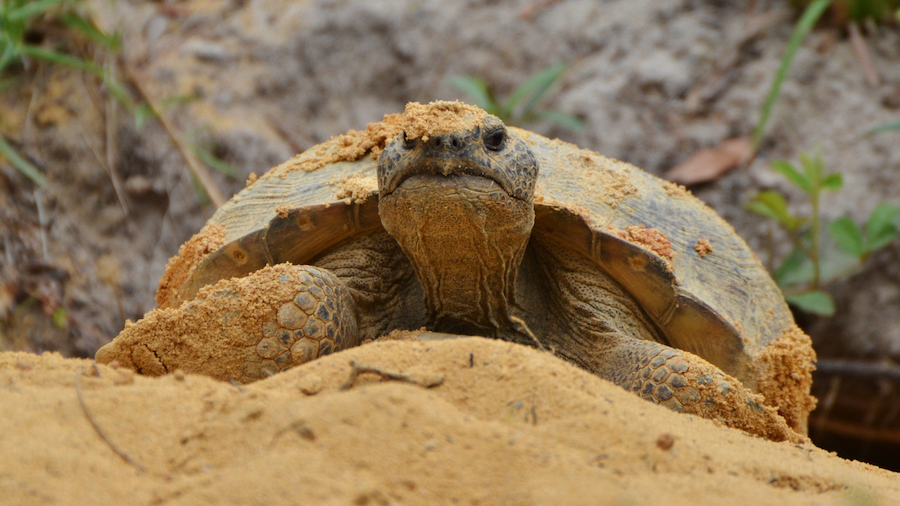
The gopher tortoise (Gopherus polyphemus) is a keystone species. Its presence, or absence, ripples through entire ecosystems. From South Carolina to eastern Louisiana, its story is about biodiversity, habitat loss and resilience.
Here are 11 surprising facts about this threatened tortoise.
🐢 Think you could survive a day in a tortoise burrow? Twelve questions on burrows, hatchlings and the 360 species that share them. Read on, then take the quiz at the end and see if you’re a Keystone Champion or still in the egg. Jump to the quiz ↓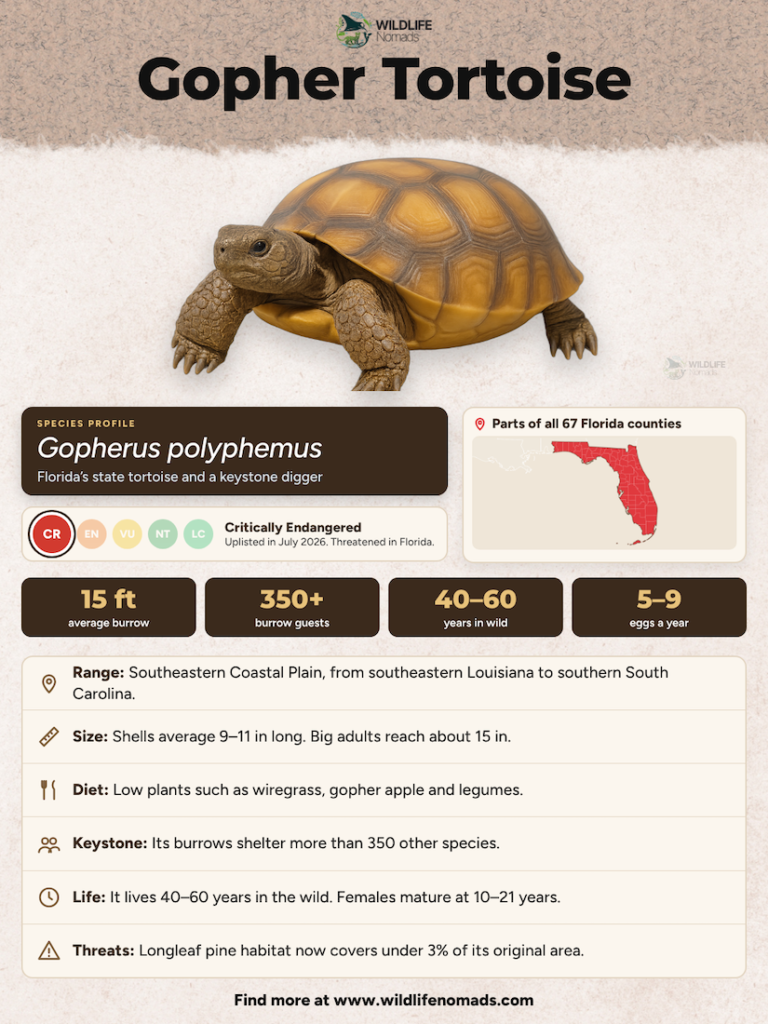
1. Gopher Tortoises Build Deep, Life-Saving Burrows
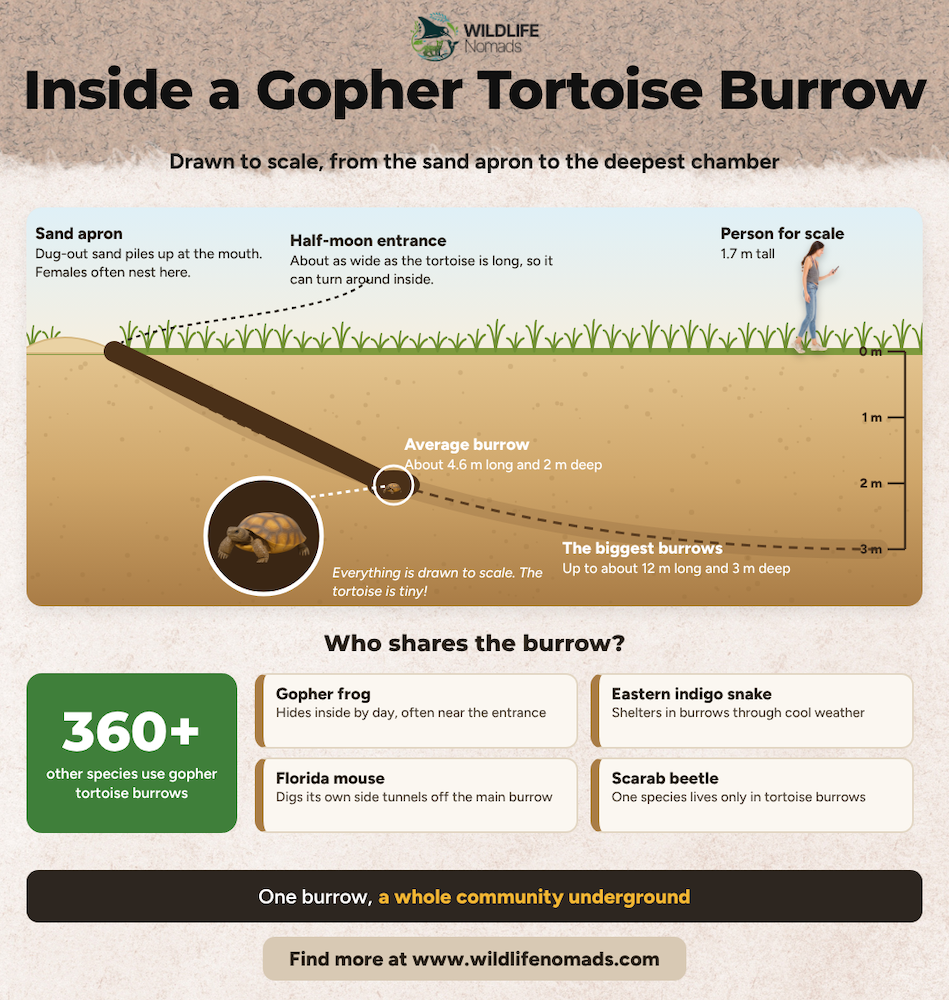
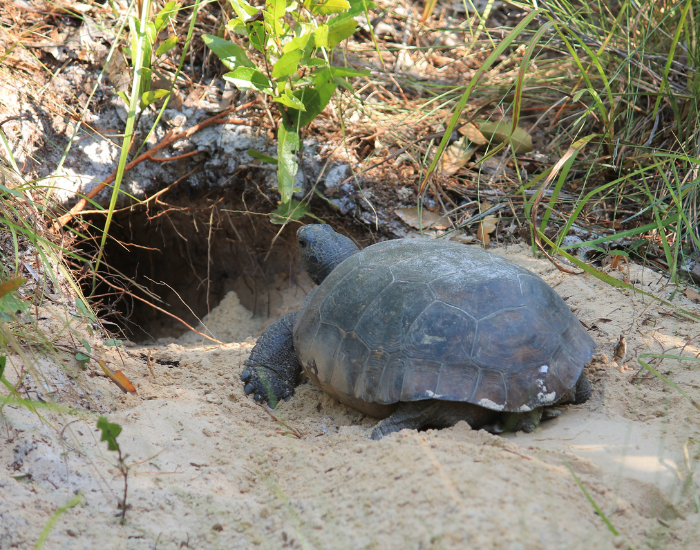
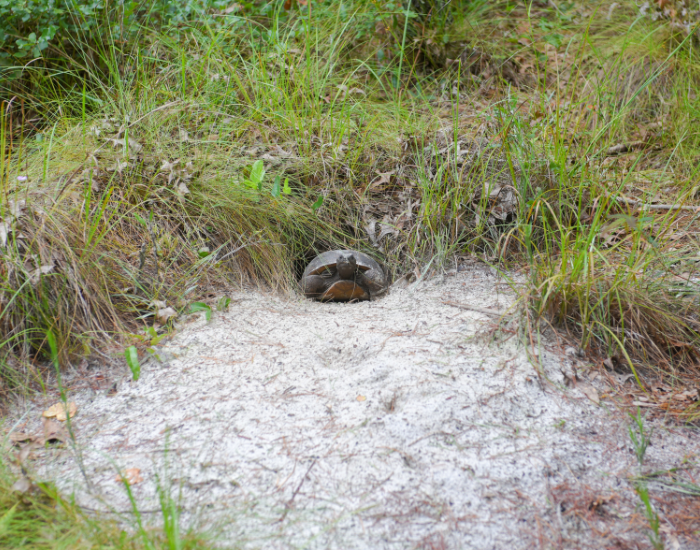
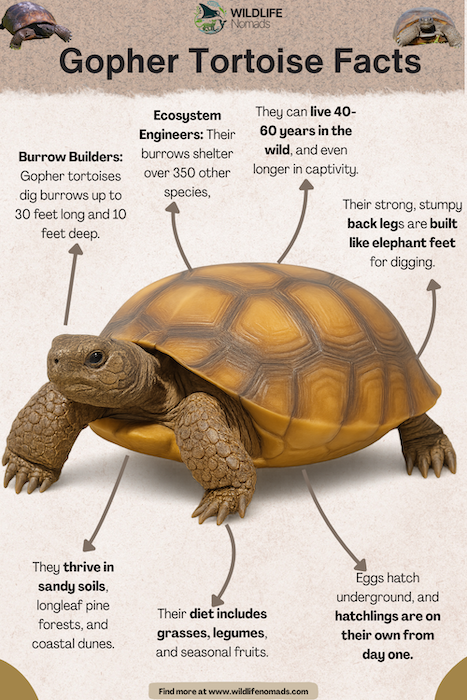
These tortoises are expert engineers, and their deep burrows prove it. An average burrow runs about 15 feet (4.6 m) long and 6.5 feet (2 m) deep. The biggest reach about 40 feet (12 m) long and 10 feet (3 m) deep. Down there, temperature and humidity stay stable all year.
The life of a gopher tortoise revolves around its burrow. Gopher tortoises spend up to 80% of their time underground. They’re rarely alone. About 360 other species share these burrows. The US Fish and Wildlife Service counts roughly 60 vertebrates and 302 invertebrates.
Gopher frogs and eastern indigo snakes shelter inside. So do other snakes, armadillos, opossums and skunks. Many retreat there during wildfires, storms and droughts. Without tortoises, these species would lose vital shelter.
On one Georgia property, trail cameras caught 14 vertebrate species inside burrows. Another 34 species used the sandy aprons out front. Six-lined racerunners, one of the lizards of Florida, were among them.
When I crouched by that Bolson burrow years ago, I thought I was looking at one reptile’s home. Gopher tortoise burrows taught me otherwise. Each one is a survival hub for a whole community.
2. Their Habitat Stretches Across the Southeast
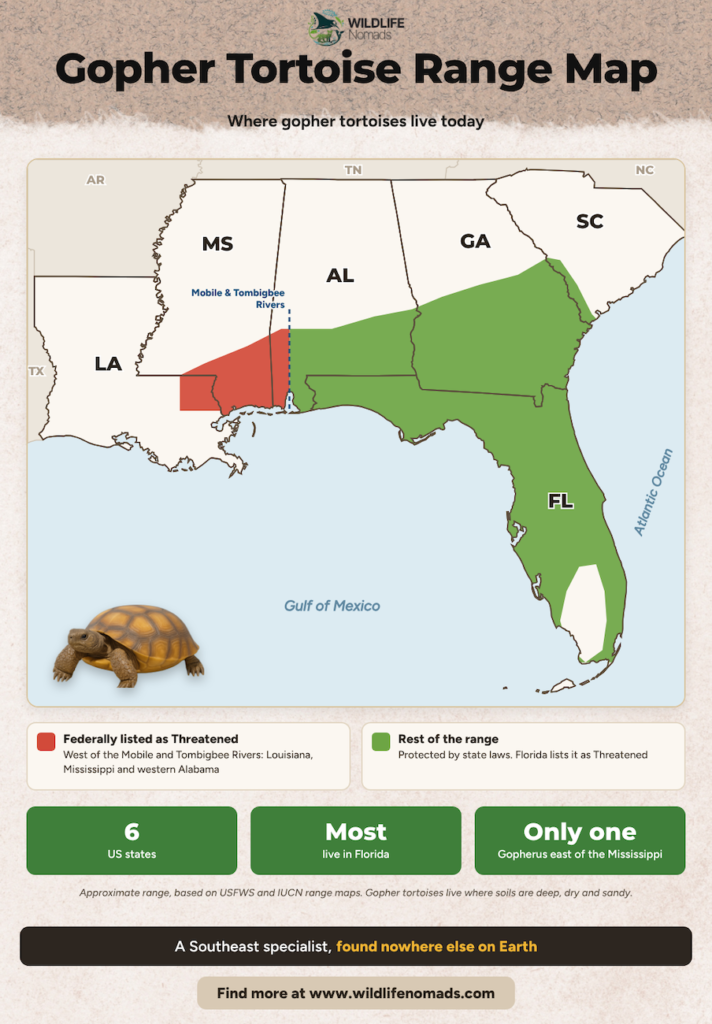
Gopher tortoise habitat once covered vast stretches of the southeastern United States. This is a species of the southeastern coastal plain. Today, most live in peninsular Florida, the Florida Panhandle and southern Georgia. Smaller populations survive in southern South Carolina, Alabama, Mississippi and eastern Louisiana. It’s the only tortoise east of the Mississippi River.
They thrive in dry upland habitats with open canopies and well-drained, sandy soils. Think longleaf pine sandhills, longleaf pine savannas, pine flatwoods, xeric oak hammocks and coastal dunes. They also live among loblolly and slash pines. Loose sand lets tortoises dig with ease. Sunny gaps give females places to nest.
Longleaf pine forests once covered about 90 million acres. Only around 5% of the longleaf pine ecosystem remains. That loss is a major reason gopher tortoise populations have declined.
3. It’s Illegal to Touch or Relocate Them
Many people ask: is it illegal to touch a gopher tortoise in Florida? Mostly, yes. The Florida Fish and Wildlife Conservation Commission (FWC) sets the rules. Florida law bans harming, harassing, keeping or relocating one without a permit. Developers must get a permit to move tortoises off construction sites.
In the western portion of the gopher tortoise range, the federal Endangered Species Act protects them too. That’s west of Alabama’s Mobile and Tombigbee rivers. The eastern distinct population segment isn’t federally listed. Still, every state where gopher tortoises occur protects them.
Florida still lets you help one cross a road. Hold it by the sides of the shell. Set it down off the road, facing the way it was heading.
The gopher tortoise is Georgia’s state reptile and Florida’s state tortoise. Florida upgraded it from Species of Special Concern to Threatened in 2007. The state’s native snakes benefit too, since many use its burrows.
This protection exists for good reason. Populations are fragile, and careless disturbance can harm both the tortoise and its burrow.
4. Gopher Tortoises Are Long-Lived Survivors
A wild gopher tortoise often lives 40 to 60 years, and USFWS estimates up to 80. In Alabama, tortoises first caught as adults in 1991 were still alive 30 years later.
That longevity comes with a slow start. Males mature at about 9 to 12 years. Females can take 10 to 21 years, depending on latitude and local resource abundance. So losing adults hurts populations most. They take decades to replace.
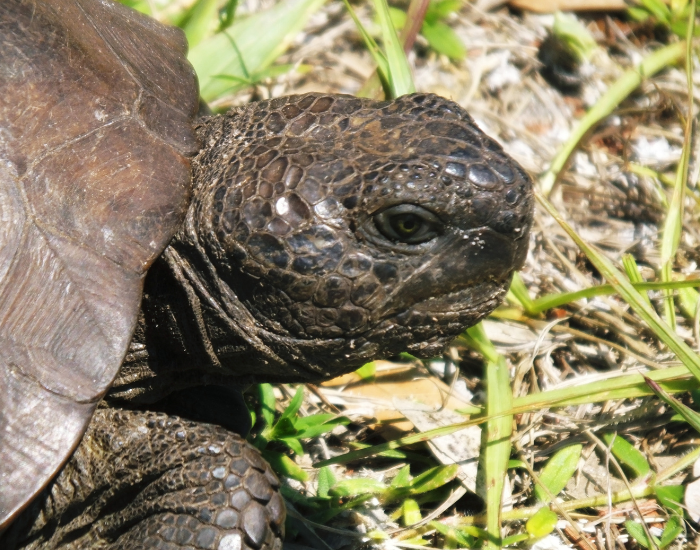
Their elephantine hind feet are strong and sturdy. Their flattened front legs work like shovels. Together they carry these diggers through decades of life.
Disease is a threat too. Upper respiratory tract disease is contagious, and careless relocations can spread it. In South Carolina, researchers studied relocated tortoises. They found Mycoplasma agassizii, a bacterium linked to the disease, in 10 to 14% of them. Most tortoises still looked healthy
5. Hatchlings Start Life on Their Own
Breeding runs from spring to fall. Females lay one clutch a year, usually 4 to 9 eggs. They nest in sunny, sandy spots near the burrow entrance. The eggs hatch after about 80 to 100 days.
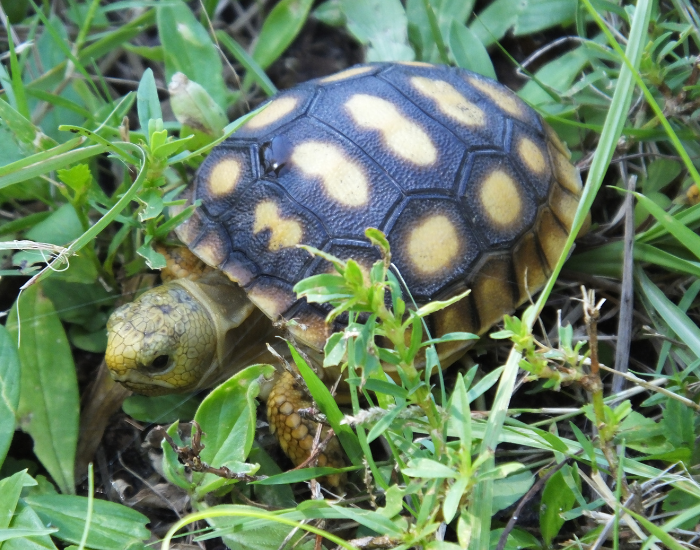
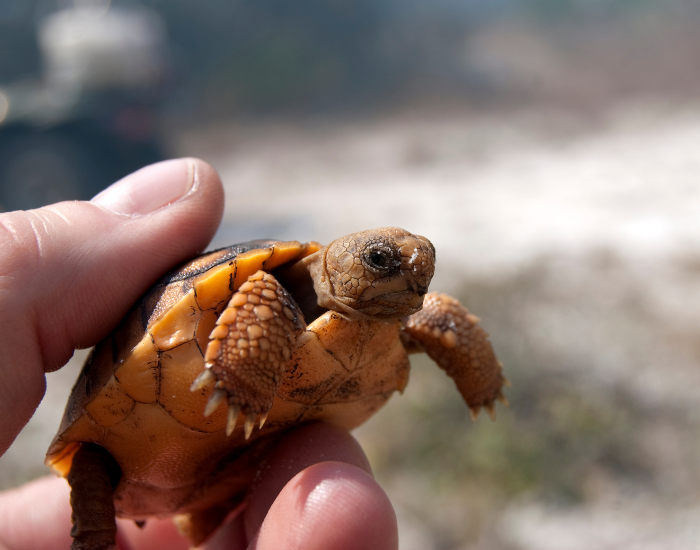
Gopher tortoise hatchlings emerge no larger than a golf ball. They receive no parental care.
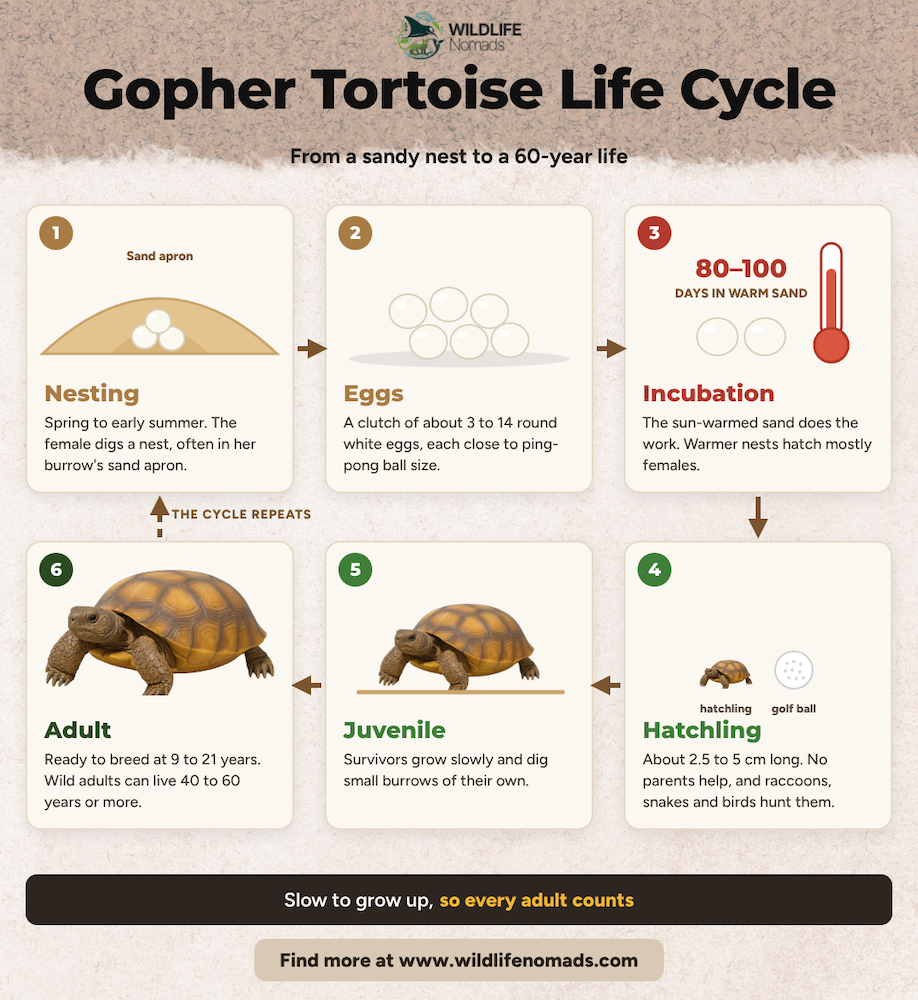
These tiny tortoises are easy prey for raccoons, snakes and birds. Predators raid many nests too. Conservation biologists sometimes run head-start programs. They raise hatchlings until they’re less vulnerable, then release them into the wild.
6. They’re Keystone Species and Opportunistic Grazers
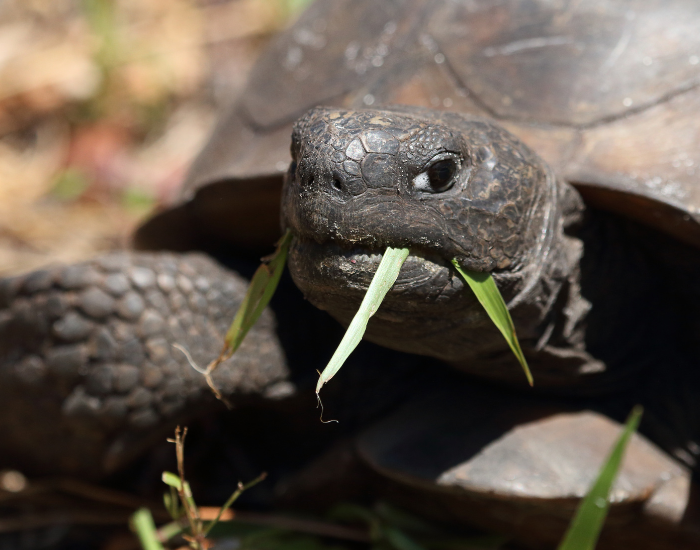
Gopher tortoises shape ecosystems in two ways: through their burrows and their diet. They graze on more than 300 plant species. Favorites include wiregrass, broadleaf grasses, gopher apple and legumes.
Most feeding happens within about 150 feet (45 m) of the burrow. Juvenile tortoises tend to eat fewer plant species than adults. They also eat fewer grasses and pick more legumes and other forbs.
Fire keeps their world open. Prescribed burns and thinning stop the canopy from closing and let sunlight reach the ground. In one Alabama forest, these methods boosted burrow numbers, and more young tortoises appeared (Pudner et al., 2021). Groups like The Nature Conservancy run prescribed burns across the Southeast.
They’re a textbook example of keystone species. They’re also important players in a food web.
7. Habitat Loss Is Their Biggest Threat
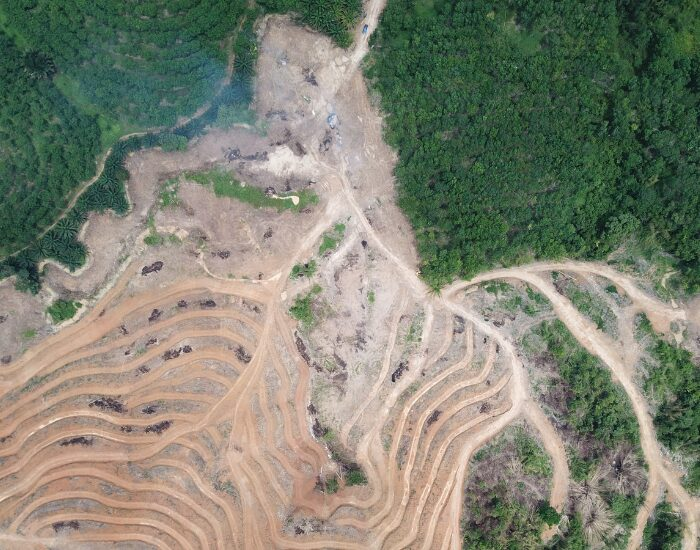
Predators and disease play a role. But the greatest danger comes from habitat loss. Cities, croplands, pasture and highways carve up their landscapes. What’s left are isolated populations with limited genetic diversity.
Habitat destruction isn’t the only problem. Habitat degradation matters too. Without fire, hardwoods close the canopy and shade out tortoise food. Tortoises often abandon burrows under thick shade.
Roads add another risk, because busy traffic kills tortoises. In Mississippi and Louisiana, the western population is small and federally Threatened. The eastern population is far larger, with most tortoises in Florida and Georgia. That range also shelters rare pine snakes.
Small populations aren’t doomed, though. In southern Alabama, three of six studied populations stayed stable for nearly 30 years. Good habitat management made the difference.
Each cleared forest or paved road means more than one lost tortoise. A miniature ecosystem collapses with it. Habitat loss also sits behind many animals that went extinct recently.
8. Conservation Efforts Are Widespread and Collaborative
In 2015, Georgia’s Gopher Tortoise Conservation Initiative set a bold goal. It aimed to protect 65 viable populations and 100,000 acres of key habitat. In September 2025, Georgia’s Department of Natural Resources announced its 65th protected population. It’s a strong answer to a big question: do protected areas work?
Gopher tortoise conservation reaches far beyond Georgia. Across the range, states protected about 120,000 acres of habitat between 2011 and 2019. Most of that came through conservation easements on private lands.
Private land owners matter here, because much of the remaining habitat is privately owned. They can get technical and financial assistance through the NRCS Working Lands for Wildlife program. The NRCS Longleaf Pine Initiative helps too. That makes conservation an economic choice, not just an ecological goal.
9. They’re Protected by Councils and Communities
The Gopher Tortoise Council, founded in 1978, brings together scientists, policymakers and citizens. Its members share research and conservation strategies. Their work shows how to save threatened species like this one. They’ve pushed for stronger protections too.
Community education programs now teach residents to recognize tortoise burrows. They also encourage people to protect the rare species that share tortoise habitat.
10. Climate Change Brings New Challenges
Climate models suggest rising temperatures and changing rainfall could alter tortoise habitat. Extreme weather may also become more frequent. Invasive species add more stress. In Florida, invaders like the Argentine tegu now live in parts of the tortoise’s range.
Conservationists are responding with creative solutions:
- Translocations to restored longleaf pine forests, with health checks first
- Head-start programs to boost hatchling survival
- Prescribed fire, forest thinning and removal of exotic plants
- University genetics studies, including one that found five genetic groups across the range.
Saving the gopher tortoise isn’t about one species. It’s about protecting whole ecosystems for future generations.
11. Gopher Tortoises Have Ancient Desert Origins
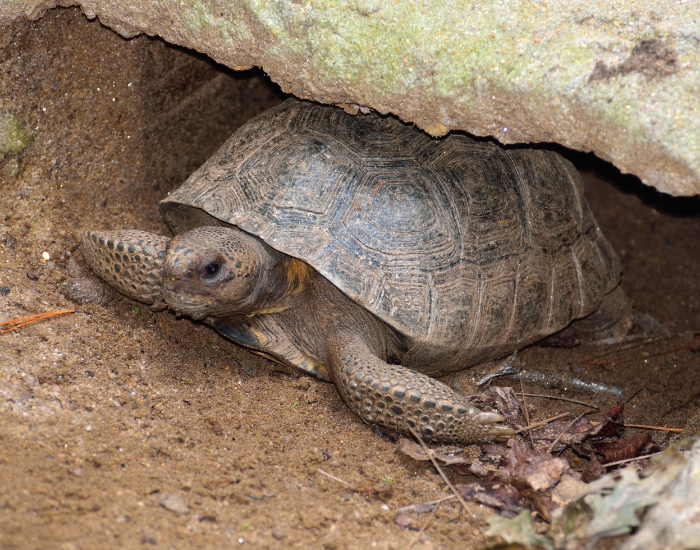
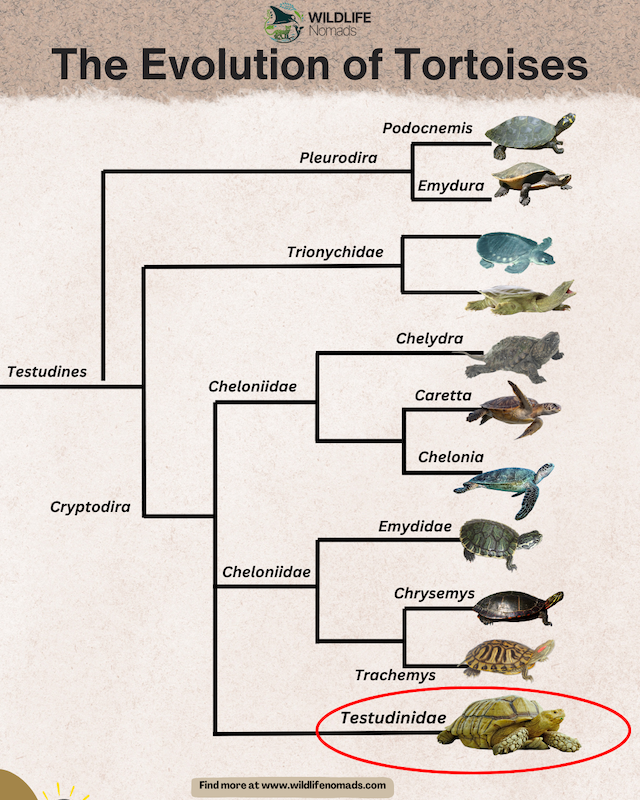
The gopher tortoise belongs to the genus Gopherus. It has five North American relatives. They are the Mojave and Sonoran desert tortoises, the Texas tortoise, the Bolson tortoise and Goode’s thornscrub tortoise. Scientists only named Goode’s thornscrub tortoise in 2016.
Gopherus fossils date back about 33 million years, to near the end of the Eocene. As grasslands and deserts spread, different lineages adapted to new places. Some settled in the arid deserts of the West. G. polyphemus took to the sandy, fire-adapted pinelands of the Southeast.
Like every tortoise, it’s a turtle built for life on land. Its burrows set it apart. Most relatives dig shorter ones, though the Bolson tortoise is a big digger too. Deep burrows likely helped gopher tortoises survive heat, cold and fire. Today they shelter hundreds of other species.
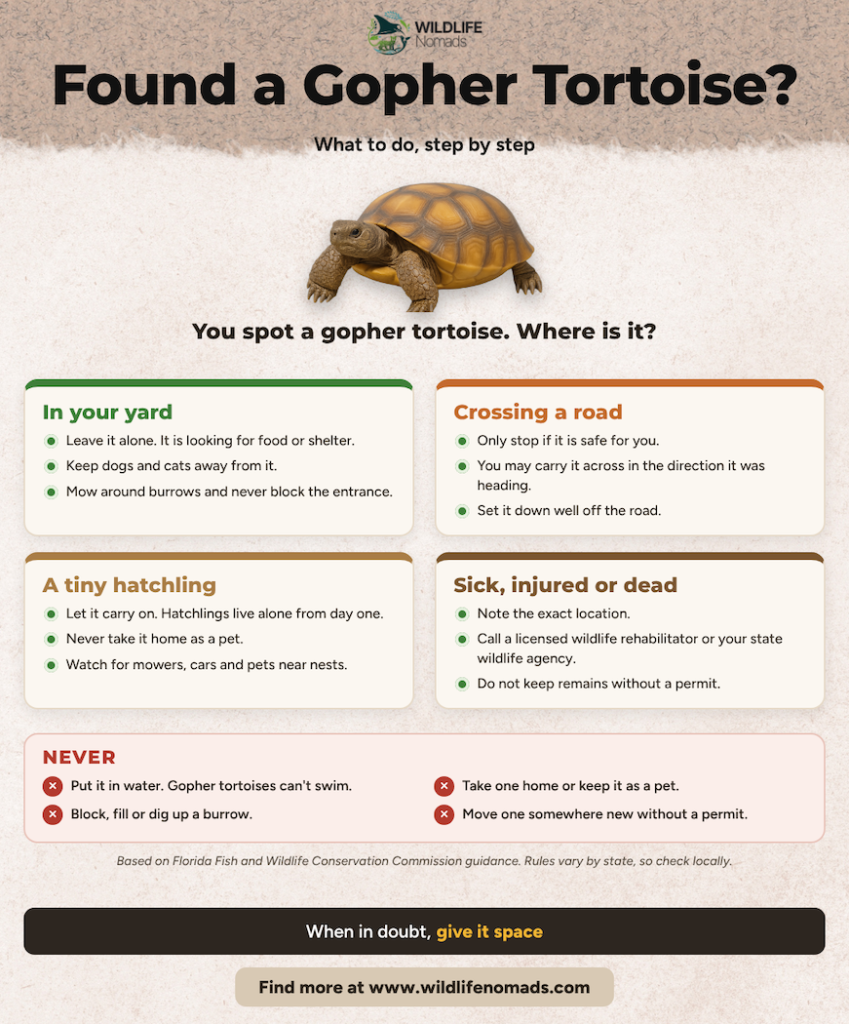
What to Do If You See a Gopher Tortoise
Spotting a gopher tortoise in the wild, or in your own backyard, is exciting. Because of its threatened status, it pays to respond the right way. Here’s what to do.
1. If a Gopher Tortoise Is in Your Yard
Gopher tortoises spend most of their lives in burrows. If one shows up on your property, it’s likely looking for food or shelter. Don’t try to relocate it. Instead:
- Avoid blocking or disturbing the burrow entrance.
- Keep pets away so they don’t harass the tortoise.
- If you’re in a development area, contact your state wildlife agency. In Florida, moving tortoises needs a permit.
2. If You See One Crossing the Road
Leave it alone if the road is quiet. If traffic is coming and you’re safe, you can help it across. Here’s how:
- Never put yourself in danger.
- Carry it across in the direction it was heading. Hold it by the sides of its shell.
- Never take it home or move it to a new area. Gopher tortoises live in very specific habitats, and relocation can disorient them.
3. If You Find a Hatchling
Each year, gopher tortoise eggs hatch in sandy nests near burrow entrances. Hatchlings are tiny and vulnerable, but they’re built to survive on their own. Don’t take them home as pets. Instead:
- Let them continue on their way.
- Protect nesting areas from lawn mowers, vehicles and foot traffic.
4. If You Find a Sick, Injured or Dead Gopher Tortoise
If a tortoise looks sick or injured, contact a licensed wildlife rehabilitator or your state wildlife agency. Dead gopher tortoises can still help conservationists. Reports help track populations and spot threats like disease or road deaths. If you find one:
- Note the location.
- Contact your state fish and wildlife agency or department of natural resources. In Florida, that’s FWC.
- Don’t remove the remains without a permit.
5. How You Can Help
You can help even if you never meet a tortoise. Support conservation groups and speak up for threatened wildlife. Back prescribed burns and habitat protection in your area. Spread the word in your community. Every effort matters, because these tortoises need intact ecosystems to thrive.
FAQs About Gopher Tortoises
Harming, keeping or relocating one is illegal across its range. In Florida, you can still help one across a road in the direction it was heading.
Leave it alone. Don’t block its path or move it. If it looks injured, call your local wildlife service.
Look for a dark brown, dome-shaped shell and strong, elephantine hind feet. Burrow entrances are flat and wide, with sandy mounds at the opening.
They’re considered a threatened species in most states and an endangered gopher tortoise population exists in Mississippi.
No. Juvenile tortoises tend to live independently from day one.
Saving Gopher Tortoises
When I think back to that Bolson burrow in Mexico, I see what its cousin means. The gopher tortoise represents more than itself. It holds together a web of life: rare species, wiregrass, longleaf pines and the people who live alongside them. That web is a reminder of why biodiversity is important.
Protecting the gopher tortoise means protecting everything that depends on it. In a rapidly changing world, that’s a cause worth digging deep for.
The Gopher Tortoise Quiz 🐢
Twelve questions, one burrow at a time. Build a streak and see how deep you can dig.
Want more? Learn how habitat destruction works, see how climate change threatens animals, or meet animals that went extinct recently.
References:
Dziadzio, M. C., & Smith, L. L. (2016). Vertebrate use of gopher tortoise burrows and aprons. Southeastern Naturalist, 15(4), 586–594. https://doi.org/10.1656/058.015.0403
Edwards, T., Karl, A. E., Vaughn, M., Rosen, P. C., Meléndez Torres, C., & Murphy, R. W. (2016). The desert tortoise trichotomy: Mexico hosts a third, new sister-species of tortoise in the Gopherus morafkai–G. agassizii group. ZooKeys, 562, 131–158. https://doi.org/10.3897/zookeys.562.6124
Folt, B., Goessling, J. M., Tucker, A., Guyer, C., Hermann, S., Shelton-Nix, E., & McGowan, C. (2021). Contrasting patterns of demography and population viability among gopher tortoise populations in Alabama. The Journal of Wildlife Management, 85(4), 617–630. https://doi.org/10.1002/jwmg.21996
Gaillard, D., Ennen, J. R., Kreiser, B. R., Qualls, C. P., Sweat, S. C., Birkhead, R., Tuberville, T. D., Aresco, M., McCoy, E. D., Mushinsky, H. R., & Hentges, T. W. (2017). Range-wide and regional patterns of population structure and genetic diversity in the gopher tortoise. Journal of Fish and Wildlife Management, 8(2), 497–512. https://doi.org/10.3996/022017-JFWM-010
McKee, R. K., Buhlmann, K. A., Moore, C. T., Allender, M. C., Stacy, N. I., & Tuberville, T. D. (2022). Island of misfit tortoises: Waif gopher tortoise health assessment following translocation. Conservation Physiology, 10(1), coac051. https://doi.org/10.1093/conphys/coac051
Pudner, R. C., Waddle, H., Mersmann, S. P., Kush, J. S., Guyer, C., & Hermann, S. M. (2021). Changes in vegetation structure and gopher tortoise population structure after 17 years of restoration management. Natural Areas Journal, 41(4), 273–282. https://doi.org/10.3375/21-3