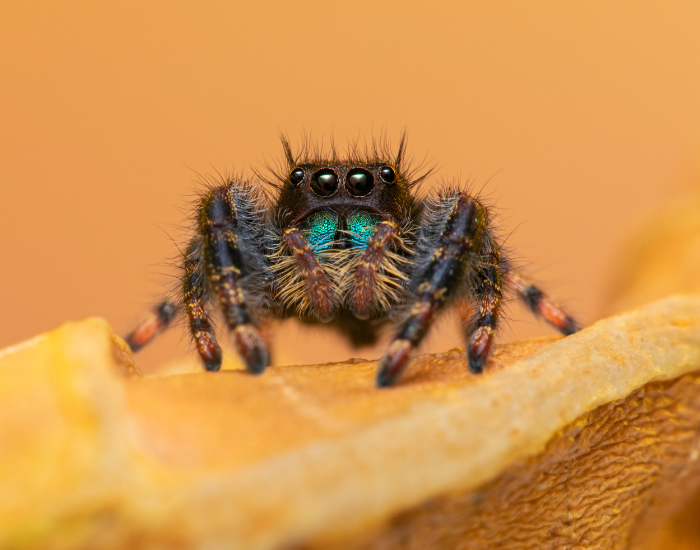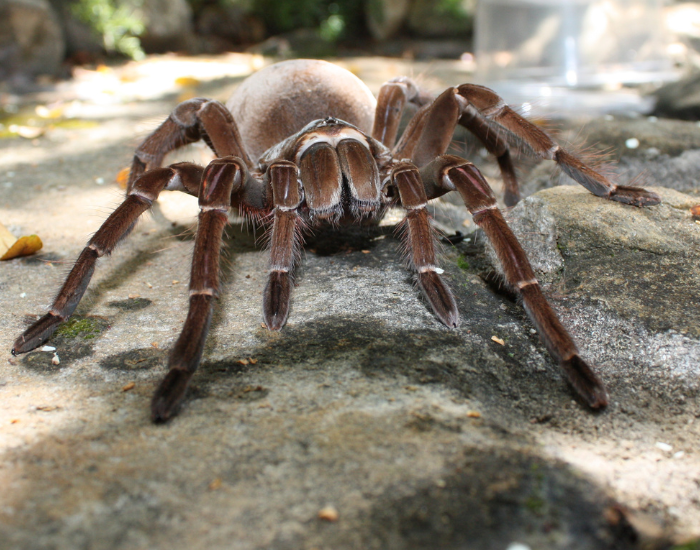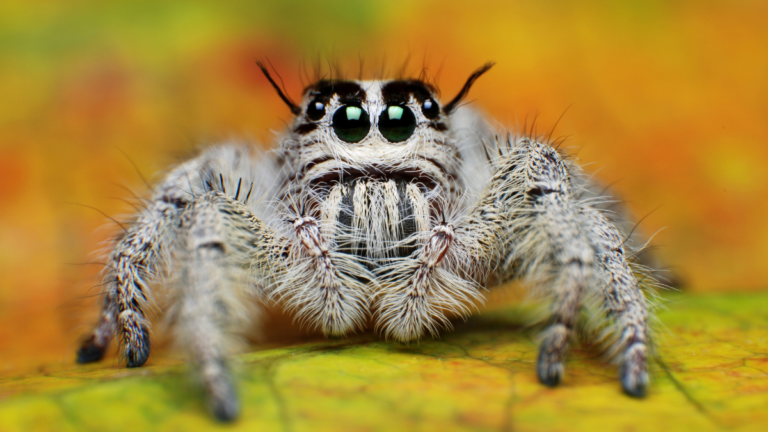
A Mexican red knee tarantula among other big tarantulas were the first arachnid I ever worked with properly. She lived a few enclosures down from a Gila monster in the reptile and amphibian house where I did husbandry. Visitors flinched at her. She spent most of her life sitting still, doing almost nothing.
That gap between what people expect and what the animal does has stayed with me ever since. Most people hear “arachnid” and picture a spider. Fair enough, because spiders account for roughly half of the 110,000-plus described arachnid species.
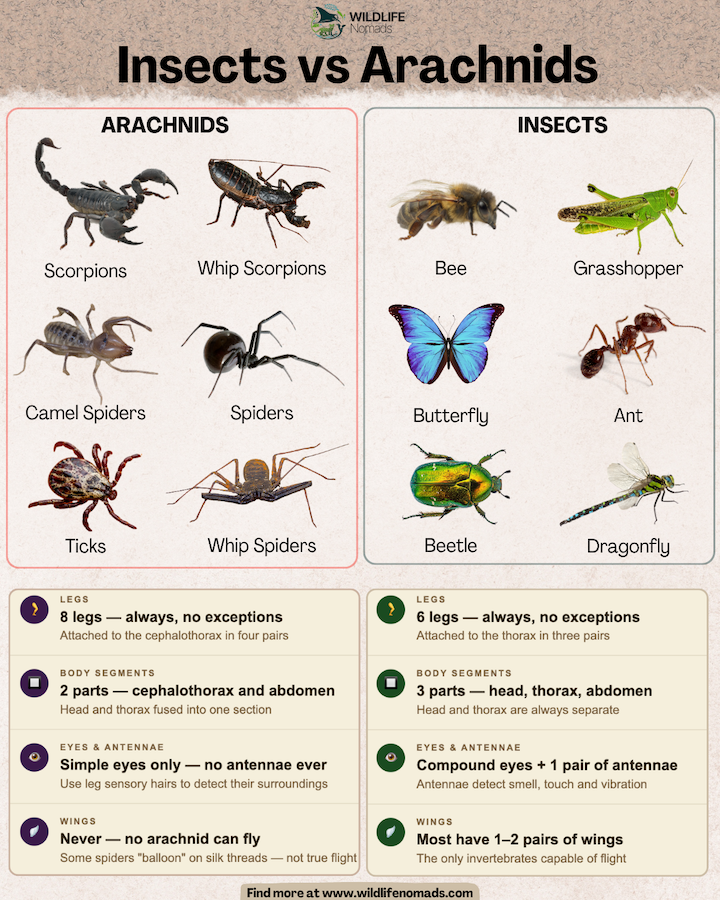
But spiders are one order out of twelve. The other eleven include animals that spray vinegar at you, hunt with sensory legs longer than your forearm, and breathe through nothing but their own skin.
Here is every living order, with one example species each, and the trait that sets it apart. You have met a few without noticing. Two or three, almost nobody has seen.
What Actually Counts as an Arachnid
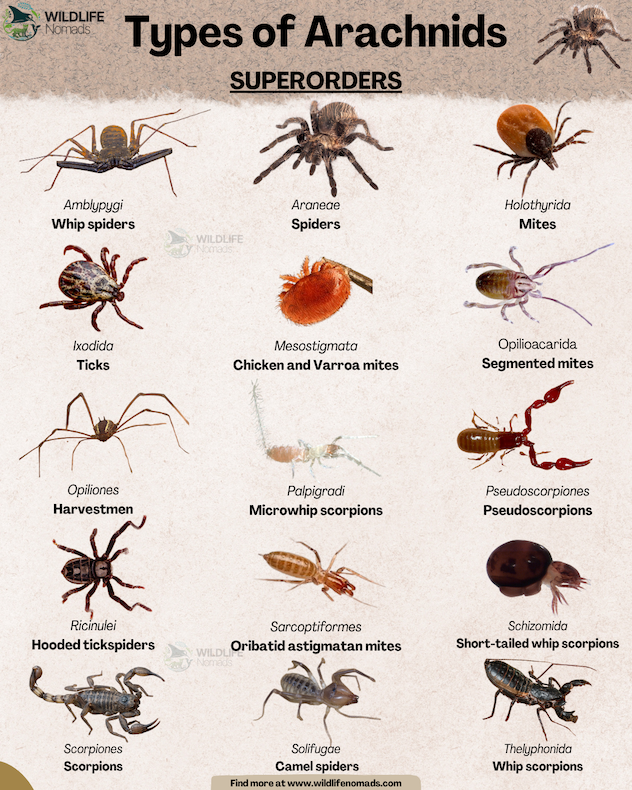
Arachnids belong to the class Arachnida, inside the subphylum Chelicerata, inside the phylum Arthropoda. Like other arthropods (like crabs), they have a hard exoskeleton and jointed appendages. Unlike insects (like beetles or dragnflies), they carry no antennae and no wings.
The arachnid body is a segmented body divided into two parts: the prosoma at the front and the opisthosoma behind it. You will still see “fused head and thorax” in older texts, including Encyclopedia Britannica, but no fossil evidence suggests arachnids ever had a separate thorax.
Most arachnids walk on eight legs, or four pairs. Two extra pairs of jointed appendages sit at the front: the chelicerae for feeding, and the pedipalps for feeding, grabbing or mating. Larval mites and ricinuleids hatch with six legs and gain the fourth pair later, so three pairs is a real stage in many arachnid life cycles.
Respiratory organs vary: some use book lungs, some tracheae, a few neither. Nearly all are predators or parasites, and most arachnids flood prey with digestive fluids, then drink the pre-digested bodies through a tubular stomach lined with diverticula.
Textbooks traditionally count eleven subgroups, because mites and ticks were lumped together as Acari. Modern work splits them into Acariformes and Parasitiformes, which gives twelve. Fossil evidence adds four extinct orders, including the trigonotarbids of Devonian swamps.
1. Spiders (Araneae)
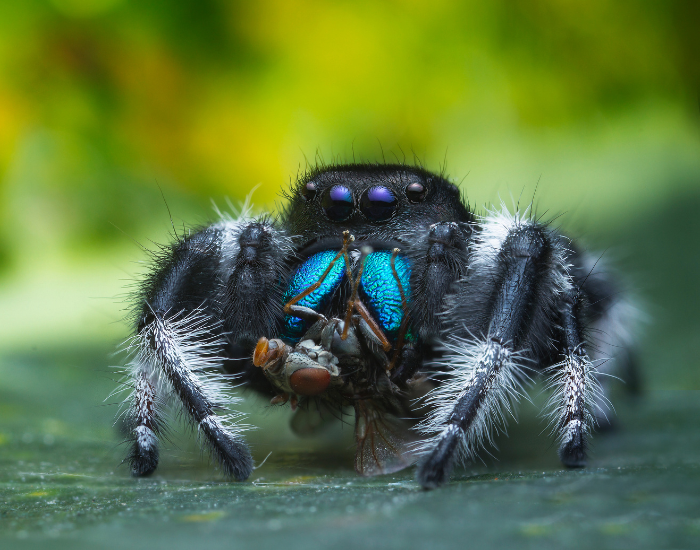
True spiders are the giants of the group. The World Spider Catalog listed 54,113 valid species across 139 families in 2026, and the count climbs weekly. Only arachnids in this order have spinnerets, and all of them produce silk from abdominal silk glands. Most spiders also inject digestive enzymes through hollow fangs before feeding.
Silk is the real story. Spiders use it for webs, draglines, burrow walls, egg sacs and wrapping prey. Nyffeler and Birkhofer estimated that spiders kill 400 to 800 million tonnes of prey each year, which is more animal biomass than humanity eats.
My example is the Sydney funnel-web (Atrax robustus). Doing field work when I was new to Australia, a coworker asked whether I had ever seen one. Then he walked me over and pointed at a burrow in a bank. It was an ordinary hole in the dirt. Antivenom has prevented every recorded death since 1981, and our Australian funnel-web spider guide covers the rest. Other examples include the pumpkin spider and the hobo spider.
2. Scorpions (Scorpiones)
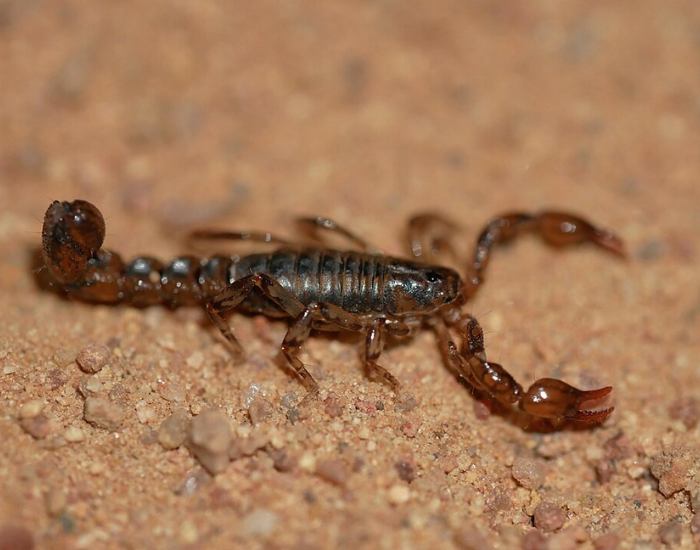
Scorpions carry the group’s most recognisable silhouette: heavy pedipalp claws, a segmented abdomen, and a telson that delivers venom. Around 2,700 arachnid species are described. All of them fluoresce blue-green under ultraviolet light, thanks to compounds in the cuticle. Kloock and colleagues found the glow may help scorpions detect light levels themselves.
They are also among the longest-living arachnids. Some reach twenty-five years, a life span closer to a parrot than a bug. Venom does double duty here, killing prey and starting digestion before feeding begins.
I have found scorpions in the field in Oaxaca and in Baja California, almost always by lifting something. Centruroides sculpturatus, the Arizona bark scorpion, is the one species in North America with medically serious venom. See our guides to Arizona scorpions and bark scorpion facts.
3. Mites (Acariformes)
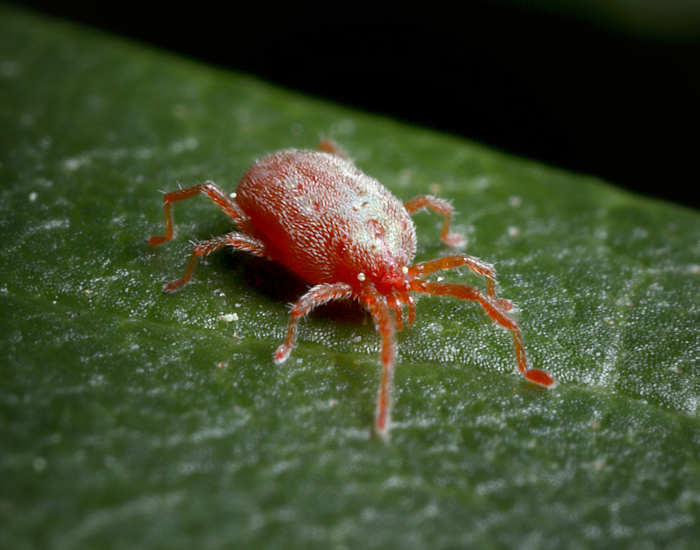
Acariformes holds roughly 32,000 described species, and many mites are too small to see without a lens. The smallest arachnid measures about 0.08 mm; the largest, a whip spider, spans around 61 cm across its sensory legs. That is nearly four orders of magnitude inside one class.
Many mites abandoned predation entirely. Some graze fungi, some eat decaying plant matter, and many mites are parasites. Water mites thrive in freshwater environments, while oribatid mites rank among the most abundant animals in forest soil.
Demodex folliculorum lives in the hair follicles of almost every adult reading this, harmlessly, in normal numbers. When I helped build a pollinator garden at university, the soil filled with mites long before the bumblebees arrived.
4. Ticks (Parasitiformes)
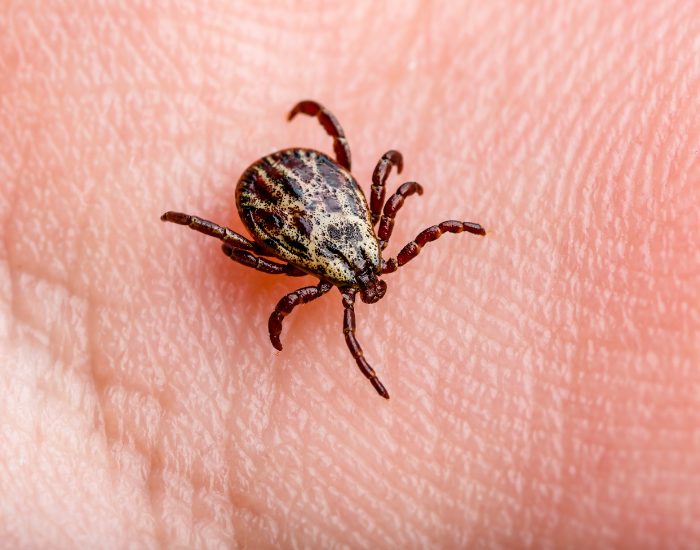
Parasitiformes covers ticks and their mite relatives, roughly 12,000 described species. Ticks are obligate blood feeders, and their mouthparts are a barbed anchor rather than a simple bite. That is why they hold on so stubbornly.
They matter medically because they transmit diseases. Sonenshine documented how tick vectors keep expanding their range across North America. Climate and land use shifts are pushing Lyme disease and related infections into new regions, and few other arachnids carry that kind of public health weight.
In Australia, Ixodes holocyclus, the paralysis tick, is the one to know. I have pulled them off myself after bush work on the east coast more times than I would like to admit. Slow, careful removal beats panic every time.
5. Harvestmen (Opiliones)
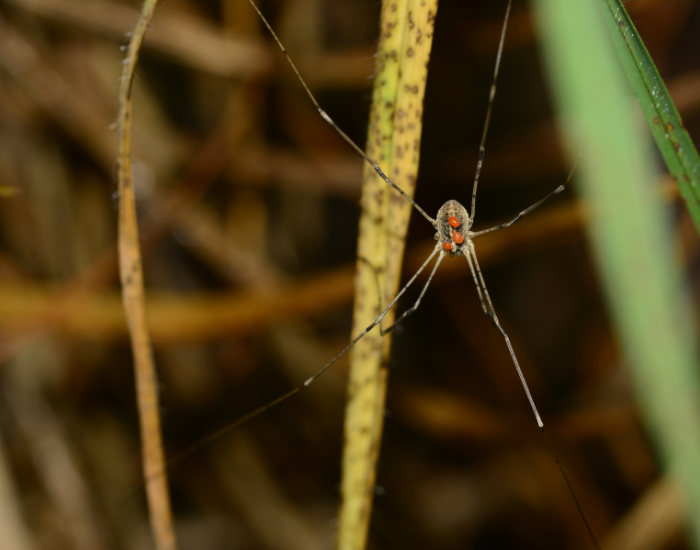
Around 6,700 species of harvestmen exist, and most of us call them daddy long legs. They break several arachnid rules at once, with no silk, no venom, and no poison glands of any kind.
They also eat solid food. Rather than drinking pre-digested soup, many species chew fungi, dead insects and plant matter, which makes them part scavenger. The body looks like one piece because the two sections join across a broad waist.
Some tropical species gather in clusters of thousands on cave walls. I have watched smaller aggregations under Queensland overhangs, a shifting carpet of extremely long walking legs. The myth that daddy longlegs are the most venomous animals alive is simply wrong, since they have no venom apparatus at all.
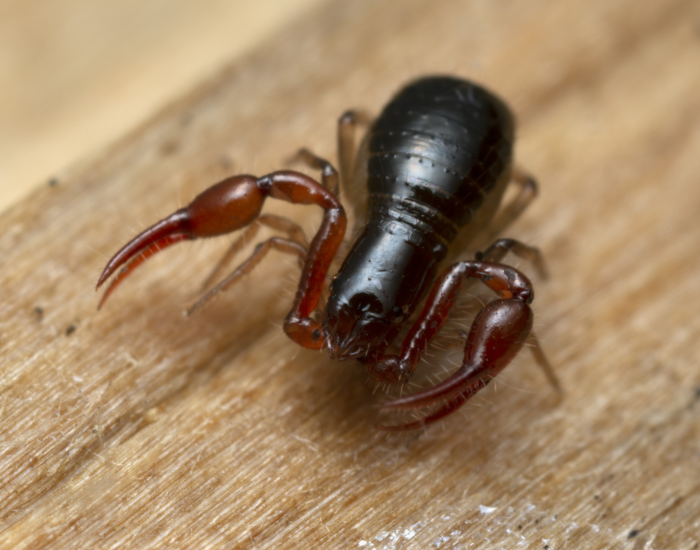
6. False Scorpions (Pseudoscorpiones)
False scorpions look like scorpions that lost their tail. About 4,000 species are described, and most are under 5 mm. They carry venom in their pedipalp claws and produce silk from glands in the chelicerae, which is an unusual combination.
They travel by hitchhiking. A pseudoscorpion will grip the leg of a fly or a beetle and ride it to new habitat, a behaviour called phoresy. Complex courtship rituals are common, with males performing long dances before depositing a spermatophore.
Chelifer cancroides, the book scorpion, turns up in old libraries eating dust mites and booklice. I found my first one under bark on a fallen eucalypt, mistook it for a mite, then watched it raise both claws. Predators that small are easy to walk past for years.
7. Sun Spiders (Solifugae)
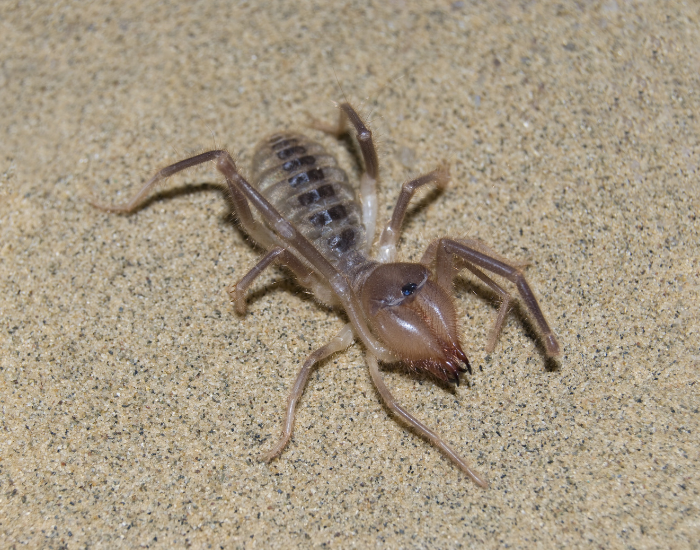
Sun spiders, also called camel spiders, number around 1,200 species. Their chelicerae are enormous, sometimes a third of body length, and they crush prey rather than poisoning it. Solifugae have no venom glands whatsoever.
They look ten-legged. In reality they walk mostly on three pairs, while the leg-like pedipalps work as sticky sensory organs that pin prey on contact. Speed does the rest, and some species sprint at more than 10 km/h.
Galeodes species dominate deserts from North Africa through central Asia. Those viral photos are real animals shot at bad angles, since the biggest bodies reach about 7 cm. They chase shade, not people, which is exactly how the “camel spider charges you” myth started.
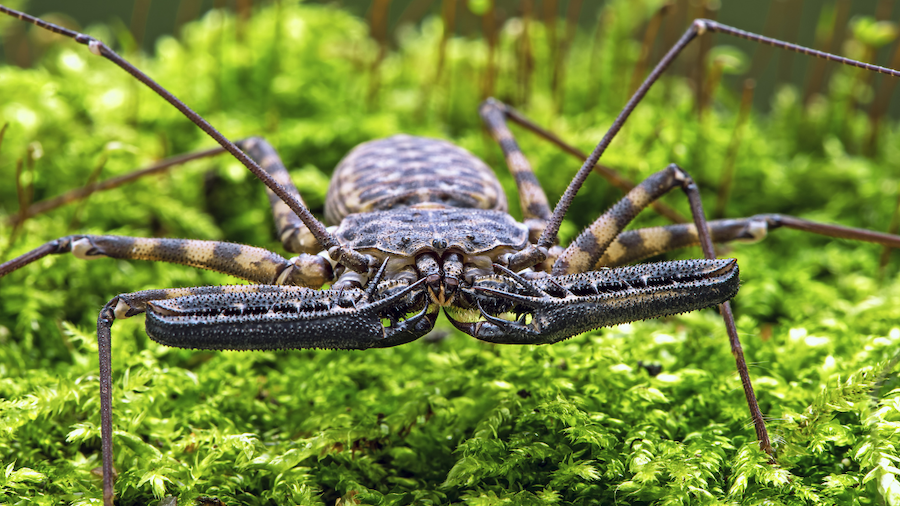
8. Tailless Whip Scorpions (Amblypygi)
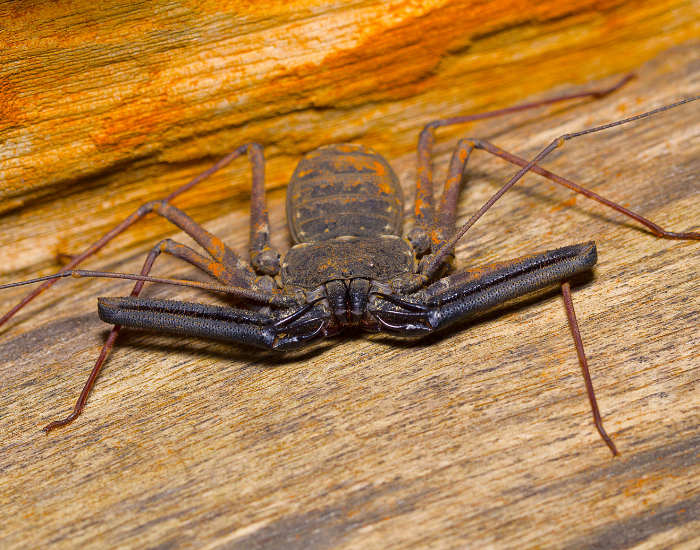
Whip spiders look like a nightmare and are harmless to people. Around 280 species are described as of 2026. They have no venom and produce no silk, so prey capture depends entirely on spined pedipalps that snap shut like a mantis strike.
The first pair of legs does not walk. Those antenniform legs stretch metres of sensory surface into thin air, and the largest specimens span roughly 61 cm across them. Bingman and colleagues showed that the Neotropical whip spider Paraphrynus laevifrons navigates home using those legs rather than its eyes. Mothers also carry their young on the abdomen and appear to communicate by touch, which is rare social behaviour in this class.
I found my only wild one in a toilet block. Friends visiting from Belgium had dragged me to Las Pozas, Edward James’ surrealist garden at Xilitla in San Luis Potosí. The jungle there grows straight through the concrete. She was sitting on the sink. Until that moment I had only seen one in a Harry Potter film, so I stood there thrilled. Then I walked out without washing my hands. Fascinating, yes. Close enough to touch, no.
9. Whip Scorpions (Thelyphonida)
Whip scorpions, or vinegaroons, hold about 120 species. They have a whip-like flagellum of thirty to forty segments at the rear, and it is not a sting. There is no venom in this order either.
Their defence is chemical. Glands at the base of the flagellum spray a mix dominated by acetic acid, with caprylic acid helping it penetrate insect cuticle. The smell is unmistakably vinegar, and the spray can be aimed.
Mastigoproctus giganteus reaches 85 mm and lives in arid parts of Arizona, New Mexico and northern Mexico. Females seal themselves into burrows, fast for months, and carry the young on their backs. Australia and Europe have none at all.
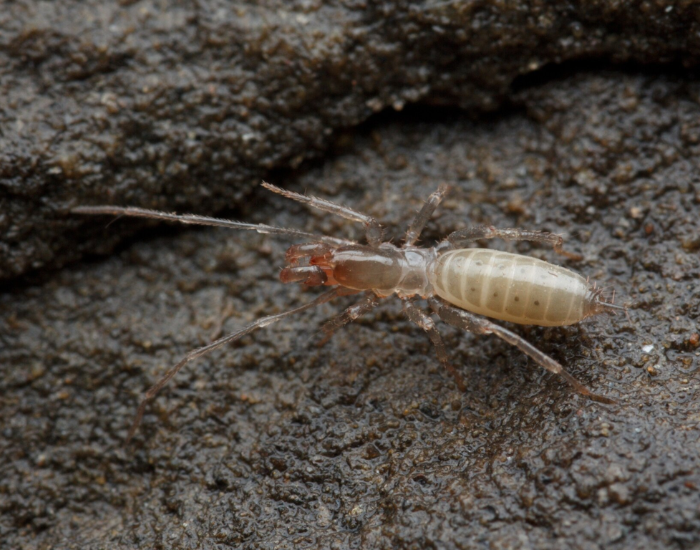
10. Short Tailed Whip Scorpions (Schizomida)
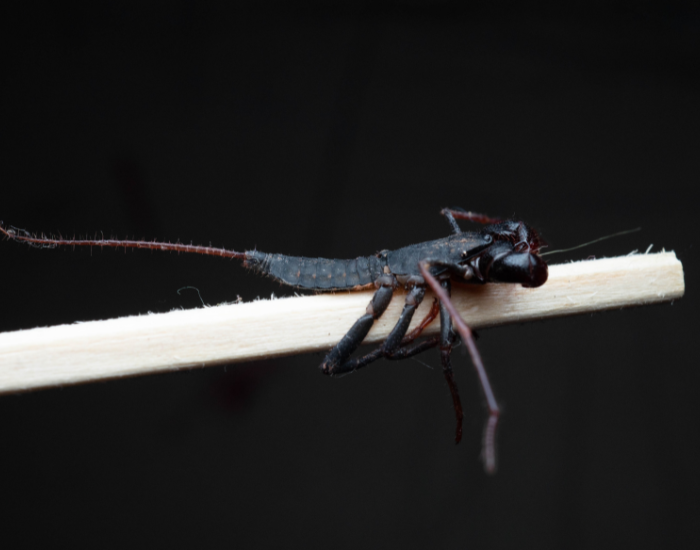
Schizomids are the vinegaroon’s miniature cousins, with about 300 species and bodies under 5 mm. The flagellum is reduced to a few segments, hence short tailed whip scorpions. The name Schizomida refers to the divided plates on the prosoma.
They are blind, or nearly so, and live in rainforest leaf litter, under rocks and in caves. They kept only one pair of book lungs where other arachnids in the group have two. Their hind legs are modified for jumping, which is the escape response you trigger by lifting a log.
Australia is a hotspot, particularly in the tropical north and the Pilbara, where cave populations have split into short-range endemics. Most species occupy one gorge and nothing else. Hubbardia pentapeltis has survived five months without food in captivity.
11. Microwhip Scorpions (Palpigradi)
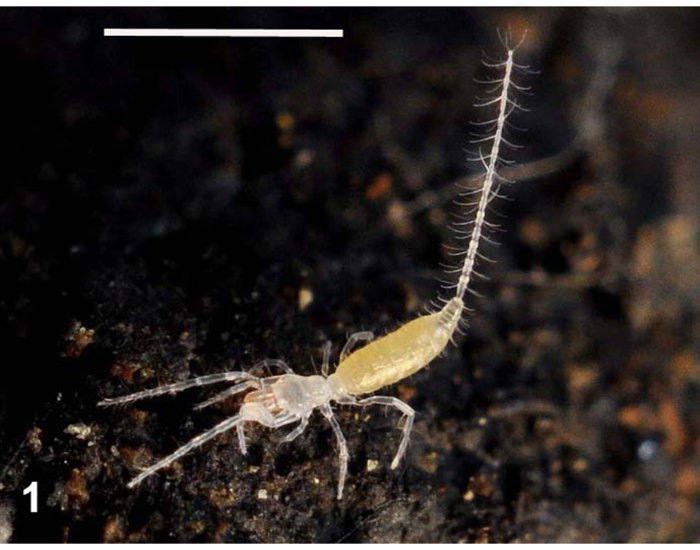
Microwhip scorpions are the arachnids nobody photographs. Around 130 species are known, adults average 1 to 1.5 mm, and they are pale, eyeless and so thinly armoured that they leave almost no fossil record.
The flagellum carries fifteen bristled articles and can reach half the animal’s length, looking like a bottle brush. Most remarkably, the family Eukoeneniidae has no respiratory organs at all. Gas exchange happens straight through the cuticle, which only works at that size.
Eukoenenia spelaea lives in central European caves, where researchers found it grazing cyanobacteria rather than hunting. That single observation quietly complicated the idea that arachnids are uniformly carnivorous. They turn up in wet soil on every continent except the polar regions, one of many arachnids occupying nearly every habitat on land.
12. Hooded Tickspiders (Ricinulei)
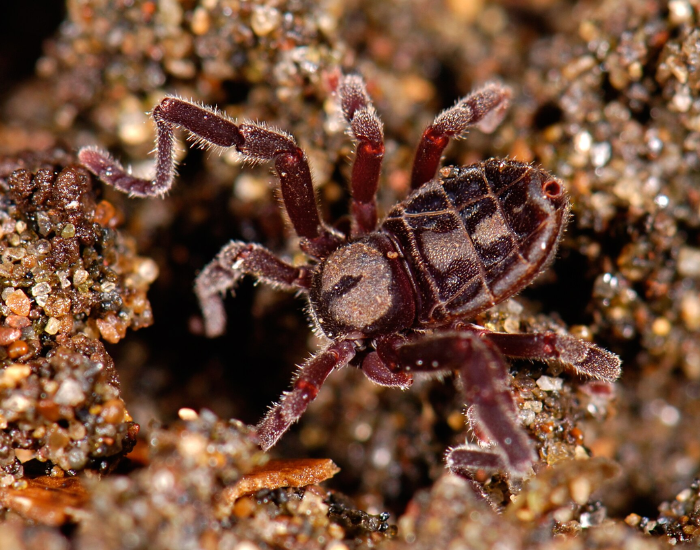
Ricinulei is the smallest order, with 103 living species and about twenty known from fossils. Adults run 5 to 10 mm and live in rainforest leaf litter and caves in west-central Africa and the Neotropics.
The hood is the giveaway. A plate called the cucullus lifts and lowers over the mouth like a visor. The prosoma and opisthosoma physically lock together, and because the genital opening sits on that joint, the animal has to unlock itself to mate.
Males use a modified third leg pair to transfer sperm, and its shape is the main way taxonomists tell species apart. Females carry eggs beneath the hood, and the young hatch with six legs. William Buckland described the first one in 1837 from a fossil, and thought it was a beetle.
Frequently Asked Questions
An arachnid is a member of the class Arachnida, within the subphylum Chelicerata and the phylum Arthropoda. Arachnids are invertebrates with a segmented body divided into a prosoma and an opisthosoma, jointed appendages, and no antennae or wings. Adult arachnids typically have four pairs of walking legs, plus chelicerae and pedipalps. There are approximately 110,000 described arachnid species.
There is no single agreed list, but the seven most commonly taught are Insecta, Arachnida, Chilopoda (centipedes), Diplopoda (millipedes), Malacostraca (crabs, shrimp and relatives), Merostomata (horseshoe crabs) and Pycnogonida (sea spiders). Modern classifications group these under four subphyla: Chelicerata, Myriapoda, Crustacea and Hexapoda. Genetic work keeps reshuffling the boundaries, so treat any fixed number as a teaching shortcut.
When people say four, they almost always mean the four familiar groups: spiders, scorpions, ticks and mites. Those account for the overwhelming majority of arachnid diversity. The full class holds twelve living orders, including harvestmen, false scorpions, sun spiders, whip spiders, whip scorpions, schizomids, palpigrades and ricinuleids.
Three different animals get this question. Tailless whip scorpions (Amblypygi) have scorpion-like grabbing pedipalps but no tail or venom. False scorpions look like tiny tailless scorpions and are harmless to people. In eastern Australia, the scorpion-tailed spider (Arachnura higginsi) is a genuine orb weaver whose abdomen tapers into a curled, scorpion-like tail used purely for camouflage.
The Takeaway
Twelve arachnid orders, one shared body plan, and wildly different answers to the same problem of staying alive on land. The tarantula that scared visitors and the 1 mm palpigrade breathing through its own skin are closer relatives than either is to an ant.
Most people will only ever meet four of these groups. That is worth changing, because the other eight are sitting under logs, in leaf litter and on cave walls within driving distance of most of us. Lift a rock somewhere damp, look carefully, and count legs.
If you want to go deeper, start with our guides to spider species, tarantula facts, the Mexican redknee tarantula, the biggest spiders in the world and the genuinely strange sea spiders, which are not arachnids at all.
Can You Name That Arachnid Order?
A 12-photo identification challenge — test your ability to spot different arachnid orders by their claws, legs, and body structure. Go back and change any answer before you score.
Which arachnid order or group is this?
References:
Ballesteros, J. A., Santibáñez-López, C. E., Baker, C. M., et al. (2022). Comprehensive species sampling and sophisticated algorithmic approaches refute the monophyly of Arachnida. Molecular Biology and Evolution, 39(2), msac021. https://doi.org/10.1093/molbev/msac021
Nyffeler, M., & Birkhofer, K. (2017). An estimated 400–800 million tons of prey are annually killed by the global spider community. The Science of Nature, 104(3–4), 30. https://doi.org/10.1007/s00114-017-1440-1
Sonenshine, D. E. (2018). Range expansion of tick disease vectors in North America: Implications for spread of tick-borne disease. International Journal of Environmental Research and Public Health, 15(3), 478. https://doi.org/10.3390/ijerph15030478
Wiegmann, D. D., Hebets, E. A., Gronenberg, W., Graving, J. M., & Bingman, V. P. (2016). Amblypygids: Model organisms for the study of arthropod navigation mechanisms in complex environments? Frontiers in Behavioral Neuroscience, 10, 47. https://doi.org/10.3389/fnbeh.2016.00047
World Spider Catalog. (2026). World Spider Catalog, Version 27. Natural History Museum Bern. https://doi.org/10.24436/2