The other day, I was killing time with a few biologist colleagues at a remote field camp, waiting on the light to drop. Someone pulled out an old alphabet game we used to play as kids, pick a letter, name as many animals as you can. We landed on M. The list got long, fast. By the time we hit fifteen, we realized just how rich this slice of the animal kingdom really is.
This article will sort it out. Below are 15 iconic animals that start with M, grouped by class: mammals, birds, reptiles, and sea animals. Some of the animal names will be familiar. Others might surprise you. Each animal earned its place on this list because it teaches us something specific about the wild. If you wanted a quick crash course on animal names beginning with M, this is it.
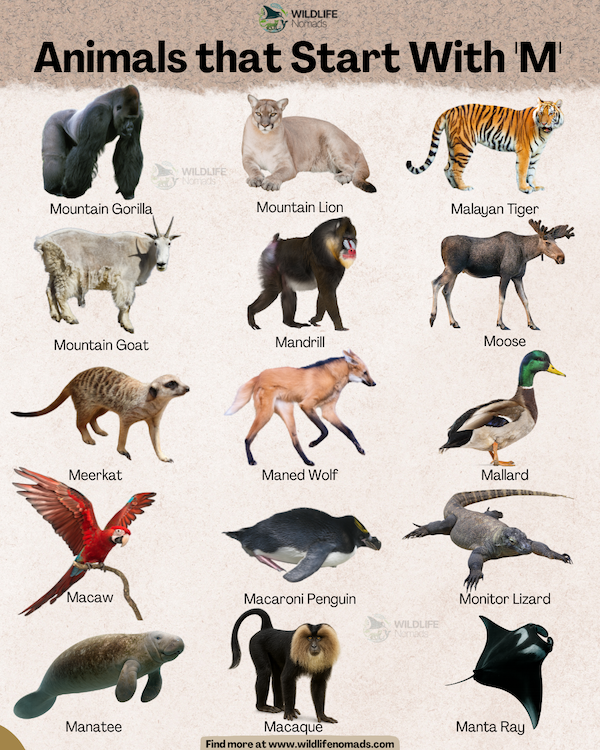
Mammals That Start With M
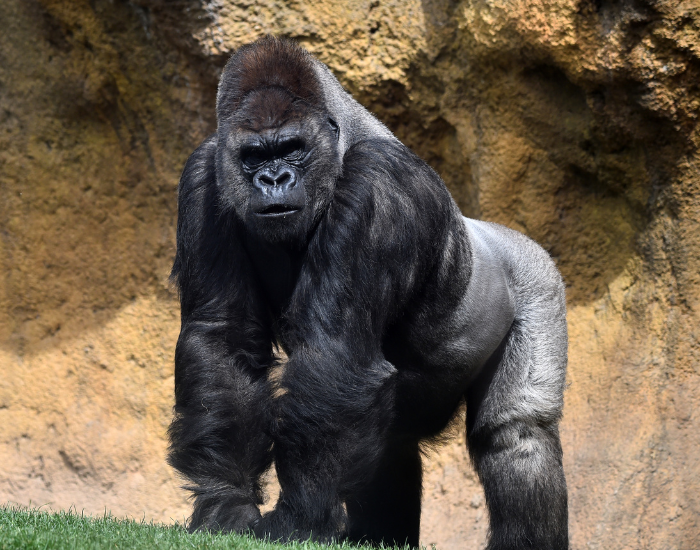
1. Mountain Gorilla
Tracking the mountain gorilla in Rwanda’s Virunga range is one of the most humbling assignments in modern field biology. These giants share roughly 98% of our DNA with humans, yet their family dynamics often look calmer than ours. A 400-pound silverback will spend an entire afternoon nibbling wild celery while toddlers tumble across his back.
This great ape live across three countries (Rwanda, Uganda, and the DRC) in East/Central Africa. Capitalize Central Africa. Decades of conservation work have pulled the population back from the brink, but fewer than 1,100 remain in the wild.
2. Mountain Lion
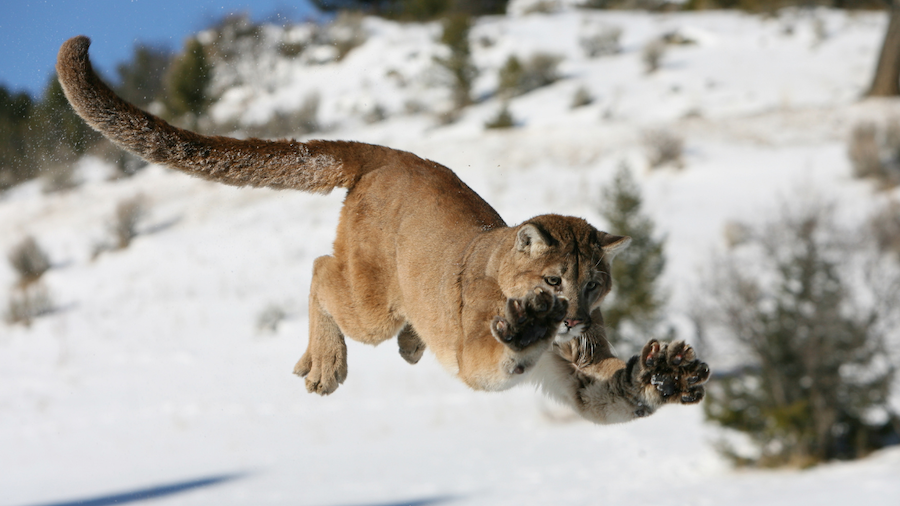
The mountain lion goes by more names than any other animal in the western hemisphere: cougar, puma, panther, catamount. Across Southern California and the high mesas of Colorado, you rarely see one in person. You usually just find pugmarks pressed into damp soil.
The mountain lion is the most widespread large predator in the Americas, ranging from the Yukon down through central america and on into south america. A single mountain lion needs hundreds of square miles, and that’s why habitat fragmentation, more than hunting, is the greatest modern threat. This animal is also one of the few cats as comfortable climbing trees and swimming rivers as it is stalking mule deer at night.

3. Malayan Tiger
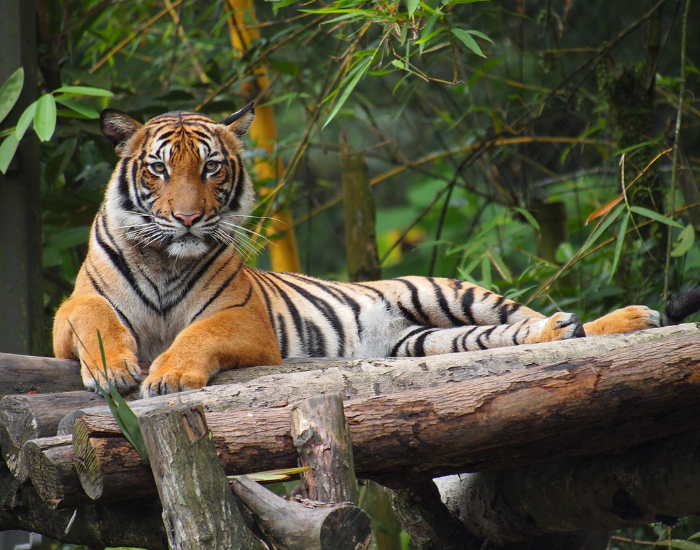
The malayan tiger is the smallest tiger subspecies, found only in the Southern half of the Malay Peninsula in Southeast Asia. Fewer than 150 individuals remain in the wild.
Malayan tigers prefer dense tropical forests, where they hunt wild boar and sambar deer. Their stripes (unique as fingerprints) vanish into the dappled light. Saving this animal depends on aggressive anti-poaching patrols and protecting the corridors that connect fragmented forests across the region. Field teams have collected genetic data showing how isolated each remaining population has become.
4. Mountain Goat
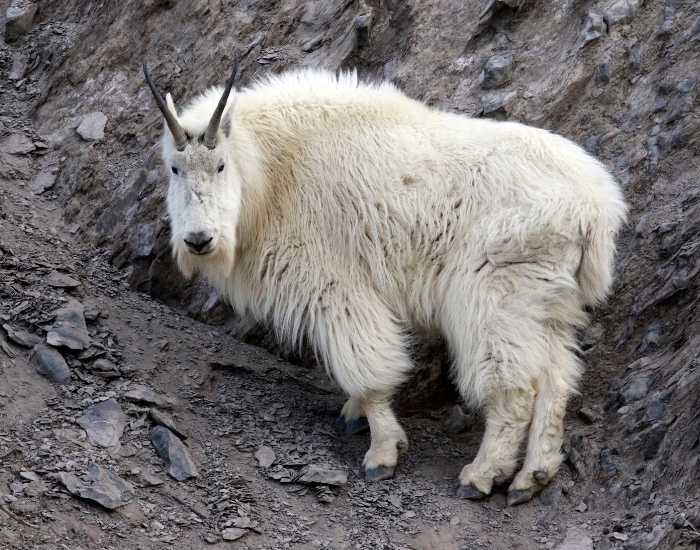
Despite the name, the mountain goat isn’t really a goat. It belongs to its own genus, more closely related to goat-antelope than to anything in the goat family proper. Watching them in the Rockies, balancing on cliff faces that would terrify a seasoned rock climber, never gets old.
The secret is in the hooves. Each one has a hard outer rim and a soft, rubbery pad that grips stone like a climbing shoe. Mountain goats live higher year-round than almost any other large mammal in the northern hemisphere. Snow, wind, vertical rock, this animal handles it all without slipping.
5. Mandrill
The mandrill is the most colorful mammal on earth. Males develop scarlet and electric-blue faces, with rumps painted in the same hues. The colors signal social rank. The dominant male in a group, called a horde, displays the most vivid pigmentation of all.
Mandrills live in the dense rainforests of equatorial Africa, mostly in Gabon and Cameroon. A single mandrill horde can include hundreds of individuals — one of the largest gatherings of any non-human primate, and one of the few monkey species that travels in such large numbers. Among the monkey family, this animal is the heavyweight, with males topping 80 pounds. Few monkey types are equally bold in the wild, and almost none are this colorful.

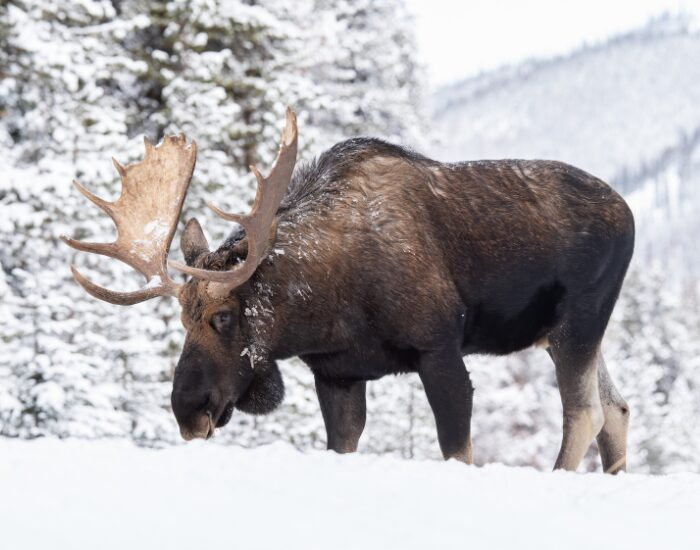
6. Moose
The moose is the largest member of the deer family. A bull moose can stand seven feet at the shoulder and carry antlers six feet across, taller than several mule deer stacked together. Anyone who has worked in Alaska or northern Canada knows to give a feeding cow moose a wide berth, especially in summer.
The moose thrives in the boreal forests and wetlands of the northern hemisphere. It eats enormous amounts of aquatic plants in summer, then switches to twigs and bark in winter. Despite its size, this animal is surprisingly fast on land, and the moose swims better than most dogs.
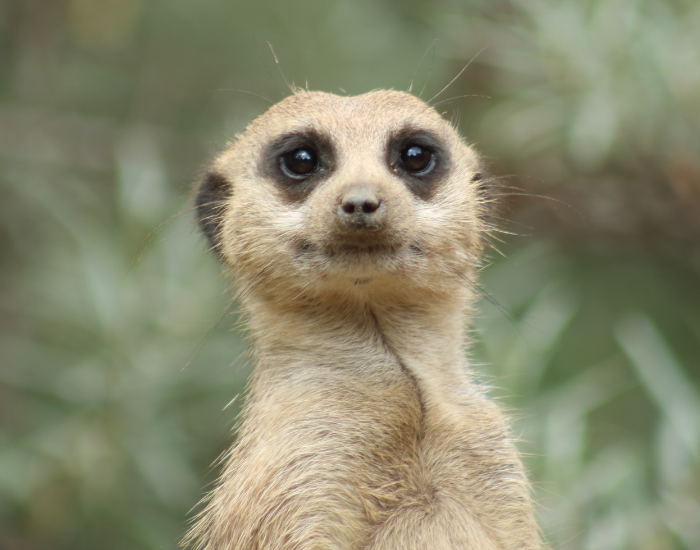
7. Meerkat
The meerkat is one of the most social mammals on earth. In the kalahari desert of Southern Africa, a single mob (that’s the proper term) emerges from the burrow each morning to warm itself in the rising sun. The meerkat then takes shifts standing guard while the rest of the group forages.
Meerkats live in cooperative bands of up to 40. They share guard duty, raise pups communally, and communicate with at least 30 distinct calls. Each meerkat also lives underground in vast tunnel systems that protect against heat and predators.
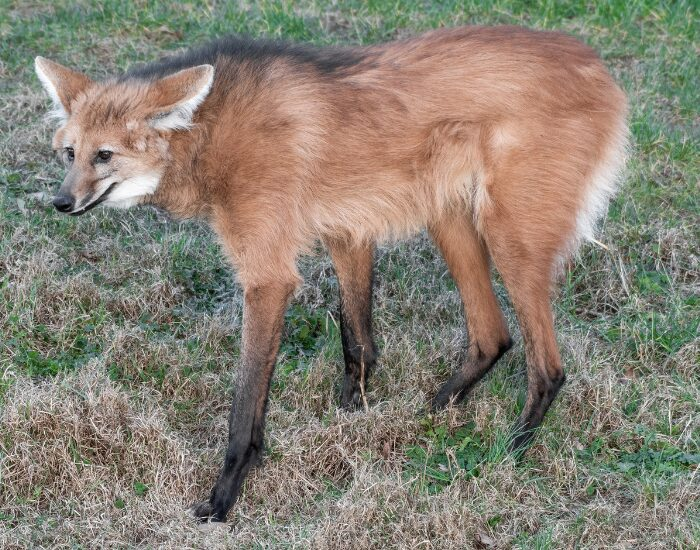
8. Maned Wolf
The maned wolf is one of the strangest-looking canids alive. Long, stilt-like legs. Reddish-orange fur. A black mohawk-style mane that rises when this animal is alarmed. Locals in Brazil sometimes call the maned wolf a “fox on stilts,” though it’s neither a fox nor a true wolf.
The maned wolf is the only living member of its genus, an animal found in the grasslands of South America. Its diet is unusually broad, fruit, small mammals like the mouse and other rodents, insects, and reptiles. Roughly half of what a maned wolf eats is plant matter, which is rare among canids and almost unheard of in true wolves.
Birds
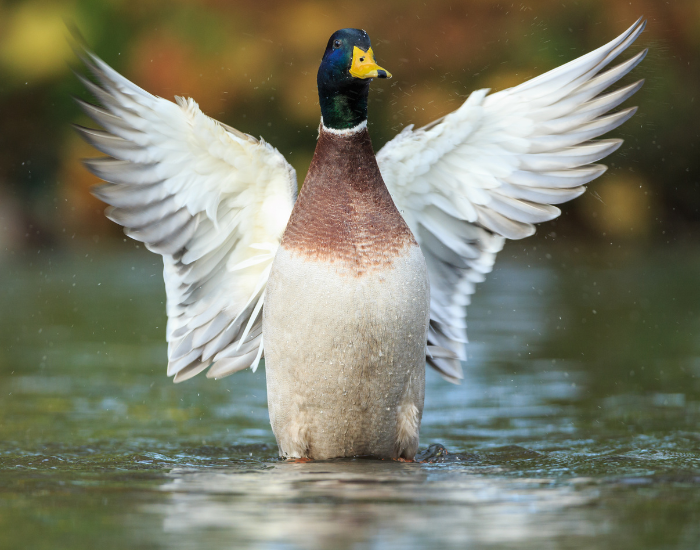
9. Mallard
The mallard is probably the most familiar duck on earth. You’ve seen mallards in city parks, backyard ponds, and remote wetlands. The males’ iridescent green heads are unmistakable, and the mallard is one of the most common animals across the entire continent of North America.
Mallards are native to the northern hemisphere but have been introduced almost everywhere else on earth. They interbreed with several other ducks in the same family, sometimes to the detriment of local populations. Despite that, the mallard remains a conservation success story, wildly adaptable, abundant, and a regular sight for anyone who pays attention to the wild.
10. Macaw
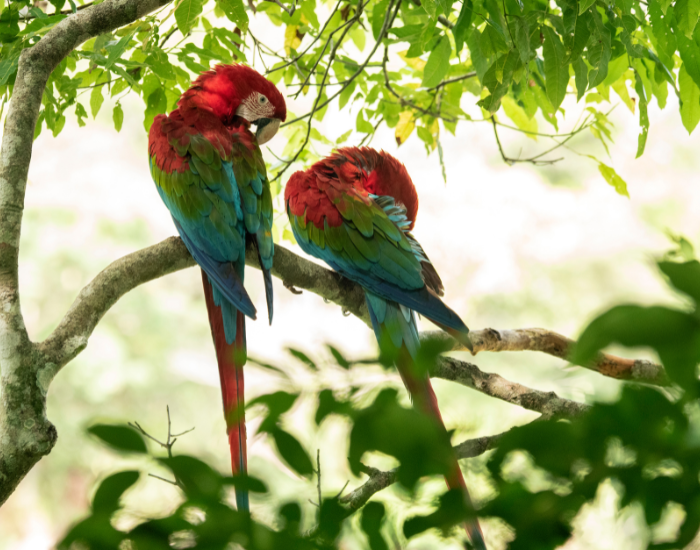
Few sights compare to a wild macaw in flight. In the Peruvian Amazon, scarlet macaws scream overhead in colors that don’t look real. They look painted on. With a long tail trailing behind, a macaw in flight is unmistakable. Among parrots, the macaw is the largest type in the world.
Macaws live in the forests of south america, where the macaw feeds on hard nuts and fruit that few other birds can crack. Several macaw species are endangered, mostly because of the illegal pet trade. A wild macaw belongs in the canopy, not a cage. Unlike most parrots, the macaw also pairs for life, sometimes for more than 60 years.
11. Macaroni Penguin
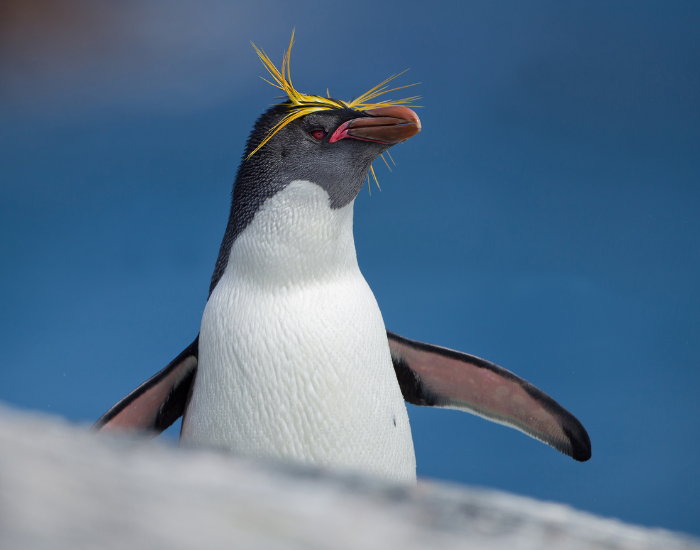
The macaroni penguin earned its name from 18th-century English dandies who wore feathered hats called “macaronis.” The bird’s crest of bright yellow feathers reminded sailors of the same flamboyant style.
Macaroni penguins breed on the rocky islands of the sub-Antarctic. With over 18 million individuals, they’re the most numerous penguin species in the world. The closely related magellanic penguin, found in Patagonia, is smaller and unmistakable for the loud braying call that has earned it the nickname “jackass penguin.”
Reptiles
12. Monitor Lizard
The monitor lizard family contains some of the most intelligent reptiles on earth. The Komodo dragon — the largest living lizard — is a monitor. So is the slender Nile monitor that stalks African riverbanks with its forked tongue flicking like a metronome.
Monitor lizards inhabit forests, deserts, and wetlands across Africa, Southeast Asia, and Australia. Unlike snakes and most other reptiles, the monitor lizard shows genuine problem-solving ability, and a few of these animals can even count small numbers. That’s a strange sentence to write about a lizard, but the research keeps confirming it.

Sea Animals
13. Manatee
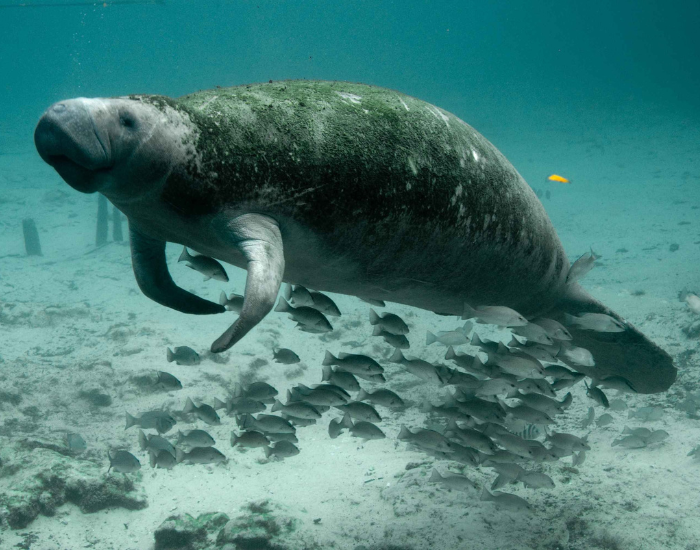
The manatee is one of the gentlest creatures in the ocean. Slow, curious, and surprisingly graceful, a manatee can weigh over 1,000 pounds yet glide through Florida’s springs like an underwater cloud.
Manatees, sometimes called sea cows, are more closely related to dugongs and elephants than to seals or dolphins. Three manatee types exist worldwide: the West Indian, the Amazonian, and the African manatee. All three are vulnerable. Boat strikes remain the leading cause of injury for Florida’s manatee population, and warm-water refuges shrink each year.
14. Manta Ray
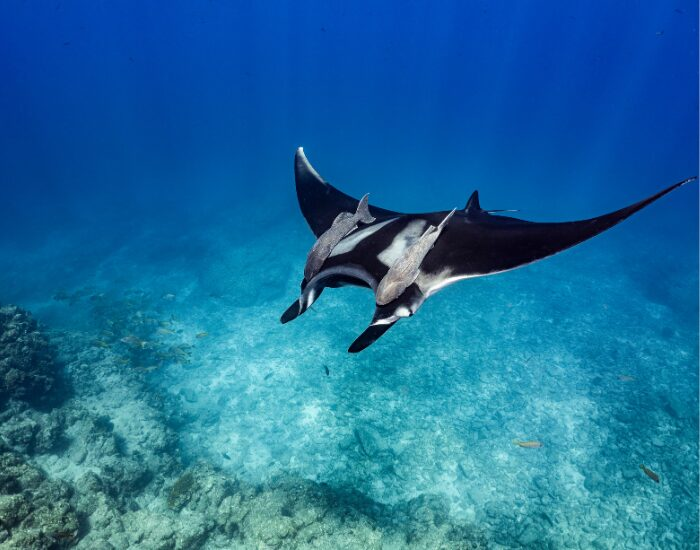
The manta ray glides through the water like a slow-motion bird. Its wingspan can stretch 23 feet, yet this animal feeds almost entirely on plankton. Reef mantas are famously curious and will often circle divers for ten minutes or more, just as interested in us as we are in them.
Two manta types exist: the reef manta and the giant oceanic manta. Both are highly intelligent, with the largest brain-to-body ratio of any fish in the sea. The manta ray is also threatened, primarily by gill-net fisheries and demand for their gill plates in traditional medicine.
15. Mantis Shrimp
The mantis shrimp might be the most underrated animal on this entire list. It has 12 types of color receptors — we have three — and can punch with the speed of a .22 caliber bullet. The strike creates a flash of light and a shockwave hot enough to briefly boil water.
Peacock mantis shrimp live on tropical reefs across the Indo-Pacific. They’re fierce predators, snapping the shells of crabs, snails, and small fish with a forelimb evolved into a spring-loaded hammer, with a stubby tail tucked behind.

References:
Clutton-Brock, T. H., Russell, A. F., Sharpe, L. L., Young, A. J., Balmforth, Z., & McIlrath, G. M. (2014). Evolution and development of sex differences in cooperative behavior in meerkats. Science, 297(5579), 253–256. https://doi.org/10.1126/science.1071412
Granjon, A. C., Robbins, M. M., Arinaitwe, J., Cranfield, M. R., Eckardt, W., Mburanumwe, I., Musana, A., Robbins, A. M., Roy, J., Stoinski, T. S., & Vigilant, L. (2020). Estimating abundance and growth rates in a wild mountain gorilla population. Animal Conservation, 23(4), 455–465. https://doi.org/10.1111/acv.12559
Patek, S. N., & Caldwell, R. L. (2005). Extreme impact and cavitation forces of a biological hammer: Strike forces of the peacock mantis shrimp. Journal of Experimental Biology, 208(19), 3655–3664. https://doi.org/10.1242/jeb.01831
Stevens, G. M. W., Hawkins, J. P., & Roberts, C. M. (2018). Courtship and mating behaviour of manta rays Mobula alfredi and M. birostris in the Maldives. Journal of Fish Biology, 93(2), 344–359. https://doi.org/10.1111/jfb.13768