When I was a kid, my absolute favorite section of the animal encyclopedia was always the one dedicated to antelopes. I would stare at the illustrations for hours, completely captivated by their shapes, though I have to admit, I was constantly confused about which one was which. They all seemed to blend together. It wasn’t until years later, when I got a job working in a zoo, that the pieces finally started falling into place. Caring for them up close allowed me to study their quirks, map their behaviors, and truly learn how to tell them apart.
Here’s the trouble with the word antelope. Most people picture one animal, but they’re really picturing fifteen at once. The antelope family is enormous, scattered across four continents, and full of species that even seasoned biologists confuse. Some are the size of a hare. Others outweigh a horse. A few aren’t even true antelope at all.
So I want to walk you through 15 types of antelope worth knowing, what they look like, where they live, and the field stories that stuck with me. By the end, you’ll never call a wildebeest a “deer” again. I promise.

What Counts as an Antelope, Anyway?
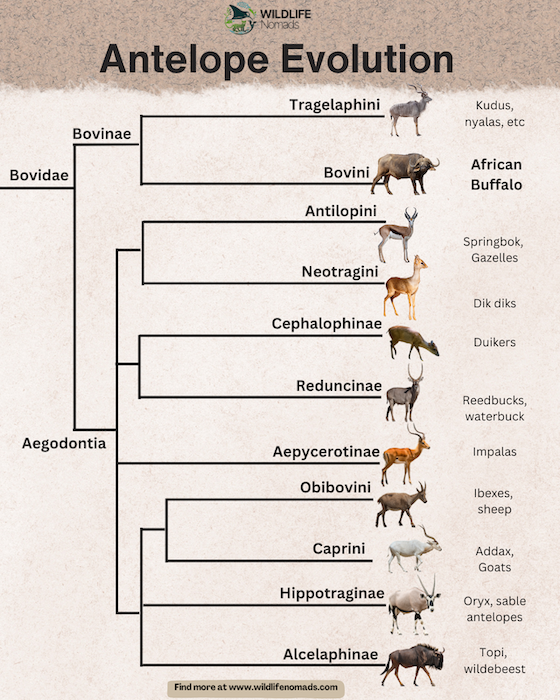
Before we get into specific species of antelope, let’s clear something up. Antelope aren’t a single tidy group. They’re a loose collection of hoofed mammals inside the family Bovidae, cousins of cattle, sheep, and goats. Most antelope species live across Africa, with a smaller crowd scattered through Asia and the Middle East. Unlike deer antlers, which fall off and regrow every year, antelope horns are permanent bony cores wrapped in keratin. They never shed. That single trait separates antelope from any deer-like animal you’ll meet.
The other quirk worth knowing:in larger, open-country species (like Eland, Gemsbok, and Bongo), females usually have horns to defend against predators. In smaller, forest-dwelling or territorial species (like Royal antelope or Four-horned antelope), females are generally hornless. As a result, identifying antelope in the field often comes down to horn shape, body size, and habitat. Let’s get into the lineup.
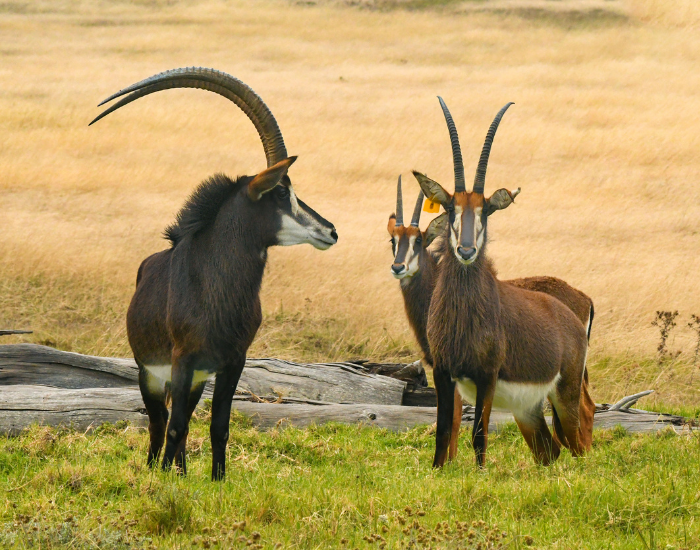
1. Sable Antelope
The sable antelope is, in my opinion, the most striking of all African antelopes. Adult males turn jet-black with white bellies and ringed, backward-sweeping horns that can exceed 60 inches. Females stay a warm chestnut. They live in small herds across the woodlands of eastern and southern Africa, particularly in Zambia, Angola, and parts of South Africa.
I’ve watched bulls drop to their front knees and clash horns with such force the sound echoed across a Zambezi floodplain. Sable are tough, they’ll stand their ground against lions and wild dogs rather than flee. That stubborn streak is one reason poachers and habitat loss hit them so hard.
2. Common Eland (Taurotragus oryx)
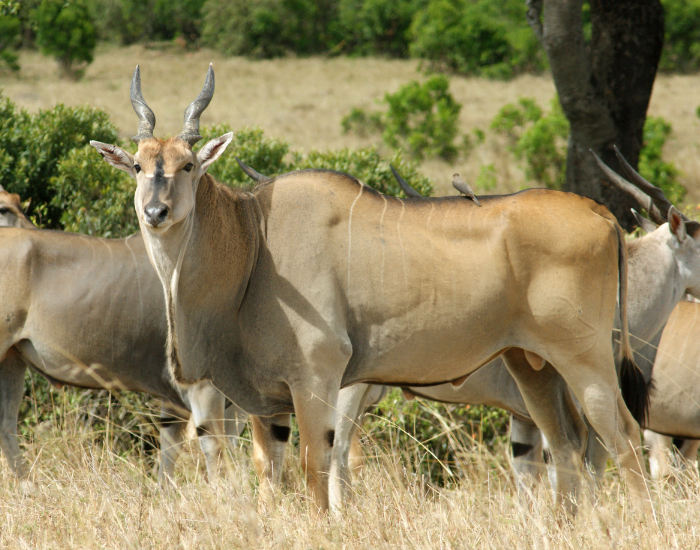
If you want to meet the largest antelope species on the planet, you want an eland. Taurotragus oryx, the common eland, can weigh nearly 2,000 pounds, closer to a small cow than a gazelle. Despite that bulk, I once watched an eland clear a six-foot fence from a standstill. It’s one of the most surreal things I’ve seen in the field.
Eland roam across the African plains of east Africa and southern Africa, forming large herds during the wet season. Both males and females carry spiral horns. Their diet consists of leaves, grasses, and fruit, which is why they thrive in mixed savanna and bushveld.
3. Giant Eland
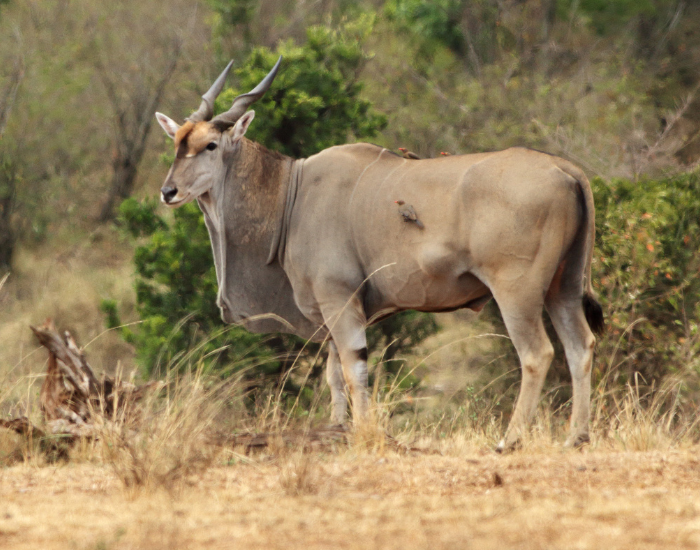
Don’t let the name fool you. The giant eland isn’t dramatically heavier than its common cousin, but it’s taller, longer-horned, and far rarer. It lives in patchy populations across central and west Africa, preferring tall grass woodlands near water. Giant eland are an endangered species in the western part of their range, where poaching and habitat loss have hammered antelope populations.
4. Gemsbok (Oryx gazella)
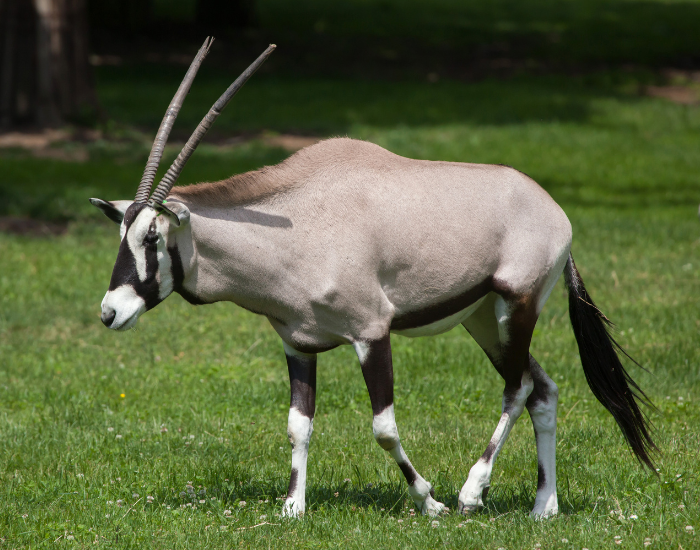
The gemsbok, Oryx gazella, is the postcard animal of the Kalahari. Both males and females grow long, straight, rapier-like antelope horns that can skewer a lion. Their bold black-and-white facial markings look painted on. Gemsbok thrive in desert regions where most antelope would die of thirst, they can raise their body temperature to avoid sweating.
If you ever camp in Namibia’s Etosha during a dry time and could still watch a gemsbok stand in 110-degree heat without flinching. As a field biologist, that kind of physiological resilience is what makes you fall in love with hoofed mammals all over again.
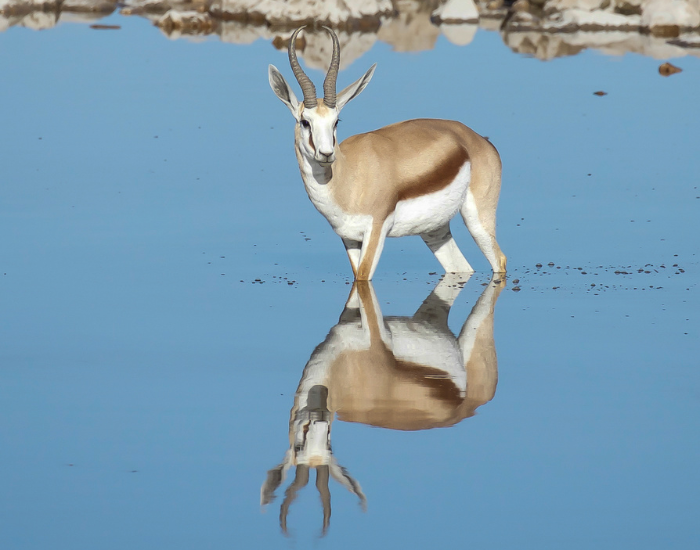
5. Springbok
The springbok is South Africa’s national animal, and for good reason. These graceful animals are famous for pronking, bouncing four-footed into the air to confuse predators. A friend that spent time in Africa told me how he watched a herd of several hundred pronk across the Karoo at sunrise, and it seem they looked like the ground itself was popping popcorn.
Springbok live in herds across southern Africa, particularly in arid plains. They’re one of the smaller species in the gazelle line. If you want the full story, I wrote a deep dive on springbok behavior and biology that goes well beyond this section.
6. Pronghorn Antelope
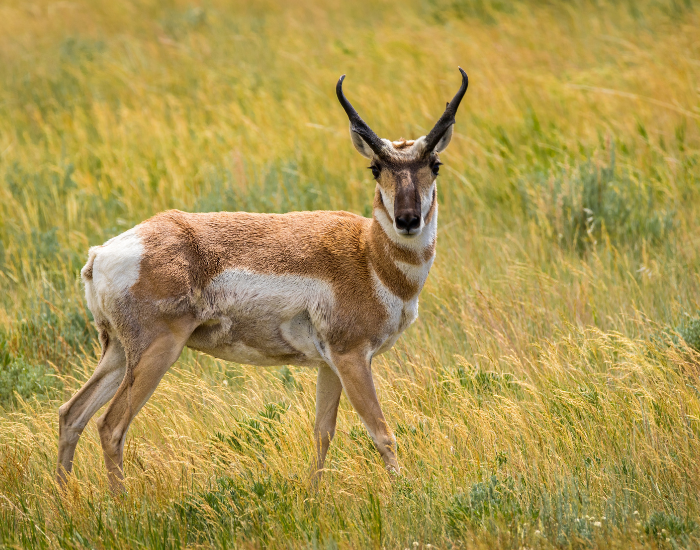
Here’s a fun confession: the pronghorn antelope isn’t actually an antelope. North America’s “antelope” of the sagebrush plains is its own family, Antilocapridae. But people call it an antelope, and after 200 years of cowboy poetry, the name has stuck.
The pronghorn is the second-fastest land mammal on Earth, clocked at nearly 60 mph. That speed evolved to outrun an American cheetah that went extinct roughly 10,000 to 13,000 years ago. I cover that ghost-predator story in my piece on pronghorn antelope, and how they compare to the fastest animals on land and modern cheetahs.
7. Saiga Antelope
The saiga antelope looks like evolution had a deadline. A bulbous, drooping snout, knobby knees, and a dazed expression, and yet it’s one of the most ecologically critical antelope species in central Asia. The snout filters dust in summer and warms freezing air in winter.
Saiga are critically endangered, with populations crashing from disease and poaching. I colleague to travel to Kazakhstan in 2018 to see one in the wild, and the conservation efforts on the ground genuinely gave him hope. I wrote a fuller account in my saiga antelope guide.

8. Tibetan Antelope (Chiru)
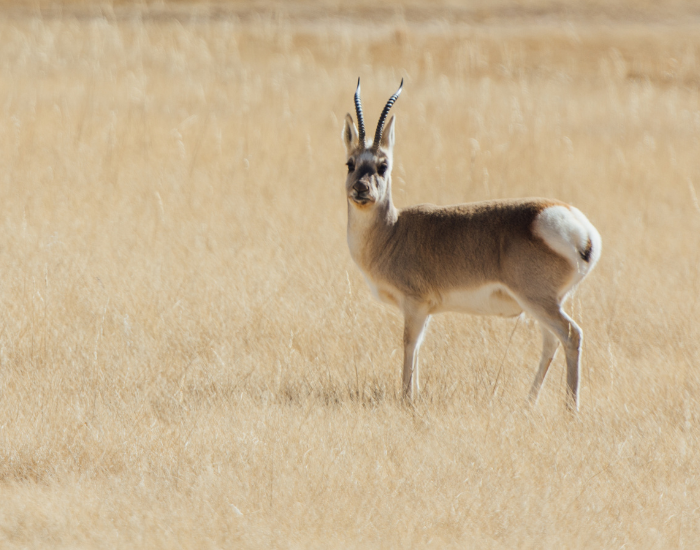
The Tibetan antelope, or chiru, lives at 14,000 feet on the Tibetan Plateau. It’s a high-altitude specialist with hollow guard hairs that trap warmth in subzero conditions. Only the males grow long, slender horns that look like polished black sabers.
Chiru were nearly wiped out for their underwool, called shahtoosh. Conservation efforts have stabilized populations, but they remain a fragile prey species in a harsh natural habitat. Watching a male chiru sprint across a snowy plain at that altitude is something I’ll never forget.
9. Royal Antelope
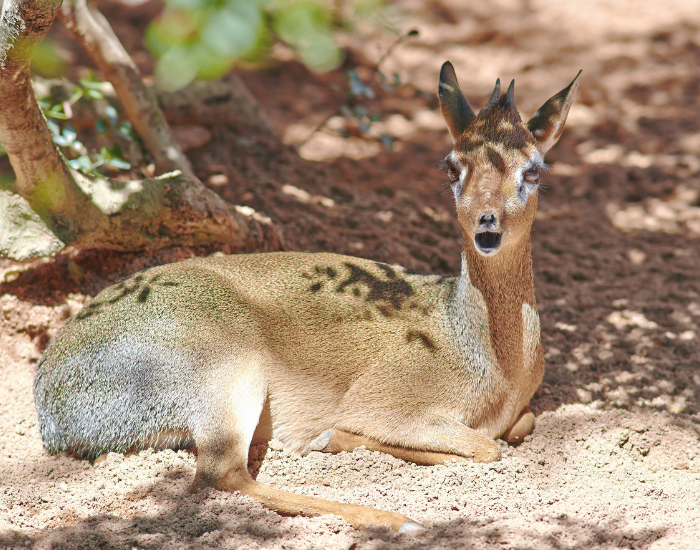
The tiny royal antelope is the smallest antelope on Earth, barely 10 inches at the shoulder and weighing under six pounds. It lives in the dense bush of west African rainforests, mostly nocturnal, almost impossible to see. Its hind legs are disproportionately long, like a hare’s, built to escape predators with explosive leaps. Smaller species like this remind me how much of the antelope family hides in plain sight.
10. Bongo Antelope
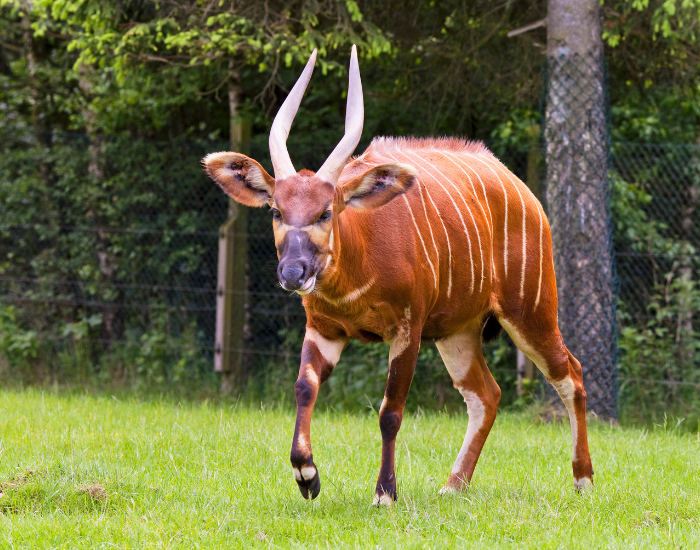
The bongo is a forest-dwelling beauty with chestnut fur and chalk-white vertical stripes. They live in the highland forests of central Africa, particularly Kenya and the Congo Basin. Both males and females grow lyre-shaped antelope horns, which is unusual for forest species.
I once tracked a bongo at night in southern Kenya using a thermal scope and felt like I was watching a ghost made of velvet. They’re one of the spiral horned antelopes, and they’re elusive enough that I devoted an entire post to bongo antelope facts.
11. Dama Gazelle
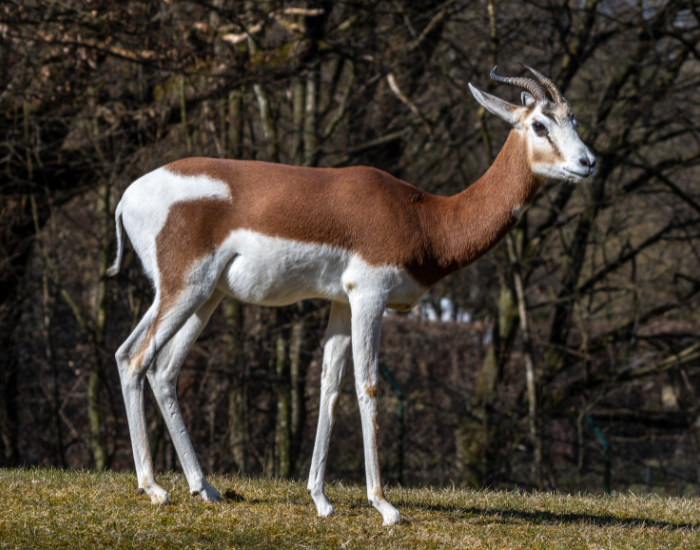
The dama gazelle is one of the most beautiful and most endangered antelope on the planet. Tall, reddish-brown, with a long neck and slim legs, it lives in the Sahel, the dry belt between the Sahara and the African savanna. Fewer than 300 may remain in the wild.
Habitat loss, drought, and hunting have devastated populations. Dama gazelle are one of those antelope species that survive mainly thanks to captive breeding programs, with reintroductions slowly rebuilding desert herds.
12. Four-Horned Antelope
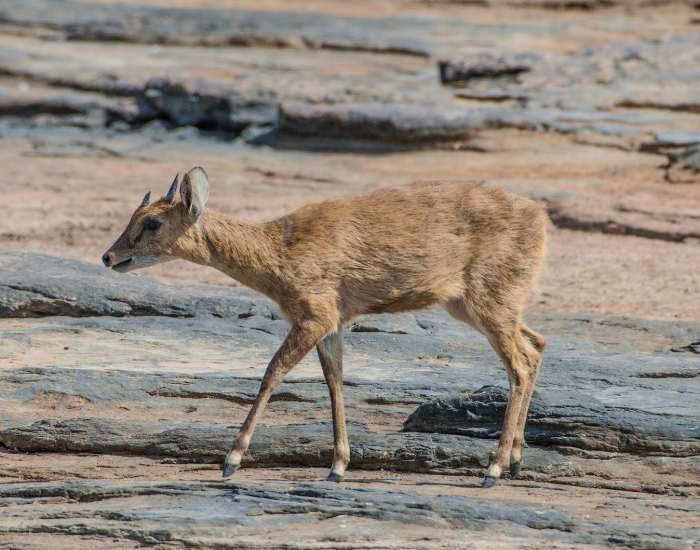
Now for one of the strangest. The four horned antelope, or chousingha, lives in the dry forests of India and Nepal. As the name suggests, the males grow not two but four horns, a small pair in front and a larger pair behind. It’s the only bovid in the world with this trait.
I haven’t yet seen one in the wild, but a colleague in Madhya Pradesh sent me trail-camera footage of a male trotting through tall grass at dawn. As a field biologist, you don’t forget animals like that. It’s a solitary antelope, shy and quick to vanish.
13. Mongolian Gazelle
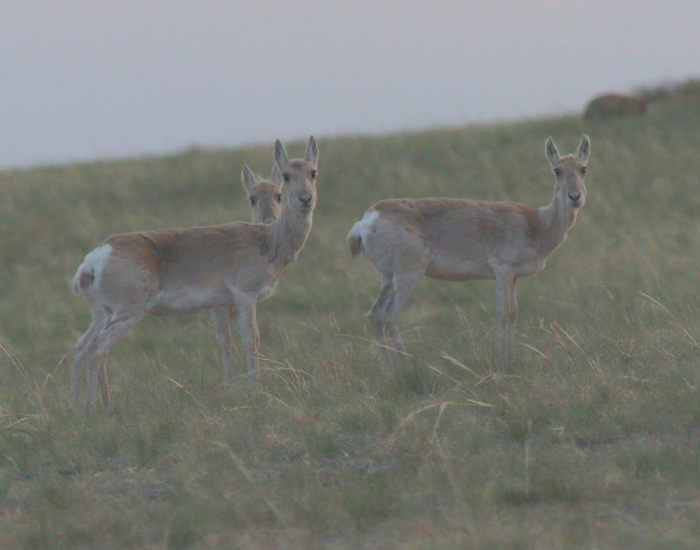
The Mongolian gazelle migrates across the steppes of central Asia in herds that can number in the hundreds of thousands. Watching them move is like watching a river of cinnamon flow across the grasslands. They’re built for cold, open country, with thick coats and surprising endurance.
These antelope live in one of the harshest environments on Earth, and their natural habitat is shrinking fast as fencing and mining fragment the steppe. They’re a reminder that not all antelope live in Africa.
14. Scimitar Horned Oryx
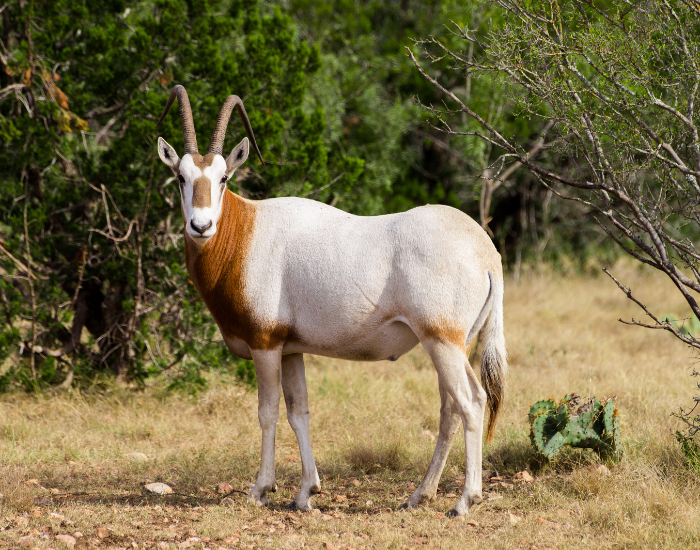
The scimitar horned oryx once roamed the entire Sahara. By 2000, it was extinct in the wild. Through a remarkable conservation push in Chad, small herds have been reintroduced and are now breeding.
Both males and females carry the long, backward-curving antelope horns that gave the species its name. Among other antelope species, the scimitar horned oryx is the textbook case for how serious conservation efforts can drag a species back from oblivion.
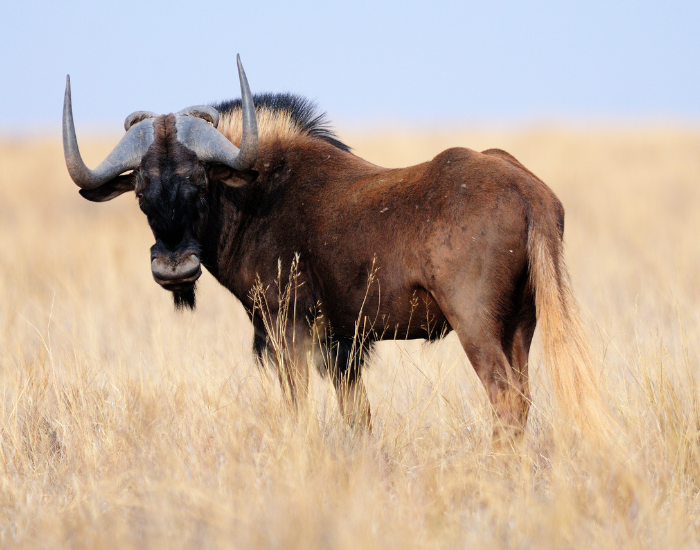
15. Blue Wildebeest
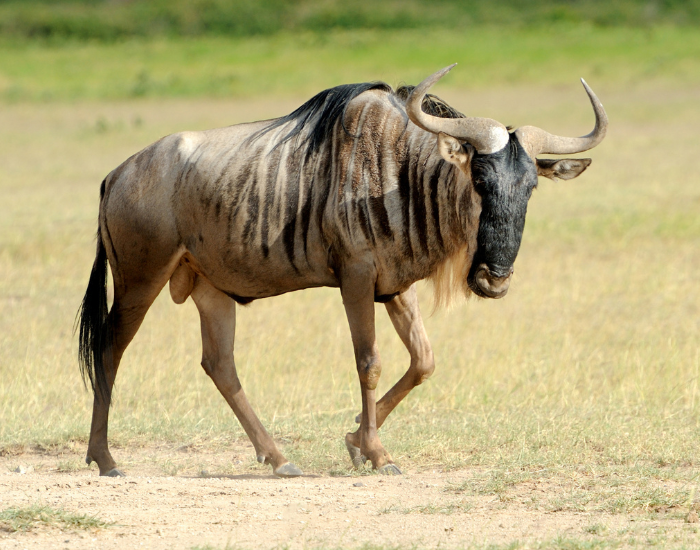
Yes, the blue wildebeest is an antelope. People forget that all the time. They form large herds during the Great Migration across east Africa, especially southern Kenya and Tanzania. A single herd can stretch for miles.
Wildebeest are a major prey species for lions, hyenas, and crocodiles. I’ve watched a river crossing turn into chaos, and watched a calf survive thirty minutes after losing its mother. That’s the brutal arithmetic of the African plains.
Bonus: Animals People Confuse With Antelope
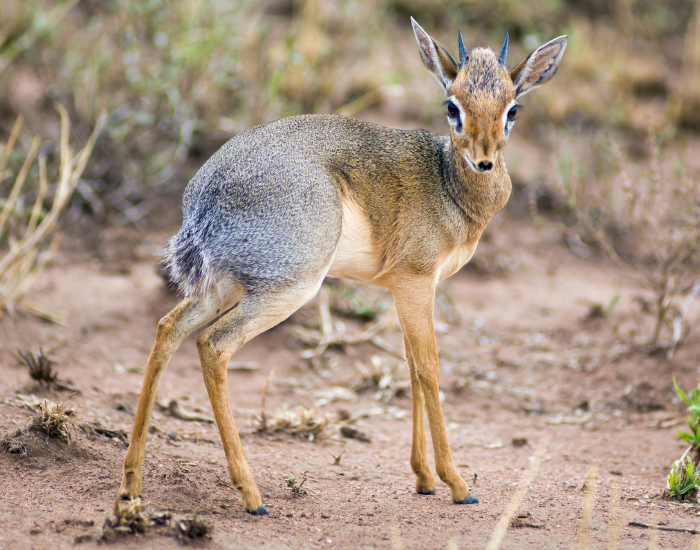
Even after listing 15, there are a few antelope type animals worth flagging. The dik-dik is a tiny East African antelope often mistaken for a fawn. The nilgai, or blue bull, is the largest antelope in Asia and looks more like a horse than a gazelle. Duiker species, found in African forests, are stockier and more rodent-like in their movements. None of these are deer, despite what tourists often shout from safari vehicles.
FAQs about Antelopes
Most antelope have slender legs, a deer-like body, and permanent horns. Unlike deer, they don’t shed their horns annually. Coat colors range from sandy tan to deep chocolate, with markings that often help camouflage them in tall grass or dense bush. Size varies wildly — from the tiny royal antelope at six pounds to the giant eland at nearly 2,000.
There are roughly 91 recognized species of antelope worldwide, though taxonomists still debate the exact count. Most species live in Africa, with about a dozen in Asia and the Middle East. Different antelope species fill niches from rainforest floors to high alpine deserts.
The giant eland and common eland (Taurotragus oryx) compete for the title of largest antelope. Common eland are heavier on average, while giant eland are slightly taller and have longer horns. Both qualify as the largest antelope species depending on which metric you use.
Antelope are bovids and grow permanent horns. Deer are cervids and grow antlers that shed every year. Unlike deer, antelope horns have a bony core wrapped in keratin. Their eating habits also differ — many antelope are pure grazers, while most deer are browsers.
The Big Picture
If you take one thing away from this guide, let it be this: the word antelope hides an entire world of biology, behavior, and beauty. From the tiny royal antelope hopping through west African bush to the saiga antelope dodging extinction on the Mongolian steppe, no two species tell the same story.
Go look. If you ever get the chance to stand on the African plains at dawn, or trek into the savannas where many species coexist, take it. Read up on individual species before you go. And if you have a favorite antelope I didn’t cover — or a story of your own from the field — drop it in the comments. I want to hear it.
References:
Bizhanova, N., Grachev, A., Rametov, N., Baidavletov, Y., Saparbayev, S., Bespalov, M., Bespalov, S., Kumayeva, I., Toishibekov, Y., Khamchukova, A., & Grachev, Y. (2025). Railway and Road Infrastructure in Saiga Antelope Range in Kazakhstan. Diversity, 17(6), 431. https://doi.org/10.3390/d17060431
IUCN SSC Antelope Specialist Group. (2017). Sable antelope (Hippotragus niger) species assessment. The IUCN Red List of Threatened Species. https://www.iucnredlist.org/species/10170/50188654
Kock, R. A., Orynbayev, M., Robinson, S., et al. (2018). Saigas on the brink: Multidisciplinary analysis of the factors influencing mass mortality events. Science Advances, 4(1), eaao2314. https://doi.org/10.1126/sciadv.aao2314
Mallon, D. P., & Kingswood, S. C. (Eds.). (2001). Antelopes: Global Survey and Regional Action Plans, Part 4: North Africa, the Middle East, and Asia. IUCN. https://portals.iucn.org/library/node/7993
Bro-Jørgensen, J. (2016). Evolution of the ungulate dewlap: Thermoregulation rather than sexual selection or predator deterrence? Frontiers in Zoology, 13, 33. https://doi.org/10.1186/s12983-016-0165-x