Since I first wrote this post, I’ve travelled through Indonesia four times, from Sumatra to Bali and Komodo. In Amed, Bali, I’ve snorkelled one of my favourite reefs twice. Turtles, triggerfish and bright coral sit just off the beach. Yet I also swam next to plastic bags and soda cans among all that marine wildlife.
The same thing happened in Pemuteran in 2025. We were planting coral with Metamorfosa Bali, surrounded by floating plastic. Honestly, it felt hopeless at times. We were doing something good while swimming through rubbish.
I saw that paradox again in Coron, in the Philippines. Later, in Marsa Alam, Egypt, we swam with dolphins near a polluted shore. Again, such beauty sat side by side with waste. I still have no words for it.
That’s why I rewrote this guide. Below are 12 ways ocean pollution affects marine life, updated with 2026 science. I also cover where marine plastic pollution comes from and what you can do.
🌊 How much do you know about ocean pollution?
Twelve questions on plastic, dead zones and the garbage patch. Read on, then test yourself at the end.
Jump to the quiz ↓What Is Ocean Pollution?
Simply put, ocean pollution is any harmful substance or energy that humans add to the marine environment. That includes plastic, chemicals, oil, sewage, fertiliser, noise and even light.
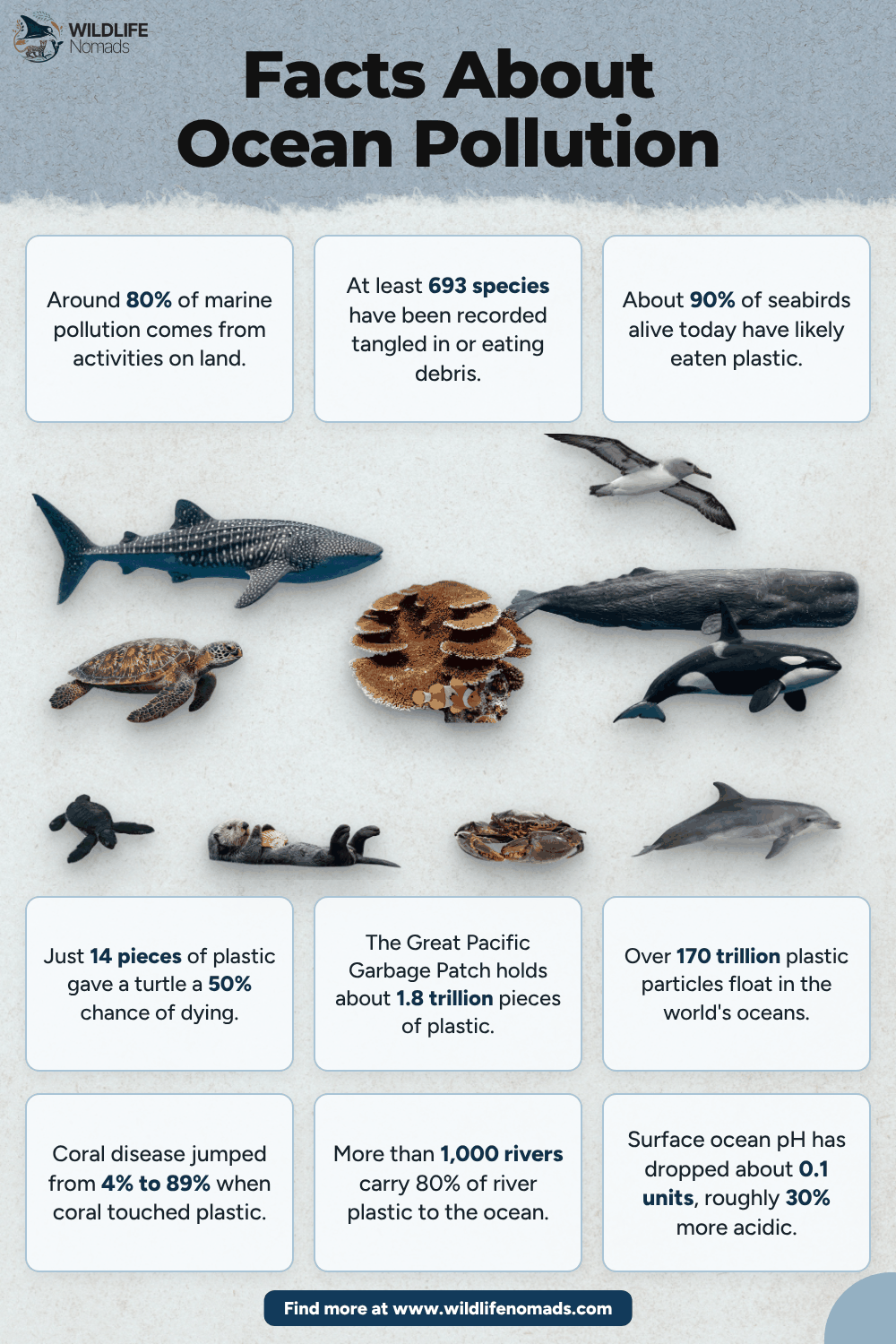
Most of it starts on land, where pollutants enter rivers first. A widely cited estimate says around 80% of marine pollution comes from human activities on land. Rain washes it into waterways, and rivers carry it to the coast.
Much of this is nonpoint source pollution. In other words, it has no single pipe. Instead, it drains off farms, roads, cities and construction sites. On top of that, extreme natural events like floods and cyclones flush even more debris into the sea.
However, not all of it starts on land. For example, lost fishing gear makes up a huge share of floating plastic in the open ocean.
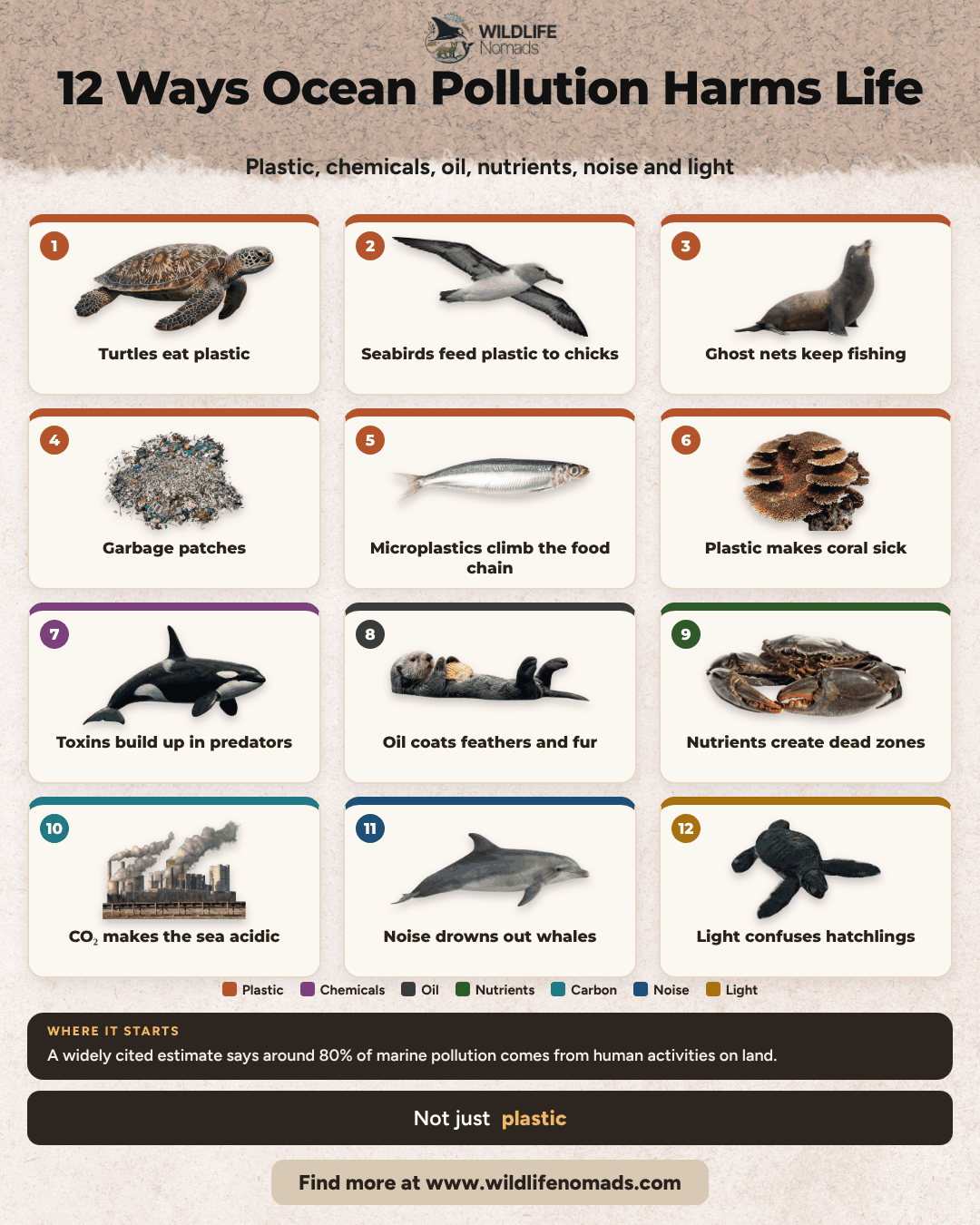
12 Ways Ocean Pollution Affects Marine Life
1. Sea Turtles Mistake Plastic for Food
Sea turtles often mistake floating plastic bags for jellyfish. Once swallowed, plastic can block or even tear the gut.
In a 2018 study, just 14 pieces of plastic gave a turtle a 50% chance of dying. Overall, at least 693 species of marine animals have been recorded tangled in or eating debris.
Whales suffer, too. For example, in 2018, a dead sperm whale washed up in Wakatobi, Indonesia. Its stomach held nearly 6 kg of plastic, including cups and flip-flops. Learn more about types of sea turtles and sperm whales.
2. Seabirds Feed Plastic to Their Chicks
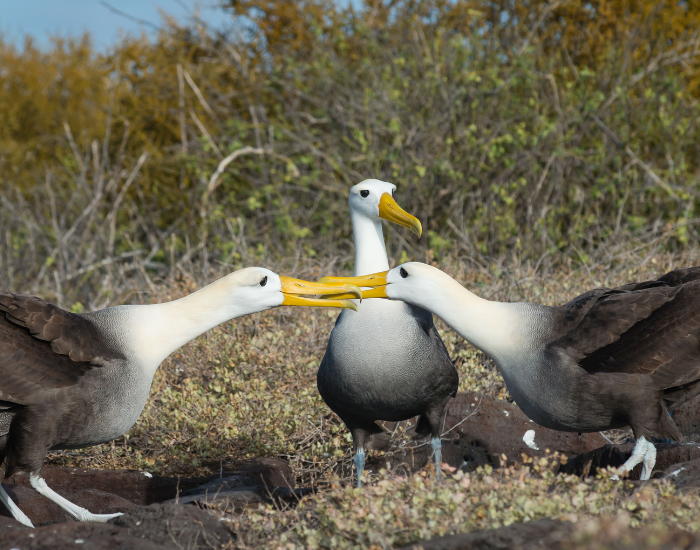
Many seabirds skim food from the surface, so they grab floating plastic too. Parents then feed it to their chicks.
A 2015 study estimated that 90% of seabirds alive today have eaten plastic. Meanwhile, albatrosses face some of the highest risk. Meet them in our albatross facts and seabirds you must know.
3. Ghost Nets Keep Fishing Forever
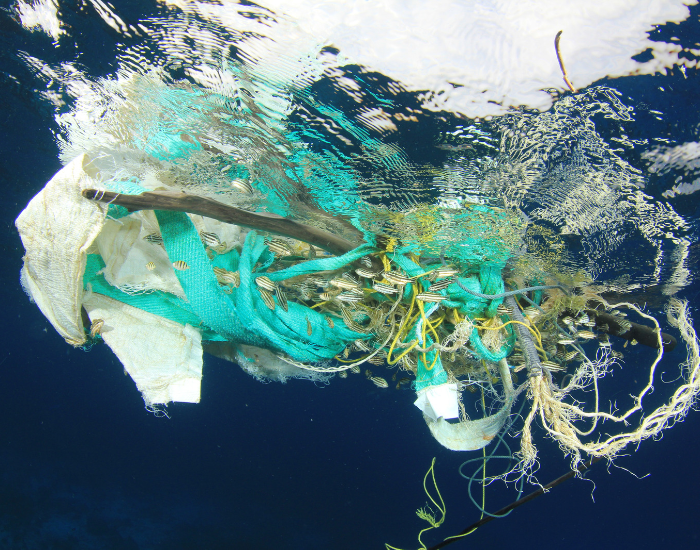
Discarded fishing nets keep catching animals long after fishers lose them. Sadly, turtles, seals and sea lions, dolphins and sharks drown in these ghost nets.
According to a 2022 study, nearly 2% of all fishing gear is lost at sea. That includes about 739,000 km of longline each year. As a result, this line could circle the Earth more than 18 times.
Marine mammals are especially vulnerable. For example, gillnets push the vaquita, the world’s rarest porpoise, towards extinction. Read can the vaquita be saved?
4. Garbage Patches Trap Plastic in the Open Ocean
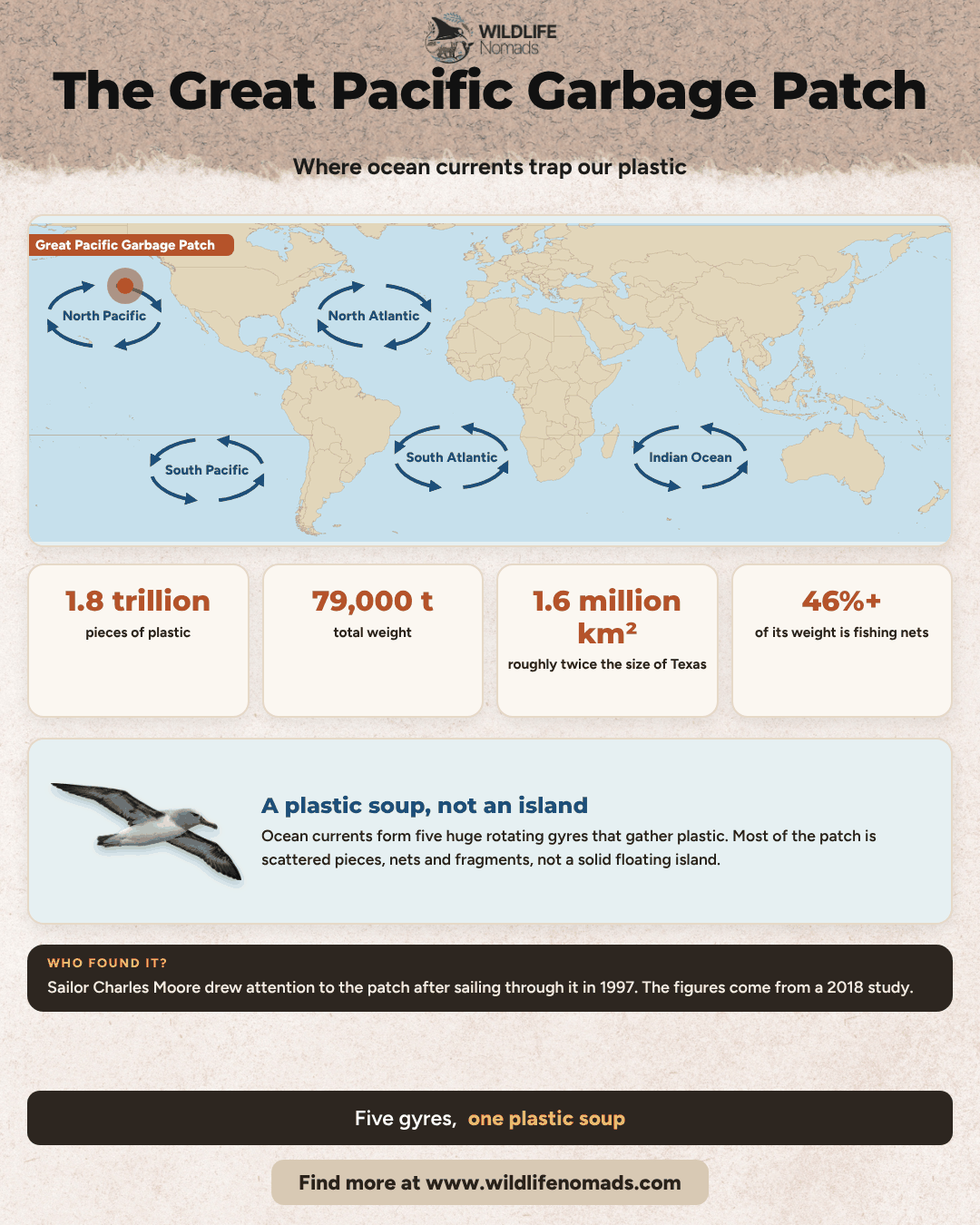
Ocean currents form five huge rotating systems called gyres. These gyres gather plastic debris into areas known as garbage patches.
Of these, the biggest is the Great Pacific Garbage Patch, in the North Pacific between California and Hawaiʻi. Sailor Charles Moore drew attention to it after sailing through in 1997.
In 2018, researchers estimated it holds about 1.8 trillion pieces of plastic. Together, they weigh around 79,000 tonnes, and every year brings more plastic. It covers 1.6 million km², roughly twice the size of Texas.
Still, it isn’t a floating island. Instead, it’s more like a plastic soup. Notably, at least 46% of its weight comes from fishing nets.
5. Microplastics Climb the Food Chain
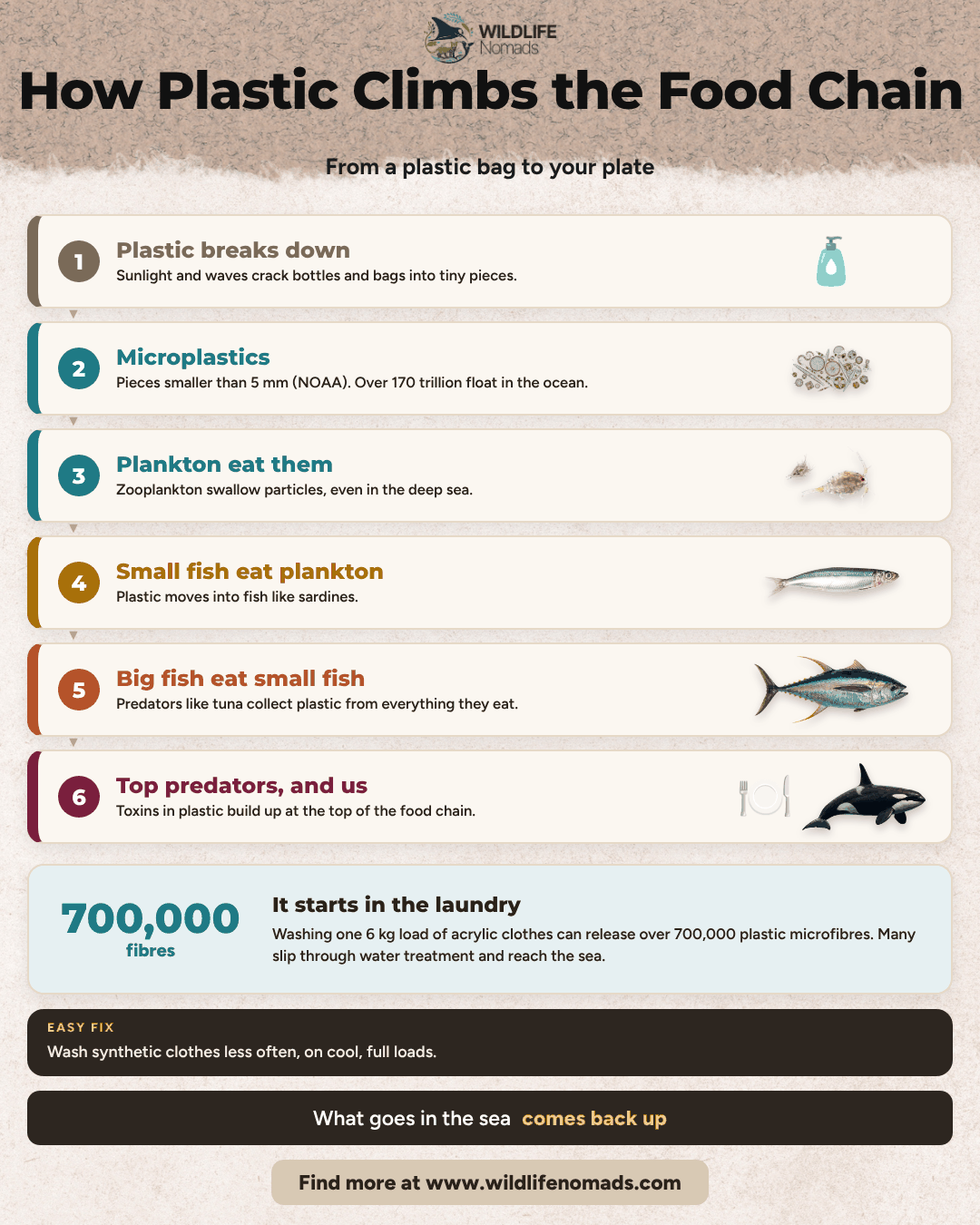
Over time, sunlight and waves break plastic into microplastics. The National Oceanic and Atmospheric Administration (NOAA) defines these as pieces smaller than 5 mm.
Then, in 2023, scientists estimated over 170 trillion plastic particles float in the world’s oceans. Plankton and other small organisms eat them, even in the deep sea. Then fish eat the plankton, and the plastic moves up the food chain.
Surprisingly, some microplastics start in our homes. Washing one 6 kg load of acrylic clothes can release over 700,000 plastic microfibers. Many slip through water treatment systems and reach rivers, lakes and the sea.
Even the freshwater Great Lakes now carry microplastics. See how energy and toxins flow in our Food Web tool.
6. Plastic Makes Coral Reefs Sick
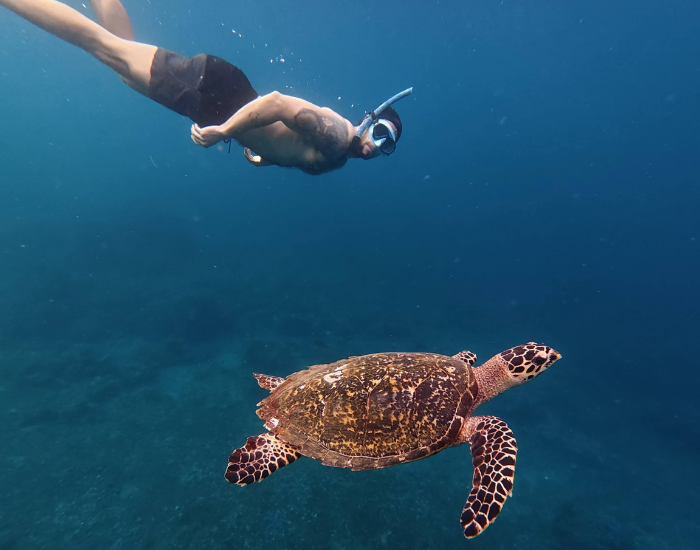
This one hits close to home for me. In 2018, a study surveyed 124,000 corals across 159 reefs in the Asia-Pacific.
Shockingly, it found that disease jumped from 4% to 89% when coral touched plastic. That’s because plastic scratches the coral and carries harmful microbes. The study estimated 11.1 billion plastic items were snagged on reefs across the region.
I think about that every time I remember the plastic bags at Amed. Structurally complex corals, like branching ones, were eight times more likely to be affected by plastic. Learn about types of corals and explore a reef in our Coral Reef Explorer.
7. Toxic Chemicals Build Up in Top Predators
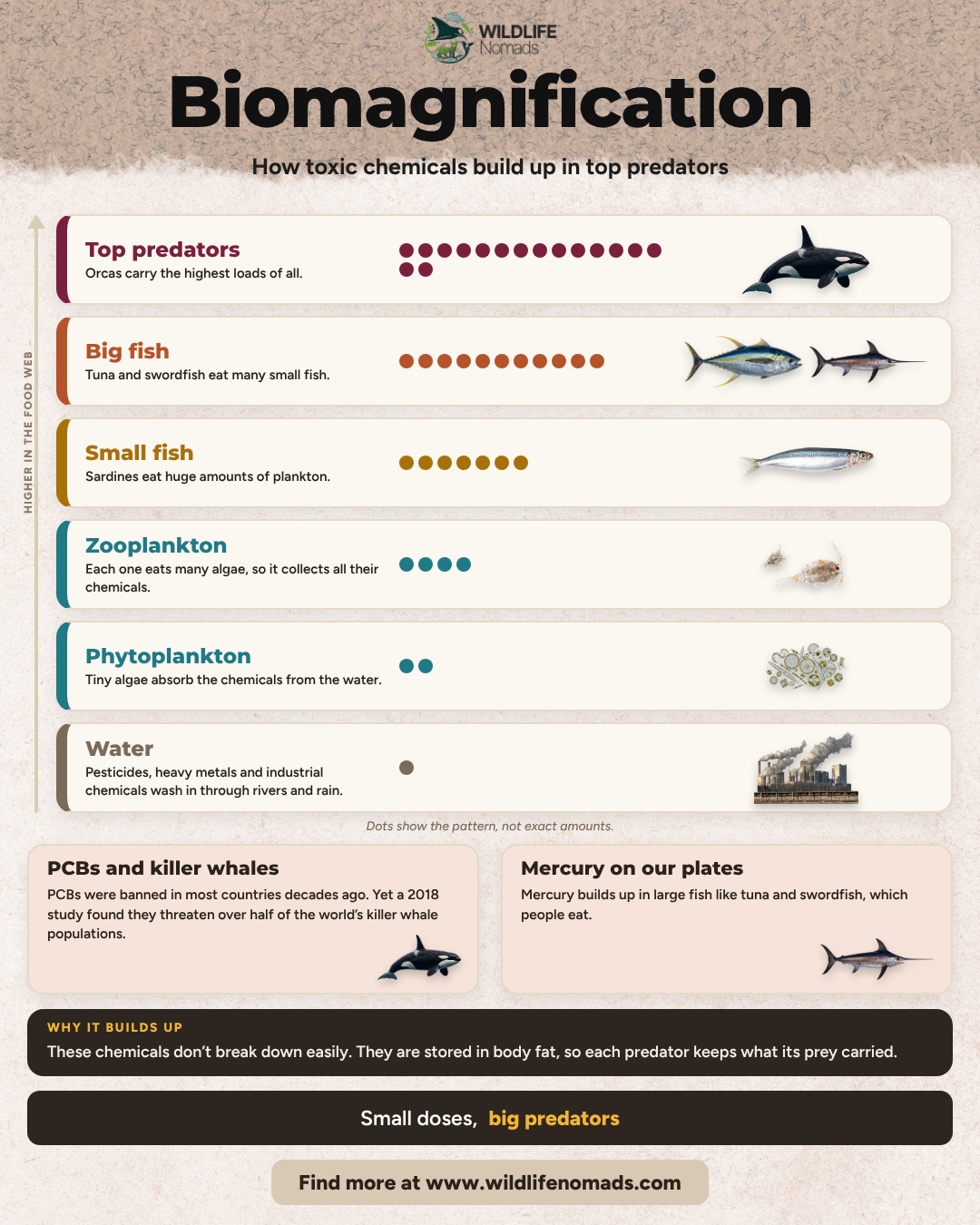
Pesticides, heavy metals and industrial toxic chemicals reach the sea through rivers and rain. Unfortunately, these dangerous pollutants don’t break down easily.
Instead, they build up in body fat and pass up the food web. Scientists call this biomagnification. As a result, top predators carry the highest loads.
For instance, PCBs were banned in most countries decades ago. Yet a 2018 study found they threaten over half of the world’s killer whale populations. Read our orca facts and are killer whales going extinct?
This chemical contamination also affects human health. Mercury builds up in large fish like tuna and swordfish, which people eat.
8. Oil Spills Coat Feathers and Fur
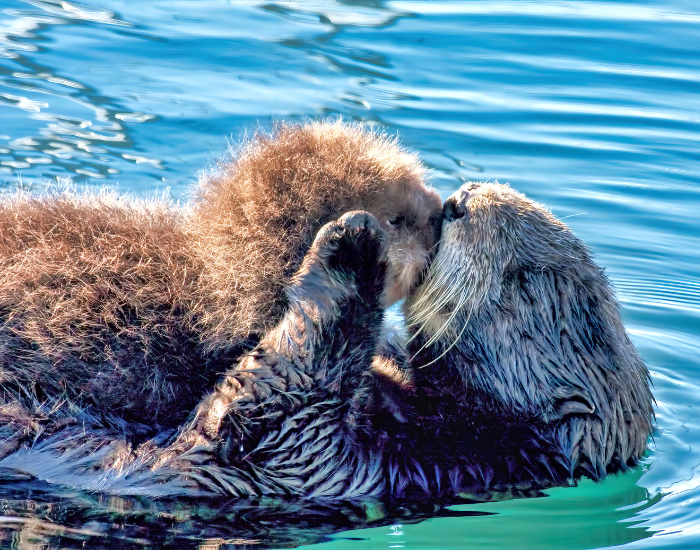
When crude oil spills, it quickly spreads across the surface. As a result, birds lose their waterproofing and can’t stay warm or fly. Sea otters lose the insulation in their fur.
In 1989, the Exxon Valdez spill in Alaska killed an estimated 250,000 seabirds and 2,800 sea otters. Later, in 2010, Deepwater Horizon released about 134 million gallons into the Gulf of Mexico. Learn about brown pelicans, which nest along that coast.
Surprisingly, big spills are only part of the story. Oil also leaks from cars, ships and machinery every day, and runoff carries it to the sea.
9. Excess Nutrients Create Dead Zones
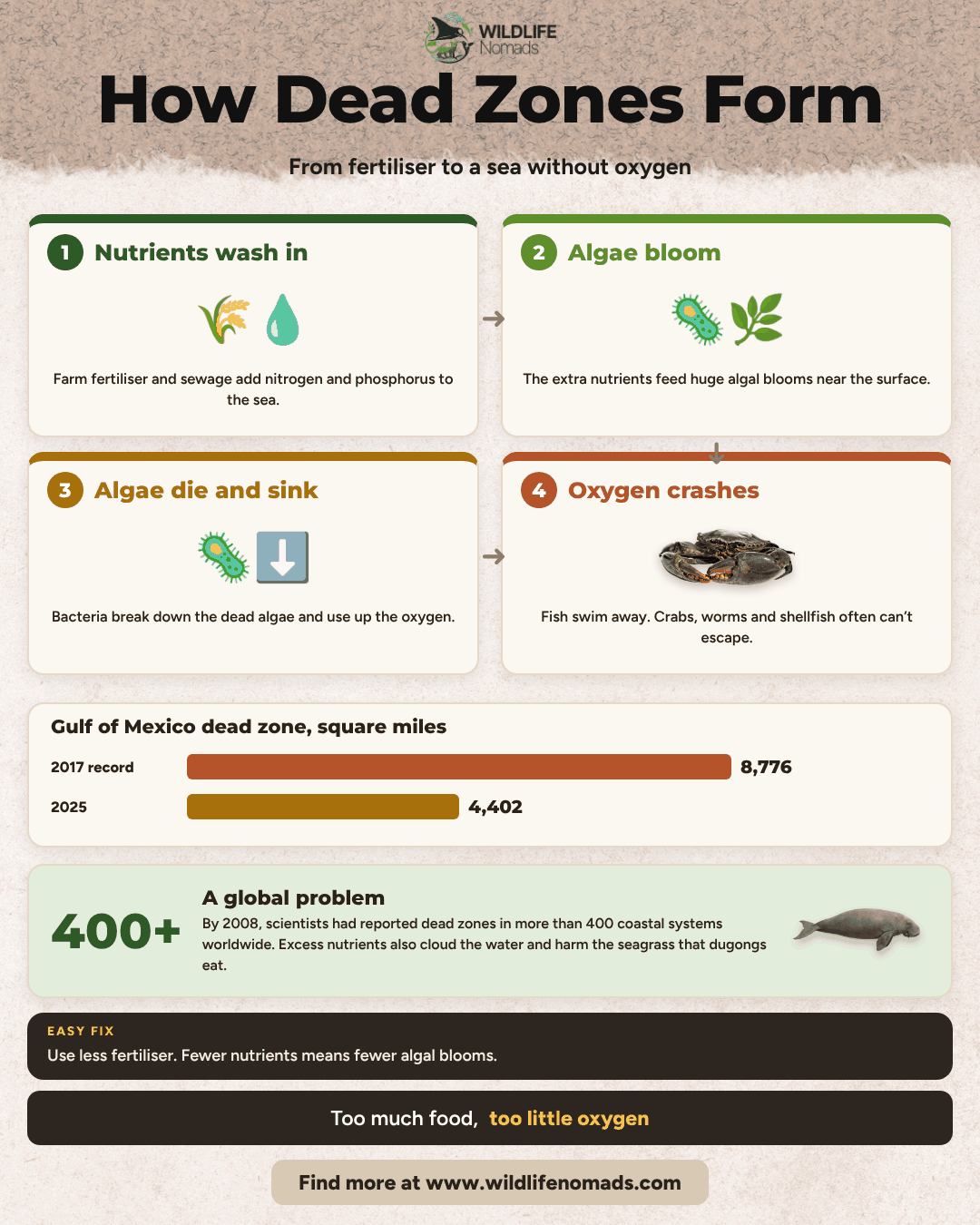
Meanwhile, farm fertiliser and sewage add excess nitrogen and phosphorus to the sea. This nutrient pollution feeds huge algal blooms.
Later, when the algae die, bacteria break them down and use up the oxygen. Fish swim away, but crabs, worms and shellfish often can’t escape. Scientists call these areas dead zones.
By 2008, dead zones had been reported in more than 400 coastal systems worldwide. In 2017, the Gulf of Mexico dead zone hit a record 8,776 square miles. In 2025, it measured 4,402 square miles.
Excess nutrients also harm seagrass, which needs clear water. In turn, dugongs and manatees lose their food. Read about the animals of seagrass.
10. Fossil Fuels Make the Sea More Acidic
Burning fossil fuels causes air pollution, and the ocean absorbs about a quarter of our CO₂. That carbon dioxide makes seawater more acidic.
Since the industrial era, surface pH has dropped by about 0.1 units. That sounds small, but it means roughly 30% more acidity. In fact, the current rate may be unmatched in the last 300 million years.
In September 2025, scientists declared that ocean acidification had crossed its planetary boundary. Corals, shellfish and tiny sea snails called pteropods struggle to build shells. See how climate change threatens animals.
11. Noise Pollution Drowns Out Whales and Dolphins
Ships, sonar, seismic surveys and construction fill the sea with sound. This noise pollution is invisible, yet it travels far underwater.
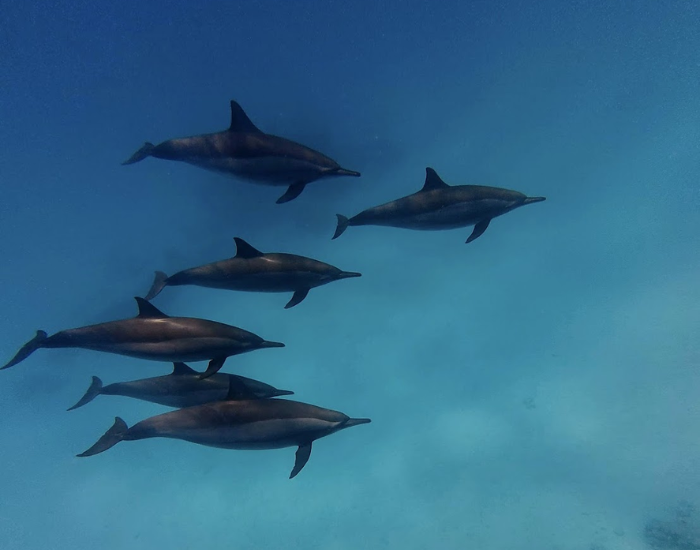
Importantly, whales and dolphins rely on sound to talk, hunt and navigate. When noise masks their calls, they can lose contact and change their behaviour. Discover the types of dolphins.
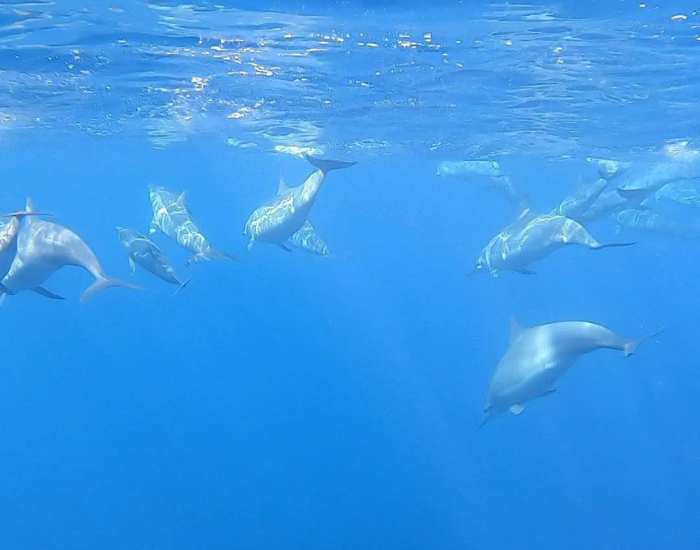
In Marsa Alam, I swam with a pod of dolphins. Yet that same coast also showed me pollution beside incredible beauty.
12. Light Pollution Confuses Turtle Hatchlings
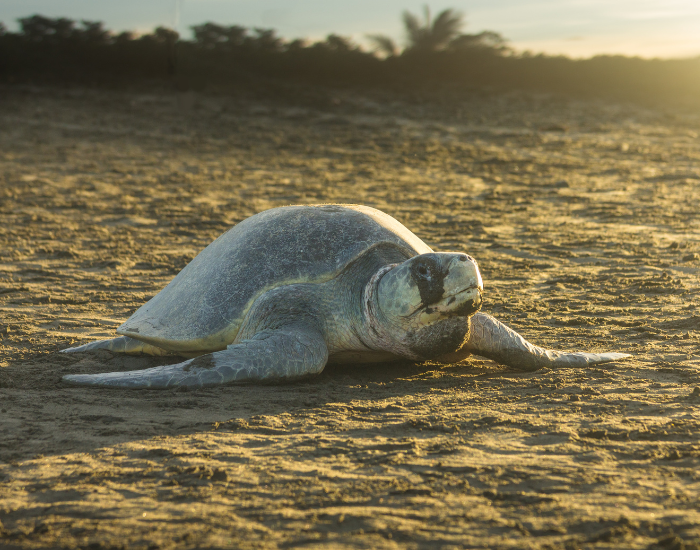
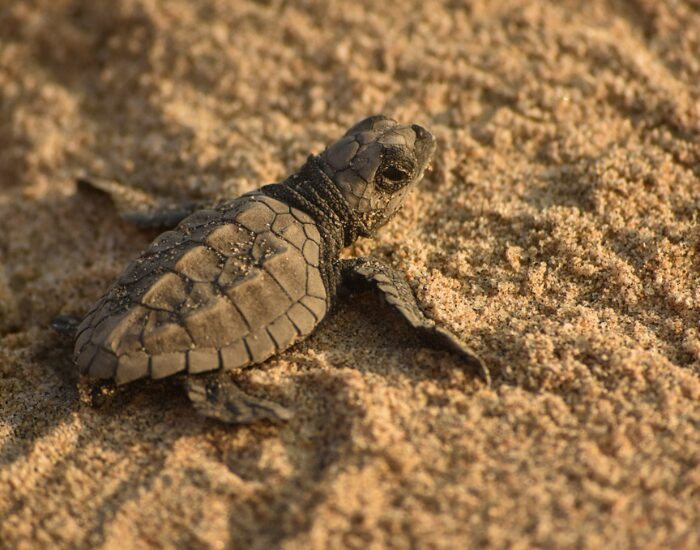
Turtle hatchlings find the sea by heading towards the brightest horizon. Normally, that’s moonlight reflecting off the water.
However, bright beachfront lights pull them inland instead. There, they face cars, predators and exhaustion. Of all the other forms of pollution, light is perhaps the easiest to fix.
In Puerto Escondido, Mexico, I helped release olive ridley hatchlings. Those tiny turtles need every advantage we can give them.
Where Does Ocean Plastic Come From?
Of all the other pollutants, plastic is the most visible marine debris. Scientists estimate 19 to 23 million tonnes of plastic waste entered rivers, lakes and seas in 2016 alone.
For years, you may have read that 90% of ocean plastic comes from just 10 rivers. However, a 2021 study replaced that idea. It found more than 1,000 rivers carry 80% of river plastic to the ocean. Many are small urban rivers.
In practice, every plastic bottle, wrapper and shopping bag has a path to the sea. That’s why coastal pollution is worst where waste systems can’t keep up, as I saw in Bali.
How You Can Help Reduce Ocean Pollution
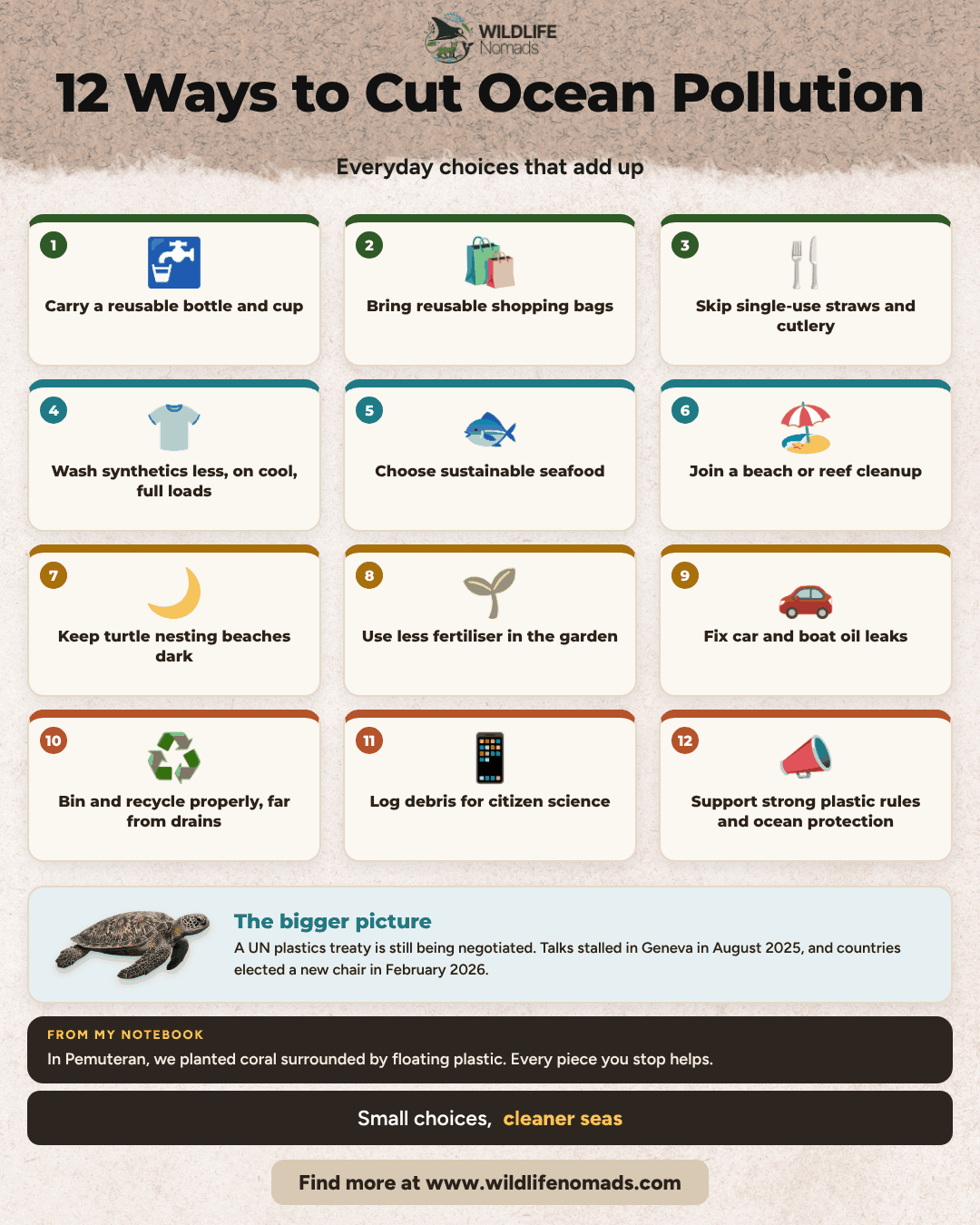
The problem is huge, yet everyday choices still add up. Here’s where I’d start:
- Cut single-use plastics: carry a bottle, a cup and reusable shopping bags.
- Wash smarter: wash synthetic clothes less often, on cool, full loads.
- Choose sustainable seafood: it helps reduce ghost gear and bycatch.
- Join a cleanup: beach and reef cleanups also collect useful data.
- Keep beaches dark: switch off or shield lights near turtle nesting beaches.
- Use less fertiliser: fewer nutrients means fewer algal blooms.
- Speak up: support strong plastic rules and ocean protection.
Protecting habitat helps marine ecosystems, too. Marine protected areas give reefs a break from fishing, although pollution still crosses their borders.
At a global level, a UN plastics treaty is still being negotiated. Talks stalled in Geneva in August 2025, and countries elected a new chair in February 2026.
🌊 Keep learning about ocean pollution
Take the infographics from this post with you, or teach them in class.
FAQs About Ocean Pollution
Ocean pollution harms marine life in many ways. Animals swallow plastic or get tangled in it, and toxic chemicals build up in their bodies. Nutrient runoff creates low-oxygen dead zones, while noise and light disrupt behaviour.
Most ocean pollution starts on land. Rain and rivers carry plastic, fertiliser, sewage and chemicals from farms, cities and roads into the sea. Lost fishing gear is another major source in the open ocean.
The idea that 90% of ocean plastic comes from 10 rivers is outdated. A 2021 study found that more than 1,000 rivers carry 80% of river plastic into the ocean. Many of them are small rivers in busy cities.
The five main types are plastic pollution, chemical contamination, oil pollution, nutrient pollution and noise pollution. Light pollution and acidification from carbon dioxide also harm marine life.
A 2018 study estimated it covers about 1.6 million square kilometres, roughly twice the size of Texas. It holds around 1.8 trillion pieces of plastic weighing about 79,000 tonnes. It is a plastic soup, not a solid island.
Climate change is often called the biggest threat to the ocean. It warms the water, bleaches coral and makes the sea more acidic. Pollution and overfishing add to that pressure.
Swim Among the Fish, Not the Plastic
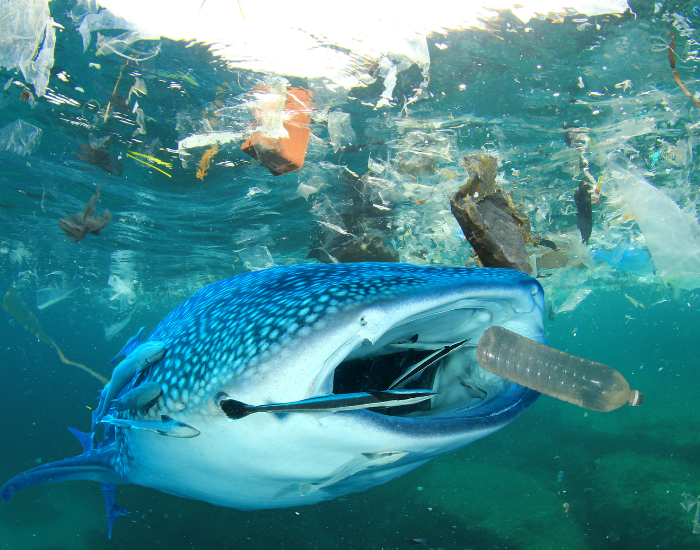
Ocean pollution takes a heavy toll on our blue planet, from plankton to whale sharks. Yet almost all of it starts with us, which means we can stop it.
Next time you reach for a plastic bag, picture a turtle at Amed. Then pick the reusable one instead. Every marine species on this list depends on choices like that. Which of these 12 surprised you most? Tell me in the comments.
Explore Wildlife Tours
References:
Desforges, J.-P., Hall, A., McConnell, B., Rosing-Asvid, A., Barber, J. L., Brownlow, A., De Guise, S., Eulaers, I., Jepson, P. D., Letcher, R. J., Levin, M., Ross, P. S., Samarra, F., Víkingson, G., Sonne, C., & Dietz, R. (2018). Predicting global killer whale population collapse from PCB pollution. Science, 361(6409), 1373–1376. https://doi.org/10.1126/science.aat1953
Diaz, R. J., & Rosenberg, R. (2008). Spreading dead zones and consequences for marine ecosystems. Science, 321(5891), 926–929. https://doi.org/10.1126/science.1156401
Eriksen, M., Cowger, W., Erdle, L. M., Coffin, S., Villarrubia-Gómez, P., Moore, C. J., Carpenter, E. J., Day, R. H., Thiel, M., & Wilcox, C. (2023). A growing plastic smog, now estimated to be over 170 trillion plastic particles afloat in the world’s oceans—Urgent solutions required. PLOS ONE, 18(3), e0281596. https://doi.org/10.1371/journal.pone.0281596
Lamb, J. B., Willis, B. L., Fiorenza, E. A., Couch, C. S., Howard, R., Rader, D. N., True, J. D., Kelly, L. A., Ahmad, A., Jompa, J., & Harvell, C. D. (2018). Plastic waste associated with disease on coral reefs. Science, 359(6374), 460–462. https://doi.org/10.1126/science.aar3320
Lebreton, L., Slat, B., Ferrari, F., Sainte-Rose, B., Aitken, J., Marthouse, R., Hajbane, S., Cunsolo, S., Schwarz, A., Levivier, A., Noble, K., Debeljak, P., Maral, H., Schoeneich-Argent, R., Brambini, R., & Reisser, J. (2018). Evidence that the Great Pacific Garbage Patch is rapidly accumulating plastic. Scientific Reports, 8(1), 4666. https://doi.org/10.1038/s41598-018-22939-w
Meijer, L. J. J., van Emmerik, T., van der Ent, R., Schmidt, C., & Lebreton, L. (2021). More than 1000 rivers account for 80% of global riverine plastic emissions into the ocean. Science Advances, 7(18), eaaz5803. https://doi.org/10.1126/sciadv.aaz5803
Richardson, K., Hardesty, B. D., Vince, J., & Wilcox, C. (2022). Global estimates of fishing gear lost to the ocean each year. Science Advances, 8(41), eabq0135. https://doi.org/10.1126/sciadv.abq0135
Wilcox, C., Puckridge, M., Schuyler, Q. A., Townsend, K., & Hardesty, B. D. (2018). A quantitative analysis linking sea turtle mortality and plastic debris ingestion. Scientific Reports, 8(1), 12536. https://doi.org/10.1038/s41598-018-30038-z
Wilcox, C., Van Sebille, E., & Hardesty, B. D. (2015). Threat of plastic pollution to seabirds is global, pervasive, and increasing. Proceedings of the National Academy of Sciences, 112(38), 11899–11904. https://doi.org/10.1073/pnas.1502108112