The first time I heard a nightjar, I thought the forest itself was humming. I stood ankle-deep in leaf litter in La Huasteca, a lush rainforest region in eastern Mexico, when a strange mechanical churring filled the canopy at dusk. Minutes later, a Buff-collared Nightjar ghosted past my headlamp on silent wings, brown, bark-patterned, and utterly alien. That encounter rewired my understanding of nocturnal birds.
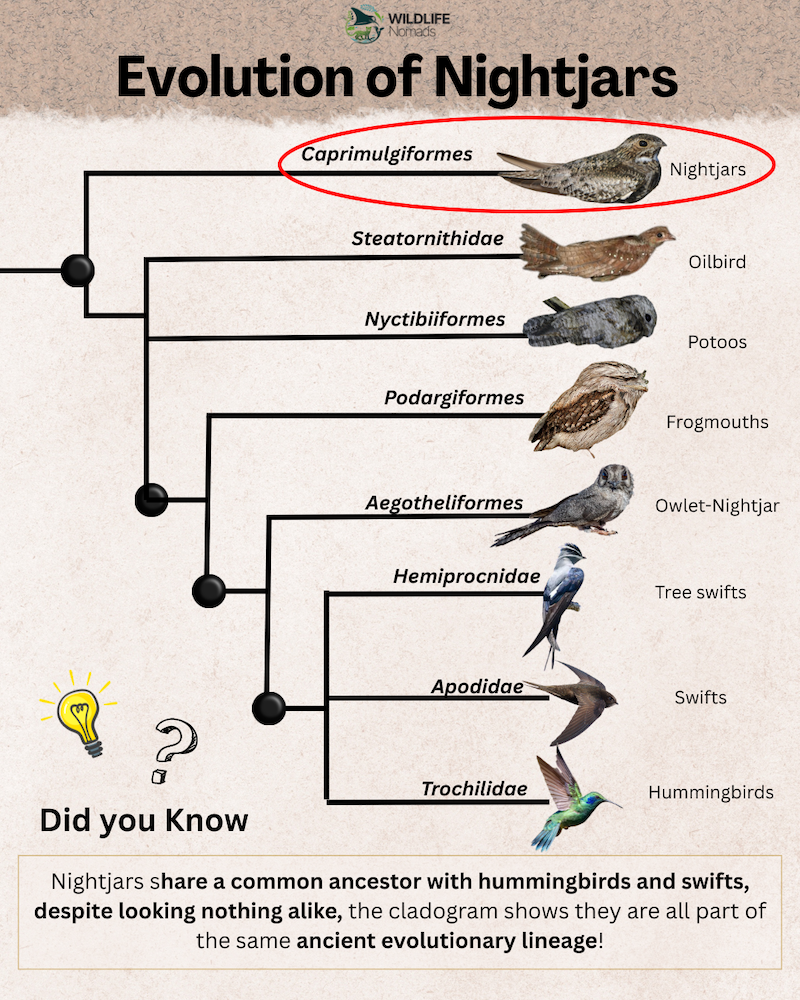
Nightjars belong to the Caprimulgiformes order, a global clan of cryptic, insect-hunting birds that most people never see. I later realized these remarkable birds also thrive across Europe, Australia, and Africa. Having written about wrens, magpies, and finches among other bird species, nightjars demanded their own deep dive. Here are 17 species that reveal just how diverse and extraordinary this family really is.
What Is a Nightjar Bird?
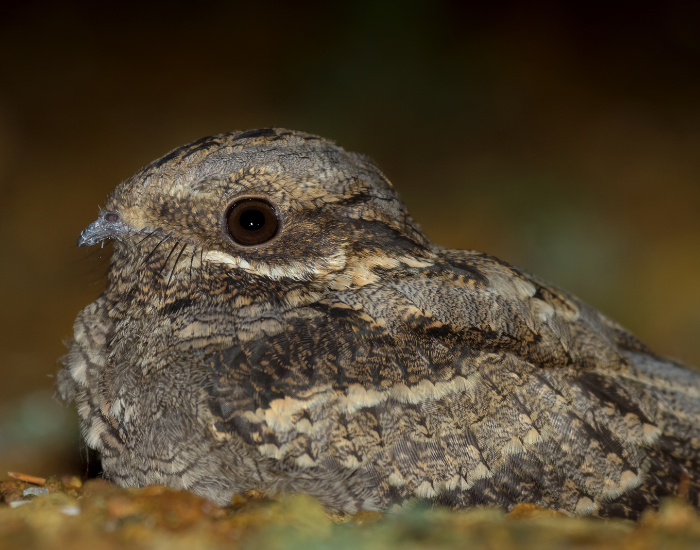
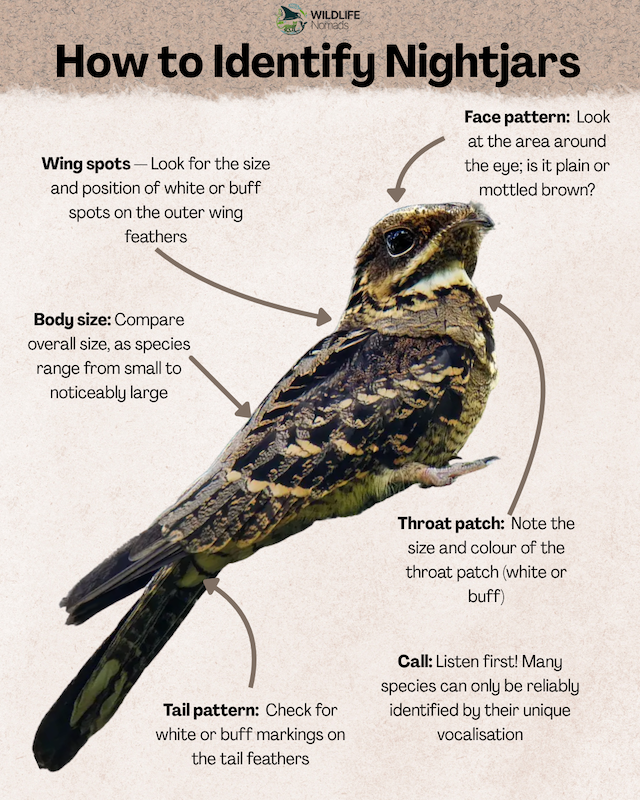
Nightjars are nocturnal and crepuscular birds in the family Caprimulgidae. Around 100 species exist worldwide, divided into two main subfamilies. They share a distinctive body plan: long wings, pointed and built for agile flight, very short bills hiding enormous mouths, large dark eyes adapted for hunting at dusk and dawn, short legs, and small feet. Their soft plumage, mottled in brown, grey, and bark-like patterns, provides world-class camouflage against bare ground and leaf litter.
The common name “nightjar” refers to their jarring, churring night song. Historically, people called them “goatsuckers” because they often flew near livestock at dusk. The myth claimed these birds drank goats’ milk. In reality, nightjars simply hunted the moths, beetles, and flying insects swarming around the animals. The old English name “dor hawk” likewise reflected their habit of hunting dor beetles at twilight.
Taxonomy has reshuffled this group repeatedly. Molecular evidence now splits the traditional genus Caprimulgus into several distinct genera. Despite ongoing reclassification, the core identity remains: nightjars are aerial insectivores with wide mouths, silent flight, and camouflage so effective they virtually disappear against the woodland floor.
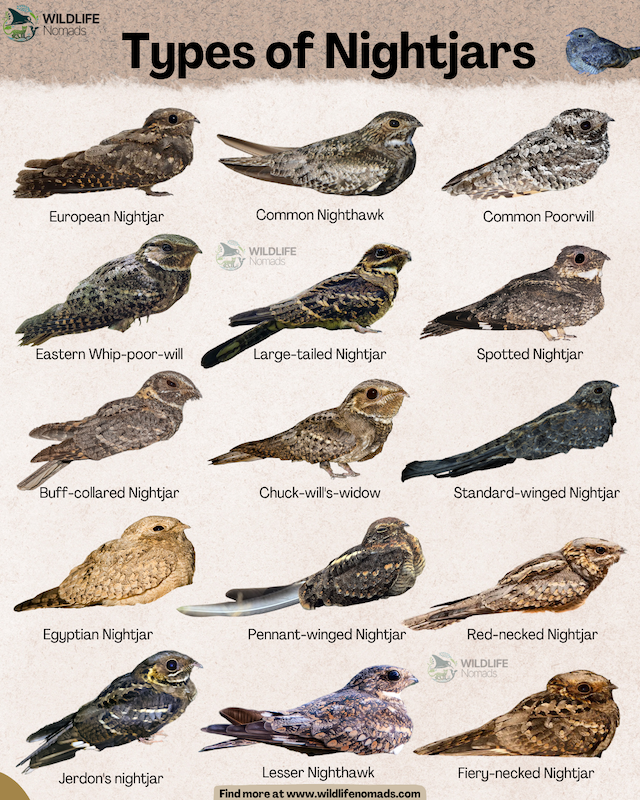
1. European Nightjar (Caprimulgus europaeus)
The European nightjar is a summer visitor to heathland, woodland clearings, and young conifer plantations across Europe, including southern England, where breeding populations have partially recovered after a 51% decline between 1972 and 1992. Its conservation status is Least Concern globally, though UK numbers remain fragile. Males produce a continuous churring song containing up to 1,900 notes per minute.
Females lay two eggs directly on bare ground, often raising two broods per season. These birds are long-distance migrants, wintering in sub-Saharan Africa. GPS tracking studies show remarkable year-to-year consistency in their migration routes. Nightjar populations in the UK remain a conservation concern, largely due to habitat loss and declining insect prey from pesticide use.
2. Common Nighthawk (Chordeiles minor)
Despite the name, the common nighthawk is a true nightjar, not a hawk, and not strictly nocturnal. These birds hunt flying insects at dawn and dusk over cities, grasslands, and forests across North America. Males sport a white throat patch and bold wing bars. Females lack the white tail band.
Urban nighthawks nest on flat gravel rooftops, a remarkable adaptation. Their booming courtship dive, produced by air rushing through primary feathers, echoes across summer evenings. Despite a Least Concern conservation status, population declines in many cities have raised alarm among conservationists monitoring nightjar species across the world.

3. Common Poorwill (Phalaenoptilus nuttallii)
The common poorwill holds a record no other bird can claim: it hibernates. Dr. Edmund Jaeger first documented this in California’s Chuckwalla Mountains in 1946, finding a torpid poorwill tucked against a rock. During hibernation, body temperature drops near ambient levels and metabolism falls below 5% of normal.
These small desert nightjars occupy arid scrublands from Canada to Mexico, with a conservation status of Least Concern across the world. Moonlight, not cloud cover, predicts their vocal activity. On bright nights, poorwills call more frequently and hunt more actively.
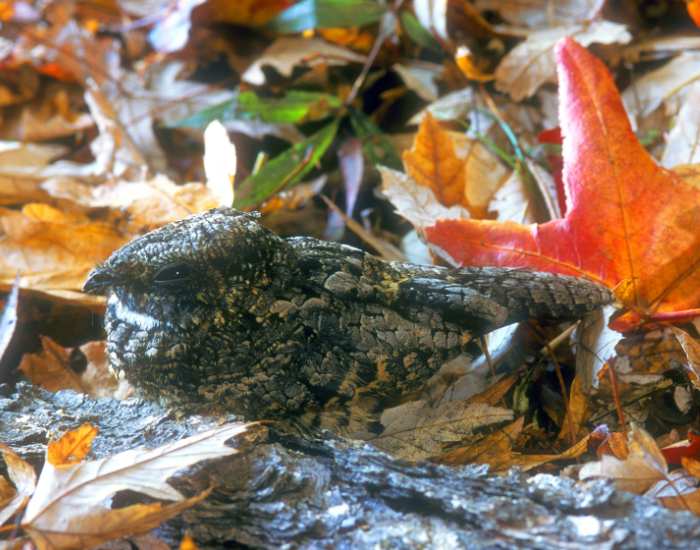
4. Eastern Whip-poor-will (Antrostomus vociferus)
Named for its obsessive three-note call, the Eastern whip-poor-will repeats its name hundreds of times per night during the breeding season. These forest-dwelling nightjars prefer open deciduous woodland with minimal undergrowth.
Recent research using LiDAR technology has mapped the precise forest structures these birds require, findings that now inform active habitat management. Females nest directly on forest floor leaf litter. Its conservation status is Least Concern, but declining numbers across the world suggest a species in quiet trouble.
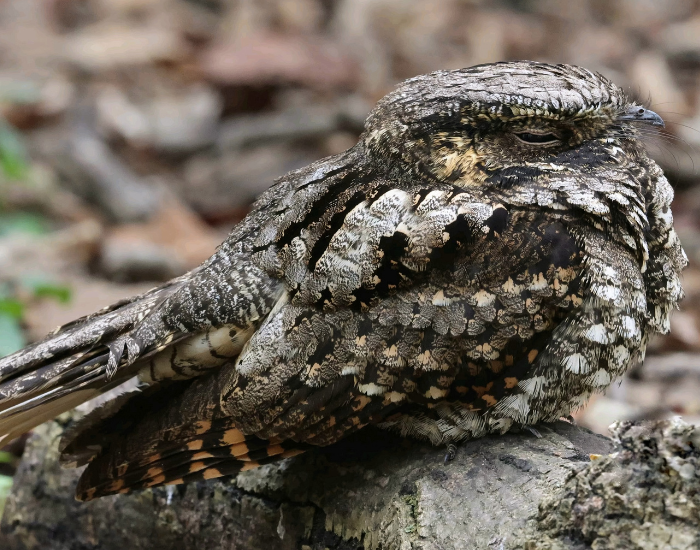
5. Large-tailed Nightjar (Caprimulgus macrurus)
I now live in Australia, where the large-tailed nightjar inhabits tropical forests, mangroves, and woodland edges across the northern regions. This species spans an extraordinary range, from the Himalayan foothills through Southeast Asia to Papua New Guinea. Six recognized subspecies reflect this geographic spread.
In Malaysia, locals call it “burung tukang kubur,” the graveyard bird, because it frequents quiet, dark spaces. These nightjars play an important role in agriculture by consuming pest insects attracted to crops and livestock. Their conservation status remains Least Concern across the world.
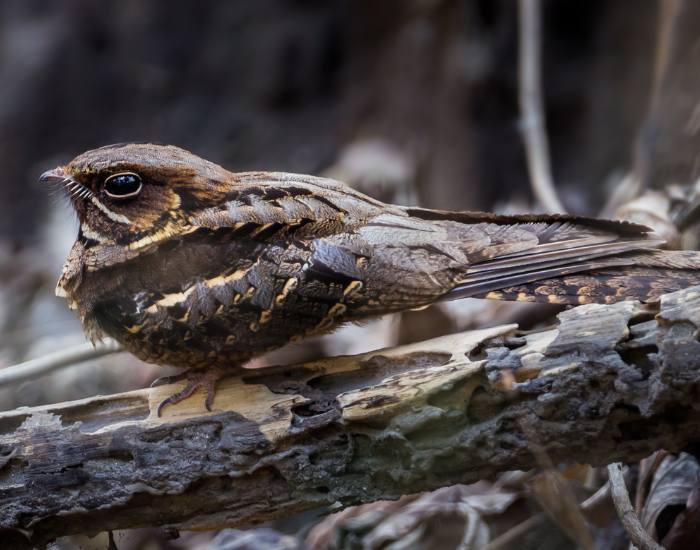
6. Spotted Nightjar (Eurostopodus argus)
Australia’s most colourful nightjar, the spotted nightjar lives across mainland open forests, spinifex grasslands, and savanna woodland. Large white spots on the outer primary feathers distinguish it from the large-tailed nightjar. Spotted nightjars roost on the ground by day, relying on intricate brown and buff plumage to vanish among rocks and leaf litter. They drink on the wing, skimming water surfaces during night flights, a behaviour that demands precise aerial control.
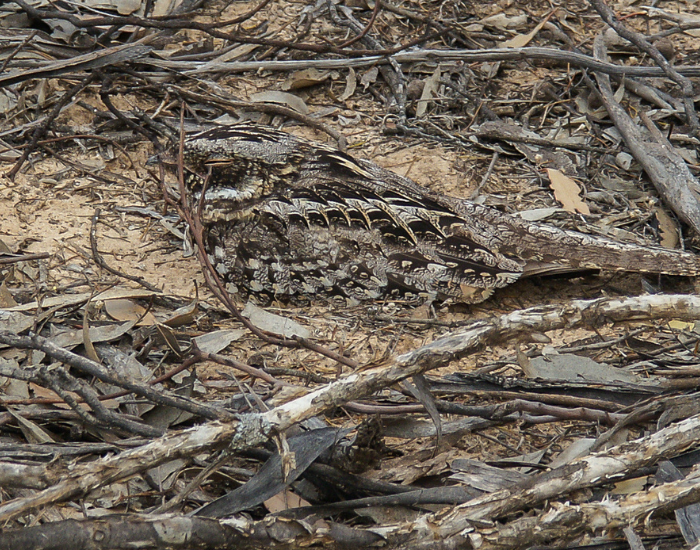
7. Buff-collared Nightjar (Antrostomus ridgwayi)
This is the species I encountered in La Huasteca. The Buff-collared nightjar ranges from Guatemala and Honduras through Mexico into southeastern Arizona. A bright cinnamon-buff collar across the hindneck identifies it immediately. Males deliver a rising, accelerating series of “cuk” notes that ends in a sudden drop.
Breeding populations reach elevations of 3,000 metres in Mexico, a testament to the species’ habitat flexibility. With an estimated population of two million, this nightjar is widespread yet surprisingly understudied, making it a good example of how much remains unknown about tropical nightjar species.
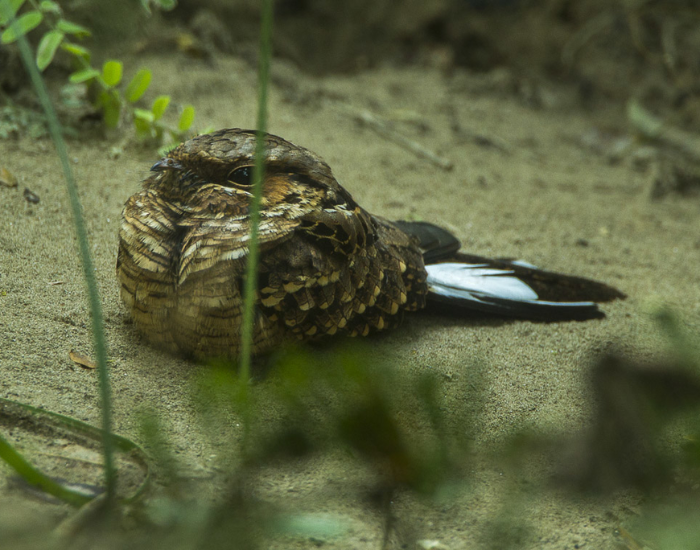
8. Chuck-will’s-widow (Antrostomus carolinensis)
North America’s largest nightjar, the Chuck-will’s-widow, inhabits pine woods and swamps across the southeastern United States. Males are brown with reddish-brown feathers lined in black. On moonlit nights, they perch on quiet dirt roads, scanning for moths, beetles, and winged ants. They winter in the West Indies and Central America. Like many nightjars, they are far easier to hear than to see.
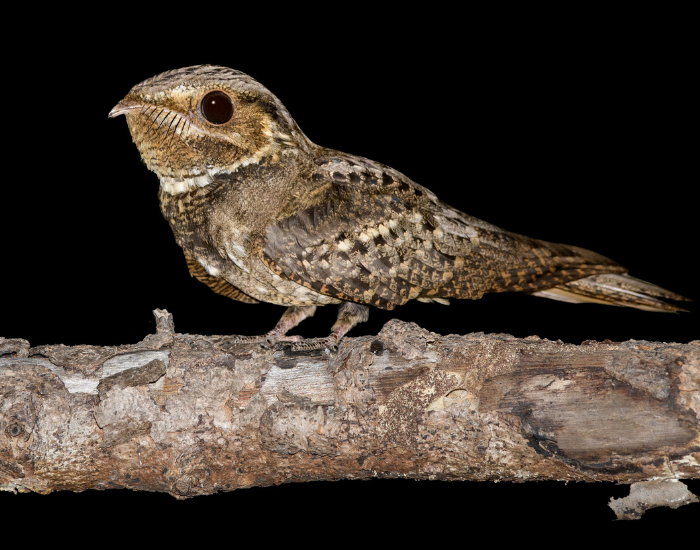
9. Standard-winged Nightjar (Caprimulgus longipennis)
Sexual selection reaches its extreme in this African species. During the breeding season, males grow elongated secondary flight feathers reaching 53.5 centimetres, over twice the bird’s body length. These “standards” trail behind in normal flight but rise like flags during courtship displays. Found from Senegal to Ethiopia in grasslands and plateau woodland, these birds gather on patches of bare ground for communal display. Their conservation status is Least Concern.
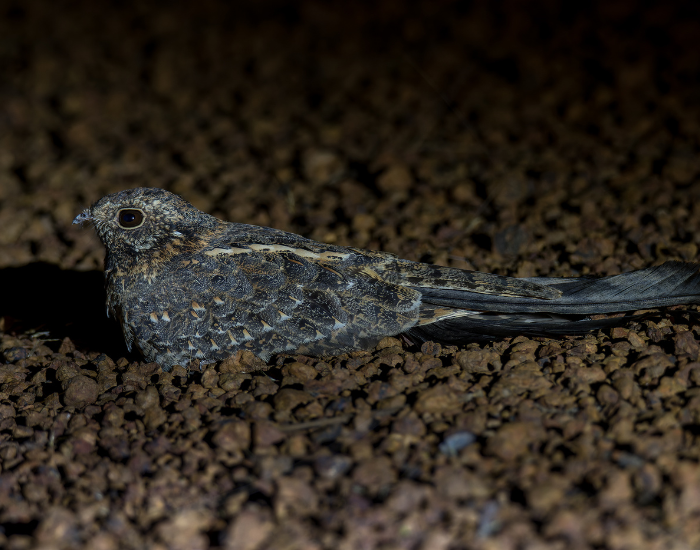
10. Pennant-winged Nightjar (Semeiophorus vexillarius)
Close relative of the standard-winged, the pennant-winged nightjar also grows extraordinary breeding plumage. Males sprout elongated primary feathers reaching 50–70 centimetres, boldly patterned in black and white.
These pennants break off after the breeding season, suggesting a steep metabolic cost. Found across Africa from Nigeria to northern South Africa, males maintain bigamous relationships, pairing with multiple females. They migrate along the Kenyan Rift Valley and Lake Victoria regions during the non-breeding season.
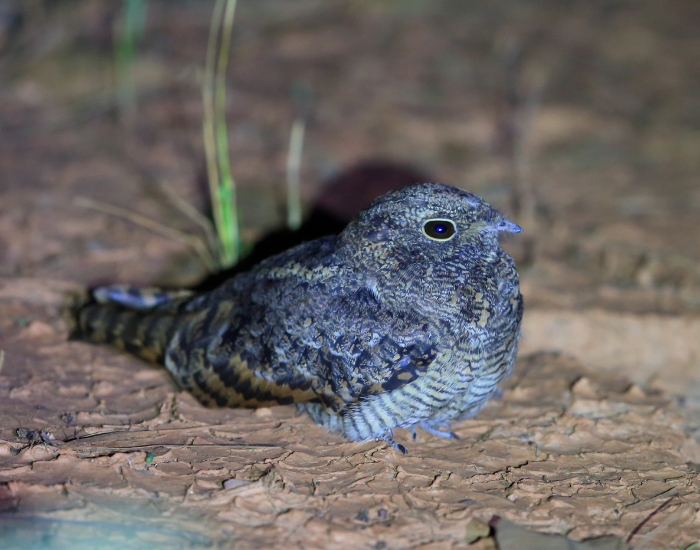
11. Egyptian Nightjar (Caprimulgus aegyptius)
Adapted to life in extreme desert, the Egyptian nightjar sports sand-coloured plumage that renders it nearly invisible on stony, flat terrain. Its range stretches from Morocco to Kazakhstan. By day, it lies motionless on bare ground, perfectly camouflaged. At dusk, it launches into flight to hunt insects over desert scrub. Recent molecular evidence confirms year-round roost site fidelity in certain populations near the Dead Sea.
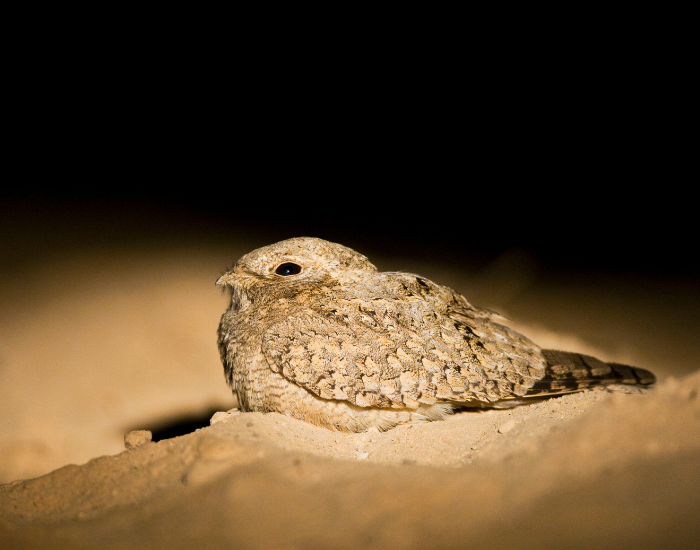
12. Red-necked Nightjar (Caprimulgus ruficollis)
The largest nightjar in Europe breeds across Iberia and North Africa before wintering in tropical West Africa. Rufous neck feathers give this species its name. Females lay elongated eggs on bare ground, and second broods commonly extend breeding well into August. The red-necked nightjar is classified as Near Threatened on the IUCN Red List, one of few nightjar species facing documented range contraction. Habitat loss and agricultural conversion threaten its Mediterranean heathland breeding grounds.
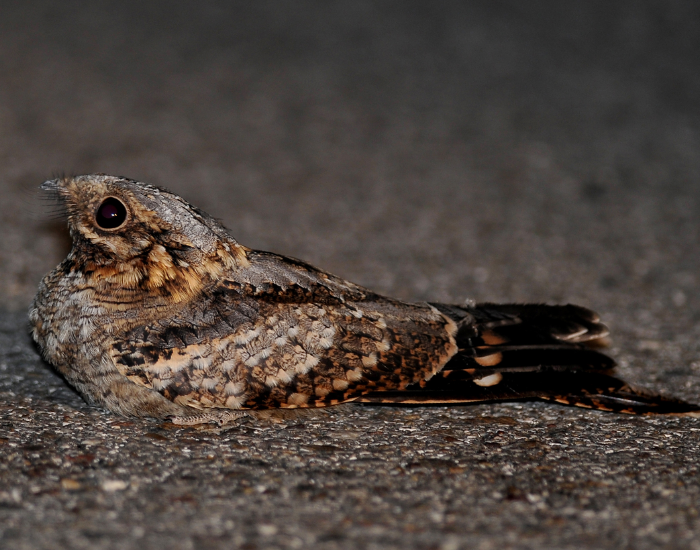
13. Fiery-necked Nightjar (Caprimulgus pectoralis)
Widespread across sub-Saharan Africa, the fiery-necked nightjar inhabits woodland savannas and deciduous forests. Its melodious call, often described as “Good Lord, deliver us”, sets it apart from other nightjars. Breeding pairs raise two clutches per season. Parents summon chicks with distinctive “wooting” calls, and chicks run toward the sound. This complex acoustic parental system has been identified through detailed behavioural studies in recent years.
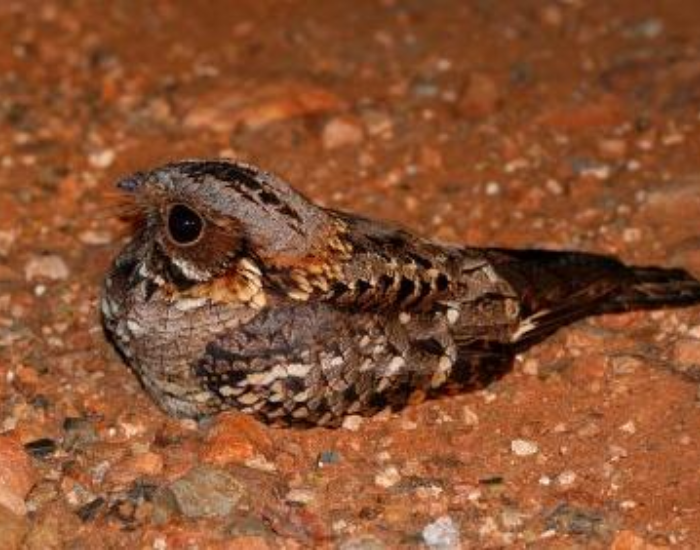
14. Lesser Nighthawk (Chordeiles acutipennis)
Slightly smaller and more buffy than the common nighthawk, the lesser nighthawk breeds across the American southwest and throughout Mexico and Central America. It prefers naturally open landscapes over disturbed agricultural land.
These migrants travel from breeding grounds in Arizona and Sonora to winter as far south as Costa Rica. Their close proximity to common nighthawks in overlapping ranges makes careful field identification essential.
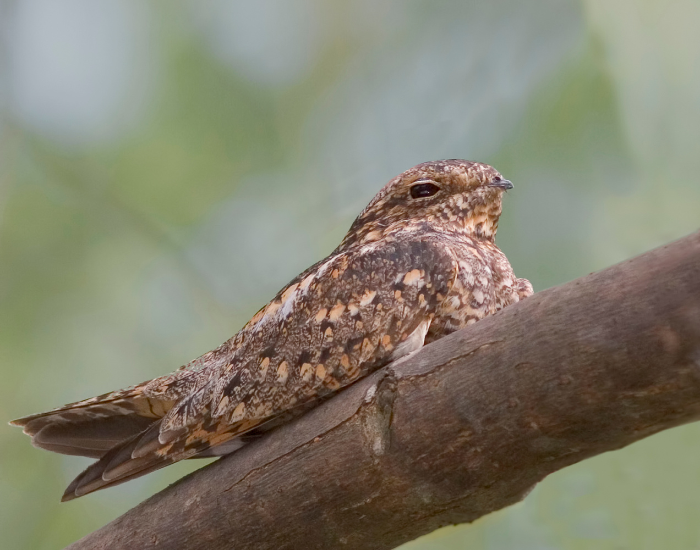
15. Bonaparte’s Nightjar (Caprimulgus concretus)
Found only on certain island groups — Sumatra, Belitung, and Borneo — Bonaparte’s nightjar is one of few nightjar species classified as Vulnerable on the IUCN Red List. Forest felling and conversion of lowland tropical habitat drive its decline. Relatively poorly studied, this Southeast Asian endemic highlights how many nightjar species remain conservation priorities in regions undergoing rapid deforestation. It represents the threatened end of a family that otherwise includes many species of least concern.
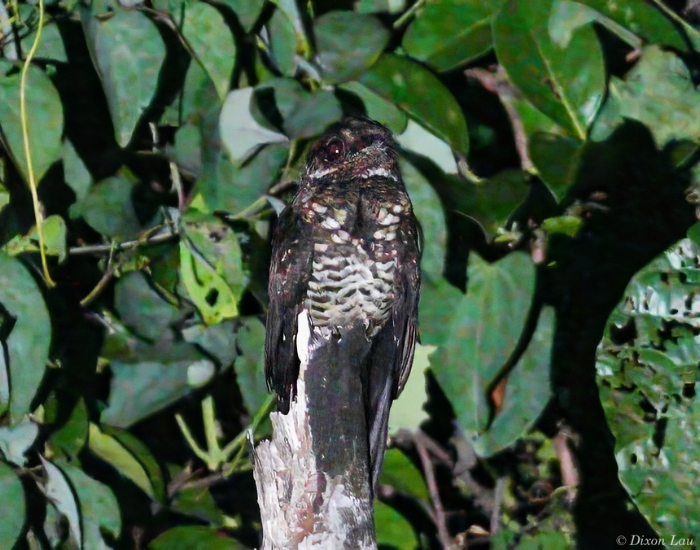
16. Jerdon’s Nightjar (Caprimulgus atripennis)
Endemic to the Indian subcontinent and Sri Lanka, Jerdon’s nightjar favours dry deciduous forests and scrubby woodland across southern India. Its brown and rufous plumage blends seamlessly with dry leaf litter on the forest floor.
Males call with a distinctive repetitive “chuck-chuck-chuck” at dusk. Unlike many nightjars that prefer open ground, this species often roosts along low tree branches during the day. Its conservation status is Least Concern, though habitat fragmentation from development continues to shrink suitable breeding areas.
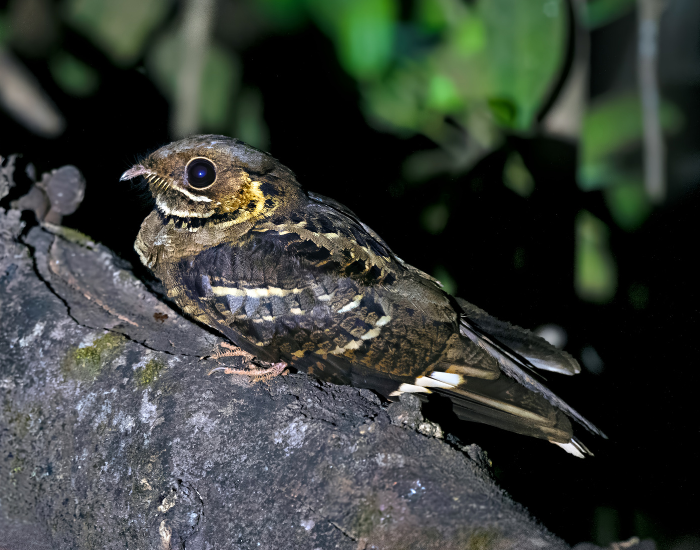
17. Madagascar Nightjar (Caprimulgus madagascariensis)
Found across Madagascar and the Aldabra atoll in the Seychelles, the Madagascar nightjar occupies dry forests, scrubland, and degraded woodland across the island. It is one of the more adaptable nightjar species in the region, tolerating secondary growth and forest edges. Brown and grey cryptic plumage keeps it hidden on bare ground by day. Madagascar’s ongoing deforestation poses a long-term threat, but the species currently holds a conservation status of Least Concern due to its broad range across the island.
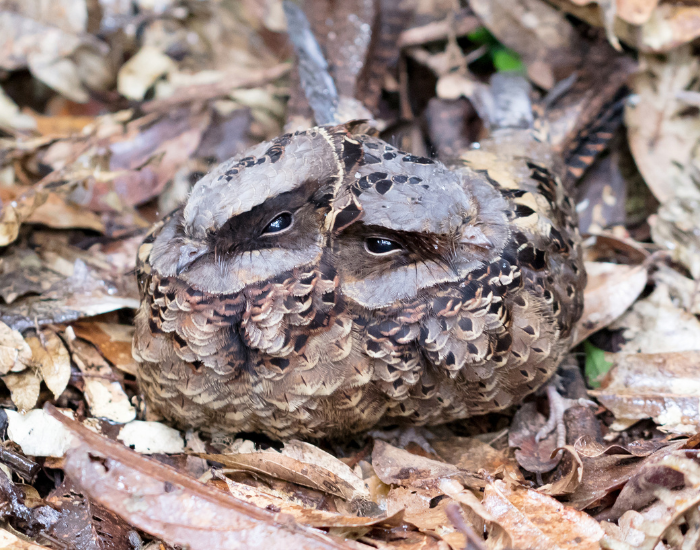
Identification: Pointed Wings and Camouflage
Spotting nightjars demands patience and timing. Their brown, grey, and bark-patterned plumage creates camouflage so effective that a bird roosting on the ground looks like a piece of dead wood. The primary field mark to watch for is silhouette: long, pointed wings, a relatively flat head, and a slim body that tapers toward a medium tail. In flight, nightjars show a distinctive falcon-like shape, but their wingbeats are softer, more buoyant, and almost moth-like.
How do nightjars compare to nighthawks? Nighthawks tend to have more angular, pointed wings with bold white patches visible in flight. True nightjars often appear rounder-winged and show less contrast. Both groups share the wide mouth and short bills that define aerial insect hunters, but nighthawks frequently hunt during daylight, while most nightjars strictly emerge at dusk and dawn. The European nightjar was once mistaken for a small kestrel in silhouette — until its silent, wavering flight gave it away.
Habitat, Threats, and Conservation Status
Nightjars occupy nearly every habitat on Earth: heathland in England, desert in Egypt, tropical forests in Borneo, woodland savanna in Africa, and open grasslands across the Americas. This adaptability explains why the family spans every continent except Antarctica, including remote island groups like the Seychelles. However, many nightjar populations face serious threats. Habitat loss from felling, agriculture, and development tops the list. Ground-nesting eggs and chicks face predation from foxes, snakes, and domestic animals. Pesticide-driven declines in flying insects, moths, beetles, and other prey, remove the food base these birds depend on. Light pollution disrupts their night hunting behaviour, and climate change shifts insect emergence timing.
Conservation efforts around the world range from heathland restoration in southern England to standardized monitoring programs along the Atlantic Flyway. The IUCN Red List currently assigns a conservation status of Least Concern to most nightjar species, but several — including the red-necked nightjar and Bonaparte’s nightjar — warrant closer attention. Many nightjars remain poorly surveyed because they are active at night, nest on the ground, and avoid detection. That gap in evidence means real population declines could go unnoticed for years.
FAQs about Nightjars
Nightjars are found worldwide in habitats ranging from European heathland and woodland to African savanna, Asian tropical forests, Australian outback, and American deserts. Their nightjar location depends on species, European nightjars breed in southern England and across Europe, while spotted nightjars inhabit mainland Australia. Many species migrate between breeding and winter grounds.
Nightjars eat flying insects including moths, beetles, and other invertebrates. They catch prey on the wing, using their wide mouths as aerial nets. Many nightjars hunt at dusk and dawn when insect activity peaks. Some species also forage on the ground for ants and other terrestrial insects when aerial prey is scarce.
A Family Worth Finding
Nightjars are among the world’s most underappreciated birds, hidden in plain sight by camouflage perfected over millions of years of evolution. From the hibernating common poorwill to the ornament-trailing standard-winged nightjar, this family challenges what we think we know about birds.
My encounter in La Huasteca taught me that the best wildlife moments often happen when daylight fades and patience takes over. Step outside at dusk, find a quiet heathland or forest edge, and listen. That strange churring in the dark might just be a nightjar reminding you the night shift has begun.
References:
Day, L. B., et al. (2024). Revealing the demographic history of the European nightjar (Caprimulgus europaeus). Ecology and Evolution, 14(10). https://doi.org/10.1002/ece3.70460
Evens, R., et al. (2024). A case of facultative polygyny in an enigmatic monogamous species, the European nightjar (Caprimulgus europaeus). Ecology and Evolution, 14(10). https://doi.org/10.1002/ece3.70366
Norevik, G., et al. (2025). Spatial consistency and repeatability of migratory flight routes in European nightjars (Caprimulgus europaeus). Movement Ecology. https://doi.org/10.1186/s40462-025-00537-6
García-Carrasco, J. M., et al. (2025). Microhabitat segregation of co-existing nightjar species in The Gambia. Ecology and Evolution. https://doi.org/10.1002/ece3.71656
Larkin, J. L., et al. (2025). Leveraging LiDAR to examine forest structural conditions influencing Eastern whip-poor-will (Antrostomus vociferus) abundance. Forest Ecology and Management, 570. https://doi.org/10.1016/j.foreco.2025.122988
Tosa, M. I., et al. (2025). Design of a monitoring program to advance nightjar conservation along the Atlantic Flyway. The Wildlife Society Bulletin. https://doi.org/10.1002/wsb.1581
Lerminiaux, C., et al. (2025). How moonlight but not cloud cover predicts vocal activity of common poorwills (Phalaenoptilus nuttallii). Canadian Journal of Zoology. https://doi.org/10.1139/cjz-2024-0137