Have you ever watched a documentary where a lion prowls the African savanna, a killer whale slices through Arctic waters, or a great white shark patrols coastal seas? These are apex predators, the top level predators of their domains, the rulers of the food chain, and in a very real sense, the guardians of ecological balance. But what exactly makes an apex predator, and why should their fate matter to every one of us?
As a biologist, I now understand it’s not just about power or danger. These animals are keystone species, organisms whose influence on their environment is so disproportionate that entire ecosystems can unravel without them. They don’t just live in their habitats; they build them.
In this article, we’ll dive deep into their world, from definitions and evolutionary history to trophic cascades, ecosystem engineering, and the urgent conservation measures needed to protect them.
What is an Apex Predator?
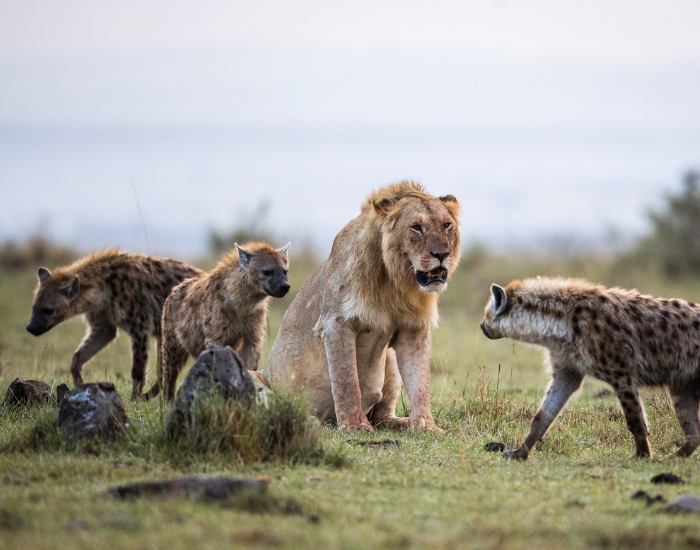
An apex predator, also known as an alpha predator or top predator, is a species that sits at the highest trophic level of its food chain, an animal with no natural predators of its own in the wild. These top level predators are the ultimate hunters of the animal kingdom, and their role goes far beyond simply killing prey.
A 2014 study in Science dubbed them “ecological kingpins”, without them, systems can unravel. So, predators apex aren’t just cool; they’re essential because apex predators reign supreme.
Why Are Apex Predators Important?
Apex predators are more than just fearsome hunters, they’re essential for maintaining the health and stability of ecosystems. Here’s why:
- Regulating Prey Populations: By hunting herbivores, apex predators prevent overgrazing and allow vegetation to thrive.
- Maintaining Biodiversity: They keep prey populations in check, ensuring no single species dominates the ecosystem.
- Supporting Ecosystem Health: Their presence influences the behavior and distribution of other species, creating a balanced and resilient environment.
How Do Apex Predators Affect Their Food Web?
To understand why apex predators matter so much, we first need to understand the structure of a food web and the trophic levels within it.
Trophic levels are the positions different organisms occupy in the food chain, based on their source of energy:
- Producers form the base. Plants, algae, and phytoplankton convert sunlight into energy through photosynthesis. Every animal in the animal kingdom ultimately depends on producers.
- Primary consumers eat plants directly. Deer, rabbits, sea urchins, and medium sized and large ungulates like springboks and buffalo are all primary consumers, and they eat plants as their main food source.
- Secondary consumers hunt primary consumers. Foxes, smaller predators like ocelot, and many fish species like tuna, that prey on herbivores occupy this trophic level.
- Tertiary consumers prey on secondary consumers. Many large predators — wolves, bears, large sharks — feed at this level, consuming both secondary consumers and primary consumers depending on what’s available.
- Apex predators sit at the top trophic level, preying on all levels below. They regulate every trophic level beneath them, from tertiary consumers down to the plants that producers form the foundation of.

How Apex Predators Shape Ecosystems: Trophic Cascades
The Kelp Forest: Sea Otters and One of Nature’s Greatest Trophic Cascades
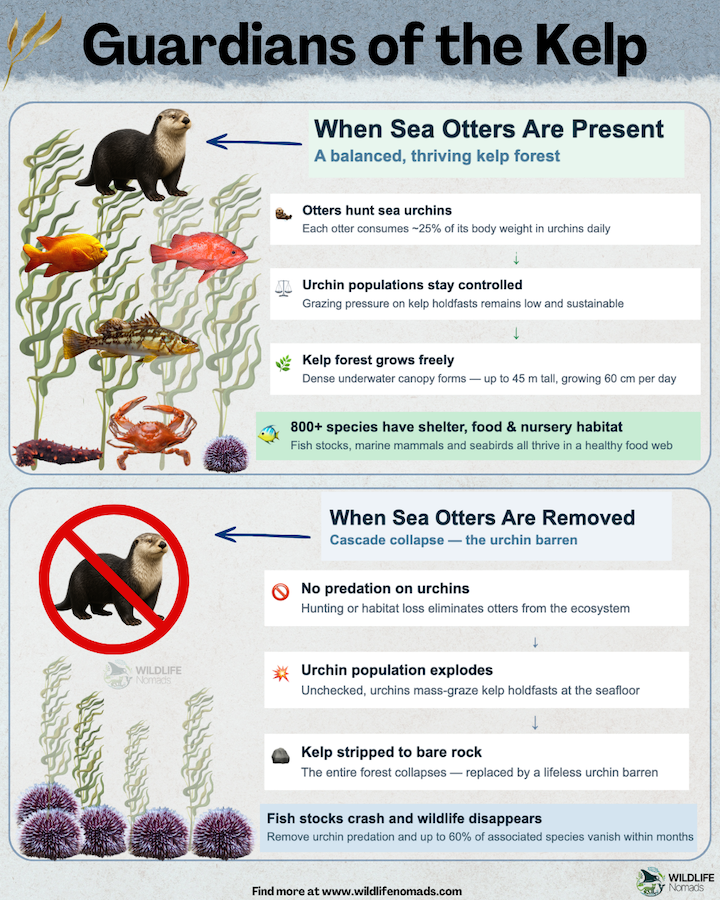
One of the most elegant trophic cascade examples comes from the ocean, specifically from kelp forest ecosystems along the Pacific coast of North America. You can read all about this in our kelp forest article, but here’s the core story:
Sea otters are the apex predators of the nearshore kelp forest. Their primary prey? Sea urchins, primary consumers that eat kelp voraciously.
When sea otter populations were devastated by the 18th and 19th century fur trade, sea urchin populations exploded. The urchins consumed kelp at catastrophic rates, creating what ecologists call “urchin barrens”, vast stretches of ocean floor with no kelp, no habitat, and almost no biodiversity.
When sea otters were protected and populations recovered, urchin numbers dropped, kelp forests regenerated, and with them came rockfish, harbor seals, and a surge in marine biodiversity. This pioneering work was documented by Estes & Palmisano (1974) in Science, and remains one of the clearest demonstrations of how a single apex predator can determine the fate of an entire ecosystem.
The World’s Most Iconic Apex Predators
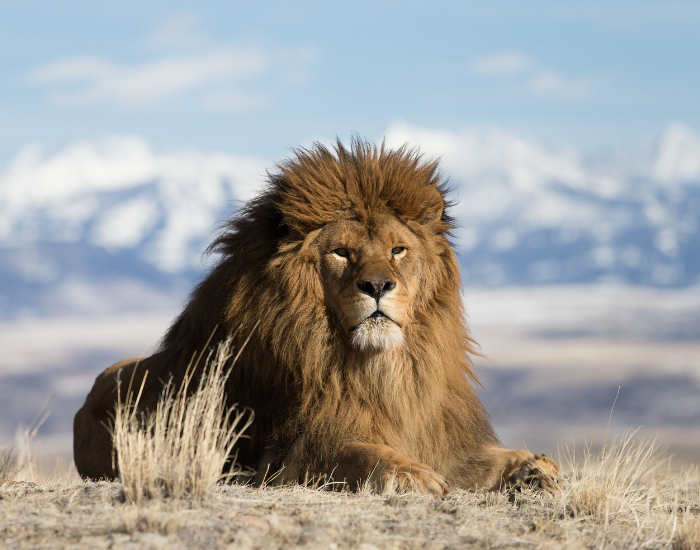
1. The African Lion — King of the Savanna
The African lion (Panthera leo) is perhaps the most recognizable apex predator on Africa and on Earth. Hunting in family groups called prides across the African savanna, lions regulate populations of large ungulates , zebras, wildebeest, buffalo, that would otherwise overgraze the grasslands. Without the African lion, the entire savanna ecosystem, one of Earth’s most biodiverse, would be dramatically altered.
Lions are threatened by habitat loss and human-wildlife conflict across much of their range. Their populations have declined by more than 40% over the past two decades.
2. The Bengal Tiger and Siberian Tiger: Lords of Asian Forests
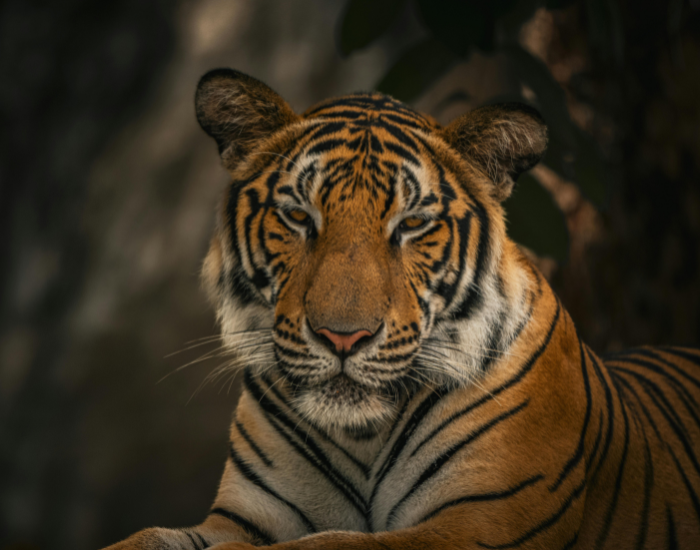
The Bengal tiger (Panthera tigris tigris) is the most numerous tiger subspecies, found across India, Bangladesh, Nepal, and Bhutan, where it regulates deer and wild boar populations in dense forest ecosystems. In India, Project Tiger — launched in 1973 — has been one of conservation’s greatest success stories.
The Siberian tiger (Panthera tigris altaica), found in the boreal forests of the Russian Far East and parts of central Asia, is the world’s largest wild cat. Both subspecies are endangered — fewer than 4,000 tigers of all subspecies survive in the wild today. Without tigers, deer and wild boar populations surge, stripping forest understories and reducing habitat quality for hundreds of other species.
3. The Great White Shark: Architect of Ocean Ecosystems
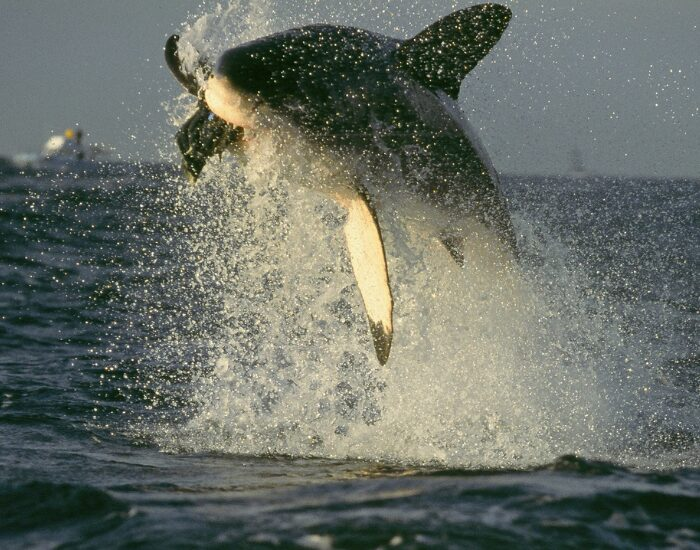
The great white shark is among the most misunderstood apex predators in the animal kingdom. Far from being a mindless killing machine, it is a precision regulator of marine ecosystems, managing populations of seals, sea lions, and marine mammals that would otherwise overgraze fish stocks and disrupt ocean food webs.
Research from False Bay, South Africa, published on our site, demonstrates exactly what happens when great white sharks are lost from an ecosystem: in a cascading effect, prey species populations explode, and the ecological balance collapses. With over 500 known species of sharks, many filling top predator roles in different ocean habitats, sharks as a group are among the most ecologically vital animals on Earth.
4. The Killer Whale (Orca) — Apex of the Ocean
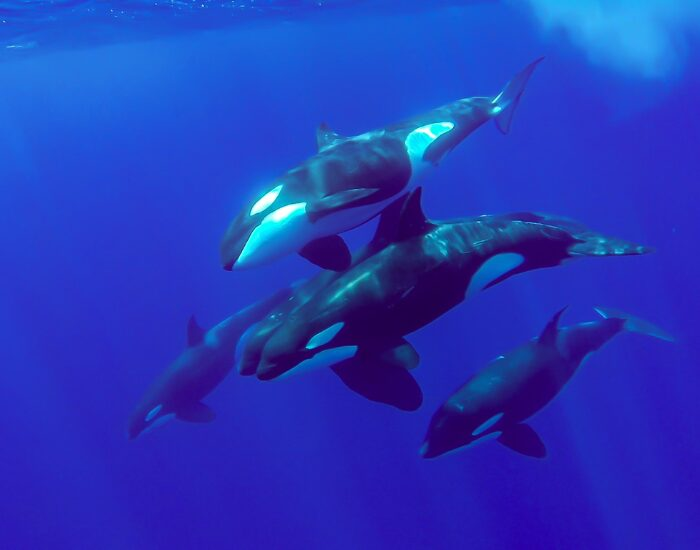
Killer whales (Orcinus orca) are perhaps the most powerful apex predators in the ocean. They feed on an extraordinary range of large prey — fish, sea birds, sea lions, marine mammals including blue whales, and even great white sharks. Their hunting intelligence, family groups with complex social structures, and ability to cooperate make them uniquely effective at regulating entire marine ecosystems.
You can discover where to see them in the wild in our guide to the best destinations for killer whales, and learn about the threats they face in our piece on whether killer whales are going extinct.
5. The Grizzly Bear and Brown Bear: North America’s Ecosystem Engineers
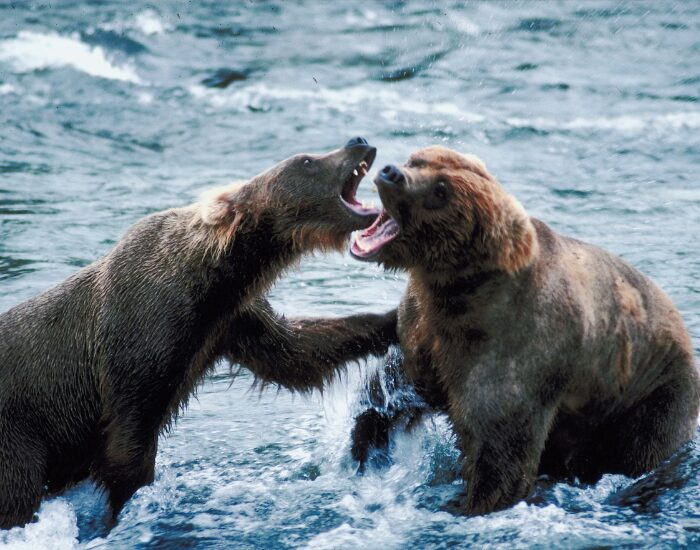
The grizzly bear (Ursus arctos horribilis) is one of North America’s most powerful apex predators. Unlike purely carnivorous predators, grizzlies have a varied diet, they eat plants (including berries and roots), fish, small mammals, large ungulates, and insects, which gives them a uniquely broad ecological role.
Grizzlies are ecosystem engineers: their digging aerates soil, their salmon fishing deposits marine nutrients deep into forests, and their seed dispersal supports plant regeneration. The brown bear of Europe and Asia plays equivalent roles across its range. There are many species of bears worldwide, each playing a top predator role in their habitat.
6. The Polar Bear: Apex Predator of the Arctic
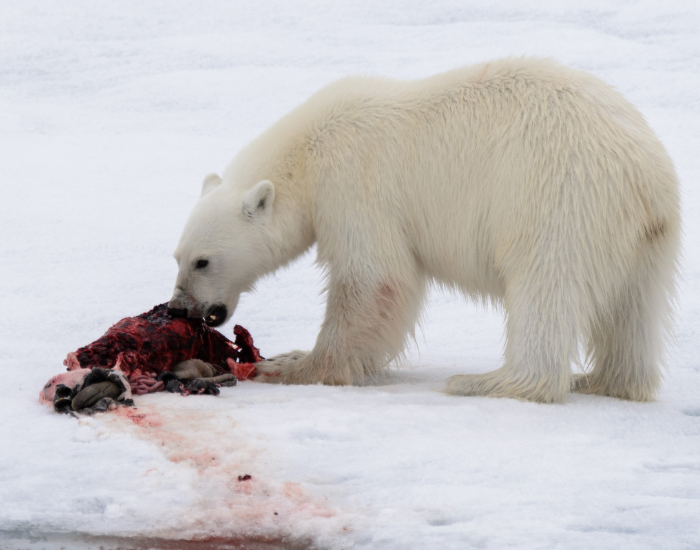
The polar bear (Ursus maritimus) is the undisputed apex predator of the Arctic, hunting seals on sea ice with extraordinary patience and skill. Their body weight, up to 700 kg in large males, reflects their place at the very top of the Arctic food web.
As climate change melts Arctic sea ice, polar bears face one of the most dramatic habitat crises of any apex predator. Reduced sea ice means reduced access to prey, leading to declining body condition, reduced reproductive success, and population decline across much of their range.
7. The Harpy Eagle: Apex Predator of the Rainforest Canopy
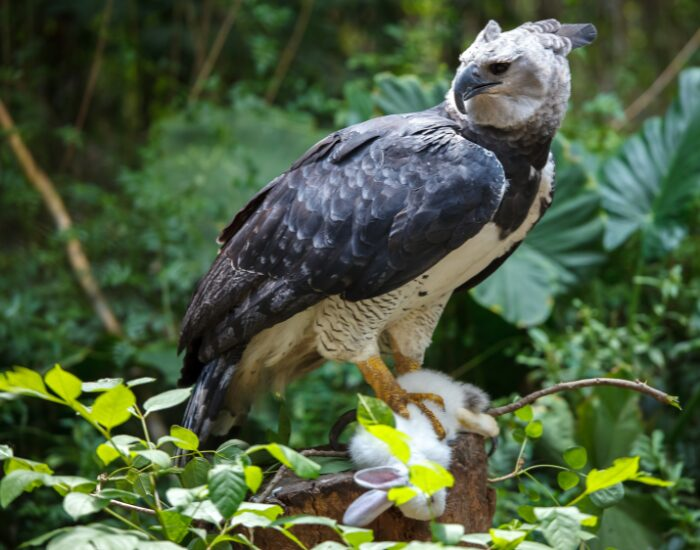
The harpy eagle (Harpia harpyja) is the world’s most powerful eagle and the apex predator of the tropical rainforest canopy in Central and South America. It preys on monkeys, sloths, and other large arboreal animals, and its presence regulates mammal populations in the forest canopy, a trophic level that few other predators reach.
Alongside the harpy eagle, other birds of prey like the American bald eagle (Haliaeetus leucocephalus) serve as apex predators in North American river and coastal ecosystems, controlling fish populations and serving as indicators of watershed health. Among other birds of prey, each occupies a trophic level no other predator reaches — from the harpy eagle in South American jungle to the bald eagle over North American rivers.
8. The Saltwater Crocodile: World’s Largest Living Reptile
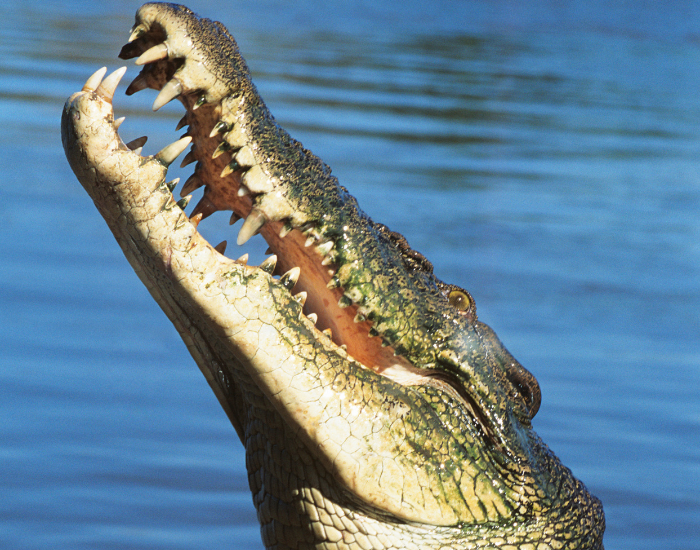
The saltwater crocodile (Crocodylus porosus) is the world’s largest living reptile and a formidable apex predator of coastal and freshwater habitats across Southeast Asia, Australia, and the Pacific. As a generalist predator, it preys upon fish, birds, mammals, and other animals across multiple trophic levels. Its presence shapes the behavior of prey animals across entire river systems, locate prey wherever the crocodile patrols, and you’ll find that other species give those zones a wide berth.
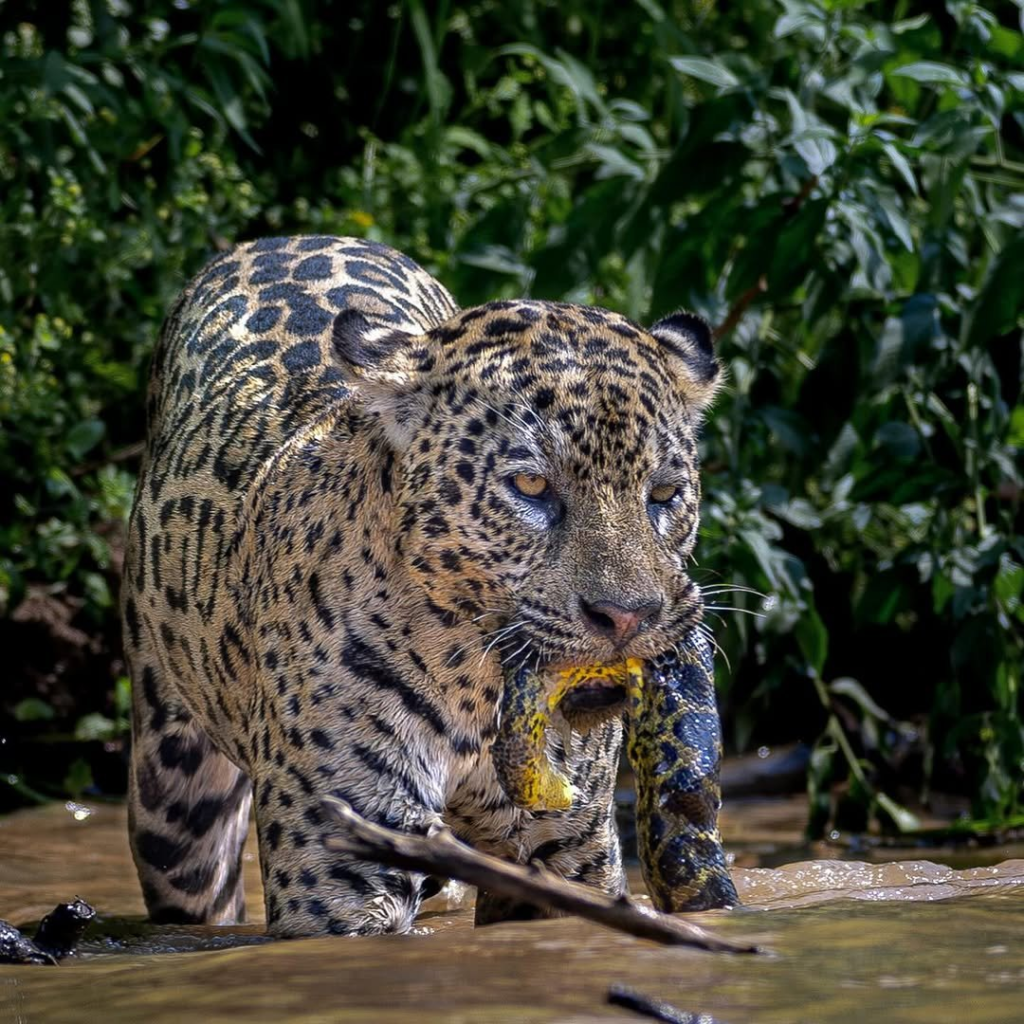
9. The Jaguar: Apex Predator of the Americas
The jaguar (Panthera onca) is the largest cat in the Americas and the apex predator of rainforests, wetlands, and grasslands from Mexico to Argentina. Unlike most large cats, jaguars are opportunistic hunters that not only eat plants occasionally, but also prey on over 85 different animal species, and as a result, they serve as powerful regulators of prey communities in complex tropical ecosystems.
The Brazilian Pantanal is today one of the best places in the world to observe jaguars in the wild, and their presence is a direct indicator of Pantanal ecosystem health. Read more in our guide to jaguars in the Pantanal.
10. The Leopard Seal: Apex Predator of Antarctic Waters
The leopard seal (Hydrurga leptonyx) is one of the most effective marine predators in Antarctic waters. It is the apex predator of penguins and crabeater seals, and also feeds on fish, krill, and sea birds. Leopard seals are critical regulators of Antarctic food webs, their presence controls prey populations across multiple trophic levels in one of Earth’s most fragile ecosystems.

Human Interactions with Apex Predators
Humans have interacted with apex predators for thousands of years, often with significant impacts on both human and predator populations. In some cases, humans have formed symbiotic relationships with apex predators, such as hunting with wolves or using eagles and falcons for falconry. However, human activities such as hunting, habitat destruction, and climate change have also threatened many apex predator populations, leading to declines in numbers and even extinctions. Conservation efforts are necessary to protect apex predators and maintain the balance of their ecosystems.
Frequently Asked Questions About Apex Predators
Apex predators are animals at the top of the food chain with no natural predators.
Killer whales and saltwater crocodiles are among the most deadly apex predators.
They regulate prey populations, maintain biodiversity, and support ecosystem health.
They create trophic cascades, influence prey behavior, and contribute to nutrient cycling.
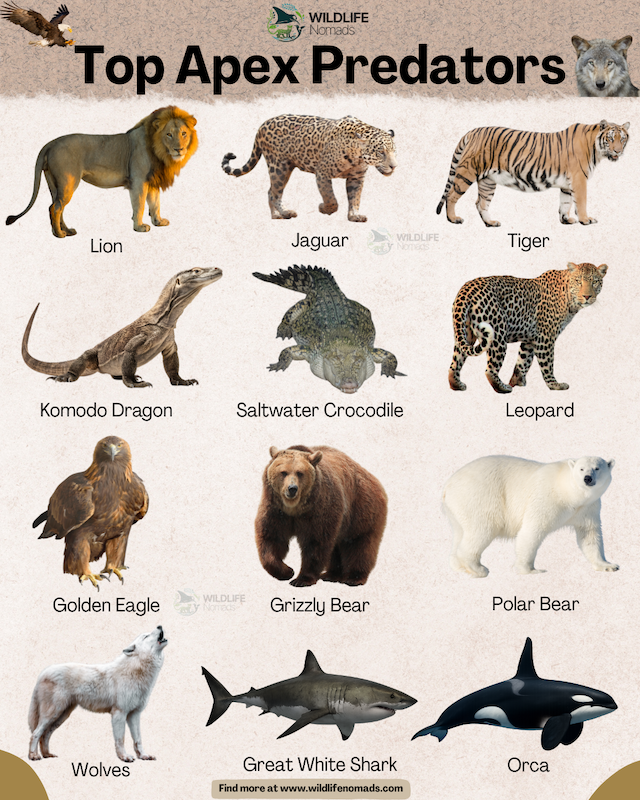
Lions, killer whales, great white sharks, tigers, and gray wolves.
The Guardians of the Wild
Apex predators are more than the stars of wildlife documentaries — they are the architects of the ecosystems we depend on. From the wolves of Yellowstone to the sea otters of the Pacific, from Bengal tigers in Indian forests to harpy eagles above South American rainforests, these animals build and maintain the biological systems that sustain all life on Earth.
As a biologist, I’ve been privileged to encounter many of them face-to-face: jaguars at dawn, sharks in deep water, lions at golden hour. Each encounter reinforced what the science confirms — these animals are not separate from their ecosystems. They are their ecosystems. Lose them, and we lose far more than a species. We lose the living architecture of the world.
Protecting apex predators is not just a conservation priority. It is one of the most important things we can do for the future of life on this planet.
References:
Bonhommeau, S., Dubroca, L., Le Pape, O., Barde, J., Kaplan, D. M., Chassot, E., & Nieblas, A. E. (2013). Eating up the world’s food web and the human trophic level. Proceedings of the National Academy of Sciences, 110(51), 20617–20620. https://doi.org/10.1073/pnas.1305827110
Beschta, R. L., & Ripple, W. J. (2009). Large predators and trophic cascades in terrestrial ecosystems of the western United States. Biological Conservation, 142(11), 2401–2414. https://doi.org/10.1016/j.biocon.2009.06.015
Estes, J. A., & Palmisano, J. F. (1974). Sea otters: Their role in structuring nearshore communities. Science, 185(4156), 1058–1060. https://doi.org/10.1126/science.185.4156.1058
Estes, J. A., Terborgh, J., Brashares, J. S., Power, M. E., Berger, J., Bond, W. J., Carpenter, S. R., Essington, T. E., Holt, R. D., Jackson, J. B. C., Marquis, R. J., Oksanen, L., Oksanen, T., Paine, R. T., Pikitch, E. K., Ripple, W. J., Sandin, S. A., Scheffer, M., Schoener, T. W., … Wardle, D. A. (2011). Trophic downgrading of planet Earth. Science, 333(6040), 301–306. https://doi.org/10.1126/science.1205106
Ripple, W. J., & Beschta, R. L. (2012). Trophic cascades in Yellowstone: The first 15 years after wolf reintroduction. Biological Conservation, 145(1), 205–213. https://doi.org/10.1016/j.biocon.2011.11.005
Ripple, W. J., Estes, J. A., Beschta, R. L., Wilmers, C. C., Ritchie, E. G., Hebblewhite, M., Berger, J., Elmhagen, B., Letnic, M., Nelson, M. P., Schmitz, O. J., Smith, D. W., Wallach, A. D., & Wirsing, A. J. (2014). Status and ecological effects of the world’s largest carnivores. Science, 343(6167), 1241484. https://doi.org/10.1126/science.1241484
Terborgh, J., Lopez, L., Nuñez, P., Rao, M., Shahabuddin, G., Orihuela, G., Riveros, M., Ascanio, R., Adler, G. H., Lambert, T. D., & Balbas, L. (2001). Ecological meltdown in predator-free forest fragments. Science, 294(5548), 1923–1926. https://doi.org/10.1126/science.1064397