

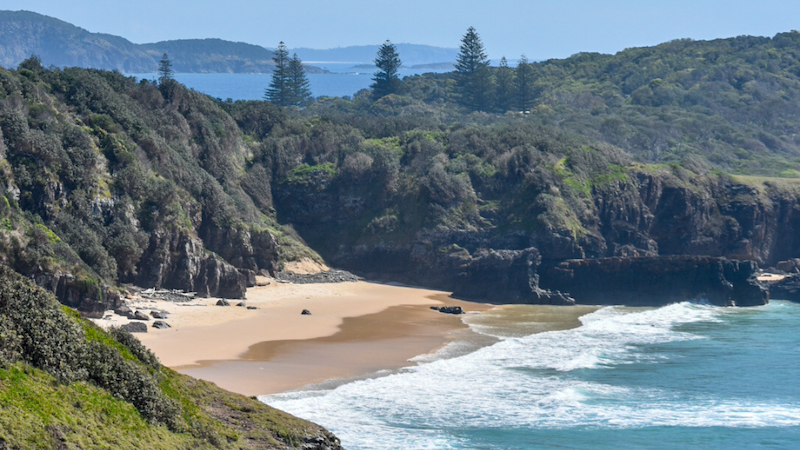
Every time we pull into a new campground, something switches on. We go quiet, scan the trees and start sorting calls from the wind. It’s meditation without trying, and Point Plomer campground pushed it further than any stop so far.
We arrived after a gorgeous day at Trial Bay, the stop after Nambucca Heads on our lap around Australia. We stayed six days inside Limeburners Creek National Park. The first three were some of the most beautiful I’ve had on this coast.
This is the camping paradox in action. You leave comfort behind, and in return your senses sharpen. Below are the 21 species we logged, three of them new for us, plus the practical details I wish I’d known before booking.
What You Need to Know Before Camping at Point Plomer Campground
Point Plomer sits in Limeburners Creek National Park, about 17 km south of Crescent Head and north of Port Macquarie. It’s a great location for a family holiday or a weekend getaway. For surfers, it’s an ideal surf getaway with world-class surfing breaks surrounded by pristine wilderness.
Getting there: Point Plomer Road and the Big Hill entrance
From Crescent Head, turn onto Point Plomer Road and follow roughly 12 km of sealed bitumen to the Big Hill entrance. Kempsey Shire Council finished sealing that section in December 2021. The last 5 km past Big Hill is a gravel road that gets potholed after rain.
Coming from the south is a different story. Plomer Road from the Port Macquarie side is 4WD only and unsuitable for towing caravans. Camper trailers and caravans should come in from the north. Check local alerts on the NSW National Parks website before driving, especially after heavy weather.
Booking, fees and check-in
You need to book online in advance through NPWS. Standard online bookings cover up to 20 people or five sites, and larger groups need a separate enquiry. Check in after 2pm and leave before 10am.
Park entry costs $8 per vehicle per day, payable when you book. You must also check in at the onsite office on arrival. NPWS runs the campground from its Kempsey office, which handles questions about conditions. It was our second campground on the lap with an in-person check-in, and that’s where we bought a 15 kg bag of firewood for $17.
Facilities: cold showers, flush toilets and no drinking water
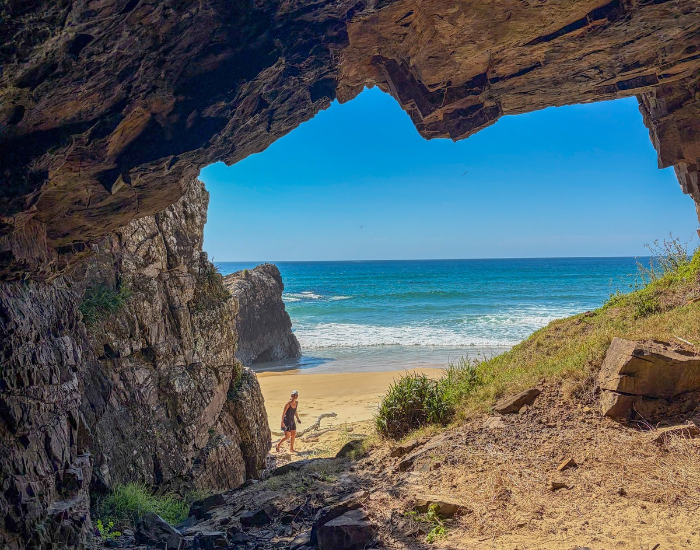
The campground has about 84 unpowered, marked sites, plus flush toilets, cold showers, picnic tables and rubbish bins. There’s a boat ramp too. The ground is mostly flat and step-free, which helps if anyone in your group has limited mobility.
The showers are cold, full stop. If you’re not used to it, the first one hurts. By day three everyone adjusts, and honestly, it’s kinder to the planet.
The taps don’t give drinking water, so bring your own drinking and cooking water. We carry a 100-litre bladder, so it never worried us. Rainwater taps around the grounds made washing dishes easy.
The onsite office sold bottled drinking water during our stay, roughly $10, plus local eggs and honey. It’s a lifesaver in an emergency, but don’t plan around it. Stock can change, so always arrive with enough water. There’s also a café sign near the office, though we never saw it open.
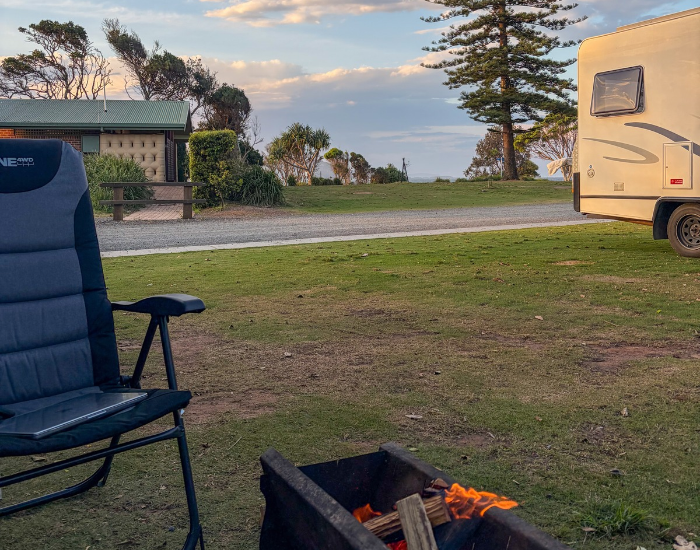
Fires are only allowed in off-ground braziers, and fire restrictions apply. We bring our own firepit, but you can hire a brazier at the office. Pack a fuel stove for days when fires are off.
Choosing a camp site
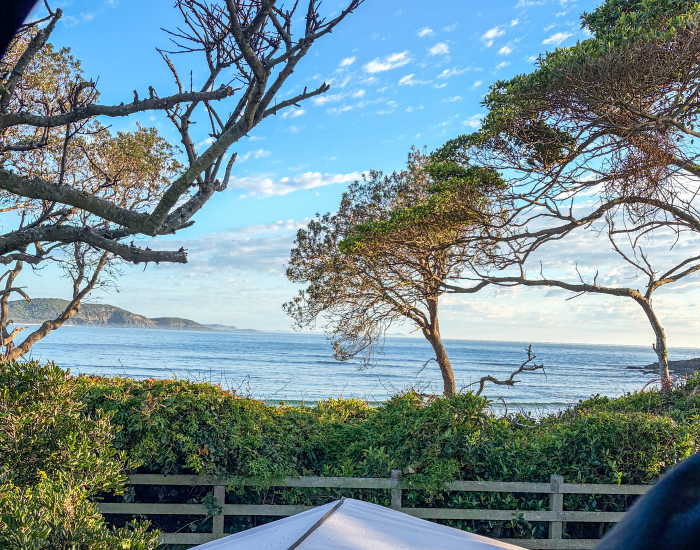
Our first night was on site 39, right on the beach. Waking up in a roof tent to the peaceful sounds of birdsong and waves crashing on the beach is hard to beat. The next day we moved to site 5 because rain and wind were coming. Beachfront sites look magical, but they leave you exposed when weather rolls in.
Swimming, surfing and fishing
Barries Bay is the nearby kid-friendly beach, with golden sands and glistening blue waters. The beach at Point Plomer catches the swell, and surfers were out every morning. Plenty of campers also wander the rocks, fishing rod in hand.
None of these beaches are patrolled. NPWS warns of strong rips, so swim carefully and watch kids closely.
Walks and lookouts
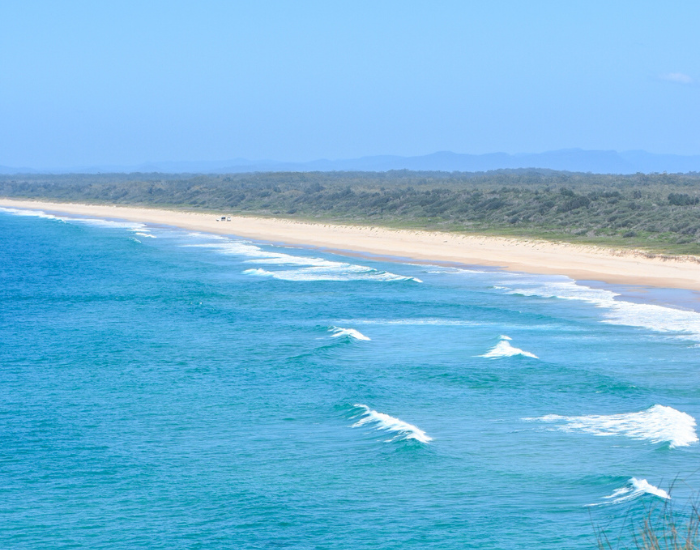
The Big Hill Rainforest walking track is a 1.4 km loop near the park entrance. It climbs a headland, then drops into rare coastal rainforest, with whale views in winter and spring. Black Beach Road also leads to a quiet beach and a lookout over the coastline in both directions.
From that lookout we saw wildflowers, a wild beach and not a single hotel. No noise of the city, just wilderness. Four or five surfers shared the waves while white butterflies drifted past. That emptiness is exactly why I love this remote campground.
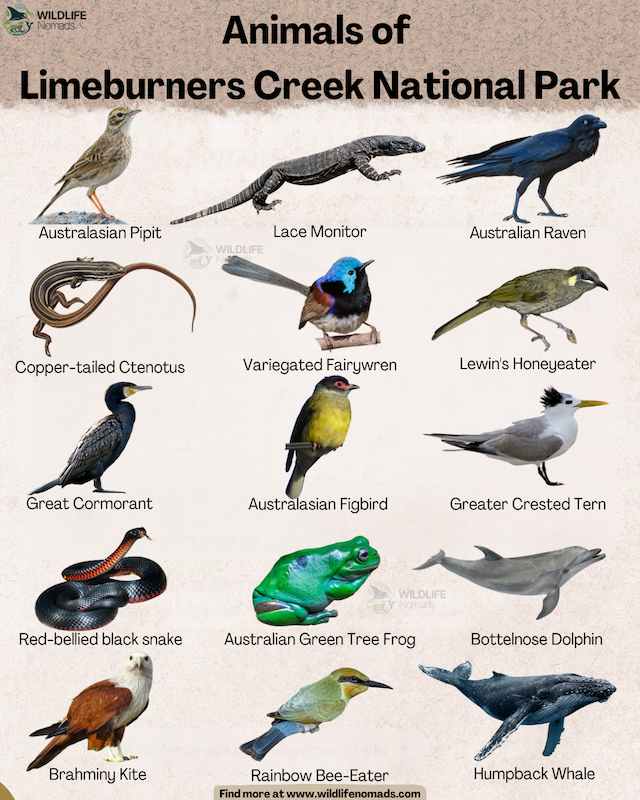
21 Animals We Saw at Point Plomer Campground
NPWS says you might see ospreys flying overhead or pied oystercatchers darting around the rocks. We didn’t log either this time. If you enjoy birdwatching, keep your binoculars handy anyway, because here’s what did turn up.
1. Brahminy Kite (Haliastur indus)
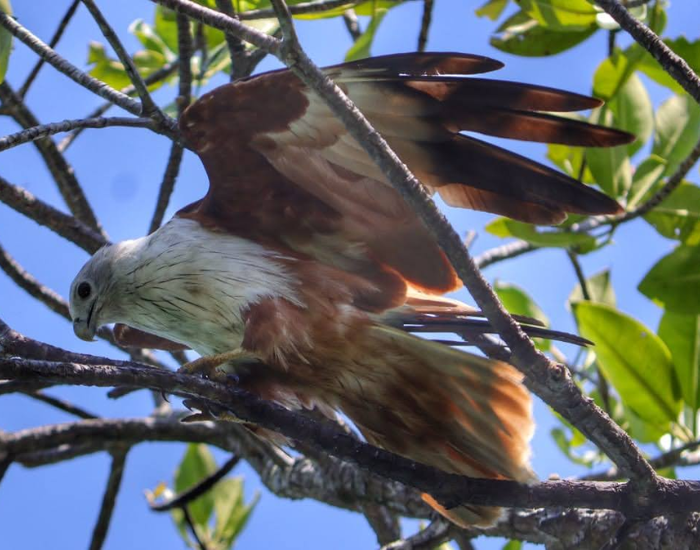
A Brahminy kite cruised over the beach on day one, chestnut wings glowing against a white head. These kites scavenge along shorelines and estuaries, taking fish, crabs and scraps. The NSW mid-north coast sits near the southern end of their Australian range.
2. Australian Raven (Corvus coronoides)
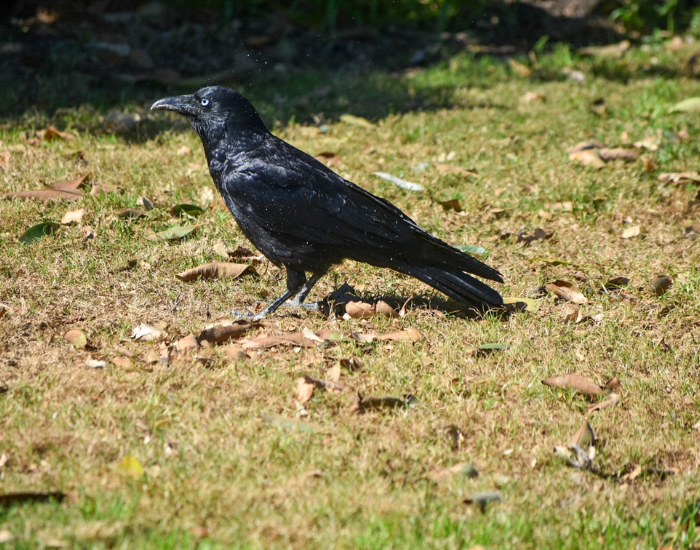
The ravens here were huge. They still surprise me every time, like something lifted from an Edgar Allan Poe poem. Adults have white eyes and shaggy throat feathers that puff out when they give that long, mournful call.
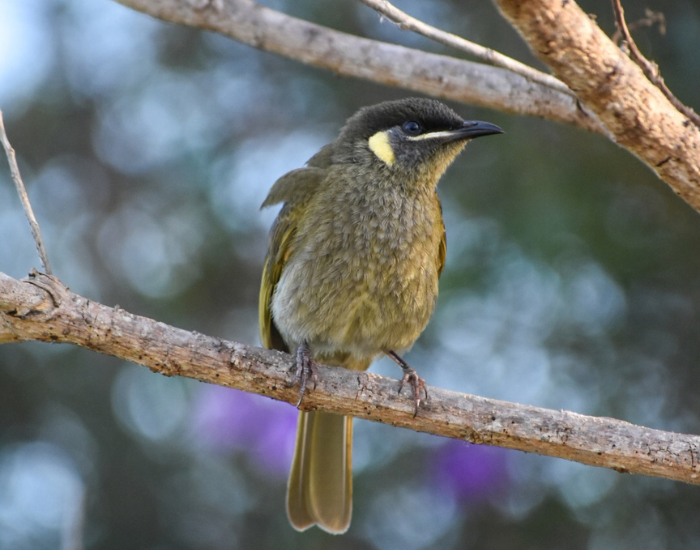
3. Lewin’s Honeyeater (Meliphaga lewini)
Lewin’s honeyeaters hung around camp exactly as they did at Illaroo campground. One nearly flew into our car looking for food. Look for the pale crescent behind the eye and listen for their rapid, machine-gun call. They’re one of the bolder honeyeaters of Australia.
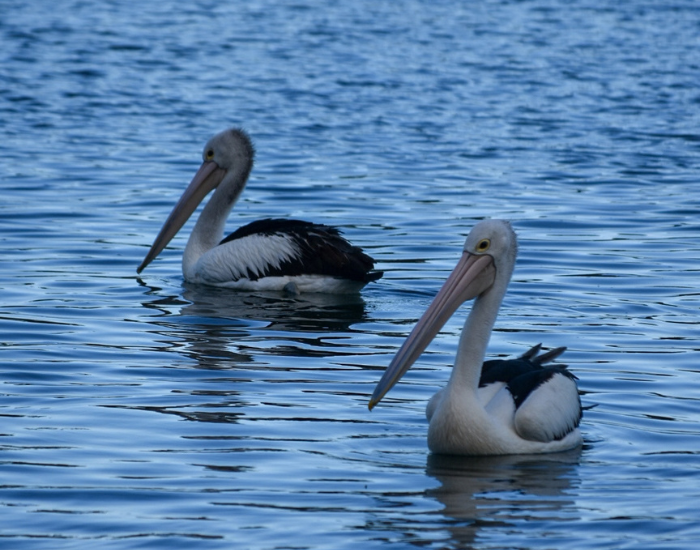
4. Australian Pelican (Pelecanus conspicillatus)
Pelicans glided low along the water most mornings. They carry the longest bill of any living bird. Their wingspan reaches around 2.5 metres, so they ride thermals with barely a flap.
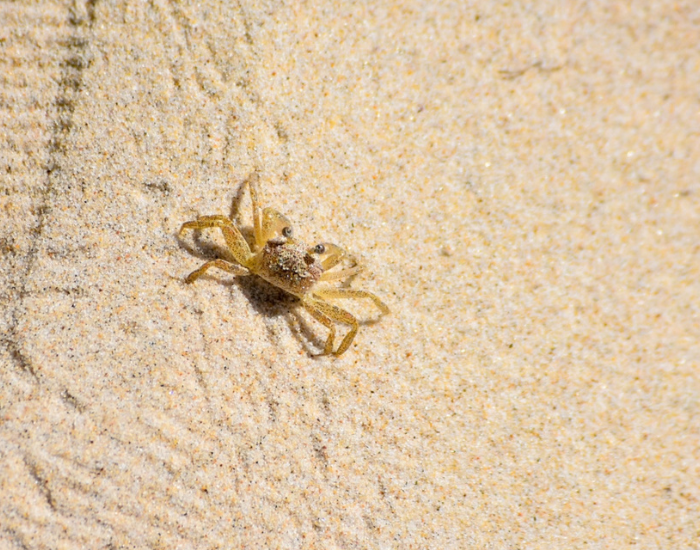
5. Smooth-handed Ghost Crab (Ocypode cordimana)
Ghost crabs dug burrows high on the sand, near the dune line. They come out mostly at night and sprint sideways faster than you’d expect. Researchers use ghost crabs as indicators of human pressure on beaches, from vehicles to trampling.
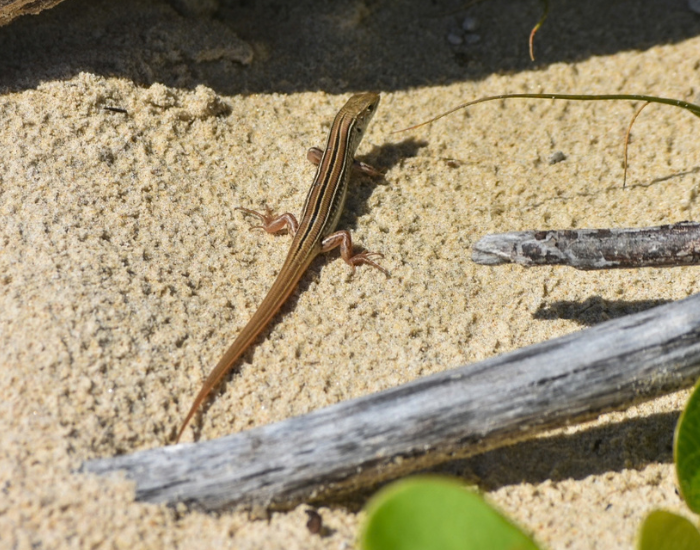
6. Copper-tailed Ctenotus (Ctenotus taeniolatus)
This striped skink was a new species for us. Several basked on the beach at the end of Black Beach Road, so look carefully. Their tails shine copper, and they dart between sun patches as active foragers. Australia has more reptile species than any other country, and I’m thrilled to finally see more.
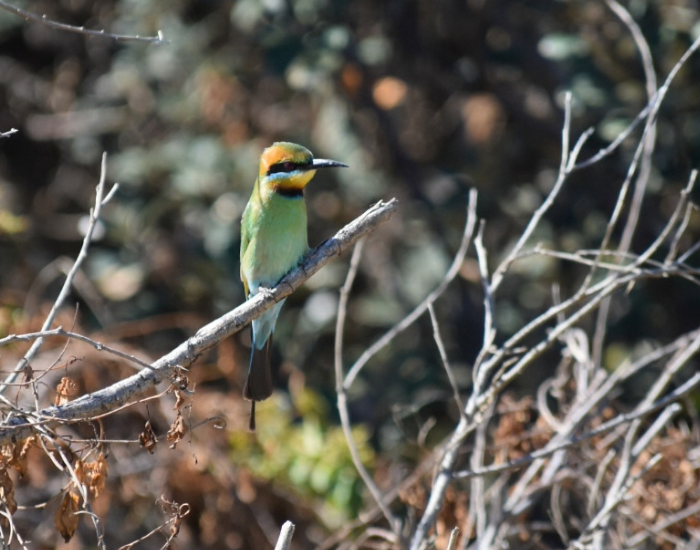
7. Rainbow Bee-eater (Merops ornatus)
Bee-eaters surprised us again, our third sighting this trip. We found them near the end of Black Beach Road, just before the lookout, and near the entrance. They migrate south in spring and dig nesting tunnels into sandy banks. Before eating a bee, they whack it against a branch to remove the sting.
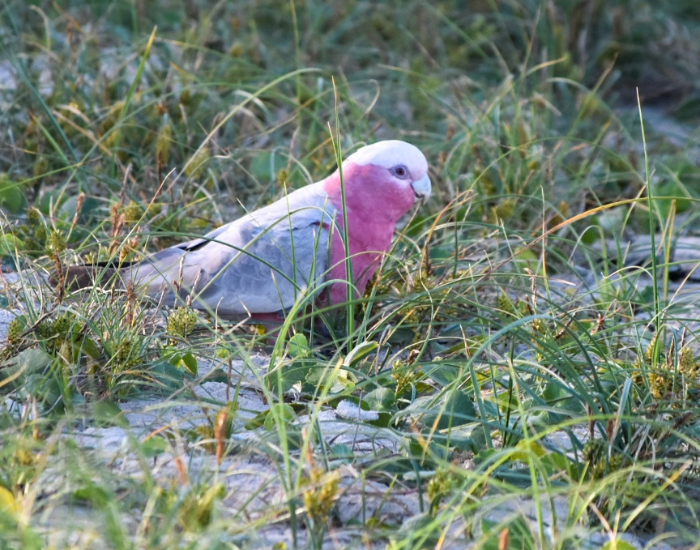
8. Galah (Eolophus roseicapilla)
Pink-and-grey galahs fed on grassy patches around camp. These australian parrots usually pair for life and stay in noisy family flocks.
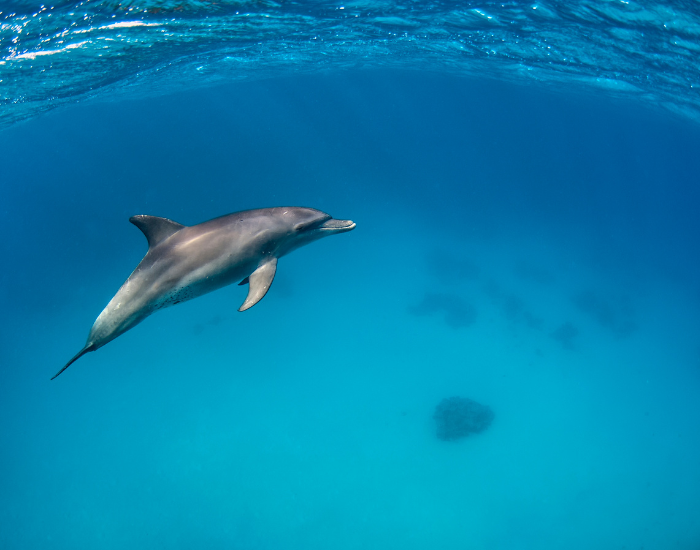
9. Bottlenose Dolphin (Tursiops aduncus)
This was my favourite moment of the whole stay. Some kids were learning to surf, and a pod of dolphins appeared a few metres away. Every kid stopped paddling to watch. Indo-Pacific bottlenose dolphins can be strongly resident along northern NSW, returning to the same estuaries for years.
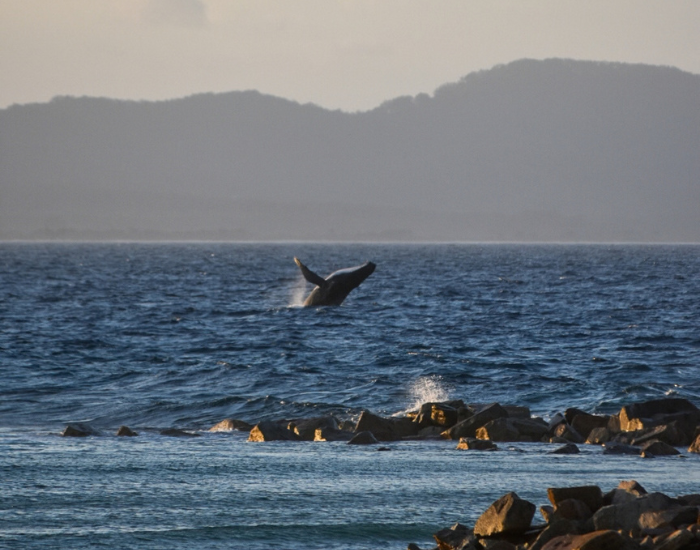
10. Humpback Whale (Megaptera novaeangliae)
From the lookouts, humpbacks were easy to spot, breaching, migrating and travelling with calves. This east coast population crashed to a few hundred whales by the early 1960s. It had rebounded to roughly 25,000 by 2015.
Breaching likely helps whales communicate over long distances. Humpbacks breach more when the nearest group is over 4 km away and when it’s windy. Since my gray whale encounter in Mexico, whales never get old for me. For more spots, see my guide to the best places to go whale watching.
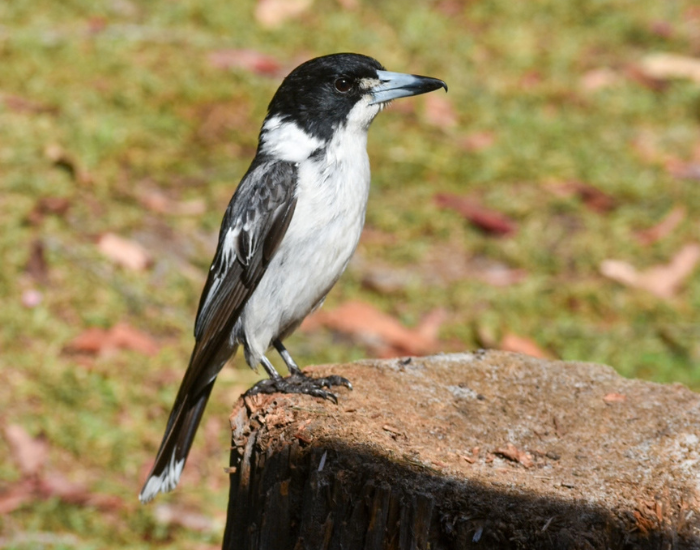
11. Pied Butcherbird (Cracticus nigrogularis)
Pied butcherbirds sang from the trees with one of the richest voices in the bush. Their name comes from wedging prey into forks or onto spikes. That “larder” lets them tear food apart or save it for later.
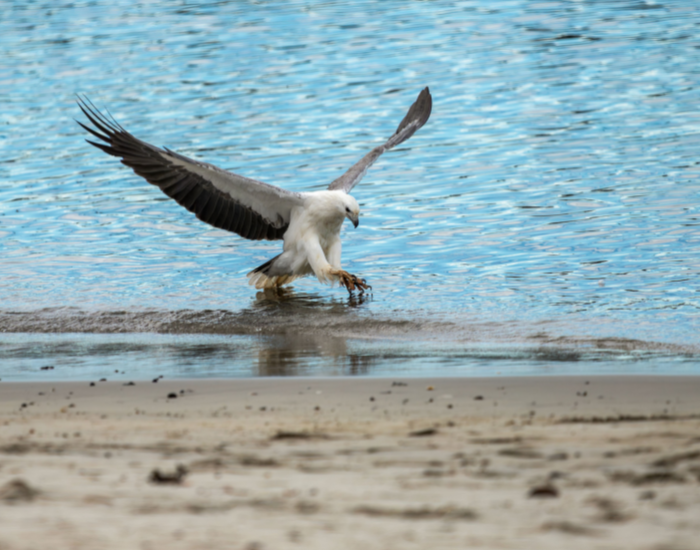
12. White-bellied Sea Eagle (Icthyophaga leucogaster)
A sea eagle flew above the beach right in front of camp. It’s Australia’s second-largest raptor, after the wedge-tailed eagle. Taxonomists recently moved it to the genus Icthyophaga, so older guides still list Haliaeetus. Read more in my post on Australian eagles.
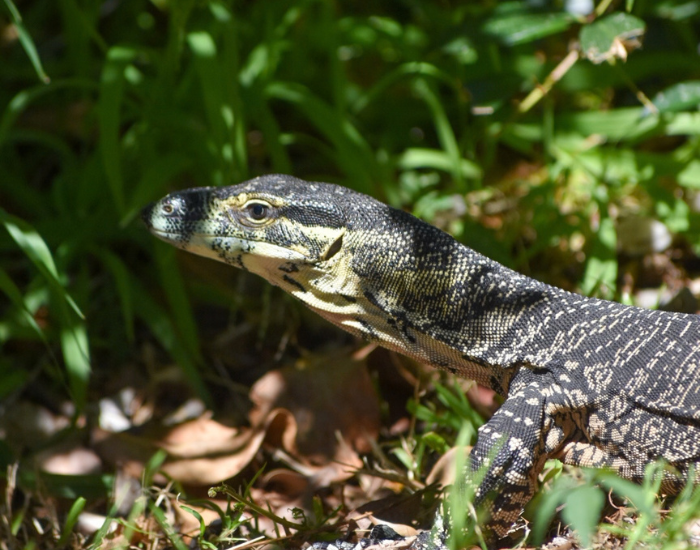
13. Lace Monitor (Varanus varius)
Lace monitors strolled the camp roads, scaring people just like they did at Illaroo. These lizards reach about 2 metres and climb trees easily. A Victorian study found campground monitors eating human scraps grew heavier and longer than wild-fed ones. That’s still no reason to feed them, because habituated monitors raid tents and bins.
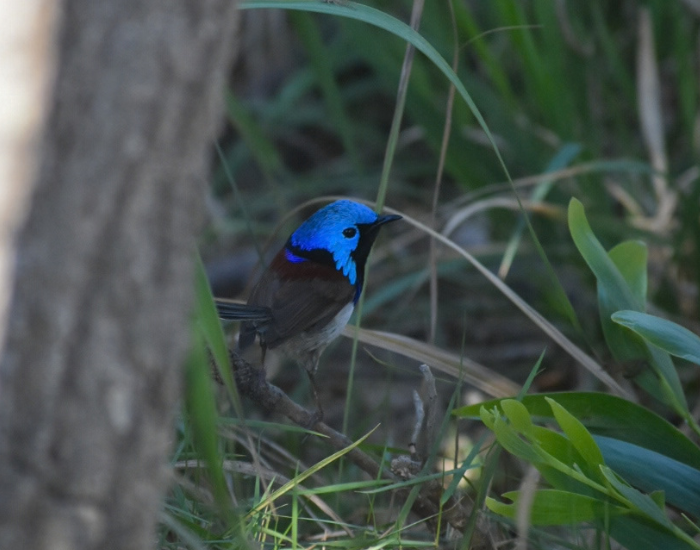
14. Variegated Fairywren (Malurus lamberti)
We found fairywrens at the second lookout at the end of Black Beach Road. Breeding males wear a sky-blue crown, a black chest and chestnut shoulder patches. Their family groups share chick-rearing, with helpers feeding nestlings that aren’t their own.
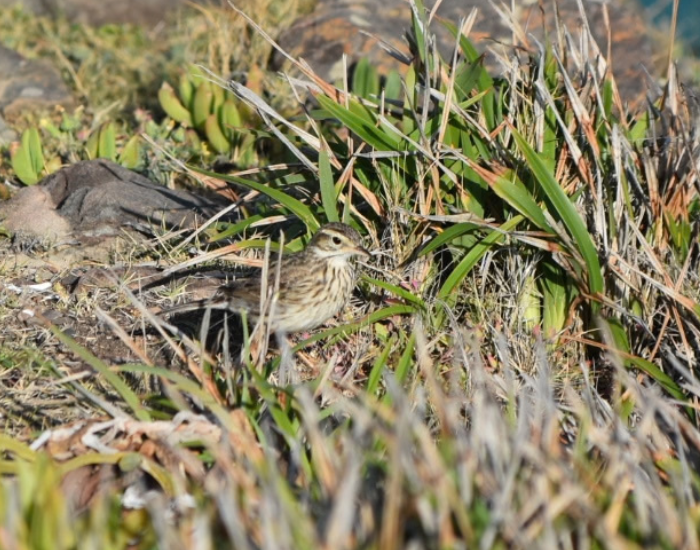
15. Australasian Pipit (Anthus novaeseelandiae)
Another new species for us, perched in the trees behind our camp. Pipits usually forage on open ground and constantly pump their tails. They’re easy to dismiss as plain brown birds, which is exactly why patience pays off.
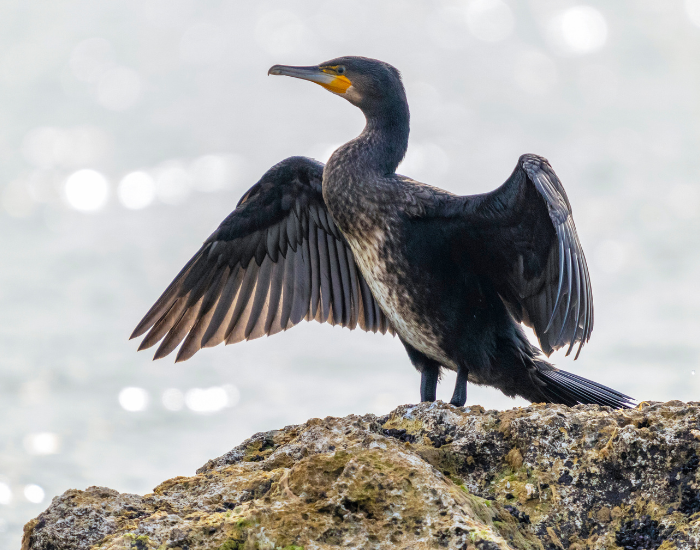
16. Great Cormorant (Phalacrocorax carbo)
This one was new too. It sat on a rock, far bigger than the cormorants I’m used to and almost entirely black. The white face and head patch made it instantly recognisable. It’s the largest cormorant in Australia and dives for fish in both fresh and salt water.
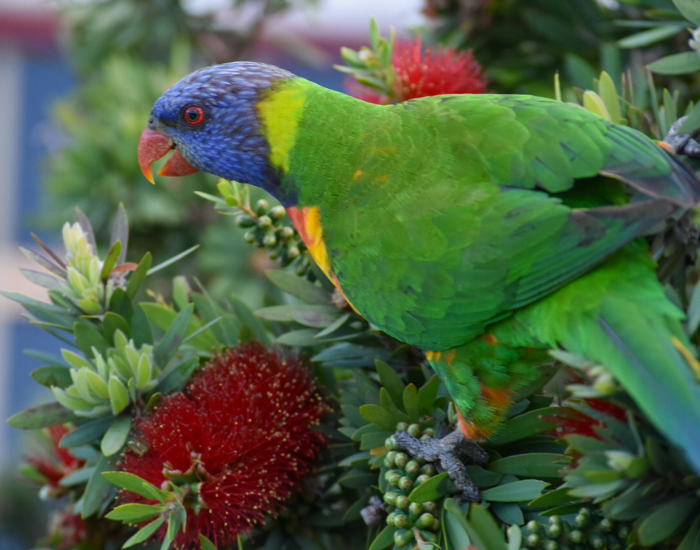
17. Rainbow Lorikeet (Trichoglossus moluccanus)
The classic campground soundtrack. Rainbow lorikeets fed noisily in the banksia trees from dawn. Their brush-tipped tongues sweep up nectar and pollen, which makes them handy pollinators.
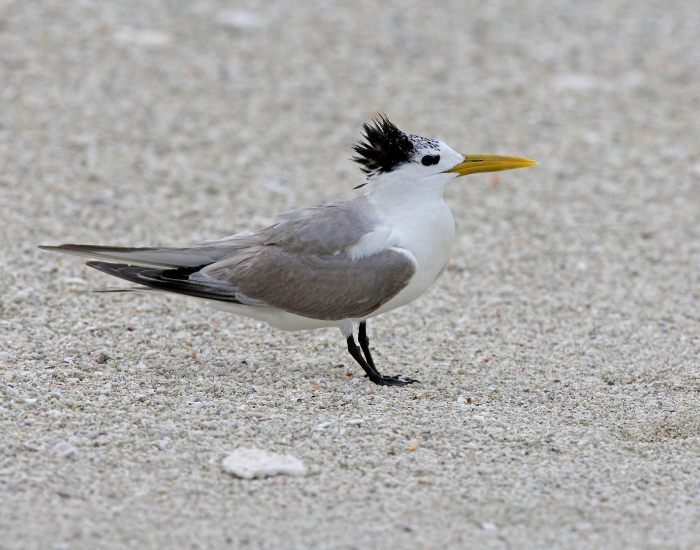
18. Greater Crested Tern (Thalasseus bergii)
Crested terns rested on the beach, our second sighting since Urunga and Nambucca. Look for the shaggy black crest and lemon-yellow bill. They plunge-dive for small fish just behind the break.
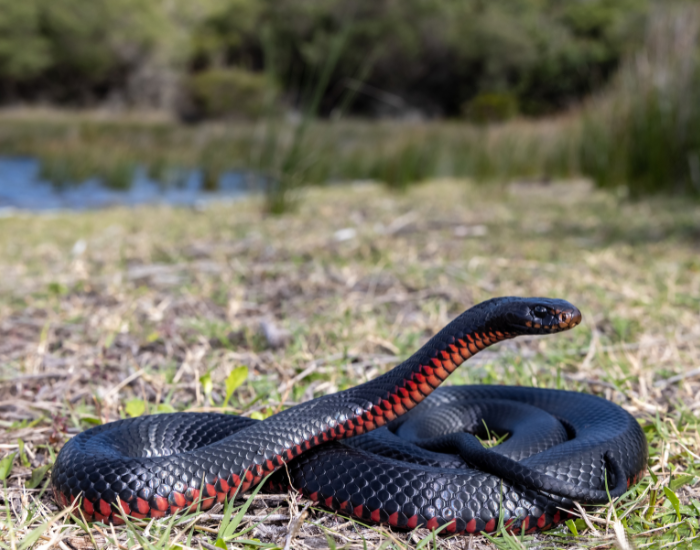
19. Red-bellied Black Snake (Pseudechis porphyriacus)
We didn’t see this snake. A ranger told us one had been spotted near our campground, and that warning was enough to list it. I’ve seen plenty before, including five on a single Springbrook hike, two of them mating. Frogs make up most of their diet, though one Lamington snake was photographed eating another red-belly. They’re on my list of the most dangerous snakes in Australia, but they’re usually shy and move away.
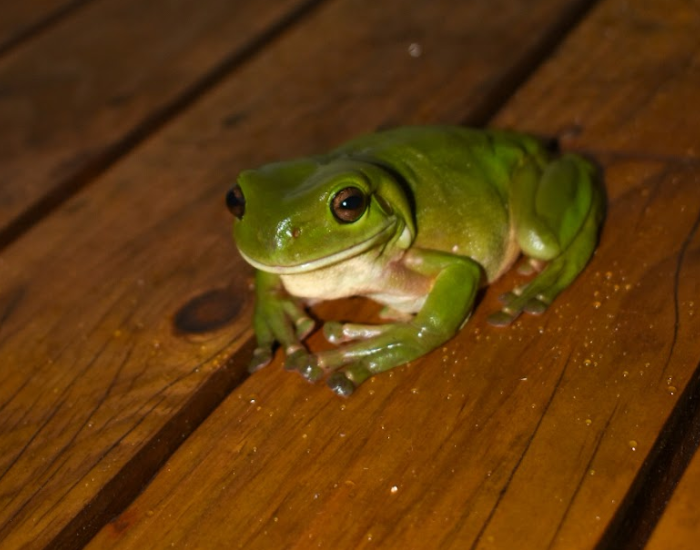
20. Australian Green Tree Frog (Litoria caerulea)
After the rain, a green tree frog called right next to the toilets. These frogs love amenity blocks, where pipes and cisterns stay cool and moist. Their deep, slow “crawk” carries a long way at night.
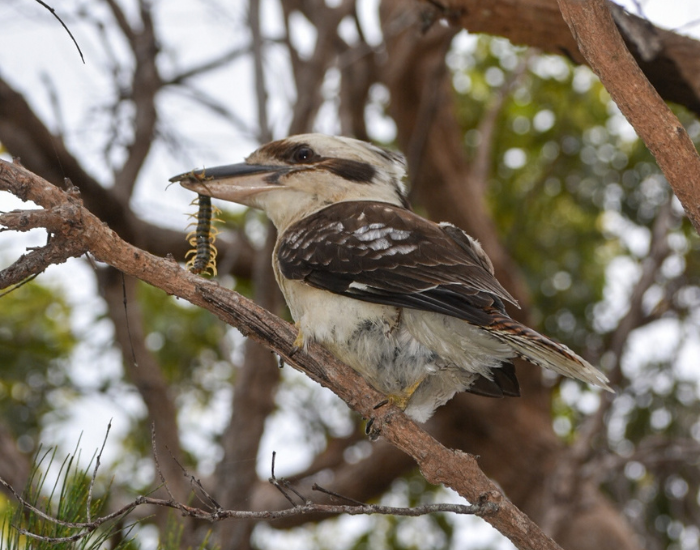
21. Laughing Kookaburra (Dacelo novaeguineae)
Kookaburras became very active once the rain eased, dropping onto the grass for insects only metres from us. They’re the world’s largest kingfishers, yet they rarely eat fish.
Point Plomer Campground FAQ
No. Point Plomer campground has cold showers and flush toilets, but no hot water. Most people adjust within a couple of days. Bring a solar shower bag if cold water is a dealbreaker.
Partly. Point Plomer Road is sealed from Crescent Head to the Big Hill entrance, roughly 12 km. The final 5 km to the campground is gravel. The southern approach via Plomer Road is 4WD only and unsuitable for caravans.
The sealed section is smooth and easy in any car. Past Big Hill, the gravel road can get potholed after rain. Drive slowly, and check NSW National Parks local alerts before you go.
Not from the taps. Bring all your drinking and cooking water, because rainwater taps are only for washing up. During our stay the onsite office sold bottled water as a backup, but supply isn’t guaranteed.
Look for whales breaching in winter and spring, roughly May to November. Headland lookouts and the Big Hill Rainforest walking track give the best views. Dolphins riding the waves turn up year-round.
Be Present at Every Campground
The rain we expected never fully arrived, and the wildlife never stopped. Point Plomer campground rewards anyone willing to slow down, listen and contemplate the beauty around them. Three new species in six days proves the bush still has plenty to show us on this coast.
If you’re planning a trip through the best NSW national parks, add Limeburners Creek to the list. Pack your water, keep your binoculars handy and leave the firewood worries to the office. Spotted something we missed? Tell me in the comments, and follow our next stop on the Australia lap.
References:
Fury, C. A., & Harrison, P. L. (2008). Abundance, site fidelity and range patterns of Indo-Pacific bottlenose dolphins (Tursiops aduncus) in two Australian subtropical estuaries. Marine and Freshwater Research, 59(11), 1015–1027. https://doi.org/10.1071/MF08109
Jessop, T. S., Smissen, P., Scheelings, F., & Dempster, T. (2012). Demographic and phenotypic effects of human mediated trophic subsidy on a large Australian lizard (Varanus varius): Meal ticket or last supper? PLoS ONE, 7(4), e34069. https://www.ncbi.nlm.nih.gov/pmc/articles/PMC3317928/
Kavanagh, A. S., Owen, K., Williamson, M. J., Blomberg, S. P., Noad, M. J., Goldizen, A. W., Kniest, E., Cato, D. H., & Dunlop, R. A. (2017). Evidence for the functions of surface-active behaviors in humpback whales (Megaptera novaeangliae). Marine Mammal Science, 33(1), 313–334. https://doi.org/10.1111/mms.12374
Lüddecke, T. (2023). Quid pro quo: A documented case of cannibalism in the red-bellied black snake Pseudechis porphyriacus in Lamington (Queensland, Australia). Diversity, 15(5), 610. https://doi.org/10.3390/d15050610
Noad, M. J., Kniest, E., & Dunlop, R. A. (2019). Boom to bust? Implications for the continued rapid growth of the eastern Australian humpback whale population despite recovery. Population Ecology, 61(2), 198–209. https://doi.org/10.1002/1438-390X.1014
Schlacher, T. A., et al., (2016). Human threats to sandy beaches: A meta-analysis of ghost crabs illustrates global anthropogenic impacts. Estuarine, Coastal and Shelf Science, 169, 56–73. https://doi.org/10.1016/j.ecss.2015.11.025



