I’ll never forget the day I realized that “magpie” is a relative term.
It was a few years before I officially moved to Australia in 2022. I was visiting my sister in Melbourne, and being a biologist, I naturally dragged her to every national park Victoria has to offer trying to find some the iconic marsupials and other Australian animals. I was busy spotting rainbow lorikeets, Australian possums, kangaroos and wombats, feeling pretty confident in my field ID skills. Then, we hit the beach.
I saw this massive black-and-white bird strolling toward us. Coming from time spent in Sweden, I thought, “Oh, look! A magpie! How charming.” In Scandinavia, magpies are clever neighbors; people don’t fear them.
Then I looked at my sister. She was paralyzed. Real fear. I looked around, and other friends were tensing up, eyeing the bird like it was a live grenade. That was my introduction to the Australian Magpie. I quickly learned that while the birds I knew in Europe were intelligent tricksters, the ones in Australia were fiercely territorial fighter pilots capable of causing actual injuries during “swooping season.”
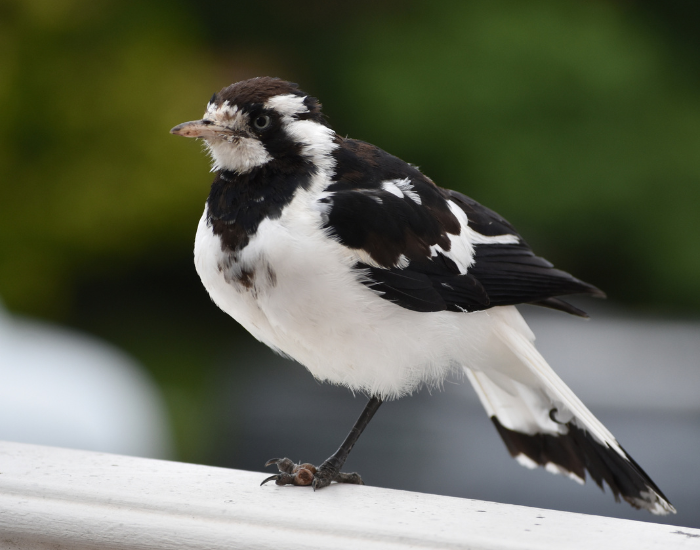
But as I looked closer, I noticed something else. A few days later, I saw a smaller black-and-white bird. “Is that a magpie too?” I asked. My colleagues laughed. “That’s a Peewee.”
It got me thinking: how many “magpies” are there really? Between my time in Sweden, my travels through Mexico, and my new life in Australia, I realized that what we call a “magpie” changes drastically depending on which continent you’re standing on.
What Makes a Magpie?
Most magpies belong to the Corvidae family (corvids), which includes crows, ravens, and jays. Magpies are part of the crow family, a group known for its intelligence and complex social behaviors. These birds are highly intelligent and social, ranking among the most intelligent animals.
However, the Australian magpie belongs to Artamidae. It looks like a magpie due to convergent evolution, nature created the black and white plumage twice in different bird families. The Eurasian magpie, in contrast, is classified as ‘Least Concern’ by the IUCN, reflecting its stable and widespread population.
True magpies have exceptionally long tails and distinct black and white plumage with iridescent green or blue feathers. Crows and ravens are mostly black with shorter tails, making it easy to distinguish magpies from a crow.
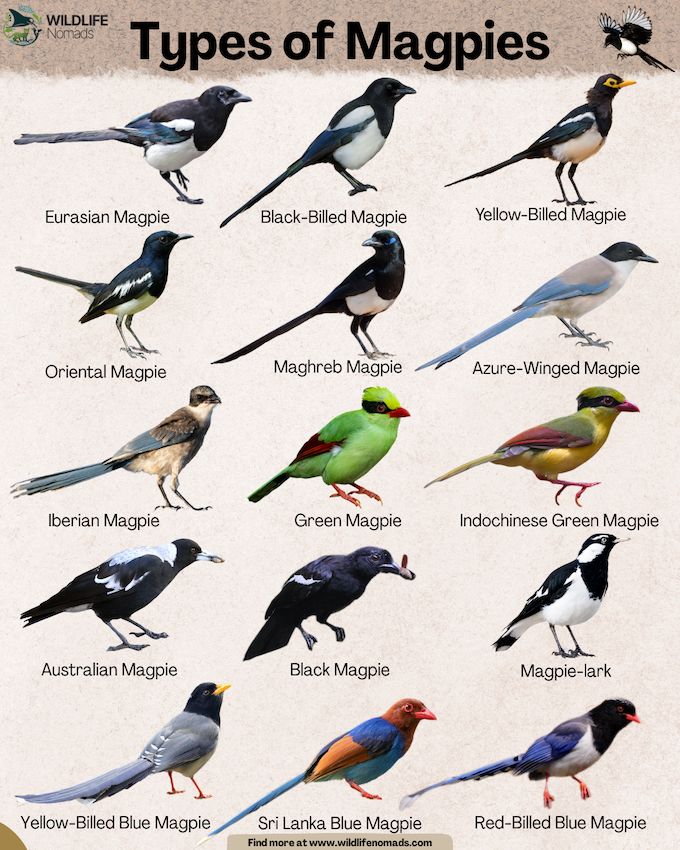
1. Eurasian Magpie (Pica pica)
Region: Europe, Asia, North Africa
The Eurasian magpie inspired the rhyme “One for sorrow, two for mirth.” This bird species sets the standard for all other magpies.
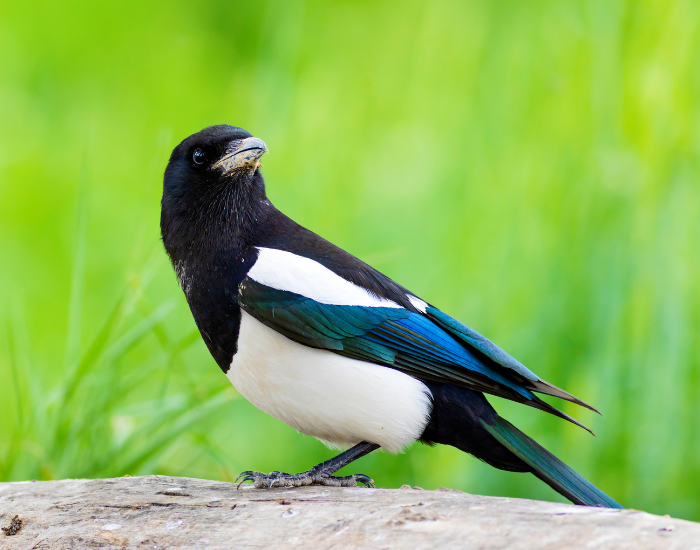
These birds have striking black and white plumage. However, the “black” parts show iridescent green and blue feathers in sunlight. Adult birds have a white belly, black wings with a metallic sheen, and dark brown eyes. The adult male is 44–46 cm in length, more than half of which is the tail. Their wedge-shaped long tail comprises nearly half their body length.
Eurasian magpies pass the mirror test, suggesting self-awareness. They gather in groups to mob potential predators like hawks. During breeding season (March-July), pairs build dome-shaped nests. Females lay 5-8 eggs. The Eurasian magpie is a resident breeding bird throughout the northern part of the Eurasian continent. Their vocalizations include a variety of sounds, and the Eurasian magpie has a distinctive call, which is either a choking chatter or a repetitive call.
Scientific Name: Pica pica | Status: Least Concern | Habitat: Gardens, parks, farmland
2. Black-Billed Magpie (Pica hudsonia)
Region: Western North America
These birds inhabit the Rocky Mountains and Great Plains. While they look like Eurasian cousins, genetic studies confirm they’re a distinct species.
Black-billed magpies follow bison herds to pick ticks, a symbiotic relationship. They build massive dome-shaped nests up to three feet wide with two entrances for predator escape. The nest is constructed of sticks and twigs, with a small interior bowl lined with grass and hair. Magpie nests can take up to 40 days to build, and the domed structure helps protect nestlings from predators above.
During breeding season, the nestlings and young birds are especially vulnerable to predation and environmental threats, so both parents provide attentive care and feeding to ensure their survival.
These birds thrive in open country and suburban environments. During winter, they form large roosting groups.
Scientific Name: Pica hudsonia | Range: Alaska to Texas | Diet: Insects, carrion, eggs, seeds
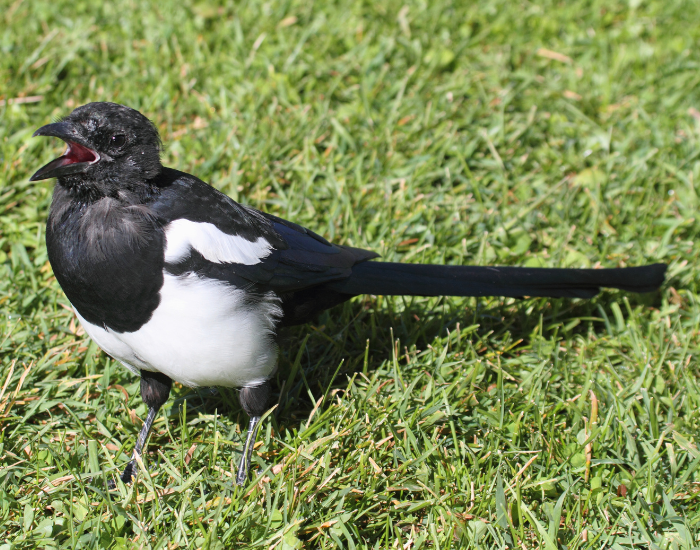
3. Australian Magpie (Gymnorhina tibicen)
Region: Australia, Southern New Guinea
A classic Bird of Australia. Despite the name, Australian magpies aren’t true corvids. During spring breeding season (September-November), males dive-bomb humans near their nesting trees.
I’ve seen Australians wearing helmets with zip-ties to deter attacks. Parks post warning signs during swooping season.
However, these birds are excellent singers. Their melodic carolling is among the most complex bird calls. They also provide natural pest control, eating ground insects and beetles.
Males have more white plumage than females. Their bill is grey-white with a black tip.
Scientific Name: Gymnorhina tibicen | Family: Artamidae | Key Feature: Swooping behavior, melodic song
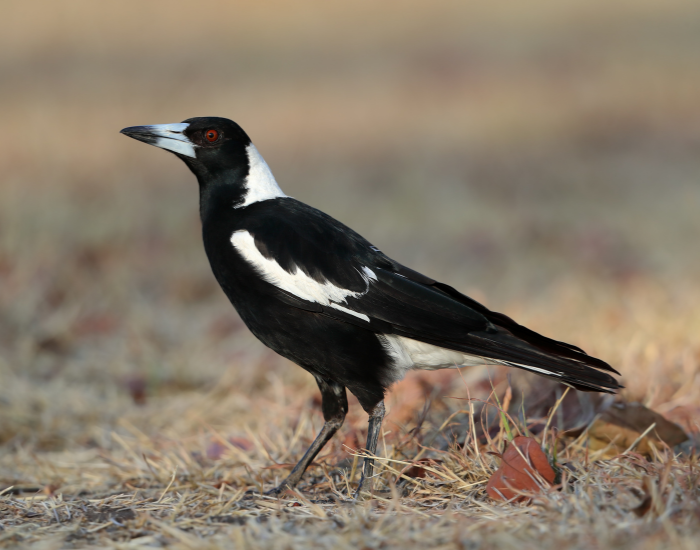
4. Yellow-Billed Magpie (Pica nuttalli)
Region: California’s Central Valley
This endemic species lives only in California. The bright yellow bill and eye patches distinguish them from black-billed relatives.
Yellow-billed magpies are highly social, roosting in large winter groups. However, West Nile virus significantly impacted populations in the early 2000s. Habitat loss also threatens survival.
Scientific Name: Pica nuttalli | Status: Near Threatened | Population: 160,000-180,000
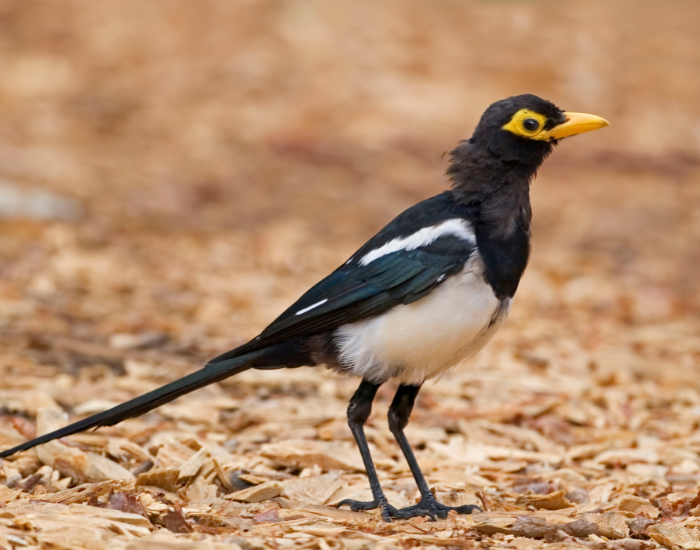
5. Oriental Magpie (Pica serica)
Region: East Asia (China, Korea, Japan)
In Asian cultures, magpies symbolize good luck, not sorrow. Korea celebrates them as national birds representing good news. In China, magpies are known as “happy magpies” and are considered signs of prosperity and joy, playing a role in the Qixi Festival legend. In Japan, magpies are revered as sacred birds that ward off evil spirits and signal prosperous times. French folklore also features magpie superstitions, highlighting the bird’s significance in various cultures.
Oriental magpies are stockier than Eurasian varieties with more blue wing iridescence and purple tail tints. They thrive in urban areas and farmland.
Scientific Name: Pica serica | Cultural Significance: Symbol of happiness in Chinese culture
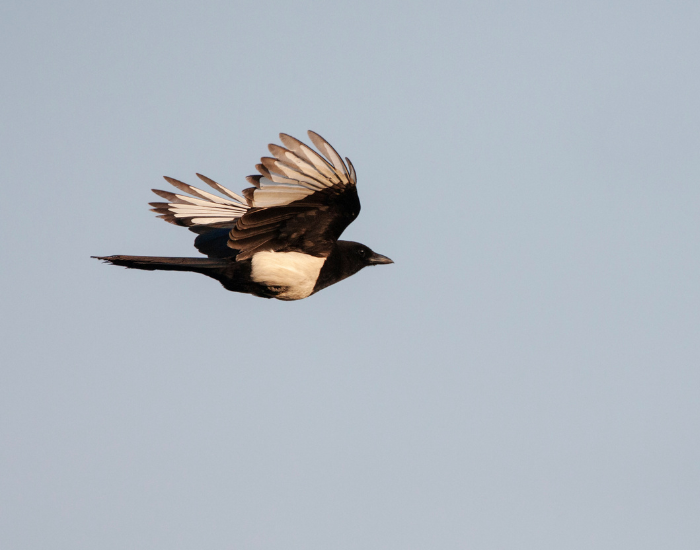
6. Azure-Winged Magpie (Cyanopica cyanus)
Region: East Asia, Iberian Peninsula
This species shows one of ornithology’s strangest distribution patterns, populations in East Asia and Spain.
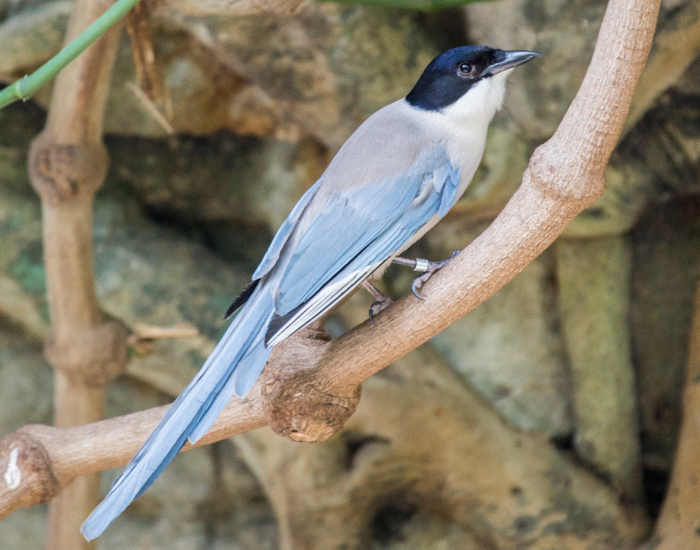
Unlike typical black and white magpies, azure-winged magpies feature beautiful blue wings and tails. Their heads are black, bodies pale grey.
These highly social birds cooperate in raising young. Multiple adults often help feed chicks.
Scientific Name: Cyanopica cyanus | Habitat: Pine forests, oak woodlands
7. Iberian Magpie (Cyanopica cooki)
Region: Spain, Portugal
Recent genetic studies revealed Iberian populations are a distinct species from Asian azure-winged magpies.
They look nearly identical with blue plumage and social behavior. However, DNA and vocalizations differ. They prefer Mediterranean habitats with cork oak forests.
Scientific Name: Cyanopica cooki | Status: Least Concern
8. Sri Lanka Blue Magpie (Urocissa ornata)
Region: Sri Lanka (Endemic)
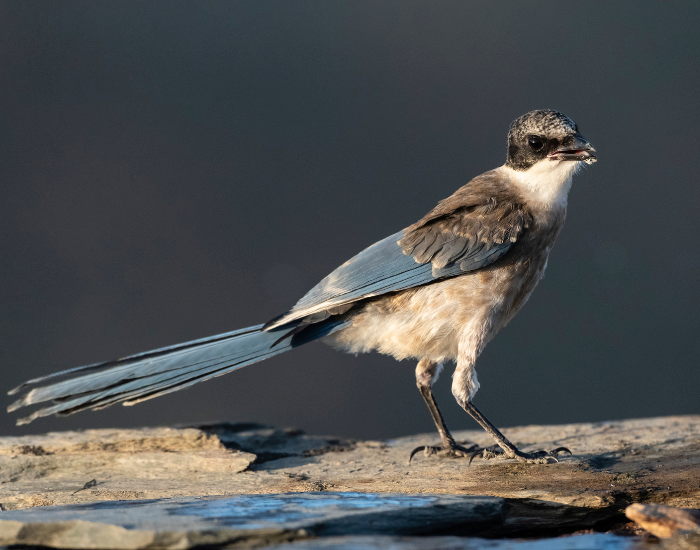
This stunning bird inhabits Sri Lanka’s wet zone forests. They feature predominantly blue plumage with chestnut-red head and wings. Their long tail has white tips, and their bill is bright red.
Sri Lanka blue magpies travel in family groups through rainforest canopies, eating insects, small reptiles, eggs, and fruits.
Scientific Name: Urocissa ornata | Status: Vulnerable | Threat: Deforestation
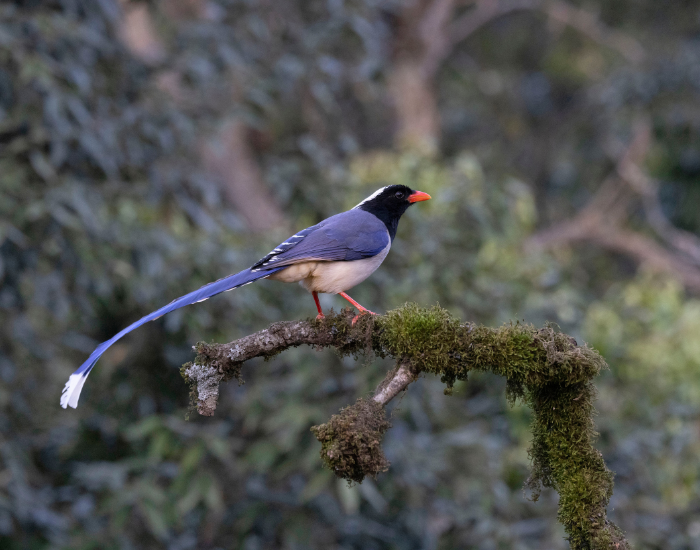
9. Red-Billed Blue Magpie (Urocissa erythroryncha)
Region: Himalayan region to Southeast Asia
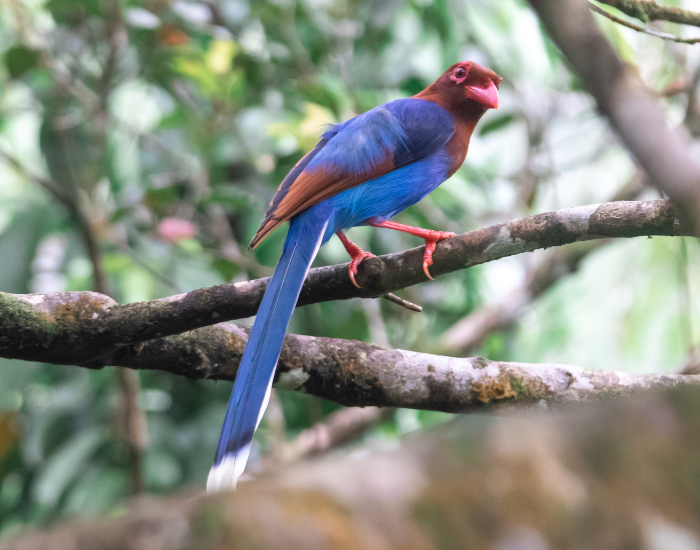
One of the world’s most beautiful birds. They have vivid blue plumage with black heads and white neck patches. Their exceptionally long tails reach twice their body length. Bright red bills and legs create striking contrast.
They inhabit forests at 600-3,000 meters elevation, feeding on insects, small birds, eggs, fruits, and seeds.
Scientific Name: Urocissa erythroryncha | Behavior: Seen in pairs or small groups
10. Yellow-Billed Blue Magpie (Urocissa flavirostris)
Region: Eastern Himalayas, Southeast Asia
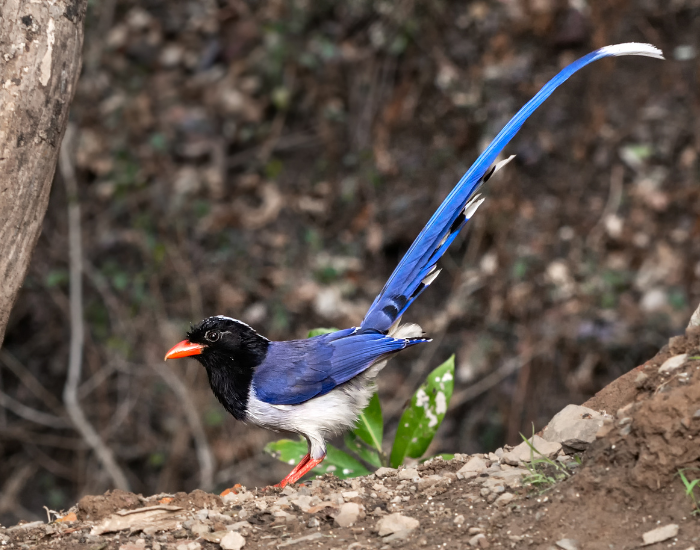
Similar to red-billed cousins but with distinctive yellow bills, legs, and eye-rings. They inhabit mountain forests at 900-3,700 meters.
These omnivorous birds search for insects in forest canopies and raid nests for eggs. They also eat berries and small vertebrates.
Scientific Name: Urocissa flavirostris | Status: Least Concern
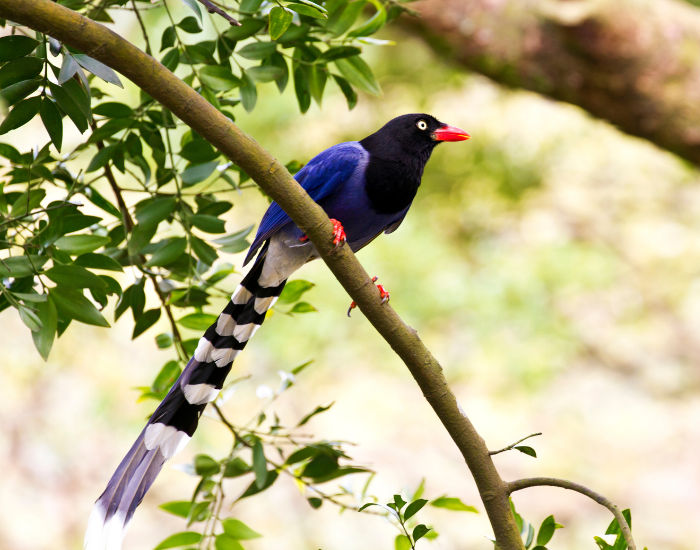
11. Taiwan Blue Magpie (Urocissa caerulea)
Region: Taiwan (Endemic)
Taiwan’s national bird exists nowhere else on Earth. They feature deep blue plumage, long tails with white tips, red bills, and yellow eyes.
Taiwan blue magpies hold special cultural significance, appearing on currency and stamps. They live in family groups and cooperate in territory defense and chick-rearing.
Scientific Name: Urocissa caerulea | Habitat: Broadleaf forests, 300-1,200m
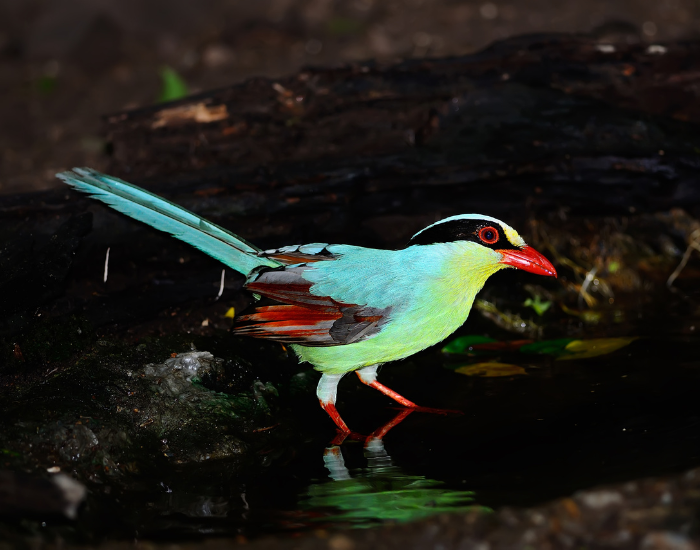
12. Green Magpie (Cissa chinensis)
Region: Southeast Asia, Eastern Himalayas
These birds break the typical magpie pattern with brilliant green plumage, chestnut wing patches, and red bills.
The green color comes from yellow pigments combined with blue structural coloration. Therefore, museum specimens often turn blue as yellow pigments degrade.
Green magpies inhabit dense forests at 300-2,400m elevation, feeding on insects, small reptiles, and occasionally small birds.
Scientific Name: Cissa chinensis | Key Feature: Rare green plumage
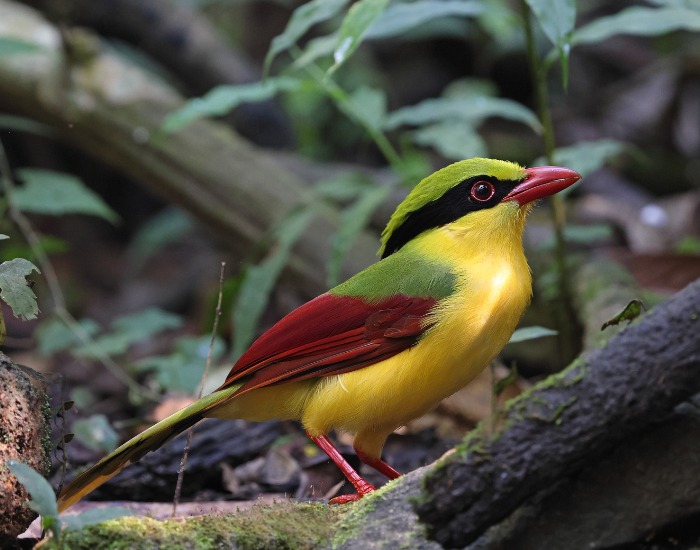
13. Indochinese Green Magpie (Cissa hypoleuca)
Region: Thailand, Vietnam, Laos
Previously considered a subspecies, this bird now has distinct species status. They have paler underparts than common green magpies.
Indochinese green magpies face pressure from illegal wildlife trade. Beautiful birds are captured for pets. Conservation efforts focus on habitat protection and combating illegal trapping.
Scientific Name: Cissa hypoleuca | Status: Near Threatened
14. Black Magpie (Platysmurus leucopterus)
Region: Borneo, Sumatra, Malay Peninsula
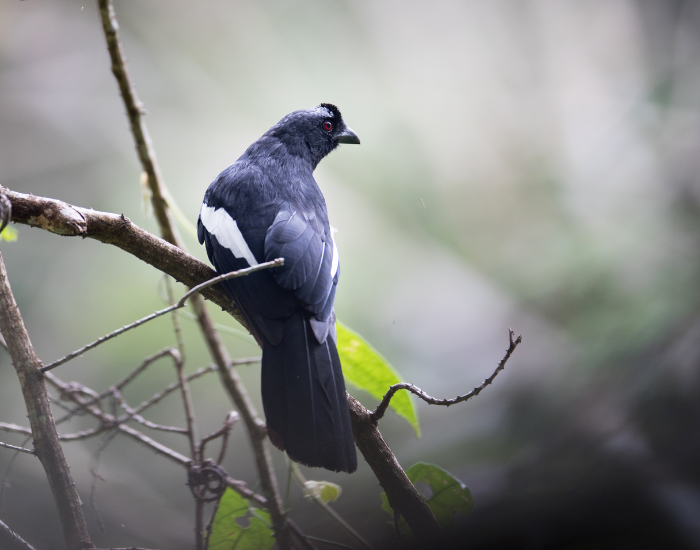
Despite the name, these birds have black plumage with distinctive white wing patches visible in flight.
Black magpies inhabit lowland and hill forests in small groups. They feed on insects, fruits, and small vertebrates. They’re less vocal than other magpie species and prefer primary forests.
It is important to mention that As of 2021, ornithologists have officially recognized two distinct species:
The Bornean Black Magpie (Platysmurus aterrimus): Endemic to Borneo, this version is entirely black, lacking the white wing flashes, and sports a noticeably taller crest of feathers on its head.
The Malayan Black Magpie (Platysmurus leucopterus): Found in the Malay Peninsula and Sumatra, this bird features the signature white wing patch I mentioned earlier.
Scientific Name: Platysmurus leucopterus | Status: Least Concern (declining)
15. Maghreb Magpie (Pica mauritanica)
Region: Northwest Africa (Morocco, Algeria, Tunisia)
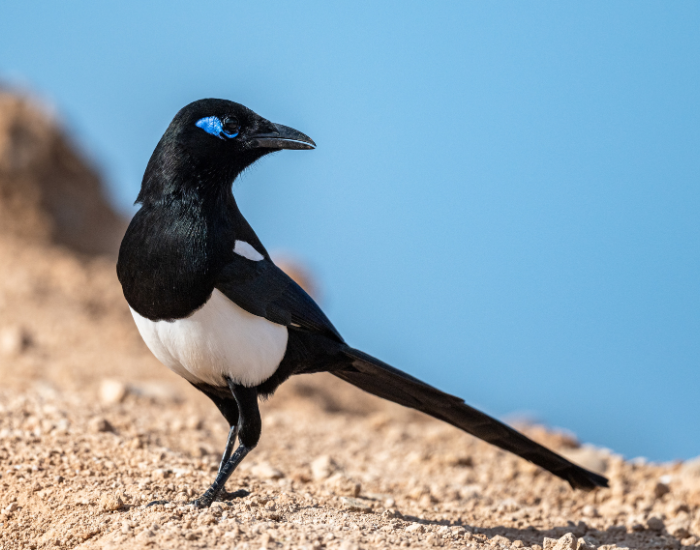
The Maghreb magpie is one of the least-known magpie species and was long considered a subspecies of the Eurasian magpie. Genetic research now confirms it as a distinct species, shaped by long-term isolation in North Africa.
At first glance, it resembles the Eurasian magpie, but closer inspection reveals key differences. The Maghreb magpie has a conspicuous bare patch of blue skin behind the eye, a shorter tail, and a softer contrast between black and white plumage. Its overall appearance is slightly more compact and less elongated.
Scientific Name: Pica mauritanica | Status: Near Threatened | Key Feature: Blue bare skin behind the eye
17. Magpie-lark (Grallina cyanoleuca)
Region: Australia, Southern New Guinea
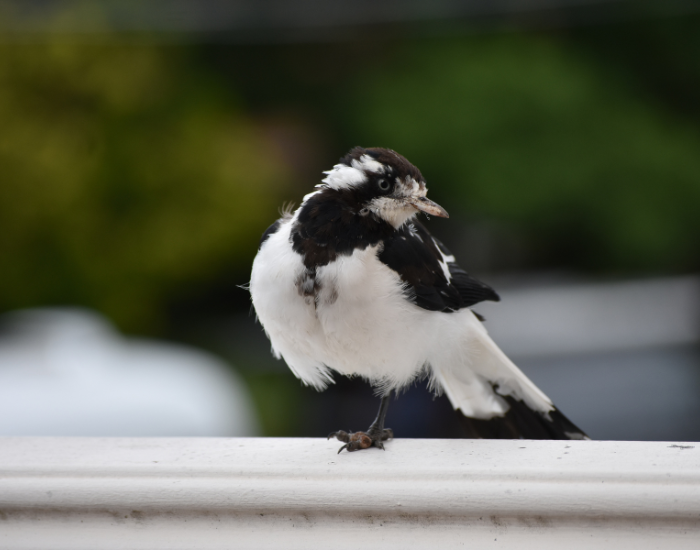
Despite the name, the magpie-lark is not a true magpie and isn’t part of the Corvidae family. It belongs to the family Monarchidae (monarch flycatchers). The name comes purely from its black-and-white plumage, another classic case of convergent evolution.
Magpie-larks are instantly recognizable in Australia, often seen strutting across lawns, riverbanks, and wetlands with an upright posture and long legs. Males and females look similar at a distance, but males have a white eyebrow and throat, while females have a black face and throat.
Scientific Name: Grallina cyanoleuca | Family: Monarchidae | Key Feature: Mud nests, loud territorial calls
Magpie Intelligence: Remarkable Bird Brains
Magpies have brain-to-body mass ratios rivaling great apes and humans. This intelligence manifests in several ways, placing magpies among the most intelligent of animals. Their cognitive abilities and social behaviors are advanced compared to many other animals.
Mimicry: Magpies mimic human speech, dog barks, car alarms, and sirens. They can mimic over 35 species of native and introduced bird species, as well as other animal calls, including those of dogs and horses. This demonstrates advanced vocal learning.
Problem Solving: They understand object permanence, that hidden food still exists. Human babies don’t achieve this until 8 months old. Studies show magpies solve complex puzzles for food rewards. Magpies can also recognize themselves in a mirror, a type of intelligence previously only displayed in a handful of animals such as great apes like chimpanzees, dolphins, and elephants.
Social Intelligence: I’ve witnessed “magpie funerals.” When family members die, other magpies gather around the body, sometimes bringing sticks or grass. They stand in silence or make soft calls. Magpies exhibit this unique ‘funeral’ behavior, gathering and calling loudly when they encounter a dead magpie. While we avoid anthropomorphizing, it suggests grief-like behavior. Magpies sometimes roost or interact with other birds, including crows, ravens, and small songbirds, highlighting their complex social structures.
Magpies form long-term pair bonds and recognize individual humans, remembering those who helped or threatened them. However, there is some doubt about the reliability of all studies and beliefs regarding magpie intelligence, as certain claims may be exaggerated or based on anecdotal evidence.
FAQs about Magpies
Most magpies are medium-sized birds with black and white plumage and very long tails. True corvid magpies show iridescent green or blue feathers in sunlight. However, some species like blue magpies and green magpies feature entirely different colors.
Yes! Black-billed magpies live throughout Western North America. Yellow-billed magpies are found only in California. You won’t find magpies on the East Coast.
Magpies are omnivorous, eating insects, carrion, eggs, small birds, fruits, and seeds. In urban areas, they sometimes scavenge human food.
This is largely myth! Studies show magpies are wary of new objects (neophobia). They avoid unfamiliar shiny items more than collect them.
In Western folklore, magpies represent mischief or theft. The rhyme “One for sorrow, two for joy” associates numbers with luck. However, in East Asian cultures, magpies symbolize good fortune and happiness.
Most Northern Hemisphere species breed March-July. Australian magpies breed during Australian spring (September-November). Males become aggressive defending nesting areas during this time.
Seeing Magpies Differently
Whether dodging swooping Australian magpies or watching Eurasian magpies outsmart predators, these birds demand respect. They aren’t just beautiful birds with striking plumage. They’re highly intelligent, social creatures with complex understanding of their world.
Next time you see a magpie, don’t just admire the black and white feathers or long tail. Watch the behavior. Look at the eyes. There’s remarkable intelligence behind that gaze.
From iridescent blue feathers of Asian species to melodic calls of Australian magpies, these birds fascinate biologists worldwide. Each species adapts to unique environments while maintaining core traits: intelligence, social complexity, and survival skills.