I remember the first time I saw brittle stars. I was diving off the coast of Komodo, still buzzing from an encounter with a massive Komodo dragon on the beach just hours before. The ocean was that perfect, crystalline turquoise you only find in the Indo-Pacific. I hovered over vibrant coral, surrounded by many types of coral fish such as puffer fish and the territorial trigger fish that seemed to guard the reef like colorful bouncers.
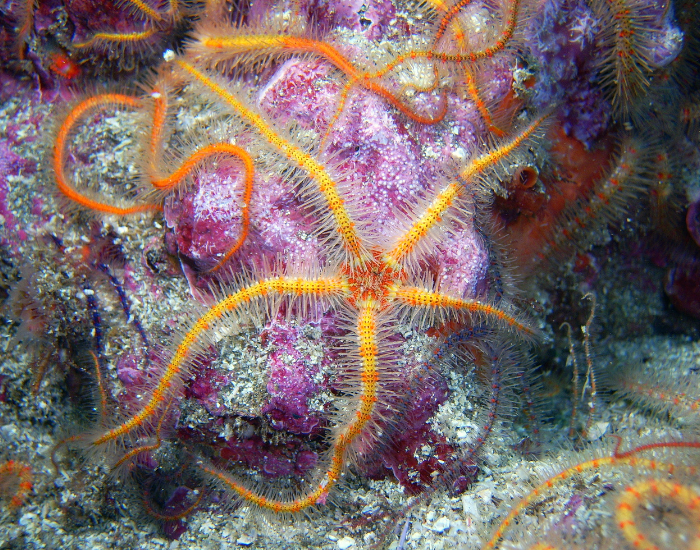
Then, something moved in the shadows of a crevice. It wasn’t a fish, and it certainly wasn’t a standard sea star. It looked like a collection of hyperactive, spindly snakes attached to a central disk. This was my introduction to the brittle star.
As a biologist, I’ve encountered plenty of unusual marine animals, but there’s something uniquely alien about these creatures. They belong to the class Ophiuroidea, and while they resemble their starfish cousins, they are completely different, both in movement and survival.
If you’ve ever wondered about these serpent stars, you’ve come to the right place. Let’s explore 12 facts that make brittle stars one of the most successful and strange inhabitants of our oceans.
1. They’re Not Actually Starfish
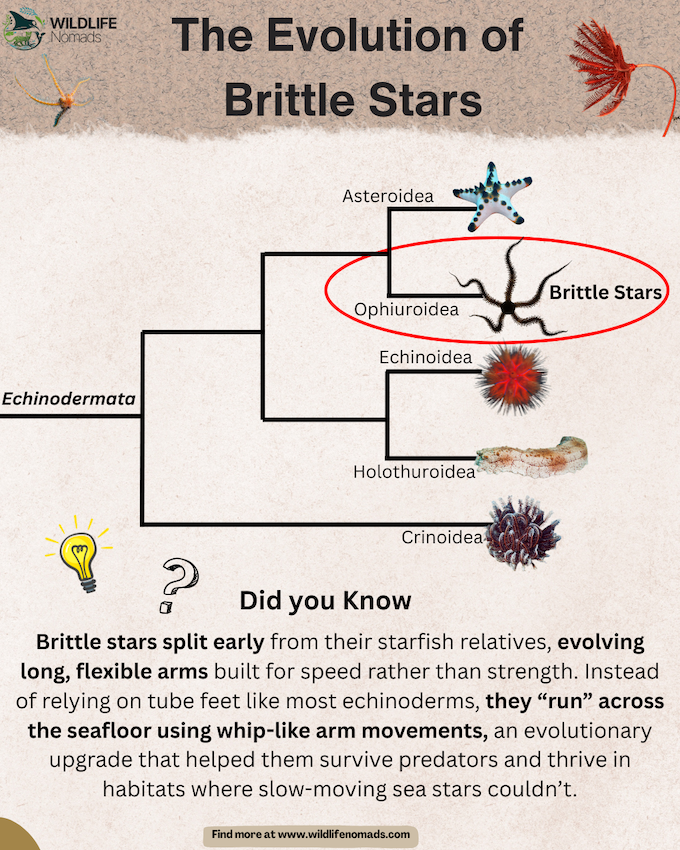
Despite the common nickname “brittle starfish,” these animals aren’t true starfish (Asteroidea). While both belong to the phylum Echinodermata, they diverged hundreds of millions of years ago during the Early Ordovician period.
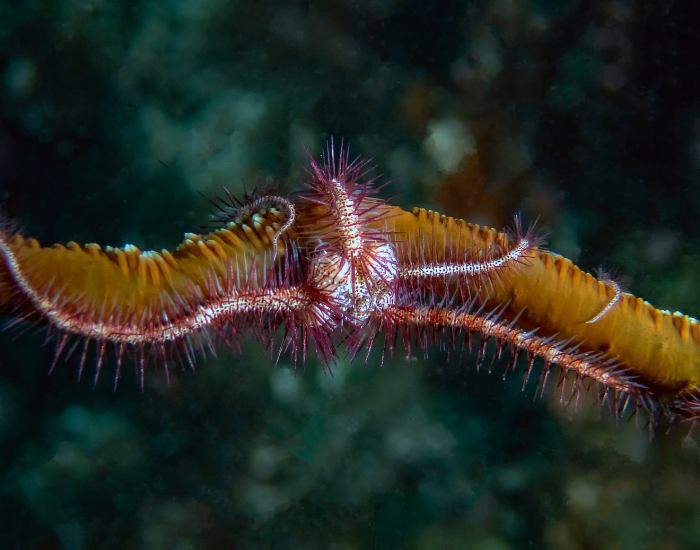
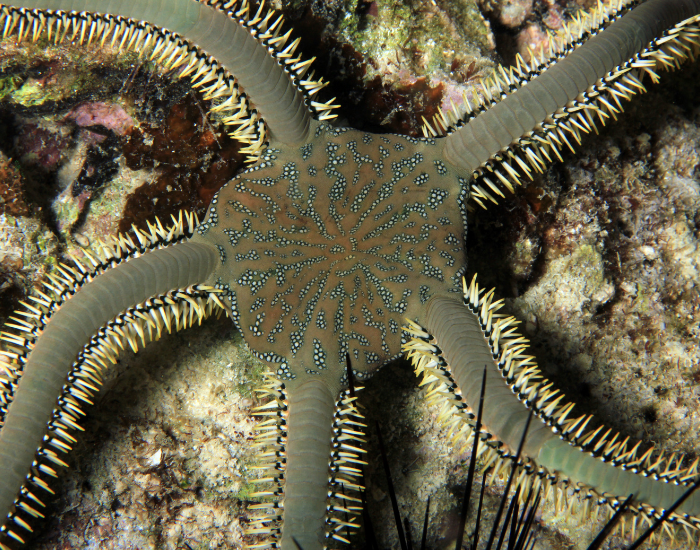
The biggest difference? Their anatomy. In a true sea star, organs extend into the arms. However, in brittle stars, all vital organs, the digestive system and reproductive organs, are crammed into that small central disk. Their arms are purely for locomotion and sensing their environment. The arms begin at the sharply defined central disk and are supported by articulated plates, allowing for remarkable flexibility. Think of them as the lean, agile version of a sea star.
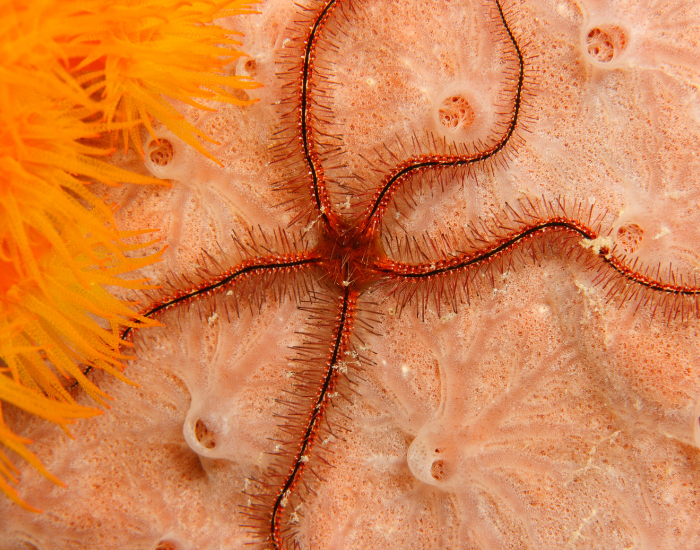
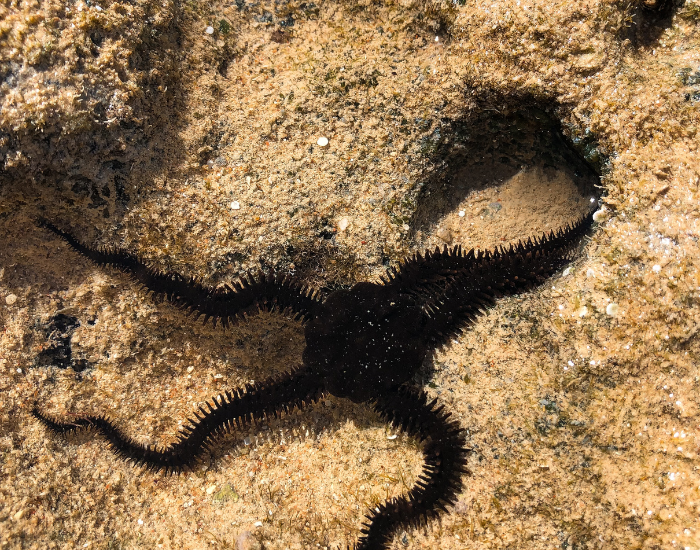
Brittle stars have five long, slender, whip-like arms which may reach up to 60 cm (24 in) in length on the largest specimens, though size varies among species. These serpent like arms are highly flexible and can bend in all directions, giving brittle stars their characteristic movement.
The central disc is sharply marked off from the five arms, creating a distinct body plan unique to the Ophiuroidea. This design allows them to squeeze into tight spaces on the seafloor where predators can’t reach.

2. The Masters of Self-Amputation
The name “brittle” isn’t marketing, it’s a survival strategy. In the wild, you may watch crabs try to snag a brittle star, only to be left holding a single, wriggling arm while the rest of the animal vanished into a rock crack.
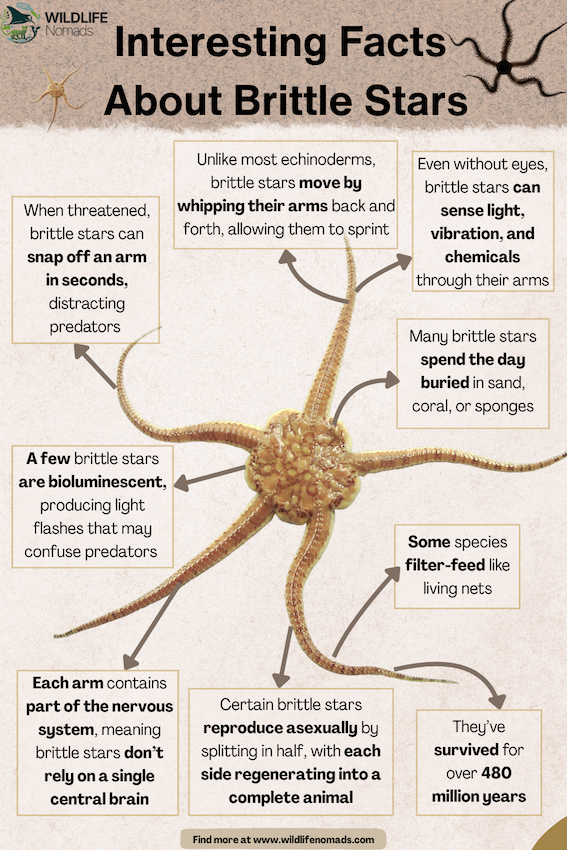
This process is called autotomy. Brittle stars can voluntarily shed an arm to distract predators. Because their vital organs stay safely tucked in the central disk, losing an arm is merely an inconvenience. They can regenerate a lost arm in several weeks to months.
It’s a brutal but brilliant strategy in the “eat or be eaten” reef environment. The ability to regenerate lost arms gives these marine invertebrates remarkable resilience against predators like crabs, fish, and other sea stars.
3. Diversity That Rivals the Rainforest
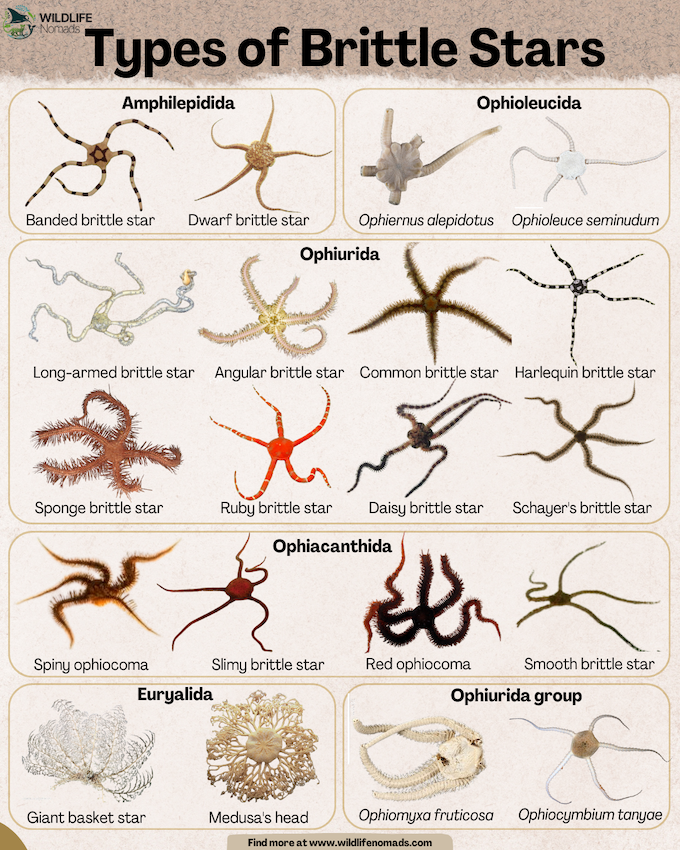
When we talk about brittle star species, we’re not discussing a handful of animals. Scientists have described over 2,000 species of brittle stars. This makes them the most diverse group of all echinoderms, surpassing sea urchins, sea cucumbers, and sea stars.
Different species of brittle stars exhibit a wide range of forms and feeding strategies, adapting to various ecological niches. Most species of brittle stars have five arms, but some may have more, highlighting the diversity within the group. Compared to the other group of echinoderms, such as sea stars, brittle stars move with a distinct snake-like motion and often occupy different habitats.
The variety is staggering. You have basket stars, which look like tangled fractal branches. Serpent stars have smooth, snake-like arms. Spiny brittle stars are covered in calcite plates resembling tiny thorns.
Brittle stars can be found today in all of the major marine provinces, from the poles to the tropics. More than 1,200 species live in deep waters greater than 200 meters. From shallow water reefs to the deepest ocean trenches, these species have adapted to virtually every marine habitat.
4. They Move Like Snakes, Not Sea Stars
If you watch a regular sea star move, it’s a slow crawl powered by thousands of tiny tube feet. It’s effective but not fast.
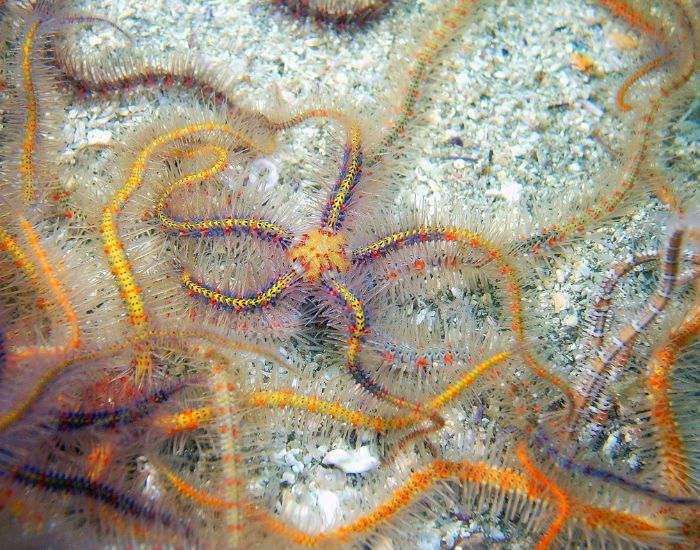
Brittle stars are different. They use their flexible arms to “row” or “slither” across the seafloor. By lashing their snake-like arms, they move surprisingly quickly. During my time diving in the Philippines, I watched a brittle star scuttle across a sandy patch to escape my flashlight. It moved with coordination that felt almost mammalian.
This agility is why they’re often called serpent stars. The long arms contain hundreds of interlocking calcium carbonate plates linked by muscles that function like ball-and-socket joints, allowing rapid, coordinated movement.
5. They Live in Earth’s Most Extreme Places
While I love seeing them in shallow reefs, the brittle star habitat extends far deeper than most realize. These deep-sea brittle stars are true survivors.
Brittle star species live in a variety of environments, including deep-sea habitats such as seamounts, abyssal plains, and near hydrothermal vents. Scientists have found them in the Hadal zone at depths exceeding 6,000 meters, nearly 20,000 feet. Down there, in crushing darkness, they often congregate in massive beds with thousands of individuals covering the sea floor like a living carpet.
Brittle stars occupy every ocean from the Arctic to the tropics. Some species even tolerate brackish water, an ability almost unknown among echinoderms. They’ve conquered environments from coral reefs to hydrothermal vents to the abyssal plains.
6. They Don’t Have an Anus
Here’s a strange fact: if you have a mouth but no exit strategy, how does digestion work? Brittle stars have a remarkably simple digestive system. They have a mouth on the underside of their central disc with five jaws, but they lack an intestine and anus.
Anything they can’t digest is expelled back through the mouth. This efficient minimalist design allows them to maintain that thin, flat profile perfect for hiding in tight coral crevices.
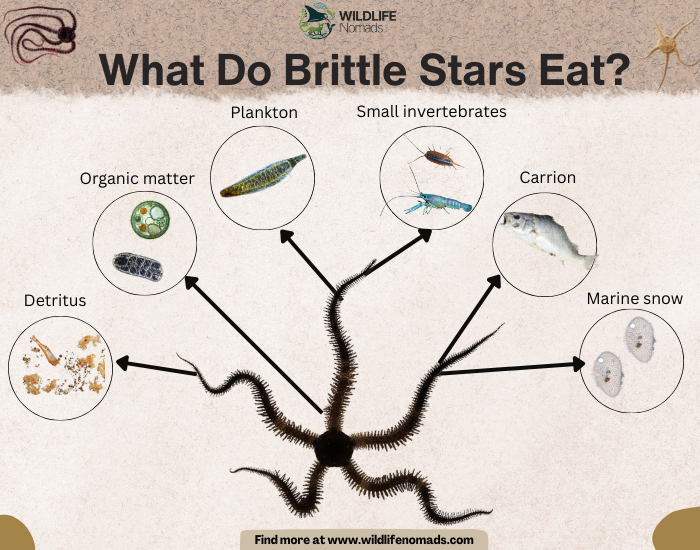
As detritivores, they eat small organic particles, marine snow, and small animals. The tube feet move food particles toward the mouth located on the underside of the body.
7. Their Entire Body Can “See” Without Eyes
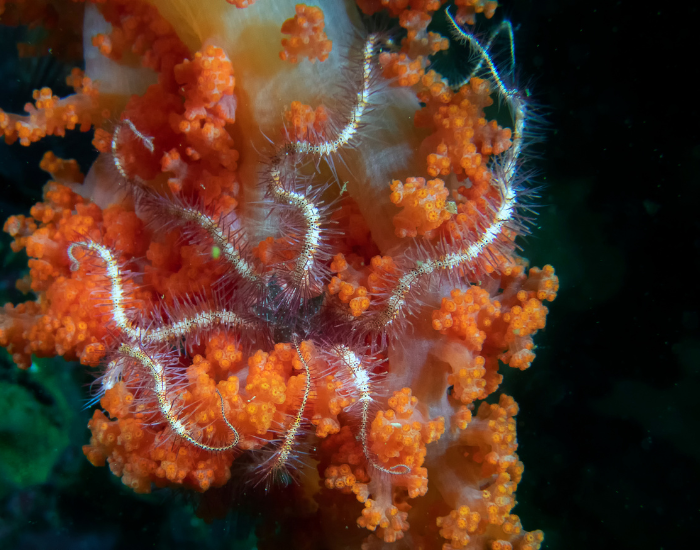
One of the most fascinating pieces of brittle star research involves their vision. For years, scientists thought they were blind. However, research published in Nature in 2001 revealed something remarkable about species like Ophiocoma wendtii: their bodies are covered in thousands of microscopic crystals embedded in their skeleton.
Scientists initially believed these crystals acted as lenses, allowing the skeleton to function as a giant compound eye. However, more recent research published in 2018 showed the reality is even more interesting. The brittle star’s entire body surface is covered in extensive networks of photoreceptor cells, the same light-sensitive cells found in animal eyes—but these work independently of the crystals.
This whole-body photoreception allows them to detect shadows and light without traditional eyes, helping them find dark hiding spots during the day to avoid predators. They can sense when exposed to light and quickly move toward shelter that represents safety from fish and other predators.
8. Ocean Janitors of the Seafloor
In marine ecosystems, brittle stars play the role of ultimate recyclers. They’re opportunistic feeders with varied diets. Some species are scavengers and detritivores, consuming decaying organic matter that falls from the surface. Others are suspension feeders, waving their arms in the water to catch passing plankton.
By cleaning the seafloor, they prevent organic waste buildup that could lead to harmful bacteria blooms. They’re unsung heroes of reef health and the seafloor ecosystem.
Many species in the family Ophiuridae are carnivorous, actively hunting small crustaceans, worms, and other small animals on the seafloor. This versatility in feeding strategies contributes to their ecological success across different habitats.
9. Not Fish, They’re Marine Invertebrates
Occasionally, you’ll hear people call them “brittle fish.” As a biologist, I gently correct this. They aren’t fish, they don’t have gills, scales, or backbones. They’re marine invertebrates with a water vascular system.
This hydraulic system uses water pressure to move their tube feet and assist with gas exchange for respiration. It’s fundamentally different from how fish breathe and move.
Understanding they’re echinoderms, not fish, helps appreciate their unique evolutionary history spanning roughly 500 million years since the Early Ordovician.
10. Some Species Glow in the Dark
Bioluminescence is common in deep-sea species (like the deep sea anglerfish), and brittle stars are no exception. Some can produce ghostly green or blue light.
Why glow? It’s likely a “burglar alarm” strategy. When a predator attacks, the flash of light may startle the attacker or attract an even larger predator to eat the thing trying to eat the brittle star. The ocean is a high-stakes game of light and shadows.
No basket stars or serpent stars are known to be bioluminescent, but many other brittle star species possess this remarkable ability. The light-producing mechanisms help these animals survive in deep waters where sunlight never penetrates.
11. Multiple Reproduction Strategies
Nature loves redundancy. Most brittle stars reproduce through broadcast spawning, releasing eggs and sperm into the water where they develop into free-swimming larvae called ophiopluteus.
However, some species are brooders, keeping young in pouches within their central disk until they emerge as tiny, fully-formed stars. Some can even reproduce asexually by splitting their central disc in half and regenerating the missing pieces through fissiparity.
Brittle stars generally reach sexual maturity in two to three years, become full grown in three to four years, and can live up to five years. Members of certain groups, like basket stars, may live much longer.
12. Are They Dangerous to Humans?
Generally, no. They don’t have venomous stingers or sharp teeth that can pierce human skin.
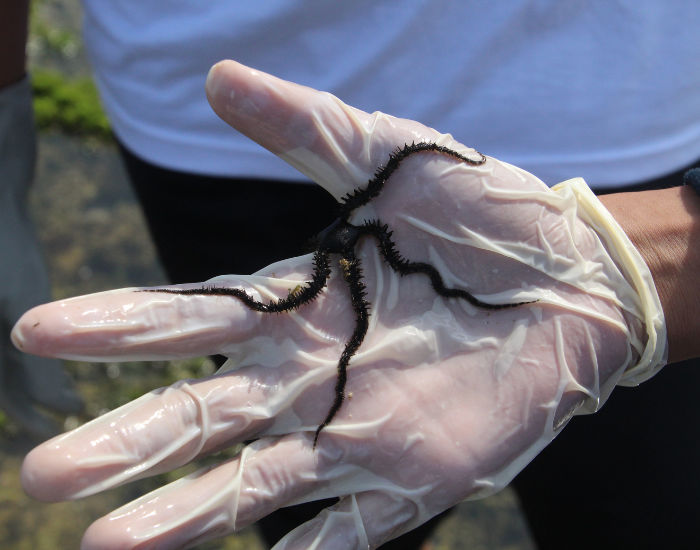
However, they’re incredibly delicate. If you try to pick one up, you’ll likely cause it to drop its arms in a stress response. Can you touch a brittle star? You can, but you shouldn’t.
My rule is “look but don’t touch.” Human skin oils and physical pressure are often too much for their fragile calcite skeleton. These small animals deserve our respect and careful observation rather than handling.
Brittle stars and their habitats can also be affected by human activities such as pollution, oil spills, and physical disturbance, which may negatively impact their populations and the ecosystems they support.
FAQ: Everything You Need to Know
The main difference is anatomy. Sea stars have thick arms with organs inside, while brittle stars have thin, whip-like arms and keep all organs in a central disc. Brittle stars also move by thrashing their flexible arms, whereas sea stars use tube feet to crawl.
They act as scavengers and decomposers. They eat detritus, small crustaceans, worms, and organic waste, keeping the seafloor and coral reefs clean and healthy. They’re essential seafloor ecosystem engineers.
No, they’re not harmful to humans. They’re shy, nocturnal creatures that prefer hiding under rocks or in coral crevices. They lack venom and pose no threat.
Brittle stars live in all oceans from the Arctic to the tropics. They inhabit shallow water tide pools, coral reefs, rocky areas, sandy bottoms, and deep-sea environments. Some species thrive at depths greater than 6,000 meters in the deep sea.
The Verdict from the Field
As I sat on the boat back in Lombok, watching the sun dip below the horizon, I thought about how these strange creatures are the glue of the marine world. Whether hiding in tropical reef habitat or surviving freezing pressures as deep-sea brittle stars, they represent the incredible resilience of life.
The next time you’re snorkeling and see snake-like arms poking from a rock, don’t be afraid. You’re looking at a masterpiece of evolution that has survived for 500 million years. These ancient marine animals continue thriving in Earth’s oceans, playing vital roles in maintaining healthy seafloor ecosystems from shallow water to the deepest abyss.