The frozen Arctic landscape remains one of Earth’s most extreme environments. After spending over eight years studying polar ecosystems and witnessing climate change firsthand during my fieldwork in Svalbard and the Canadian Arctic, I’ve gained unique insight into how these remarkable animals survive the harsh conditions of the far north.
My interest in Arctic wildlife began during an exchange year studying biology at Uppsala University in Sweden. While I wasn’t conducting field research, I had the opportunity to travel north to Kiruna, just above the Arctic Circle, where I experienced the landscape firsthand.
During my time there, I joined a guided husky sledge trip across the frozen tundra and went on a winter hike through Arctic terrain. Along the way, I saw semi wild reindeer moving through the snow as the low winter light cast soft violet tones across the landscape. Those moments, brief but powerful, made the adaptations of Arctic animals feel tangible rather than theoretical, and sparked a lasting fascination with how life persists in such extreme conditions.
The Reality of Life in the Arctic Environment
In this blog we love animals that have adapted to harsh and rough environments, we already have explored desert animals. But when we discuss animals in polar lands, we’re examining creatures that have mastered extreme physiology. these creatures possess adaptations including anti-freeze proteins in their blood, hollow hair for insulation, and metabolic rates that shift dramatically with seasonal changes.
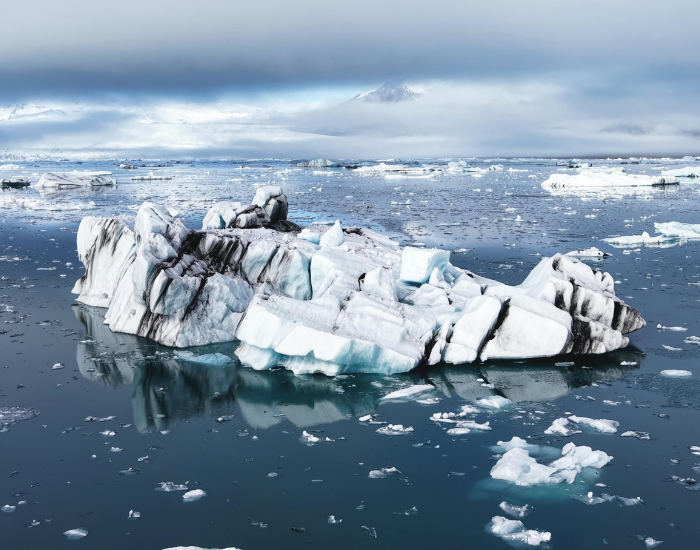
Arctic ice plays a crucial role in providing shelter, breeding grounds, and migration routes for Arctic wildlife such as seals and whales; changes in arctic ice directly impact animal behavior, migration patterns, and survival in this unique ecosystem. The Arctic Ocean and surrounding sea ice form an ecosystem in constant flux.
1. Polar Bears: Apex Predators of the Sea Ice
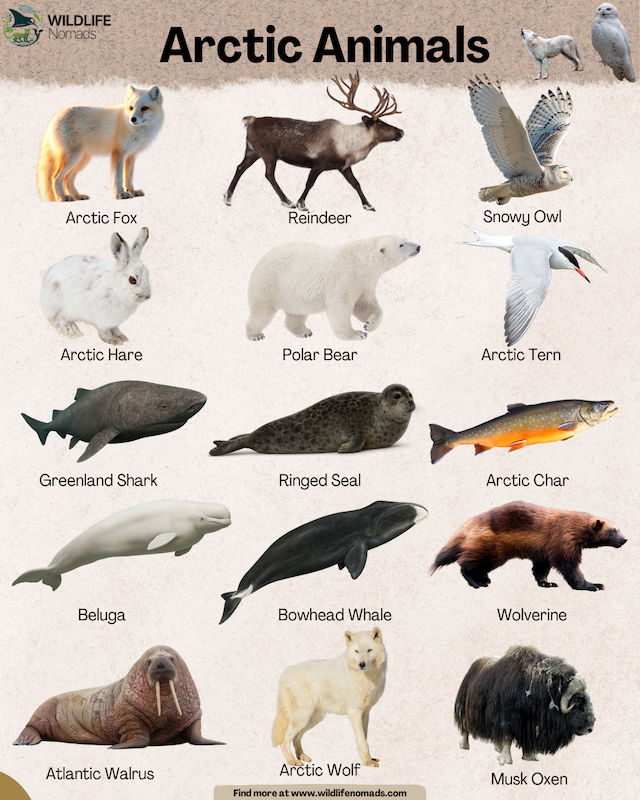
Often called the King of the Arctic, polar bears (Ursus maritimus) represent the definitive apex predator of the Arctic region. Unlike other types of bears, they’re classified as marine mammals because they spend most of their lives on Arctic sea ice hunting ringed seals and bearded seals.
Their thick fur isn’t actually white but translucent and hollow, reflecting light while their pitch-black skin underneath absorbs heat. During my time in the north, I learned that a polar bear’s survival depends entirely on healthy sea ice. Without stable ice platforms, they cannot effectively hunt their primary prey. Climate change and habitat loss now threaten them, earning them a Vulnerable conservation status.
Regions like Svalbard, the Canadian Arctic, and Greenland are known for having more polar bears, making them prime locations for those wildlife enthusiasts hoping to see them in their natural habitat. In particular, Svalbard is considered one of the best locations for spotting polar bears during Arctic expeditions.

2. Wild Reindeer and Caribou: Icons of the Arctic Tundra
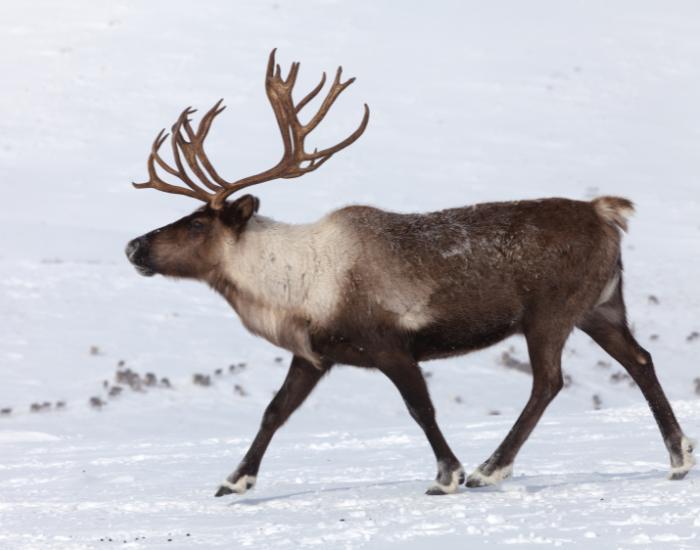
Reindeer and caribou (Rangifer tarandus) embody the spirit of the Arctic tundra. During my trek north of Kiruna with a dog sledge team, I witnessed their silhouettes against endless white expanses, a memory that still captivates me.
These animals are unique among deer species because both males and females grow antlers. Their specialized hooves function like natural snowshoes, spreading wide to support their body length on soft snow or soggy summer tundra. Across Arctic regions, they undertake the longest land migration of any terrestrial mammal, traveling thousands of miles annually to reach breeding grounds and feeding areas.
3. Narwhals: The Unicorns of Arctic Waters
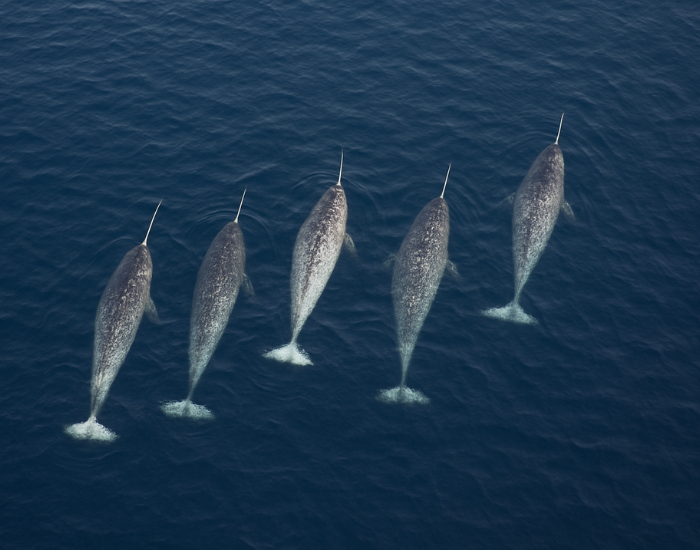
The narwhal (Monodon monoceros) remains perhaps the most enigmatic species in Arctic waters. That famous spiral tusk, which has earned narwhals the nickname ‘unicorns of the sea,’ is actually an elongated tooth that grows through the upper lip and can reach up to 2.7 metres (about 10 feet) long in males.
Recent research reveals the tusk functions as a sensory organ containing millions of nerve endings. Scientists believe narwhals use it to detect changes in water temperature, salinity, and pressure. These social animals frequent deep Arctic Ocean waters, particularly around West Greenland, East Greenland, the Canadian Arctic, and Baffin Island, a key area where narwhals are highly concentrated and frequently observed. The best time to see narwhals is between May and August, when they travel closer to shore in search of food. They live in large herds and rely on pack ice edges for protection from killer whales, their primary predator.
4. Arctic Fox: Masters of Frozen Survival
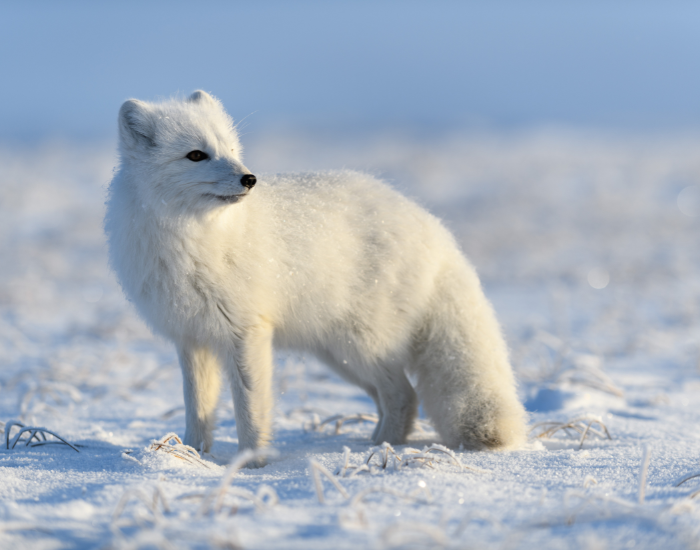
The Arctic fox (Vulpes lagopus) represents the ultimate opportunist in the Arctic wildlife community. I’ve observed these small hunters in sub-arctic brush, watching them employ remarkable hunting strategies including dramatic jumps into snow to catch Arctic hares and lemmings. They also hunt for bird eggs as part of their diet, showcasing their adaptability in the harsh Arctic environment.
Arctic foxes can often be found scavenging in Greenland, Iceland, and Norway, where they prey on small animals like birds and lemmings. They possess a counter-current heat exchange system in their hind legs, preventing body heat loss to frozen ground. The Arctic fox has a thick, multi-layered fur coat that provides insulation against extreme cold, making it well-suited for survival in frigid temperatures as low as -50°C before shivering begins. During harsh winter months, Arctic foxes often follow polar bears to scavenge seal carcasses left on sea ice.
5. Arctic Hare: Speed on the Tundra
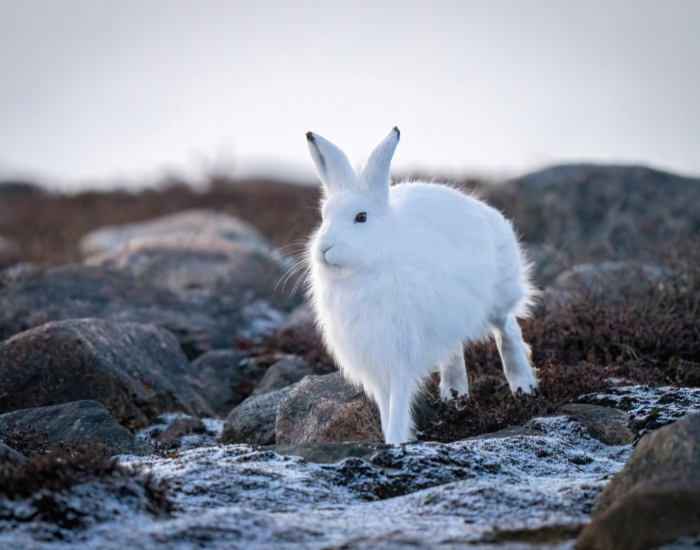
Don’t let their appearance fool you, Arctic hares (Lepus arcticus) are powerhouses. These animals bolt at speeds reaching 40 mph when threatened by predators like Arctic wolves or grey wolves. In the high Arctic, they maintain white coats year-round for camouflage against snow. However, in more southern Arctic areas, they turn brownish-grey during summer months to blend with exposed rocks and moss.
6. Walrus: Giants of Arctic Waters
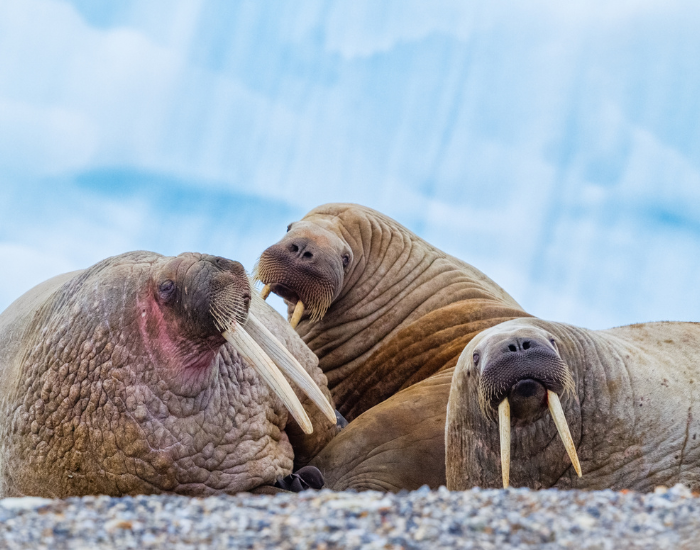
Atlantic walrus (Odobenus rosmarus) rank among the heaviest Arctic animals. Males can exceed 2,000 kg in body length and weight combined. Their distinctive tusks serve multiple purposes: hauling massive bodies from Arctic waters onto sea ice, defending territory, and social signaling within large colonies.
These social animals form large herds on ice floes and coastal areas. They use their tusks and sensitive whiskers to locate clams and other prey on the ocean floor. Walrus populations face threats from climate change as receding pack ice forces them to rest on land masses rather than their preferred ice sheets.
7. Beluga Whales: Vocal Specialists of the Arctic Ocean
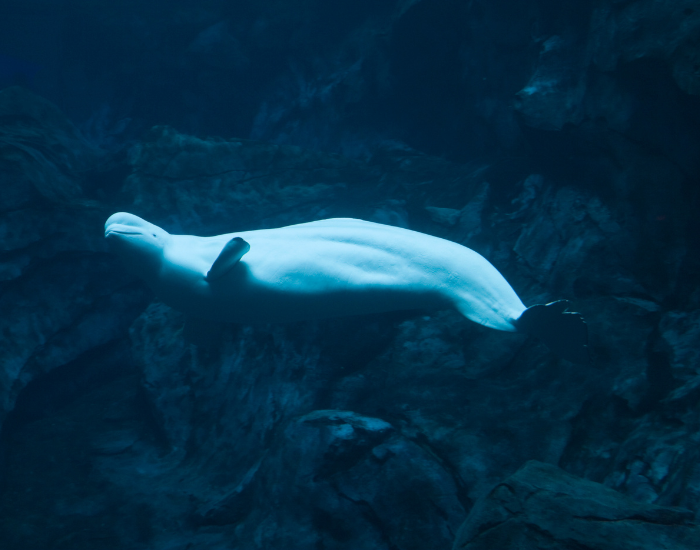
Known as sea canaries, beluga whales (Delphinapterus leucas) produce high-pitched whistles and chirps that echo through Arctic waters. Their vocal sounds serve crucial communication functions within their social groups. Unlike most whales, belugas possess unfused neck vertebrae, allowing them to turn their heads, a vital adaptation for navigating complex cracks in sea ice.
8. Musk Oxen: Living Relics from the Ice Age
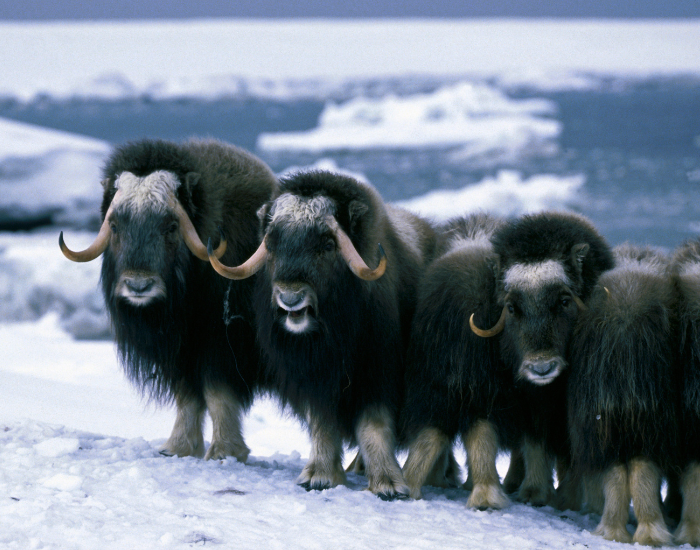
Musk oxen (Ovibos moschatus) are literal ancient animals, having survived in the Arctic for thousands of years since the Ice Age. Their outer guard hair grows nearly 100 cm long, covering soft qiviut under-wool that provides insulation eight times warmer than sheep’s wool.
These animals live in large herds and form defensive circles when threatened by Arctic wolves, with adults protecting calves in the center. Their ability to withstand harsh conditions and frigid temperatures makes them true Arctic survivors. You can find them across Greenland, northern Canada, and introduced populations in Norway and Russia.
9. Arctic Char: Northernmost Freshwater Fish
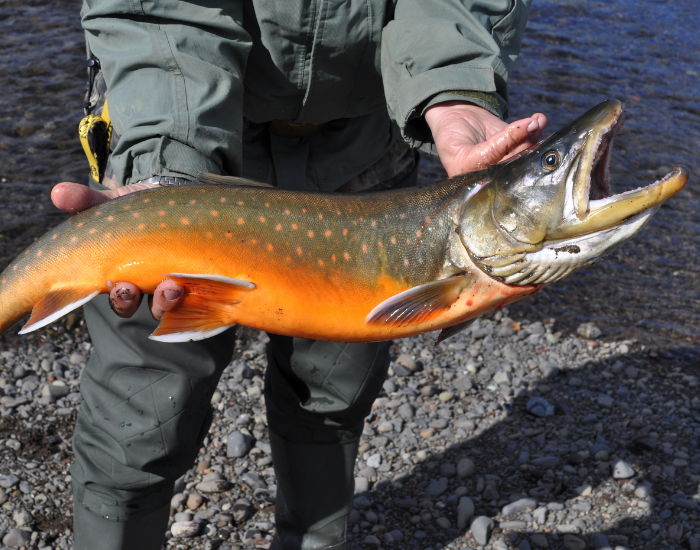
Arctic char (Salvelinus alpinus) fascinate biologists as the northernmost freshwater fish species. These hardy animals inhabit glacial lakes frozen for most of the year. They represent a vital food source for indigenous communities, Arctic terns, and other wildlife throughout the north pole regions.
10. Snowy Owl: Daytime Hunters of the Tundra
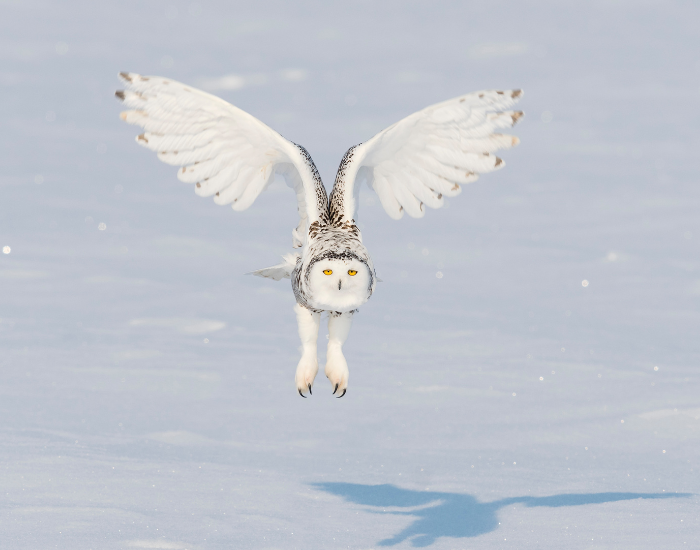
Not many birds of prey live in the arctic, and unlike most owls, snowy owls (Bubo scandiacus) hunt during daylight, a necessary adaptation for 24-hour Arctic summer sunshine. These nomadic birds follow boom-and-bust cycles of lemmings across the Arctic tundra. During breeding season, they nest on the ground in areas providing good visibility for spotting predators.
11. Bowhead Whales: Arctic Longevity Champions
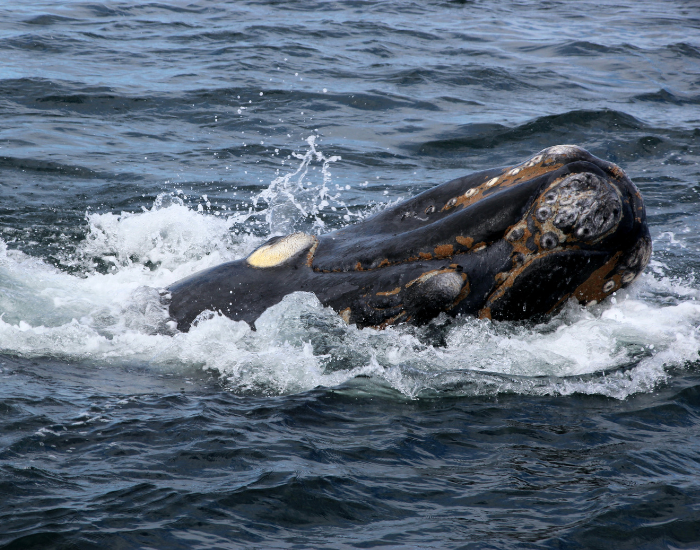
Bowhead whales (Balaena mysticetus) can live over 200 years, making them among Earth’s longest-lived mammals. They possess the thickest blubber of any animal—up to 50 cm—providing insulation in icy Arctic waters. Bowhead whales are the only species of whale that live year-round in the Arctic. They lack dorsal fins, a unique feature among whales that helps them navigate under sea ice. These whales can measure up to 15–18 metres and weigh over 100,000 kg. Their massive, reinforced skulls break through thick sea ice from beneath, allowing them to breathe in areas where other mammals cannot survive.
12. Arctic Terns: Ultimate Long-Distance Migrants
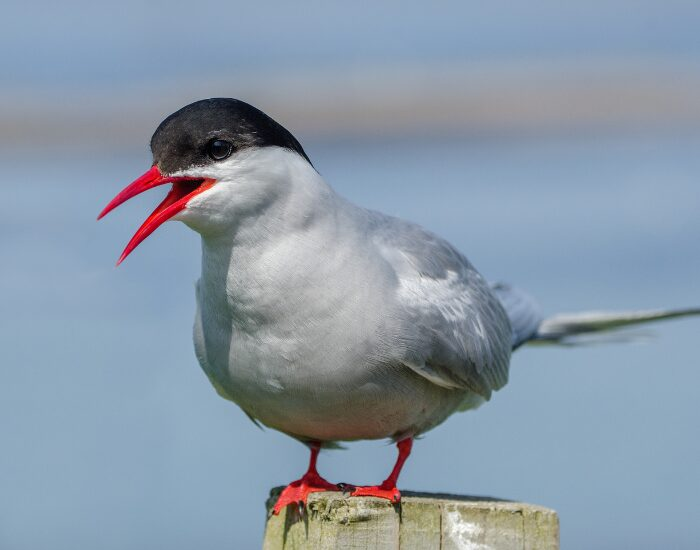
Arctic terns (Sterna paradisaea) witness more daylight than any creature on Earth. They migrate from the Arctic Circle to Antarctic regions and back annually, a round trip of approximately 59,000 miles (96,000km), one of the largest migration on earth. These birds experience two summer months in each polar region, maximizing feeding opportunities during their breeding season and winter months.
13. Ringed Seals: The Ice Architects of the Arctic
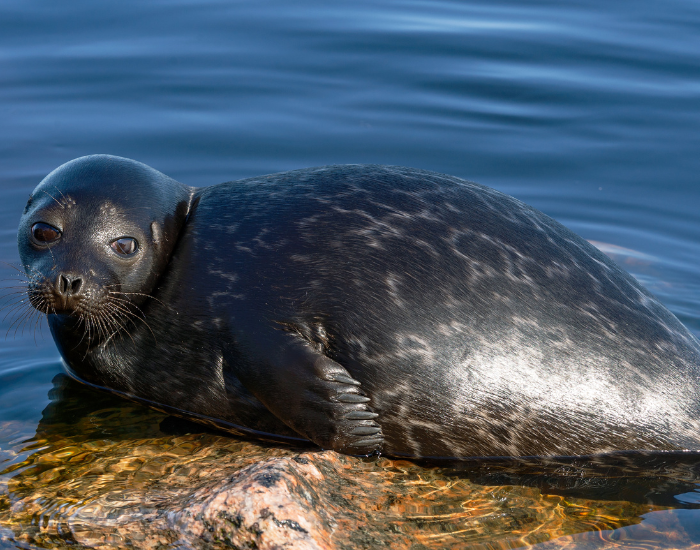
Ringed seals are arguably the most important mammals in the Arctic food web. Unlike other species of seals, they maintain breathing holes in thick sea ice using the claws on their foreflippers, a behavior that allows them to survive in regions where ice never fully breaks.
These seals are the primary prey of polar bears, making their population health directly tied to the survival of the Arctic’s apex predator. Ringed seals also give birth in snow dens built atop sea ice, providing insulation and protection for pups during the coldest months. As sea ice thins and becomes less stable, these critical breeding habitats are disappearing, placing increasing pressure on their populations.
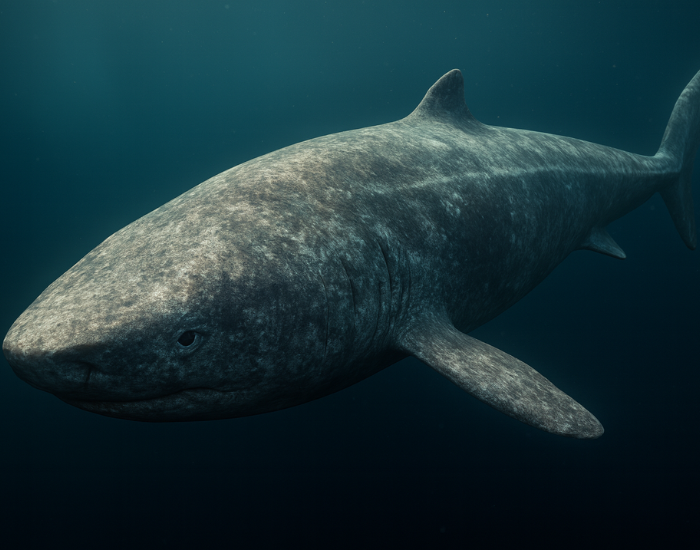
14. Greenland Shark: The Longest-Living Vertebrate on Earth
The Greenland shark (Somniosus microcephalus) is one of the Arctic Ocean’s most enigmatic inhabitants. Living in deep, icy waters often below 1,000 meters, this slow-moving predator remained poorly understood until surprisingly recently.
Radiocarbon dating of eye tissue has revealed that Greenland sharks can live over 270 years, making them the longest-living vertebrates known to science. Some individuals swimming today may have been alive before the Industrial Revolution. Their sluggish movement is an adaptation to extreme cold, allowing them to conserve energy in near-freezing water.
Conservation and Climate Change in the Arctic Region
I cannot discuss animals of the north without addressing habitat loss from climate change. The Arctic environment warms at three to four times the global average rate. As a biologist who’s witnessed this transformation firsthand, I’ve seen the data translate into real-world impacts.
When sea ice recedes earlier each year, it disrupts the entire food web. From Arctic cod hiding under ice to beluga whales hunting them, the timing of natural cycles shifts dramatically. Arctic cod and some invertebrates have adapted by producing antifreeze proteins to prevent ice crystals from forming in their blood. Ice recedes faster than wildlife can adapt, threatening polar bears, walrus populations, and ice-dependent seals. Polar bears are becoming increasingly reliant on land for food due to melting sea ice. Seabirds, which are important indicators of the overall health of Arctic ecosystems, are also affected by climate change.
FAQs About Arctic Wildlife
The geographic North Pole sits in the middle of the Arctic Ocean, usually covered in shifting sea ice. You won’t find permanent residents there year-round. However, polar bears, Arctic foxes, and ringed seals occasionally appear near the pole during their seasonal movements.
No, this represents a common misconception. Penguins live almost exclusively in the Southern Hemisphere, primarily in Antarctica. The Arctic hosts different birds like Arctic terns, snowy owls, and Atlantic puffins. The now-extinct Great Auk was the Arctic’s only flightless bird.
Several species face critical endangerment. The Siberian Crane and certain bowhead whale populations rank among the rarest. North Atlantic Right Whales occasionally wander into sub-arctic waters and remain critically endangered.
The optimal viewing period runs from June through August during summer months. The Arctic Ocean becomes most accessible for Arctic cruise expeditions, and wildlife activity peaks during the midnight sun period. Expedition teams and intrepid explorers find this the best season for wildlife photography and observation.
What the Arctic Teaches Us About Survival
The Arctic represents more than ice and harsh conditions, it showcases incredible biological adaptation. Whether observing Arctic hares huddled against frigid temperatures or watching semi wild reindeer move through Kiruna’s violet shadows, north polar animals demonstrate life’s remarkable tenacity.
If you get the chance to travel north, past the tree line into true Arctic wilderness—take it. Nothing compares to witnessing a narwhal surface in Arctic waters or hearing husky teams howl in the crisp air of the Arctic Circle. These experiences connect us to the far north in profound ways while reminding us why protecting these animals and their habitat matters urgently.
For those planning Arctic expeditions, consider joining conservation-focused Arctic cruise programs that support local Arctic peoples and fund habitat protection. The Aurora Borealis often illuminates these northern lights regions during autumn and Arctic winter, adding magical beauty to wildlife observation trips.
Where to Arctic Animals?
Here is a list of 6 arctic tours where you can see some wild arctic animals. As a biologist, I only recommend tours that follow strict ethical guidelines to ensure we don’t disturb wildlife. These are the three tours/ partners I trust most based on their conservation records:
This blog is reader-supported. When you buy experiences through links listed on this site, we may earn an affiliate commission.