When everybody else is sleeping, the night shift starts. For most people, it’s hard to imagine the biological gear-shift that happens at dusk, but as a field biologist, my most profound discoveries haven’t happened under the mid-day sun. They happened at 3:00 AM, knee-deep in a swamp or perched on a rainforest floor, illuminated only by the red glow of a headlamp.
Nocturnal animals are the architects of the “other” world—creatures that are most active during the night and rest during the day. They’ve evolved unique adaptations to thrive in low-light conditions, taking advantage of the cool darkness to hunt, forage, or avoid the prying eyes of daytime predators. Unlike diurnal animals (that’s us), their daily patterns are shaped by a total subversion of our reality.

A Different Way of Seeing
Throughout my career, I’ve learned that depending on where you live, the night isn’t silent—it’s actually incredibly crowded.
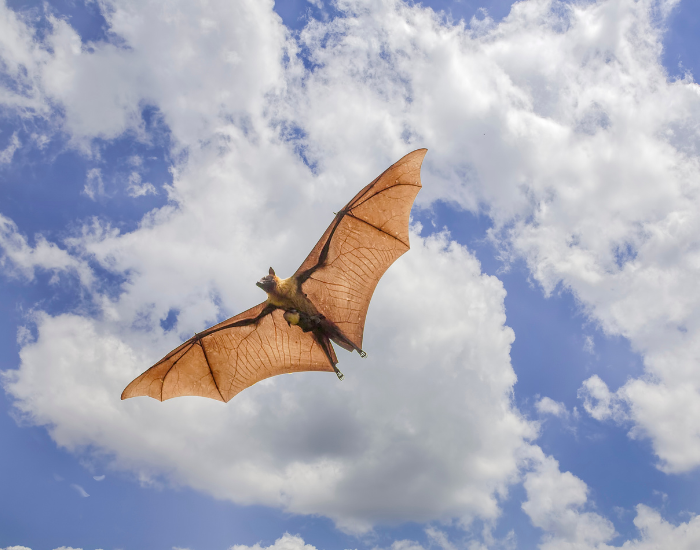
- In Australia: I’ve spent countless evenings watching the sky turn black as thousands of Flying Foxes awaken in the afternoon, their leathery wings creating a rhythmic whoosh over the canopy. If you live here, you know the sound of a Possum heavy-footing it across your roof or the rustle of a Bandicoot in the undergrowth.
- In Bali, Indonesia: I remember a specific night in Amed. Around 10:00 PM, like clockwork, the Tokay Geckos began their barking call. Tracking them down with a flashlight to observe their vertical agility taught me more about sensory adaptation than any textbook ever could.
We can learn a lot from these species. They perceive a totally different reality than we do—one defined by thermal signatures, acute hearing, and heightened scent. There is a deep wisdom in that; they remind us that the “truth” of an environment changes depending on when you’re looking at it.
Even among ant types, this nocturnal shift is vital. Some of the most fascinating different ant species, like the Australian Sugar Ant (Camponotus consobrinus), wait for the heat of the day to break before they begin their massive foraging expeditions. To understand the “night shift” is to understand the full scope of life on Earth.
What Makes an Animal Nocturnal?
Before we jump into our amazing list, let’s talk about how you actually know if an animal is nocturnal. It’s not always as obvious as you might think, and there are some pretty clear indicators that scientists look for.
Activity Patterns: The most obvious sign is when an animal is most active. True nocturnal animals do most of their hunting, foraging, mating, and socializing between dusk and dawn. Their internal biological clocks are essentially flipped compared to diurnal (day-active) animals.
Physical Adaptations: Nocturnal animals often have distinctive physical features that give them away:
- Large eyes to capture more light
- Enhanced hearing with larger ears or specialized ear structures
- Heightened sense of smell
- Some have an acute sense of hearing or smell, allowing them to detect prey or danger in the dark
- Specialized fur or feather patterns for better camouflage in darkness
- Reflective eye layers (tapetum lucidum) that make their eyes shine in the dark
Behavioral Clues: You can often tell by observing when animals come out to feed, when they’re most vocal, and when they’re most likely to be seen moving around their habitat.
Sensory Superpowers: Many nocturnal animals possess heightened senses that far exceed what humans can perceive. Some use echolocation, others have incredible night vision, and many rely on acute hearing or smell to navigate their world.
The evolution of nocturnality in mammals likely occurred as a response to avoiding competition with diurnal predators and taking advantage of different ecological niches available at night. These sensory adaptations help nocturnal animals find food in the dark, giving them a survival advantage.
12 Fascinating Nocturnal Animals
1. Great Horned Owls: Silent Predators of the Night
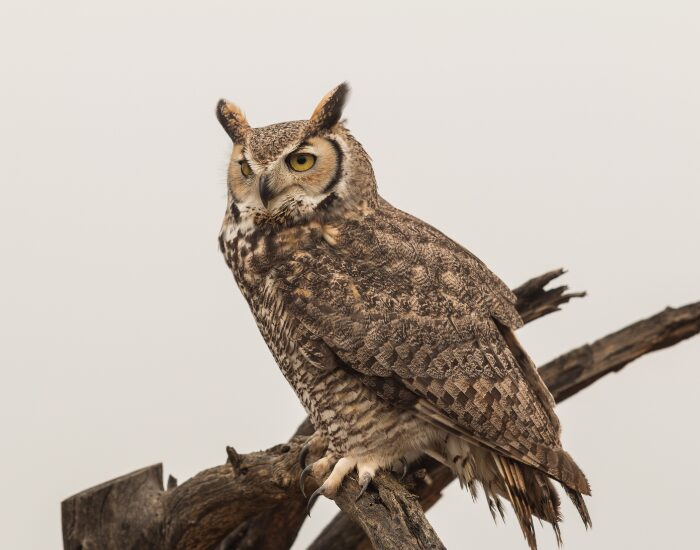
The Great Horned Owl (Bubo virginianus) is truly the most iconic nocturnal predator across the Americas, and its success is a result of a trio of incredible adaptations that make it an apex nighttime hunter.
These owls possess extraordinary low-light vision . Their massive, tube-shaped eyes are fixed in their sockets but are so sensitive that the owl can see in conditions only slightly brighter than starlight. To compensate for their inability to move their eyes, they have the remarkable ability to rotate their heads up to 270 degrees.
While all owls have acute hearing, the Great Horned Owl is categorized as a functionally symmetrical-eared owl (unlike the highly specialized Barn Owl). Although some slight vertical offset may exist, their excellent directional hearing is overwhelmingly aided by the subtle, dense feathers of the facial disc, which act like radar dishes to collect and funnel sound waves precisely to the ear openings hidden beneath. They can certainly locate small rodents moving beneath light snow or vegetation, making winter hunting possible.
Their flight is completely silent thanks to specialized feathers with soft, fringed edges that break up air turbulence. This means their prey never hears them coming. Combined with their powerful talons that can exert up to 300 pounds per square inch of pressure, they’re incredibly effective hunters.
2. Bats: Masters of Echolocation
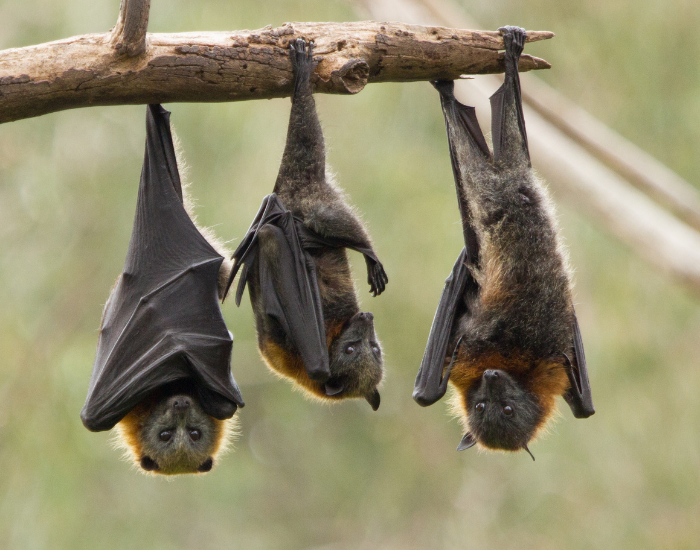
Bats represent one of the most successful groups of nocturnal animals on the planet, with over 1,400 species worldwide. Many bat species are strictly nocturnal, being active only during the night. What makes them truly special is their use of echolocation, essentially, they navigate and hunt using sound waves.
Beyond their incredible navigation abilities , bats play crucial ecological roles as pollinators and pest controllers. They are vital to ecosystem health, but their role in pest control is more complex than often advertised.
While insectivorous bats consume a huge variety of small flying insects, the dramatic claim that a single bat can eat 1,000 mosquitoes in an hour is an exaggeration. Scientific studies, such as those analyzing fecal DNA, show that mosquitoes typically represent only a small proportion of a bat’s overall diet.
According to research, bats can process echolocation information faster than any other mammal processes sensory information, they can update their flight path in response to obstacles in just 30 milliseconds.
3. Red Foxes: Cunning Night Hunters
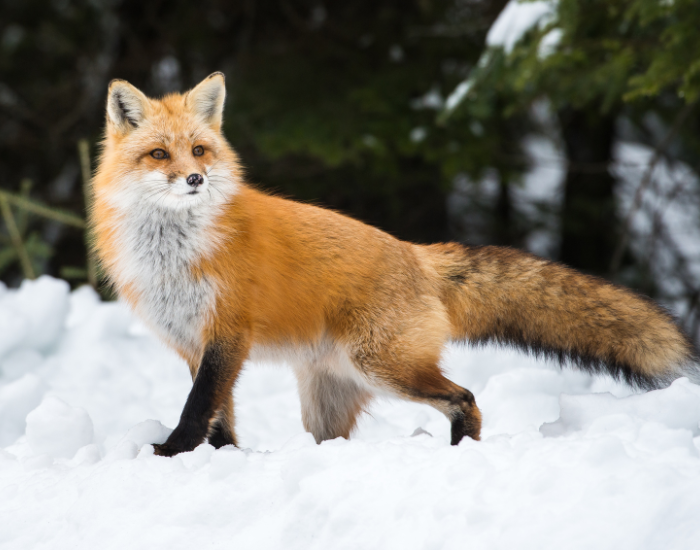
Many types of foxes are nocturnal, but ted foxes are incredibly as they have successfully colonized habitats all over the world! While they can be active during the day, they’re primarily nocturnal hunters with some remarkable adaptations. Being active at night also helps red foxes avoid predation from larger daytime predators.
Their hearing is extraordinary, they can hear low-frequency sounds and rodents digging underground. Red foxes have been observed using a hunting technique called “mousing,” where they listen for prey moving under the snow, then leap high into the air and dive nose-first into the snow to catch their target.
Research found that red foxes can detect Earth’s magnetic field and use it for navigation, especially when hunting. They tend to be most successful when attacking in a northeastern direction, possibly because they’re aligning their attacks with magnetic field lines.
4. Raccoons: The Masked Bandits
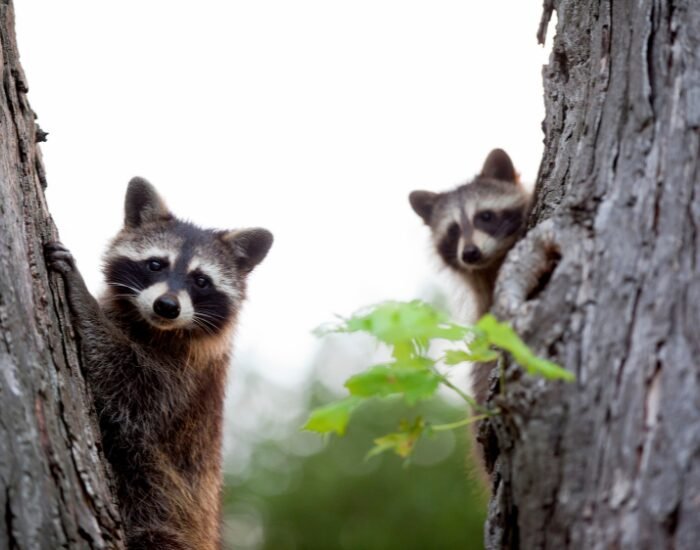
Raccoons are probably one of the most recognizable nocturnal animals, especially in urban environments. Their distinctive “mask” isn’t just for show, the dark fur around their eyes may help reduce glare and improve their night vision.
What really sets raccoons apart is their incredibly sensitive front paws. They have more nerve endings in their “hands” than most animals, allowing them to identify objects through touch alone. This is why you often see raccoons appearing to “wash” their food, they’re actually using water to soften their paw pads and enhance their sense of touch. Raccoons are opportunistic feeders and often include small rodents in their diet, along with fruits, insects, and human food scraps.
Their adaptability has made them incredibly successful in urban environments, where they’ve learned to take advantage of human food sources and shelter opportunities. Research from York University shows that city raccoons are actually more intelligent than their rural counterparts, likely due to the cognitive challenges of urban living.
5. Big Cats: Leopards and Other Nocturnal Felines
Several big cat species are primarily nocturnal animals, with leopards being perhaps the most consistently night-active. However, leopards are not exclusively nocturnal and may sometimes be active during the day. These powerful predators have adaptations that make them incredibly effective hunters in low-light conditions.
Leopards have excellent night vision, with eyes that are six times more sensitive to light than human eyes. Their large pupils can dilate widely to capture maximum light, and like other cats, they have a tapetum lucidum that reflects light back through their retinas.
What makes leopards particularly impressive is their stealth. They can move almost silently through vegetation, and their rosette-patterned coat provides excellent camouflage in dappled moonlight. They’re also incredibly strong, a leopard can carry prey up to twice its own body weight up into trees.
Research shows that leopards in areas with high human activity have become even more nocturnal, shifting their activity patterns to avoid human contact while still maintaining their hunting success.

6. Hedgehogs: Spiky Night Wanderers
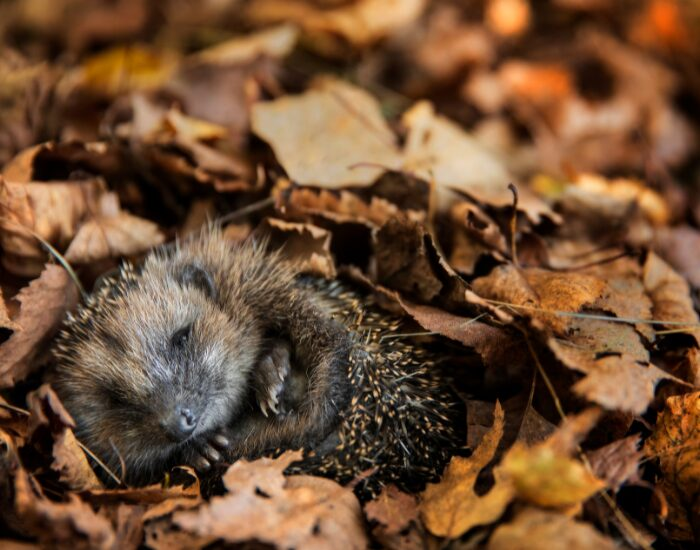
European hedgehogs are delightful nocturnal animals that spend their nights foraging for insects, worms, insect larvae, and other small prey. These small mammals have some fascinating adaptations for their nighttime lifestyle.
Hedgehogs have an excellent sense of smell and hearing, which they use to locate prey in the dark. They can hear the movement of insects and worms underground, and they have a keen sense of smell that helps them track down food sources.
Their most famous adaptation, their spines, serves as protection from nocturnal predators. When threatened, hedgehogs roll into a tight ball, presenting only their sharp spines to potential attackers.
7. Flying Squirrels: Gliding Through the Night
These small mammals don’t actually fly, they glide using a stretchy membrane called a patagium that extends between their front and back legs.
Southern flying squirrels are found throughout the eastern United States and are perfectly adapted for nighttime life in the forest canopy. They have large eyes that help them see in low light, and their gliding ability allows them to move efficiently between trees without having to come down to the dangerous forest floor. Their long tails play a crucial role in stabilizing their flight and steering as they navigate through the dark.
Their gliding is remarkably precise. Flying squirrels can glide distances of up to 150 feet and can make sharp turns in mid-air by adjusting their membrane tension and using their tail as a rudder. They typically glide from higher to lower points, then climb back up to repeat the process.
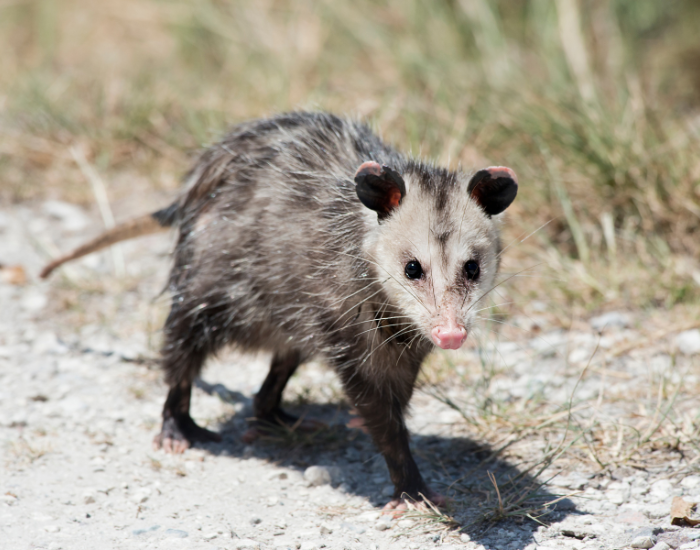
8. Opossums: North America’s Only Marsupial
Virginia opossums are fascinating nocturnal animals and the only marsupial native to North America. These often-misunderstood creatures have some remarkable adaptations for nighttime survival.
Opossums are incredibly adaptable omnivores with a diet that includes everything from insects and small animals to fruits, garbage, and bird eggs. Their varied diet and flexible feeding behavior have helped them thrive in both natural and urban environments.
One of their most famous adaptations is “playing possum”, when threatened, they can enter a catatonic state that makes them appear dead. This involuntary response can last from a few minutes to several hours and often convinces predators to lose interest.
Opossums have excellent night vision and a keen sense of smell. They’re also surprisingly intelligent, they can remember food sources and have been observed using simple tools in captivity.
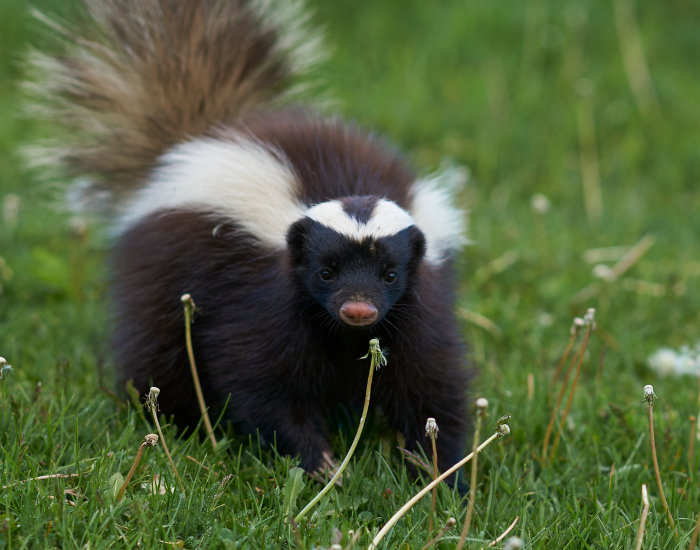
9. Skunks: Striped Night Foragers
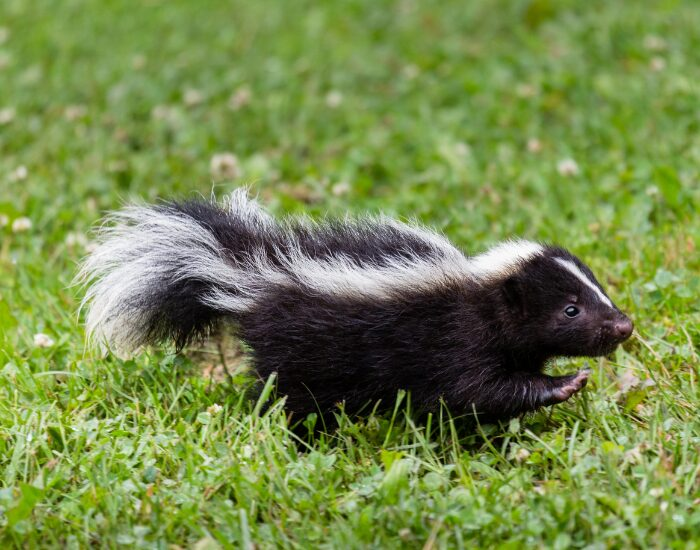
Skunks are well-known nocturnal animals with one of the most effective defense mechanisms in the animal kingdom. While most people focus on their ability to spray, skunks have several other interesting adaptations for nighttime life.
Striped skunks are primarily insectivores, using their excellent sense of smell and sharp claws to dig for grubs, beetles, and other insects. They’re actually beneficial to have around because they eat many pest insects that damage crops and gardens.
Their black and white coloration serves as warning coloration, a visual signal to potential predators that they’re not to be messed with. This aposematic coloring is visible even in low light conditions and helps prevent confrontations before they start.
Skunks have poor eyesight but excellent hearing and smell. They’re generally peaceful animals that prefer to avoid conflict, giving several warning signals before resorting to spraying. These warnings include stomping their feet, raising their tail, and doing a handstand display.
10. Barn Owls: Ghost-White Silent Hunters
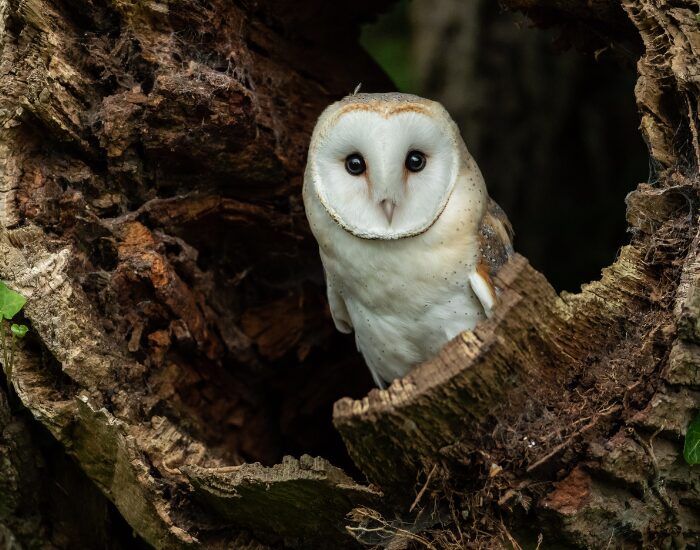
Barn owls are perhaps the most widely distributed nocturnal animals in the world, found on every continent except Antarctica and Australia. These pale, ghost-like birds of prey are incredibly specialized for hunting in complete darkness. Their sharp senses, including exceptional hearing and vision, allow them to detect prey even in total darkness.
Their heart-shaped facial disc isn’t just for show, it acts like a satellite dish, collecting and focusing sound waves toward their ears. Combined with their asymmetrical ear openings, this gives them the ability to locate prey with pinpoint accuracy using sound alone.
Barn owls can hunt successfully in complete darkness, something that has been confirmed through infrared photography studies. They can detect prey moving in grass from over 100 feet away using only their hearing.
Their flight is completely silent thanks to specialized feather structures. The leading edge of their primary feathers has a comb-like structure that breaks up air turbulence, while the trailing edges have soft fringes that reduce noise.
A single barn owl family can consume over 3,000 rodents in a breeding season, making them incredibly valuable for natural pest control.
11. Honey Badgers: Fearless Night Raiders
Honey badgers are among the world’s most fearless animals on the planet. These small but incredibly tough mammals are primarily active at night and have a reputation for taking on animals much larger than themselves.
Despite their name, honey badgers eat a varied diet that includes insects, small mammals, birds, and yes, occasionally honey. They’re excellent diggers and can excavate complex burrow systems where they rest during the day.
Honey badgers have incredibly thick, loose skin that provides protection from bites and stings. Their skin is so tough that it can protect them from bee stings, porcupine quills, and even snake bites. They’re also remarkably intelligent and have been observed using tools.
Their fearless nature and nocturnal habits help them avoid larger predators while giving them access to food sources that other animals might not be able to access.
12. Night Monkeys: The Only Truly Nocturnal Primates
Night monkeys (also called owl monkeys) are the only truly nocturnal animals among the primates. Found in Central and South America, these small monkeys have evolved some remarkable adaptations for nighttime life in the forest canopy.
Night monkeys have the largest eyes relative to body size of any primate, which helps them gather maximum light in dark forest conditions. Their large eyes contain a high density of rod cells, giving them excellent night vision but limited color vision.
These monkeys are highly social and live in small family groups consisting of a mated pair and their offspring. They communicate through a variety of vocalizations, including territorial calls that can be heard over long distances through the forest.
Their nocturnal lifestyle allows them to avoid competition with diurnal primates and take advantage of nighttime food sources like nectar and night-blooming fruits.

The Science Behind Night Vision and Nocturnal Adaptations
Understanding how nocturnal animals see and navigate in the dark is pretty mind-blowing. It’s not just about having bigger eyes, though that certainly helps.
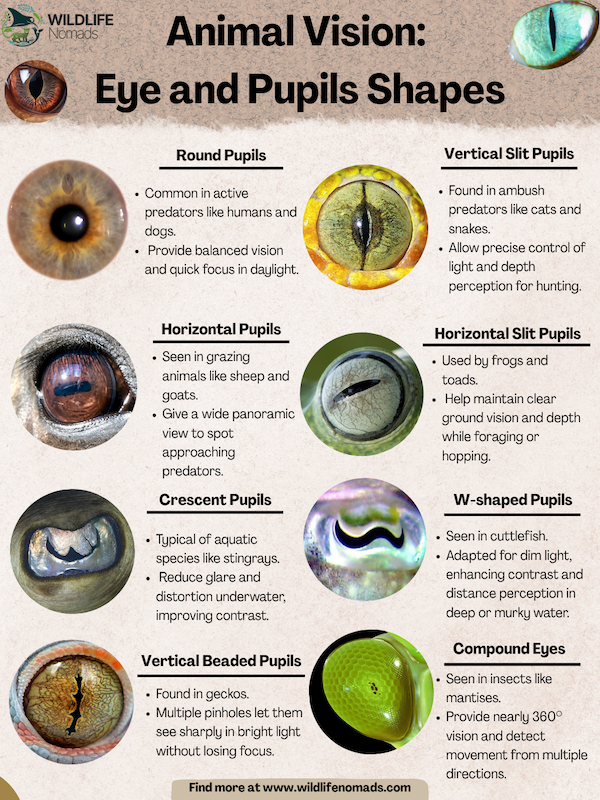
Most nocturnal animals have a reflective layer behind their retinas called the tapetum lucidum. This acts like a mirror, bouncing light back through the eye and giving the photoreceptors a second chance to capture photons. That’s why many nocturnal animals’ eyes glow when you shine a light on them. Thanks to these adaptations, some nocturnal animals are able to hunt and navigate effectively even in total darkness.
Their eyes also tend to have more rod cells (which detect light and movement) and fewer cone cells (which detect color). This trade-off means they can see much better in low light conditions, but they often see the world in less vivid colors than we do.
Research shows that many nocturnal animals also have larger corneas and pupils, allowing more light to enter their eyes. Some species can see clearly in light levels that would leave humans completely blind.
Other nocturnal creatures, such as bats and owls, use echolocation and specialized sounds to navigate and communicate. Bats emit high-frequency calls that bounce off objects, allowing them to “see” with sound and even coordinate with other bats during group hunts. Owls, meanwhile, use a combination of hoots, screeches, and even wing claps to communicate with mates and mark their territories.
The Impact of Light Pollution on Nocturnal Wildlife
As cities and towns grow brighter, the natural darkness that nocturnal animals depend on is disappearing. Light pollution—caused by artificial light at night—poses a serious threat to many nocturnal species, disrupting their behavior, physiology, and even their survival.
For some animals, like baby sea turtles and certain nocturnal birds, artificial lights can be dangerously attractive. Hatchling sea turtles, for example, may crawl toward streetlights instead of the ocean, becoming disoriented and vulnerable. Nocturnal birds can become confused by city lights, leading to fatal collisions with buildings or exhaustion from flying off course.
Light pollution also interferes with the internal clocks of many nocturnal animals. Exposure to artificial light can suppress melatonin production, a hormone that regulates sleep and daily activity patterns. This disruption can lead to changes in feeding, breeding, and migration behaviors, putting entire populations at risk.
Increased visibility from artificial lights can make nocturnal animals more vulnerable to predators. Prey species that would normally be hidden in the dark become easy targets, while nocturnal predators like big cats and flying squirrels may avoid well-lit areas altogether, leading to fragmented and isolated populations.
The Challenges Facing Nocturnal Animals
Unfortunately, many nocturnal animals face significant challenges in our modern world, and understanding these threats is crucial for their conservation.
Light Pollution: This is perhaps the biggest threat facing nocturnal wildlife today. Artificial lighting disrupts natural darkness patterns, confusing animals that rely on natural light cues for navigation, feeding, and breeding. Studies show that light pollution can disrupt migration patterns, breeding cycles, and predator-prey relationships.
Habitat Fragmentation: Development and road construction break up the large territories that many nocturnal animals need. This is particularly problematic for species like flying squirrels and big cats that need connected forest corridors.
Vehicle Strikes: Many nocturnal animals are killed by vehicles as they cross roads during their nightly activities. This is a major cause of mortality for species like hedgehogs, opossums, and owls.
Climate Change: Changing temperature and precipitation patterns affect the availability of prey and suitable habitat for many nocturnal species. Some animals are shifting their activity patterns in response to climate change. In hot environments, many nocturnal desert animals are active at night to take advantage of cooler temperatures and conserve water. In arid regions, being active at night helps them preserve precious water by avoiding the heat of the day.
Human Disturbance: Increased human activity in natural areas can disrupt the behavior of nocturnal animals, forcing them to alter their feeding and breeding patterns.
Embracing the Night Shift
The world of nocturnal animals is truly remarkable, a parallel universe of activity that happens right under our noses while we sleep. From the silent flight of owls to the echolocation abilities of bats, from the problem-solving intelligence of raccoons to the fearless nature of honey badgers, these creatures have evolved incredible adaptations that allow them to thrive in the darkness.
Understanding and appreciating nocturnal animals isn’t just about satisfying our curiosity—it’s about recognizing the vital roles these creatures play in healthy ecosystems. They’re pollinators, pest controllers, seed dispersers, and predators that help maintain the balance of nature.
The next time you’re out after dark, take a moment to listen and look around. You might catch a glimpse of one of these amazing nocturnal animals going about their nightly business. Whether it’s the hoot of an owl, the flutter of bat wings, or the rustling of a raccoon in the underbrush, you’re witnessing millions of years of evolution in action.
References:
Begg, C. M., Begg, K. S., Du Toit, J. T., & Mills, M. G. L. (2003). Sexual and seasonal variation in the diet and foraging behaviour of a sexually dimorphic carnivore, the honey badger (Mellivora capensis). Journal of Zoology, 260(3), 301–316. doi:10.1017/S0952836903003789
Cobo, R., Navarro-Sempere, A., Segovia, Y., & García, M. (2025). Adaptations of the Vertebrate Retina to Low-Light Conditions: A Review. Anatomia, histologia, embryologia, 54(4), e70042. https://doi.org/10.1111/ahe.70042
Francq, E. N. (1969). Behavioral Aspects of Feigned Death in the Opossum Didelphis marsupialis. The American Midland Naturalist, 81(2), 556–568. https://doi.org/10.2307/2423988
Gonsalves, L., Bicknell, B., Law, B., Webb, C., & Monamy, V. (2013). Mosquito consumption by insectivorous bats: Does size matter? PLOS ONE, 8(10), e77183. https://doi.org/10.1371/journal.pone.0077183
Hall, M. I., Kamilar, J. M., & Kirk, E. C. (2012). Eye shape and the nocturnal bottleneck of mammals. Proceedings. Biological sciences, 279(1749), 4962–4968. https://doi.org/10.1098/rspb.2012.2258
Hunter, J. S. (2009). Familiarity breeds contempt: Effects of striped skunk color, shape, and abundance on wild carnivore behavior. Behavioral Ecology, 20(6), 1315–1322. https://doi.org/10.1093/beheco/arp144
Kohtz, L. (2025, August 4). International Owl Awareness Day. Conservation Nebraska.
Pettit, M. (2010). The problem of raccoon intelligence in behaviourist America. The British Journal for the History of Science, 43(3), 391–421
Zaman, M., Roberts, N. J., Zhu, M., Vitekere, K., Wang, M., & Jiang, G. (2022). Temporal activity patterns of North China leopards and their prey in response to moonlight and habitat factors. Ecology and evolution, 12(6), e9032. https://doi.org/10.1002/ece3.9032
Zhu, M., Zhao, Y., Wang, M., Zaman, M., & Jiang, G. (2024). Response of wildlife communities to human activities in the distribution area of the North China Leopard. Global Ecology and Conservation, 50, e02872. https://doi.org/10.1016/j.gecco.2024.e02872