While it’s true that these cartilaginous predators (Chondrichthyes) outdate dinosaurs and even trees, simply calling them “ancient” misses the point. As a biologist, what I find most fascinating isn’t that they’ve been around for 400 million years, it’s that they’ve spent that time perfecting a skeletal design that makes them the most energy-efficient hunters on the planet.
I’ve had the privilege of seeing this engineering firsthand. Just recently, while driving around Australia, I came across a Wobbegong shark at Minnie Waters, Illaroo Campground, a creature so strange and sedentary that my friend and I nicknamed him “Grandpa Shark.” (You can read my full deep-dive on Wobbegongs here). Also, last year in Bali, I watched Blacktip Reef sharks swimming with effortless agility through the coral gardens.
Whether it’s a “Grandpa” Wobbegong camouflaged on a rock or the high-speed mechanics of a Mako, there are now over 540 identified species as of 2026, and we are still counting. In this guide, we’re moving past the “Jaws” myths to explore the actual science of shark diversity: how they are classified, the strange evolution of their “skin teeth” (dermal denticles), and why, after surviving five mass extinctions, they are now facing their greatest challenge yet.
A Quick History: The Evolution of Sharks
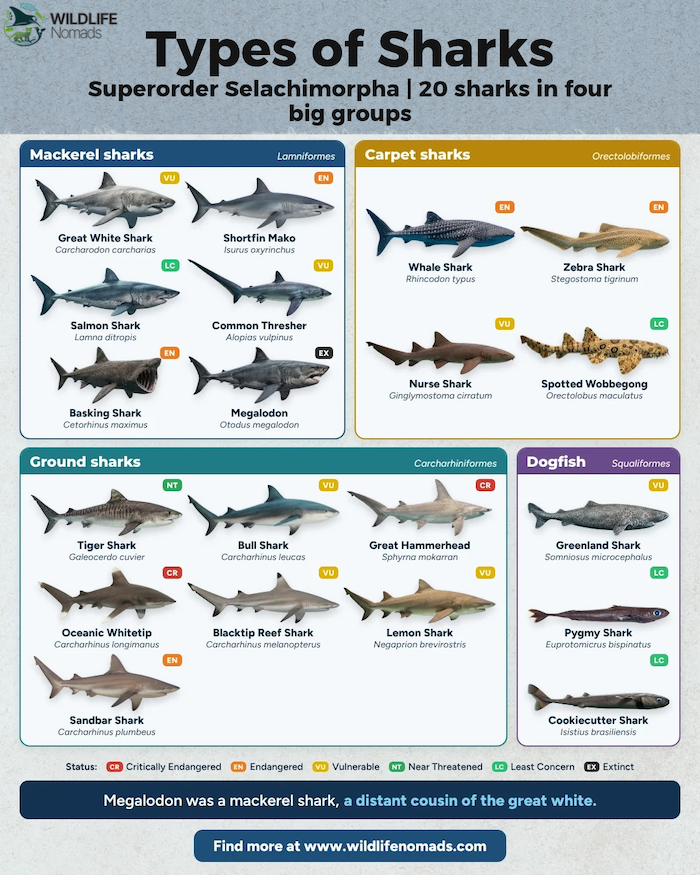
Sharks have been on Earth for over 400 million years, predating dinosaurs, mammals, and even trees. The oldest known shark-like fossils date back to the Silurian period, with recognizable shark features appearing in the Devonian period, often dubbed the “Age of Fishes.” Cartilaginous fishes, the evolutionary lineage to which modern sharks belong, have diversified over millions of years since the Cretaceous-Paleogene extinction.
Unlike bony fish, sharks belong to a class called Chondrichthyes, meaning their skeletons are made of cartilage, not bone. Over millions of years ago, they evolved into apex predators with remarkable adaptations: electroreception, replaceable teeth, and highly efficient swimming abilities.
How Many Species of Shark Are There in the World?
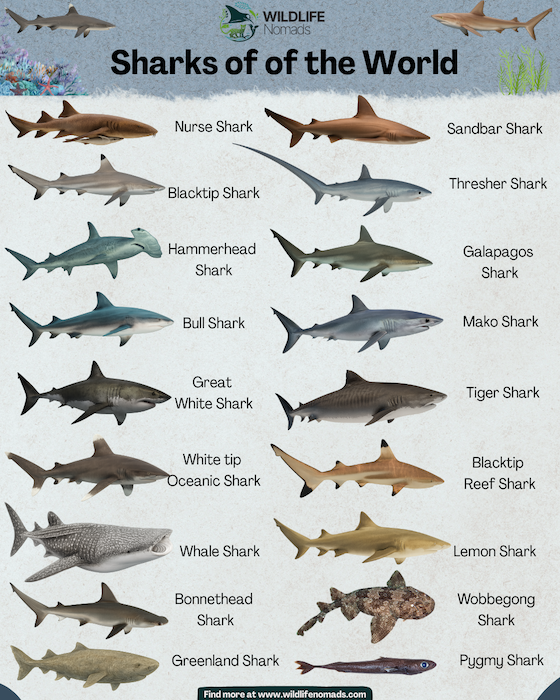
As of 2025, scientists have officially identified over 540 species of sharks, according to the International Union for Conservation of Nature (IUCN) and the Smithsonian Institute. These species range from tiny, bottom-dwelling sharks less than 20 cm long to enormous filter feeders like the whale shark. One of the largest shark species is the basking shark, known for its filter-feeding habits and harmless nature.
To see twenty of these species side by side, from the 27 cm pygmy shark to the megalodon, try my shark size comparison.
Classification of Sharks
Sharks are classified into several orders, each showcasing unique characteristics and evolutionary traits. This classification helps scientists understand their physical features, behaviors, and relationships within the marine ecosystem.
Orders of Sharks
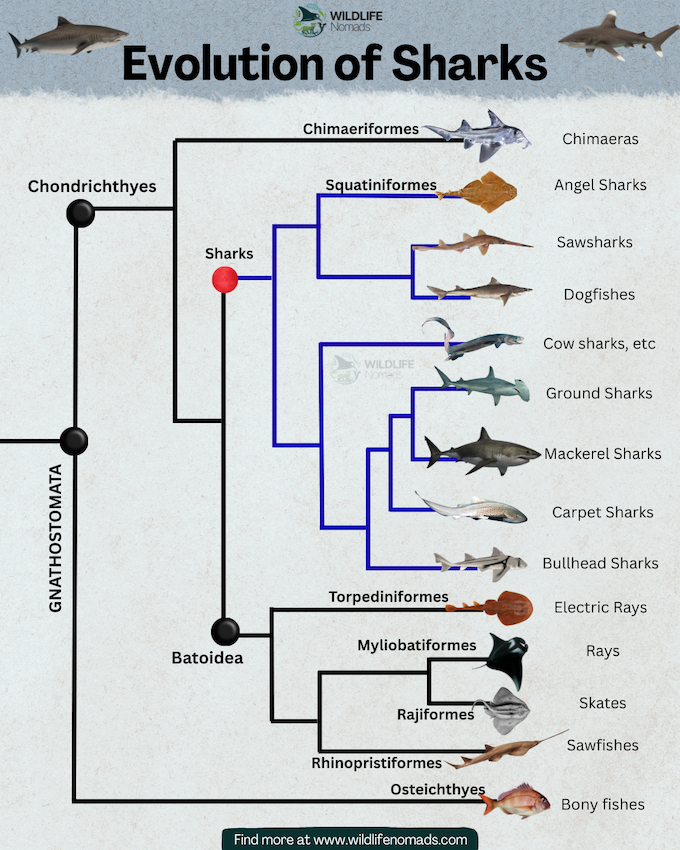
There are eight primary orders of sharks, each with distinct features that set them apart:
- Carcharhiniformes (Ground Sharks): This order includes some of the most well-known sharks like the bull shark, tiger shark, and sand tiger shark. They are characterized by their five gill slits, moveable eyelids, and two spineless dorsal fins.
- Heterodontiformes: Known as bullhead sharks, these species are often found in rocky reef environments and have a unique appearance with a pig-like snout.
- Hexanchiformes (Six-Gilled Sharks): These ancient sharks have more than the typical five gill slits and include species like the frilled shark.
- Lamniformes (Mackerel Sharks): This order includes the great white shark and mako shark, known for their speed and predatory skills.
- Orectolobiformes: This group includes carpet sharks like the whale shark and wobbegong, known for their distinctive patterns and bottom-dwelling habits.
- Pristiophoriformes (Sawsharks): Named for their elongated, saw-like snouts, these sharks use their unique snouts to hunt prey.
- Squaliformes: This diverse order includes dogfish sharks, many of which inhabit deep-sea environments.
- Squatiniformes: Known as angel sharks, these species are flattened like rays and are often ambush predators.
Each order represents a broad evolutionary branch, showcasing the incredible diversity and adaptability of shark species.
Interactive · free Shark size comparison Twenty sharks at true scale, from a 27 cm pygmy shark to a 15 m megalodon, each beside a 2 m diver. Pit any two head to head, or test your eye in the guessing game. Compare the sharks →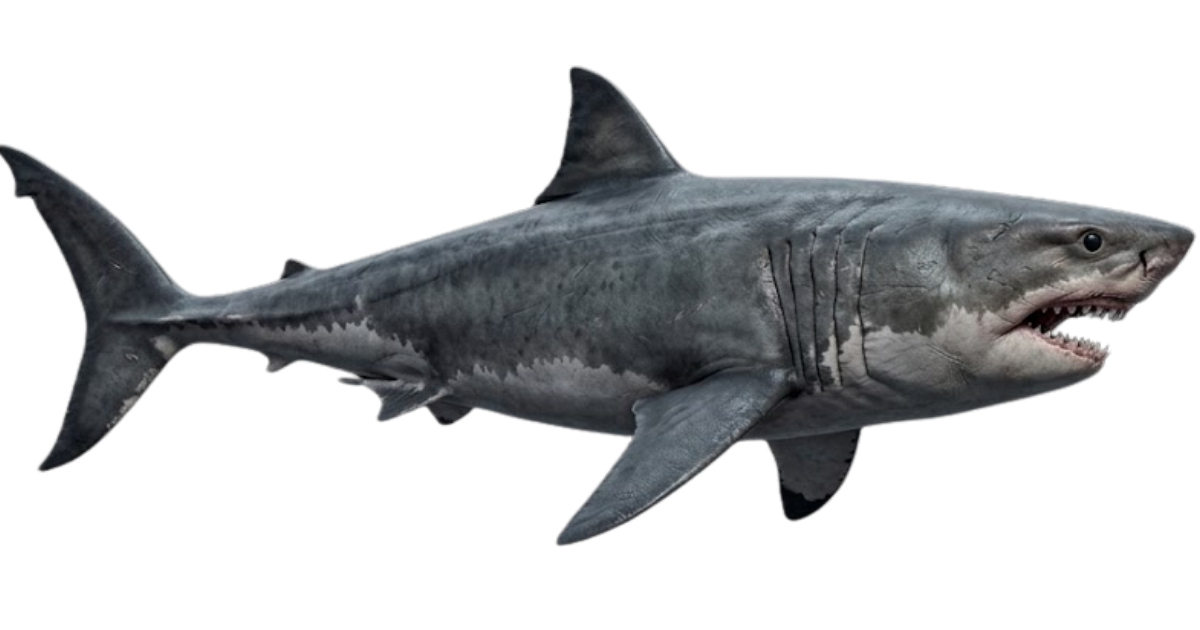

Types of Sharks: Exploring the Diversity
Let’s meet some of the standout types of sharks species that showcase the diversity of this incredible animal group.
Deep sea sharks, such as the elusive megamouth shark, inhabit the depths of the ocean and possess unique features like glowing pores around their mouths to attract prey through filter feeding, showcasing remarkable adaptations to their deep-sea environments.
The goblin shark, frilled shark, megamouth and ghost shark all appear in my dive through the deep sea sharks.
1. Whale Shark (Rhincodon typus)
The largest fish in the sea, whale sharks can grow up to 12 meters long and weigh over 20 tons. Despite their size, they are gentle filter feeders, consuming plankton, krill, and small fish by swimming with their enormous mouths wide open. Found in warm tropical oceans around the world, they often migrate long distances and are popular with ecotourists in places like Mexico’s Yucatán Peninsula and Ningaloo Reef in Australia, which are among the best places to swim with whale sharks in the world.
Similarly, basking sharks, which are classified as mackerel sharks, are also filter-feeding giants that do not hunt prey and are harmless to humans.

2. Great White Shark (Carcharodon carcharias)
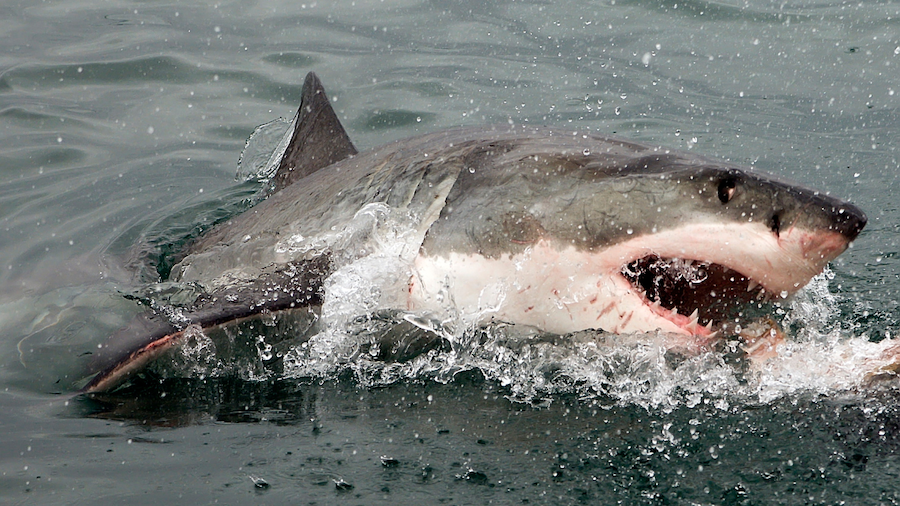
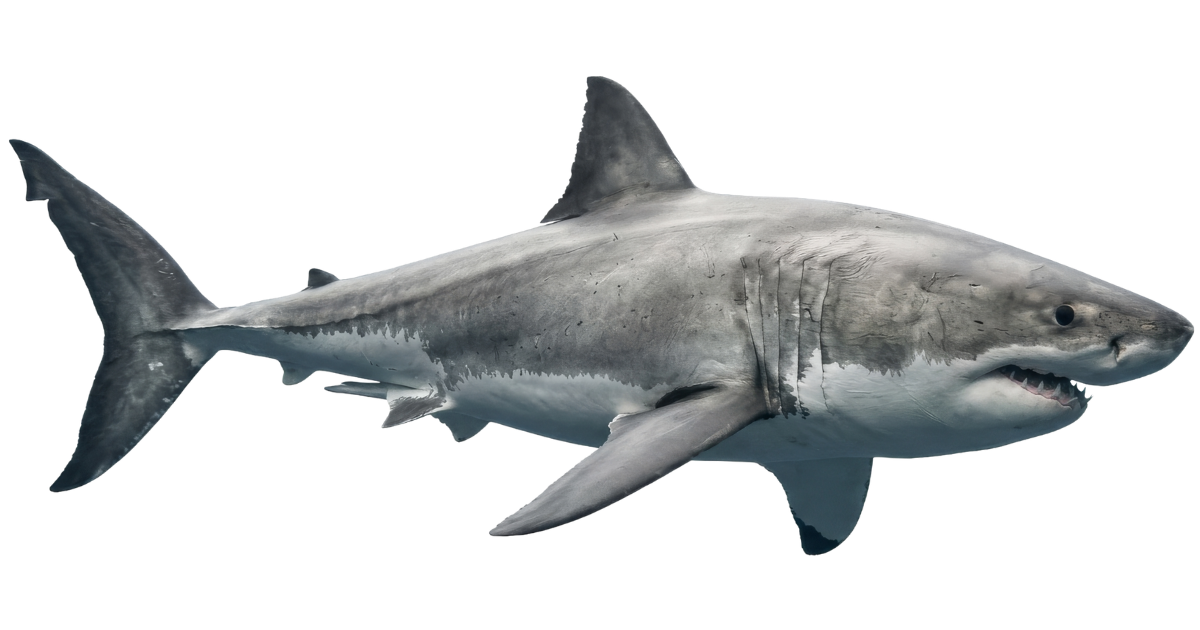
Perhaps the most famous shark species, the great white is a powerful apex predator found in temperate coastal waters. It can grow up to 6 meters long and is equipped with rows of razor-sharp teeth that are constantly replaced throughout its life. Despite their fearsome reputation, attacks on humans are rare, and great whites play a crucial role in maintaining marine ecosystems by regulating prey populations on the food web.

3. Hammerhead Shark (Sphyrnidae family)
Hammerheads are known for their distinct T-shaped heads, which enhance their ability to sense electric fields emitted by prey. This adaptation gives them an advantage when hunting bottom-dwelling creatures like stingrays. Hammerheads are found in tropical and temperate waters worldwide and are known to form massive schools during migration seasons.

4. Greenland Shark (Somniosus microcephalus)
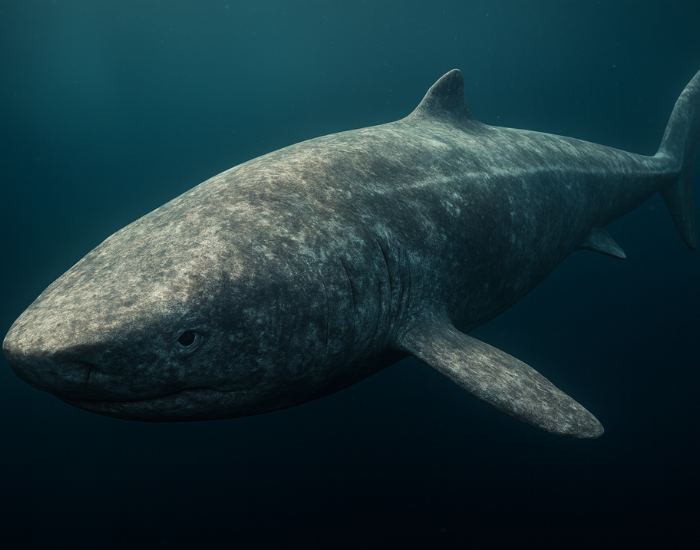
Living in the icy depths of the North Atlantic, the Greenland shark is one of the longest-living vertebrates on Earth, with some individuals estimated to be over 400 years old. These slow-moving sharks inhabit deep waters and feed on fish, seals, and carrion. Their longevity is still being studied, offering insights into aging and deep-sea adaptation.
5. Goblin Shark (Mitsukurina owstoni)
The goblin shark is a rarely seen deep-sea species with a distinctive elongated snout and a protrusible jaw that shoots forward to snatch prey. Found at depths of up to 1,200 meters, this pink-hued shark looks like a relic from another era, earning it the nickname “living fossil.” Goblin sharks are known for their ancient lineage and unique physical characteristics, such as their sword-like protrusion on the head and large size.
6.Blue Shark (Prionace glauca)
Known for its striking indigo coloration and sleek build, the blue shark is one of the most widely distributed shark species in the world. Found in both temperate and tropical oceans, they are fast swimmers and often travel in large schools. While not typically dangerous to humans, they are unfortunately one of the most heavily fished shark species.

7. Shortfin Mako Shark (Isurus oxyrinchus)
Often referred to as the fastest shark in the ocean, the shortfin mako can reach speeds up to 45 miles per hour. It’s a formidable predator, with a streamlined body and incredible agility. Mako sharks are known to leap out of the water and are a favorite among sport fishers, although they face serious threats from overfishing and bycatch.

8. Tiger Shark (Galeocerdo cuvier)
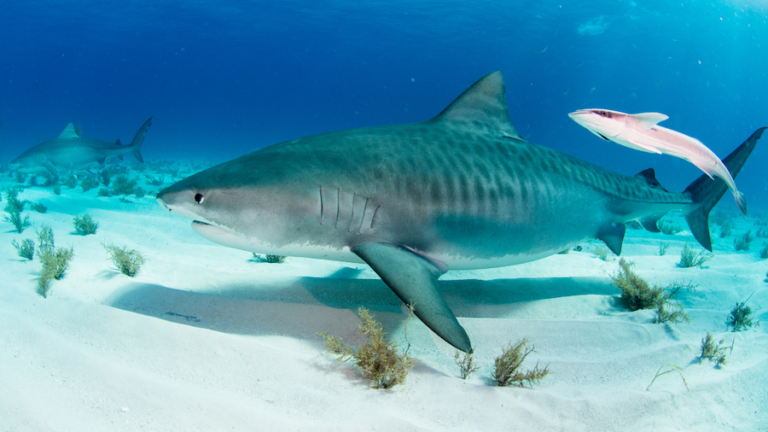
Recognizable by the dark vertical stripes on its body, the tiger shark is a powerful predator found in tropical and subtropical waters. Known for their scavenging habits, tiger sharks are often called the “garbage cans of the sea” because they eat a wide variety of prey. Despite their reputation, they are crucial to ocean health.

9. Thresher Shark (Alopias spp.)
Thresher sharks are famous for their long, whip-like tails, which they use to stun schools of fish before feeding. Their unique tail can be as long as their body, making them stand out among pelagic species. Found in deep offshore waters, threshers are shy and rarely seen by divers.

10. Basking Shark (Cetorhinus maximus)
Second in size only to the whale shark, the basking shark is another gentle giant of the ocean. These filter feeders can grow up to 10 meters long and are found in cool temperate waters. Despite their massive size and gaping mouths, basking sharks pose no threat to humans and feed on plankton.

11. Leopard Shark (Triakis semifasciata)
The leopard shark is a beautifully patterned species native to the Pacific coast of North America, particularly abundant in the kelp forests and sandy bottoms of California. With its sleek, silver-gray body adorned with dark saddle-like blotches and spots, it resembles a swimming work of art. Reaching lengths of up to 2 meters, the leopard shark is a docile bottom-dweller that feeds on crabs, shrimp, worms, and small fish. Often seen cruising in shallow bays and estuaries, this shark is a favorite among divers and snorkelers due to its calm nature.

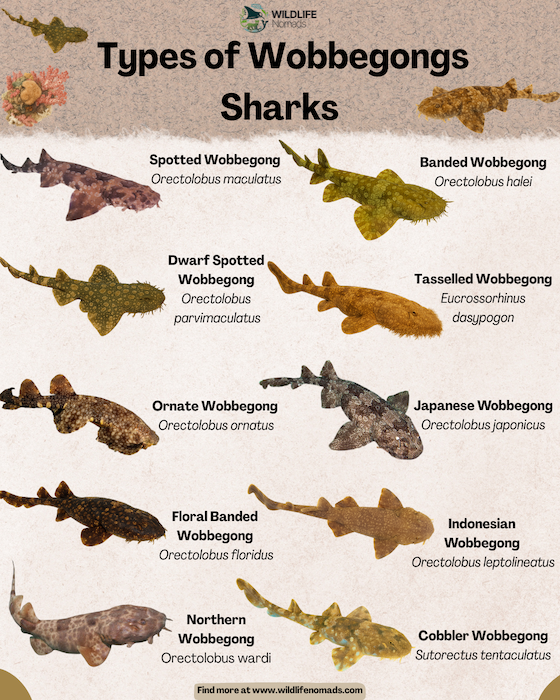
13. Wobbegong Shark (Orectolobidae family)
Wobbegongs are among the most unusual-looking sharks in the ocean, with their ornate, carpet-like patterns and fringed, whisker-like lobes around their mouths. These bottom-dwelling ambush predators are found primarily in the shallow temperate and tropical waters of the western Pacific Ocean, particularly around Australia and Indonesia. Growing up to 3 meters in length, wobbegongs use their camouflage to blend seamlessly with rocky reefs and coral, waiting motionlessly for unsuspecting fish, octopuses, and crustaceans to swim within striking distance. Their name comes from an Australian Aboriginal word believed to mean “shaggy beard,” perfectly describing their distinctive appearance.
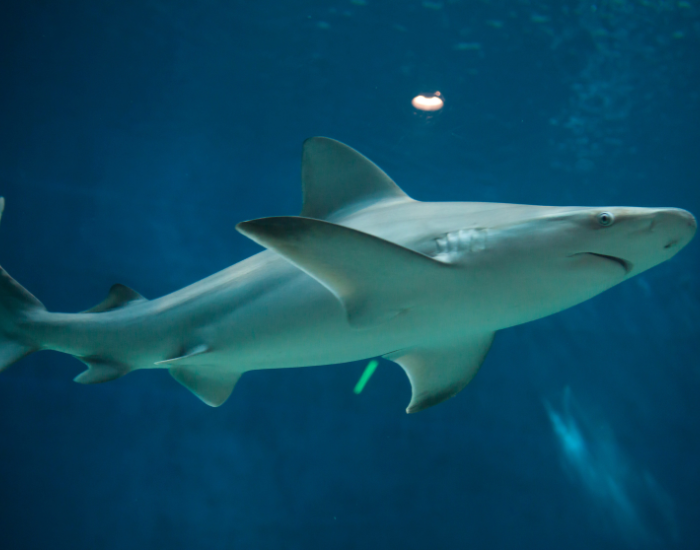
14. Sandbar Shark (Carcharhinus plumbeus)
The sandbar shark, also known as the brown shark or thickskin shark, is one of the most common coastal sharks in the world. Found in temperate and tropical waters, these stocky sharks can reach lengths of up to 2.5 meters and are characterized by their high, triangular dorsal fin and bronze-gray coloration. Sandbar sharks prefer shallow coastal waters, bays, harbors, and river mouths where they feed on small fish, rays, and crustaceans. They are slow-growing and late-maturing, which makes them particularly vulnerable to overfishing. Despite their abundance in coastal areas frequented by swimmers, sandbar sharks are docile and rarely pose any threat to humans.
15. Bull Shark (Carcharhinus leucas)
The bull shark is one of the most adaptable and potentially dangerous shark species in the world. What makes them unique is their remarkable ability to survive in both saltwater and freshwater environments, allowing them to travel far up rivers like the Mississippi, Amazon, and Ganges. Growing up to 3.5 meters in length and weighing over 200 kilograms, bull sharks are stocky, aggressive predators with a broad, flat snout and small eyes.
They feed on fish, dolphins, other sharks, and occasionally terrestrial animals. Their tendency to inhabit shallow coastal waters, river mouths, and estuaries brings them into frequent contact with humans, contributing to their reputation as one of the more dangerous species alongside great whites and tiger sharks.

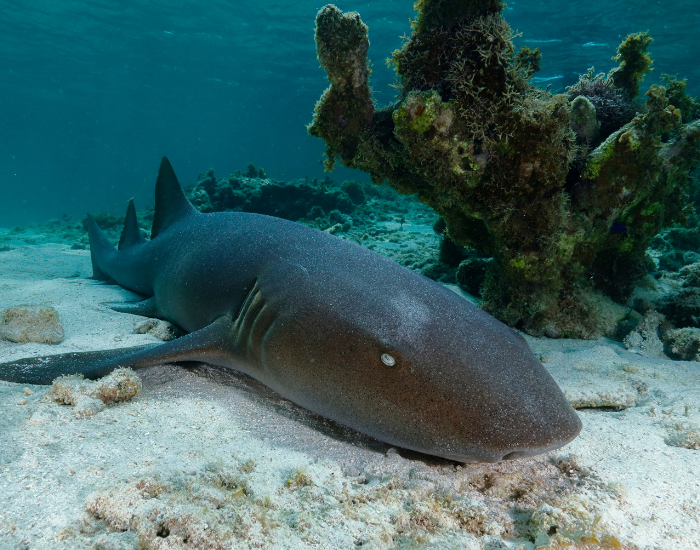
16. Nurse Shark (Ginglymostoma cirratum)
The nurse shark is a slow-moving, bottom-dwelling species found in warm shallow waters of the western Atlantic and eastern Pacific. Growing up to 4 meters in length, these docile sharks have a distinctive yellowish-brown to gray coloration and barbels near their mouths that help them sense prey buried in the sand. Nurse sharks spend much of their day resting on the ocean floor, often in groups, and become active at night to hunt for fish, crustaceans, and mollusks. They use powerful suction to extract prey from crevices. Their calm temperament makes them popular with divers, though they will bite if provoked or stepped on.
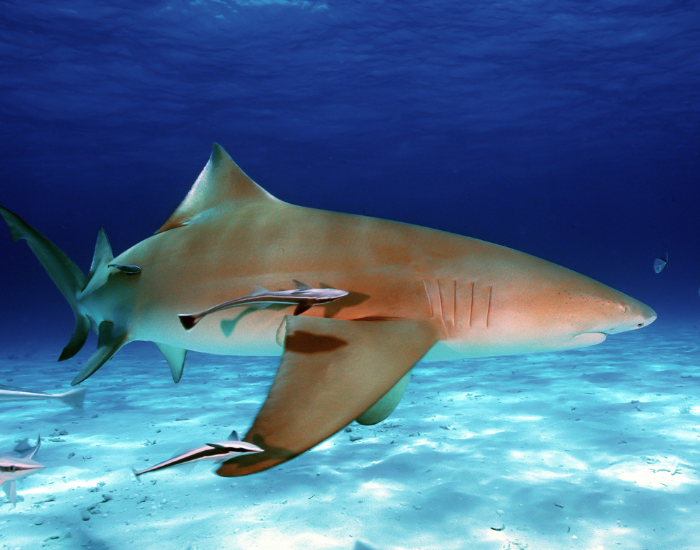
17. Lemon Shark (Negaprion brevirostris)
Named for their distinctive yellowish-brown coloration that helps them blend with sandy ocean bottoms, lemon sharks are stocky, powerful predators found in shallow subtropical waters, particularly around mangroves, bays, and coral reefs. Growing up to 3.4 meters in length, these sharks are highly social and often form groups, especially juveniles who remain in protective nursery areas for several years.
Lemon sharks have been extensively studied due to their tendency to return to the same locations year after year, providing valuable insights into shark behavior, learning, and social structure. They feed primarily on fish and rays and are generally not considered dangerous to humans, though caution should always be exercised around any large predator.
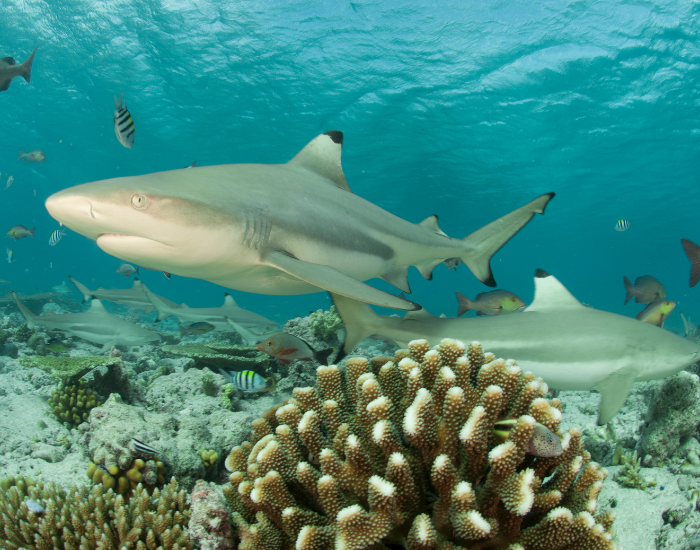
18. Blacktip Reef Shark (Carcharhinus melanopterus)
Not to be confused with their larger cousin the blacktip shark, blacktip reef sharks are smaller, more timid species that rarely exceed 1.6 meters in length. These beautiful sharks are easily identified by the prominent black tips on all their fins and their light coloration. Found in shallow waters throughout the Indo-Pacific, they are one of the most common sharks encountered by snorkelers and divers around coral reefs and lagoons.
Blacktip reef sharks are active predators that hunt small fish, crustaceans, and cephalopods in the shallow reef environment. Often seen in water so shallow their dorsal fins break the surface, these sharks are generally harmless to humans and tend to flee when approached, though they may become bolder in areas where they’re regularly fed.
19. West Australian Lanternshark (Etmopterus westraliensis)
The 2025 Discovery Officially described in September 2025, this is one of the newest additions to the shark family tree. Discovered in the deep waters off the Gascoyne Marine Park in Western Australia, this tiny predator lives in the “Twilight Zone”—nearly 2,000 feet (610 meters) below the surface.
- Bioluminescent Beauty: Like a living lantern, this shark has specialized organs called photophores on its belly and flanks. In the pitch-black deep sea, it “glows” to camouflaging itself against the faint light from above (a trick called counter-illumination).
- Size: It’s a pocket-sized predator, with the largest specimen ever found measuring just 16 inches (40 cm).
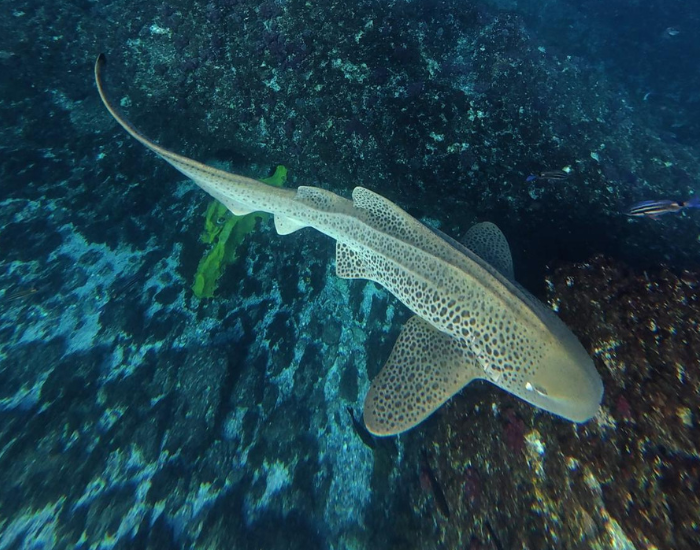
20. Zebra Shark (Stegostoma tigrinum)
Don’t let the name fool you, adult zebra sharks don’t have stripes. Born with bold dark-brown and cream-yellow bands, they transform as they grow into a pale yellow-brown coat covered in dark spots, which is why Australians call them leopard sharks. This identity crisis is just one of many things that makes them extraordinary.
Found across the tropical Indo-Pacific, from the Red Sea and East Africa to the shallow coral reefs of Australia and Japan, zebra sharks are bottom-dwelling, nocturnal hunters with a cylindrical, highly flexible body built for squeezing into narrow reef crevices. Their caudal fin alone is nearly as long as the rest of their body. They are also one of the only sharks capable of asexual reproduction, with documented cases of females producing offspring without a mate, a biological phenomenon called parthenogenesis.
How Many Shark Species Are Endangered?
According to the IUCN Red List, about 37% of all known shark species are currently threatened with extinction. This includes:
- 31 species listed as Critically Endangered
- 73 species listed as Endangered
- 113 species listed as Vulnerable
Endangered sharks face significant threats from human activities such as overfishing and habitat destruction, leading to declining populations. Conservation efforts are urgently needed to protect these important marine creatures from extinction.

Major Threats:
- Overfishing and bycatch: Overfishing, including shark fishing, has led to a significant decline in shark populations. The demand for shark fins has exacerbated this issue, causing severe ecological consequences. There is an urgent need for protective legislation and conservation efforts to combat this problem.
- Shark finning (especially for shark fin soup)
- Pollution and habitat degradation
- Climate change affecting prey and breeding cycles
Shark Research and Discovery
Shark research and discovery are dynamic fields that continually enhance our understanding of these fascinating creatures. Researchers study various aspects of shark biology, behavior, and ecology, as well as the impacts of human activities on shark populations.
One of the most exciting areas of shark research is the discovery of new species. For instance, the megamouth shark, discovered in 1976, is a deep-sea species with a unique mouth and jaw structure that allows it to filter feed on plankton. Similarly, the goblin shark, with its distinctive elongated snout and protrusible jaw, has intrigued scientists since its discovery.
Shark research also focuses on understanding shark anatomy and physiology, such as their electroreception abilities, which allow them to detect the electrical signals emitted by prey. Studies on shark behavior and ecology provide insights into their migratory patterns, social structures, and feeding habits.
Overall, shark research and discovery are crucial for advancing our knowledge of these ancient and vital marine predators, ensuring their survival for future generations
Sharks Are Worth Saving
So, how many species of sharks are there in the world? Over 540, and more are being discovered every year. Each species is a product of millions of years of evolution, uniquely adapted to thrive in its niche.
But sharks face unprecedented pressure. Our collective choices—from what we eat to how we vote, will determine whether these majestic animals continue to roam our oceans.
Let’s work to ensure future generations can still look into the deep blue and wonder at the marvel that is the shark.
Visual Shark Identification Challenge 🦈
Look at the photo for each question and identify the correct shark species from the 4 options below!
Photo Identification
Where Can I swim or Scuba Dive with Sharks?
Many places in the world are great to experience shark in the wild. Previously, we wrote an article about the best places in the world to swim and dive with sharks. You can also fin experiences below:
Spoiler alert: This website is reader-supported. When you book a wildlife experience through links listed on this site, we may earn an affiliate commission.
References:
Fishelson, L., & Baranes, A. (1998). Distribution, morphology, and cytology of ampullae of Lorenzini in the Oman shark, Iago omanensis (Triakidae), from the Gulf of Aqaba, Red Sea. The Anatomical Record, 251(4), 417–430. https://doi.org/10.1002/(SICI)1097-0185(199808)251:4<417::AID-AR1>3.0.CO;2-P
Guttridge, T. L., van Dijk, S., Stamhuis, E. J., Krause, J., Gruber, S. H., & Brown, C. (2013). Social learning in juvenile lemon sharks, Negaprion brevirostris. Animal Cognition, 16(1), 55–64. https://doi.org/10.1007/s10071-012-0550-6
Martins, C., & Knickle, C. (2019). Megamouth shark (T. Bowling, Ed.). Florida Museum. https://www.floridamuseum.ufl.edu/discover-fish/species-profiles/megamouth-shark/
Skelton, Z. R., Kacev, D., Frable, B. W., Farwell, C. J., & Weng, K. C. (2023). Two’s company: First record of two free-swimming megamouth sharks, Megachasma pelagios (Lamniformes: Megachasmidae), off the California coast. Environmental Biology of Fishes, 106(4), 717–724. https://doi.org/10.1007/s10641-023-01406-0
Walls, R. H. L., & Dulvy, N. K. (2021). Tracking the rising extinction risk of sharks and rays in the Northeast Atlantic Ocean and Mediterranean Sea. Scientific Reports, 11, Article 15397. https://doi.org/10.1038/s41598-021-94632-4
Whitney, N. M., Lear, K. O., Gaskins, L. C., & Gleiss, A. C. (2016). The effects of temperature and swimming speed on the metabolic rate of the nurse shark (Ginglymostoma cirratum, Bonaterre). Journal of Experimental Marine Biology and Ecology, 477, 40–46. https://doi.org/10.1016/j.jembe.2015.12.009