The first green sea turtle I met in Amed made me stop swimming. By the end of that week, I had stopped counting them.
Amed sits on the east coast of Bali, and the reef starts a few metres off the beach. I have been there twice. Both times, I swam out from my accommodation and met turtles every single day. Some grazed, some slept under ledges, and some hovered while fish picked at their shells.
Since then, this reptile keeps turning up on my travels. I have snorkelled beside them at Marsa Alam in Egypt and off Gili Trawangan in Indonesia. On our lap around Australia, I have seen them at Red Cliff on the New South Wales coast.
In fact, every encounter raised a question, and the science behind the answers surprised me. Below are 12 facts about Chelonia mydas, from its odd name to its comeback on the IUCN Red List. Some come straight from my snorkel sessions. Others come from researchers who have spent decades on nesting beaches.
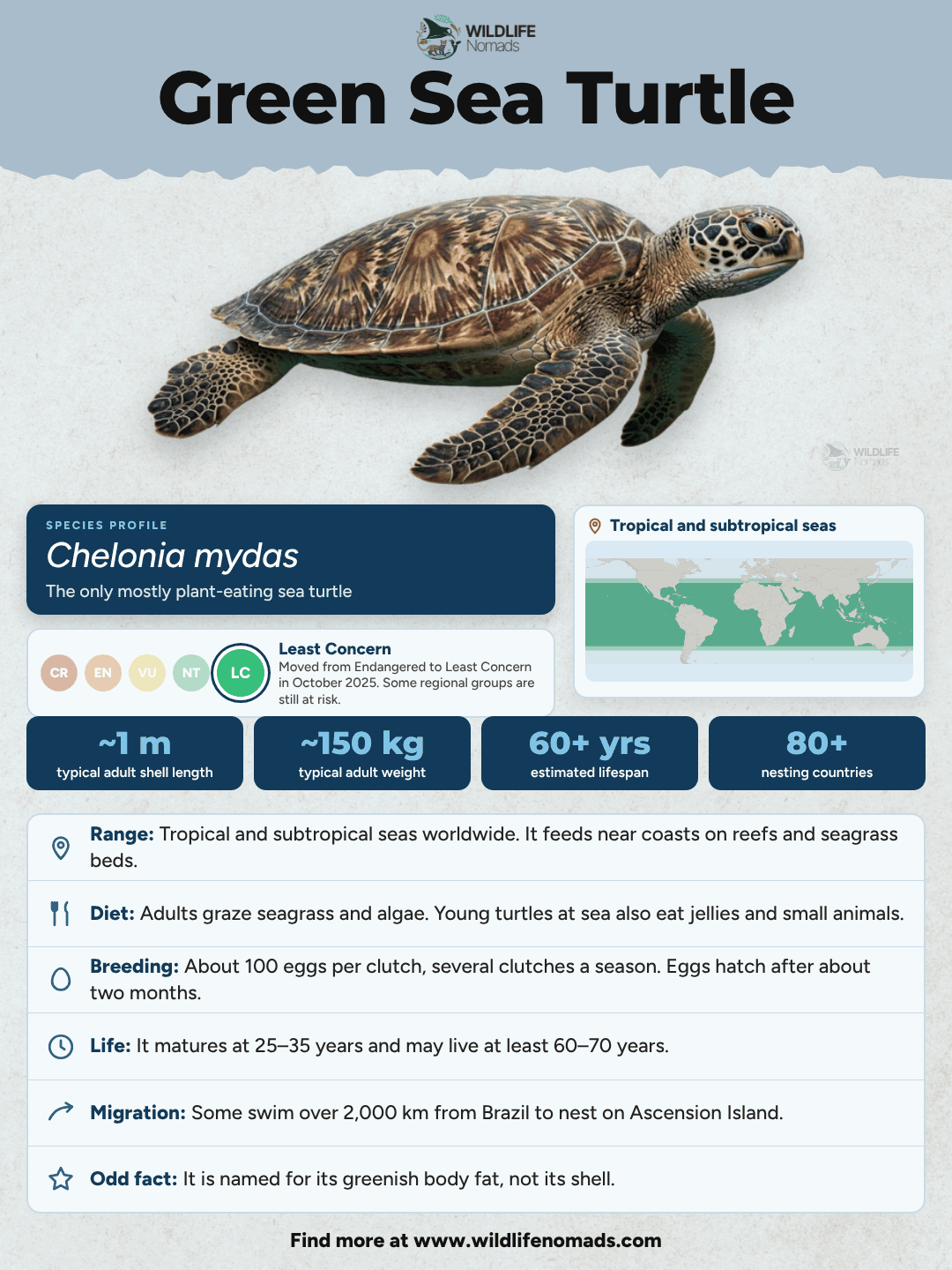
1. Its Name Comes From Its Fat, Not Its Shell
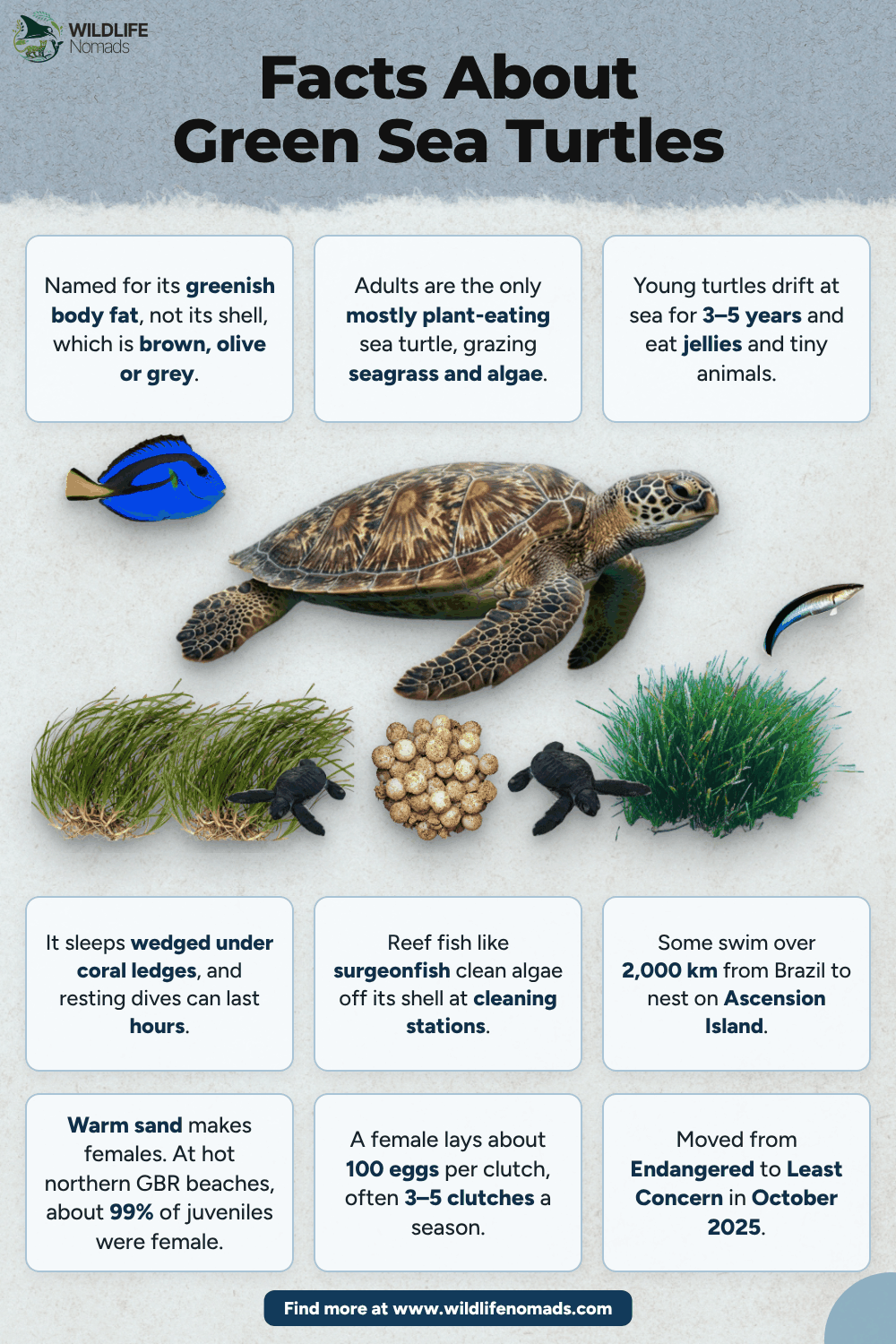
Most people expect a green turtle to look green. However, the ones I meet underwater look olive, brown or almost grey. The green sea turtle’s shell is usually dark brown, olive or grey, often with darker streaks. Underneath, the plastron is a much paler yellow to white.
Instead, the name comes from the greenish colour of its body fat. That tint is widely attributed to pigments from its plant diet. Sadly, the same fat made the species famous for turtle soup, which fuelled centuries of hunting.
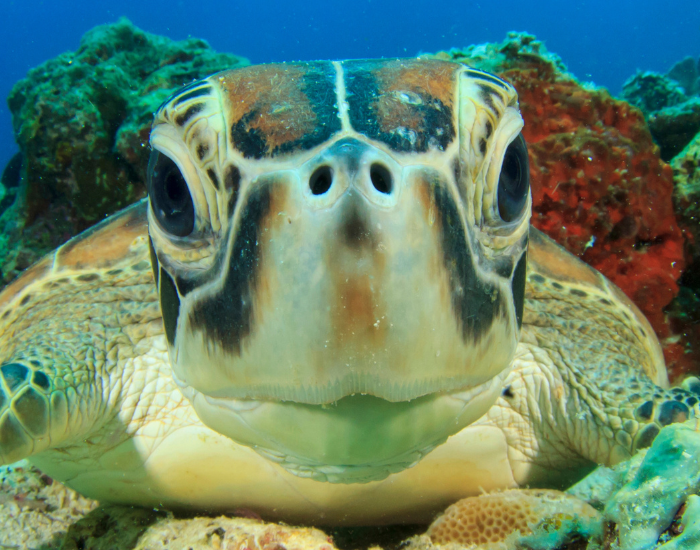
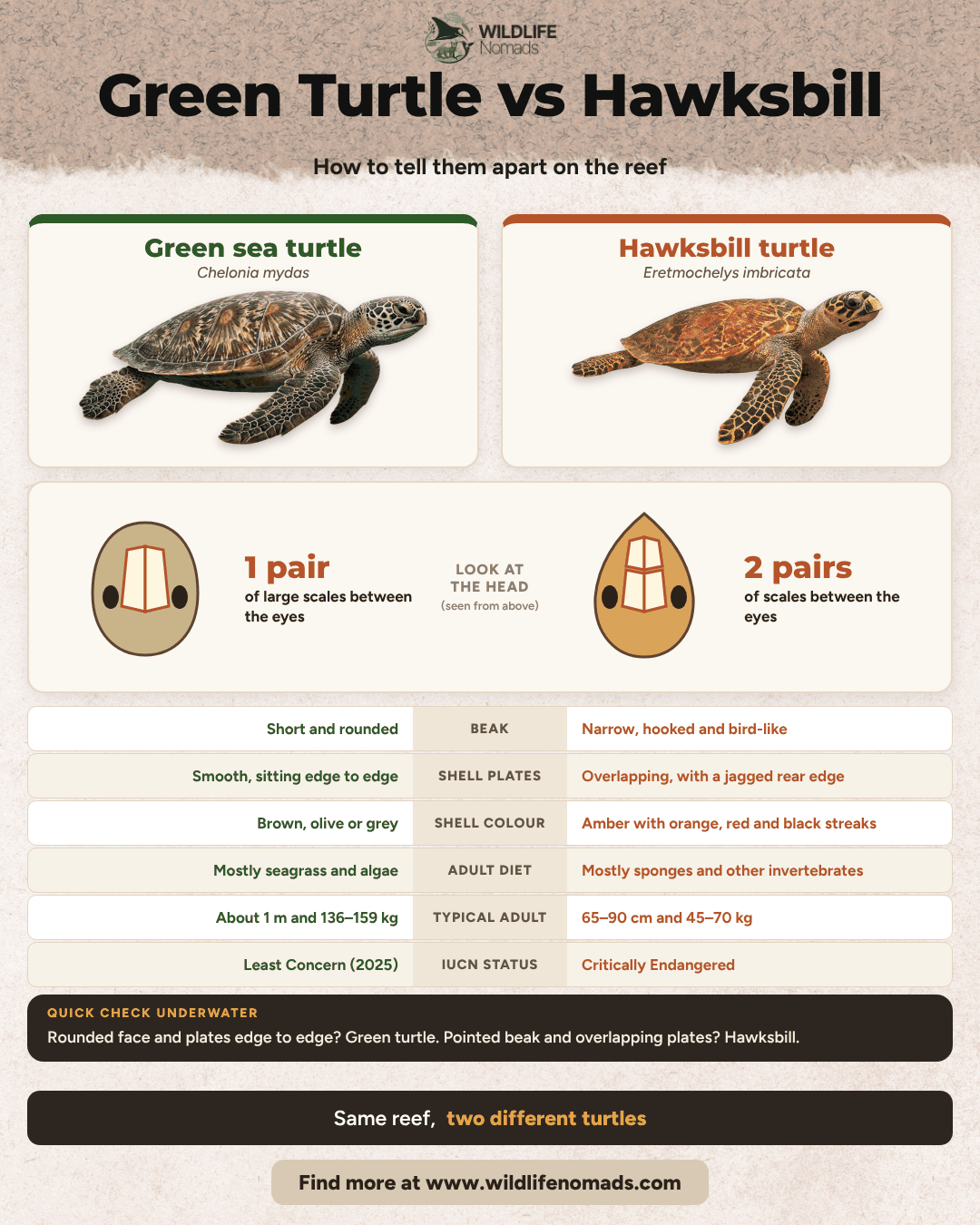
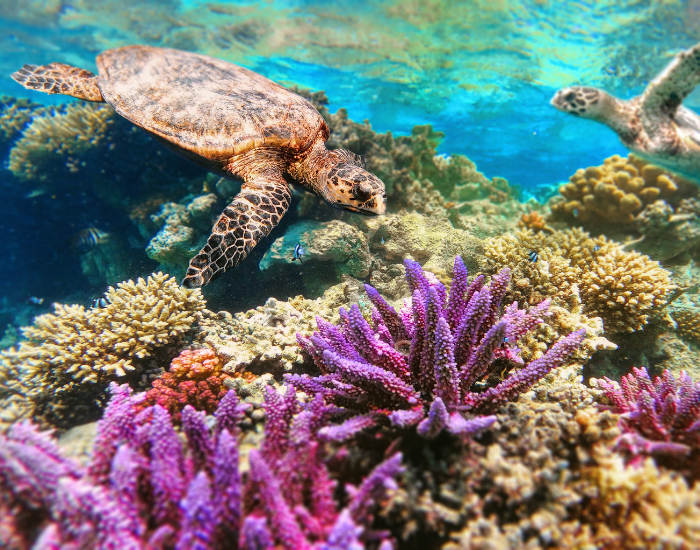
The green sea turtle scientific name is Chelonia mydas. In the water, though, I identify it by the head. A green turtle has a single pair of large scales between its eyes and a short, rounded beak. Hawksbill sea turtles, by contrast, show two pairs of scales and a hooked, bird-like beak. Like all marine turtles, neither can pull its head into its shell.
2. Adult Green Turtles Are the Only Mostly Herbivorous Sea Turtles
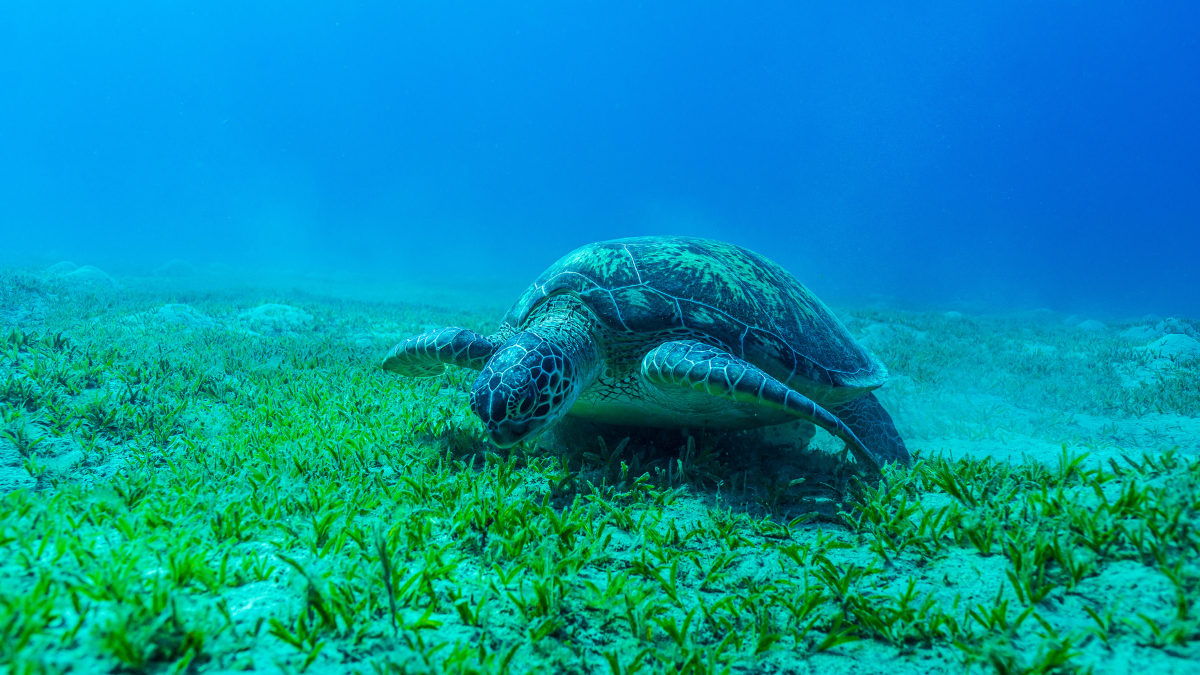
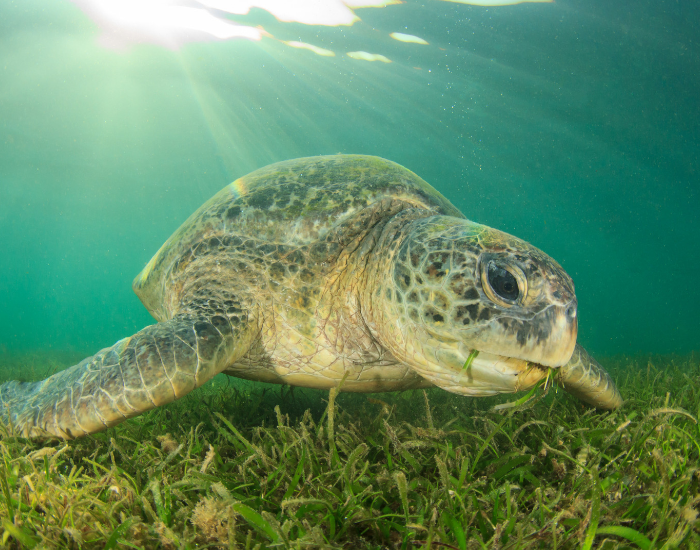
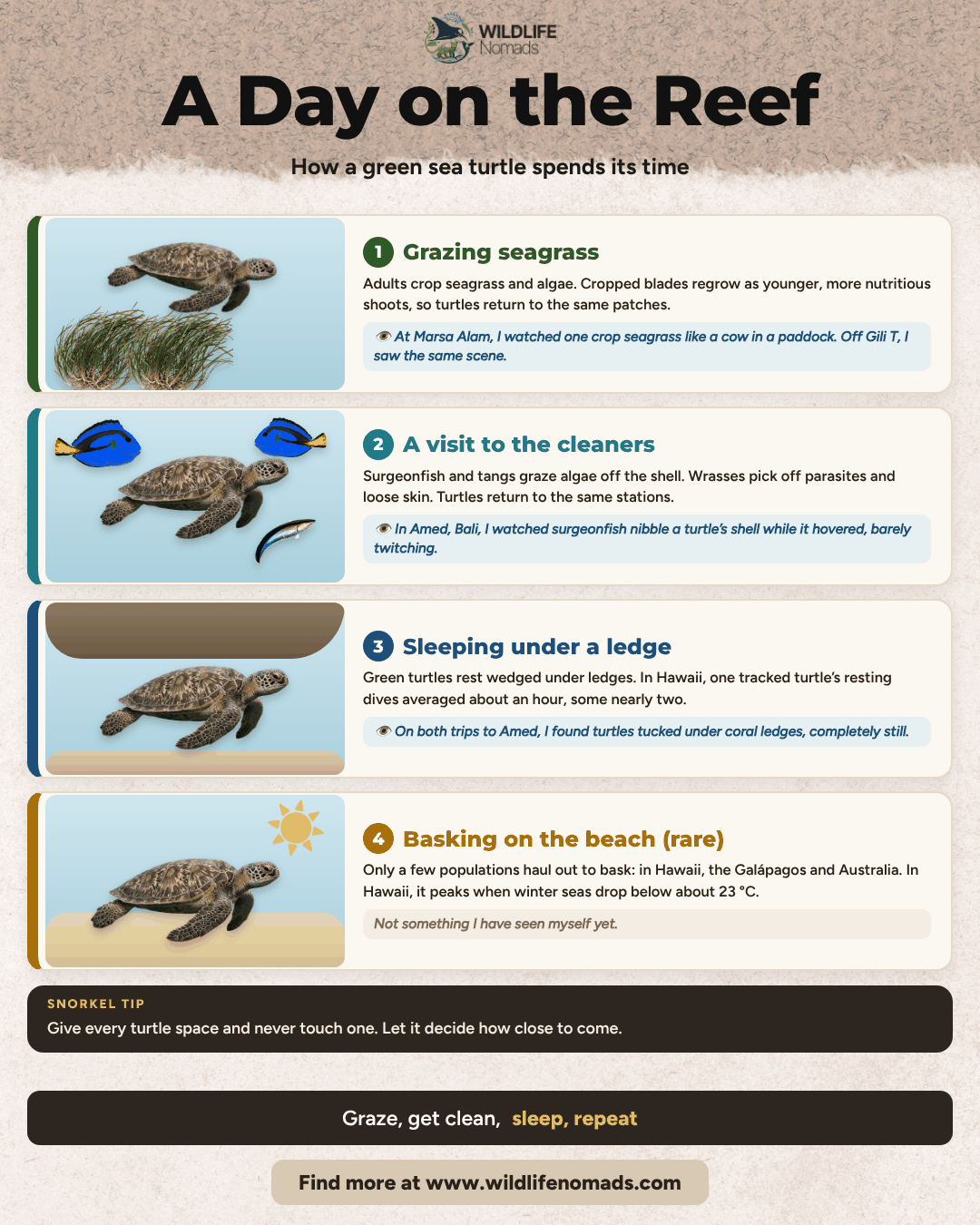
At Marsa Alam, I floated over seagrass in shallow water close to shore. A turtle below me cropped the blades like a cow in a paddock. Off Gili T, I watched the same scene, head down, ignoring every snorkeller nearby.
That habit sets them apart from other sea turtles. Most adult sea turtles eat animals: leatherbacks eat jellyfish, hawksbills eat sponges and loggerheads crush crabs. Among the seven sea turtle species, adult green turtles alone live mainly on plants. They eat sea grasses and algae, and some populations also graze mangrove leaves.
Some sources call them the only herbivorous species of sea turtle, but that goes too far. Adults still eat invertebrates now and then, such as jellyfish and sponges. In the eastern Pacific, green turtles eat noticeably more animal prey than populations elsewhere.
3. Young Turtles Start Life as Omnivores
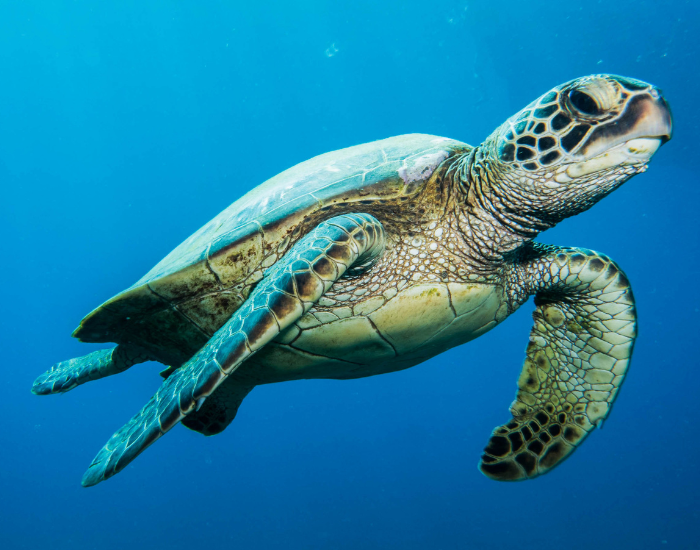
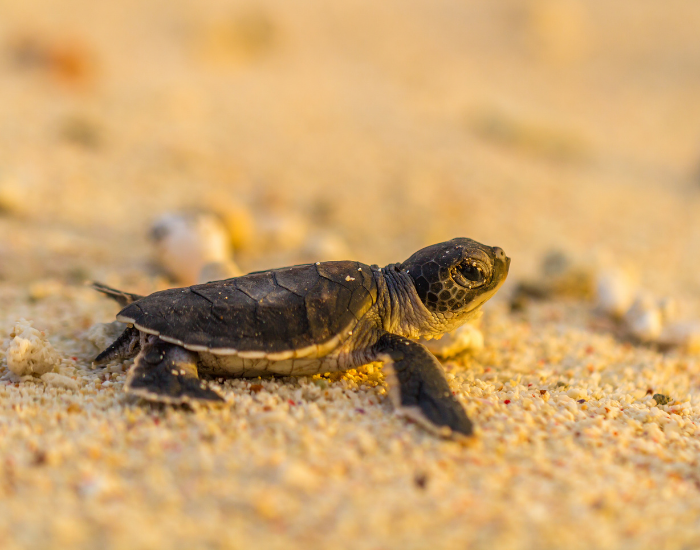
In fact, herbivory is something green turtles grow into. After hatching, young turtles head for the open ocean and drift with currents and floating seaweed. Out there, they eat almost anything small enough, from jellies to tiny crustaceans and plants.
Researchers call this stage the lost years. Because tiny turtles are so hard to track, this stage remains a puzzle in marine science. In Queensland, Arthur and colleagues (2008) used chemical signatures in turtle tissue to follow this change. Their data showed juvenile green turtles moving from animal prey towards a plant diet after settling near the coast.
Typically, that move happens after three to five years at sea. Juvenile green turtles then settle in coastal foraging areas, often seagrass beds or coral reefs. Many stay loyal to those foraging grounds for decades.
4. They Mow Seagrass Meadows Like Gardeners
Grazing turtles keep seagrass blades short, which looks destructive at first. In practice, cropped seagrass regrows with younger, more nutritious shoots. Turtles return to the same patches, creating grazing plots they revisit again and again.
As a result, that gardening helps keep healthy seagrass beds productive. For this reason, many scientists describe the green turtle as a keystone species in coastal habitats. Those meadows shelter young fish, crabs, seahorses and grazing dugongs.
Balance matters, though. At Derawan in Indonesia, Christianen and colleagues (2014) found turtles overgrazing meadows inside a marine protected area. They linked it to high turtle numbers and few large predators such as tiger sharks. In places, the seagrass collapsed. It shows how apex predators shape plant and animal life together.
5. Green Turtles Sleep Wedged Under Coral Ledges
Amed gave me my favourite turtle behaviour. On both trips, I found green turtles tucked beneath coral ledges and rock overhangs, completely still. One looked as if it had reversed into a garage for the night.
In fact, this is how green turtles rest. A slow metabolism lets them stay down far longer than when they are active. In Hawaii, one tracked turtle made resting dives of about an hour on average, some lasting nearly two. In colder water, resting dives can stretch for several hours.
Interestingly, the choice of bedroom changes with age too. Hart and colleagues (2016) tracked juvenile green turtles in Dry Tortugas, Florida. As the turtles grew, they picked deeper resting sites, where they rested longer and spent less energy.
6. They Visit Cleaning Stations on Coral Reefs
Also in Amed, I watched a turtle hover over a coral bommie with its flippers spread wide. Several surgeonfish moved in and nibbled at its shell and skin. The turtle barely twitched.
Researchers call these spots cleaning stations. Usually, herbivorous reef fish such as surgeonfish, tangs and angelfish graze the algae growing on turtle shells. Wrasses and other small fish pick off parasites and loose skin.
In Hawaii, Losey and colleagues (1994) watched turtles hold special postures while saddle wrasses cleaned them. Turtles return to the same stations again and again, which suggests they remember where to go. Both sides win: the fish get a meal, and the turtle leaves with a cleaner shell.
7. Some Populations Haul Out to Sunbathe
Normally, sea turtles spend their whole lives in the water, apart from females coming ashore to nest. Green turtles in a few places break that rule. They crawl onto sandy beaches by day and simply lie in the sun. I have not seen it myself yet, so it is still on my list.
Even so, beach basking is known from only a few populations, in Hawaii, the Galápagos Islands and Australia. Van Houtan and colleagues (2015) linked it to water temperature. In Hawaii, turtles basked mostly when winter sea temperatures dropped below about 23 °C.
Warming up probably helps digestion and immunity, and it may keep turtles away from sharks. However, the same study projected basking could disappear by around 2100 as seas warm. If you find a basking turtle, keep your distance and let it rest.
8. Green Turtles Migrate Thousands of Kilometres to Nesting Beaches
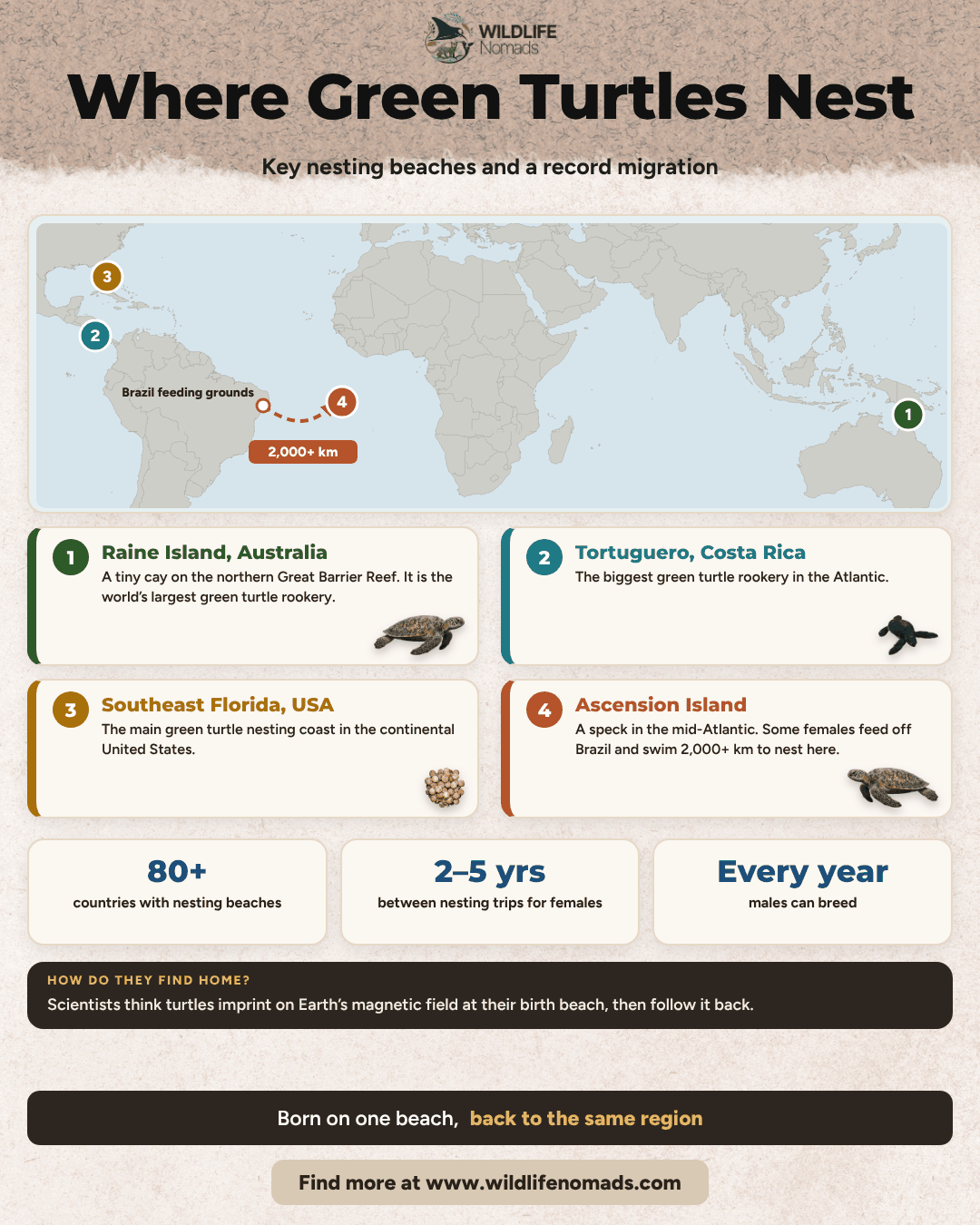
Green turtles are highly migratory animals. Adult turtles feed in one area, then swim to nesting grounds that can lie thousands of kilometres away. Some females nest on Ascension Island, in the middle of the Atlantic Ocean. They feed along South America’s eastern coast in Brazil, more than 2,000 km away.
How do they find one speck of sand? Lohmann and colleagues (2008) proposed that sea turtles imprint on the Earth’s magnetic field at their birth beach. As adults, they seek out that same magnetic signature. That is why most females nest in the region where they hatched.
Meanwhile, males migrate too, and usually more often. Adult males can breed every year, while females typically return every two to five years. In between, they rebuild the fat reserves that each breeding season burns through.
9. Raine Island Hosts the Largest Green Turtle Rookery
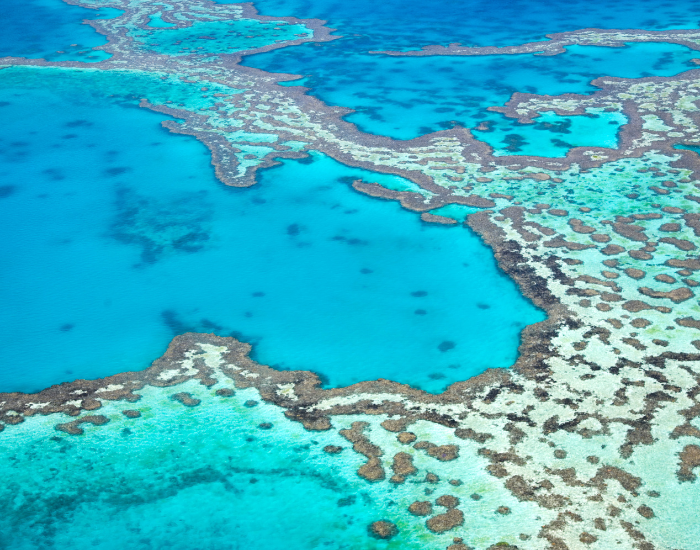
Raine Island is a tiny coral cay on the outer edge of the northern Great Barrier Reef. It hosts the world’s largest green turtle rookery. During peak seasons, thousands of females crawl ashore on a single night.
Other important nesting beaches include Tortuguero, on Costa Rica‘s northern Caribbean coast. It is the biggest rookery in the Atlantic. In the United States, most green turtles nest along Florida’s Atlantic coast. Smaller numbers nest in the U.S. Virgin Islands, and a few as far north as South Carolina.
Overall, green turtles nest in more than 80 countries. They live in the Atlantic, Pacific and Indian oceans and the Mediterranean Sea. Adults favour the tropics, while juveniles also feed in some subtropical and temperate regions.
Raine Island also shows the risks of a crowded beach. Beach erosion and sea level rise have flooded nesting sites and drowned eggs. Adult females have also tumbled off small sand cliffs and died on their backs. The Raine Island Recovery Project now reshapes beaches and fences cliffs to help them.
10. Sand Temperature Decides If Sea Turtle Hatchlings Are Male or Female
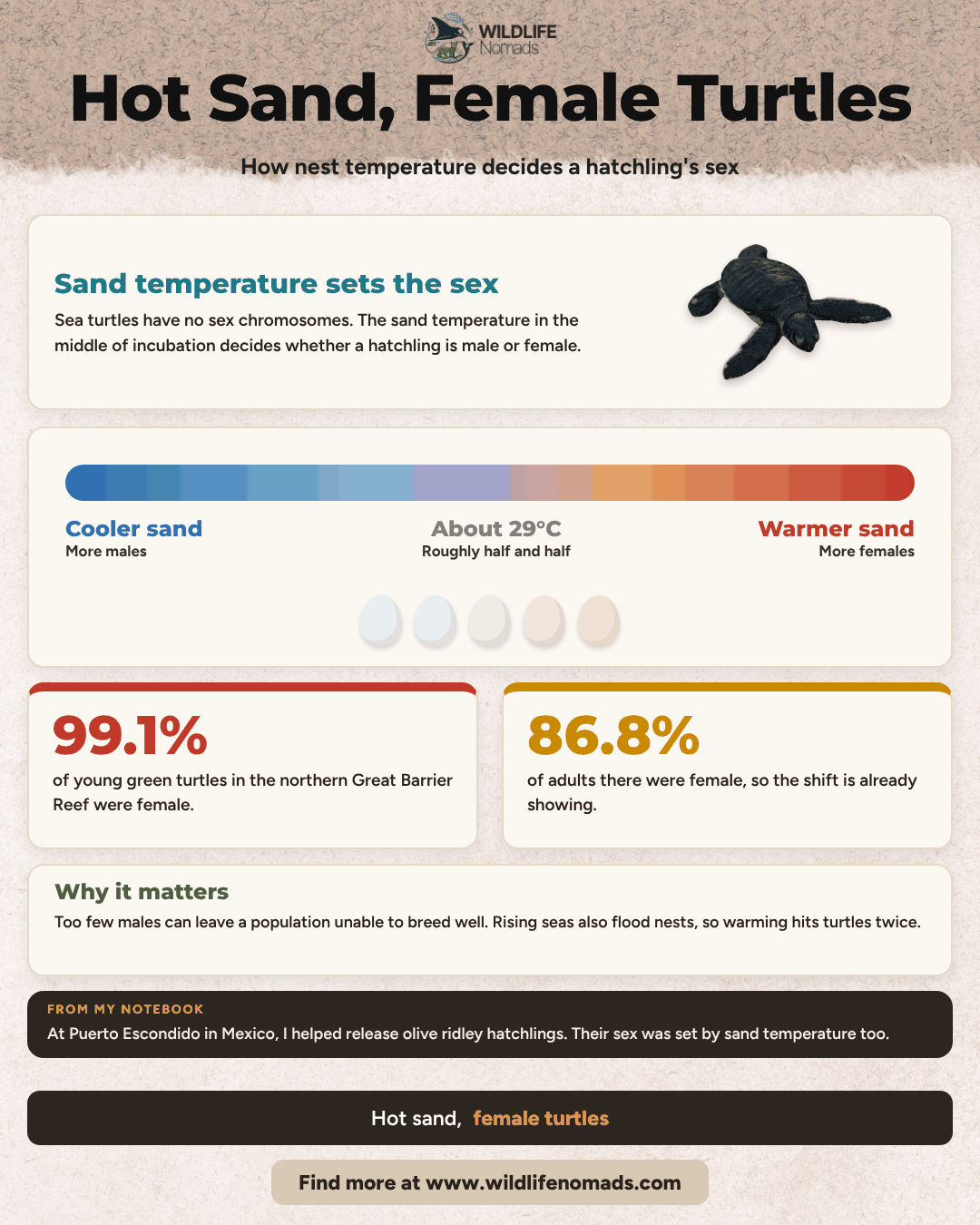
Unlike us, sea turtles have no sex chromosomes. Instead, sand temperature during incubation sets the outcome. Warmer nests produce mostly females, while cooler nests produce mostly males.
That makes warming beaches a serious problem for sea turtle populations. Jensen and colleagues (2018) sampled turtles foraging in the northern Great Barrier Reef. Among juveniles from the warm northern rookeries, including Raine Island, about 99% were female.
By contrast, turtles from cooler southern beaches showed a milder bias, around 65 to 69% female. Managers are now testing shade and watering to cool nests. A few males can mate with many females, but no population can run on females alone.
11. Green Turtles Nest Several Times in One Season
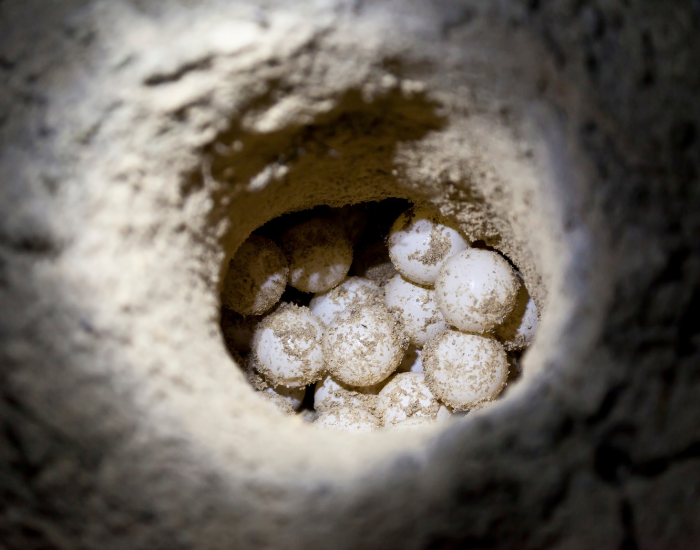
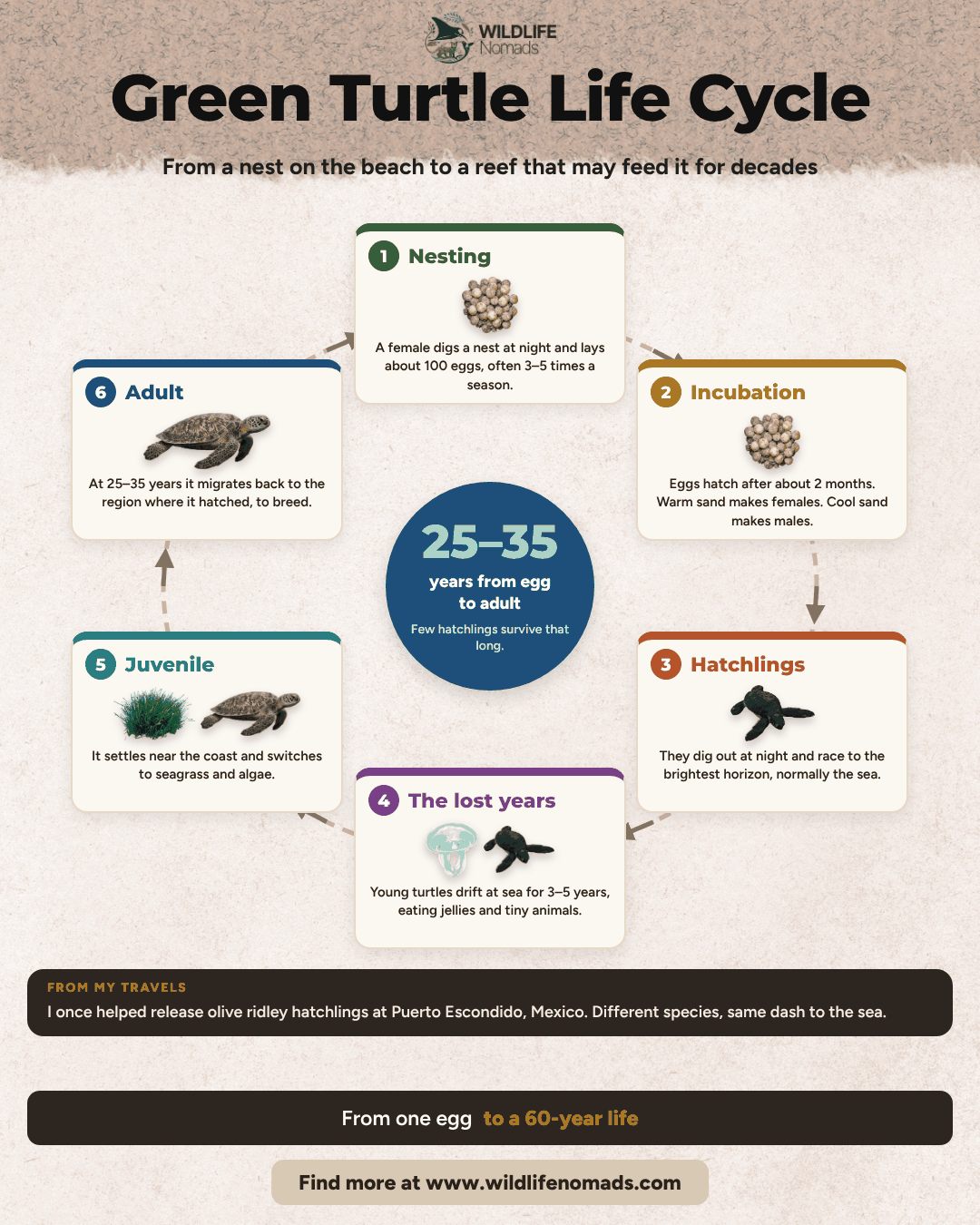
A nesting female drags herself up the beach at night and digs a deep chamber with her back flippers. She then lays about 100 to 110 eggs. Roughly two weeks later, she comes back and lays another clutch.
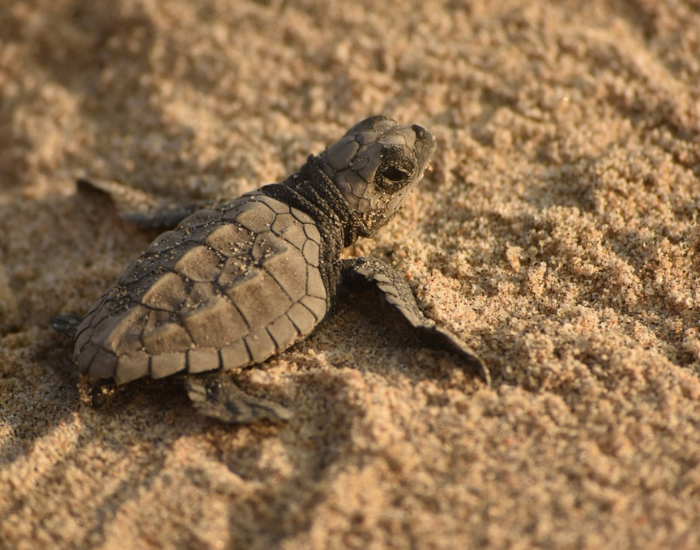
Overall, most females lay eggs three to five times in one season. The eggs hatch after about two months, and hatchlings usually emerge at night. They then race towards the brightest horizon, which is normally the moonlit sea. Bright lights behind a beach can disorient hatchlings and pull them inland.
Years ago, I helped release olive ridley hatchlings at Puerto Escondido in Mexico. They belong to a different species, yet they face the same dash to the water. Few sea turtle hatchlings survive to adulthood. Survivors take 25 to 35 years to mature and may live at least 60 to 70 years.
12. The Green Sea Turtle Is a Comeback Story, With Footnotes
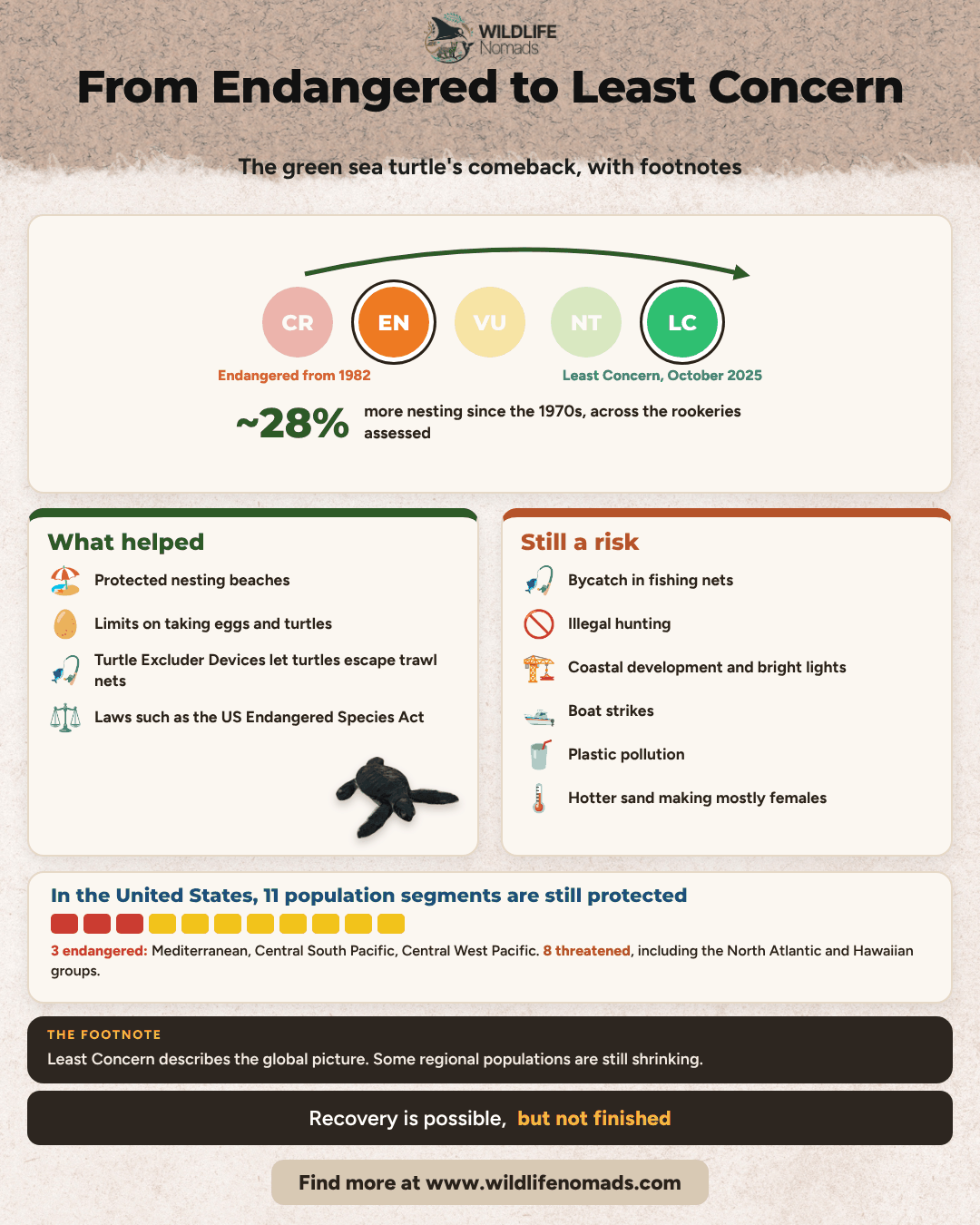
For more than four decades, the IUCN listed the green turtle as Endangered. In October 2025, the global assessment moved it straight to Least Concern. Nesting had risen about 28% since the 1970s across the rookeries assessed.
Above all, that recovery reflects decades of conservation efforts. Protected nesting beaches, limits on egg and turtle harvests and better fishing gear all helped. Turtle Excluder Devices are fishing gear modifications that protect sea turtles in trawl nets. They let turtles escape before they drown.
Still, Least Concern describes the global picture. Some regional green turtle populations face bycatch in fishing nets, illegal hunting, coastal development, boat strikes and plastic pollution. Several other sea turtle species, such as the hawksbill, remain far more threatened. In the United States, the green turtle remains protected under the Endangered Species Act.
There, the National Marine Fisheries Service and the U.S. Fish and Wildlife Service manage 11 distinct population segments. Three are endangered: Mediterranean, Central South Pacific and the Central West Pacific DPS. That last one includes the Northern Mariana Islands and other western Pacific islands. The rest are threatened, including the North Atlantic DPS and the Central North Pacific DPS. That Hawaiian Islands population nests mostly on isolated islands in the northwest of the chain. Like many endangered sea animals, they still need protection.
FAQs About the Green Sea Turtle
Green sea turtles migrate between coastal feeding grounds and the region where they hatched. Adult females make the trip every two to five years, often swimming hundreds or thousands of kilometres. Some turtles that feed off Brazil cross the Atlantic to nest on Ascension Island. Researchers think they navigate partly by sensing the Earth’s magnetic field.
Not at the global level. In October 2025, the IUCN Red List moved the green sea turtle from Endangered to Least Concern. Nesting had risen about 28% since the 1970s. However, some regional populations still face serious threats. In the United States, three distinct population segments remain endangered and eight are threatened under the Endangered Species Act.
Most sea turtles follow long routes between feeding grounds and nesting beaches. Hatchlings ride ocean currents into the open ocean, then juveniles settle in coastal waters years later. Adults then commute between those feeding areas and their home nesting region. Routes differ by species and population, and satellite tags keep revealing new ones.
Nobody has an exact count, because males and juveniles rarely come ashore. Scientists track populations by counting nesting females and nests instead. The northern Great Barrier Reef population alone includes more than 200,000 nesting females. The 2025 IUCN assessment found global nesting about 28% higher than in the 1970s.
Globally, the green sea turtle is not rare. It lives in warm parts of the Atlantic and Pacific oceans and the Indian Ocean. It nests in more than 80 countries and is now listed as Least Concern by the IUCN. Snorkellers see it regularly in places like Bali, Hawaii, the Red Sea and Queensland. Some local populations, however, remain small and threatened.
Adult green sea turtles eat mainly seagrasses and algae, which makes them the only mostly herbivorous sea turtle. Young turtles in the open ocean are omnivores and eat jellyfish, small crustaceans and plants. Adults occasionally take animal prey, especially in the eastern Pacific.
Scientists estimate green sea turtles live at least 60 to 70 years. They mature slowly, usually at 25 to 35 years, and some take 40 years or more. That slow life history means populations need decades to recover.
Float, Watch and Let Them Be
If one green sea turtle fact stays with you, make it this: sea turtle conservation works. A species listed as Endangered for over 40 years bounced back because people protected beaches, eggs and nets. Yet the same turtle still needs dark beaches, healthy seagrass and cool sand.
So next time you snorkel coral reefs, slow down. Look under the ledges, scan the seagrass and watch for cleaning stations. Give every turtle space, never touch one, and let it decide how close to come. Before your next trip, take a swim through our coral reef simulator.
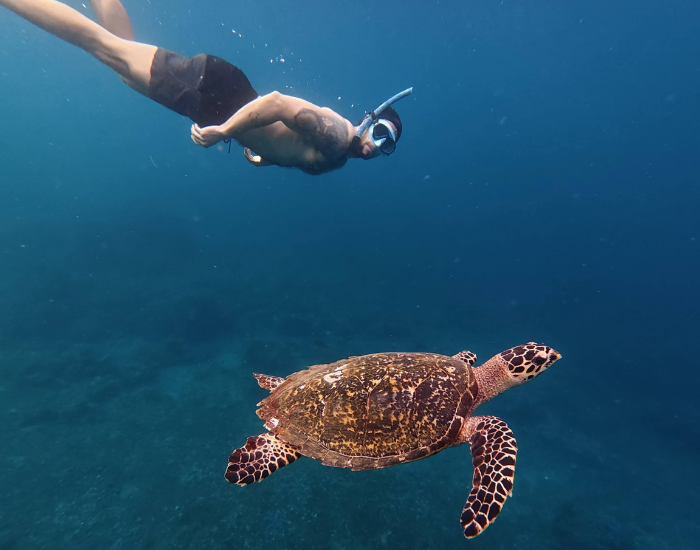
Then tell me in the comments where you met your first green sea turtle. I would love to add your spot to my list.
References:
Arthur, K. E., Boyle, M. C., & Limpus, C. J. (2008). Ontogenetic changes in diet and habitat use in green sea turtle (Chelonia mydas) life history. Marine Ecology Progress Series, 362, 303–311. https://doi.org/10.3354/meps07440
Christianen, M. J. A., Herman, P. M. J., Bouma, T. J., Lamers, L. P. M., van Katwijk, M. M., van der Heide, T., Mumby, P. J., Silliman, B. R., Engelhard, S. L., van de Kerk, M., Kiswara, W., & van de Koppel, J. (2014). Habitat collapse due to overgrazing threatens turtle conservation in marine protected areas. Proceedings of the Royal Society B, 281(1777), 20132890. https://doi.org/10.1098/rspb.2013.2890
Hart, K. M., White, C. F., Iverson, A. R., & Whitney, N. (2016). Trading shallow safety for deep sleep: Juvenile green turtles select deeper resting sites as they grow. Endangered Species Research, 31, 61–73. https://doi.org/10.3354/esr00750
Jensen, M. P., Allen, C. D., Eguchi, T., Bell, I. P., LaCasella, E. L., Hilton, W. A., Hof, C. A. M., & Dutton, P. H. (2018). Environmental warming and feminization of one of the largest sea turtle populations in the world. Current Biology, 28(1), 154–159. https://doi.org/10.1016/j.cub.2017.11.057
Lohmann, K. J., Putman, N. F., & Lohmann, C. M. F. (2008). Geomagnetic imprinting: A unifying hypothesis of long-distance natal homing in salmon and sea turtles. Proceedings of the National Academy of Sciences, 105(49), 19096–19101. https://doi.org/10.1073/pnas.0801859105
Losey, G. S., Balazs, G. H., & Privitera, L. A. (1994). Cleaning symbiosis between the wrasse, Thalassoma duperry, and the green turtle, Chelonia mydas. Copeia, 1994(3), 684–690. https://doi.org/10.2307/1447184
Van Houtan, K. S., Halley, J. M., & Marks, W. (2015). Terrestrial basking sea turtles are responding to spatio-temporal sea surface temperature patterns. Biology Letters, 11(1), 20140744. https://doi.org/10.1098/rsbl.2014.0744